F L A U N T


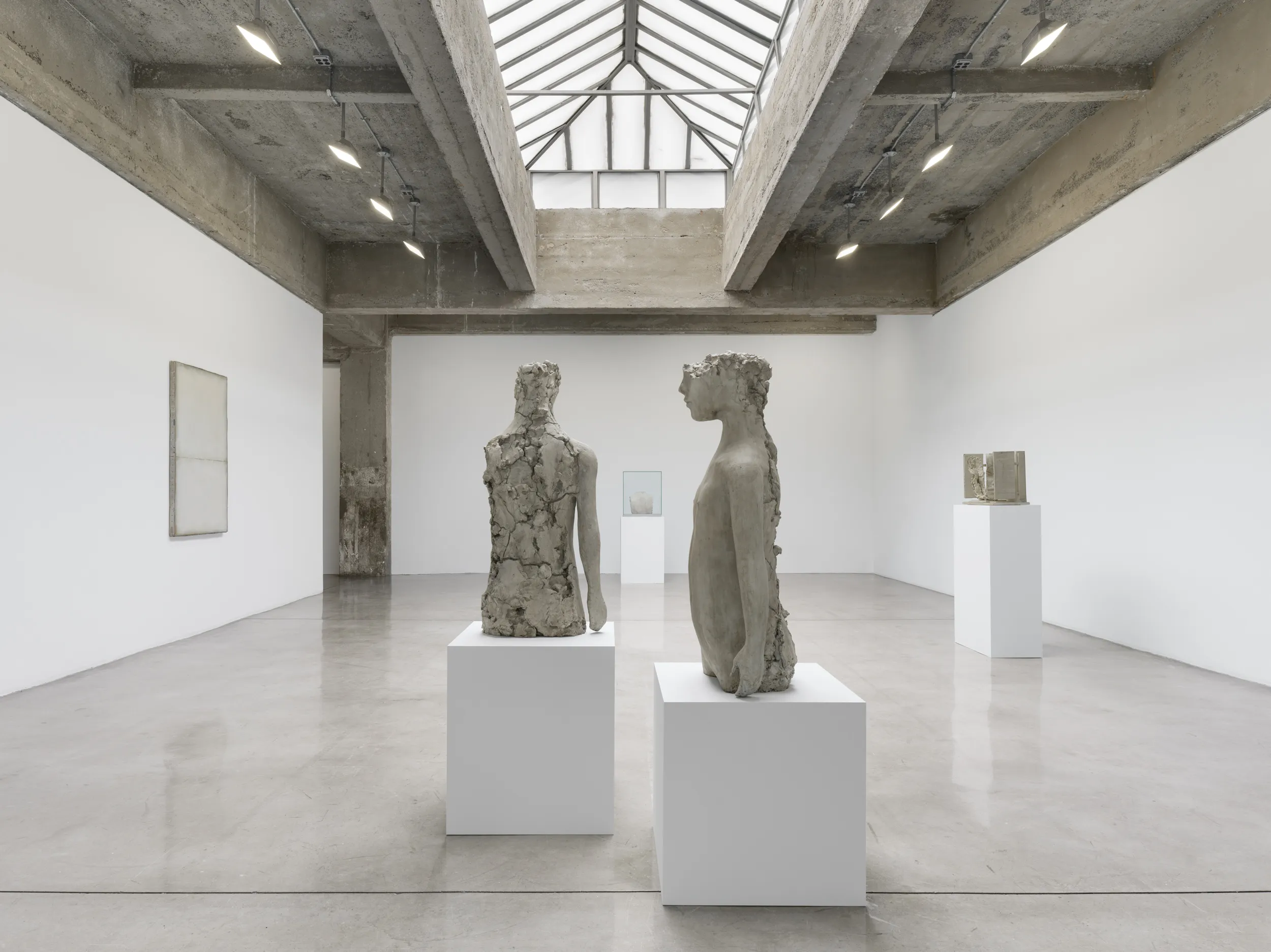
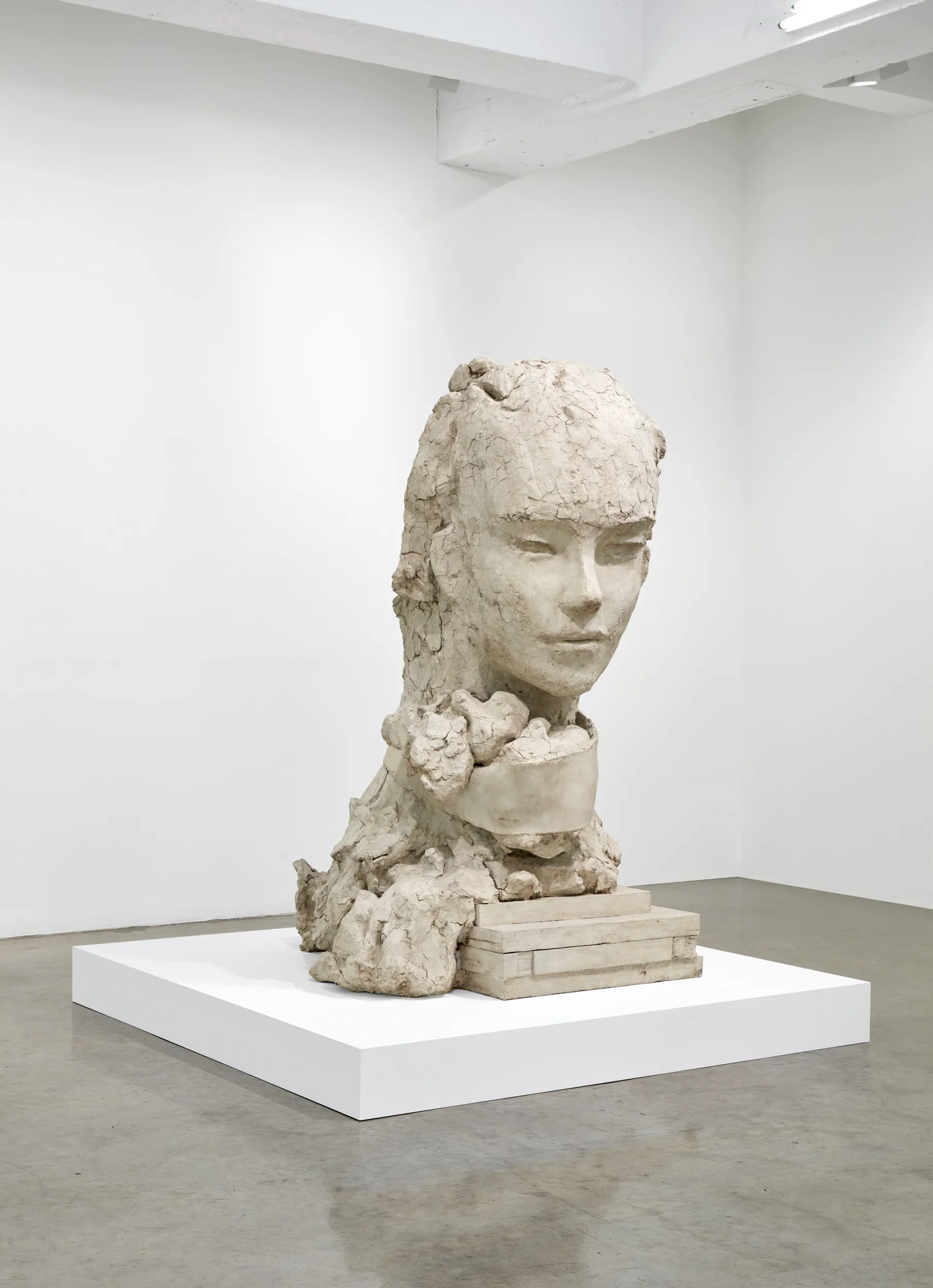
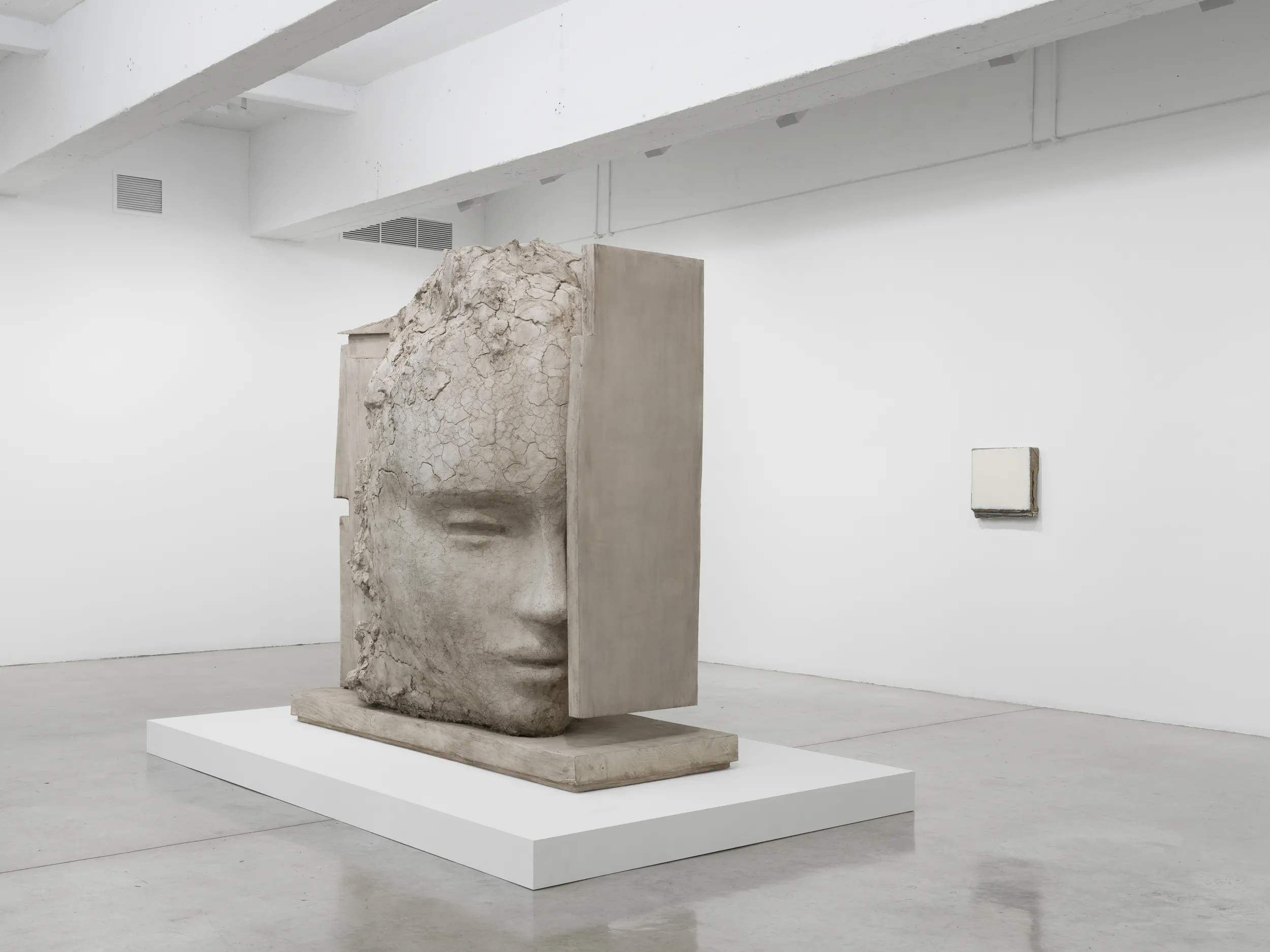
Something has just happened here or is about to. Walk into Mark Manders’s sixth solo exhibition at Tanya Bonakdar Gallery and the ground floor meets you with two colossal heads the color of bone, dry and fissured, cracked like a riverbed in drought and abandoned mid-thought. Bonewhite Clay Head with Vertical Cloud (2024-2025) looks pulled from a dream and set down still soft. Beside it, Monument (2024-2025) sits in a silence so complete it registers less as an object than a salvaged object of desire. You keep waiting for the maker to come back and finish what he started.
The maker won’t, and that withheld return is the engine of Manders’ sculptural enterprise. It is important, Manders says, that “every work seem made by one single person, and that you feel the room has just been left behind.” For thirty years he has been constructing one impossible fiction, a self-portrait in the shape of a building, where each sculpture is a room in a mind rather than a likeness of a face.
Almost nothing here carries a single date. Short Sad Thoughts / All Existing Words is dated 1990 to 2026, and Manders experiences that span as detonation in motion. “I tend to see my work as a slow explosion,” he says. “All parts were there from the beginning. Sometimes it takes many years for a work to get its final form.” The 1990 point of departure is not buried beneath the 2026 destination; it is still arriving. A piece may spend decades finding its shape or turn and address an earlier version of itself.
Monument is bronze impersonating clay at its most precarious, drying and cracking, moments from collapse, though Manders insists it is a painting before a sculpture. “I see it as a three-dimensional painting; it is painted bronze.” By casting a fragile instant in metal and holding it there, he reaches, in his words, for something that goes beyond him. The impulse is almost primal. As a child he saw a reproduction of one of the earliest cave paintings, a human hand ringed in red pigment, and it rearranged him: a single person’s gesture, frozen in time and still readable tens of thousands of years later. That legibility across the abyss became a pillar of his work.
Monument carries a more intimate grief as well. Manders made it for his mother, who lost a baby just after birth, and for everyone whose sorrow had to stay unspoken. A lump rests on the figure’s throat, words caught on their way out, bound to the body, unable to break free, yet made visible. It is the show’s most profound devastation: speech stopped at the threshold and turned to monument.
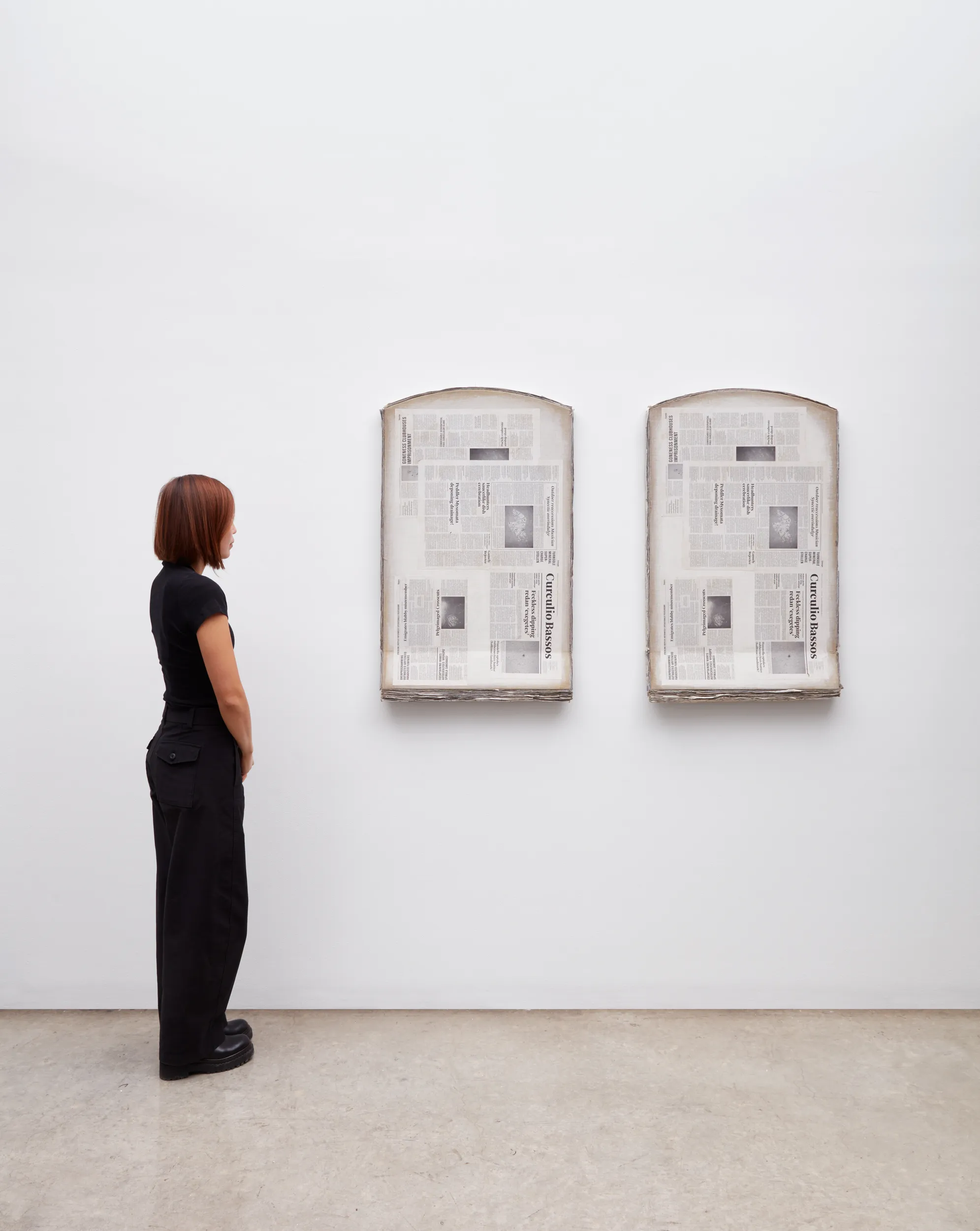
Language is arrested everywhere in these rooms, nowhere more eerily than in the newspapers Manders prints himself. Titled All Existing Words (2005-2026), each contains every word in the English language, used exactly once, scattered at random, a whole tongue struck mute by the loss of syntax. Manders frames spare white paintings in these papers so they read like windows, playing on painting’s oldest metaphor while lining the sill with a medium that already feels like a relic. From this frozen newspaper he lifts single words, gives them three-dimensional form, and gathers a few related ones into a room; such is the case of Field Fragment (2026), a thin blue horizon of suspended painted tiles representing the melancholic sky and Landscape with All Existing Words (2005-2026), a block of his newspapers falling through the air, stopped just before it strikes the ground. Everything is mid-gesture; nothing is allowed to land. Print’s disappearance does not trouble him. The idea of a newspaper will stay with us even when the papers are gone, Manders says: a concept for describing and distributing what mattered in the world.
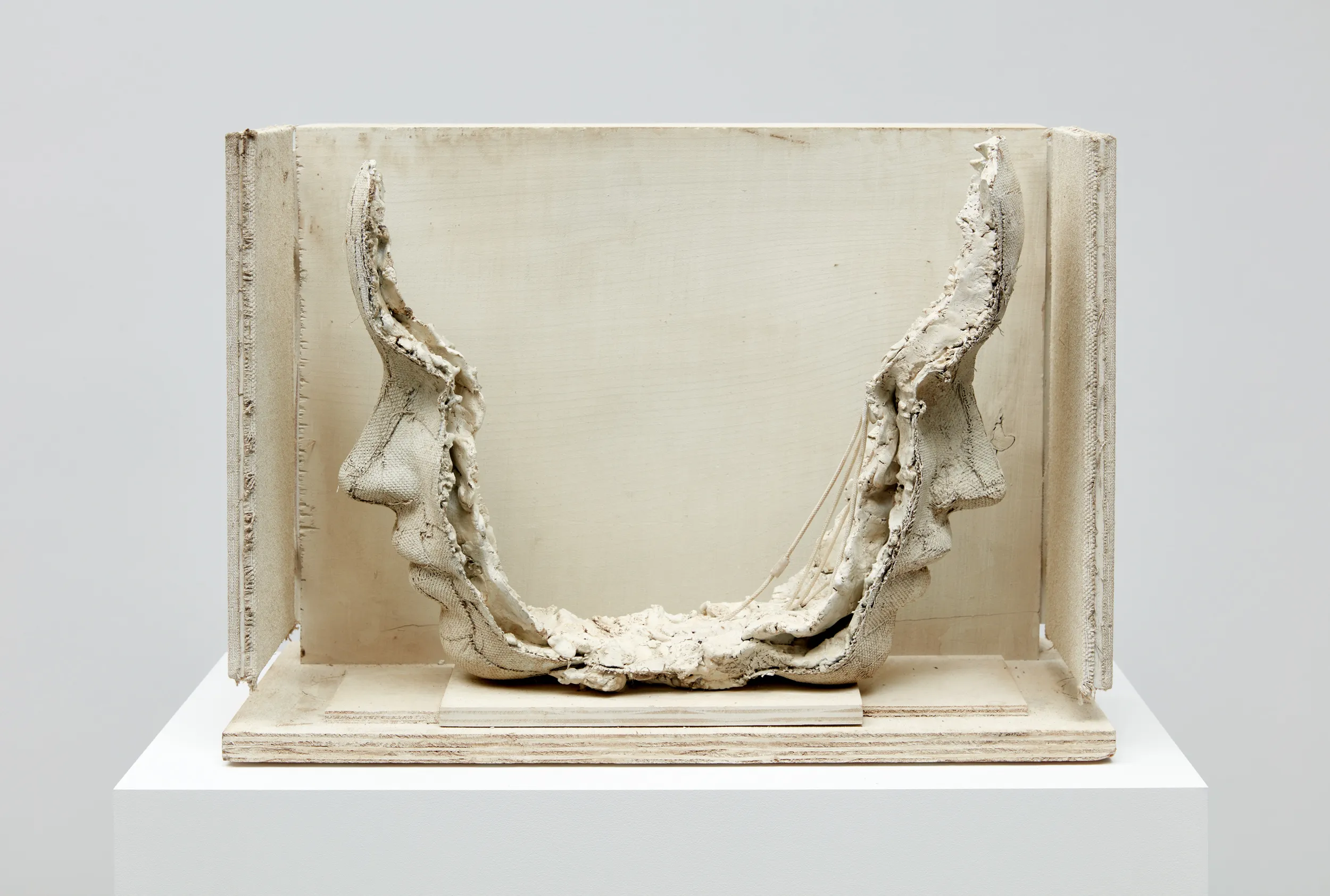
Beneath the bronze and sand and newsprint, his self-description is disarmingly plain. “In essence I always stayed a poet.” Manders decided it made more sense to write with objects than words, that he could speak through them, above all when works share a room and rooms are made to talk to one another. The gallery becomes a scenography of the mind, and Manders executes the grammar.
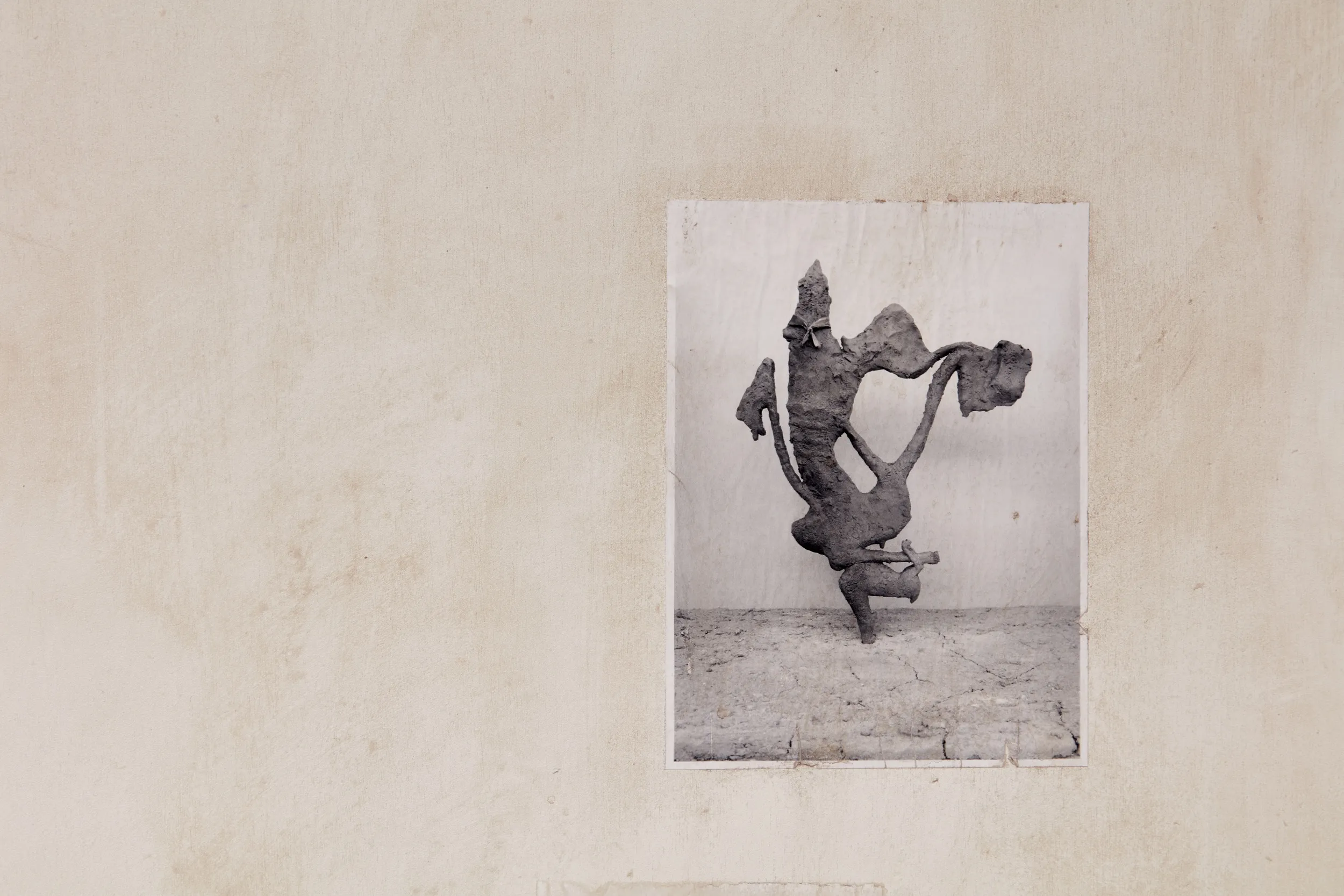
It is tempting to read all of this as elegy, for print, for permanence, for an analog century now receding. Manders resists the mournful key. His wager is stranger and more hopeful: freeze the vulnerable moment precisely enough and it becomes not a ruin but an archetype, a thing that goes beyond him. The papers will vanish; the idea of the newspaper will not. The clay will never finish drying, because it was never clay. What lingers, room after silent room, is the oldest gesture there is: a single body pressed inward, still legible across an unimaginable distance, insisting that someone was here.
Stay up-to-date with exclusive events and content.


