F L A U N T


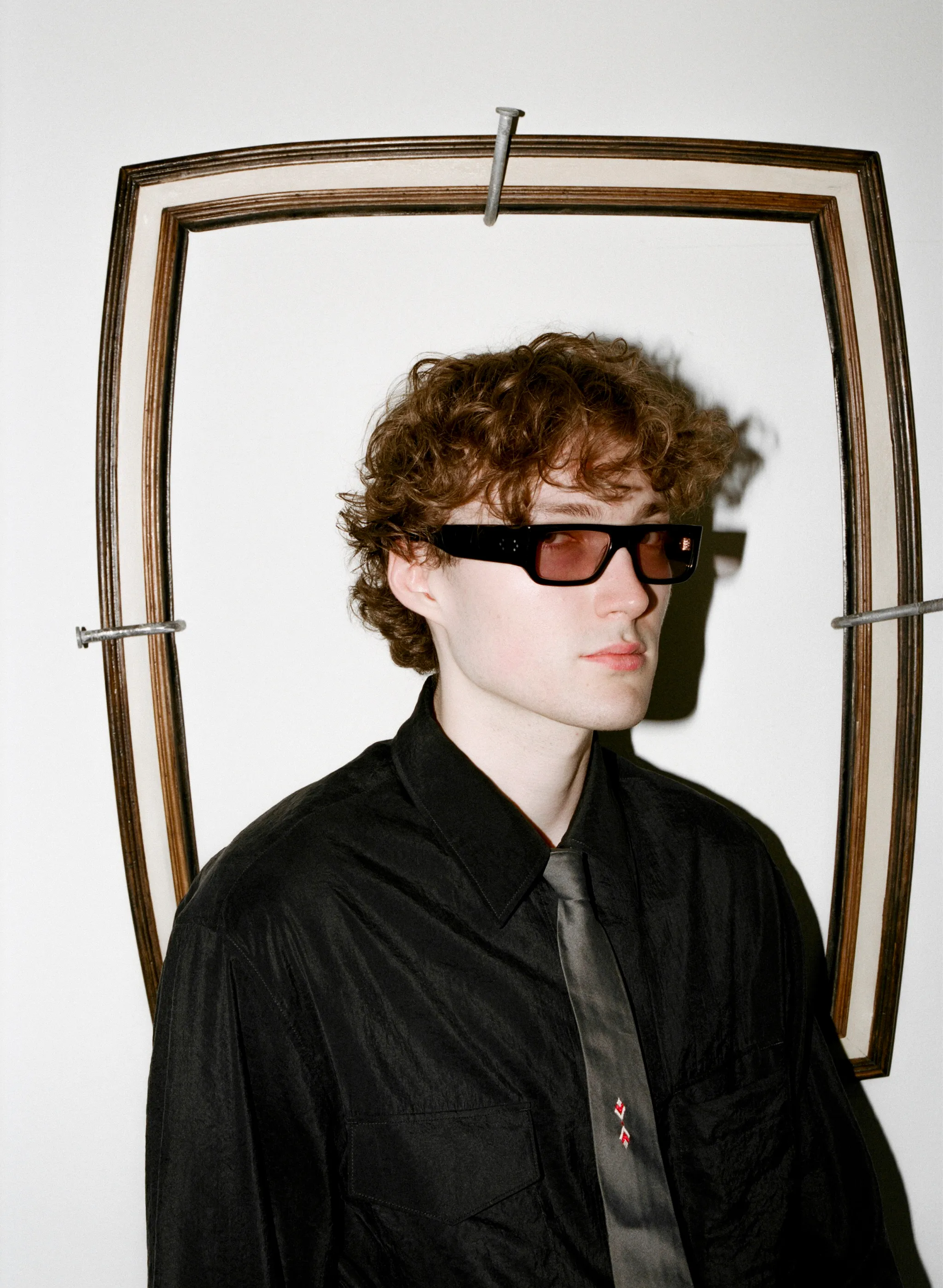
For Wells Watson, tension begets creation. The New York-based multidisciplinary artist prides himself on testing the limits of stability by inventing displays of collapse that mimic the harsh landscape of his city’s arts scene. Working across film, sculpture, and painting, Watson utilizes processes of abrasion to warp familiar media appendages such as CRT televisions and photographic plates, living canvases ripe with connective potential. Rather than treating these decayed displays as abstract expression, Watson’s work demonstrates a sympathetic approach to the afterlife of function and challenges traditional procedures of image production and consumption. Mutant symbols consume themselves in various states of distortion, while maintaining just enough recognizable structure to emphasize their purposes of reflection both literal and figurative.
Watson’s Tribeca studio was formally inaugurated in early May, marking a formidable new chapter in his ongoing creative endevours. As an artist working across many modes, the space offers Watson a dedicated haven to continue merging moving images with static ones in his exhibits of subversive media. Read below for Flaunt’s conversation with Watson on the development of his new creative atmosphere, as well as the conceptual structures behind some of his most provoking pieces.

Most of your art incorporates burning and deformation, and is described as “deliberate intervention”. What do you feel your work is aiming to intervene? Is there something banal about how art is normally received?
By “deliberate intervention”, I'm referring to the creation of points of friction within a system plagued by predetermined relationships. Most media arrives organized by the expectations which accompany its consumption. I'm interested in what happens when these habitual ways of seeing are interrupted, whether through burning or deformation. I'm trying to fold the logic of a given medium back onto itself, pushing beyond its prescribed role to allow new possibilities to emerge. Conversely, there's a tendency to reduce artwork to immediate recognition, to identify something categorically before it's fully encountered, and that's what I consider banal. I'm more interested in suspending the moment of recognition, to allow the work to unfold rather than arrive all at once.
Many of your pieces include harsh metals (nails, chains, etc.) What about these materials inspires you? What material would you refuse to work with?
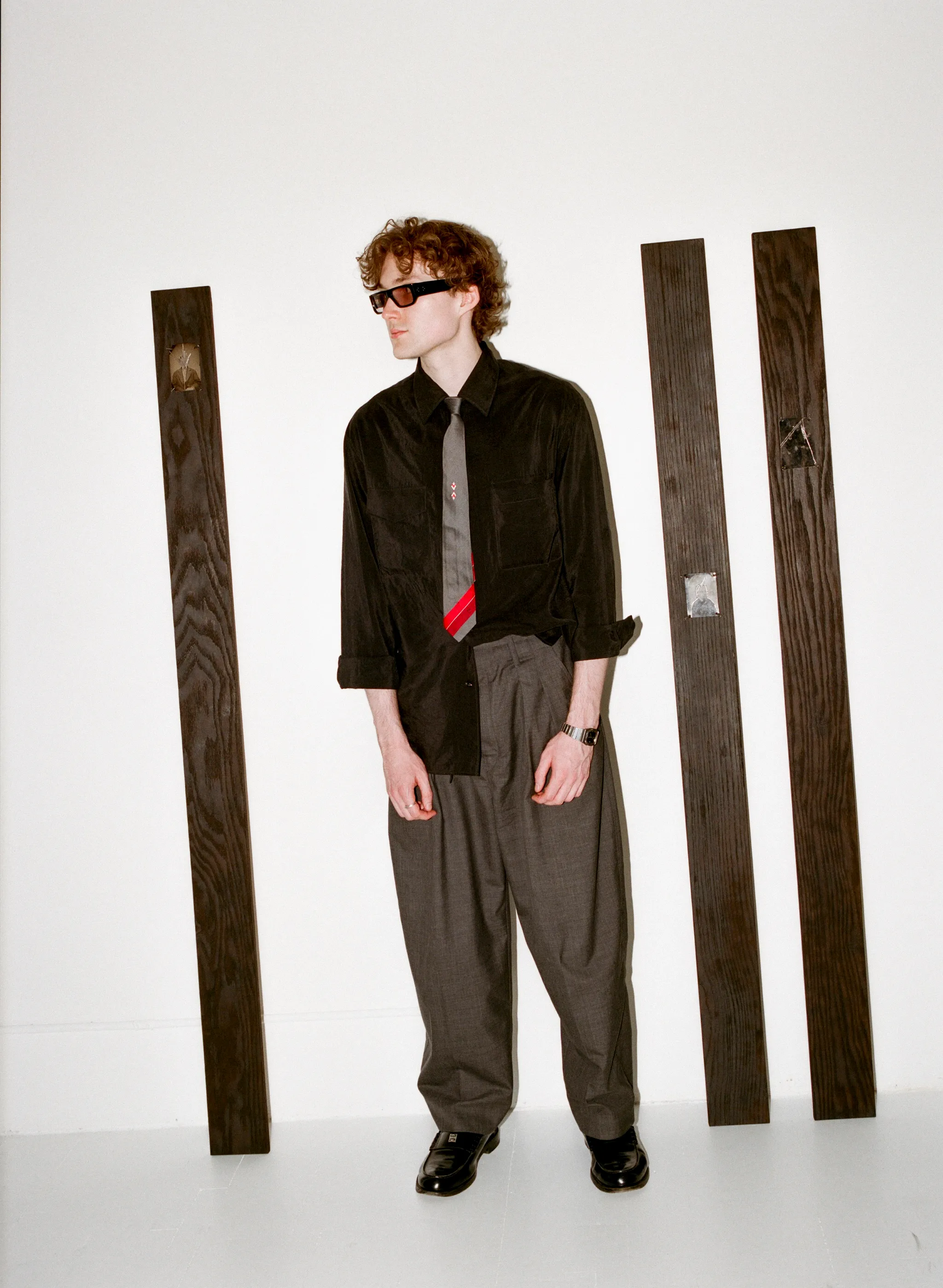
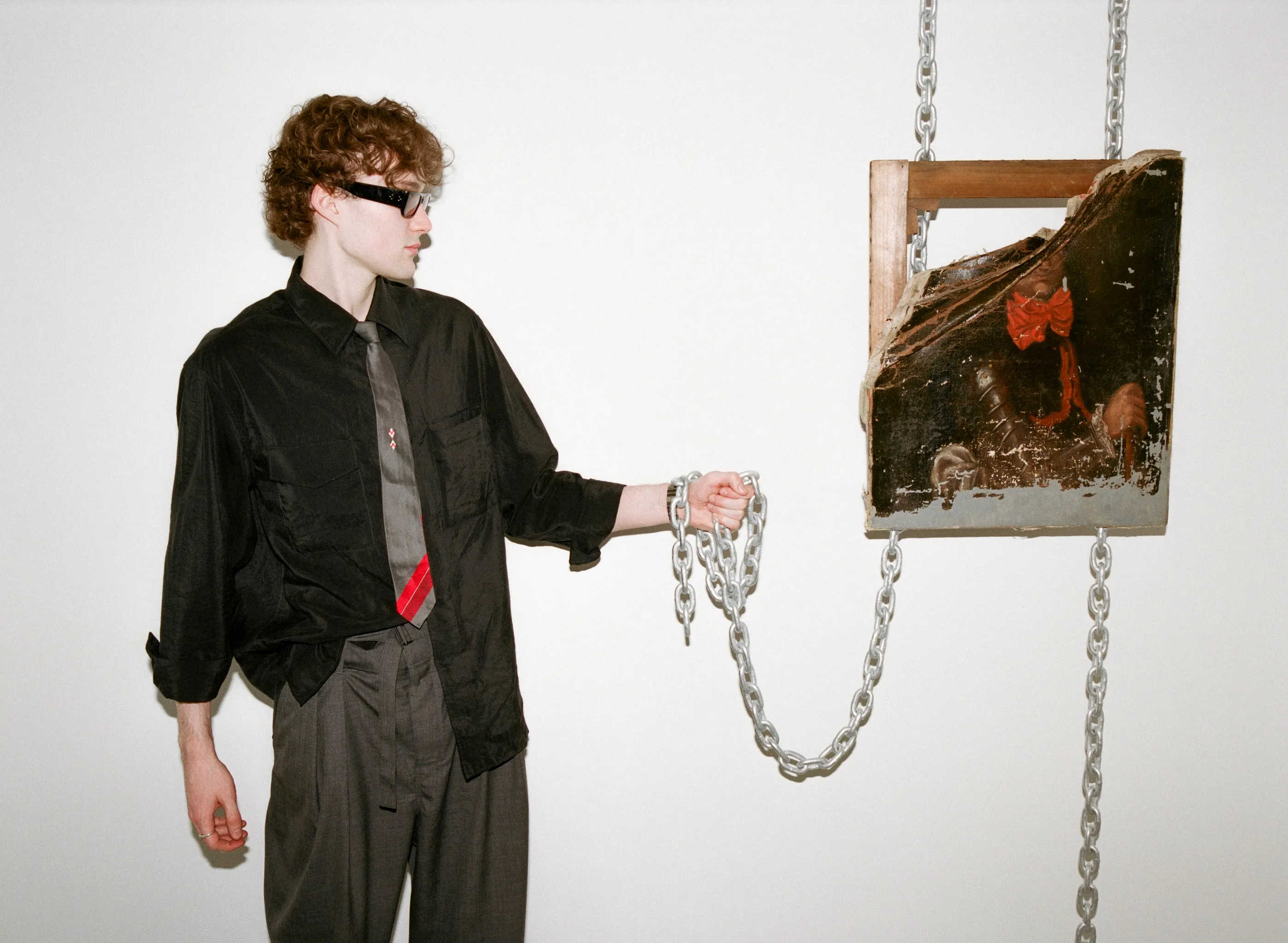
Industrial materials inspire me because they exist in various states of tension. These “harsh” objects were designed to connect and restrain. So even before they enter the work, they're embedded within systems of force and use. And it's that latent energy which draws me in. Interest in a given material stems from its capacity to foster new relationships. I'm not necessarily attracted to a particular material so much as the possibility that a material can exceed the defined role or interpretation most readily available to it. Once a chosen material feels exhausted, my curiosity wanes. Inherently, the interest comes out of a material's generative potential, its capacity to enter into a new dialogue with other materials. These relationships build fresh interpretations, and with those newfound insights, unforeseen possibilities emerge.
How does irony reflect in your art? Or are natural and unnatural materials inseparable?
If there is an ironic nature to my work, it isn’t about mocking meaning but staging competing realities. The conditions I work with often appear opposed, whether preservation and decay or the natural and artificial. I’m interested in coexistence, where those conditions become increasingly difficult to separate from one another and their boundaries begin to dissolve. More than a contradiction, I’m interested in this inseparability.
Many of your digital pieces involve the dismantling and distortion of CRT televisions to the point of being unidentifiable. Why does this medium feel important to obscure?
CRT televisions initially appealed to me because the production of images is tied visually to its physical processes of phosphor activation, signal transmission, magnetism, etc. In contrast, many contemporary image displays veil their operations behind an increasingly stable image. Because of this, I see the medium as valuable for revealing rather than obfuscating. The distortions push the system to a point where the process of creating an image becomes clearer than the resulting image. To that point, I’m interested not in a lack of image but in the precise moment when images reach their limit, at which point the processes of their creation are exposed.
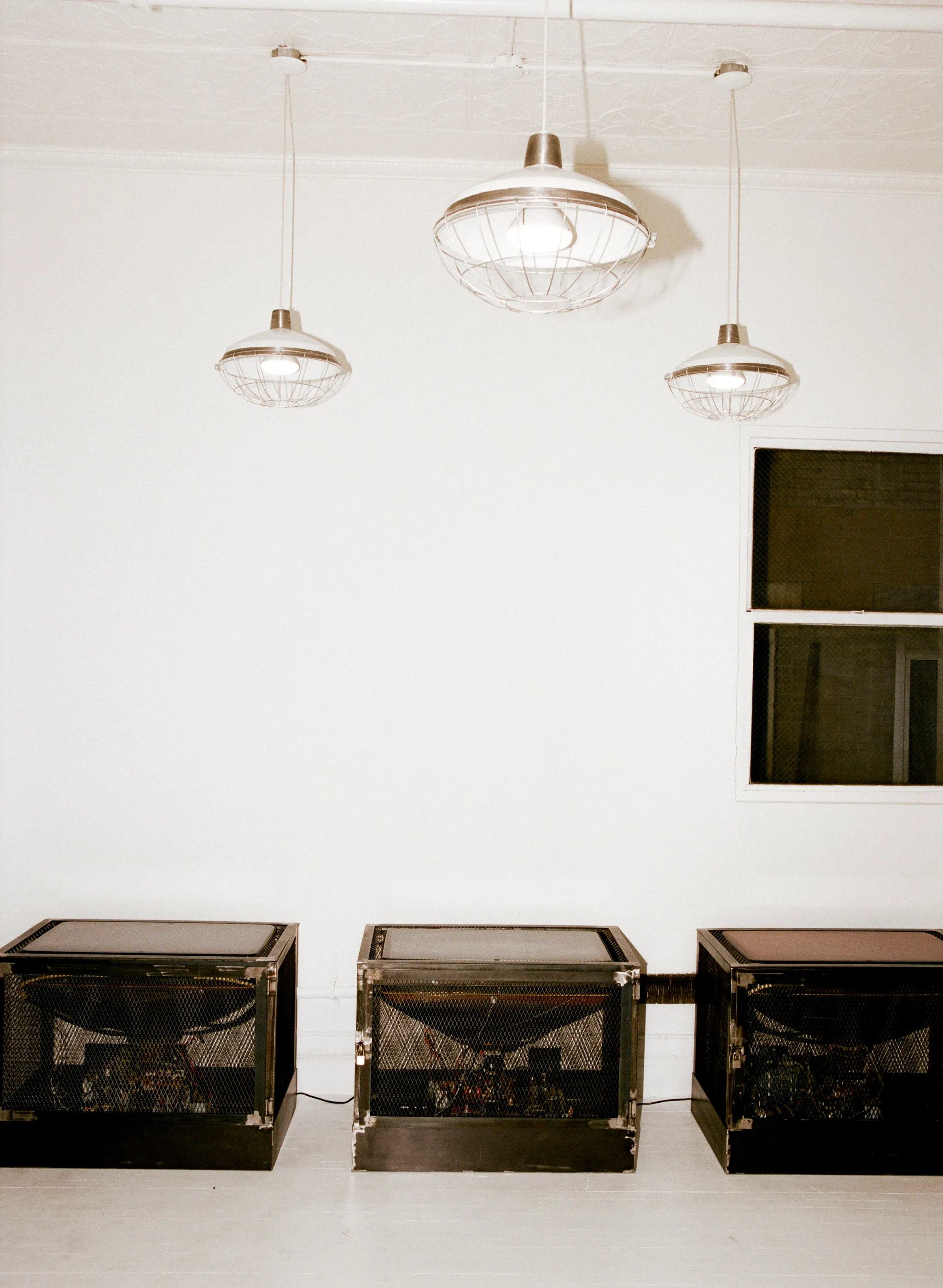
Your series, Signal Study I, 2025, and Signal Study II, 2025, display various short clips, some of which are provocative, before their point of deformity. What memories does this series elicit for you? How do these pieces reflect fleeting moments within our memories?
The signal studies don't conjure up specific memories for me, yet they do engage my obsession with "memories of memories". As the signal studies unravel, each image begins to absorb traces of images yet to come. I’m interested in images being cannibalized. That process of consumption embodies how we access memory. I used to imagine memory as readily accessible, incorruptible even, but I’ve since learned every recollection of a given moment is transformed by subsequent recollections of the same moment, and eventually, the memory becomes a memory of a memory of a memory, ad infinitum. It persists only through continuous reformation. What remains in these works is less a defined moment and more a study of any given memory’s ongoing reconstruction.
Your piece,ke Me Far, Far, displays a Bonsai tree wrapped in aluminum wire. While the title initially reads with assuring, wistful connotation, the piece reflects themes of entrapment. Can you share the journey behind this paradox? What feelings are evoked by your choice of a Bonsai tree?
I’ve always found the restraint of bonsai trees to be beautiful, yet melancholic. They require an enormous amount of care, and that cultivation comes through heavy restriction, taking on their form through wiring and pruning. I was drawn in by how these interventions, which appear to constrain the tree, also produce the conditions of its characteristic growth. The title emerged from that contradiction. Take Me Far, Far suggests movement and escape, but the bonsai undergoes a profound transformation without ever leaving its place.
You unveiled your new Tribeca studio with an intimate reception showcasing your work, with a live performance by experimental noise musician Lea Bertucci. How do you feel music changes the tone of your art? What were the audience reactions?
I believe it transformed the atmosphere of the space and heightened viewers’ awareness of duration. The acts of looking and listening seemed to become difficult to separate from one another. Much of my work deals with instability, transformation, and systems pushed beyond their intended functions, and I think Lea’s sound created a similar experience. It didn’t direct interpretation so much as change the quality of attention within the room. People seemed more willing to remain with the work rather than move quickly through it. The work itself didn’t change, but the conditions through which it was encountered certainly did.
How has your new studio expanded the breadth of your work? What are your plans for it?
The biggest change for me hasn’t just been about working at scale, though it's certainly a factor. What’s really changed is that the studio allows me to work across multiple mediums simultaneously. A film may influence a painting, or I could find curatorial pairings between objects I wouldn't have thought of before, and these relationships can generate ideas I wouldn't have been able to tap into otherwise. My hope is that the space continues to function as a site where different bodies of work can collide, evolve, and push one another into new territory.
Stay up-to-date with exclusive events and content.


