F L A U N T


A team of photographers maneuvers around Urs Fischer’s dozen-odd surreal cast bronze sculptures scattered throughout Jeffrey Deitch’s light-filled gallery. The front desks are strewn with stalks of crimson colored gladiolas for that evening’s opening. In a pressed white shirt, glossy cuff links, and acetate frames, Deitch perches on the white leather bench nursing a mug of something that smells faintly of cinnamon.
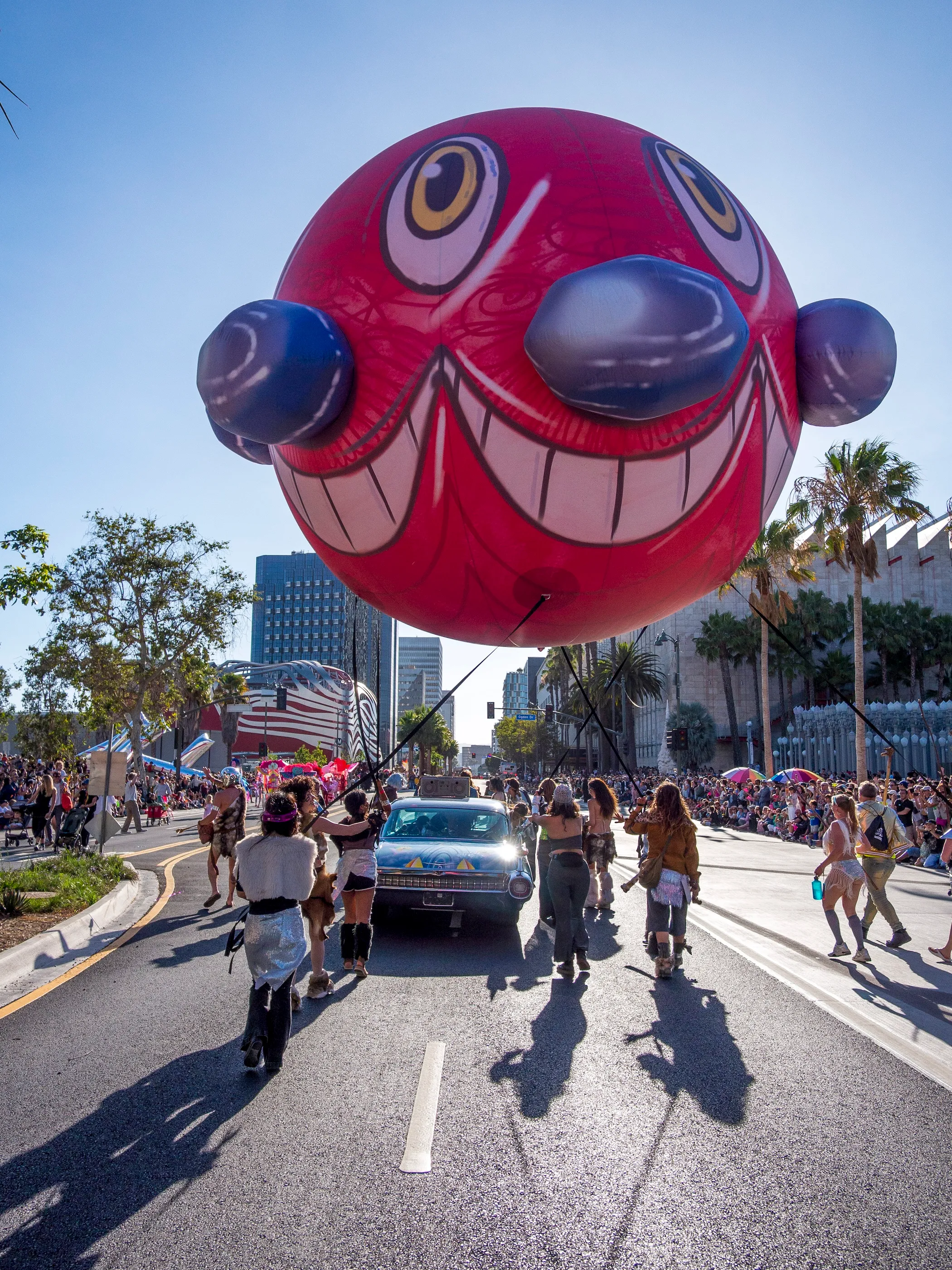
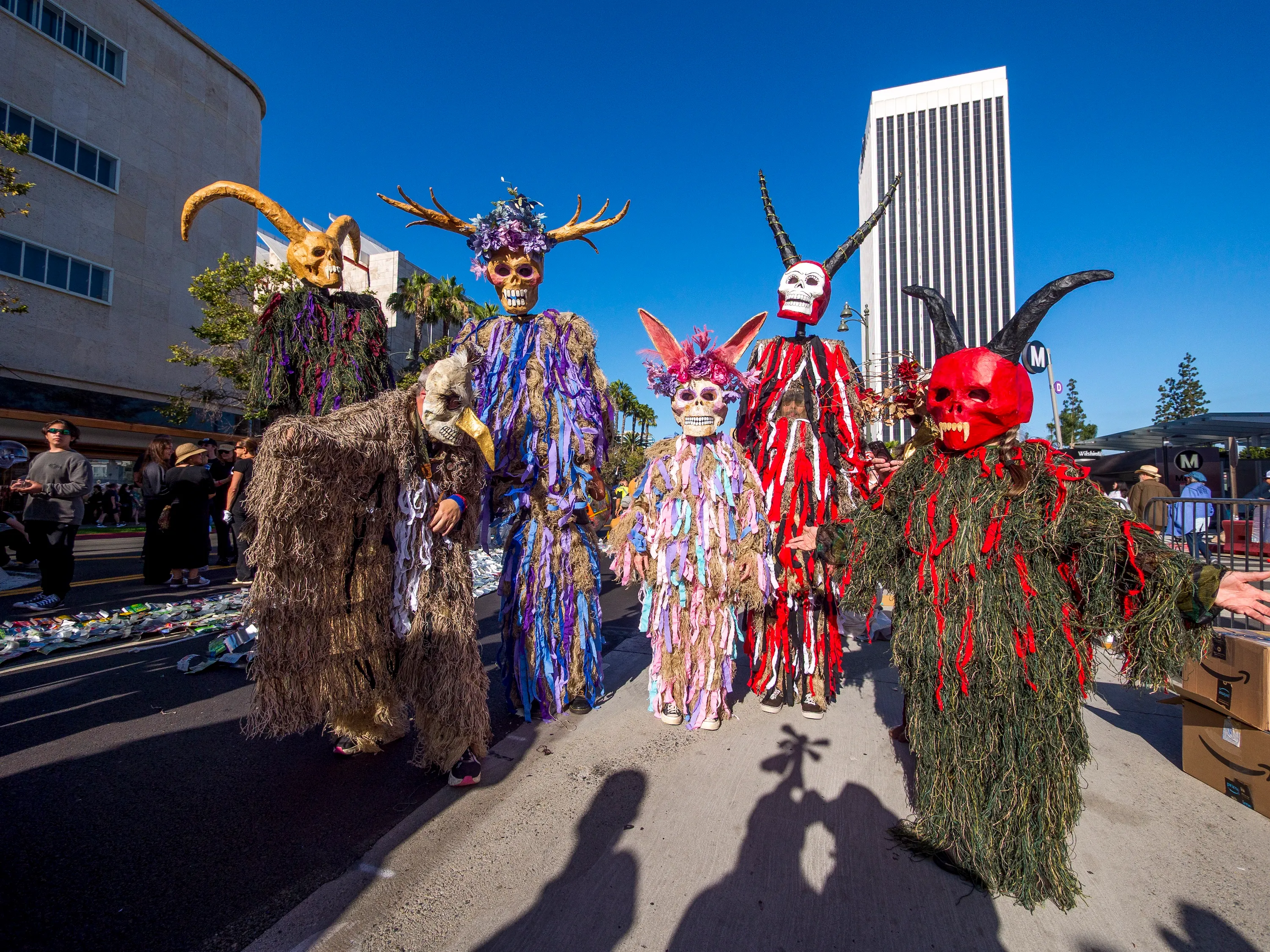
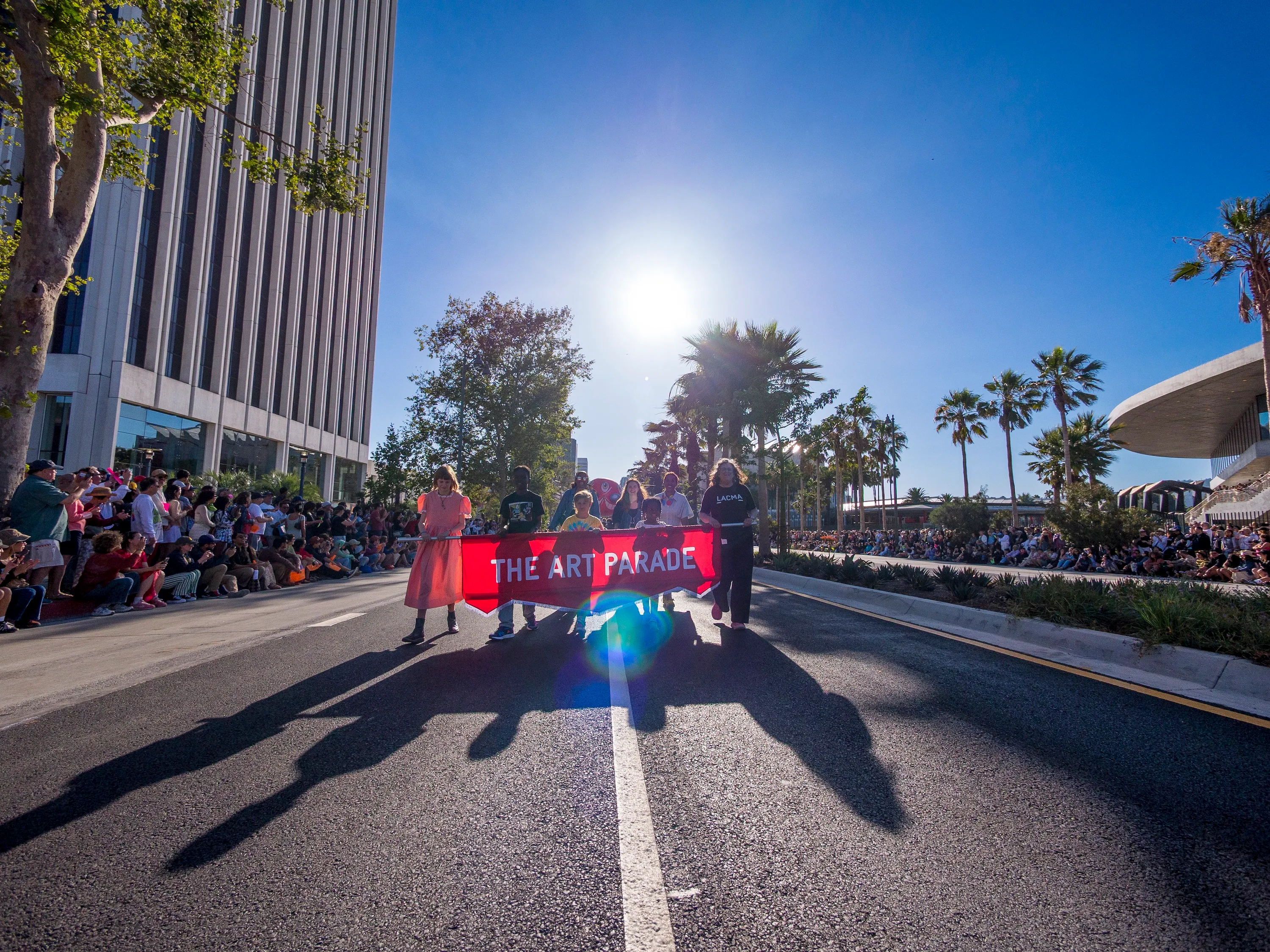
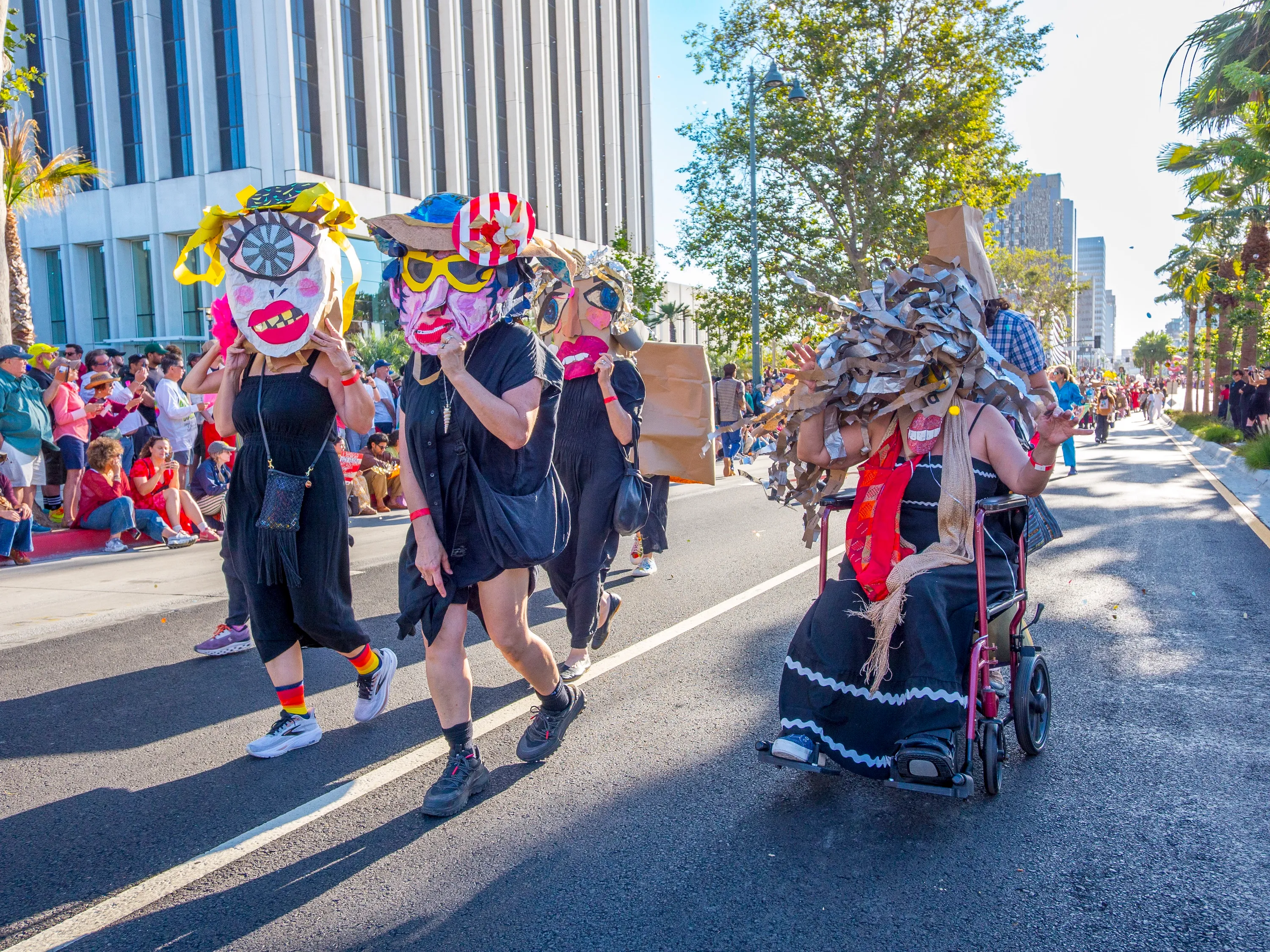
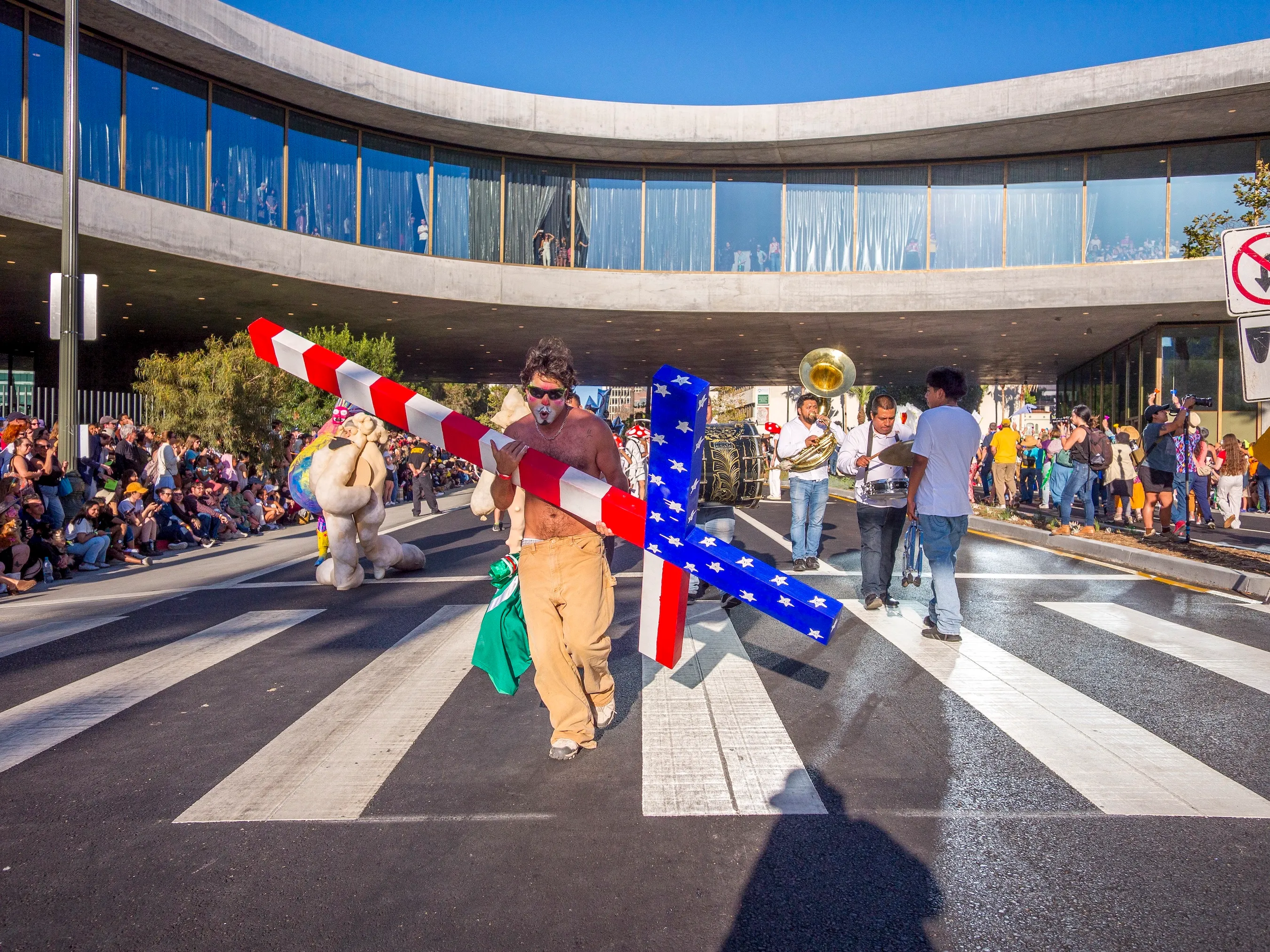
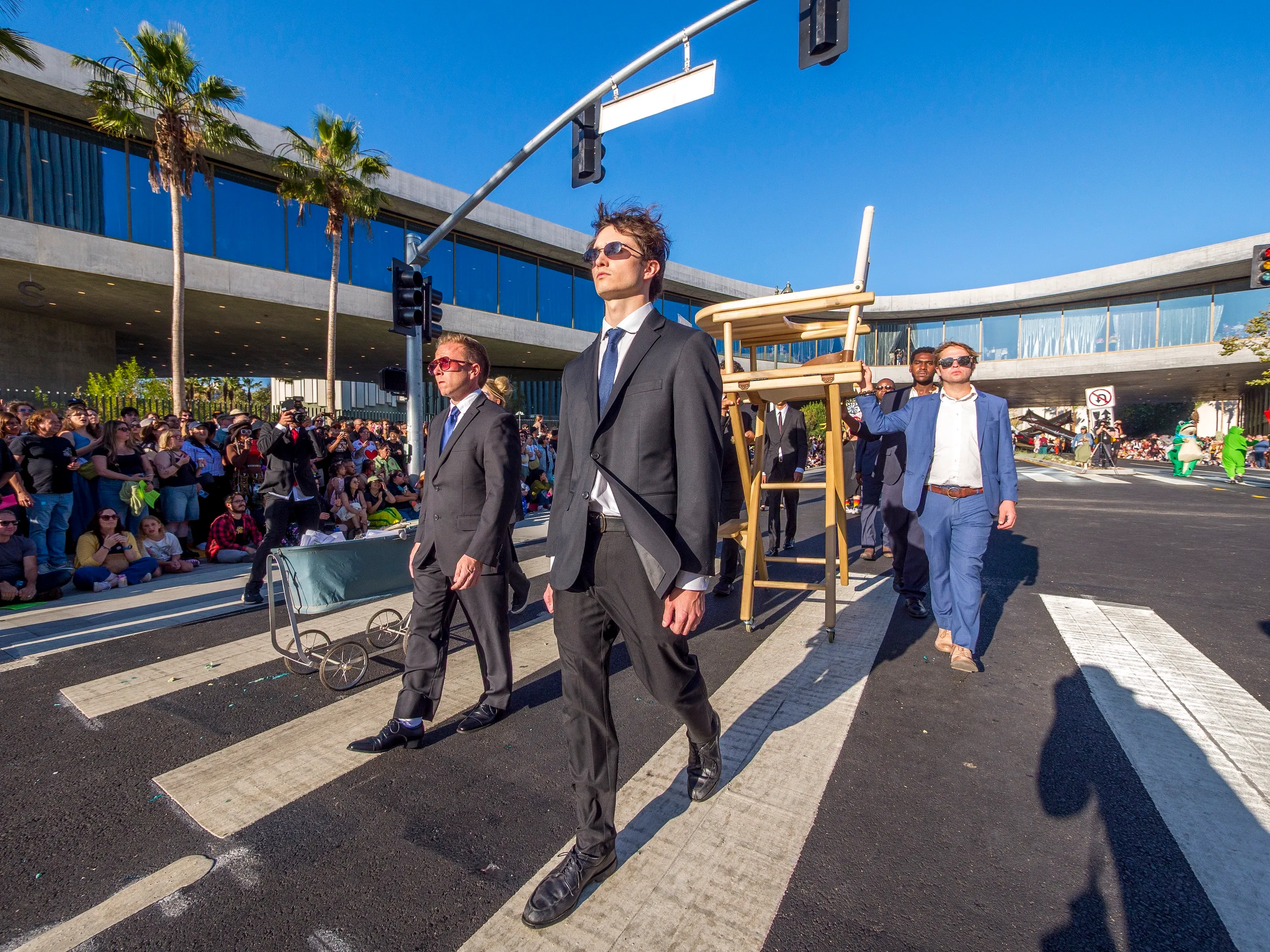
The following day, his Art Parade, featuring 146 projects with more than 1,600 participants, will take over Wilshire Boulevard outside LACMA’s newly opened David Geffen Galleries. The veteran gallerist staged the first iterations of his annual Art Parade in New York City from 2005 to 2008, and Saturday marks the event’s much-anticipated LA debut.
How did you come up with the idea for the Art Parade originally?
For a long time, I’ve been interested in the parade as an art medium. I love the tradition of Carnival in Rio and the Love Parade in Berlin. So it’s a natural extension of my interest in art that’s inclusive and connects with the public. We often put on exhibitions at the gallery that are participatory. Yoko Ono is just one example. We’ve shown her work a number of times at the New York galleries.
Another reason I wanted to do the Art Parade is that we had a very active gallery in New York City in the 2000s, and almost weekly, artists would come to us with proposals for things they wanted to show. And even though I had two spaces, we only really had slots for maybe ten shows a year. We had so many interesting proposals, and I thought, what can I do? What kind of structure can we put together where we can say yes to everybody instead of saying no?
A parade?
Everybody can be in the parade! In New York, we did say yes to everybody; no one who applied was rejected. Here, we’re working in collaboration with LACMA, and their curators are more rigorous than I am. Even so, most of the people we said no to here had projects that weren’t appropriate for a parade: painters with canvases, bands that needed a stage.
Do you have any favorite performances from those first parades?
I would say Kembra Pfahler and The Voluptuous Horror of Karen Black. There was also a group of women artists who had been doing projects in the gallery and who organized a bicycle troupe. They all painted themselves gold, and it was spectacular. Steve Powers did an inflatable of one of those classic New York City 1980s stretch limousines. The parade ended with a performance by the Dazzle Dancers. It was all very visually impressive.
The parade was featured on your TV show ArtStar, right?
Yes, we had this short-lived reality TV program, and the culmination of the project was the Art Parade.
That project seemed to anticipate so much about our current culture, like the preoccupation with documentation and the focus on content production. Of course, Miracle Mile in the middle of LA today is very different from SoHo in the early aughts. What made you decide to bring the parade to the West Coast?
I came to Los Angeles in 2010, and as the director of MOCA, the most frequent question I received was: “When are you bringing the art parade to Los Angeles?” I should have done it earlier, but there was a lot going on with the museum, and then with the four galleries. I actually started planning one a few years ago, and had finally received permission to do it on Hollywood Boulevard, but then Michael Govan, the director of LACMA, reached out and asked if I would consider moving it there as part of the celebration of the new building and new Metro D line.
How many projects will there be, and are there any artists you’re especially excited about?
One hundred fifty or more projects, and altogether maybe a thousand participants. I’m particularly enthusiastic about Madeline Hollander’s performance. I first met Madeline when Urs Fischer asked her to be the choreographer for his exhibition, Play, with the robot chairs. She choreographed the chairs, and then we did a show with her. She’ll be doing a dance with inflatables tomorrow that I’m really very excited about. So there are professional artists, and then there are, for example, a mother and daughter from the San Fernando Valley who wrote in with an idea.
I love that.
There will be puppets and live bands. One of my oldest artist friends, Kenny Scharf, is going to be pushing his famous customized Cadillac from the Petersen Automotive Museum down the street. We don’t want anything automated; everything is human-powered.
The parade arrives just before July 4 and the celebration of the country’s 250th anniversary. Does that give this edition a particularly political register?
That’s inevitable today. It’s an open platform. And just like all art, some works have a direct political message, others have more subtle ones, still others are just about celebrating art and life, which can be read as political as well.
That reminds me of Audre Lorde, and her affirmation that joy is an act of resistance. How do you think about artists’ ability or responsibility to meet, so to speak, our socio-political moment?
It’s a topic of constant discussion. What we do here is continue our ambitious programming, push our cultural excellence so that it keeps the pressure on public institutions. We’re foremost a platform for artists, so if an artist wants to do something sharper politically, we give them a place to do so. I think progressive art has an inherently political objective that has to do with openness to new ideas, tolerance, a celebration of what is human.
Who could have predicted even a few years ago how critical that last part would be? Community also seems to be important not only to the parade but also to your approach to running a gallery. Coming from New York City, I have to admit to finding things here a little isolating still.
Come to more openings! A lot of people in creative fields come to Los Angeles knowing almost nobody. They come because they want to participate in this cultural energy. Our openings here at the gallery have become really quite amazing for gathering people. Last fall, we had 3,000 people visit in a single night. I hope, of course, that we’re doing some exciting things that people want to see, but I think a lot of it is because we’ve become a place where people can connect. If you’re a creative person here and maybe you know two or three people in the city, well, you can meet them here, or you can come and strike up a conversation with other like-minded people. Something that I’m very proud of is that two very prominent people in the Los Angeles art community met at one of our openings and have since gotten married.
It sounds like you have a lot of affection for the city.
Well, I’ve been coming to LA since the 1970s. It’s the place where culture is created, and where art, music, film, and fashion all run together. I like the high culture: the excellence of the LA Philharmonic, all the great artists, and museums and galleries. But I also really like the culture that comes out of the streets, and a number of our shows here open up to that. I feel that by having a gallery here, I can really make a contribution to the culture of the city: have a meaningful impact. That’s to say nothing of the beautiful climate and geography.
I know there’s been a thriving art scene here for much longer than most people outside of LA really appreciate, but it does seem that in the last few years there’s been a new surge of energy—and now with LACMA opening.
Oh, definitely. It’s all incredibly exciting. I heard that they have 20,000 RSVPs for the Black Party Saturday. Michael Govan’s idea of LACMA as the town square seems to be totally happening.
A parade is such a great way to make art accessible and personal to people who otherwise feel excluded or intimidated by art spaces. Besides welcome, is there anything else you hope that people walk away from the experience feeling?
Oh, you know, inspired, happy, maybe with a new appreciation for how art can connect us.
Important always, but perhaps, especially now. Last question, I heard that there’s already a future parade in the works. Can you tell me a little about it?
We’re going to make this a biennial event and are already starting to gear up for 2028, so we have plenty of time to prepare. We’re hoping to confirm funding so that we can have more elaborate floats and invite artists from different cities and countries. This year it’s very local, but we have ambitious ideas for what comes next.
Stay up-to-date with exclusive events and content.


