F L A U N T


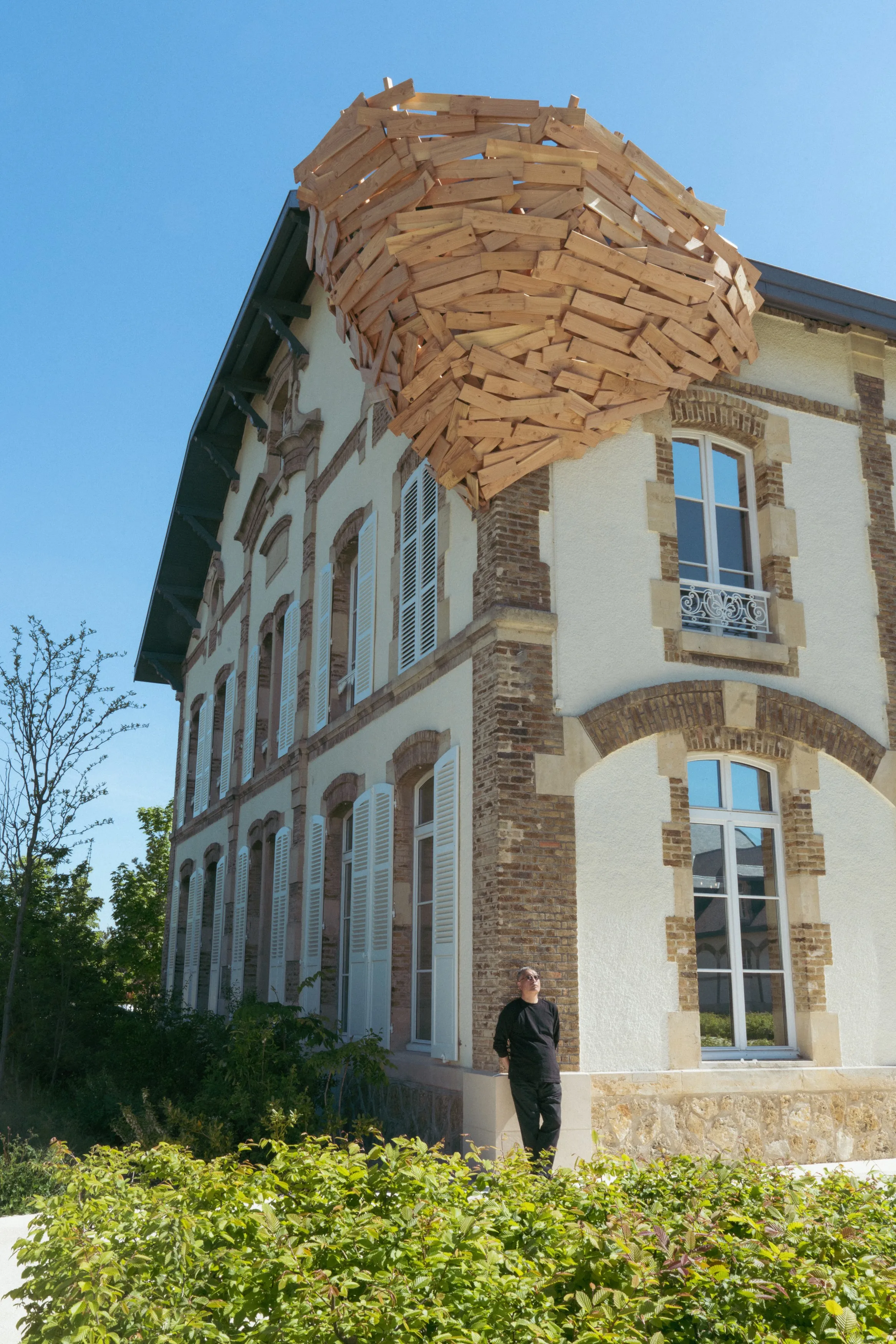
For Maison Ruinart’s annual Conversations with Nature, an international series inviting artists to reimagine humanity's relationship with the world around us, acclaimed Japanese artist Tadashi Kawamata asks us to return home to the natural world, to see the outside as more than just a place we can visit. For the oldest champagne house, whose identity has always been inseparable from the land, this connection to the earth lies at the heart of its history and philosophy.
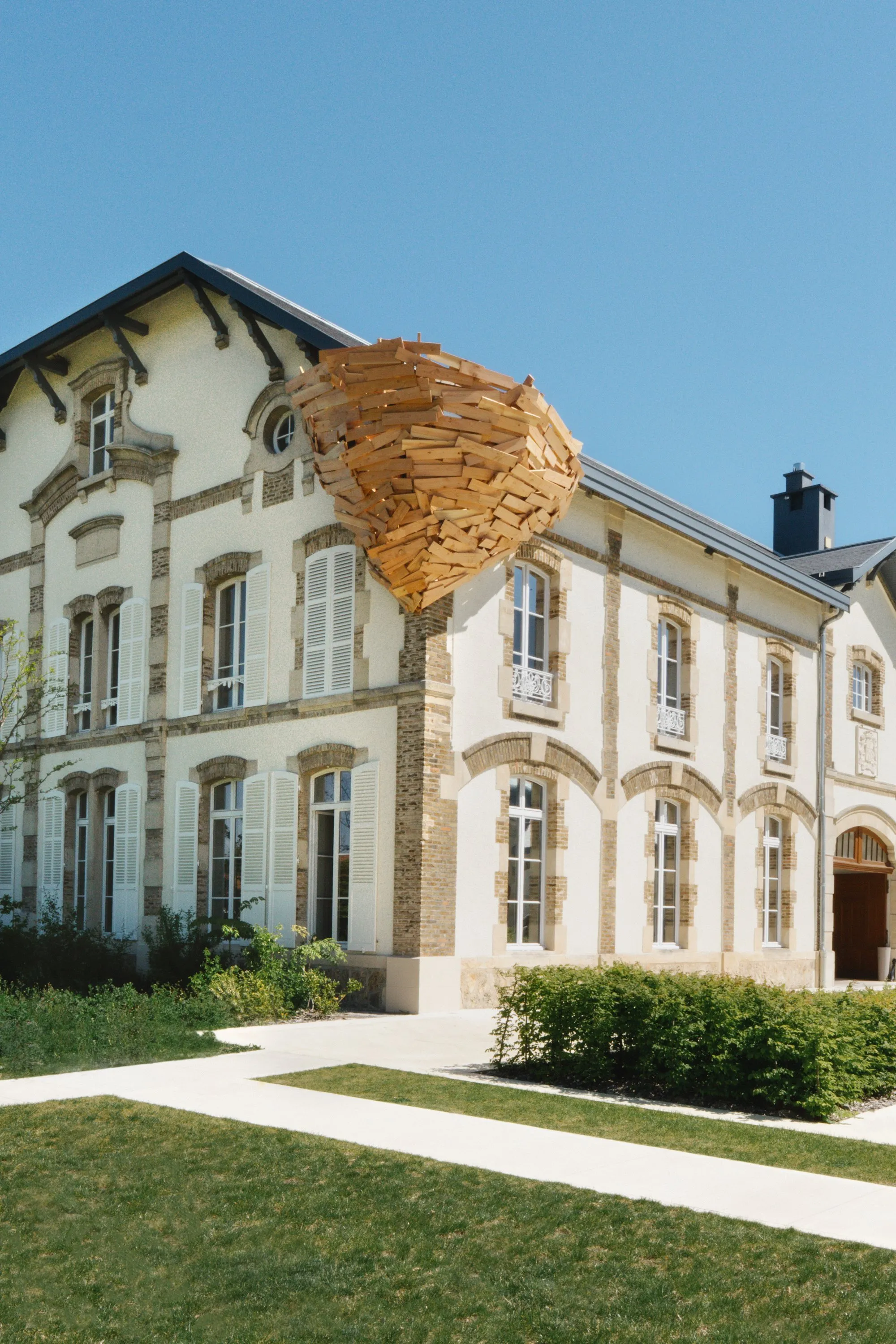
This year, Kawamata unveiled three site-specific installations across Ruinart’s historic estate in Reims. Each work dissolves the perceived boundary between the built and the organic, transcending the traditional idea of architecture and seeing nature as something separate from ourselves.
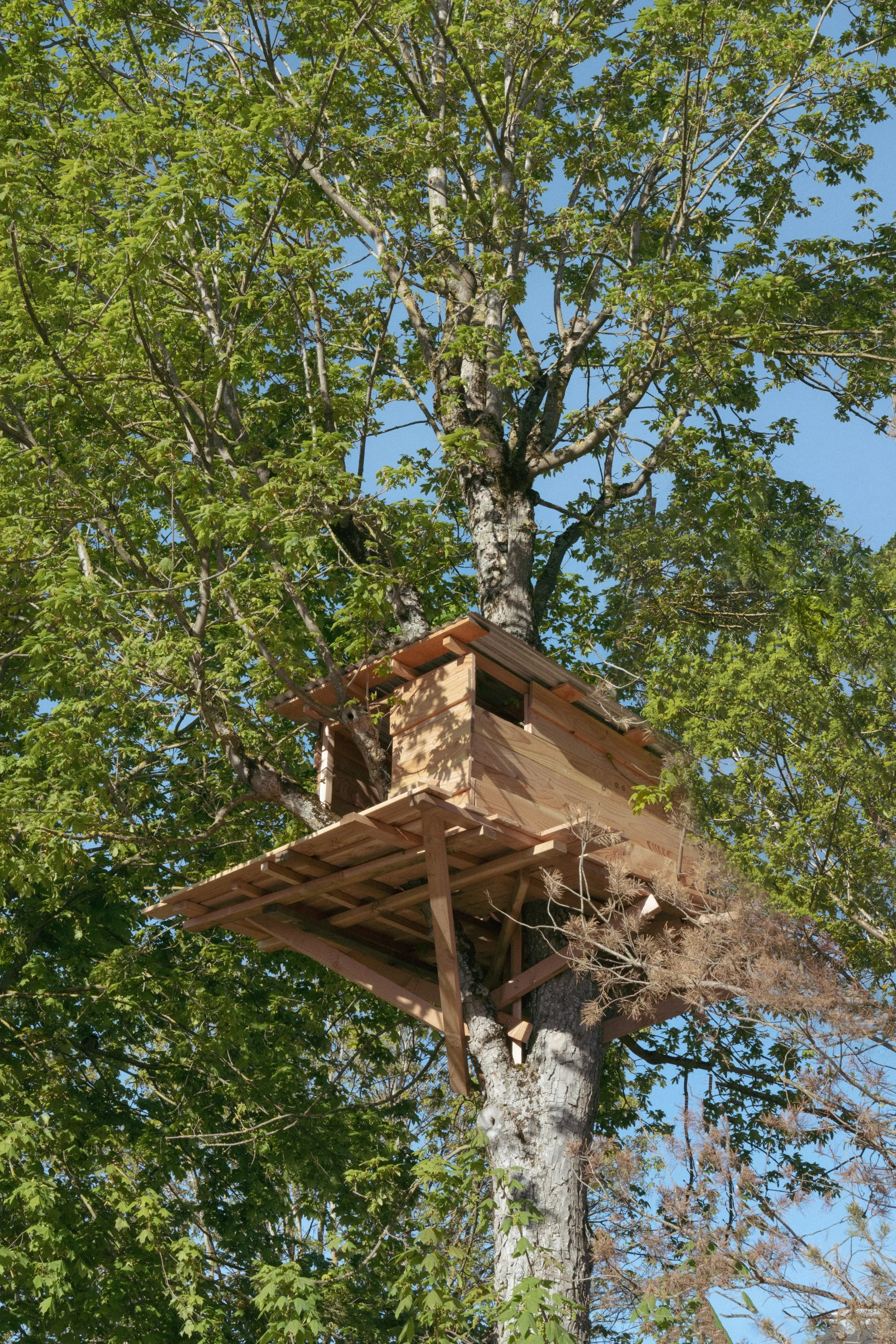
The first, “Nest,” rises as an elevated refuge woven from reclaimed timber, recalling both a bird's shelter and a place of quiet contemplation. Nearby, “Tree Hut” wraps itself around a living tree, designed to grow alongside it, acknowledging that the structure's final form will ultimately be shaped by the life it supports. Completing the trilogy is “Observatory,” a soaring lookout tower that lifts visitors into the canopy, offering a rare shift in perspective where the landscape is experienced from a bird’s-eye view.
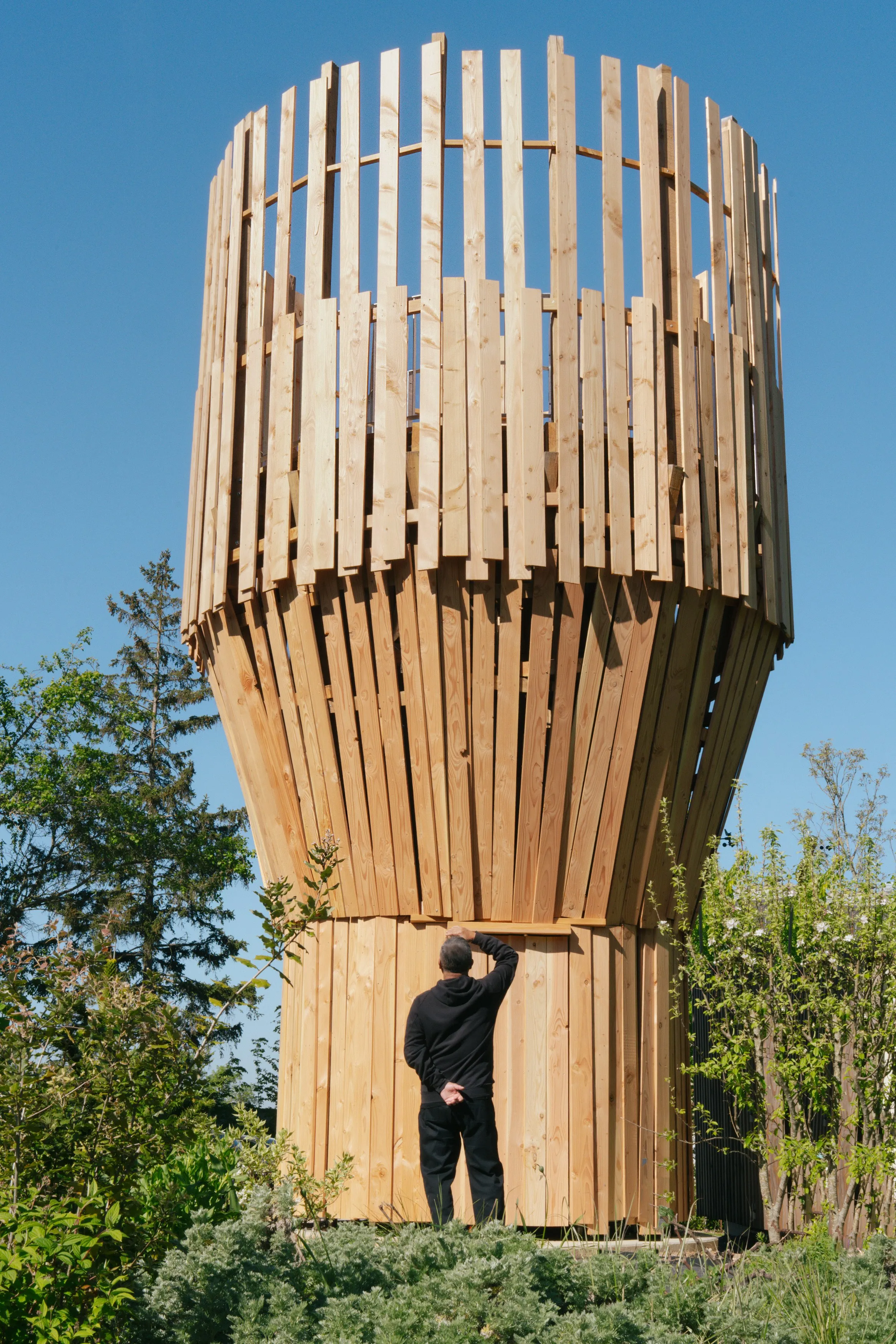
Though now permanent fixtures within Ruinart's grounds, the installations resist the idea of permanence as stasis. They will weather, age, and evolve in constant dialogue with their surroundings, recording the subtle shifts of climate, vegetation, and light. And it is in these grand and minute subtleties where Kawamata does not let meaning stay fixed, as each work is continually rewritten by the landscape itself.
“I need moments of walking, silence, and observation,” Kawamata tells me. “These moments allow me to slow down and become aware of small things, the sound of wind, the movement of leaves, and changes in light. This awareness naturally enters the work. I hope the installations can create a similar pause for visitors and offer a way to become more receptive to what is already there.”
What already exists at Ruinart is a long history of endurance, cultivation, and renewal. But in Reims, alongside the bottles resting in the Maison’s Crayères, Kawamata’s installation becomes part of that same living continuum. See here, a few quiet moments with Tadashi Kawamata as he reflects on how humans, architecture, and art are all part of the same living cycle: to endure, adapt, transcend, and return.
There is such a division and connotation between the indoors, as safe and secure, and the outside, as unpredictable and at times feral. How do you relate to the idea of returning to Nature as "home." And does the feeling or idea of home transcend the idea of architecture for you personally?
I think this division between indoors and outdoors is something we construct more than something that truly exists. We often imagine the inside as protected, and the outside as uncertain, but in reality, both conditions are always present.
Home is not limited to architecture. It is more about the feeling of refuge, trust, and attention. A nest, for example, is very simple, but it carries a strong sense of belonging. Nature can offer that same feeling, which is not always comfort but a deeper sense of orientation and connection. So, in that sense, home begins before architecture.
In rural spaces, like the Ruinart vineyards, my process often involves a deeper immersion in the existing natural elements. I might emphasize the organic integration of structures, drawing inspiration directly from the surrounding trees, earth, and light. When I approach a landscape, whether it's the vineyards of Ruinart or an urban setting, I look for inherent character, hidden narratives, and subtle vibrations. I seek to understand the landscape’s history, its relationship with human presence, and its natural cycles. I'm drawn to the elements – the light, the wind, the sounds, the textures – and how they interact with the space.
Nature is so grand yet intimate and universal. And each of your works invites close looking as much as distant viewing. How do you think about scale in relation to intimacy in your pieces?
Scale is very important because it changes how we behave. When something is large, we often become quieter and are in awe. When something is small, we move closer and look more inquisitively. Intimacy is not only about size. It comes from attention. If a work makes you notice a small detail—a sound, a shadow, a movement—then it becomes intimate, even within a large scale.
When I make tree huts in the trees, people feel something in the air. Like a floating house, and the audience is not in the same position.
My installations subtly change our perception of space. By playing with different scales, great heights, emptiness, and fragile structures, they make us look again and pay attention to details that are often missed – shifts in light, the movement of the wind, and the presence of other living creatures.
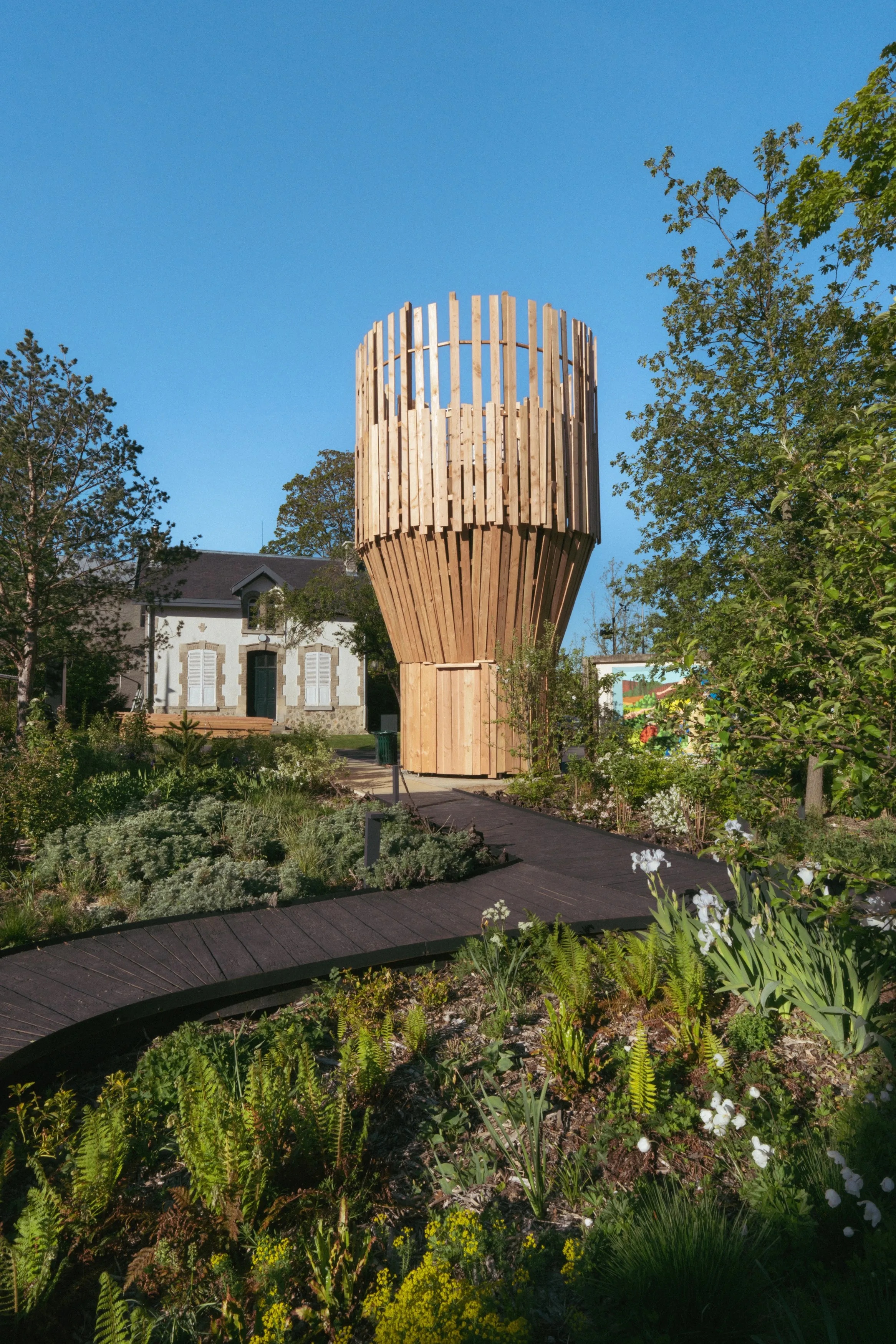
The works truly live outside and are informed and transformed by the elements. How do you think about the passing of time, light, and weathering as architectural materials in your works?
I consider natural elements as part of the construction process. The work is not finished when it is built. It continues to evolve with light, wind, humidity, and time. These forces introduce something I cannot fully control, and that is important to me. I prefer when a structure remains sensitive to its environment, so that it can respond, transform, and sometimes even become more fragile over time.
Working with wood allows for a certain simplicity and artisanal dimension. It is a material that anyone can cut or assemble, which makes it accessible for creating my structures. The ease comes from its natural adaptability and its inherent narrative. It carries its own history and transforms organically, which aligns with my artistic philosophy of impermanence.
The challenge, if one can call it that, is less about the material itself and more about ensuring that the ephemeral nature of my installations is understood. I don't seek to achieve static perfection, but rather to create works that will age, evolve, and ultimately transform with time and the elements. This means accepting and embracing its natural processes, rather than forcing it into a fixed state.
Nature is built to last or to at least endure, and art can be seen as proof of existence. How do you approach longevity, but also mortality, the circle of life, and the idea of always returning to the earth at the end in your practice?
In nature, everything changes. Things grow, transform, and disappear, and it is natural for art to follow the same cycle. The materials I use already carry a history, and they will continue to change after the work is completed. In this way, the work is never fixed; it remains part of a process. What matters is not resisting time but working with it. The experience of the work, how it makes someone feel, what it makes them notice, can remain even as the structure itself evolves or eventually returns to the earth.
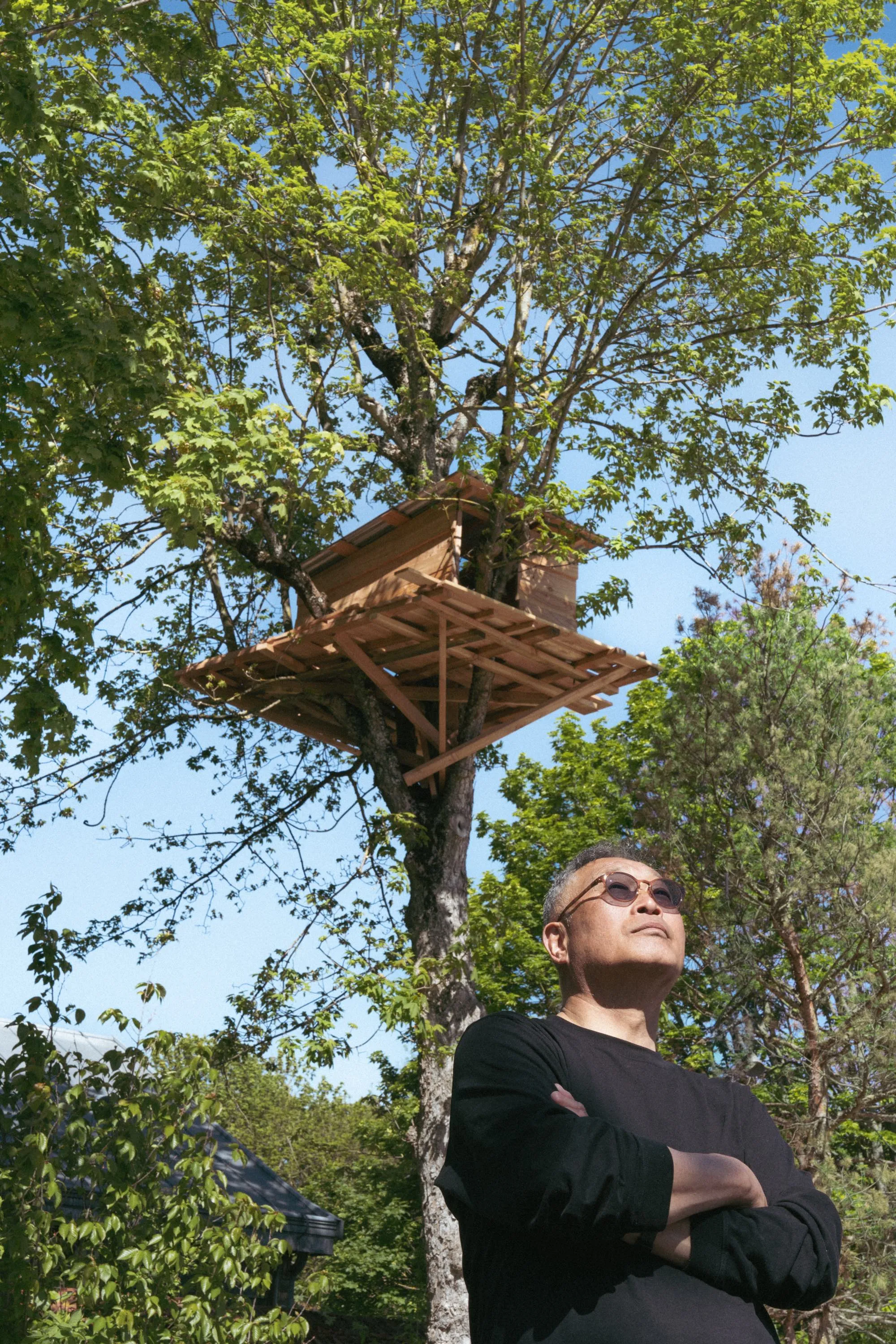
Photographed by Victoria E. Paternó
Stay up-to-date with exclusive events and content.


