F L A U N T


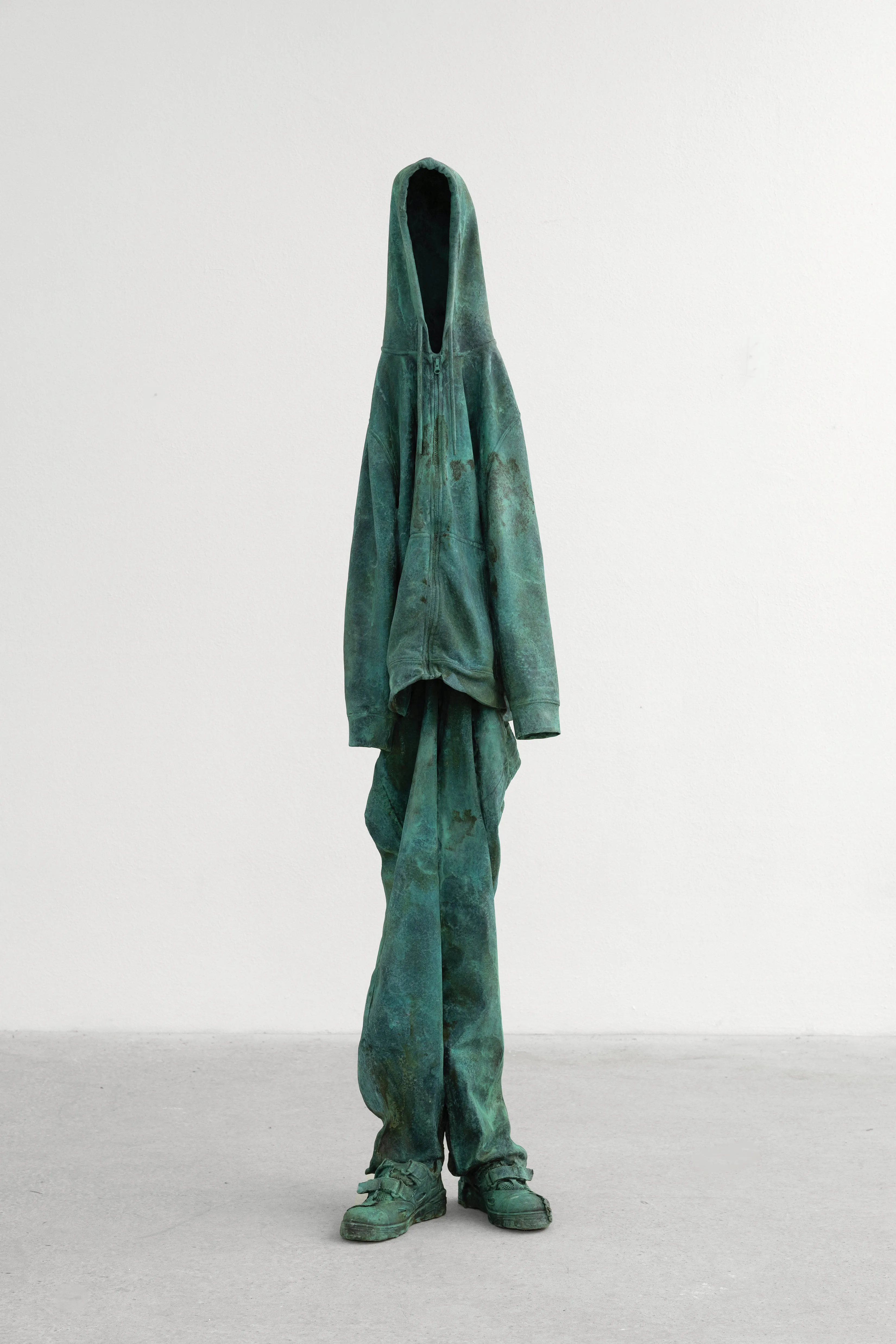
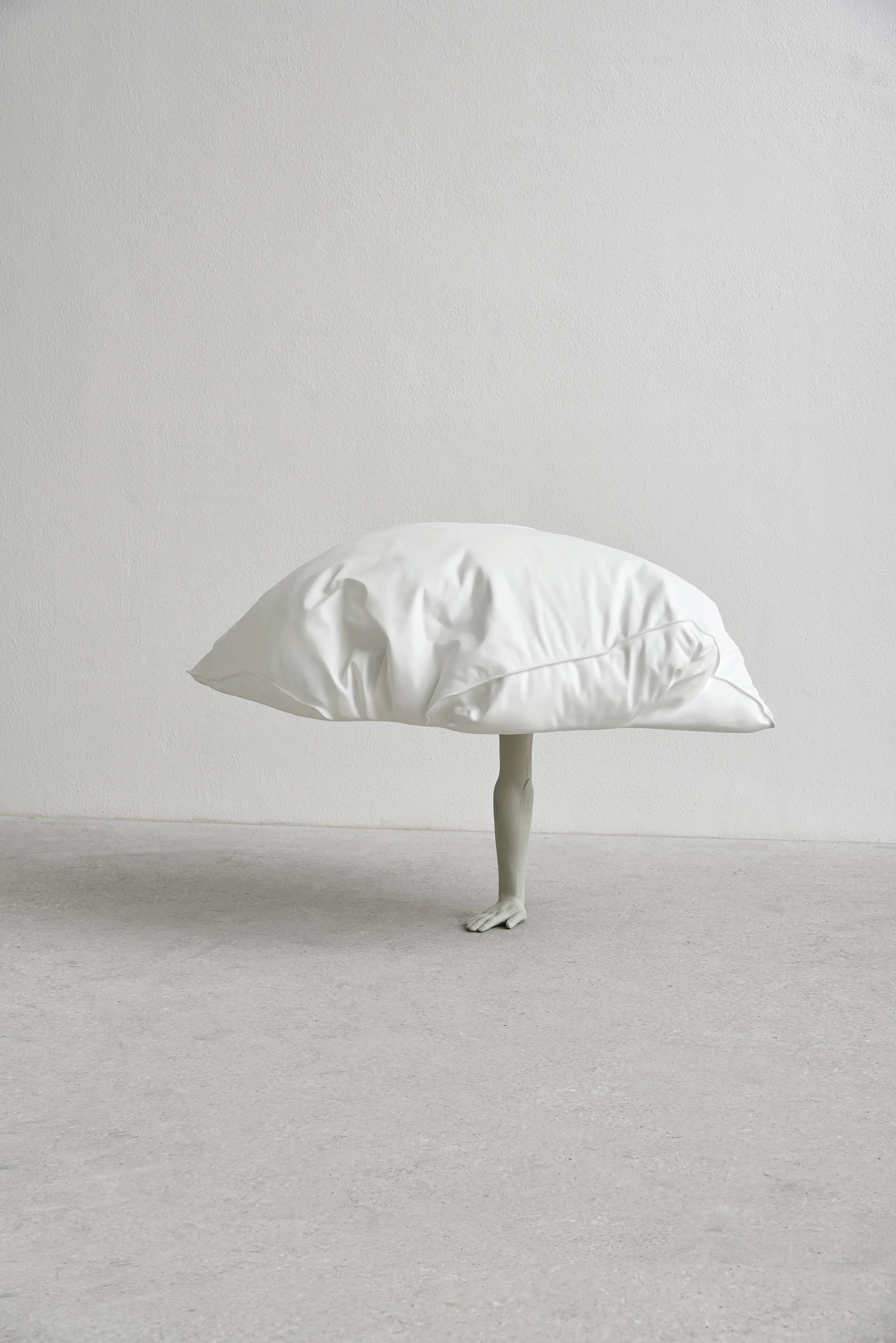
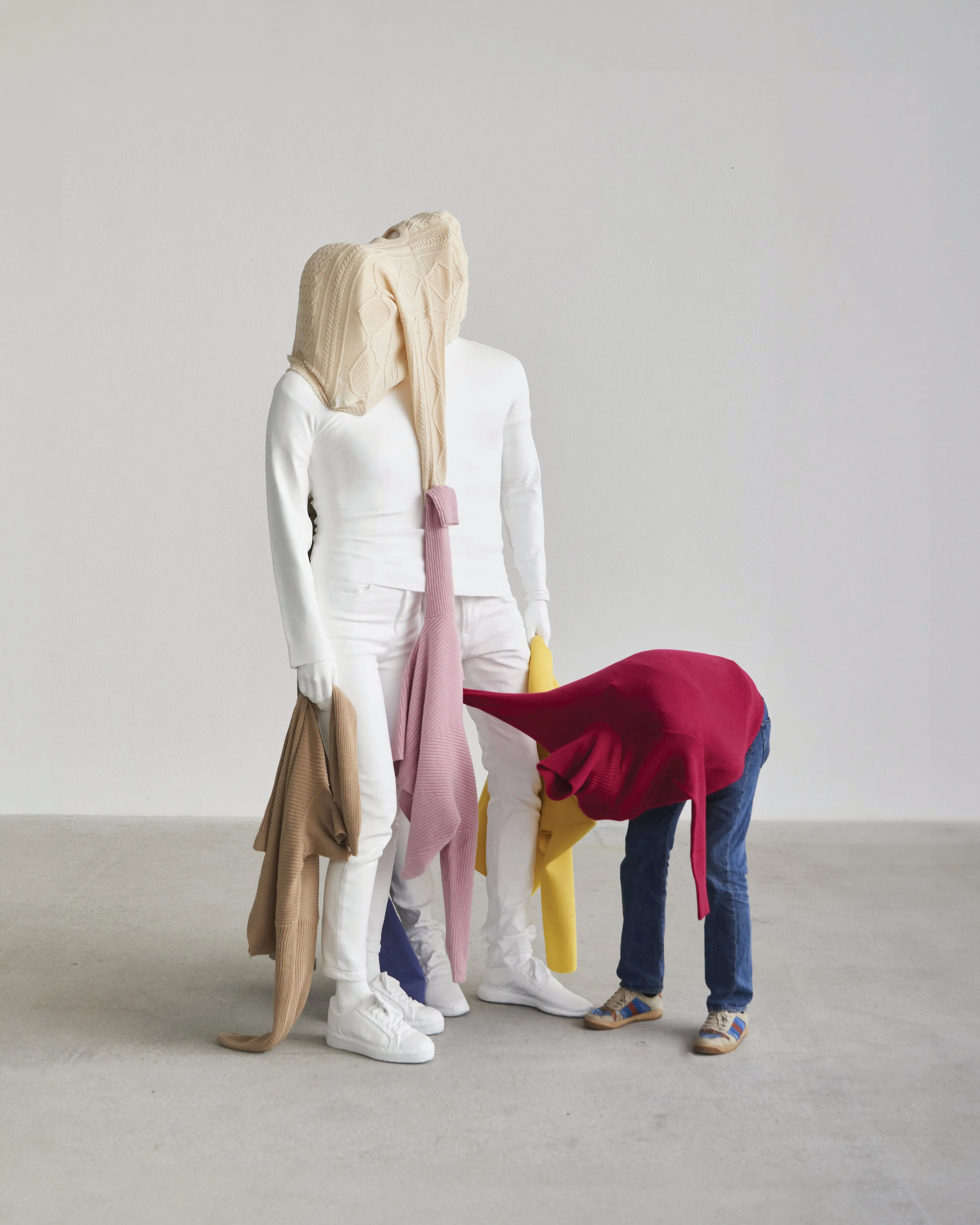
Walk into Lehmann Maupin’s Chelsea gallery this spring and the first thing you encounter is a small crowd of bright figures suspended mid-motion: a pink suit with arms tucked at the sides, pairs of suits and trousers caught as if animated by wind, a low horizontal piece called “Fallen Falls (Substitutes)” (2025) that occupies the wall like a wave that has decided to lie down. None of the figures have a head. Elsewhere, two larger sculptures have legs but are capped by an enormous pillow where the upper body should be. One stands confident, bearing the weight of its cushion like an assistant helping a heavy guest into bed. The other hugs its legs tightly, two pillows stacked; the posture feels closer to an apology. They are called “Nurse” and “Double Dream” (both 2026). The show is called Double Dream, Erwin Wurm’s first solo presentation in New York in five years.
“We have a huge mirror wall in our flat with a word written on it: ‘deep,’” Wurm tells me when I ask him about the doubling—of bodies, of cities, of exhibitions. Double Dream opens alongside “Dreamers,” his solo at the Museo Fortuny in Venice, timed to the Biennale. “When you look into its depth, you see the space doubled, and you see yourself doubled. It reflects a certain reality.” He has been reading about cosmology lately, he says. “They say now that a doubling universe is possible. And then there’s the dream—I’m from Vienna, and Sigmund Freud grew up and worked there. So the dream was always an important story, for him, and for us, and for me. Dreaming means, in a way, both escaping reality and reflecting it at the same time.”
Wurm has spent 40 years making objects that perform that double act. The early One Minute Sculptures turned viewers themselves into temporary statuary by way of brief, instructed poses; the fat cars and bloated houses of the 2000s rendered consumption as form; the Substitutes, which he began in 2022, hollowed out the human figure altogether. The new Dreamers continue that lineage but in a more psychologically intricate key. Here, the body has either withdrawn into sleep or vacated the premises entirely. What remains is an empty promise of flesh, a color block, an imitation of fashion. Nothing identifies the missing figure, and yet the missing figure is, in each work, oddly haunting.
“One of the threads running through my work is absurdity,” Wurm says when pressed on the pillow heads. “I try to look at our reality, at our world, from the perspective of the absurd, because I thought maybe then we see something else. And it’s true—you do see something else.” Reality, in his account, is already strange enough; the absurd is what allows you to register the strangeness. “We still have the possibility to drift somewhere else through the dream, or through the act of looking at our reality from a different angle, which reveals something new.” The absurd, in Wurm’s idiom, is not a destination but an instrument or a lens that bends the ordinary back into view. “It’s a game with our perception of ourselves, of the world, of our lives,” he says, “and that perception is constantly changing.”
In Double Dream, domestic interior is translated into sculpture: cushions, dress socks, the particular pink of an afternoon bedroom. I ask whether home, as setting, theme, or a structure of feeling, has become a kind of recurring problem in the work. “Yes—home, but home also means a certain mental state,” Wurm answers, and then he reaches for a German word, Zustände, which means fluctuating states. “Home is something that can be described very simply, but also something that widens out enormously. It’s not just the house where I live. Our planet is home for us; our universe is home for us. Home is related to our connection to the things we love.” It is a generous redefinition, and it complicates the easy reading of the Dreamers as figures of retreat. The dreamer is not necessarily hiding. The dreamer may be home.
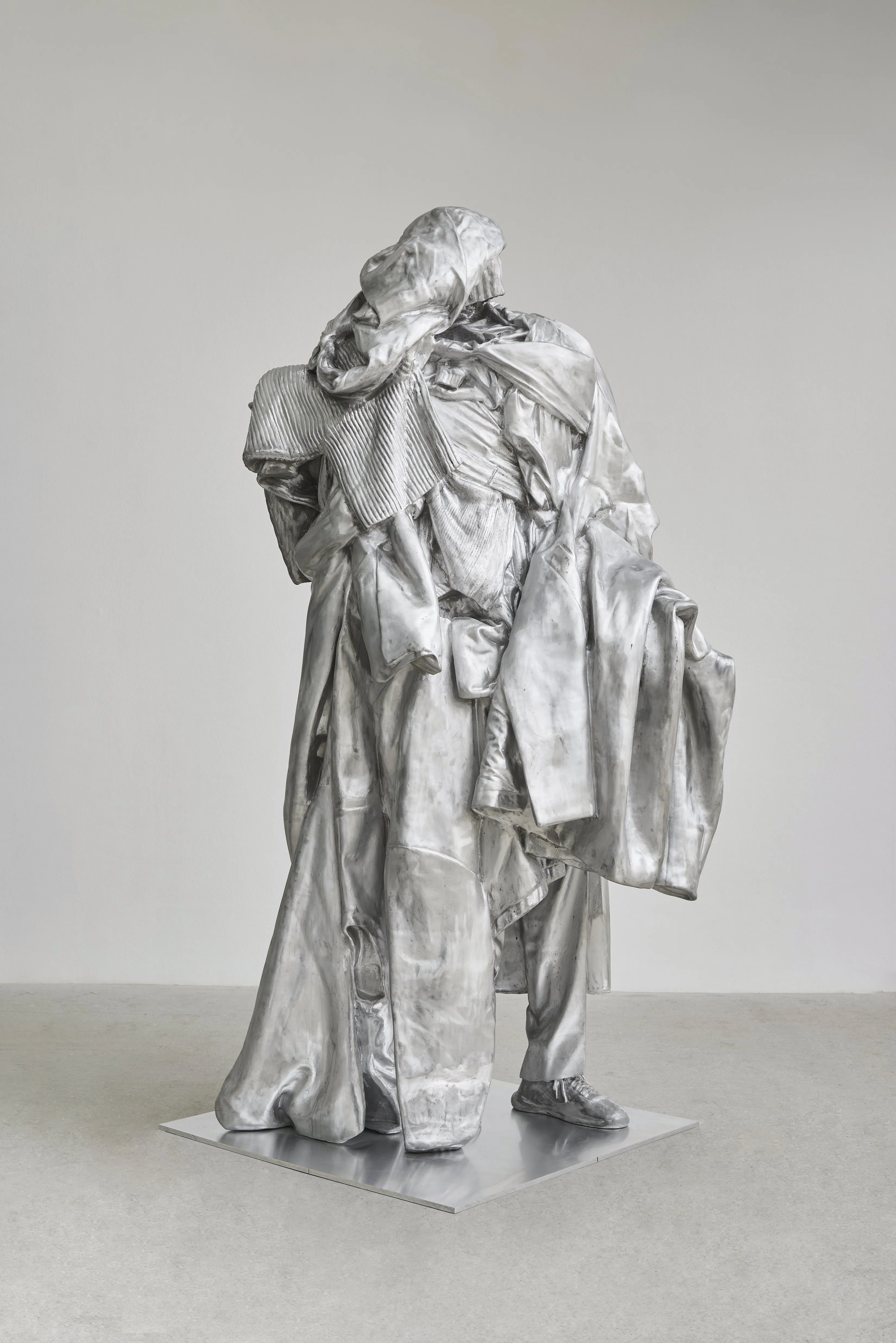
What Wurm has always insisted, and what is harder to see in the work the first time one encounters it, is that the sculptures are arguments about sculpture itself. He arrived at clothing through his fascination with the history of sculpture. “When we look at classical Roman or Greek sculptures, they show massive bodies of goddesses, horses, warriors,” he says. “But those bodies are defined only by a very thin layer of skin, a bronze skin. They’re empty inside. And then I realized: that’s a skin, and clothing is our second skin. So why not start working with clothes?” The Substitutes, cast in painted aluminum, literalize the conceit. From a distance, they read as fabric. Up close, they reveal themselves as solid metal, in the attire and posture of a person you might pass on Tenth Avenue.
The slip from classical to contemporary, from warrior to office worker, is where the work’s social register opens. Yet Wurm is reluctant to over-read it. “Consumerism and capitalism are certainly a big part of it,” he says. “But there’s also a certain poetry in the contact with daily life. We’re surrounded by all these things we use without consciously seeing them anymore—they’ve become too normal. But when you step aside and look at them from the perspective of the absurd, you suddenly see them again, because you’re approaching them from a different angle. A chair can suddenly become very interesting, or a pen, or glasses, or a bottle.” He discovered the world anew through this method, he says. “And that’s exciting.”
This method has the lightness of a joke. Wurm’s humor has been remarked on so often that it occasionally seems we are unsure whether to celebrate or apologize for it. He is unapologetic. “Comedy and science fiction are both big things in my work—graphic novels, cartoons, and so on,” he says. He grew up in the 50s and 60s, when comics were prohibited in his household. “We read them in secret, under the bed, under the sheets. But they really influenced me. Science fiction especially offered a way out of our reality—it was an escape. Reading was also that kind of escape.” When he was 13 or 14, he spent his pocket money on paperback books. “I was alone there, in that world. My parents couldn’t follow me, nor my sister, nor my friends. It was an empty space where I could create and follow my own ideas. It was a safe space.”
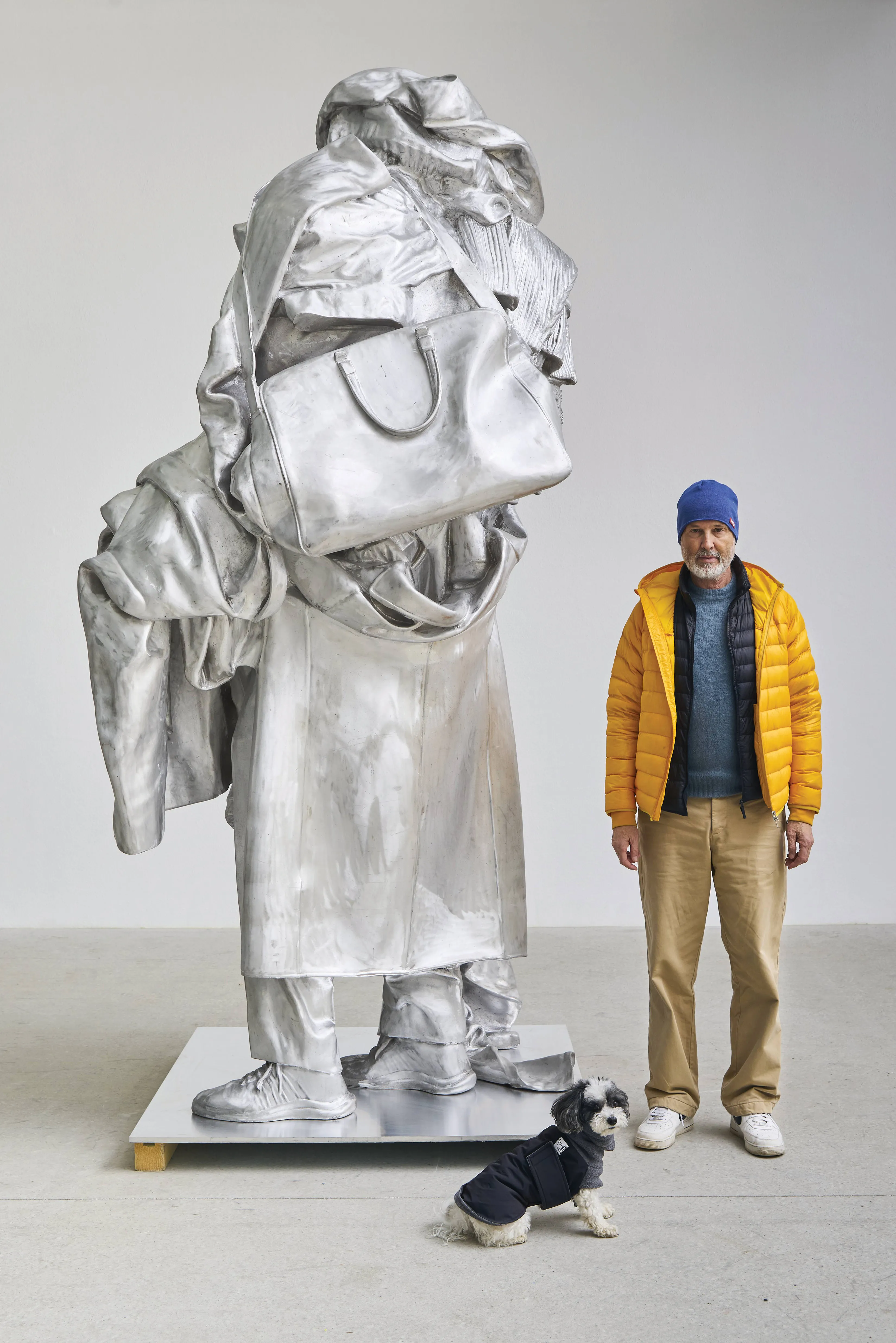
That description sits oddly close to a description of the Substitutes themselves. The clothes and pillows are empty spaces; the dreamers’ interiority has vanished out of the room. To read the work this way is to see Wurm as a sculptor of vacancies, the small, here-and-there vacancies that human beings occasionally need in order to keep being human. They are vacancies that, in the present economy of constant address, have become increasingly difficult to hold.
This is, of course, also a strategy. The dreamers are not only retreating; they are looking sideways at a present they do not entirely want to accept. When I ask Wurm whether his recent return to science fiction’s vocabulary has anything to do with the future and whether escape, in a moment of climate catastrophe and accelerating political failure, remains a tenable artistic position, he muses on the unique consciousness that we must dream up to get to the future we want. But we are yet to know what that consciousness is. The Dreamers stand in the gallery in their pillow heads, and the question of what they are dreaming, and whether any of the rest of us can afford to keep doing so, await for us to labor over. Perhaps that is the beauty of dreams.
Stay up-to-date with exclusive events and content.


