F L A U N T


1991. The World Wide Web’s irreversible debut. The Super Nintendo. Nirvana’s Nevermind. Rodney King. The Gulf War. The dissolution of the Soviet Union. A civilization perplexed by a rapidly evolving political, racial, and technological landscape, blindly ascending towards the limitless millenia. Though the passage of time has a way of pushing us so. It nudges us into a set of eyes with which, suddenly, we acquire a posture of privileged retrospection. Laws transform, and eventually, we are exasperated that such legislation ever existed. Ideas expand. Definitions change. Words—as sparse as they might be—change.
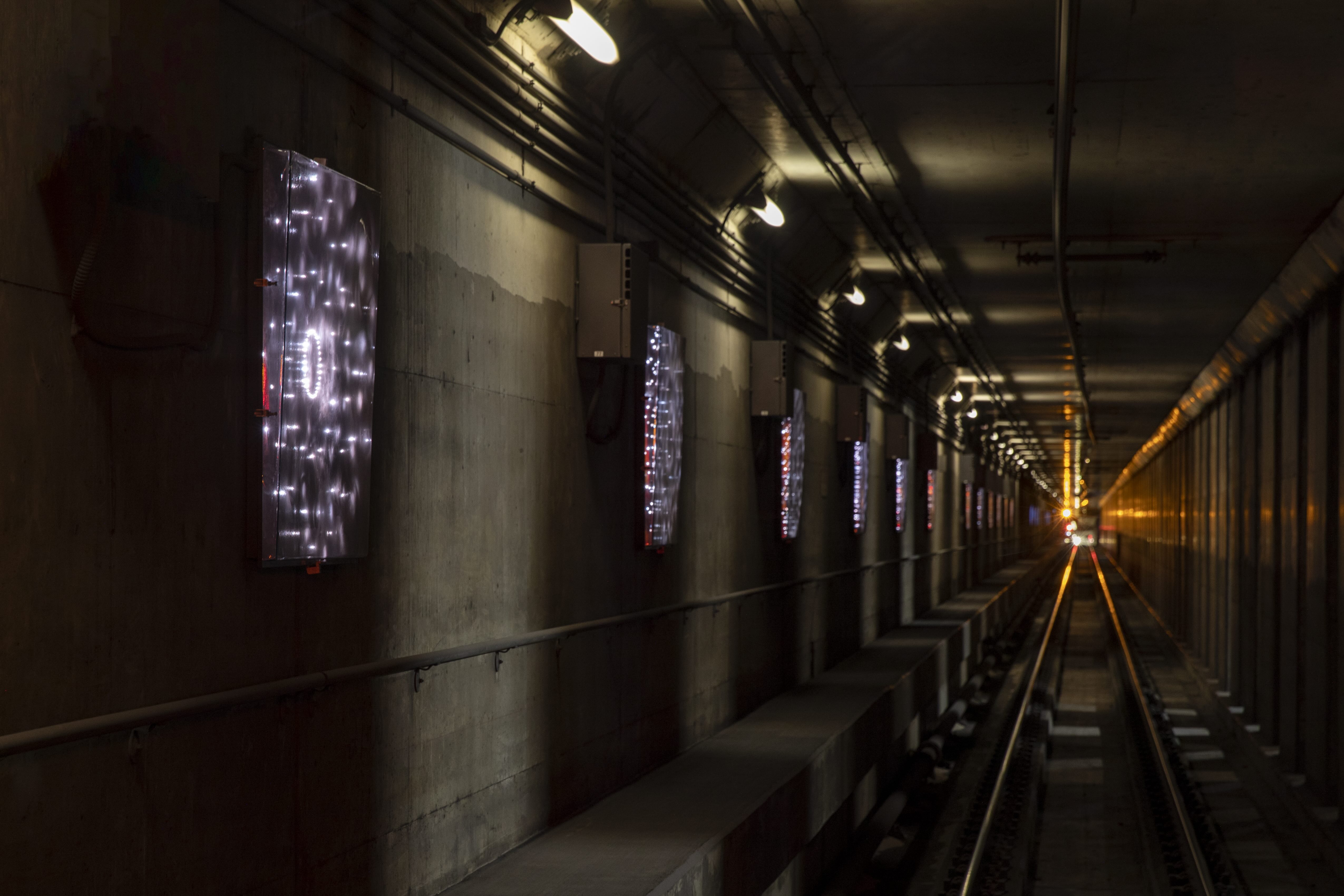
In 1991, Los Angeles artist Thomas Eatherton unveiled his luminous definition of the word “unity.” Only, this definition was not written. As a colorful series of hypnotizing, abstract light works lining a stretch of subterranean concrete walls, Eatherton’s Unity once glowed in an underground Metrolink tunnel for city dwellers to experience on their daily commutes, somewhere beneath 7th Street/Metro Center and Pico Station. Thirty feet beneath honking intersections, the collection was Eatherton’s first permanent piece—optimistically pulsating and fixed in the public’s curious, early 90’s gaze.
Although, after years of wear and tear, the work was taken off display. And in its withholding, a reminder of community retreated beneath the undertows of the Angelino consciousness.
Thirty-five years later, I make my way downtown towards Union Station with a notepad and pen. Because through Metro Art Program, Eatherton’s Unity has been immortalized into glowing for Metro riders once again.
There is a certain electricity in the passenger terminal when I arrive. That’s because the press sticks out like a sore thumb—huddling under the gargantuan City of Dreams/River of History mural, holding their cameras, microphones, and excited grins. Senior Director of Corporate Communications for the LA Metro Melissa Coleman greets me and lays out the plan for the afternoon. We are going to ride the train twice in a private car exclusive to the press and experience Eatherton’s revived work with the lights off. Leading our adventure beneath the belly of L.A. are Maya Emsden and Angelene Nelson-Campuzano—two pioneers at Los Angeles Metro whose passion for public art programs and community enrichment perfectly embodies Eatherton’s call to join arms.
Heading towards the platform, I stumble into Abby Sher—Los Angeles artist and philanthropist who co-founded the Santa Monica Museum of Art, now known as the Institute of Contemporary Art, Los Angeles. She was a long-time friend and collaborator of Eatherton’s, with whom she opened the SMMoA after stumbling across his work.
“He was responsible for the [ICLA’s] vision,” Sher says. She smiles, examining the cherished memory of her friend and his contributions to the light and space genre that she boards the metro to experience once again.
When I step onto the train, Maya—Executive Officer of the Metro Art Department—delivers a few remarks, outlining the masterful œuvre that Eatherton’s work surmises. Only, as she goes to speak, she begins to choke up.
“This all started in the early 1980s,” Maya says. “Mayor Bradley was preparing to have a metro system built. So [the Metro] started looking for ways to integrate artwork into the system. And in 1989, Metro finally codified an art program. Headed by Jessica Cusick, they commissioned Thomas Eatherton. With [Unity], he always talked about how important it was to see each piece from one’s unique perspective—that there is no one way to see it, that anyone’s perspective is a fine way to see it.”
Maya pauses. She looks around the Metro car, seeing years of passion come to focus before her.
“The [Metro Art Program] has become one of the largest public art programs in the country,” she says. “We are really proud of the teamwork and amazing artists that have been commissioned over the years.”
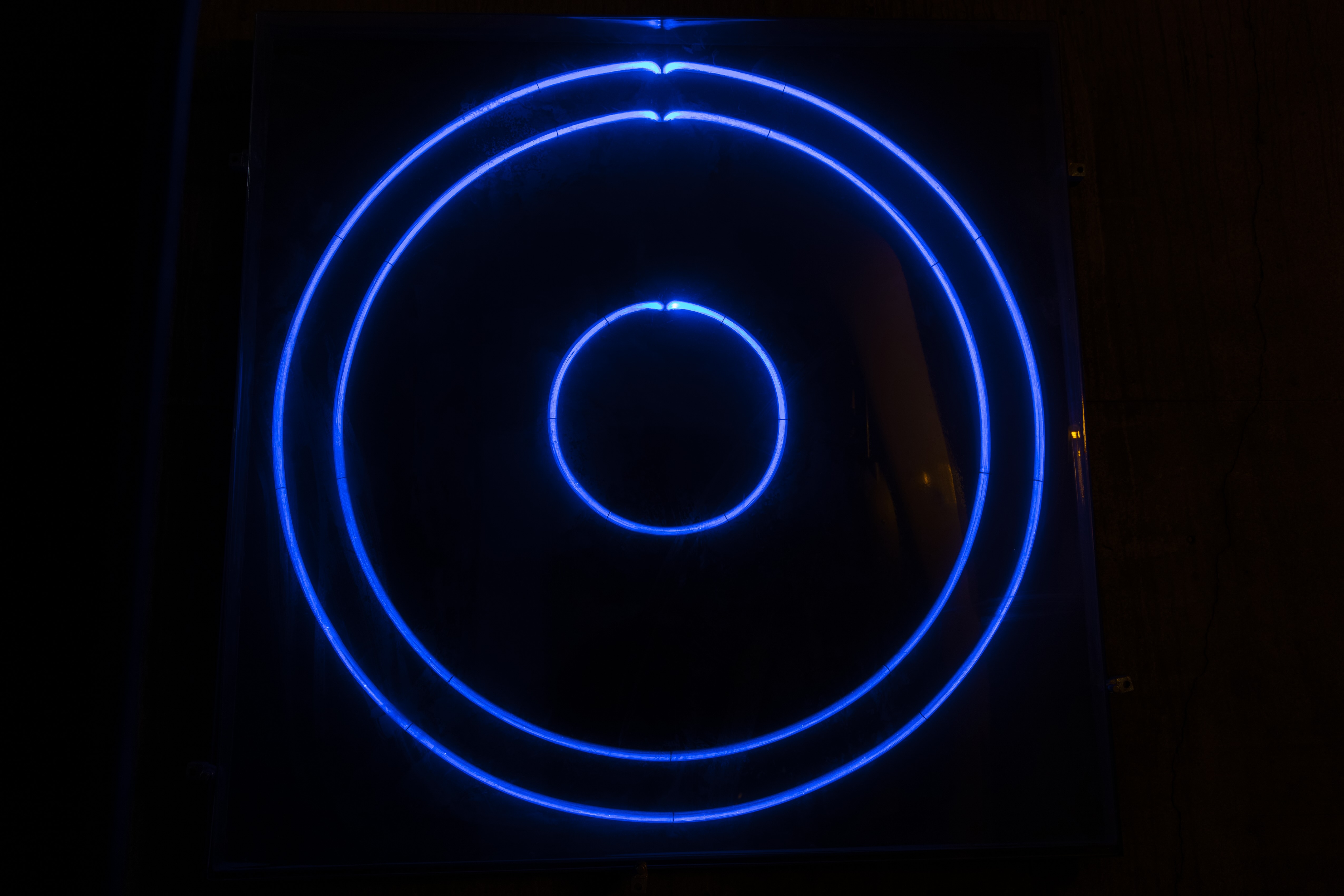
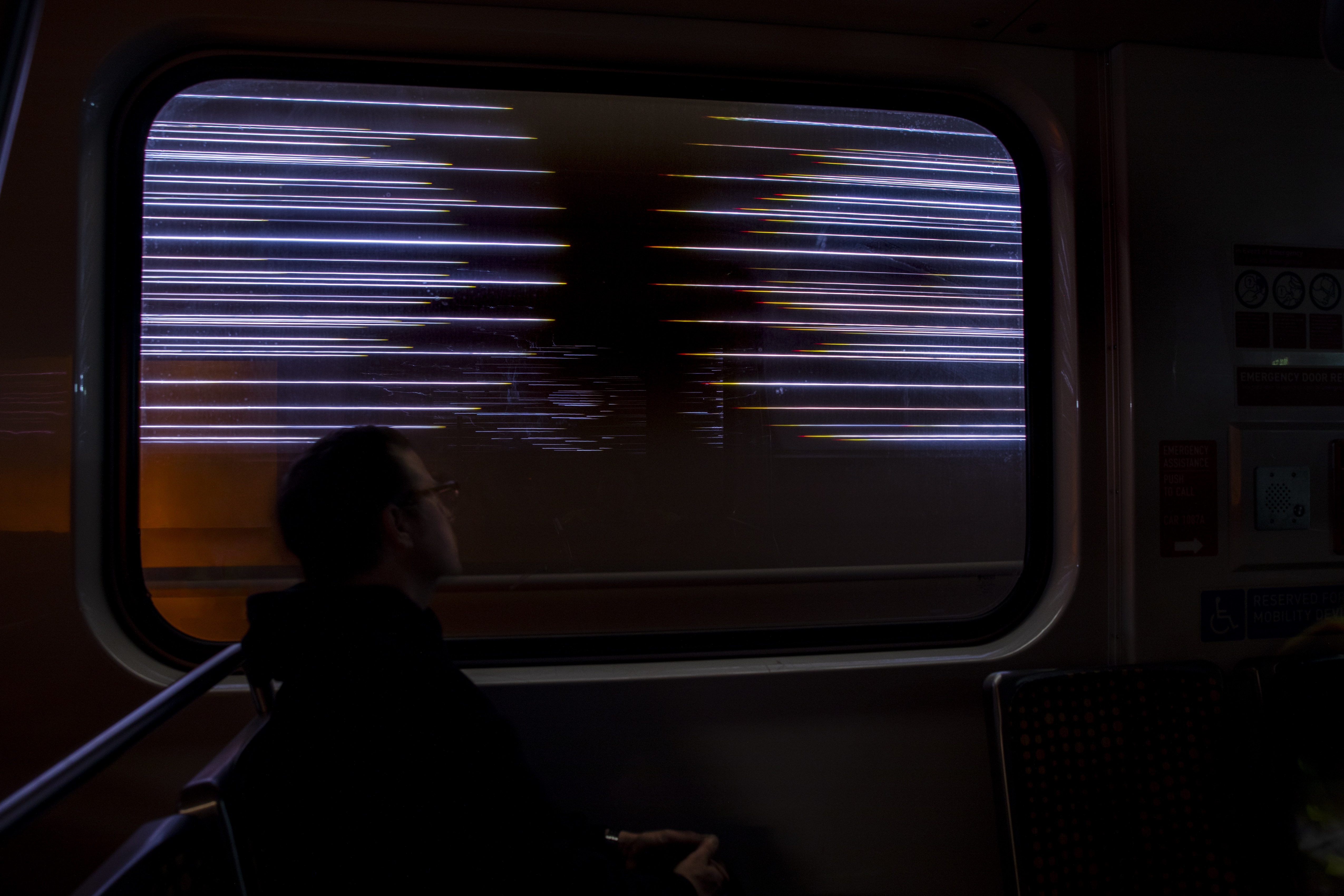
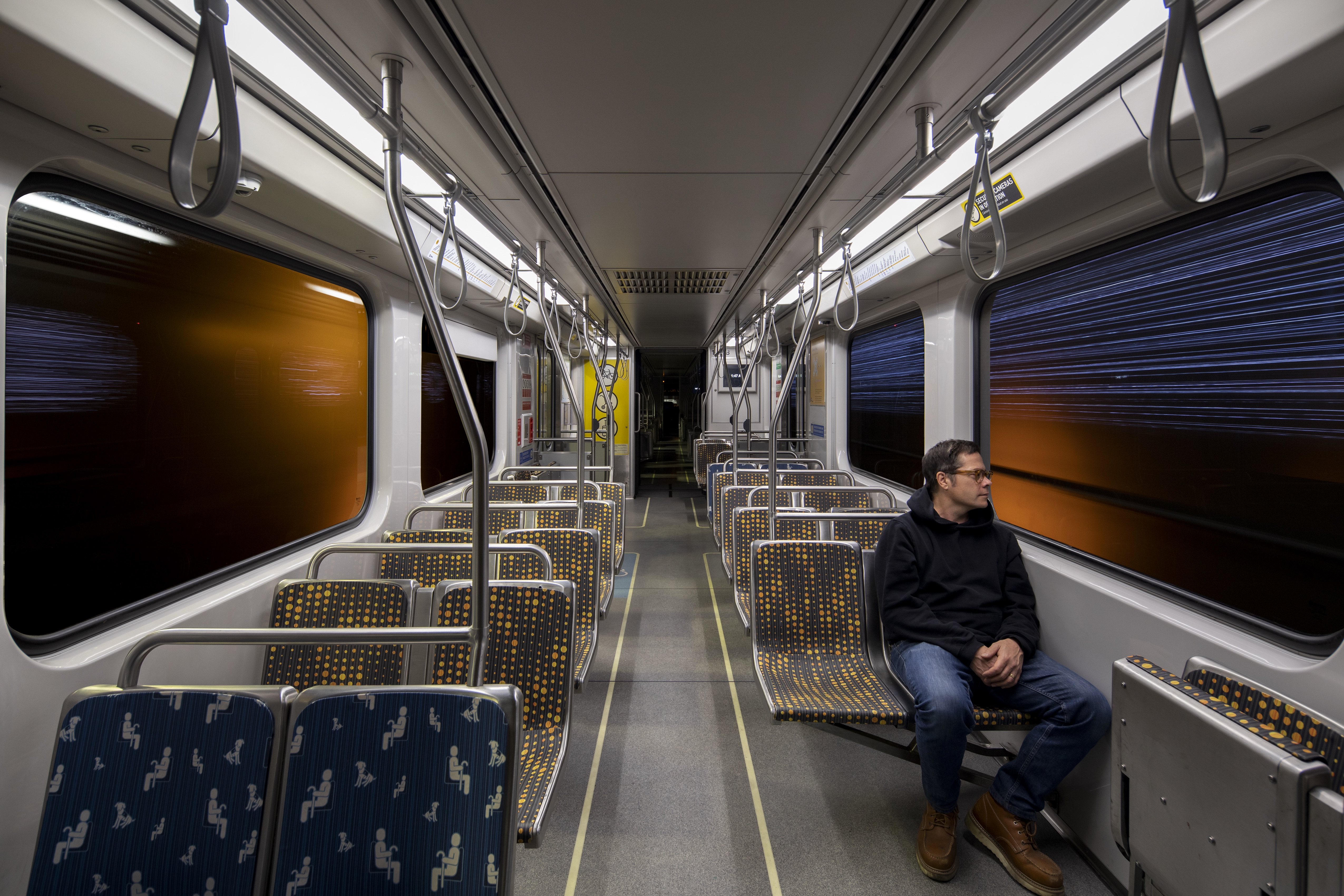
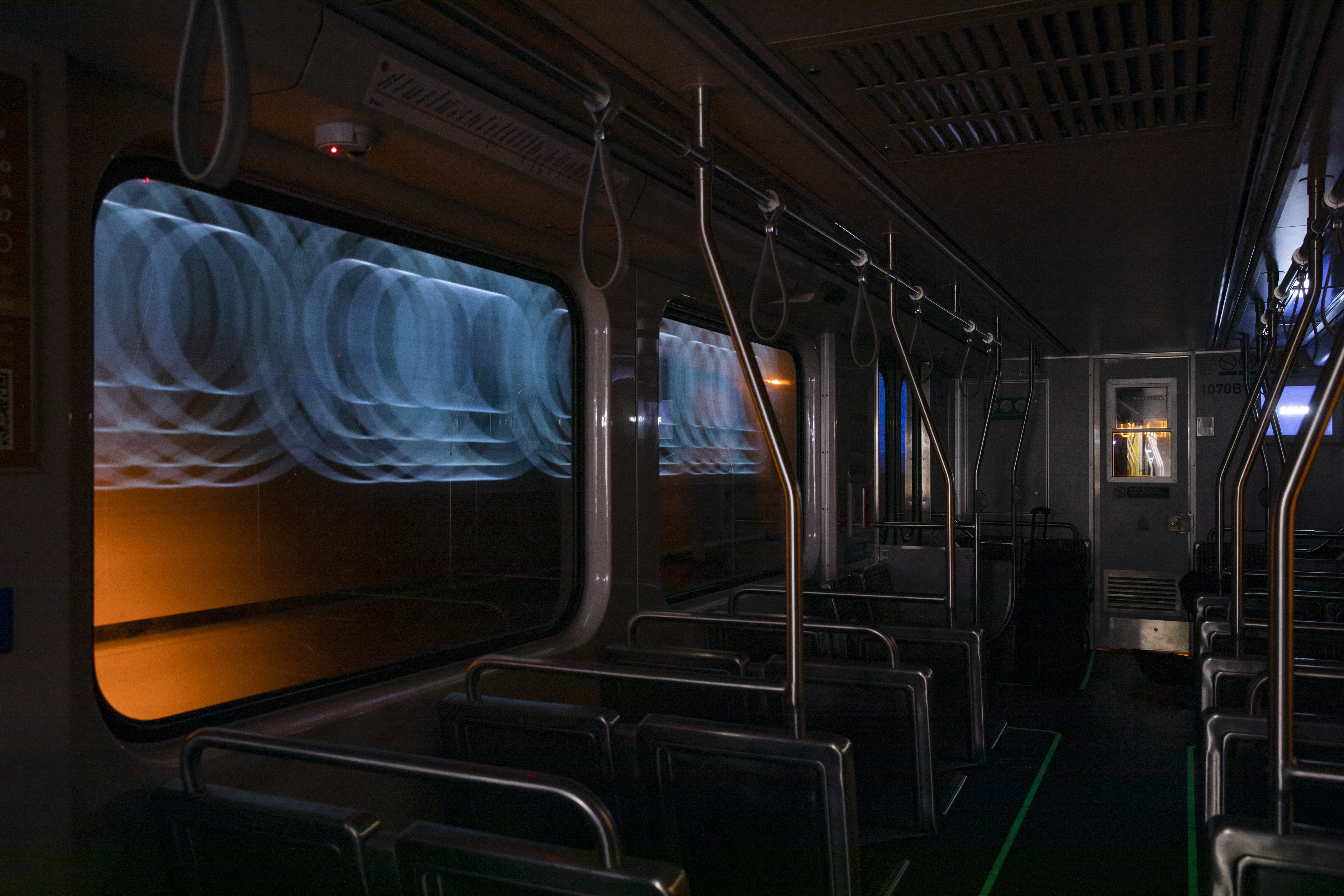
As the train zips underground and we near Unity, journalists pile towards the windows. Suddenly, in the mundanity of passing through, Eatherton’s work strikes like lightning. Eighty-two fiber-optic light paintings, illuminating patterns of blue and white light, seem to hypnotize, then swallow us. Shaped like planets’ orbits, the paintings dilate. Combined with the voyeur's perspective from a transient car, the works blur together, melding two contradicting acts of movement into a single act of viewership, stuck in mesmerizing motion. One does not simply gaze upon these spellbinding pieces, but experiences them, leaping from one to another like individual portals.
When the ride is over and applause erupts, I wonder about the process of refurbishing these works—what it must have been like reconciling technology from 1991 with that of 2026. I approach Angelene Nelson-Campuzano, who spearheaded the refurbishment of this effort.
“We had the support of our leadership to see what is both feasible and sustainable,” Nelson-Campuzano says. “Because technology has changed so much since 1991, we were able to take a much more green approach. Also, with the internal components of a lot of these electronic devices, we were asked if it was even possible to improve upon them. Which, with new LED technology, the color palettes and life expectancy of the works were able to be extended. So now, this is all possible for two or three more decades.”
Not only has technology changed. Since 1991, the United States has experienced several monumental anomalies where the word “United” in our nation’s title has rendered itself salient—some days true, many other days erupting upon itself in Politico headlines or televised court hearings. I ask Nelson-Campuzano how Unity has changed in meaning with its sudden revival amidst the contemporary, American milieu. But, Nelson-Campuzano’s response deviates from the distant, overarching American conversation, and instead, localizes itself to the present Angelino moment—to the unity right before us.
“Metro is one big family," Nelson-Campuzano says. "The process that happens within the agency and with the support that we receive is really one big unification. ‘Unity’ for us has become a defining point in unifying our patrons, in unifying our public spaces, and looking at both as possible experiences.”
As we step off the train, back into the passenger terminal, a palpable sense of community floats with us, down into the bustling, echoing hallway. Camera crews and journalists laugh with each other, rambling about the art that they just saw and the exhiliration they feel to run home to their laptops and write about it. Old friends reminisce on Eatherton’s vivacious reign as both an innovative light and space artist, and as a human. Because in experiencing the revival of an artwork in its most public forms, a collective, mercurial admiration for what could spawn from the human hand seems to do exactly what Eatherton intended—it unifies us.
“Transit spaces are usually very engineered, almost clinical. They’re not usually something that people think of as ‘vibrant.’” Emsden says. “But with [Unity], it brings back humanity to that experience.”
Thomas Eatherton’s Unity is currently on display on the A/E Line (formerly the Blue Line) between 7th Street/Metro Center Station and Pico Station.
Stay up-to-date with exclusive events and content.


