F L A U N T


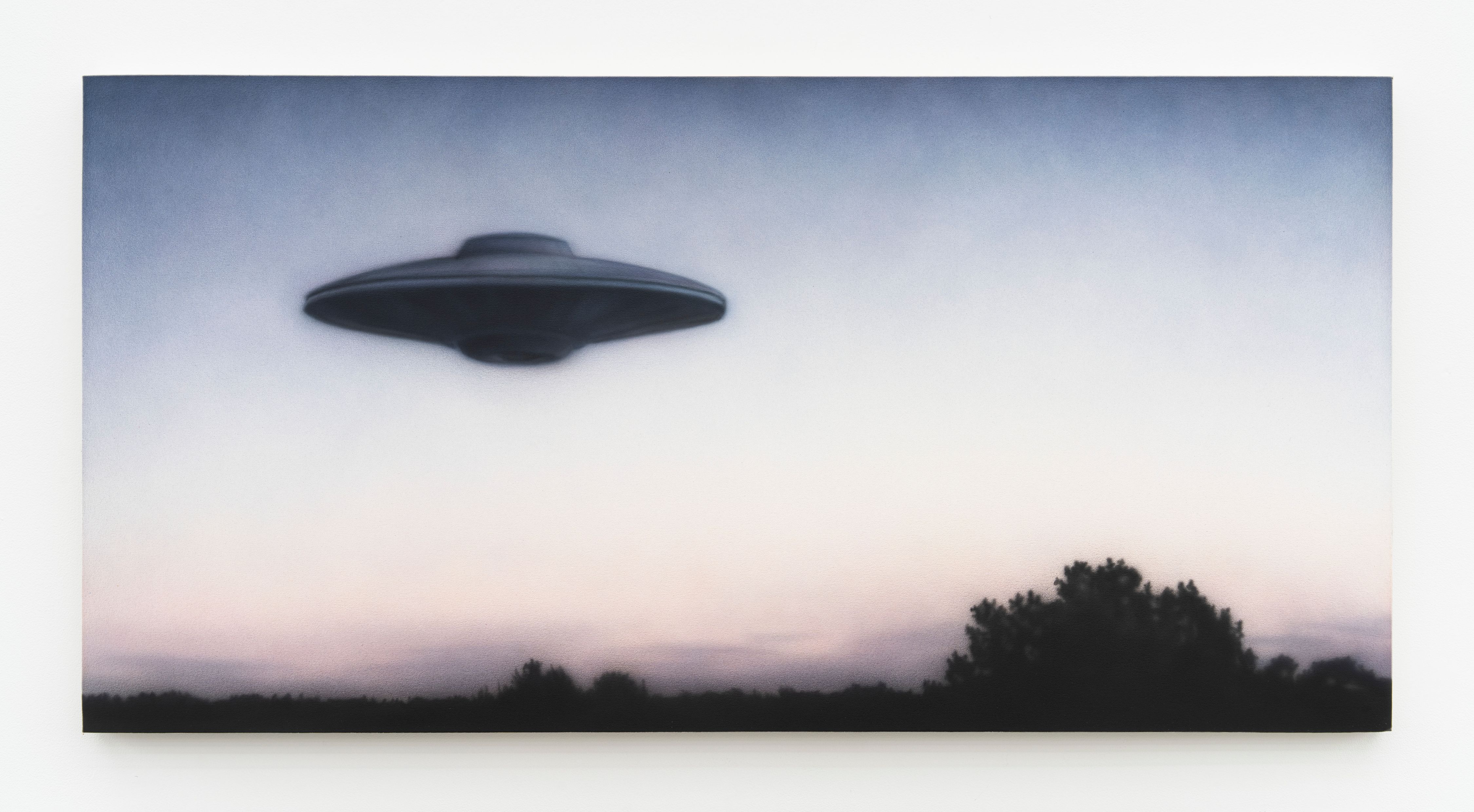
Aryo Toh Djojo is fascinated by alien abduction, not in the horror movie sense. The self-described ufologist means it as a way out, and eventually a way back: up into the unknown to find some tools, then down again to face a world that, as he puts it, stopped feeling real somewhere around 2020.
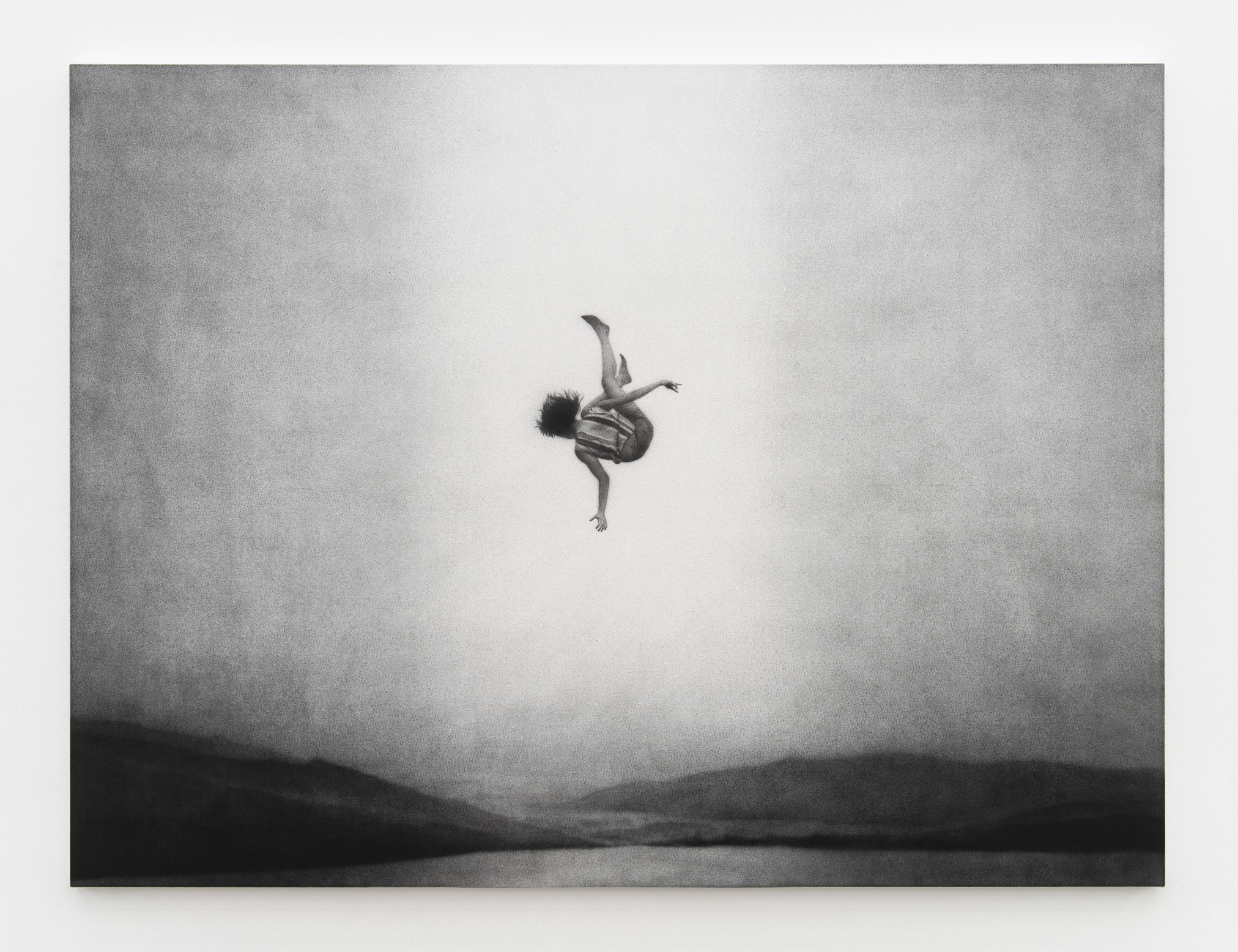
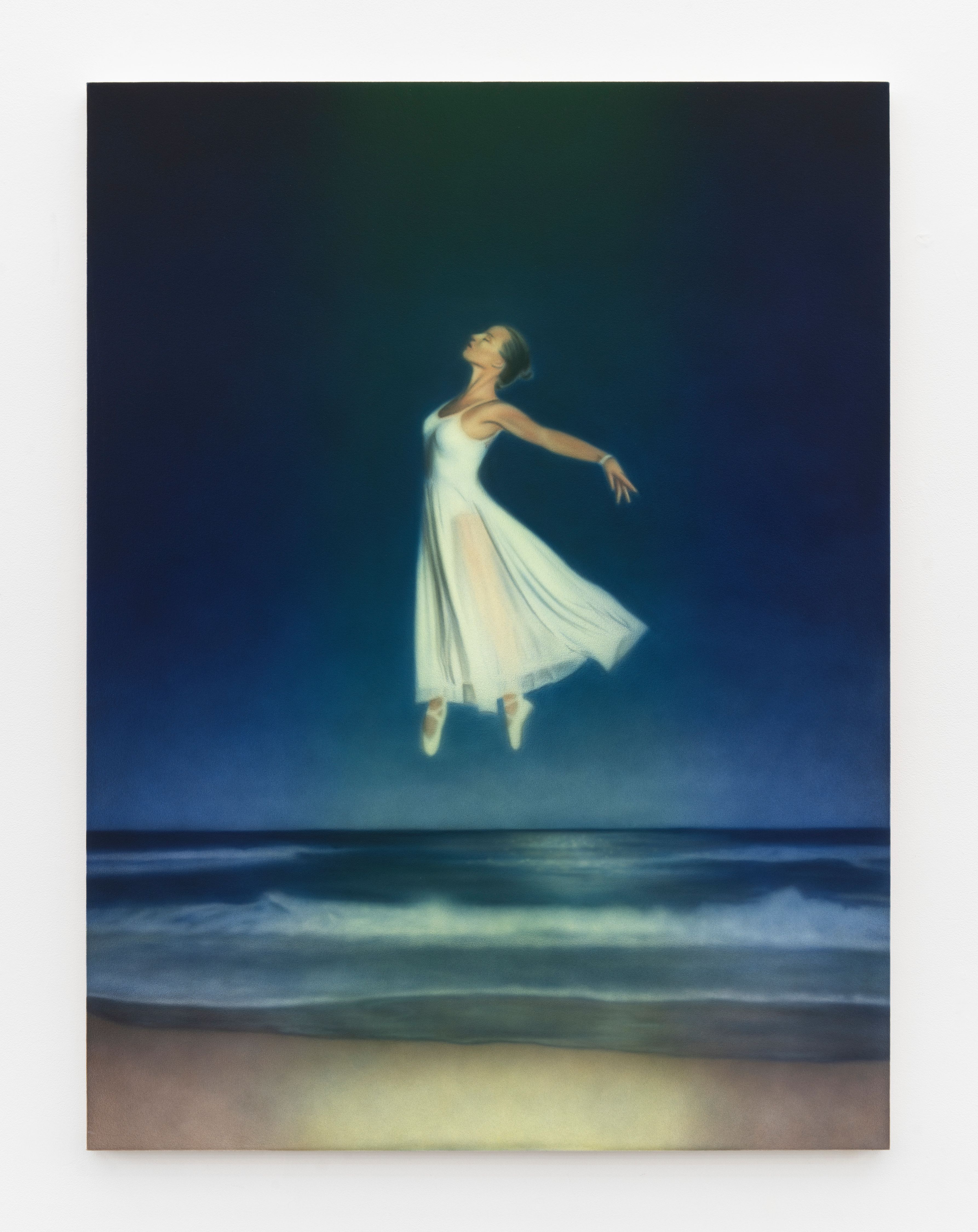
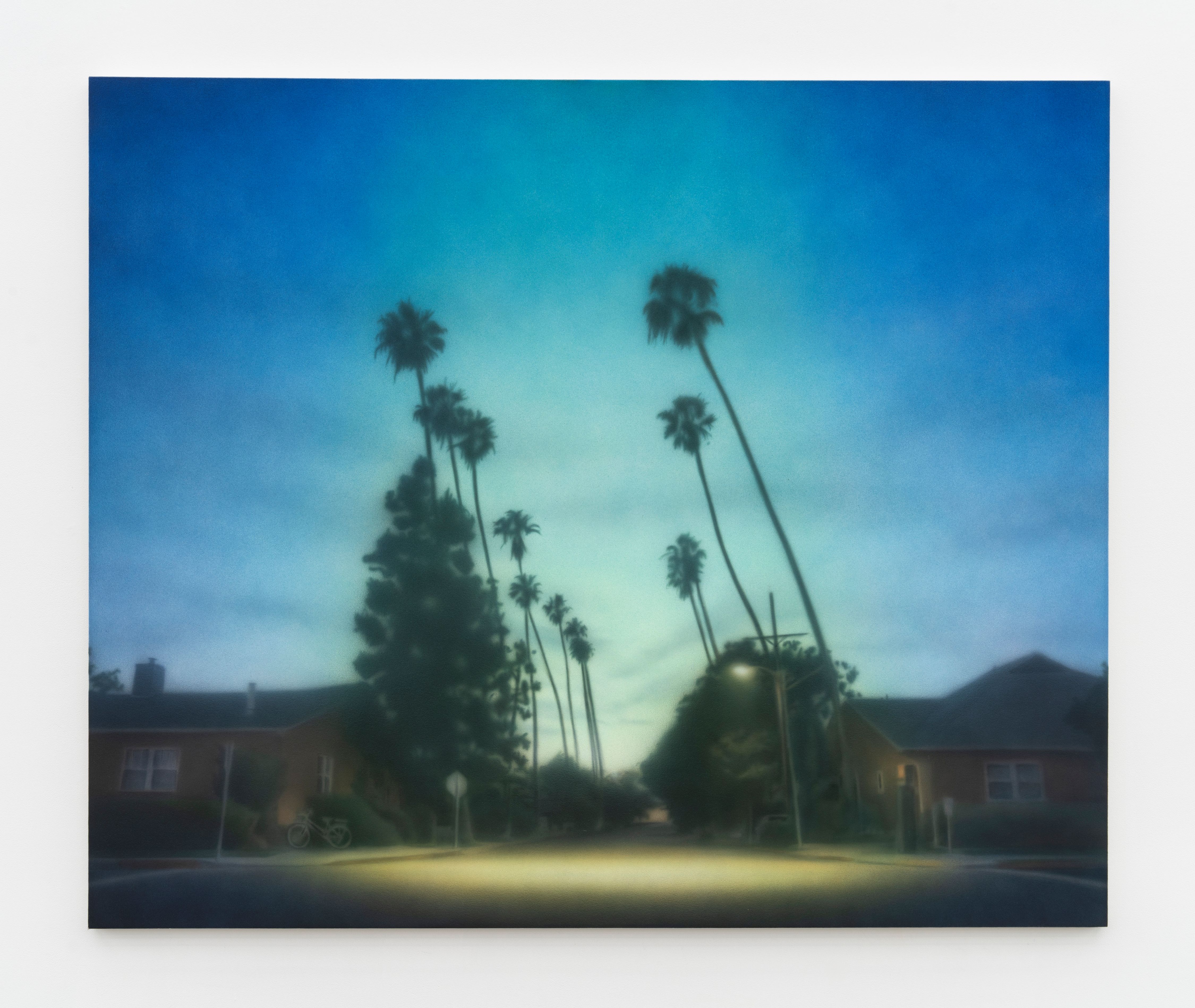
Born in Glendale in 1984 and raised on sci-fi blockbusters, Toh Djojo airbrushes his visions freehand, so that flying saucers, ascending figures, and palm-lined streets all appear soft focus, caught between a dream and a grainy photograph. At Perrotin, Leap into the Void, his first show in New York, shares its name with Yves Klein’s famously doctored 1960 leap, and the exhibition runs on the same sleight of hand: texts that surface only under blacklight, faux-relic Polaroids, and sound works tuned to Sun Ra and John and Alice Coltrane. We spoke about belief, why low resolution reads as truth, and the urge to get off this planet for a while.
Leap into the Void feels like the frame for the whole show. Where did it start?
The whole show really came out of that idea. It took me a while to start working on it. With everything going on in the world, there was this feeling of wanting to get away from it. Or wanting to be taken away. That’s where the abduction images came from. But I wasn’t thinking about abduction in a negative way. More as a way to be taken out of here, to help me figure out the world, and then be brought back down. It became this strange idea about transcendence, or ascension.
In the beginning it was literally, “I just want to get the fuck out of this place.” What I’ve realized since is that you have to go out for a minute, find the tools to guide you, and then come back and use them to navigate reality. Even my wife— before I was making this work—was always saying the same thing: “What is going on in the world? It doesn’t feel real anymore.” So leaping into the void is really about being okay with the unknown. That’s just life.
The press release calls you a ufologist, a pretty loaded self-description.
I’d probably say amateur ufologist. My wife and I got really into it around 2020—more into the spiritual side of UFOs than anything else. As the years have gone on and things got busy, there’s always new information coming out that I can’t always keep up with. So I’m not constantly updating myself, but I’ve been following it.
Are you a true believer, or more of a skeptic? Do you want to convince yourself?
No, I’m probably a true believer. I’ve seen things in person, a couple of times. The problem now is that between AI and so-called government disclosure, it’s very hard to tell what’s real. I believe they’re real—and I think the government pushing the idea that they’re here comes with its own agenda for why they’re putting it out there. But for me it was always more about the spiritual side of UFOs. I don’t think that’s the kind of thing that’s going to come out through the government.
Was the airbrush a deliberate choice? It has a mystery to it—it plays right on the border between real and unreal.
It wasn’t intentional. I picked up the airbrush on a whim in 2020, right when the pandemic hit. I wasn’t even planning to paint UFOs— I just wanted to see if I could paint a landscape. My wife and I were getting into all this UFO stuff at the time, so I thought, let me just throw a UFO in the sky, like a dot. And that’s when it all happened, because it changed the whole idea of what the landscape was. It was a gesture—this tiny dot—and I just ran with it.
The tool wasn’t the deliberate part, but painting without stencils was. Everything’s freehanded, and because of that the work has this dreamy quality, like a memory you can’t quite pinpoint. There’s a kind of magic that happens with an airbrush. And it’s one of the oldest tools there is—think about cave paintings. The airbrush then was the mouth: they’d put pigment in their mouth, press a hand to the wall, and blow the pigment around it. That handprint was basically one of the first portraits. I always thought that was interesting.
There’s something in how UFO believers trust low-resolution photographs: the blurrier the image, the more believable it reads. Are you recreating that feeling of a casual snapshot, the kind anyone could take?
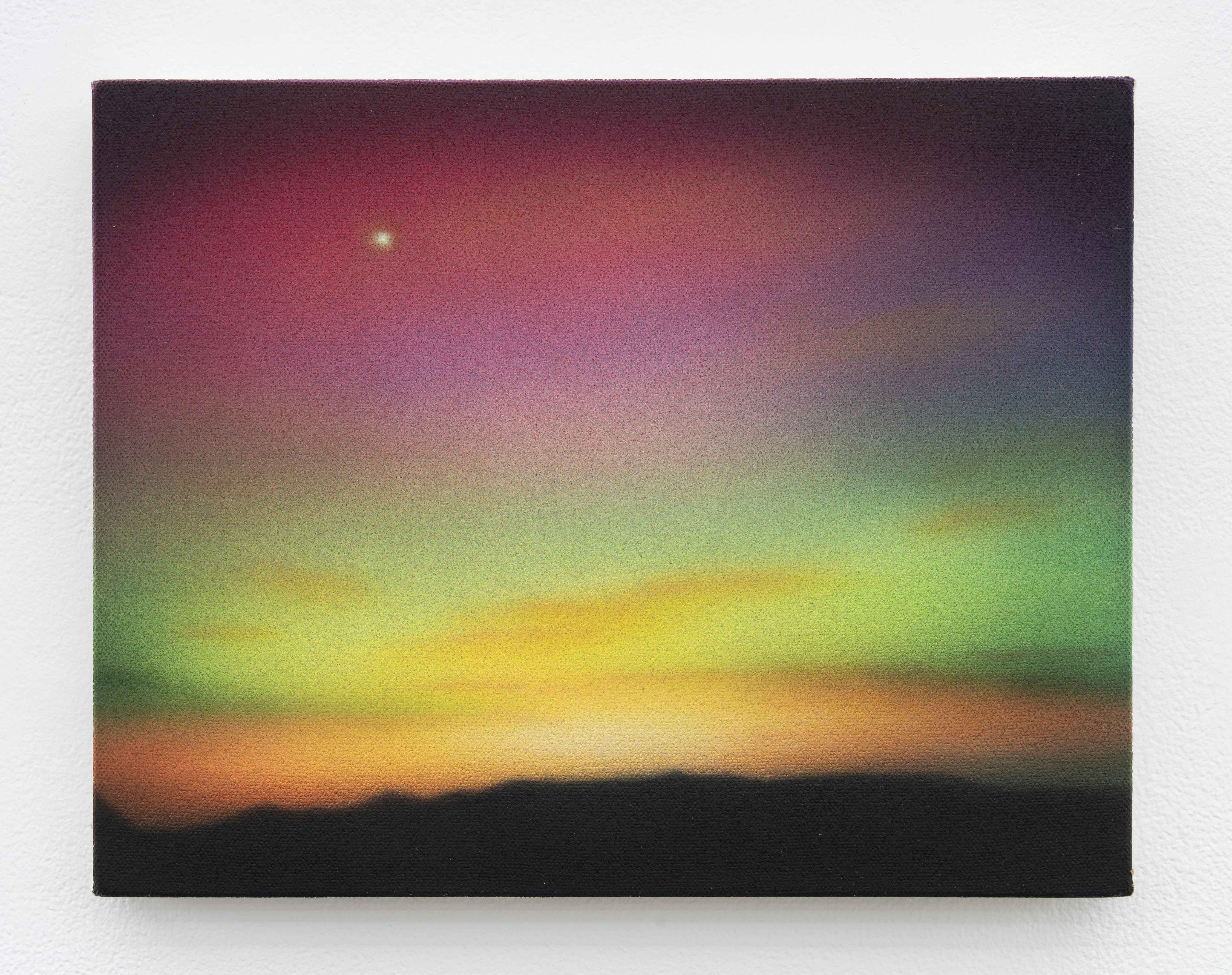
Totally. I’ve been collecting a lot of actual UFO photos, and I’m trying to capture that look—not so much the pixelation of the digital age, though it makes sense that it comes out that way too. Because that’s what the airbrush does. It’s literally building the image out of what are almost pixels—all these different bits of pigment.
Tell me about the gray studio portrait—the mid-century-looking couple with the dog. It reads differently from the rest. Is it about retouching? About family?
With airbrushing, there’s that whole history in photography. Even now you use one to clean up areas in a fashion magazine. But that image is actually of two abductees. It’s Betty and Barney Hill, the first well-known abductees in the US. It just made sense to paint them; they helped tie the whole show together.
You’ve also embedded language in the paintings that’s only visible under blacklight—text that essentially resists being photographed. You can’t really catch it in a snapshot. Is there something there about keeping a secret, letting meaning in only for the few?
It is sort of that. In the world—even with the government—you only ever get so much. They give you breadcrumbs and you have to figure out the rest. As much as I hate that, it’s fun to make work that way, to hide these little Easter eggs. It’s another way to branch out beyond just painting an image—now I’m adding text on top of it, or behind it, or you need a certain light to see it. I’ve also been doing thermochromic paintings that only reveal themselves when the surrounding air gets warm enough. As much as it’s kind of a gimmick, it’s fun—I’ll own that. I like playing with the viewer. A lot of the work is really about perception.
The sound works draw on these cosmic, spiritual figures from the 60s and 70s avant-garde, and an Afrofuturist lineage too. How do the UFO discourse and the music speak to each other for you?
I listen to a lot of it. John and Alice Coltrane are very cosmic, spiritual people. And Sun Ra is way out there. But I’ve always loved sound artists too — John Cage, Pauline Oliveros. They’re not as well known in the mainstream, but Cage conceptualized music in a completely different way, and with Pauline it’s really about listening. It’s meditative.
I’m not a musician by any means. I can’t read music. The sound work is very experimental. I’ve always loved collage, and doing it sonically was a big draw. Manipulating an image, for me, is the same as manipulating a sound: you take a field recording, run it through some effects, and come out with this other thing. I love that. It’s that same cosmic, spiritual feeling—a kind of universal chaos—except it’s physical.
You grew up in LA. Did you have a relationship to Hollywood, to the alien-blockbuster genre? Were you watching those films growing up?
Ever since I was a kid, sci-fi films were my favorite, so it makes sense that movies found their way into what I’m doing. A lot of the paintings have LA iconography—palm trees, the landscape of the city—but that’s not intentional either. It just came out that way. Sometimes I’ll watch a movie on silent, just looking at it, and without the audio you start to notice how they use lighting, the camera positions. That helps me with composition.
Stay up-to-date with exclusive events and content.


