F L A U N T


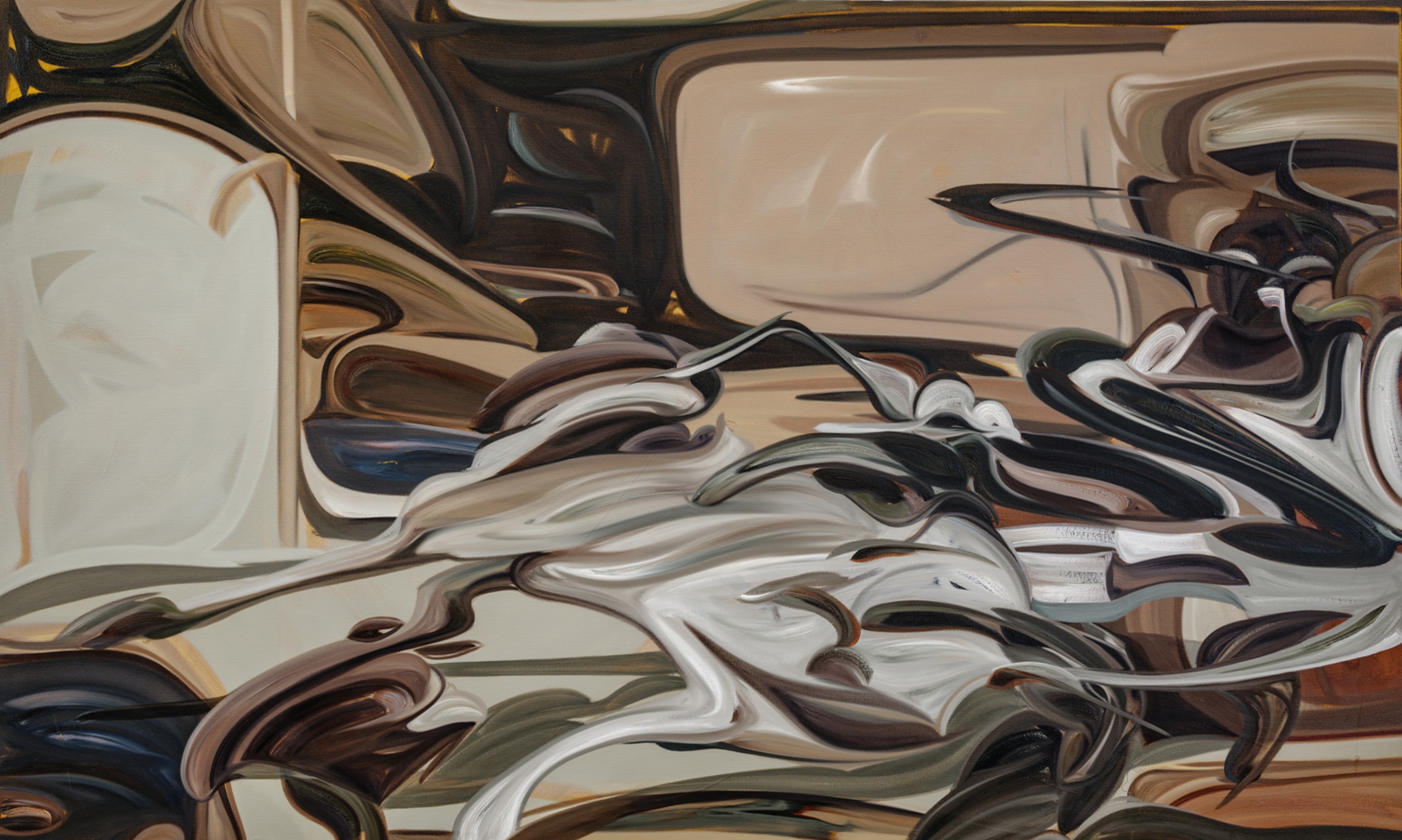
One wonders if Yeats, in 1919, knew that “The Second Coming” would form a linguistic framework upon which countless works of art and literature would be constructed, each attempting to parse through the horrors of the century to come.
Yeats felt it then: the end of an era, slouching towards Bethlehem. It was this exact sentiment that resonated with Nigerian author Chinua Achebe for his 1958 novel, the title of which borrowed from the third line of the Yeat’s poem: “things fall apart, the center cannot hold,” describing the introduction of British colonial forces and Christian missionaries in Nigeria, navigating the widening division between pre-colonial life and traditions, and addressing the political tensions within localized communities. Yeats felt what Achebe felt what Luke Agada feels—a raw humanity; a thumping reminder that global systems are in a state of perpetual dismantle; a seed of fear in the throat at the prospect, and pressing reality, of change.
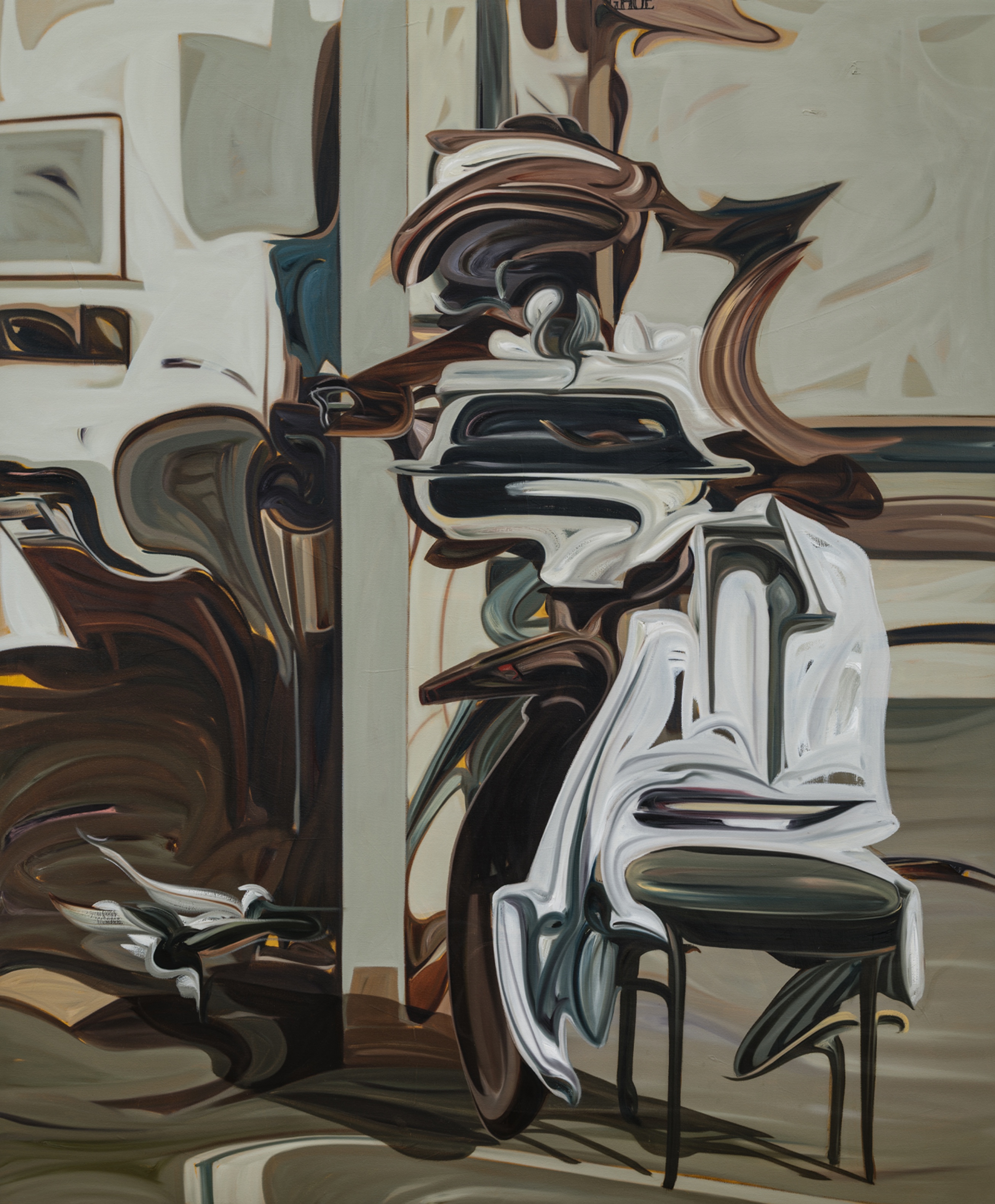
In his exhibition at Sean Kelly in New York this fall (his first solo exhibition with the gallery and in the city!), Luke Agada ponders this poetic inheritance by flipping it. What does it look like, Agada considers, when the center does indeed hold? To Agada, it looks like time melting into oil, like figures made out through wisps of brown smoke, like warm memory and rust. “It began as a response to the poem by Yeats and its famous proposition,” Agada meditates. “It’s an image of the world in which established structures were breaking down and things were going in disorder. I became interested in postulating a different proposition, and rather asking the question: What enables the center to endure? Yeats defines the center as the organizing principle that makes the world socially, politically, spiritually and morally coherent.”
In a time of what seems to be a pandemic of apathy and a general loss of faith in global structures of governing, Agada’s is a hopeful message, “When I was painting, I was also partly reading the book Why Nations Fail. It’s a book that breaks down the reason for the world and poverty of different nations, how nations are, why they are the way they are today.” Agada says, “I was also thinking about the history of painting as well. When we look at the history of painting, painters are always trying to not just represent or mimic life, but to create a space that can only exist in the painting, because painting itself has a lot of possibilities and gives the ability to, put side by side, possibilities and contradictions within the same image in a way that works. I’m looking at the relationship between the figure and the space and how that even the figure can adapt to what is happening in the environment.”
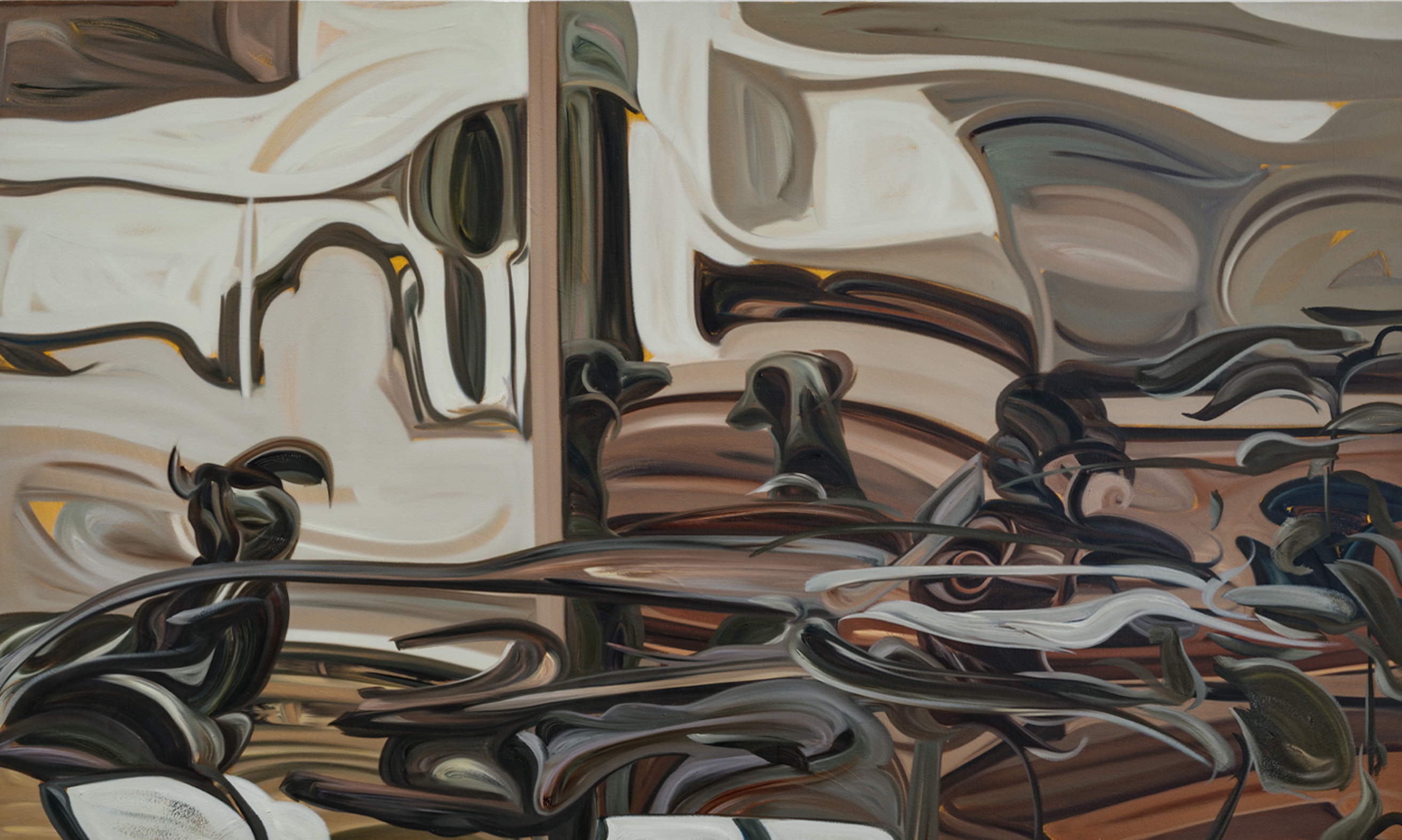
Agada, who studied at the School of the Art Institute of Chicago, has watched his works evolve from a clearer form of surrealism towards the realm of abstraction. His 2022 works see recognizable artifacts and interior spaces begin to fold into each other, and his previous exhibitions (like Between Two Suns with Roberts Projects in 2024) have foregrounded Homi Bhabha’s idea of the third space, another long-interrogated sociopolitical and literary concept. While he walks around the gallery, he speaks of Roberto Matta, a Chilean surrealist painter, who painted a series called Psychological Morphology (1938-1939). “I was able to draw some parallel between my work and the way he composed,” Agada tells me, standing face to face with his current piece “Of Tempest, Of Dreams,” (2026), “The way we look at the composition, it’s abstract, but you can feel like it has an interior space, and that the sense of space is there. In my large scale paintings, most of the abstracts or elements that have been reduced to gestures and forms. They represent an elemental part of our memories that are no longer defined. You cannot necessarily remember the details anymore, but you know it’s there and it’s important but you just can’t put the details of the evidenced event or person, it’s blurry.”
When the Center Holds, however, casts a broader ideological net than previous exhibitions. “I’m not necessarily referring to a fixed political and geographical, institutional center. I am referring to something much more relational,” he comments. “I feel that the thing that consistently makes the center endure, is something that helps us to keep finding meaning within conditions where the structures that we once relied on became unstable. These can refer to interpersonal relationships, collective memory. It can refer to spirituality, faith, and how we adapt to the conditions that we’re in right now.”
In the room at Sean Kelly, there is a series of sketches that have been modeled off of previous paintings. “Drawing was not primarily a core part of my practice. I usually go directly to paintings and I would sometimes work from reference photographs,” Agada explains, “When I work on an image, I’m actually breaking it to the very core and essence” The center, if you will. Agada tells me that he highlights elements; conversations; colors; scale shifts, and when he’s done, he tries to “understand” what he’s been seeing.

Perhaps this is that proverbial “center:” one’s own ability to maintain shape through the currents of memory and reclaim that shifting space as one’s own.
“In a period whereby these shifting global order and so this confidence in these structures begin to wane, we begin to find a new way we need to be to make meaning out of the conditions that we’re in and make meaning out of life now, ” Agada says. “We return back to something much more personal, much more internal. That might have to do with interpersonal relationships with other human beings because in the midst of all this, we are finding ways to still retain our humanity. In the midst of trying to fight for something, trying to fight for stability, we don’t want to lose our humanity, lose who we are, lose our identity. If we are to change, we are to actually transform into something even better than we are right now.
The ways that we are able to construct meaning and understanding when the tapestry of Yeat’s proposed spiritus mundi begins to mutate in uncertain times, when the revelation of the second coming and institutional change is no match for the Élan vital of humanity!
Stay up-to-date with exclusive events and content.


