F L A U N T


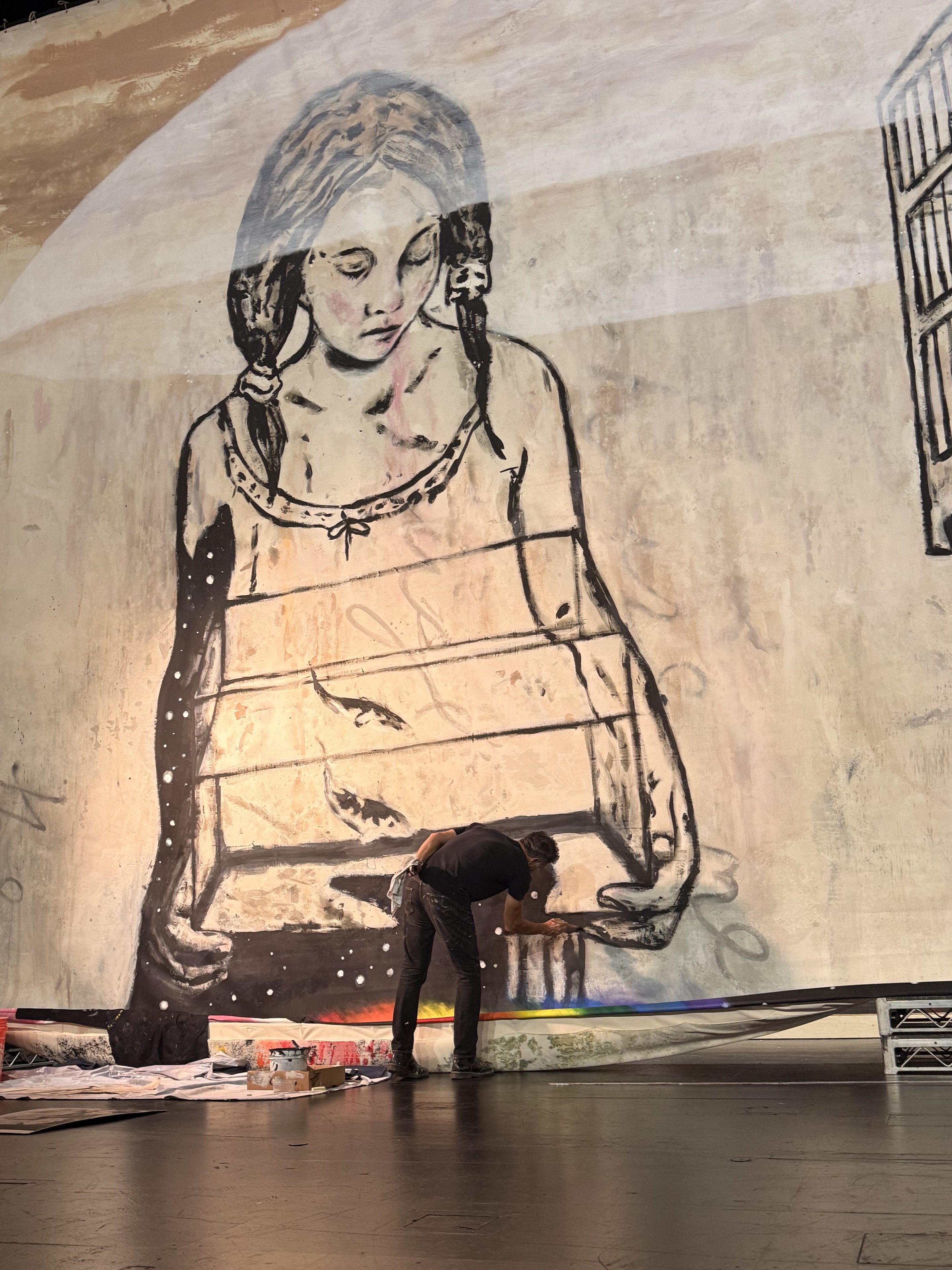
“We spend much of our lives making containers. Houses, families, languages, beliefs, memories, even our sense of who we are. They give shape to experience, but reality continually exceeds them,” says artist Enrique Martínez Celaya. He is speaking to us in anticipation of his art installation The Things We Know, which is set to complement the LA Opera's 2026/27 season at the Dorothy Chandler Pavilion. The installation is not just a static art exhibition but an immersive ‘visual prelude’ depicting various intimate spots of time. With The Things We Know, Celaya asks us to inch outside of our realm of certainty: “What we know is precious,” he states, “but it is also very small compared with what we don't know, and perhaps smaller still compared with what cannot be known.”
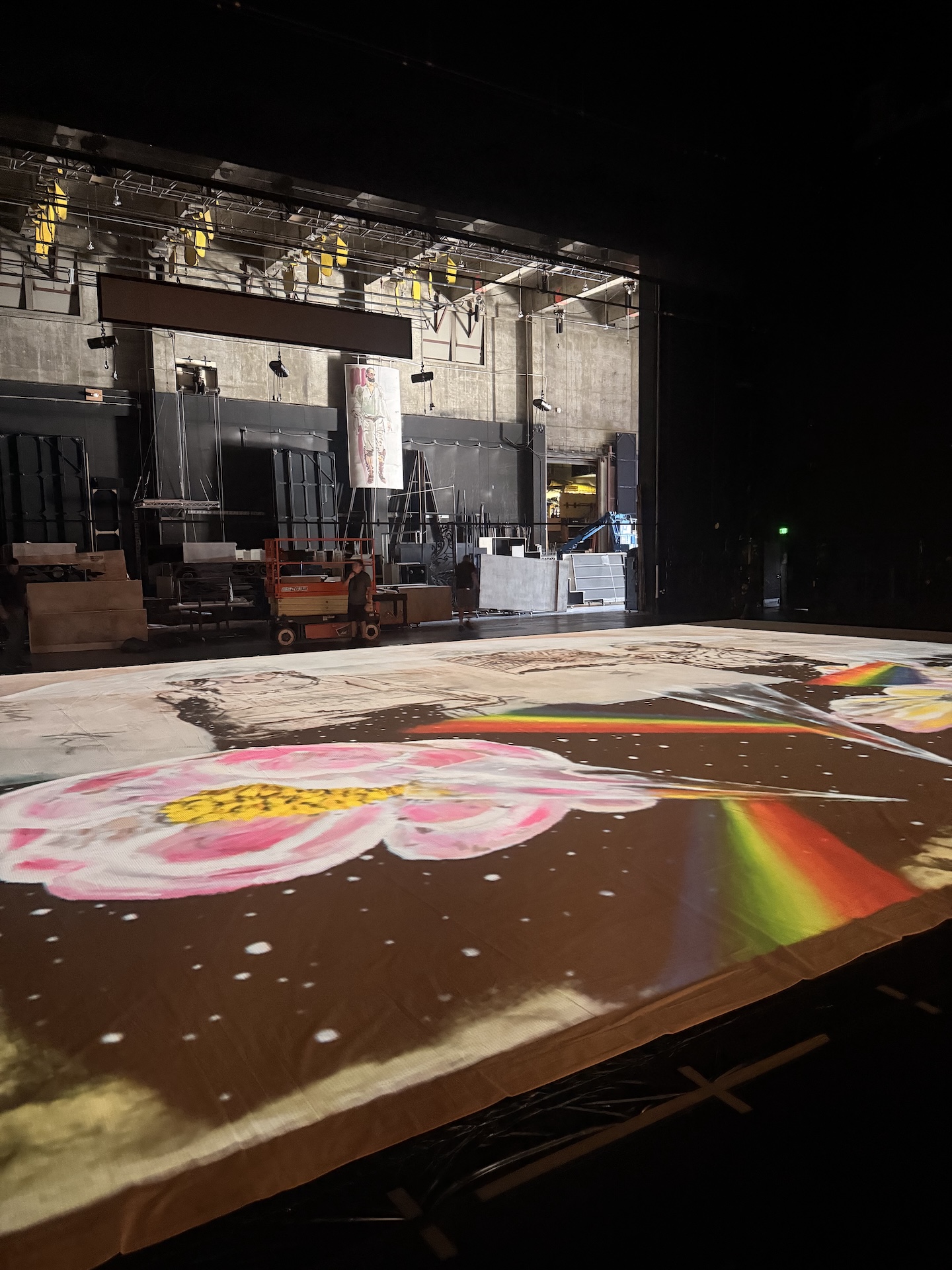
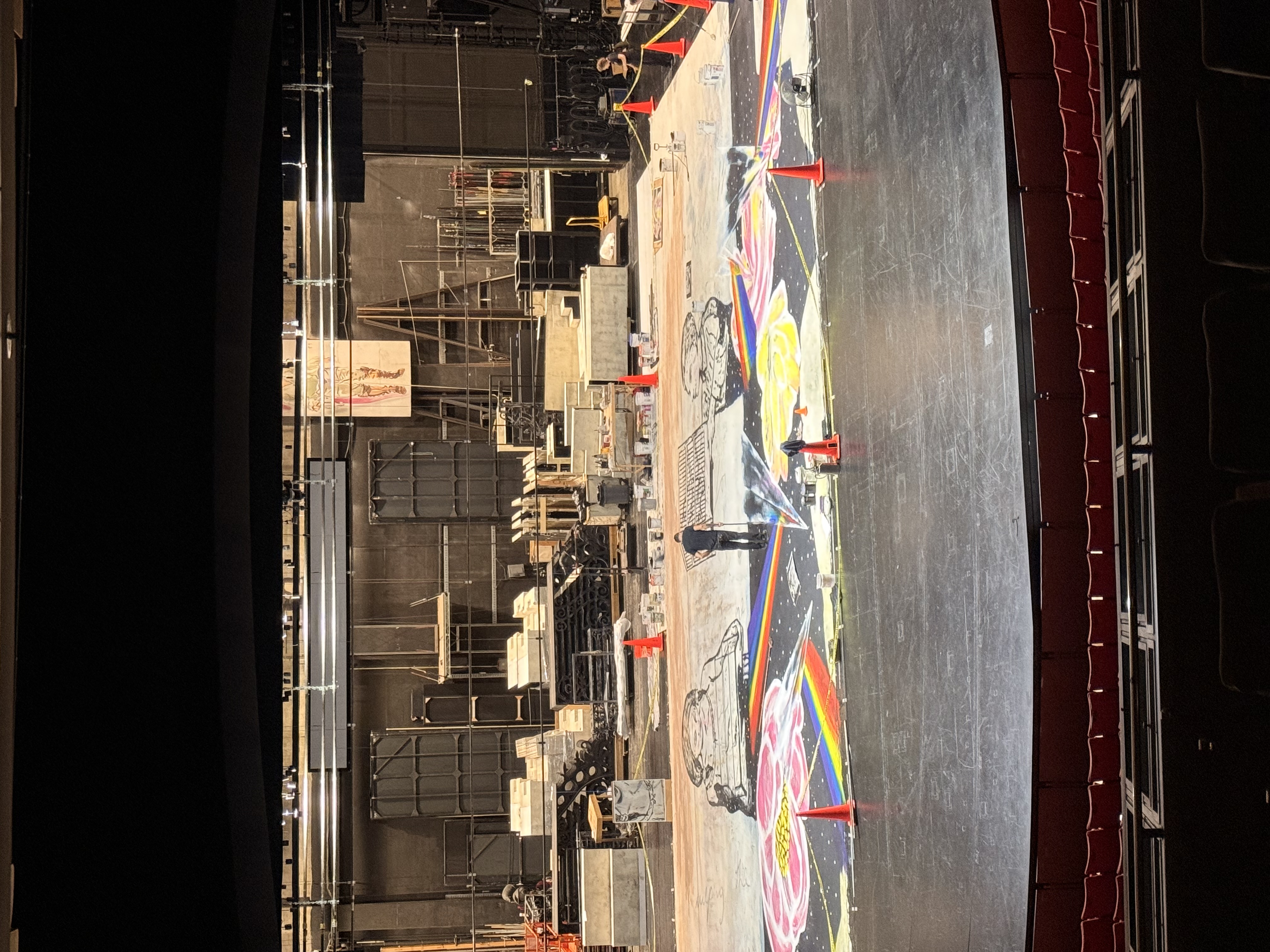
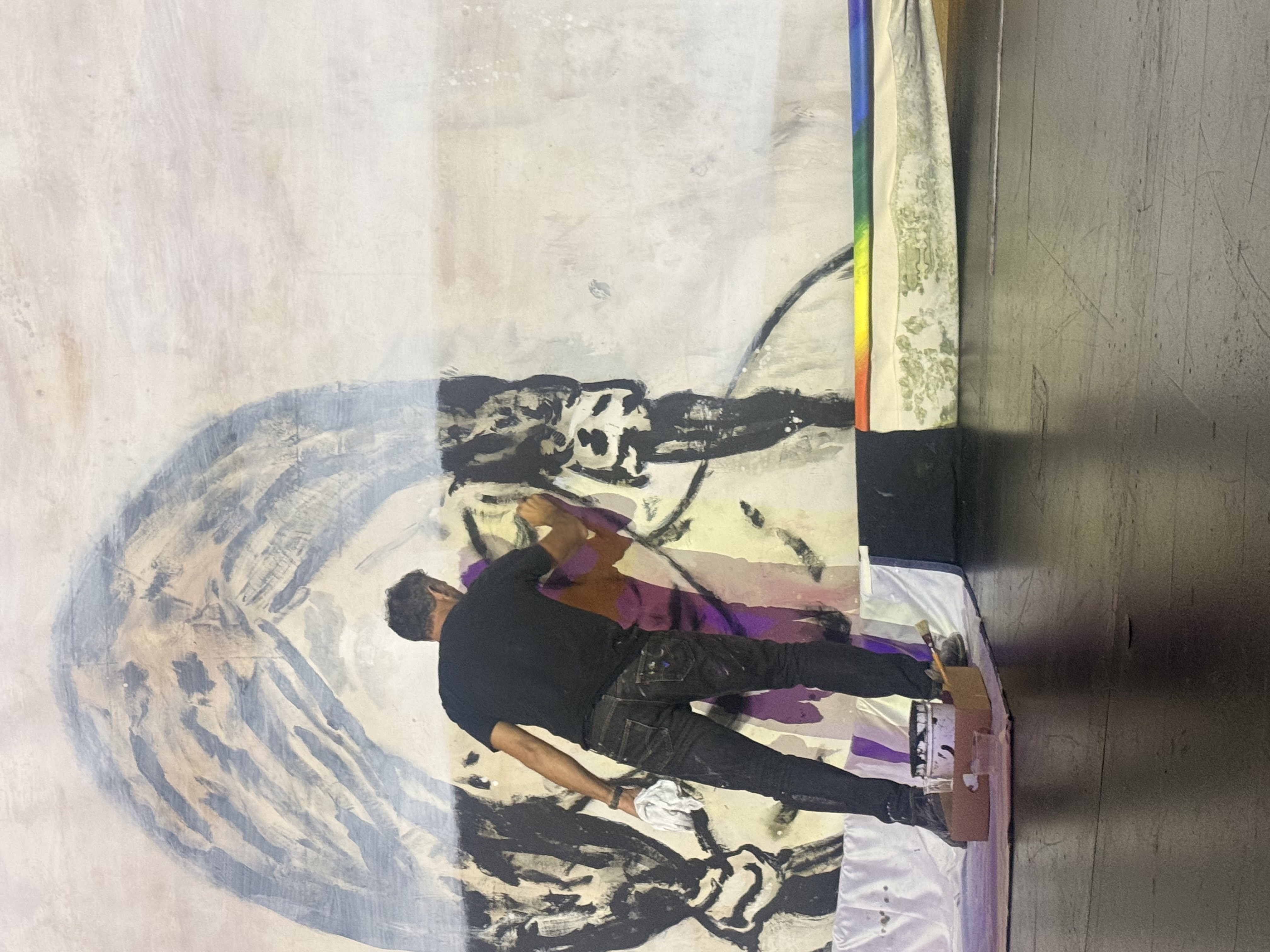
Celaya’s exhibition constitutes a seventy-foot art piece preceding the actual opera, revealing itself in fragments over the course of 30 to 40 minutes. The Things We Know portrays a quiet insanity, featuring depictions of children in isolation, figures observing creatures in confinement, and fragments of writing that suffuse the entire exhibition. Through the distillation of its reveal, Celaya forges a commentary on containment: “Against those contained spaces are stars, flowers, fragments of writing, and other things that resist being organized into a single explanation,” says Celaya. The work becomes a prologue to the opera, beckoning viewers to think about yearning and the beauty of uncertainty, then thrusting them into total sensorial immersion.
The 2026/27 season also marks critically acclaimed Conductor Domingo Hindoyan's inaugural foray as Music Director of the LA Opera. “LA is a city that is known by innovation, taking risks in productions and musically,” says Hindoyan. “The idea is to do new pieces, commissions, and modern pieces, something to really have a balance between what is classic and go further as much as we can.” The integration of The Things We Know is a facet of this mission, a synthesis of different, unconventional art forms converging with the lineage of opera.
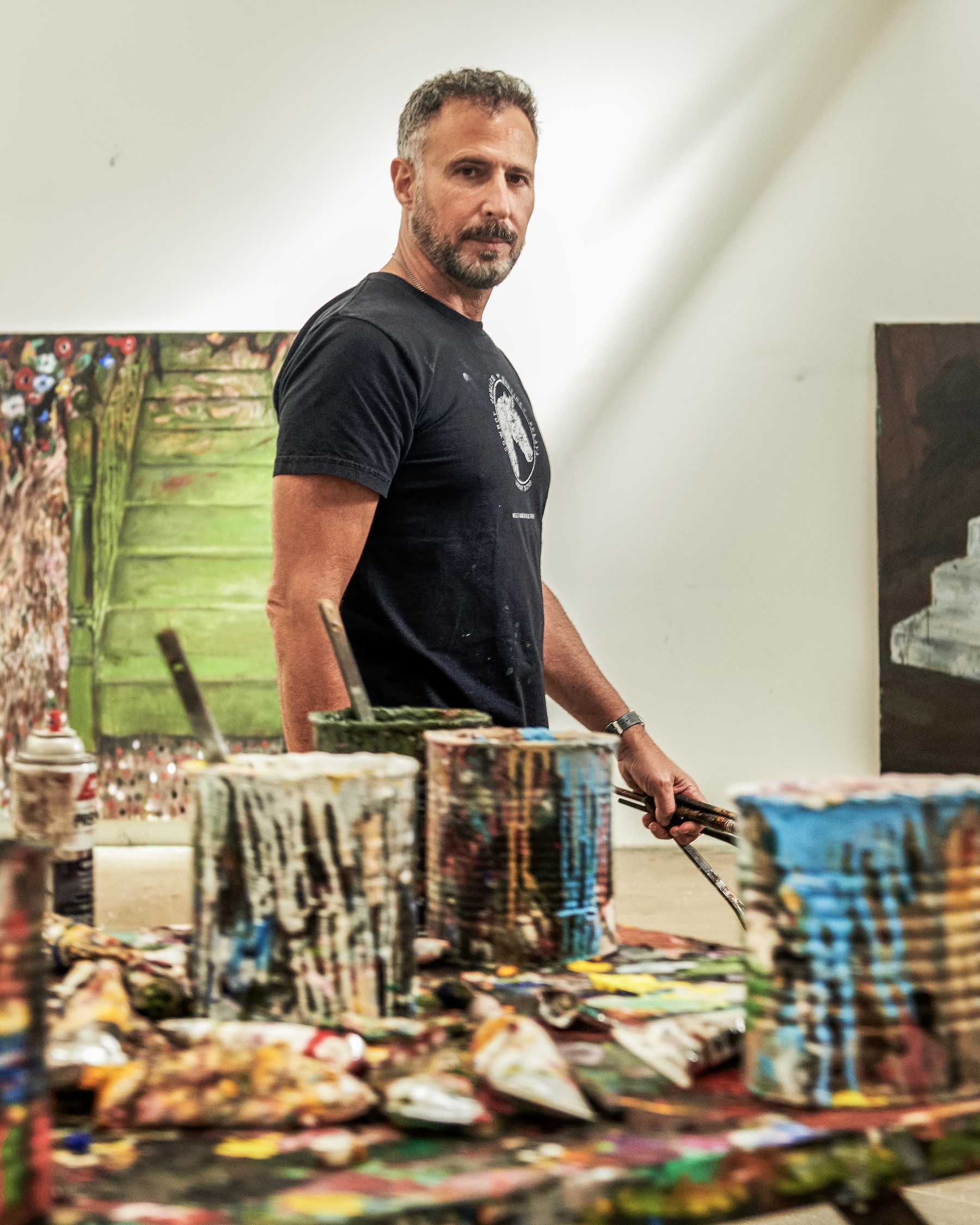
The LA Opera season opens October 17, unveiling Celaya’s exhibition alongside its new production of Carmen. Celaya spoke to us about getting commissioned by the LA Opera and the intricacies of his newest exhibition; find tickets here for the LA Opera 2026/27 season.
The Things We Know has been described as a prelude rather than a standalone art exhibition. The piece begins with a portrait of two children in their isolated worlds. How did you decide on this portrait as the introduction to your piece?
I wanted the curtain to begin at the scale of a human life. The two children are absorbed in their own worlds, one looking into an aquarium and the other putting his hand inside a birdcage. They are together but separate, and both are looking at forms of life that are themselves contained. There is tenderness in that, but also something uneasy.
The children, the aquarium, and the cage emerged through writing, drawings, and paintings, all of which went through many changes. Then, as I began to consider the movement of the curtain, the rest of the painting moved from this intimate world toward something much larger and less comprehensible.
The curtain is almost anthropomorphized with “The Things We Know”; the revelation of different portraits is timed meticulously to embody the life-form of the curtain. How were you able to so intricately deliberate the curtain's movement in order to breathe space for the audience to sit in the friction of the performance?
One of the reasons I like to work on unique projects like the curtain for LA Opera is that they allow me to do things I couldn't do in a museum, for instance. As soon as I started thinking about the project, I knew that movement, such a specific aspect of a curtain, had to be incorporated into whatever I did. If I ignored that fact, I would simply be making a very large painting that happened to be used as a curtain.
So I started working with movement itself as a material. The displacement of the images reminded me of the process by which life becomes memory. I made studies of what would be visible at different heights and how one image would disappear while another remained. Things that seemed central became fragments and then vanished. Other things became more important. Eventually the entire work disappears. I wanted the movement to feel inevitable rather than theatrical, and to allow enough time for the audience to notice that what they thought they were looking at is changing. In that sense, time is one of the materials of the work.
How are you able to ignite curiosity and maintain a sense of mystery with such an intricately crafted exhibition? Is this process intuitive or calculated?
I am not sure I can always distinguish between intuition and calculation. Often, what seems like intuition comes from a lot of thinking that has gone on beforehand. And what feels like calculation is the accumulation of support for what one knows intuitively. In either case, mystery and the possibility of finding some truth that at first seems unknowable, or at least elusive, are central concerns in my working process. If I know clearly what a work is going to be before I make it, or understand how it works, or see that I am delivering some sort of message, I lose interest. I begin with things that have a charge for me without necessarily understanding why. Then I work on them, remove them, bring them back, write about them, paint over them. Gradually, relationships emerge.
Throughout the process, I can be extremely deliberate. I will spend a great deal of time adjusting a color, moving something a few inches, or considering what the audience sees at a particular moment as the curtain rises. But all of that precision has to remain in service of something that shines brightly in its clarity, a clarity that isn't exhausted by being known.
There is something poetic about depicting these figures in these fixed, contained spaces and then integrating something, a piece of writing, a constellation, something unrecognizable, that cannot be deciphered. What significance does this paradox hold for you?
We spend much of our lives making containers. Houses, families, languages, beliefs, memories, even our sense of who we are. They give shape to experience, but reality continually exceeds them. That tension is important in the curtain. An aquarium is a world you can see almost completely, and a cage defines a very specific boundary. Against those contained spaces are stars, flowers, fragments of writing, and other things that resist being organized into a single explanation. I don't think of those elements as symbols with corresponding meanings. They are more like different kinds of evidence, some legible and some not.
The title, The Things We Know, contains some of that tension. What we know is precious, but it is also very small compared with what we don't know, and perhaps smaller still compared with what cannot be known. I also want to suggest that the things we know exceed the things we think we know.
How has your work as a scientist informed your craft as an artist? Has it aided in your detail-orientedness? Has it made you less concerned with answers?
The world described by contemporary physics is very different from the one our senses seem to present to us. Things that appear solid and separate become much stranger when examined closely. Space, time, matter, causality, even what constitutes a thing become difficult questions. That was important to me, and it still is. Physics probably reinforced the value of precision, but I don't think being detail-oriented is its most important legacy. The precision I most value from physics is the insistence that little can be learned from generalities, and that this precision is as applicable to writing as it is to understanding experience. The particular is always informative.
Physics made me more careful about what a useful answer actually is, and more respectful of questions that may not have one. Science is extraordinarily powerful when a question can be formulated in a way that its methods can address. But many of the questions that matter most to me aren't like that. What does it mean to love someone knowing you will lose them? What makes a life meaningful? What is the experience of beauty? Realizing that these types of questions needed something other than science made me more confident in the value of art. One of the problems in the arts and humanities is their envy of the success and rigor of science, so they often imitate the appearance of that rigor, which is a shame.
All of your past and present vocations– philosophy, writing, science, visual art– are all unified by an attempt to probe truth. Are there themes you feel can be comprehensively communicated with one medium rather than another? Do these trades often fuse together? Or is it circumstantial?
While these vocations or approaches are treated very differently in universities and society, and they do have their differences, I see them mostly as methodologies toward truth. Writing allows an argument to unfold with a degree of explanatory precision that art often cannot. Physics can make claims about the physical world that neither a poem nor a painting can make. Art can put things into relation simultaneously and without resolving them into language. It can create an encounter that precedes explanation. Each approach has its powers and its limits.
When I was younger, I thought of these activities as separate interests competing for my time. I no longer experience them that way. They are different ways of attending to the same reality, and they often enter one another without my deliberately arranging it. I write while I am making paintings. Something I learned in physics forty years ago can suddenly become relevant in the studio. A painting can expose a weakness in something I thought I understood philosophically. But I try not to force those connections. I don't want a painting to illustrate philosophy or a scientific idea, and I don't want writing to explain a painting. They are most useful to one another when each remains fully itself. What unites them is not subject matter but the quality of attention they demand, and the hope that, through different means, they might bring me somewhat closer to what is true.
Stay up-to-date with exclusive events and content.


