F L A U N T


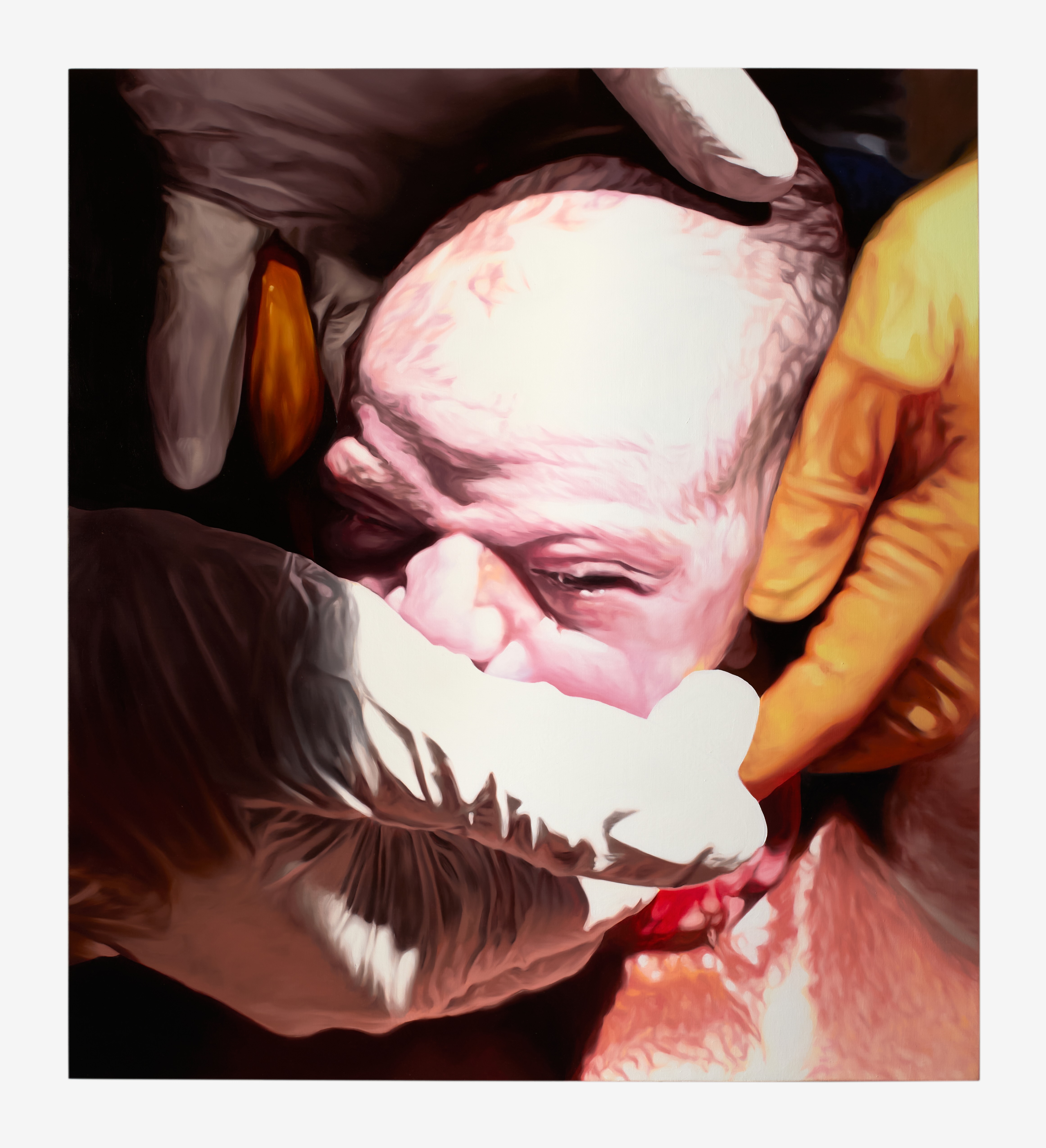
The beautiful in nature is a question of the form of object, and this consists in limitation, whereas the sublime is to be found in an object even devoid of form, so far as it immediately involves, or else by its presence provokes a representation of limitlessness, yet with a superadded thought of its totality.
- Immanuel Kant, Critique of Judgement
In literary criticism, ‘The Sublime’ is defined as a reaction to something that reflects nature so poignantly and so vastly that it is almost paralyzing. It is a sensorial experience that is so divine and so ineffable that it is both exalting and terrifying.
As I sift through the repertoire of 26-year-old Jacob Fenton, I feel a similar sensation: an almost debilitating distress due to my difficulty locating a concrete truth, yet a sort of exaltation because of its immensity. The Los Angeles-based artist just unveiled his solo exhibition Life at Brewer Martin in West Hollywood, and it is both a humbling and awe-inducing portrayal of birth and creation.
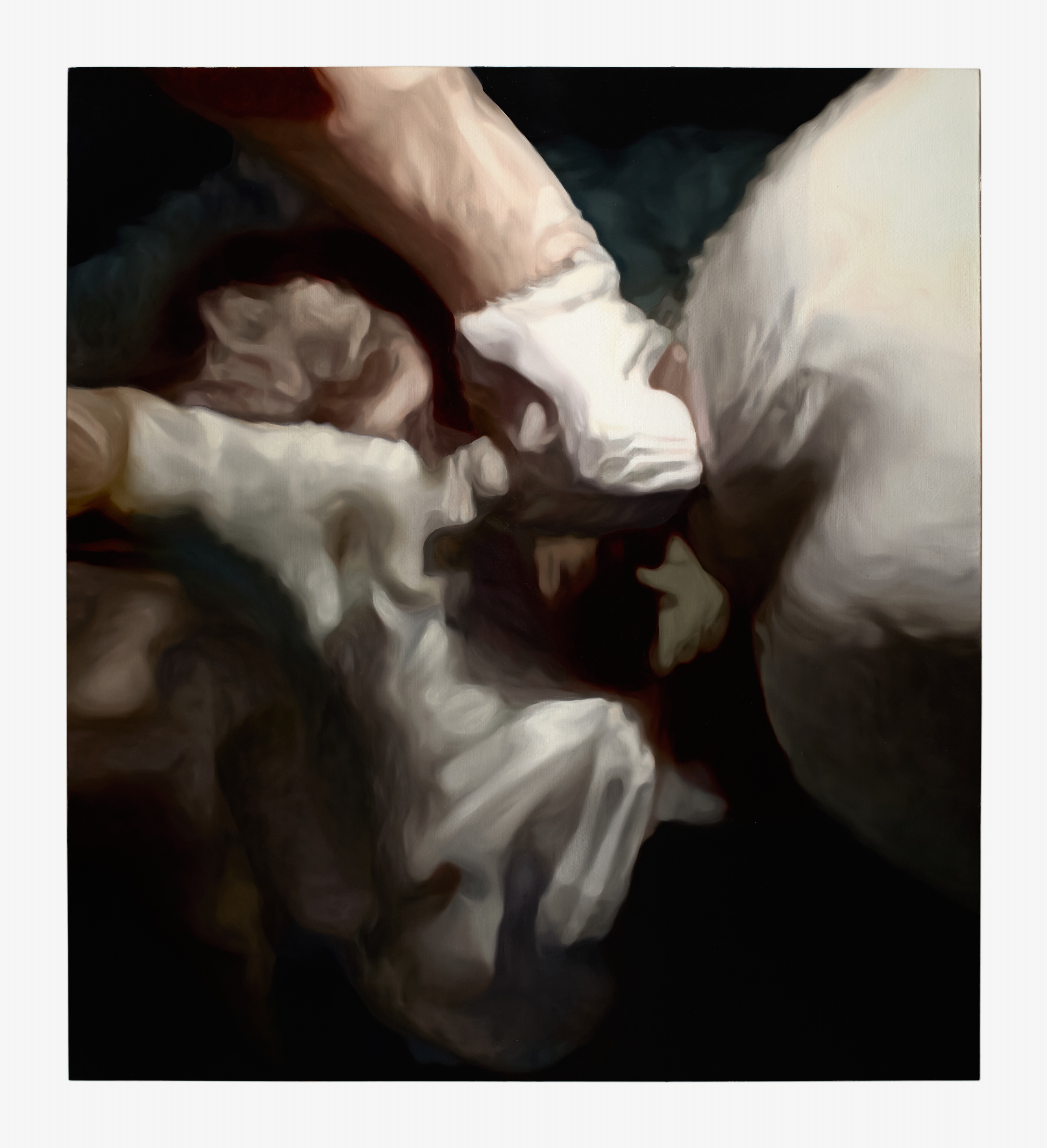
Birth is the most tangible vessel for emergent possibility we have; it is widely understood as one of the most, if not the, hope-inducing processes we could ever endure or witness. But what actually happens when we have to face the infinite potential of total nascency? When infancy and the Western processes of labor become a mirror for our own existential terror? Does Creation ultimately become an emblem of futility? Or can we locate hope in the intensity of our experience?
Based on real-time photographs taken by a doula, Fenton’s Life probes these boundless existential questions. He states that the exhibition is “less about motherhood or the actual action of giving birth, and more about being witness to it.” The viewer becomes immersed in the doula’s perspective, the vessel between these experienceless, these organ-like beings and our society of total existential ecstasy. “It was more about what it means to guide something that is an organ into becoming an individual. And what are the implications of that?” he says. “The doula's perspective represents something more. I guess they're almost giving this thing–that is not even alive yet–identity, or humanity.”
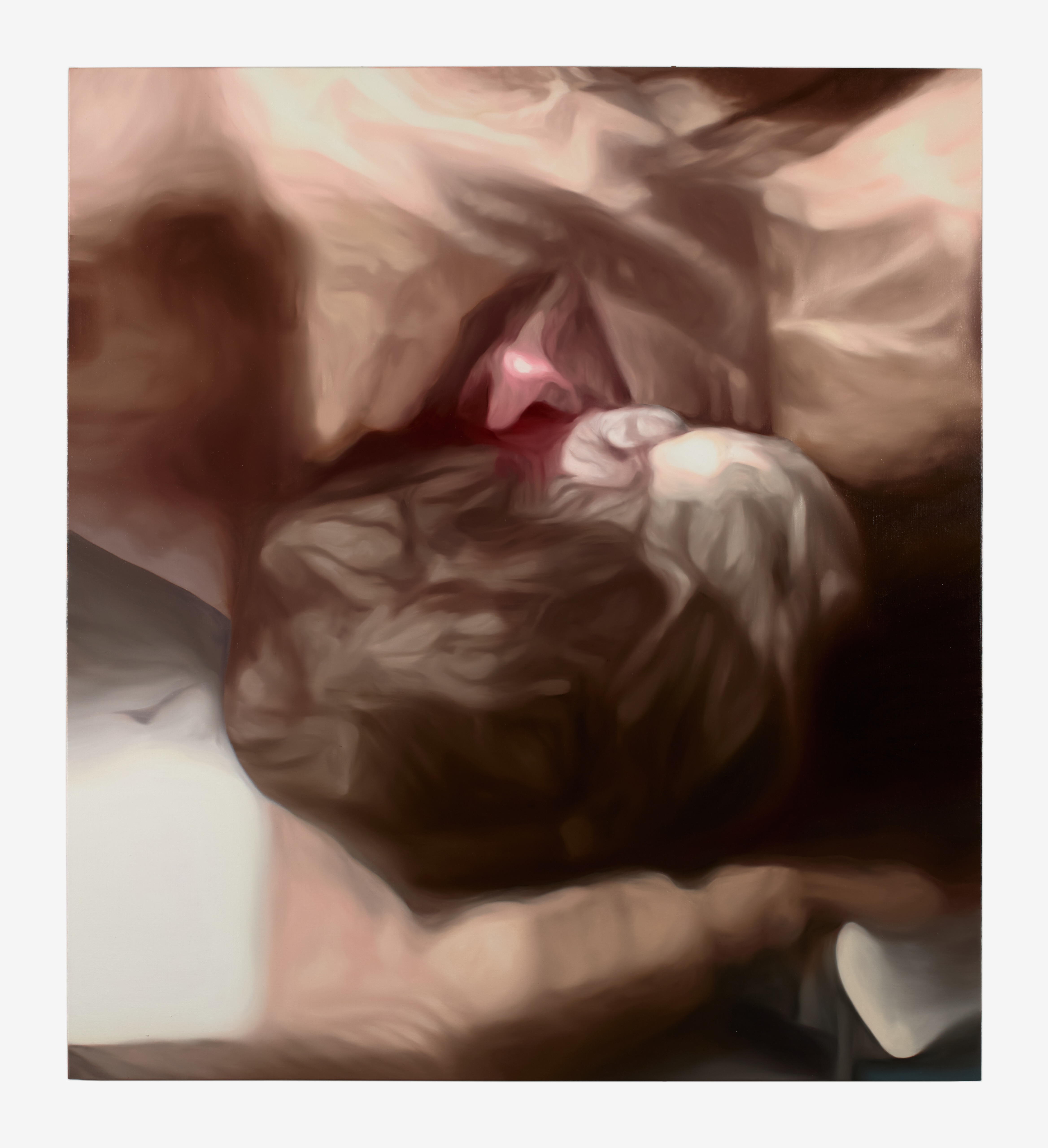
The paintings are clinical images, yet they are far from devoid of sentimentality. The semi-liminal texture of his imagery, the expressions on the infants’ faces, the sterility of the Western medical theater, the placenta almost reifying the transition between the infants’ nascent stage and identity-bearing state–the exhibition becomes a catalyst for a series of questions rather than a fixed depiction of existential dread. Does the abject horror of the Western medical sphere forever underscore our existence? Or does it amplify the capacity of human vigor? Is temporality the only thing that renders us significant? Is our consciousness of death the only concrete universal truth? Does the sublimity of emergent possibility mirror our own fear of uncertainty?
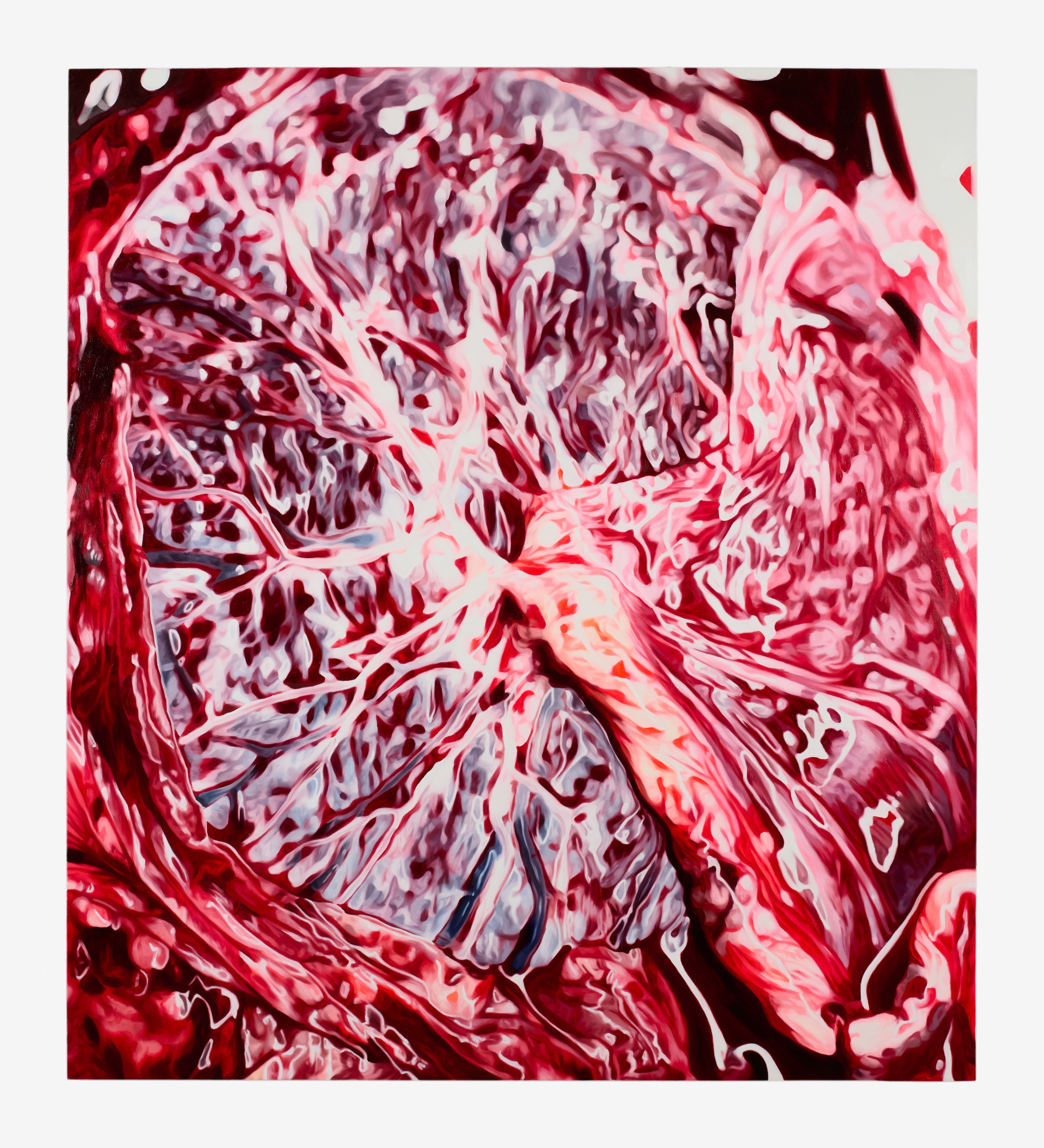
“I didn't want any association to disturb this sort of phenomenological experience of them […] they are just kind of open signifiers in a way, but signification to what?” Fenton invokes Malevich’s notion of the “embryo of all possibilities”; i.e., the infants index both the infinitude and temporality of our existence. “To which temporal space do these potentialities bring one guidance toward: to the present, past, future, or to all at once? Is it the difficulty of locating an answer to this question, or the frustration with not knowing where to start from them? Is this our nostalgia?”
What I have come to realize is that trying to locate a concrete answer with this exhibition constitutes a total axiomatic nightmare. “There's not really a point [...] I like when things can just act on you in a way that [emphasizes] a body to picture or body to object relationship, which I think painting at its best is doing,” Fenton says. “My intention is to raise the self-consciousness and [universal] consciousness. I would even go as far as to say that in raising consciousness, you can take that to different political levels.”
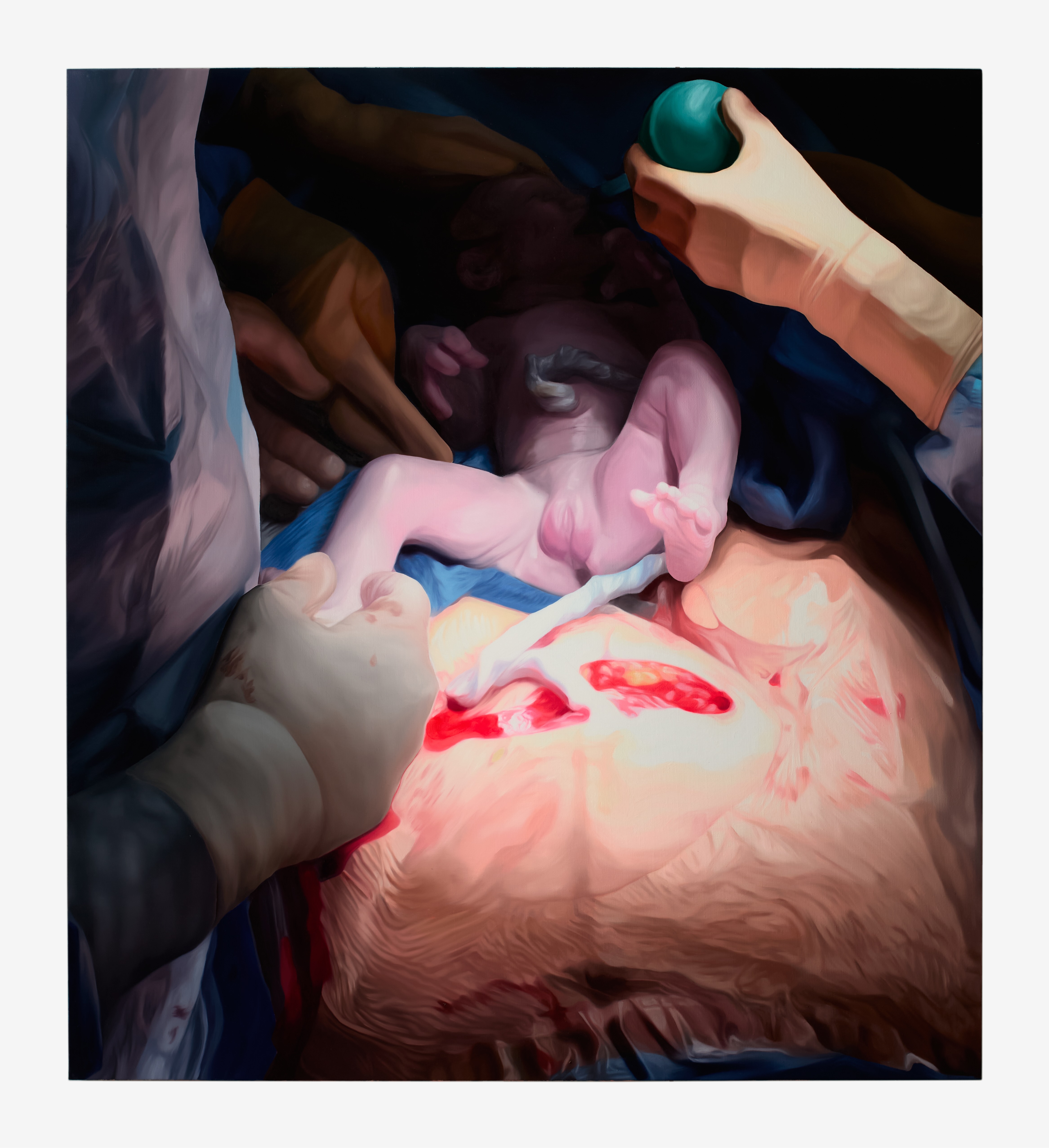
In a culture that is obsessed with effacing truth, Life is a return to primality, a penetrating revelation of some of our most primitive contradictions and instincts. “I think there's a primordial, almost schism when you're looking at it, because you project your own birth onto images of birth, and with that–they are images of birth, but they also contain so much vibration and sensations of the body.” Even writing this becomes a psychological experiment in itself, as I’m left wondering if my insatiable need to hyper-analyze this exhibition is just a mechanism to cope with a feeling that is entirely too visceral.
At the end of our interview, I tell Jacob that I choose to see this exhibition as hope-inducing. I choose this partly for the sake of my own sanity, but also because it is a truth-revealing, profoundly feeling-engendering body of work that I believe is deeply necessary. “They exist today so they are of the day, but there is a latent nostalgia in them,” Jacob says. “They’re an ever-presence of our age that beckons to an image of the future to come by way of a yearning for what was once and always will be an individual and collective past.”
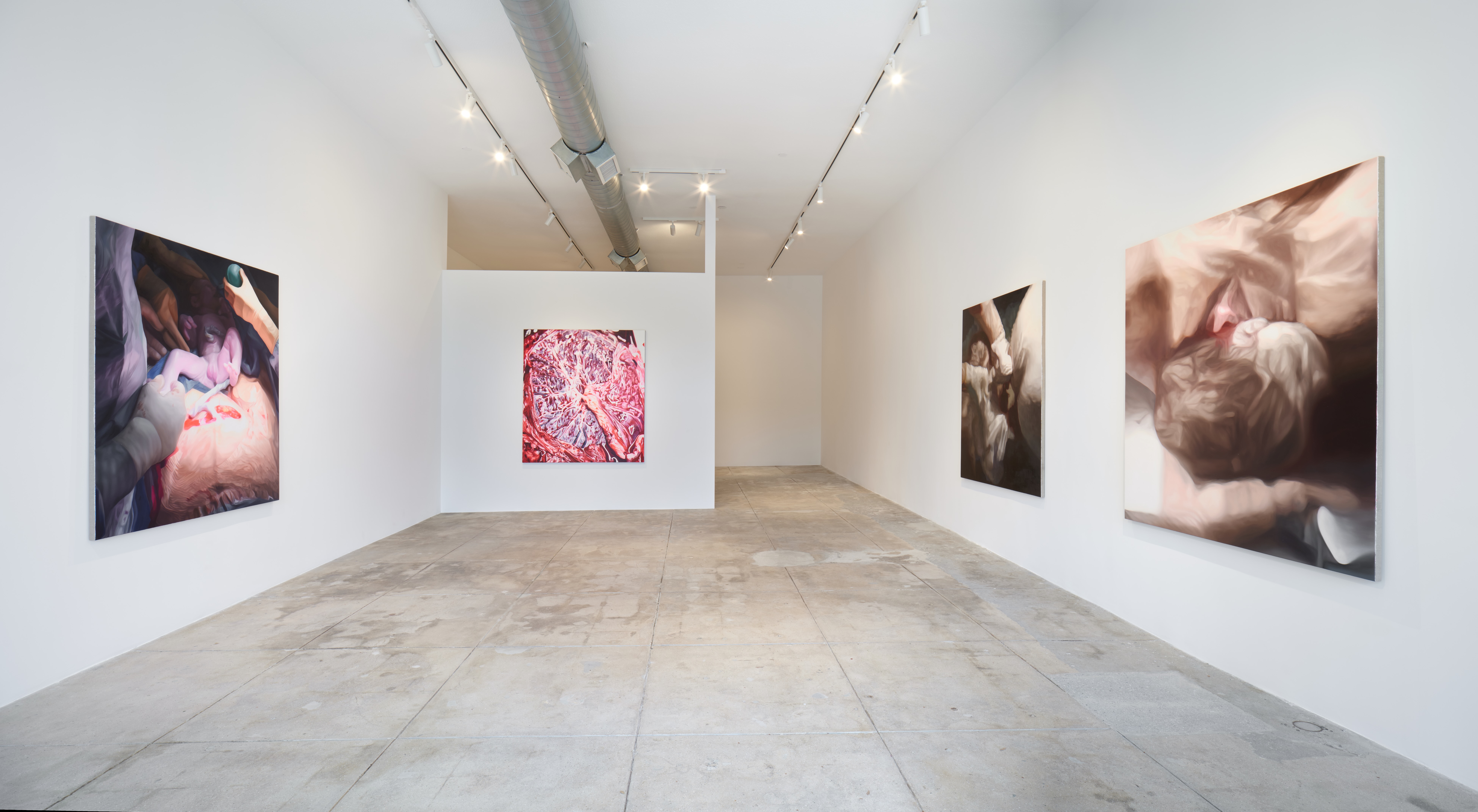
Life is on view at Brewer Martin from now through October 31st; find information here.
Stay up-to-date with exclusive events and content.


