F L A U N T


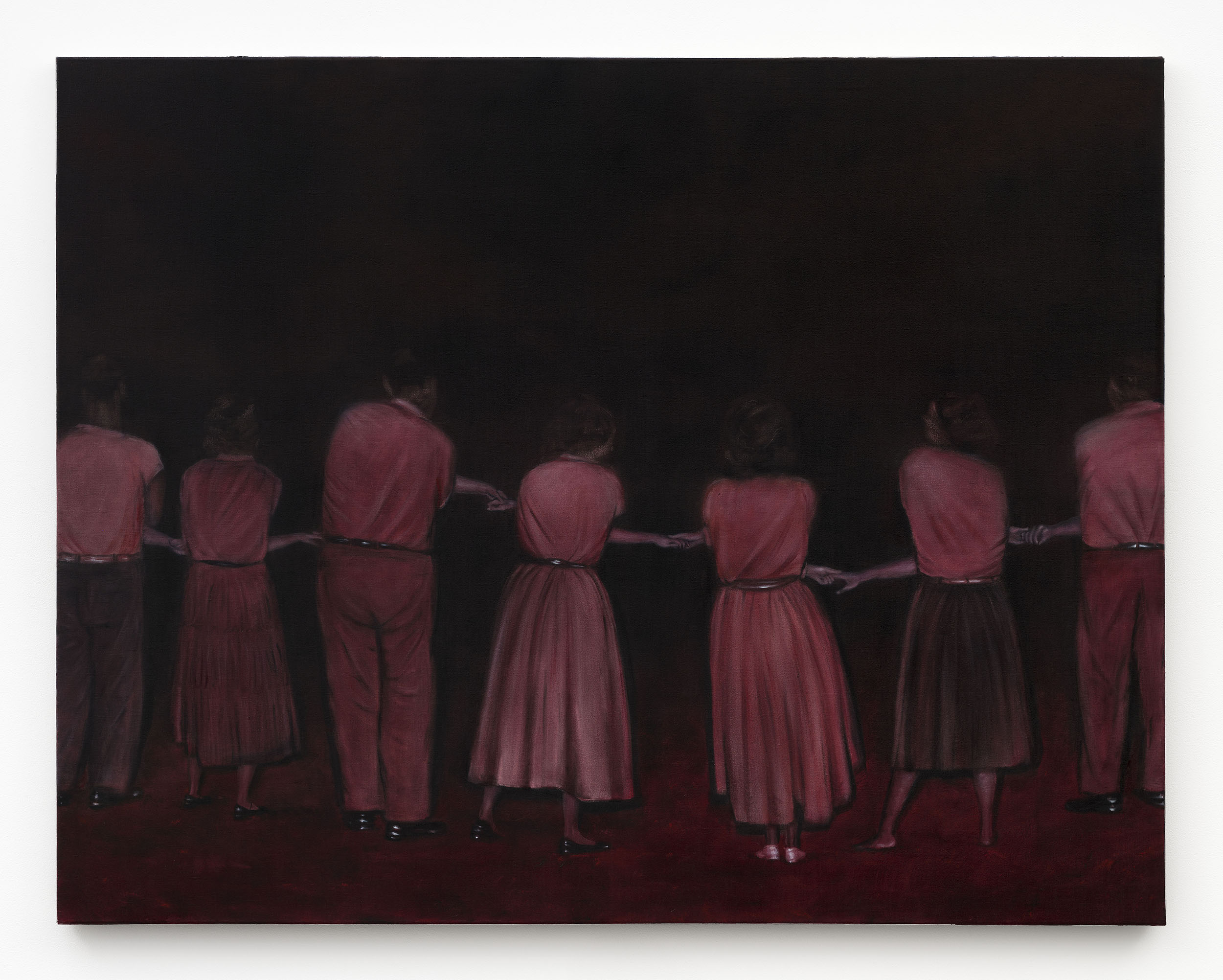
In The Marriage of Heaven and Hell, William Blake writes: “If the doors of perception were cleansed, every thing would appear to man as it is: infinite. For man has closed himself up, till he sees all things thro’ narrow chinks of his cavern.”
At the time, Blake was responding to the essentialist dogma that defined the Western tradition, positioning readers to think critically on topical themes regarding freedom of the mind, soul, and spirit. Blake was notorious for commenting on the West’s denigration of the human imagination and fixation with the absolute, advocating for a mode of thought that espouses the fragmentation of the self. Two hundred and thirty six years later, London-born and Portugal-based artist Mia Middleton is following through on this ethical mission with her newest exhibition, Summoning Cleo.
Featuring portraits of arcane hinterlands, figures in isolation, and obscure, ultra-specific gestures of sentimentality, Summoning Cleo oscillates between phantasmagoria and materiality. Her second solo exhibition with Roberts Projects, the exhibition is almost a test of patience, asking viewers not to bridge the gap between liminality and tangibility but to surrender to the disorientation of complete and total distillation. “I believe in emergentism, and I’m really interested in relational ontology,” she says. “So, this idea that there is a whole, but that the fragments that create that whole have properties that go beyond what the whole is as well—I believe that on a day-to-day level, like in the world.”
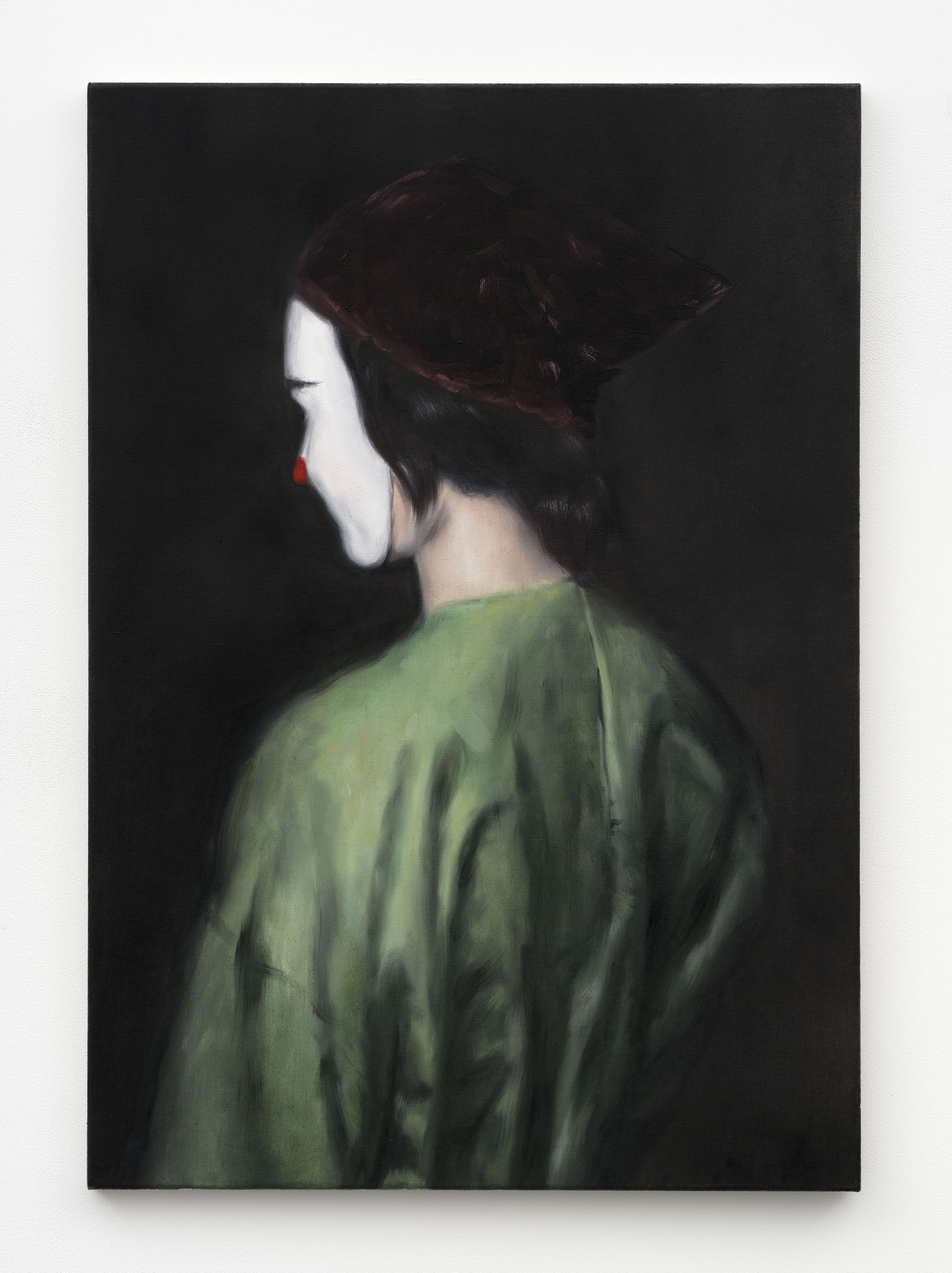
To Middleton, Summoning Cleo is about “Trying to summon an entirely new world, [an] entirely new way of being, [an] entirely new faith.” The exhibition came into fruition while she was trying to get pregnant, and the paintings embody her own fear of immateriality: “There was a lot of grief and a lot of yearning and a lot of setbacks over quite a number of years, and so this show kind of became this yearning for this sense of innocence, this fantasy life that wasn’t materializing— this show was partly my attempt to make peace with either outcome.”
Throughout the exhibition, Middleton endeavors to vivify the disorienting experience of accessing faith, in both its tenuousness and the melancholia that comes with its achievement. In “Turning (Outside the World),” a woman faces away from the viewer while remaining visible enough to see that her face is masked with clown makeup; “Citadel” features a fortress situated on the top of a hill, shrouded in the haze of a crimson dystopia; in “Fifth Weapon,” a shadow of a man wearing an eerily tilted top hat is depicted, almost beguiling the viewer to join him in isolation.
The proverbial cherry on top of the exhibition is the fact that Cleo is actually never overtly depicted— she is only an elusive figure summoned to embody the transience of being. What’s incredible about Middleton’s work is that, rather than forging an allegory for the entire exhibition, she invites viewers to simply sit in the surrealness; in the discomfort.
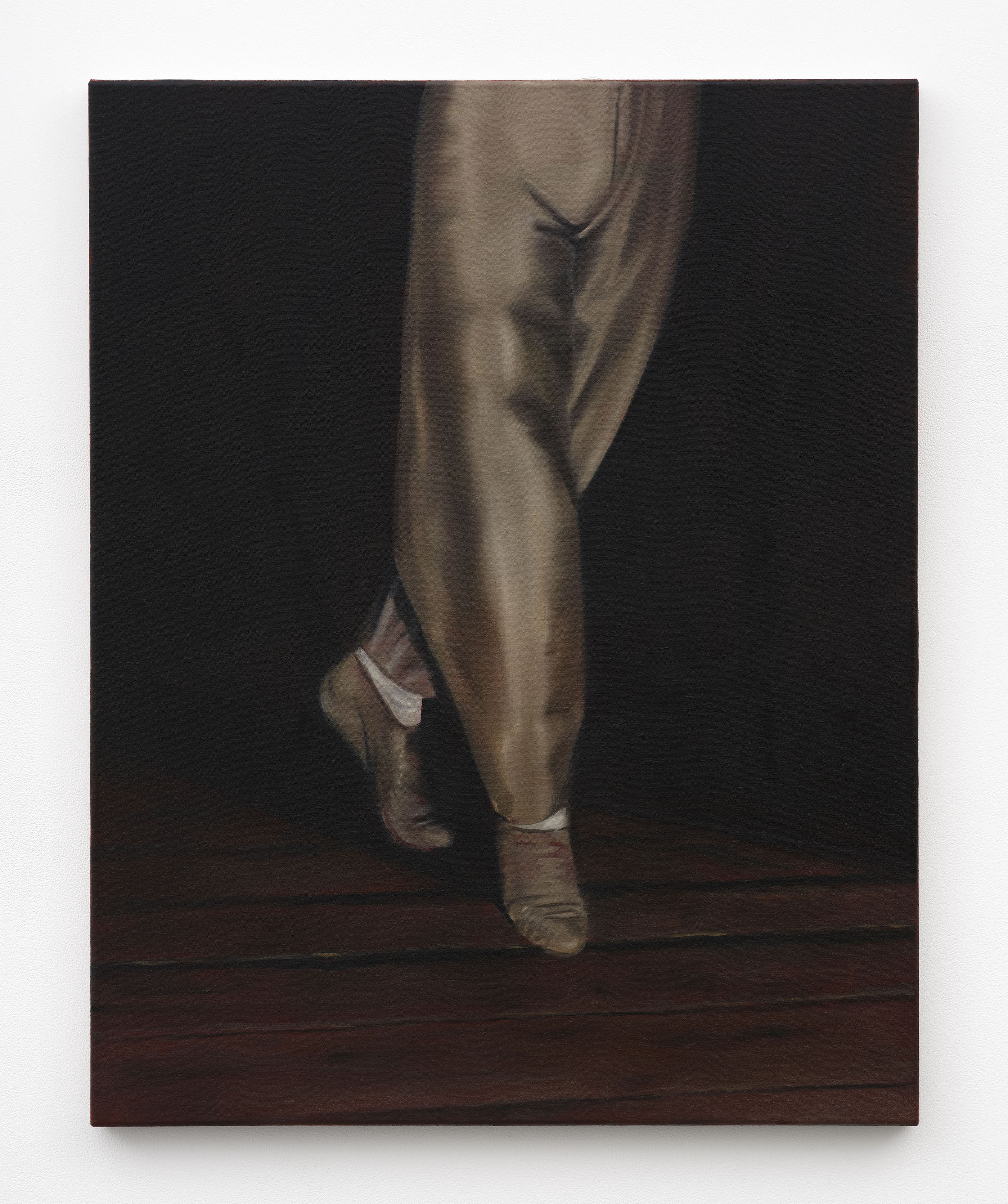
When I speak to Mia about the exhibition, I’m almost humbled by her effervescence, a quality I admittedly did not initially anticipate given the eeriness of her repertoire. “Some components of yourself require exorcism more regularly,” she tells me. “I think that for me, those that I’m purging through my paintings are a component of me that isn’t necessarily going to be cleanly understood through my communication style.” Middleton, to me, is an ineffable portrait of human plurality; she possesses the capacity to probe the futility of the human condition while retaining her jovial sensibility.
Middleton does not evade the disillusionment that emerges amidst the pursuit of vitality; she experiences it in its totality, allowing the multiplicity of her interiority to imbue viewers with the hope of human potential.
“[Summoning Cleo] tracks my disillusionment, my lack of resilience, my rebuilding of belief, and then my movement towards a sense of building […] I’ve needed to create a sense of faith for myself, and I kind of had to start with all these fragments,” Middleton says.
The artist’s portraits of despondency and isolation are actually a yearning for life, and her ability to portray such specific moments of suspension is actually the result of raw human spontaneity. “It is so much about what are the raw materials that you build a life and a sense of purpose from, and how abstract that actually is, and how so much of that is just the practice of your own personal rituals and trying to find any sense of spontaneity a priori, a lust for life at a time when everything’s falling apart.”
Middleton does not shy away from the bleakness of truth, yet her palpable fervor endures. “I’m fine to be fragmented, and I guess that’s coming back full circle because that’s so much of how I believe what life is […] The joyousness of aliveness—it’s a primordial state of being.”
Stay up-to-date with exclusive events and content.


