F L A U N T


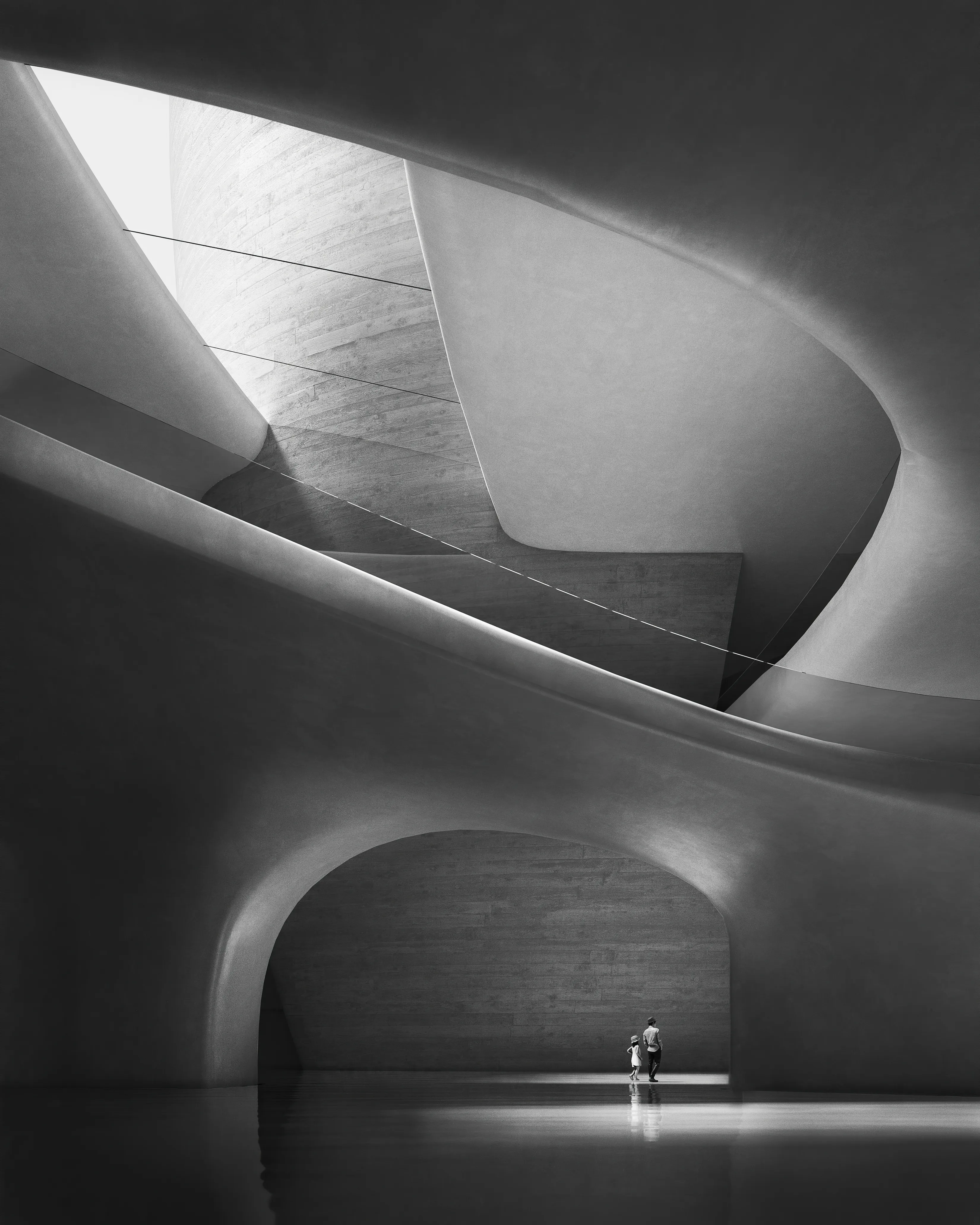
Asked many times to imagine the future of a site, its street, neighborhood, and even city, architect Ma Yansong admits that the profession too often avoids a conversation with the public on its own terms.
“Many architects don’t explain the idea. They talk about function, about logical, rational things. That’s hard to attack,” he says.
It’s true that buildings are complex, demanding the labor and expertise of thousands of workers over many years, but we’ve become quite good at building. At least, when good building is the goal. For Ma, founder of MAD Architects and designer of the forthcoming Lucas Museum of Narrative Art, architecture must first attend to the needs and ambitions of its neighbors and inhabitants, no matter how combative or divergent. The rest is simply a matter of execution.
“The idea for each project becomes very specific when you go to a place and meet people.” A solo visit to the site may provoke a concept. Sometimes the client brings their own. “Or, I have no image until we sit at the table, have dinner, drink too much, and suddenly you have something and then pull out some paper. I don’t know when or where, but some key information becomes complete.” It’s an unscientific path, one that extends and branches as more perspectives get involved.
The director of the recently completed Fenix Museum in Rotterdam accompanied Ma on his first visit to the existing warehouse when the architect noted something about opening up the roof. “He remembers. He kept saying that my first sentence was all about movement, people’s movement, air, light. That inspired him as a curator. So, when I say, ‘This is my true feeling of the space,’ I also think about how he received the message.”
This scrap became the image of a tornado or a seagull, depending on the venue, eventually resulting in a pedestrian spire of chrome swirls bursting from the concrete structure. “This is public art. It becomes something that everyone can judge, right? So, the discussion becomes very abstract.” Abstraction, for Ma, is participatory—it invites speculation and interpretation.
MAD has also cultivated an internal vocabulary. Shanshui (“mountain-water”) refers to a traditional style of landscape painting in which “nature” is highly composed, nearly detached from reality. Ma dabbled in ink painting as a student. He later encountered the proposition of a Shanshui urbanism in the writings of Qian Xuesen, a notable engineer and cyberneticist dissatisfied with the aggressive redevelopment of Beijing.
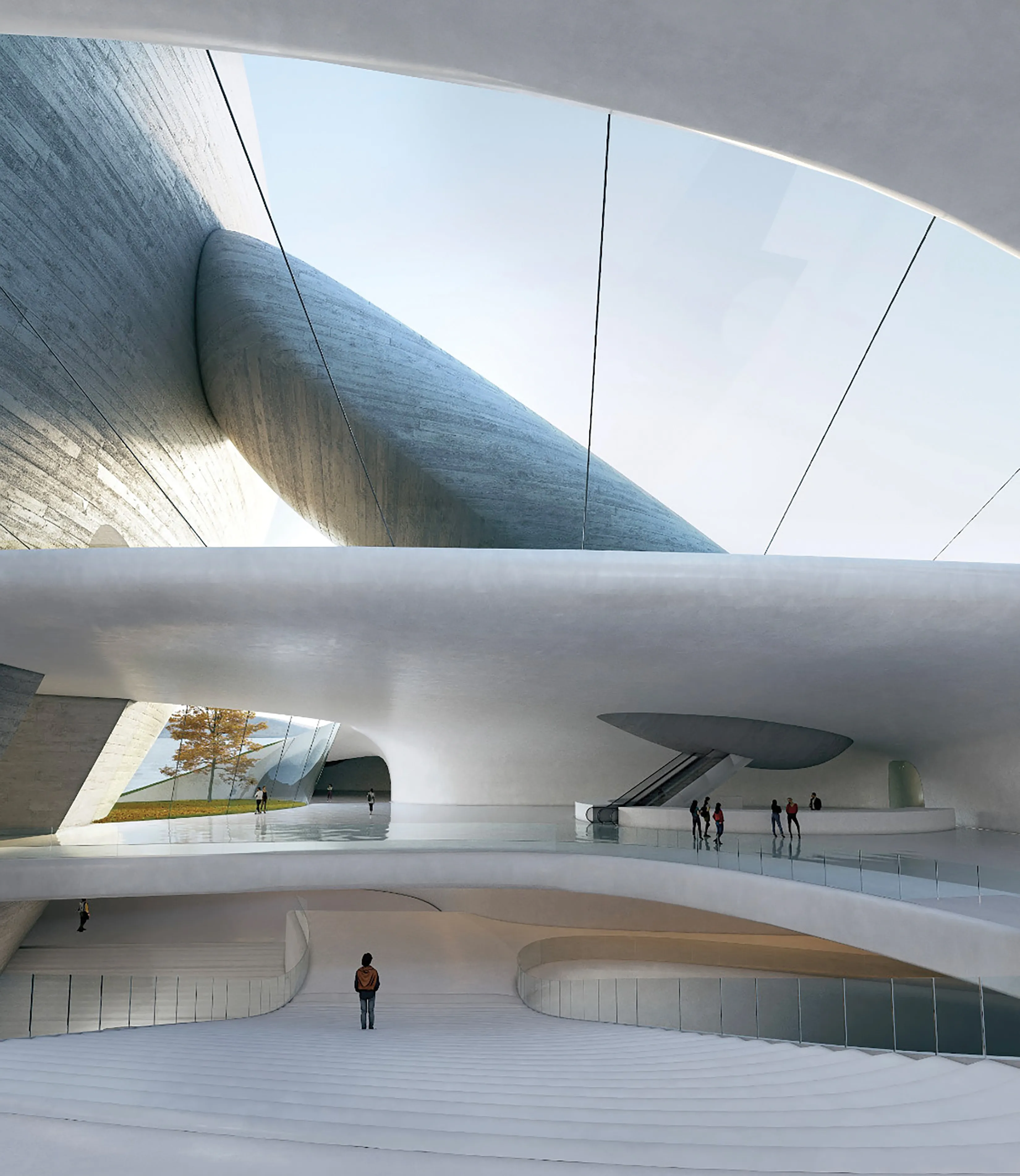
In 2015, Ma published Shanshui City, a manifesto of sorts advocating for an architecture of emotional composition—not the image of nature, but its spirit. The new Shenzhen Bay Cultural Park, for example, is more land art than building, Ma explains. Between the city’s dense forest of towers and an oceanic bay, MAD designed a cluster of building-scale “pebbles” to sit atop an undulating landscape. There are no trees around the projecting stones—this would break the confusion of scales.
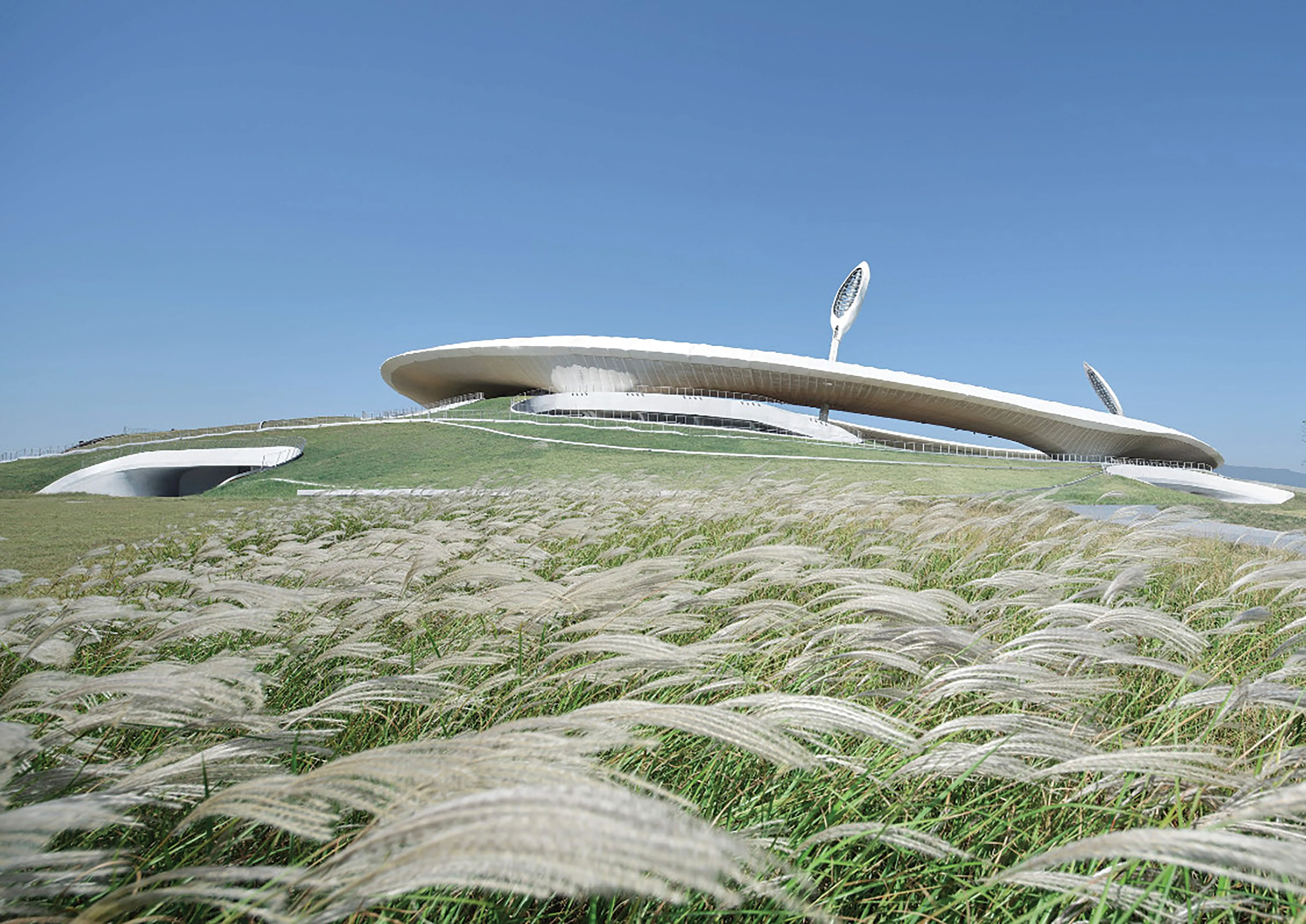
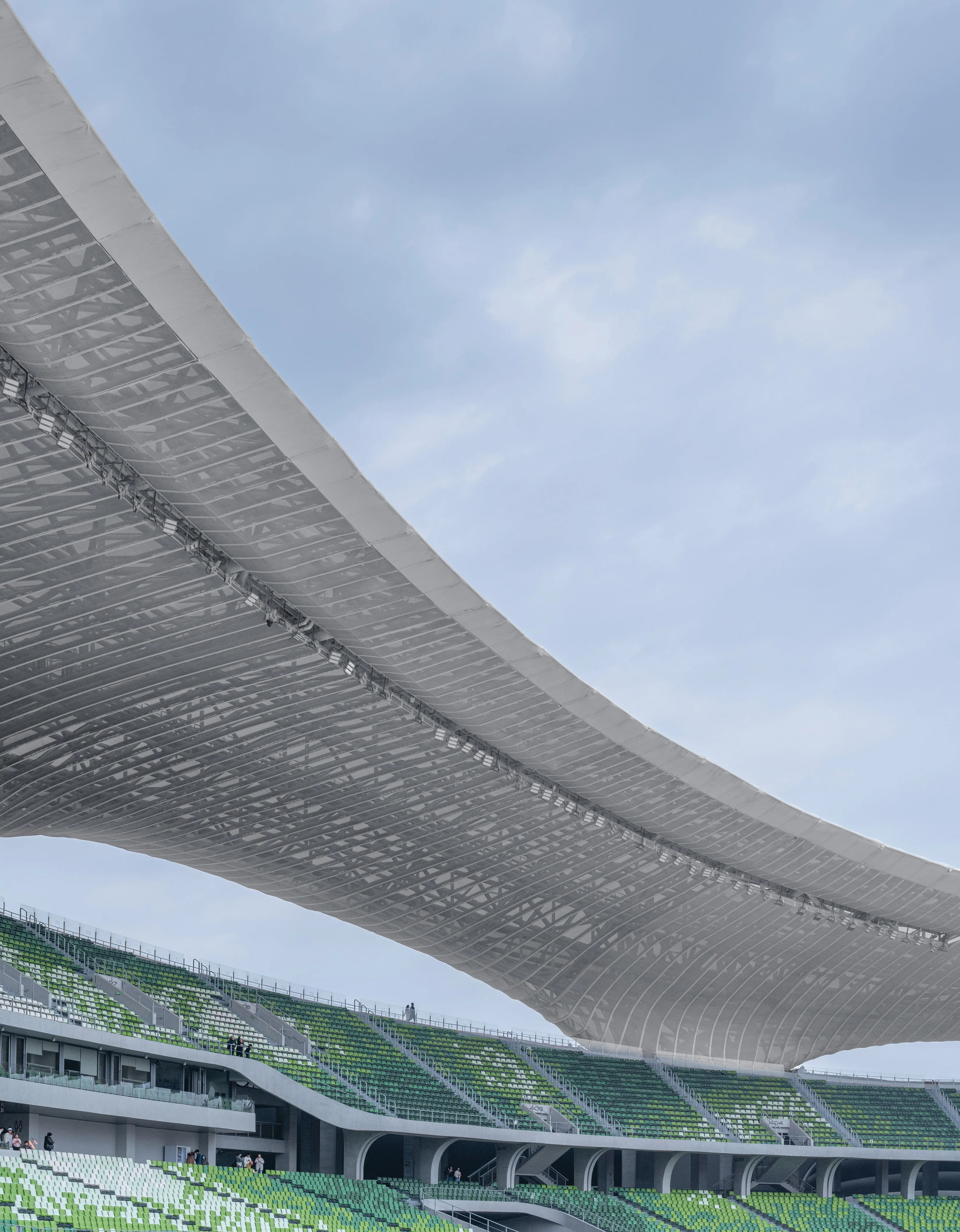
Likewise, the new Quzhou Sports Park sports complex submerges interior spaces below vast grassy plains to echo the surrounding mountains. “That’s the beauty of a garden so abstract and imaginary. If you put a tree in that garden, it destroys the scale. It’s not an island or a planet anymore. So, instead we use grass. A lot.”
For each place a mood, both simple and commanding, arrived by massive forms. So, what about Los Angeles?
A more humble mixed-use development for Beverly Hills first brought MAD to the US over 10 years ago. Drive down Wilshire Boulevard and you’ll spot Gardenhouse, a cluster of white cartoon houses popping up from a podium made entirely of vertical planting (a sly nod to the paranoid hedges that occlude nearby Spanish Revival mansions).
Los Angeles has its own history of formal fabrications, or even a lack thereof. “History? Not necessary. It has a vibrant, pioneering spirit, it embraces the diversity of its inhabitants.” The LA school is not a style, Ma suggests, but an assortment of eccentricities that eventually seep into the norm.
At Walt Disney Concert Hall, for instance, “I see people excited. They have to appreciate the building in order to appreciate what’s inside. The music conductor in there is also not a traditional guy.” This pattern of newness shoots past mere consumption; rather, these iconic buildings index a social activity particular to place.
So it goes in Exposition Park, where a brand new cultural institution is set to open this fall. Indeed, the Lucas Museum arrives after more than a decade of public dialogue: first a contentious one in Chicago, then an elaborate courtship from both San Francisco and Los Angeles.
For each city, a unique design (though all curvy). “Some architects just need to please their one boss. Better architects care about more, about people in the future. The different voices are important... you can never make people all agree. That’s not the true meaning of architecture.”
Stay up-to-date with exclusive events and content.


