F L A U N T


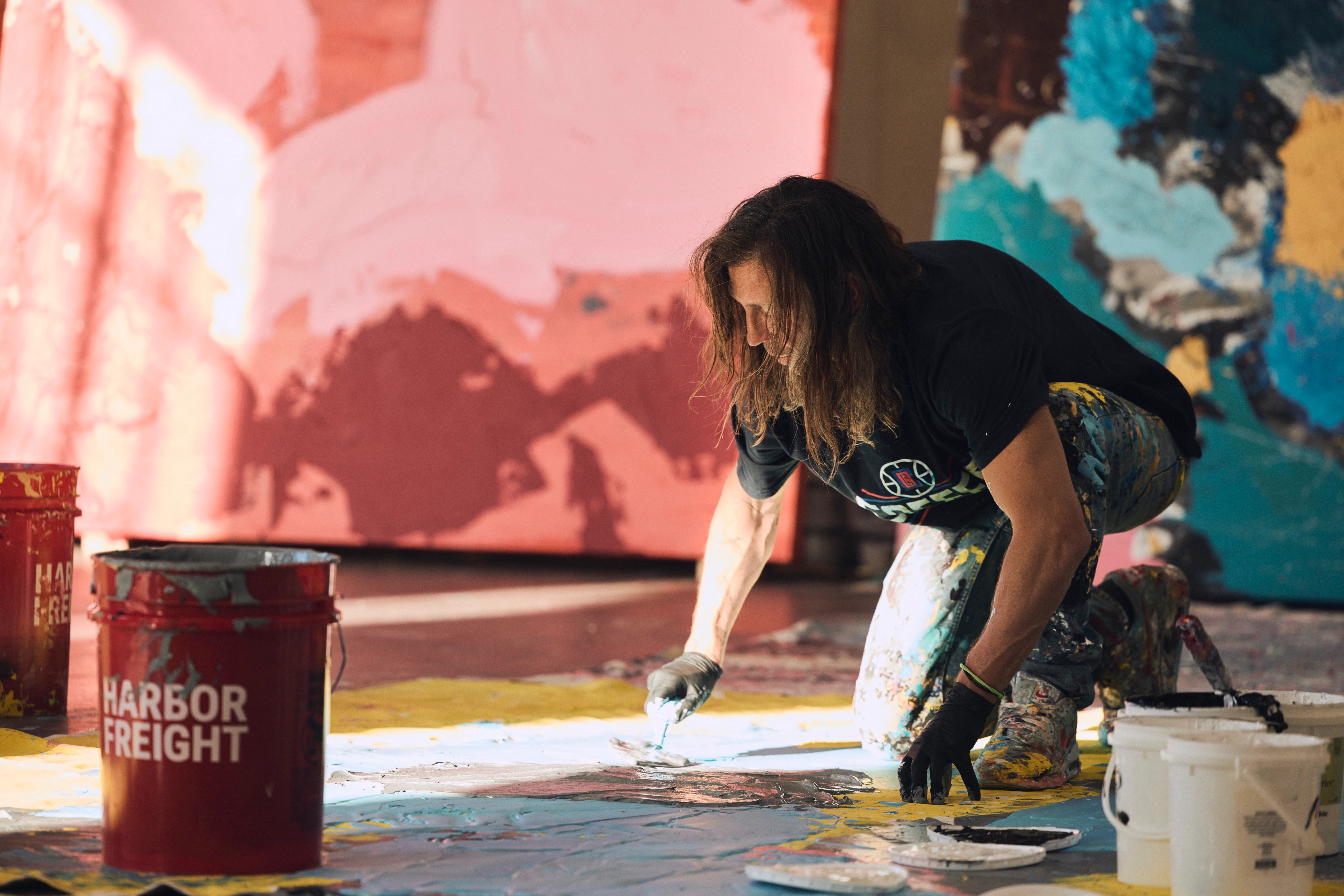
Robyn Ward is a talent once hidden from view with Banksy-esque efficiency, registering on the art world not so much as a proclaimed presence as a furtive transmission flickering through the urban static – his creations dispersed under aliases via various street art collectives, as if the artist himself were in some kind of witness protection program. But ten years ago the Irish painter lifted the long-held veil on his identity in an abdication of anonymity that has witnessed him become hugely successful – exhibiting large-scale canvases across the globe alongside some of the biggest names in the art world, while simultaneously rendering the very notion of societally prescribed ‘success’ as ambiguous, at best.
Sure, there is a street-art-esque largesse in Ward’s canvases that carries the unmistakable swagger of someone who has learned the liberties that anonymity can grant, yet that swagger conceals a complex and heavily layered sensibility–an eloquence that insists on the coexistence of personal existential crises and wider socio-political comment. His works have elbowed up against names that function as topographical markers on an art-world map scorched by commerce and celebrity, such as Hockney and Hirst, but his trajectory is not the result of a fancy art education, or ultra self-confident manifestation.
What actually underwrites Ward’s achievement as an artist is a restless, and sometimes disquieting curiosity in the vagaries of place and persona–an appetite, if not exactly for destruction, then at least for the deeply unsettled. His narrative of ascent is further complicated because his art refuses the consolations of linear teleology –it is instead a palimpsest of performative concealment, strange melancholy and ostentatious reveal; an act of self-exposure that somehow preserves the residue of mystery.
It’s key to note that Ward grew up in Northern Ireland as the violence of The Troubles was slowly winding down, and it’s a background that profoundly shaped his childhood, informing his attraction to art as both a means of imaginative escape and marker of societal unease. He thereafter made a career of being peripatetic, ricocheting across the globe in scattershot psycho-geographical adventures that leave their fingerprints across his increasingly abstract surfaces.
Both his childhood and later displacement inform the work–at times presenting an anarchic global panorama that tilts toward political elegy, where personal memory and history reverberate on a surface that feels both scarred and celebratory. In this interview, the acclaimed painter, currently residing in Los Angeles, takes us deep into the internal dance of his creative process, and tells us why he is always keen to push beyond the perceived limits of control.
You’ve talked before about your process as a painter as a kind of battle, can you elucidate on that a little, and tell us what it is like for you to come to a blank canvas
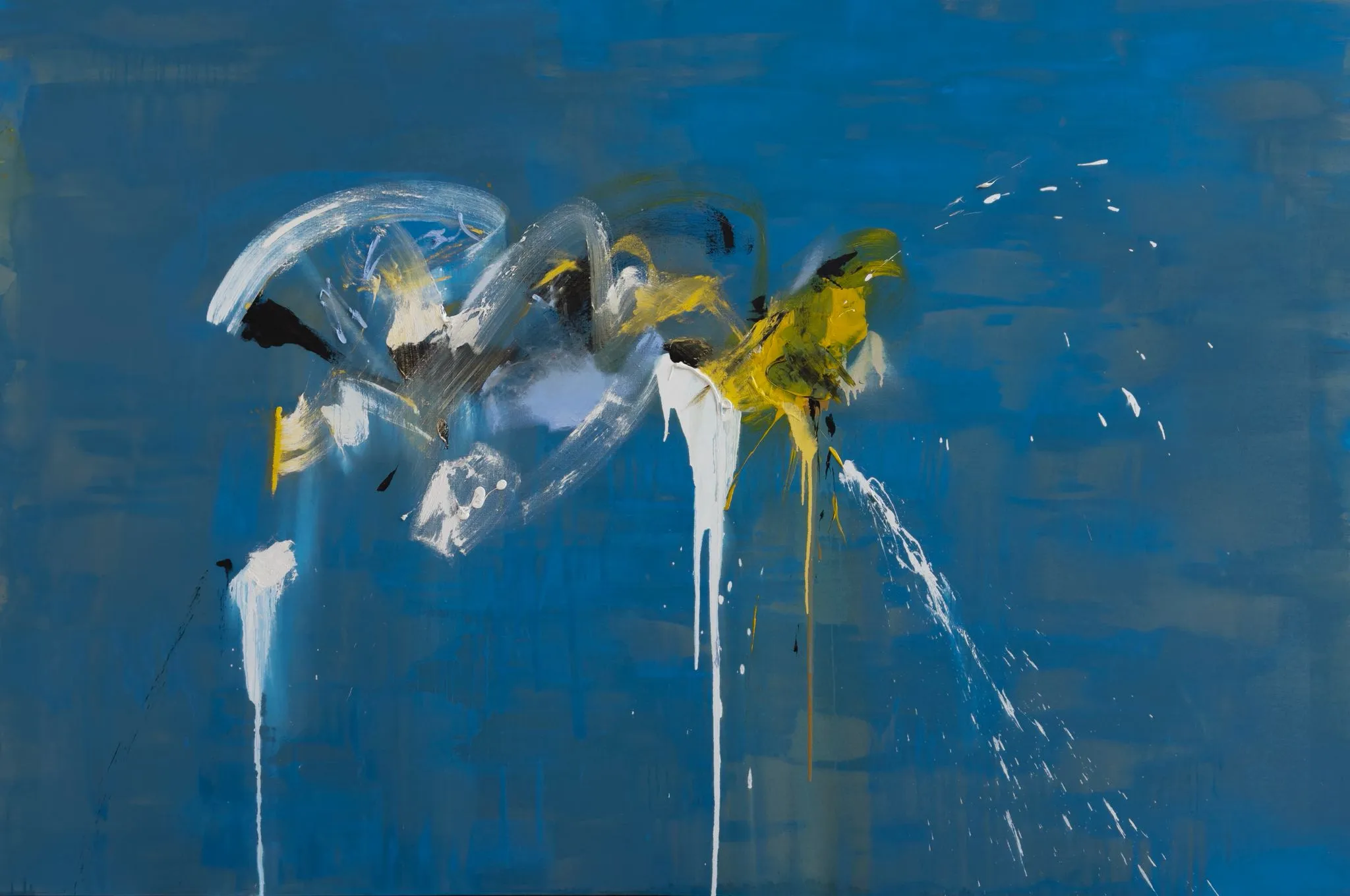
The canvas is like a dance to me, and it's a dance which can give me crazy anxiety, depression and frustration at times, but then, all of a sudden, moments of intense joy. Every painting I create involves a panoply of emotions that arise in me as I am painting, and to me the process is one of bringing up all these different kinds of moments of your life that you're then painting into, and it starts to dictate where you're going. I don't like to be too controlled, so when I paint, I’m kind of surfing into the process, and dancing with the canvas to get to a place where it sits at ease with me. And that moment can kind of take me outside of linear time – it’s kind of like transiting across all parts of time, my past, my present, and then going into the future, if that makes sense?
It sounds quite unanchored, as if you are trying to explore the flux of identity?
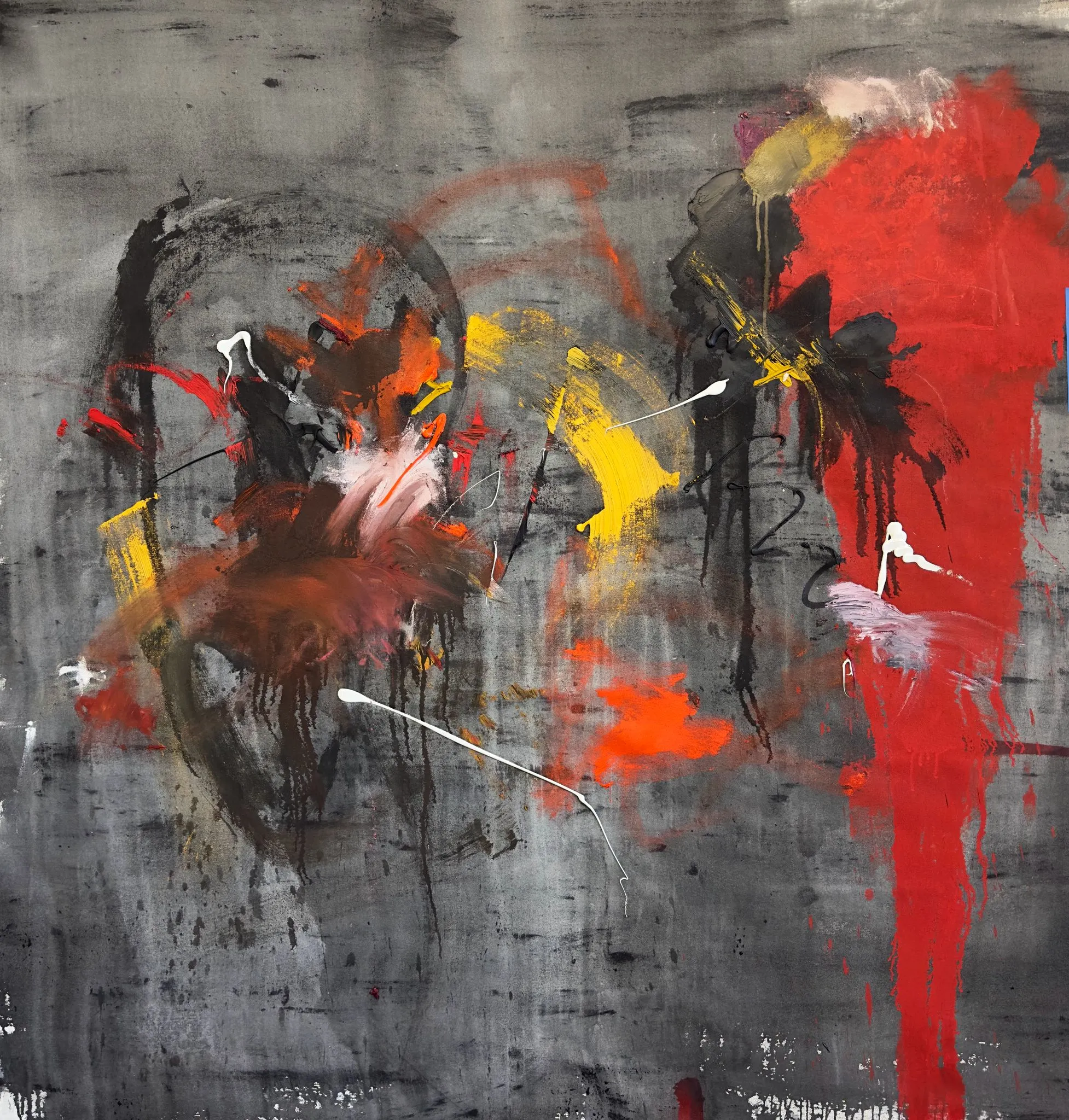
I think I'm constantly pushing that question of what identity is, because I don't believe that we are born into a certain identity, and that was always a big part of my practice. The process that I use is to paint elements of history and then also to remove history, so I'm constantly laying down layers and different snapshots of my life, and then tearing them open again. I tend to say that I am embedding fragments, and then scraping them all back to reveal what's underneath. I'm giving the viewer glimpses into different parts of myself, and experiences I've had throughout my life. I explore those experiences to the point that they start to resist and push back.
It sounds like a process of destruction and creation, where do you think that desire comes from?
It's kind of what's always turned me on from back when I started as a 15-year-old kid. I used to take this one wall in Ireland, paint a large-scale abstract piece on it, and then whitewash it, and then paint another piece on it. That was my development canvas. My first experience of art was the murals of Belfast. That's what I used to see on a daily basis, and they were always being painted over and recreated. I think that's maybe also a reason why I paint at the scale I paint, because, to me, an artwork was something that would exist on the side of a house.
What would you say essentially drives you to paint?
I think what drives me is an inherent need to paint, and I actually have to switch off and unplug from it sometimes, because it can get almost too cathartic in the studio. But then, when I'm out of the studio for too long, I start to unravel, and become anxious to get back into the studio. I think that is because when I'm laying down the different layers, and different moments that are in my head, the canvas starts to speak to me through the chaos, and take me to a place to calm. It’s a battle, though – it can be a beautiful dance, as I have said, but, at times, it can be depressing, or even morbid. That's why I paint on multiple canvases at a time. I'll often turn a canvas around and put it face against the wall, so I don't look at it – then in three months time, I'll come back to it again. It's never plain sailing. I'm surfing across a full spectrum of emotions throughout.
Do you think there is a tension in your work because your first experience of art came through The Troubles and the murals?
Well, I think what you have to do as an artist is be constantly absorbing and questioning what's going on in the world, and questioning reality.
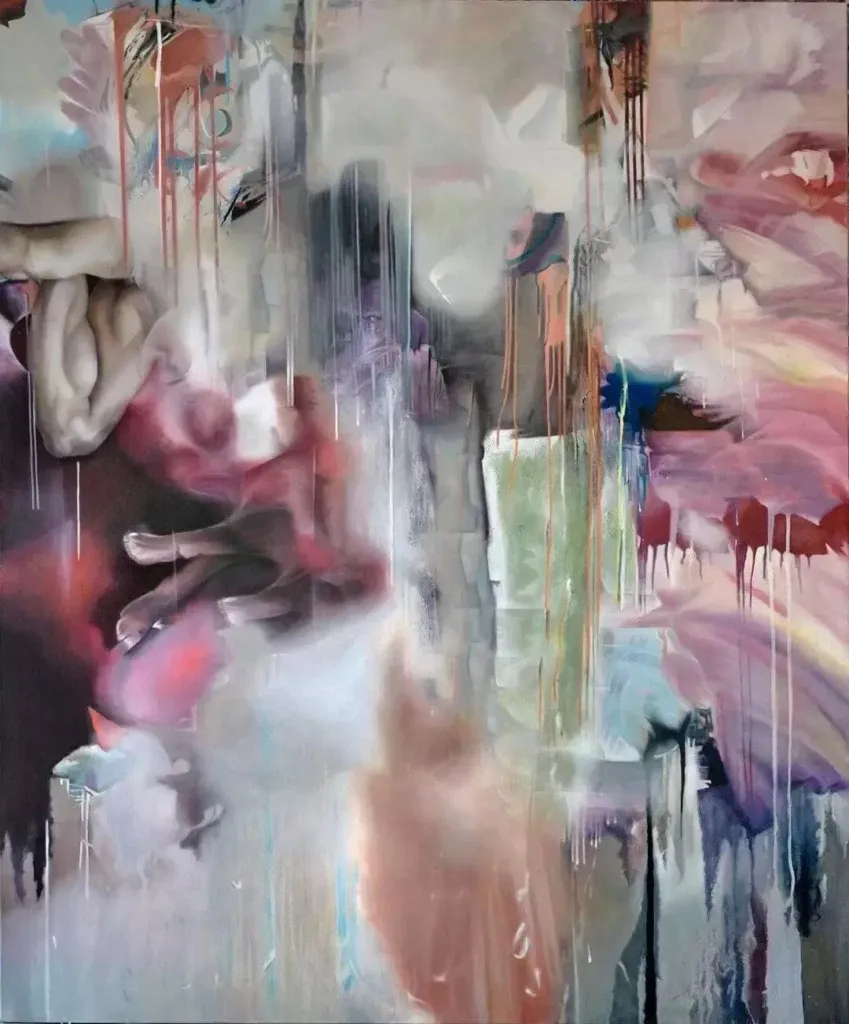
My work definitely comes back to the murals and this strange friction in which you're seeing glimpses of the past, but not the full story. When you grow up seeing these murals, which are history and walls and art pieces and tension all at once, then that seeps into your own work. By the time I was 18, it was very important to me to get out and go into different countries and cultures, and soak up as much as I could. I had a studio in Mexico City for many years, for example, and it took me about two and a half years to realize that I had brought this beautiful, kind of washed out yellow hue into a lot of my paintings, which had come from this one Taco stand that I walked past every day. Many of the influences in the work are subconsciously lifted from my environment.
You seem to be incredibly nomadic and have studios in various global locales–would you describe yourself as a free spirit?
When it comes to my work and my painting, I can be quite chaotic and all over the place, but when it comes to general life, I'm a very free spirit. I have no real plan, and I don't really want to plan out life. I have a series of sketch pads, which I travel around the world with, and I'm constantly sketching all over them. When I lose inspiration, I'll often go to certain key cities that I love being in, and go to certain hotels that turn me on from an intellectual perspective. Then I'll come back into my studio with a whole array of new ammunition, and a rough blueprint for work. I've worked and lived in many countries across the world now, and that's a big part of my development. I really believe that every time you see a new religion, a new culture, a new country, a new language, or experience a new smell, a new flavor, a new fruit, then it develops you as a person, and enables you to live without being stuck in any one idea of your identity.
Stay up-to-date with exclusive events and content.


