F L A U N T


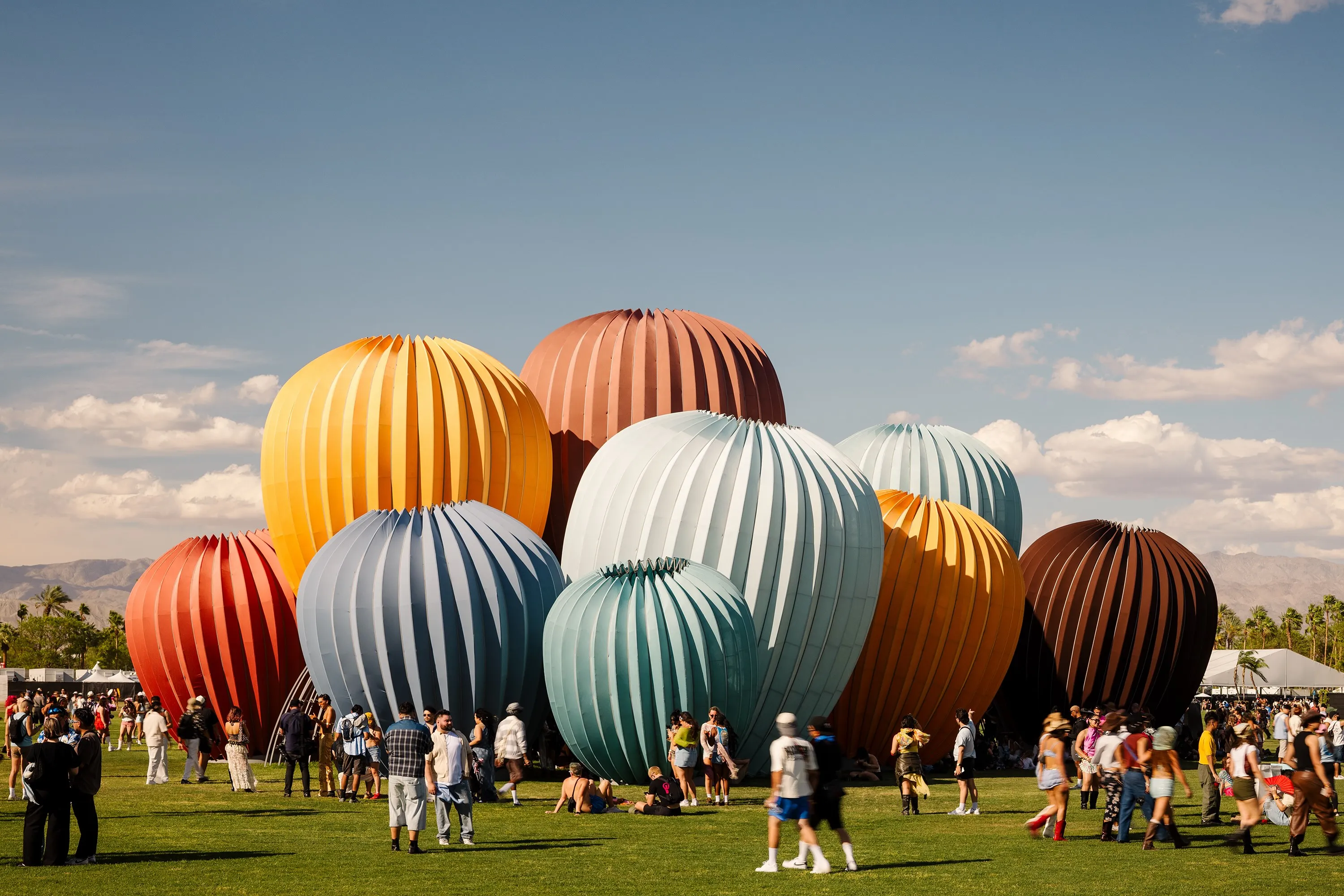
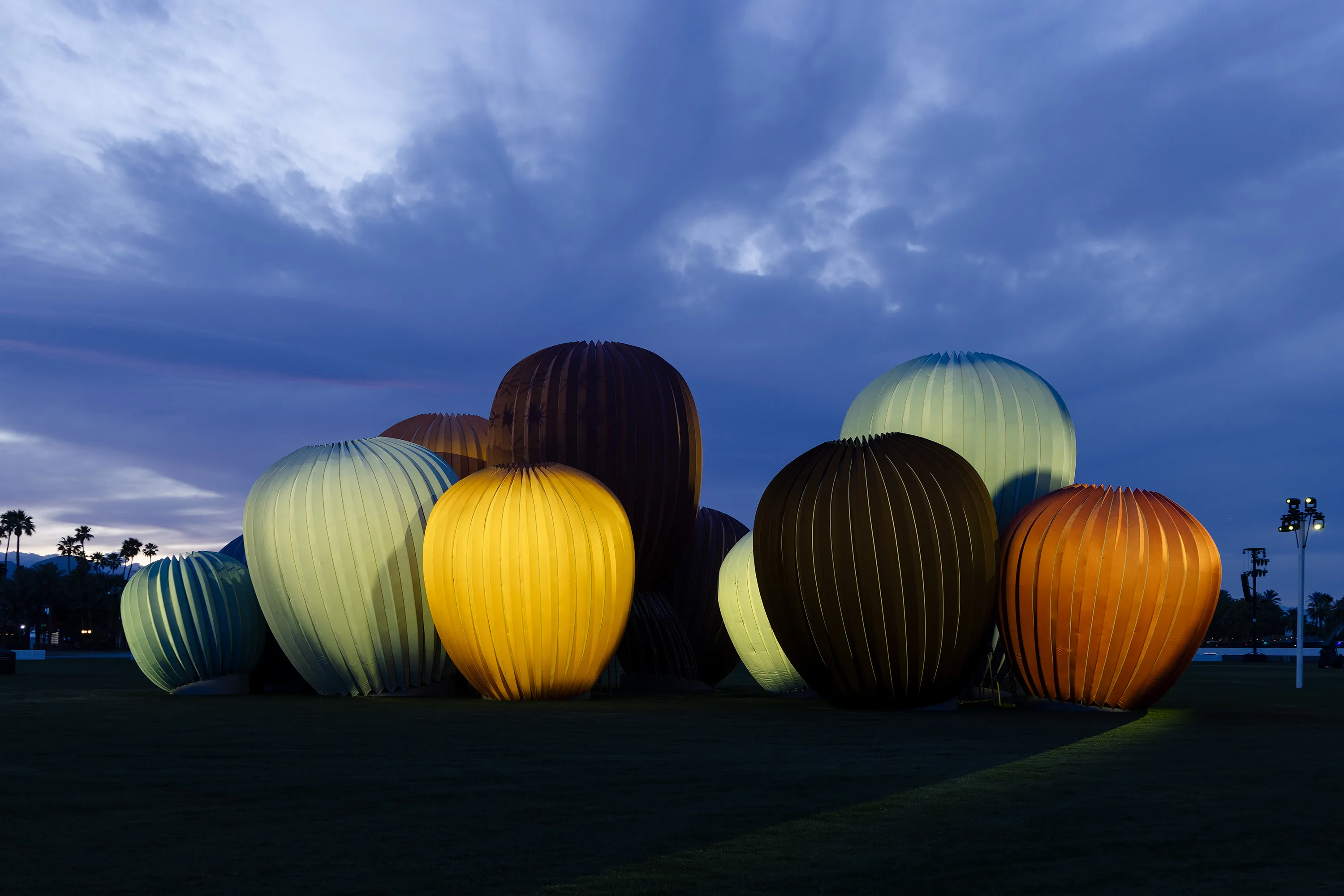
There is something inherently beautiful about desert flora–not just in its shape or color or scent, but in its insistence on blooming against harsh conditions. At this year’s Coachella Valley Music and Arts Festival, London-based architect, designer, and AR-K-C founder Kyriakos Chatziparaskevas translates that resilience into “Starry Eyes,” a field of towering forms drawn by geometric rhythms of the golden barrel cactus.
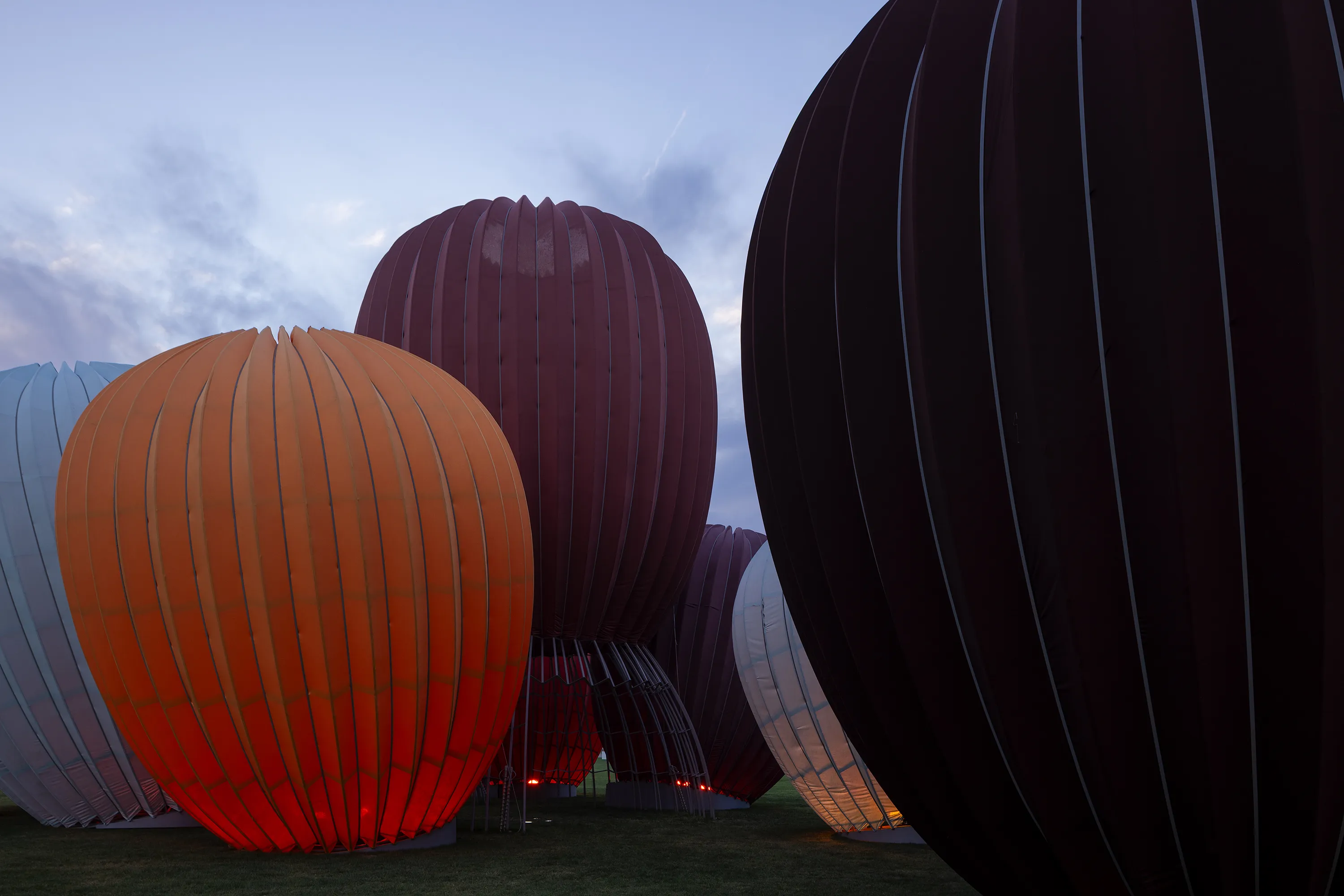
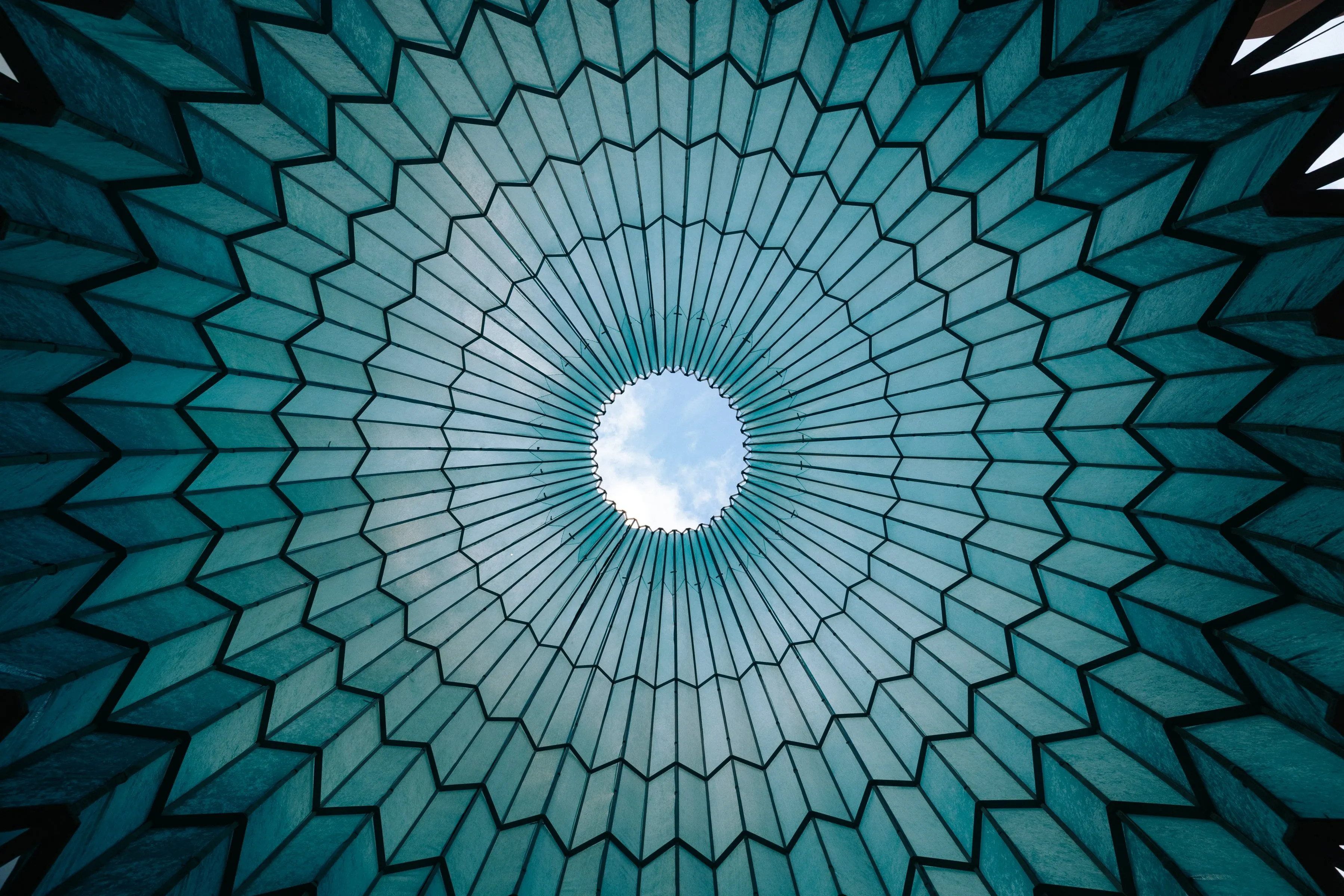
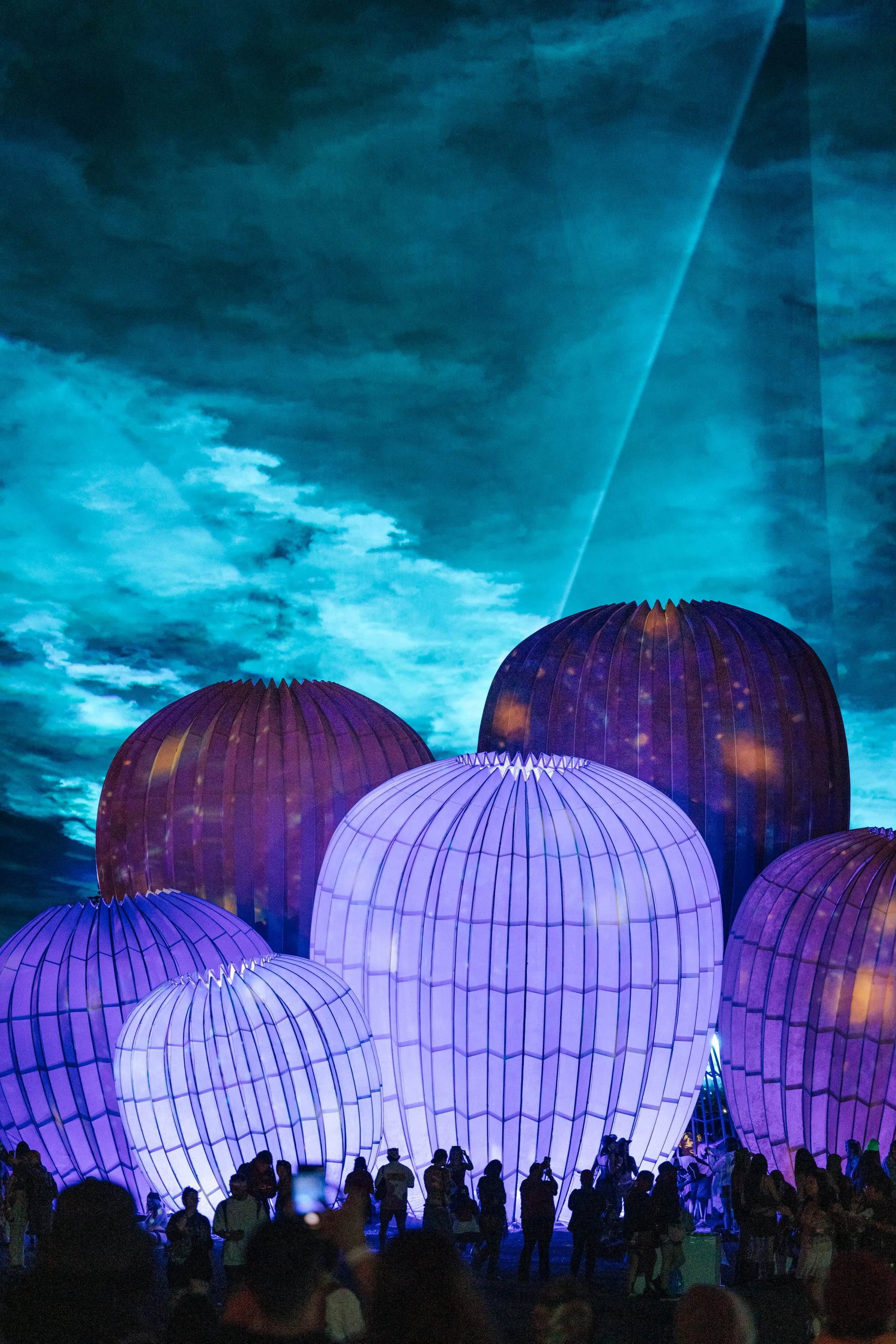
Curated by Public Art Company, led by Raffi Lehrer, Coachella’s large-scale installations have long transcended visual landmarks. Chatziparaskevas leans into the idea of art as social infrastructure, resisting the purely pictorial in favor of something embedded and responsive, shaped by the same pressures as the desert itself: sun, heat, movement, and time. Pleated fabric stretches over slender steel ribs that tilt skyward, while the star-shaped oculi puncture their crowns, opening each structure to the sky. By day, the installation offers shade, casting shifting patterns of light and shadow while subtly guiding the flow of bodies across the site. By night, those once solid forms turn translucent, now lanters glowing from within, revealing their inner structure and inviting a more intimate awareness of space, of being inside it, beneath it, and amongst it.
“Starry Eyes” creates moments of pause, orientation, and connection within the scale of it all. A reminder that art belongs to the people moving through it. In a landscape defined by vastness, it becomes a place to gather, breathe, and look up. Here, Chatziparaskevas expands on the idea of function into experience, suggesting that even temporary architecture can hold memory, shape behavior, and create fleeting but collective moments of wonder.
“Starry Eyes” feels deeply rooted in both geometry and landscape. How do you balance abstraction with a sense of belonging to a specific place like the Coachella Valley?
Coachella‘s desert landscape features some of the most beautiful plants and mountain textures. The design process focused on geometrical and spatial principles, rather than trying to be figurative about certain shapes and colors.
Movement of people, shading, site boundaries, and buildability are ordinary parameters in an architectural brief. Nevertheless, even in this extraordinarily open brief, all these considerations have played an important role in developing the design narrative and final form. “Starry Eyes” should not only offer the Coachella Valley an iconic silhouette, but also a series of comfortable gathering spaces for people to explore, and a beautifully detailed structure to look at from close up.
The installation transforms from a shade structure to a luminous lantern field. How do you think about time, light, and transformation as architectural materials?
The design intent was for the project to transform from solid sculpted forms in the day to translucent shells at night.
Inside, there is a sense of lightweightness that comes not only from the slender structure but also from the natural light that pours in from the top, and the visual connection to the sky.
At night, the forms come to life with colored uplighting from inside and by light patterns projected from the outside. The light that makes it through the fabric reveals the hollowness of the shapes and the thinness of the skin, turning “Starry Eyes” into a three-dimensional canvas that pulses together with the festival.
You reference both desert flora and icons like Lautner’s Bob Hope House. What draws you to bridging natural forms with architectural history?
I saw in desert flora and Lautner‘s Bob Hope House ways that nature and man celebrate resilience to Coachella’s desert climate. The golden barrel cactus owes its characteristic ribs to its need to store water and survive in the desert. On the other hand, the Bob Hope House volcano shaped atrium with its oval opening at the top provides passive ventilation and natural light for comfortable outdoor living.
The idea was for the project to be designed from the inside to the outside, as much as from the outside to the inside.
You’ve said the work must “belong to the joy of the people beneath it.” How do you design for collective emotion or shared experience?
The arrangement of the cacti into clusters creates two types of spaces. The first is the space below the floating cacti that draws the eyes upwards to the star-shaped openings at the top. The second is the interstitial spaces between the cacti that stand on the ground. These spaces provide shading, facilitate way-finding, frame the views to the main stage, but most importantly, offer opportunities for socializing and exploration.
The hypothesis was that if people get at least two of these benefits, they will most likely enjoy spending time there and experience something memorable.
Stay up-to-date with exclusive events and content.


