F L A U N T


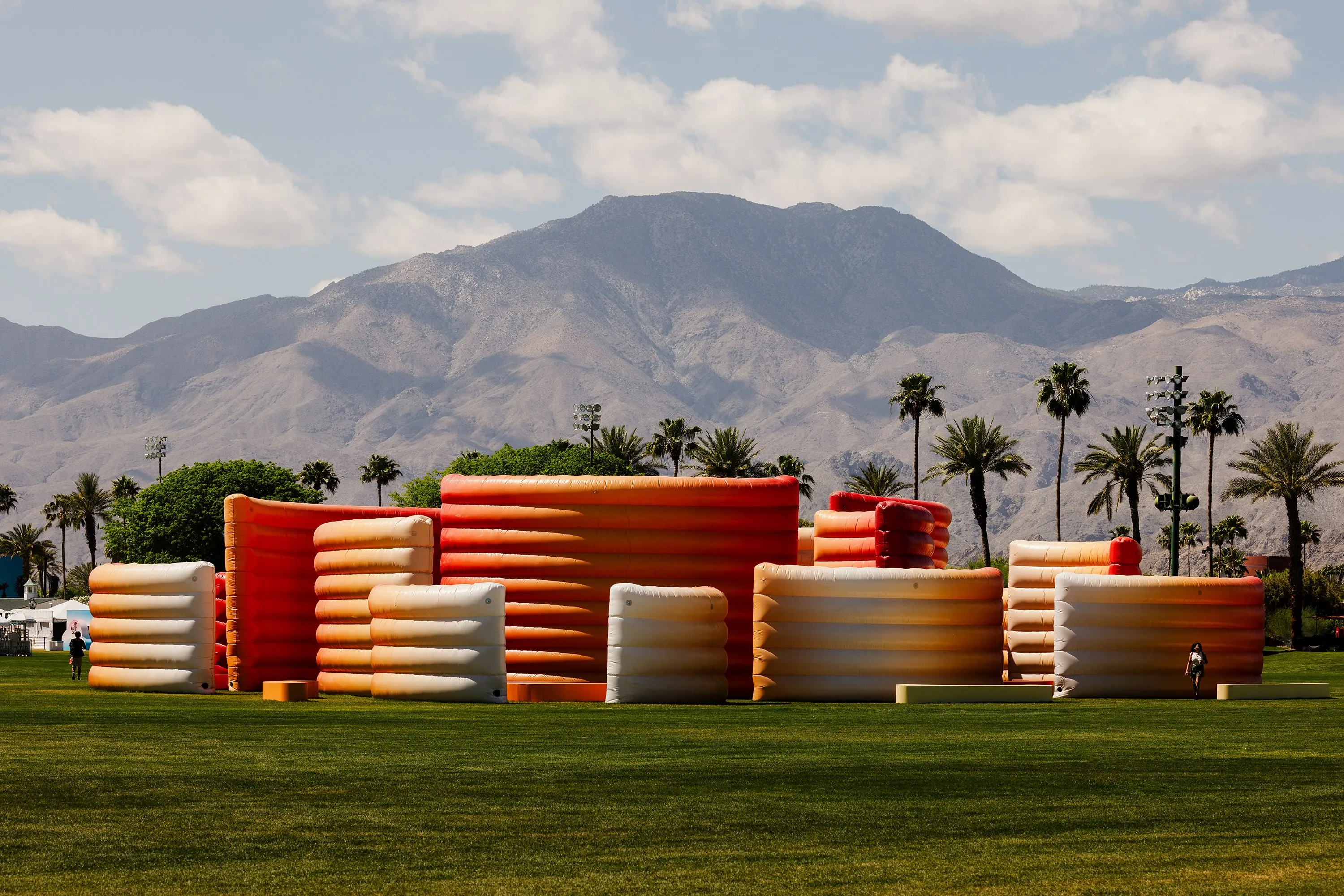
At the Coachella Valley Music and Arts Festival, most people and things ask to be seen. But Sabine Marcelis’ “Maze,” asks something else: that you move. Curated by Public Art Company, led by Raffi Lehrer, the installation is built on shifting conditions: light that changes as you turn a corner, walls that alternately enclose and release, glimpses of the outside world that disappear and return just as quickly. What it is depends on where you are within it and how you choose to move through it.
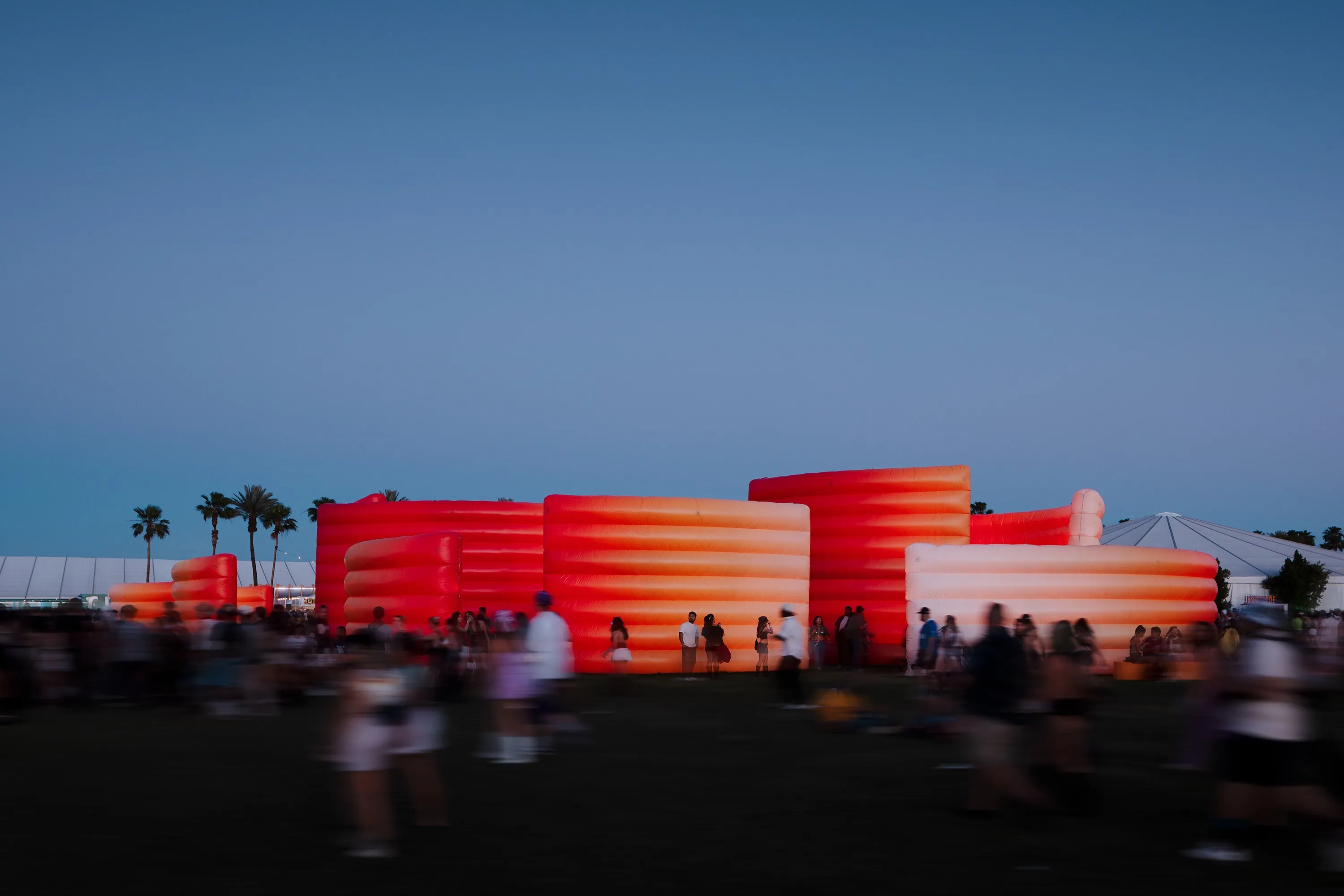
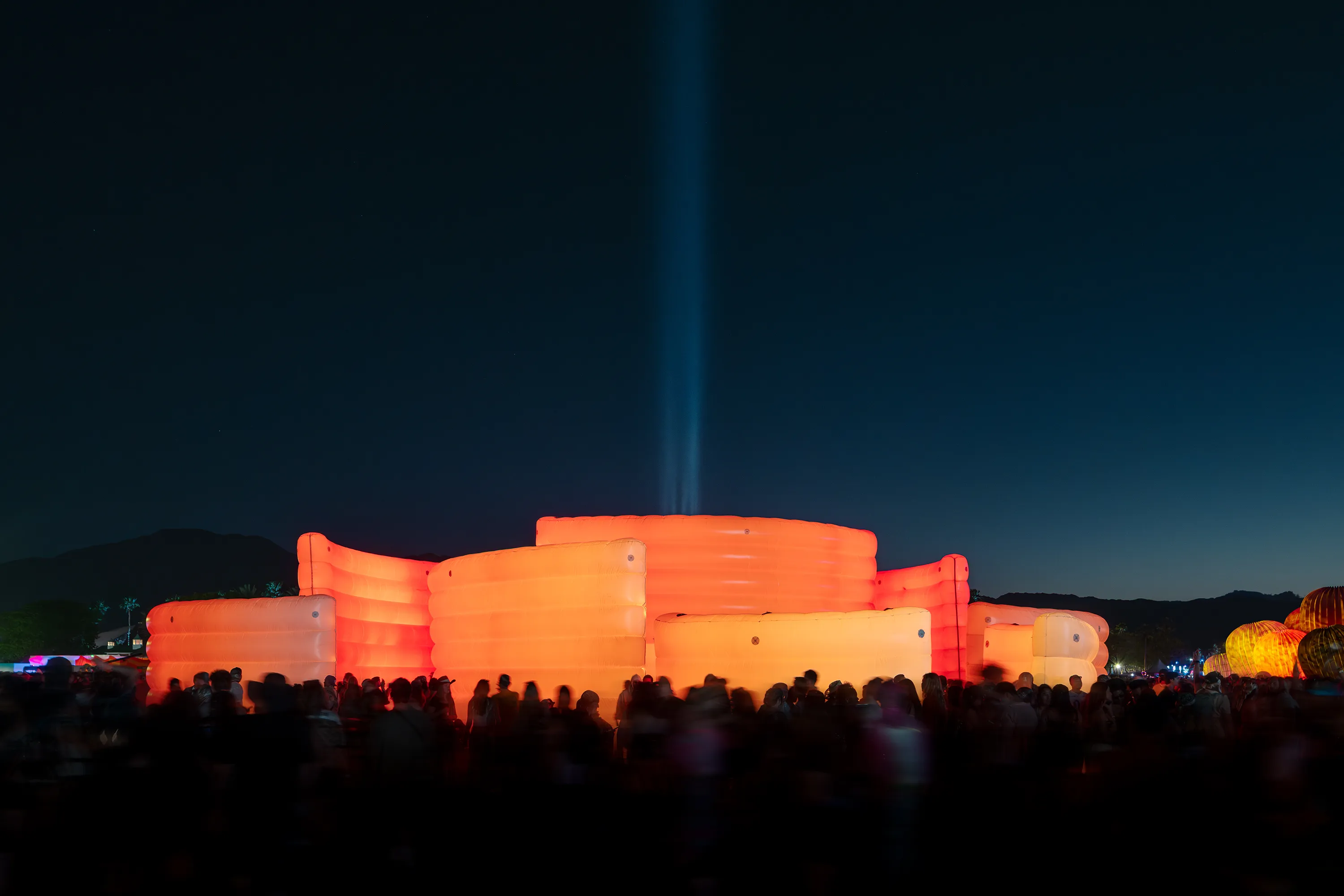
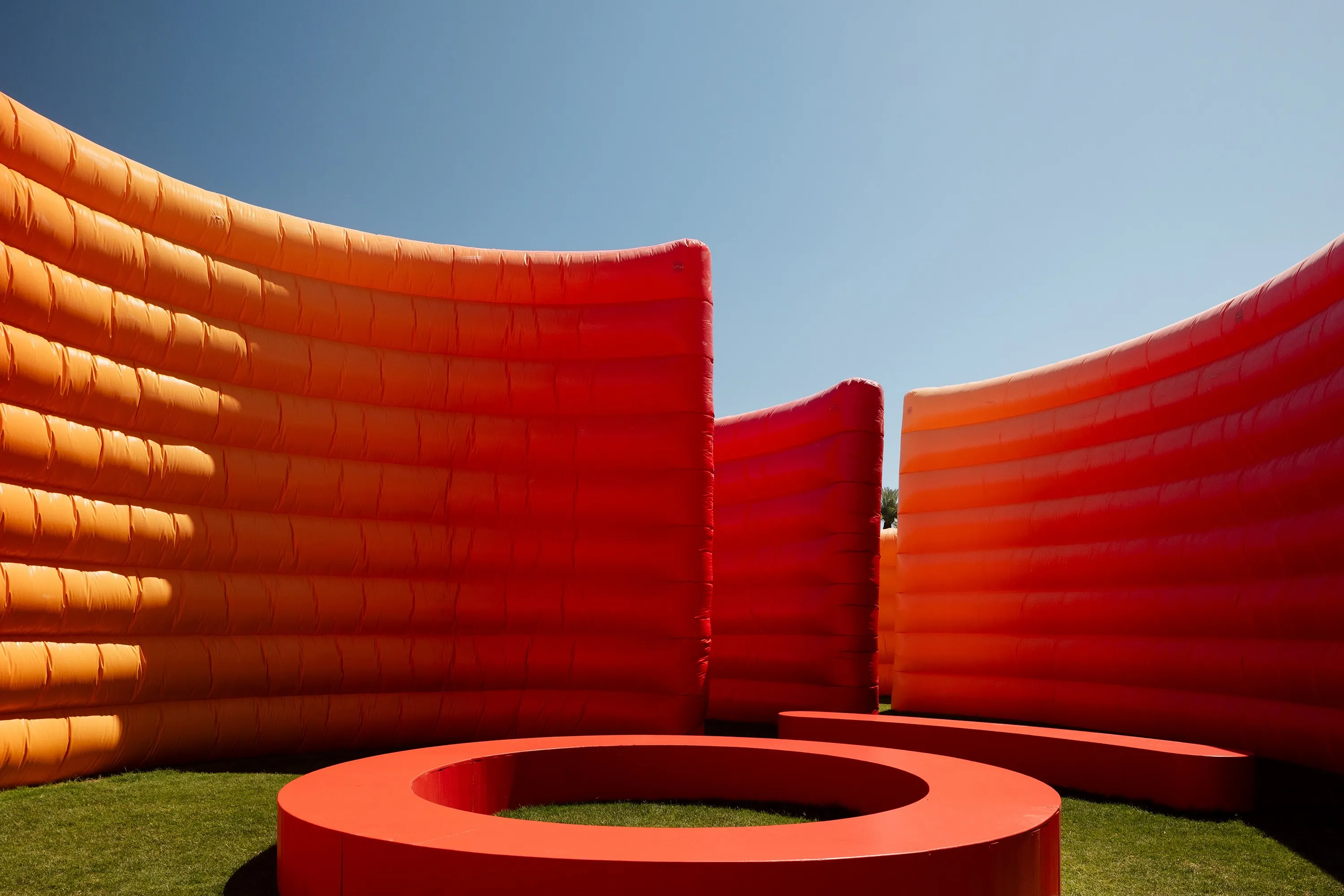
An inflated terrain unfurls in gentle bends and turns. Its softly curled walls swell and dip at different heights, washed in a gradient that moves from light, sun-faded yellow at the edges to a dense, heat-soaked red toward the center, echoing the valley’s shifting tones across the day. In daylight, the structure tempers the intensity of the desert, diffusing glare and muffling the surrounding noise to create pockets of shade and stillness. After sunset, the form takes on a low internal glow, turning the structure into a softly lit haven. Openings intermittently frame the festival beyond, while the other edges provide places to sit, close enough to remain part of it without disconnection.
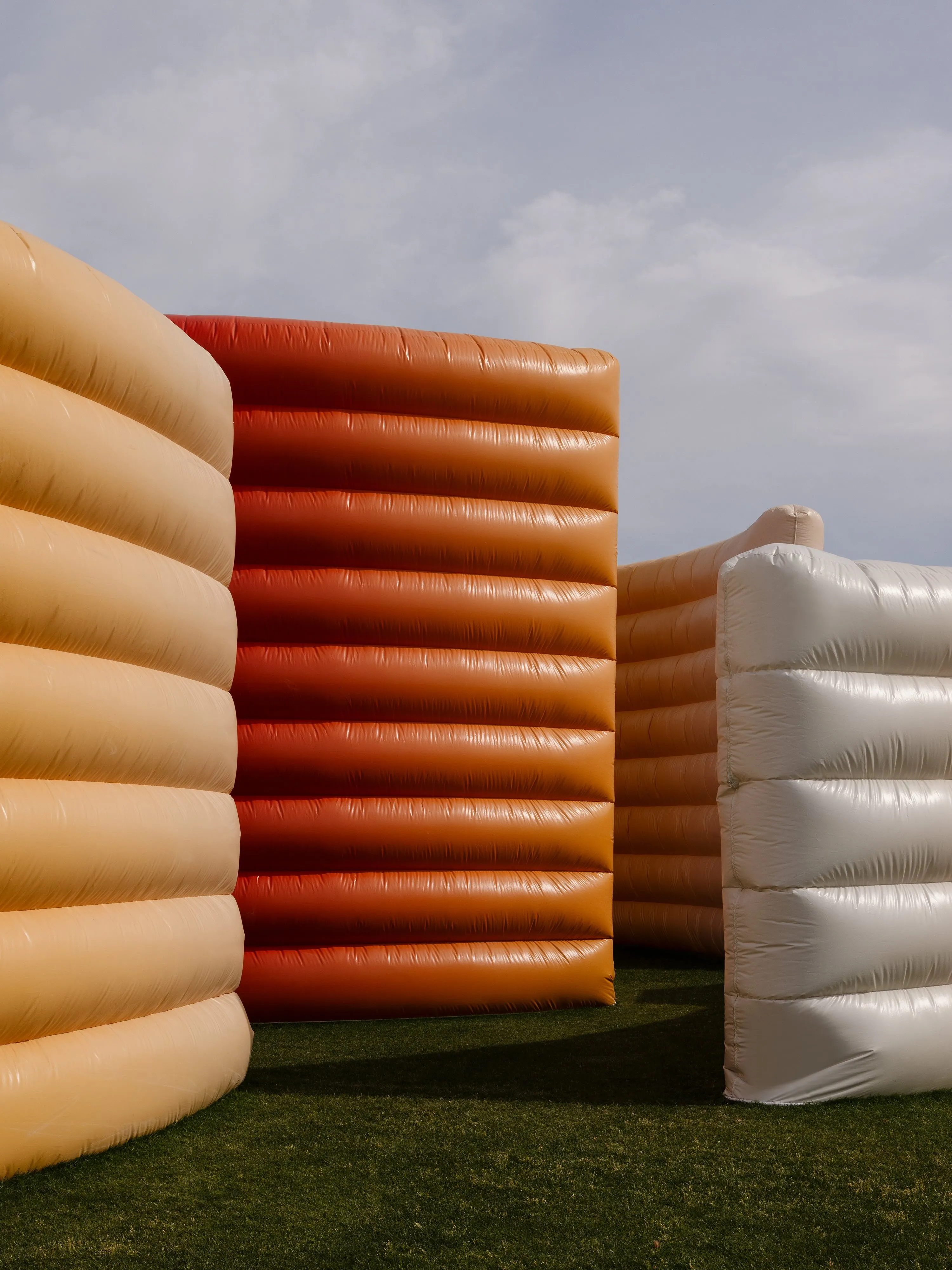
This emphasis on movement is not incidental. Marcelis slows down perception, stretching it across time and space, introducing the idea that understanding can unfold over time, and that the act of moving through something, physically and perceptually, is where meaning actually takes shape. Marcelis’ work often hinges on reduction, paring everything back to essentials.
See here, Sabine Marcelis’ case for restraint.
"Maze" invites slowness in a high-intensity environment. How do you design for pause and reflection within a space like Coachella?
It starts with understanding the context. At a festival like Coachella, you're constantly surrounded by stimulation. I wanted to create a space where you can briefly disconnect from all of that. Once you're inside, you're enclosed by the walls, and that gives you a sense of pause in the middle of all the chaos. At the same time, that enclosure references how the Coachella Valley itself is surrounded by mountain ranges. It isolates and embraces you at the same time. There is also seating outside the walls where you're not completely isolated from the festival and can still look out towards the main stage, but from a more relaxed spot.
Your work often treats light as a material. How does the desert's natural light inform the gradients and atmosphere of “Maze”?
The desert light was a big reference. The colors of “Maze” directly nod to the Coachella Valley at different times of day. Light is really the driving force behind the experience of “Maze.” During the day, the deep red and orange walls offer shade from the harsh sun. At sunset, in that beautiful transitional light, the work starts to transform. At night, the walls breathe light and draw people in with their glow. The work evolves along with the day, and I think that's essential for any public artwork that lives outside.
The installation feels both minimal and emotional, so how do you approach creating sensory experiences that are subtle yet deeply affecting?
I think restraint is everything. The more you strip away, the stronger what's left becomes. “Maze” is really just form, color, and light, but when those three things come together in the right environment at the right moment, it works.
As visitors move through the structure, perception constantly shifts. How important is movement and discovery in shaping the meaning of your work?
It's everything. “Maze” isn't a work you get from one spot; it reveals itself as you move through it. The way the light changes, the way the walls open and close around you, the way you lose and regain sight of the outside, none of that happens if you're standing still. I want people to feel like they're discovering it, not just looking at it.
Stay up-to-date with exclusive events and content.


