F L A U N T


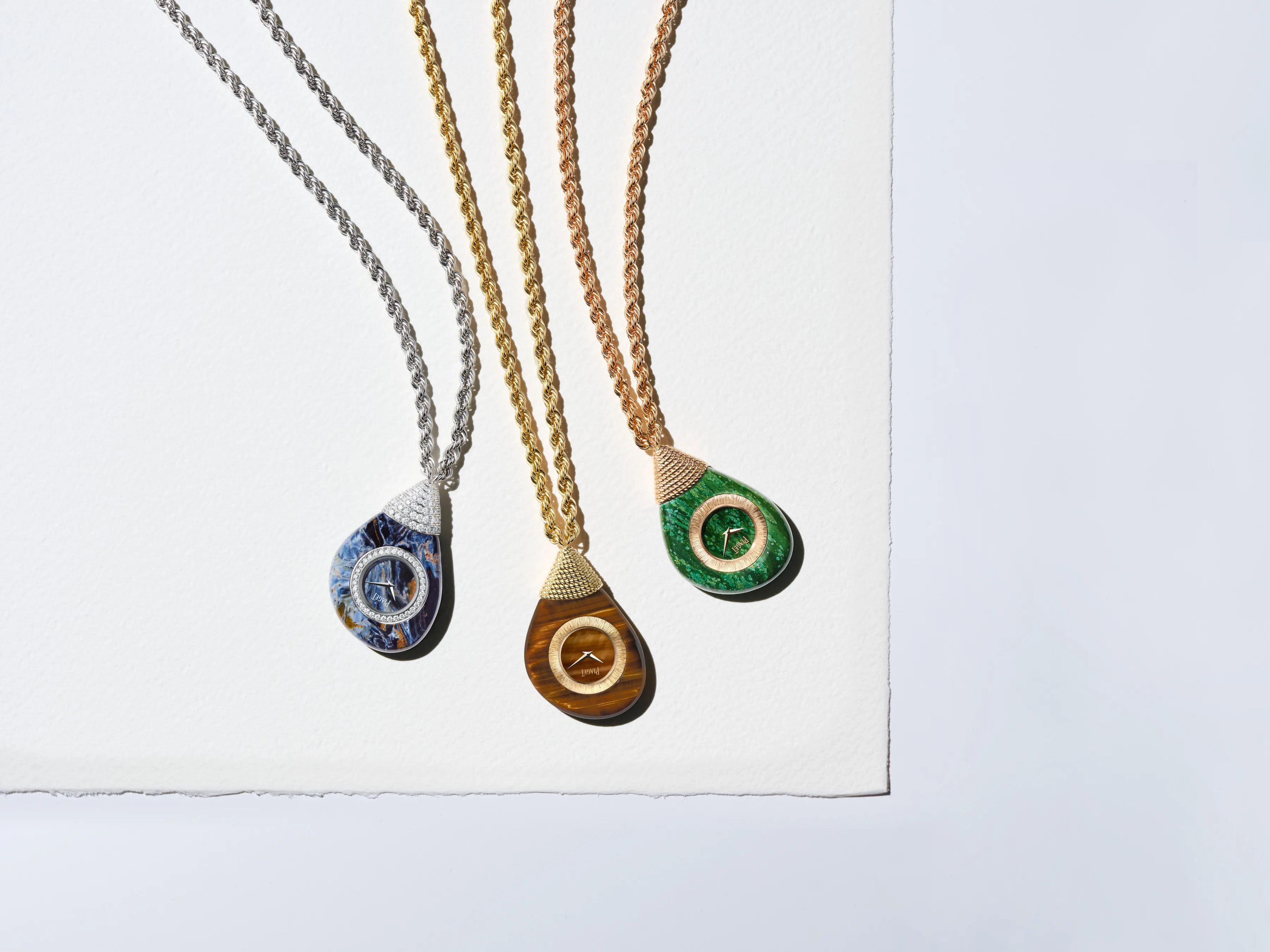
Piaget’s upcoming presentation at Watches and Wonders Week 2026 is set to unveil their latest release of watches, serving as an homage to their signature motifs—to movement, to color, and to the Maison’s singular ability to turn watchmaking into adornment since its inception in 1874. Across the revived ornamental stones and the new Swinging Pebbles and Sixtie on Strap collections, the brand revisits its most expressive archive codes from the 60s and 70s: sculptural gold, opulent stone, and the equally enduring philosophy that a watch can behave like adornment. Now recasted with a fresh sense of contemporaneity, Piaget’s myriad of releases feel deeply rooted in the Piagetian history (not in reference to the evolutionary psychologist) so markedly apparent in the design of their high-precision Swiss watches.
A watch is, first and foremost, an item of jewelry—its function as a watch almost secondary, according to founder Georges-Édouard Piaget. This is apparent with Piaget’s 2026 version of the timeless collection, Swinging Sautoirs. Carved stone dangles off the wearer’s neck, first hollowed out and housed with a gold- or silver-framed dial, granting the wearer the ability to tell time in motion. Reminiscent of their 1974 Kimono pocket watch design, the pebble-shaped stones, which now come in tiger’s eye, verdite, or pietersite, create an organic and tactile experience communicated through a sort of omni-expressive design. Suspended from a hand-made twisted-gold chain, these hand-carved stone watches become part amulet, part timekeeper.
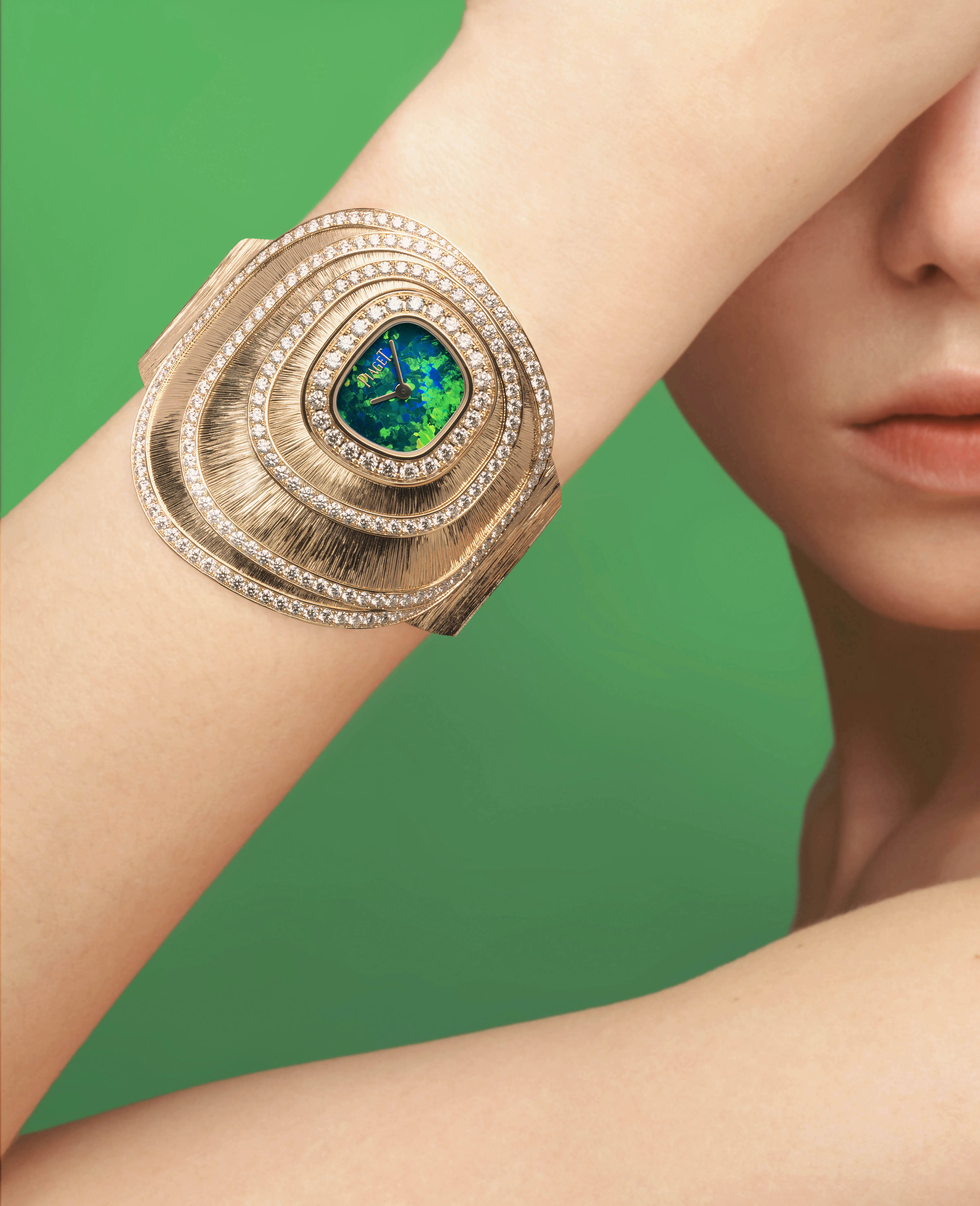
In continuation of their whimsical Watches and Wonders 2026 launch, Piaget has also relaunched certain ornamental stones, making their conviction in color vivid. Maison’s fascination with stark stone dials dates back to 1963, when Piaget first dressed watches in lapis lazuli, turquoise, malachite, coral and tiger’s eye. Those early creations helped establish the brand’s reputation for its unwearied way with color, as seen in the 1963 Art of Colour collection. Not only were clients able to participate in a bespoke, personalized creation of their pieces, by way of hand-selecting bracelets, dial materials, numeral styles, and diamond settings, but were able to forge a personal collection to their jewelry. These reinvisioned watches became a token, outshining the commercial steel watch of the time, and inspiring innovation and artistry well into the 60s and 70s.
Pairing precious metal with vivid natural stone is at the heart of Piaget’s design today. Their intriguing varieties of stone dials, as seen embedded into the blue quartz Andy Warhol pieces, the Sixtie opal cuff, and the bull’s eye dials framed by Clou de Paris cases, first became popularized by the "Piaget Society,” or acclaimed artists and pop-culture icons like Andy Warhol, Salvador Dhalí, and Jackie Kennedy. Piaget's ornate design and freedom-enhancing concepts were the catalysts for their ultimate transformation of the jewelry watch into a contemporary work of art.
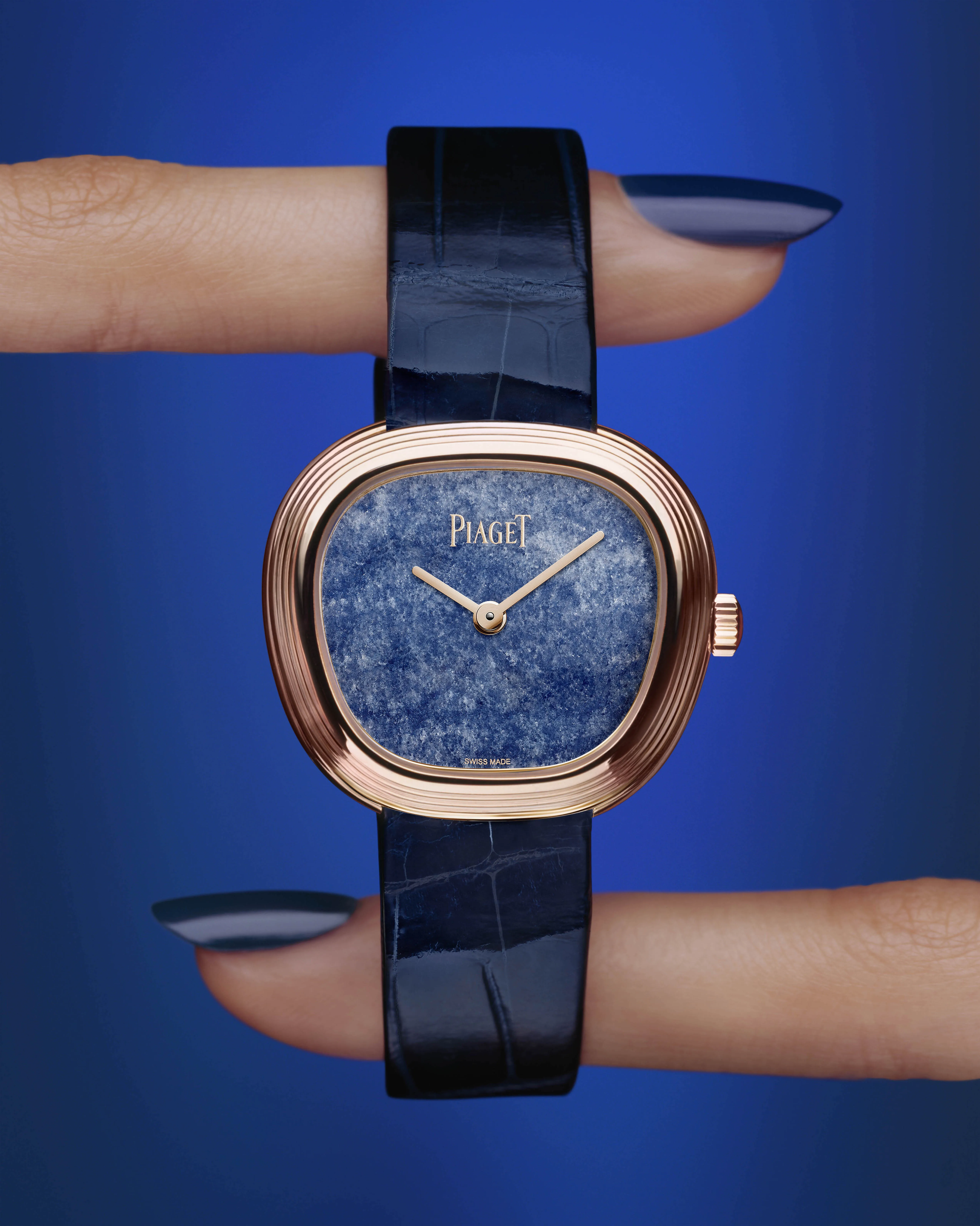
And speaking of the 60s, Sixtie on Strap speaks to their 2025 release of the watch Sixtie, coined after sixty ticks on the clock each minute, sixty minutes in the hour, and the defining era of the Swinging Sixties (I know, it’s a lot of sixes). The 2026 rendition trades the original precious-metal bracelet for deep blue alligator leather, whilst the classic trapezoid-shaped dial of Sixtie remains.
Seemingly less sculptural in a jewelry sense, but more contemporary and easier to wear, it looks that the focus was to preserve the distinctive silhouette that original designer Jean-Claude Gueit first intended. A pink-gold dial case with finely etched gadroons wraps around one of the two new trapezeoids: either a silvered satin-brushed dial with golden Roman numerals or a blue quartz stone dial with marbling (in keeping with this year’s theme of ornamental stones). Time will tell how preferred these precious pieces become in the coming weeks after Watches and Wonders Week 2026.
One thing is clear—Piaget’s collections affirm the Maison’s rare ability to make time feel ornamental, mobile, and nostalgic. With these contemporary pieces, the Maison is reimagining classic designs that continue to capture audiences, art connoisseurs and watch fanatics alike. Each release finds a way to return to the aesthetic codes encapsulated within the foundation of Piaget’s artisanry, seamlessly blending heritage and luxurious design. In doing so, Piaget asserts their position at the intersection of horology and high jewelry (or “Extraleganza” as the brand itself refers to it as), where time is not only measured, but worn.

Stay up-to-date with exclusive events and content.


