F L A U N T


If you stand still enough, poised against the great glass walls of the Hong Kong Convention and Exposition Center with your back to the thrumming crowd inside, you will find that the placid blue Victoria Harbour at which you are gazing is breathing. Watch wakes foam behind passenger ferries; watch neon signs blink silently from the top floors of glass towers; watch cargo ships bisect water from the sky as if they are zipping the horizon shut, and locate yourself at a small point in the history of the port city. It is not difficult to feel cowed by the weight of time here, knowing that you have joined centuries of observers of these very marinas, perhaps at this very spot, watching modernity construct itself atop a great stretch of blue ocean, weaving into clotted green mountains.
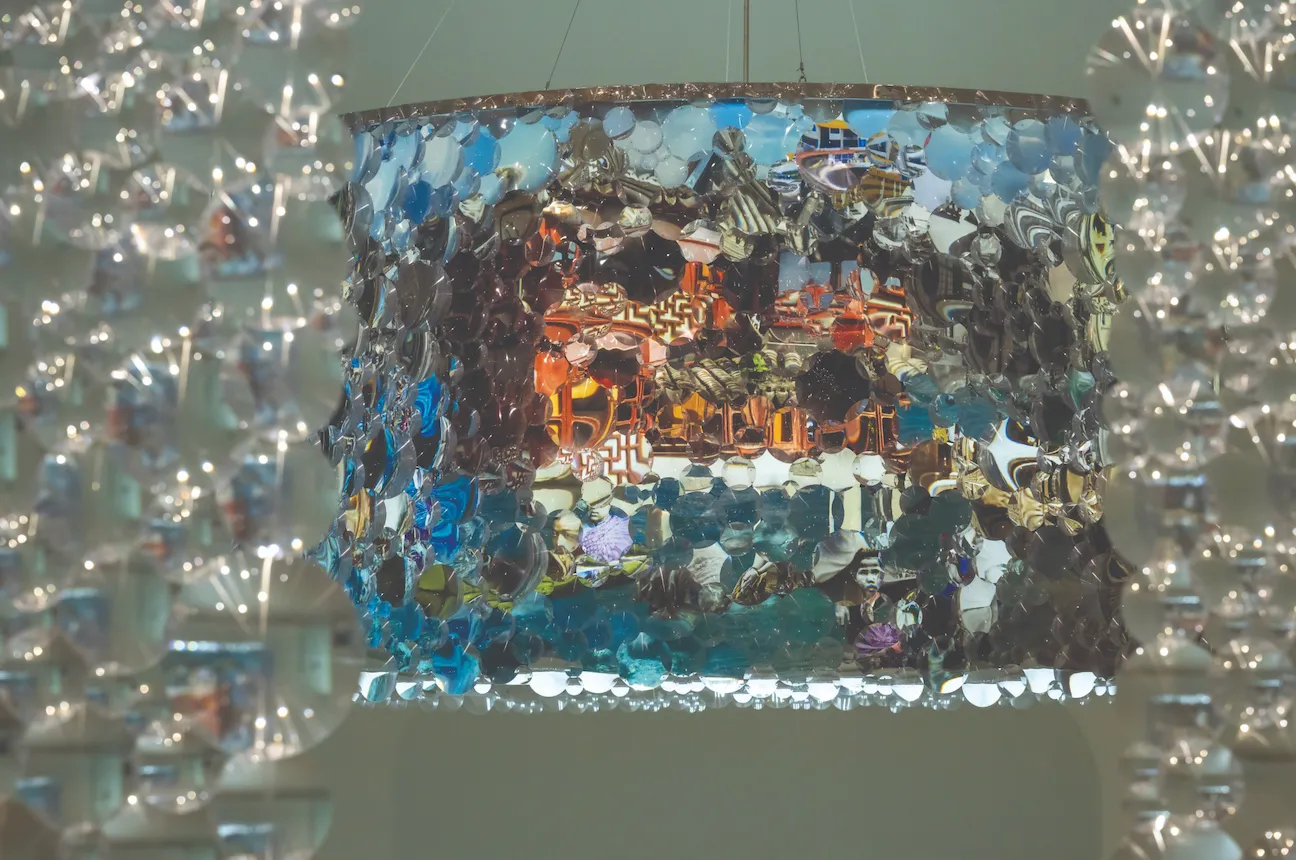
This sort of meditative deindividuation is foregrounded at Art Basel Hong Kong, the largest art fair in Asia, which takes place throughout this weekend at the HKCEC. Director Angelle Siyang-Le has oft described the fair as an “ecosystem”—an apropos label for the complex balance struck between creation and observation, between business and art, between city and land—and, as a patron of the multitudinous cultural programming within the site and across the city, one is made to feel as if they have taken a part in something larger; expansive; important.
The fair, now in its thirteenth year as part of the Art Basel global programming, has returned in 2026 with a spate of cultural events, artists, and art, with a specific, intentional focus on Hong Kong as a significant nexus for cultural exchange within the region. As such, Art Basel Hong Kong has interlaced global art into the very fabric of the city, with corollary events at offsite cultural hubs (namely, the Tai Kwun Contemporary, Para Site, the Centre for Heritage, Arts and Textile (CHAT), and Pacific Place’s Park Court,) and in turn, welcomed the world in, with 240 galleries from 41 countries and territories participating, and global partnerships with UBS, Qatar Airways, Audemars Piguet, and BMW.
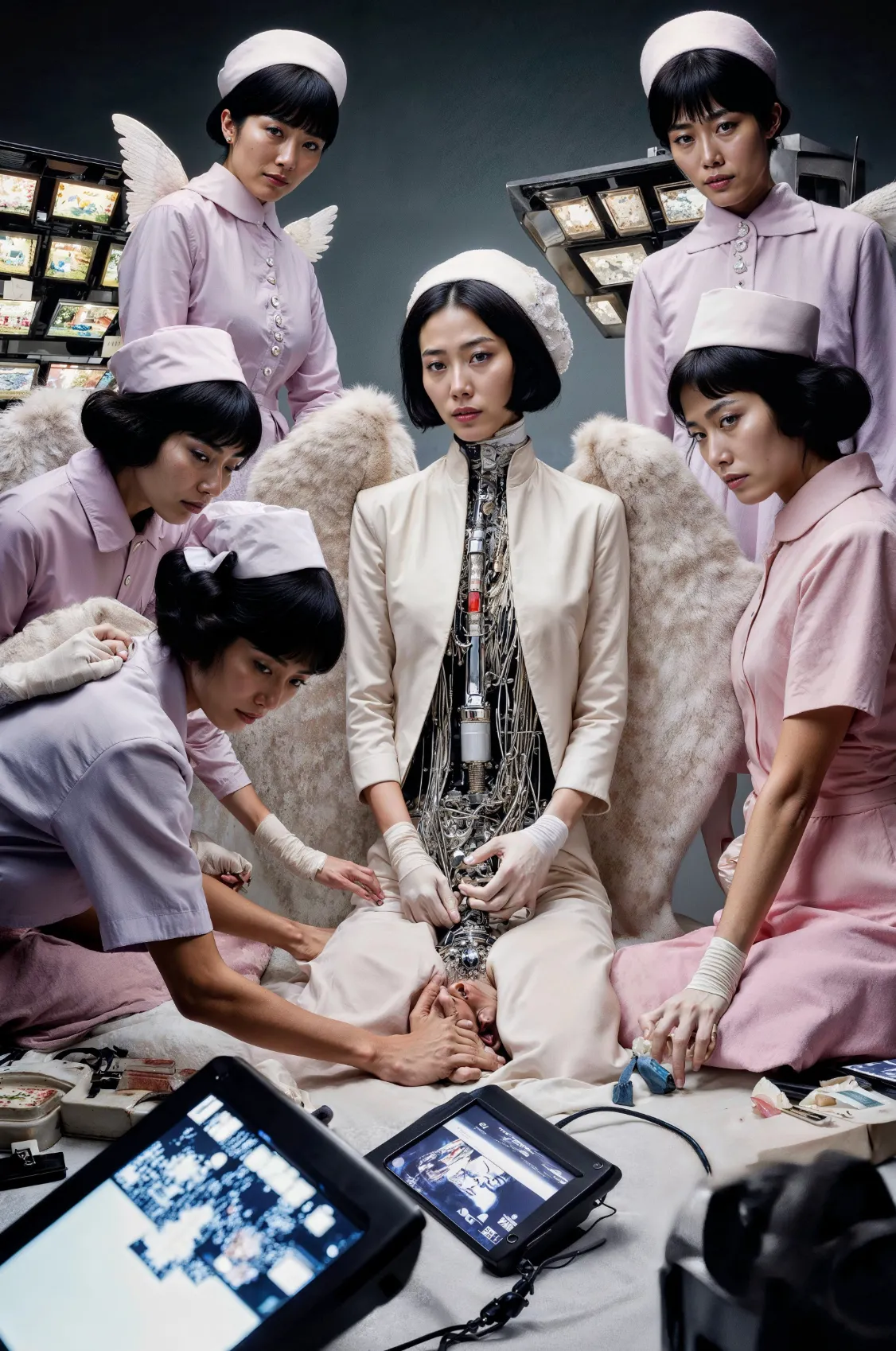
There is a particular joviality animating the fair this weekend. It is, in part, generated by the introduction of the new. This year, Art Basel Hong Kong has opened the second iteration of digital art sector Zero 10, curated by Eli Scheinman, which showcases a titillating selection of digital art (at the fair, catch Tim Yip’s hulking humanoid glaring down the crowd, or grab a dice coaster from Jack Butcher with SILK Art House, as part of a social and artistic gambit predicated on in-person human connection, or mint your own custom seal to own part of Robert Alice’s infinite scroll).
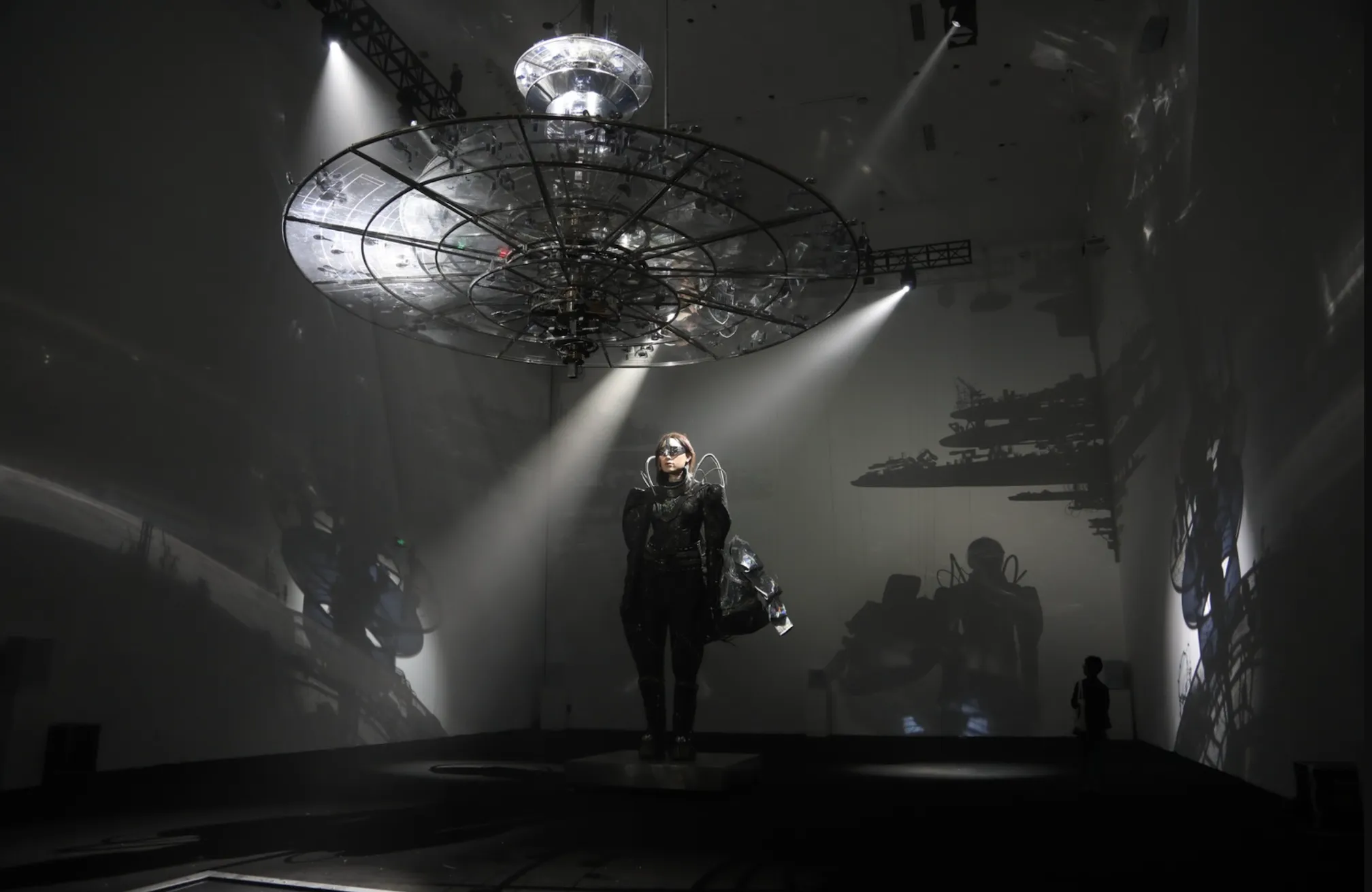
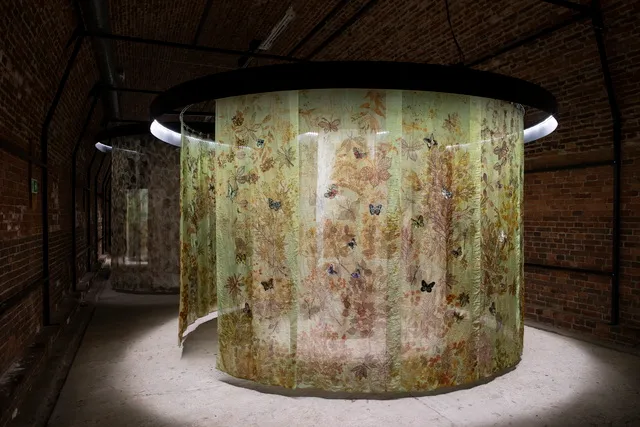
Also new this year: the pan-Asian curatorial team for large-scale Encounters sector, spearheaded by Mami Kataoka, which sees thoroughfares on each floor occupied by expansive installations, inspired by the five cosmological elements—Earth, Water, Fire, Wind, and Ether/Space (“It’s about the in-between. You have to feel the energy in between!” Kataoka insisted to our tour group on Thursday, smiling and gesturing towards Seokyeong Kang’s “Mountain,”). The Encounters pathways offer some of the only seating on the convention center floor—a great deal of each piece’s beauty is site-specific, as if these works were to be observed from the bench, or traversed on the way to another sector, or grazed by the curious palms of a passing child.
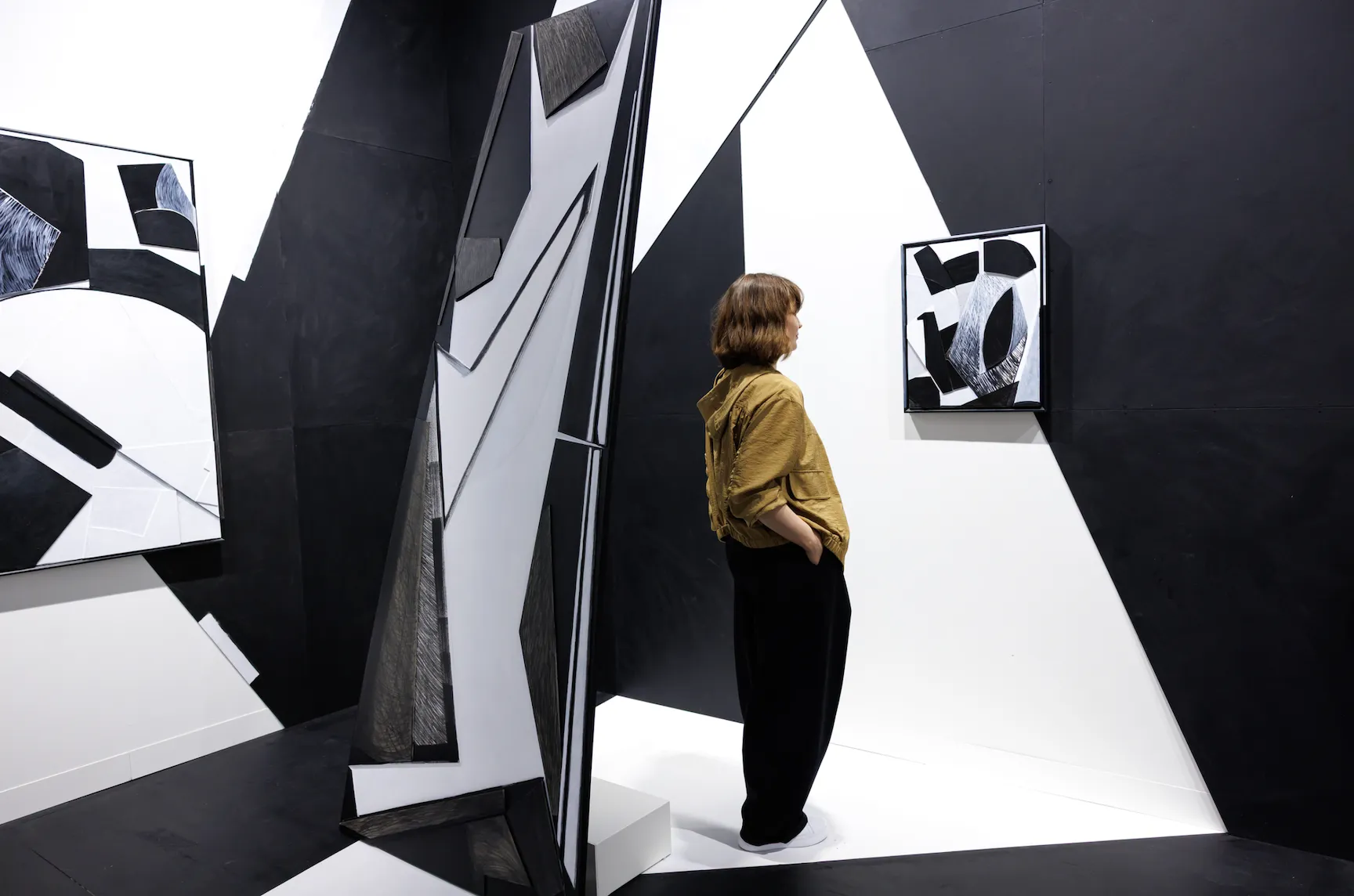
Art Basel Hong Kong has also inaugurated the new Echoes sector this year. Here, tucked snugly next to Zero10 on the third floor of the convention center, ten curated booths from galleries across the world highlight the work of mid-career artists created in the past five years— an area of “real market need,” according to Director Siyang-Le. Working across medium and geopolitical boundary, artists in the Echoes sector, by and large, seem largely concerned with the challenges of the collective against hegemonic ideal—whether it manifests in imperial influence, the physical constraints of the gallery booth, or the expectations of the audience
Double Q’s Natalia Załuska is one such challenger. On the first-day VIP preview at the fair, the Polish artist stands at the corner of the space, watching (but rarely speaking) while guests filter in and out of the interior of the booth. She tells me that she’s particularly interested in the dialogue between space and observer, and it’s evident: angular, jagged shapes jut out from the walls and emerge from the ground. Załuska’s aim for her Double Q showing was, in her own words, was to “create a world the viewer could step in,” she tells me. “I like to challenge the idea that a painting depends on the wall.” Załuska’s axis of critique largely focuses in and around the gallery space, where she is not particularly concerned with the aesthetic object, but with the aesthetic experience.
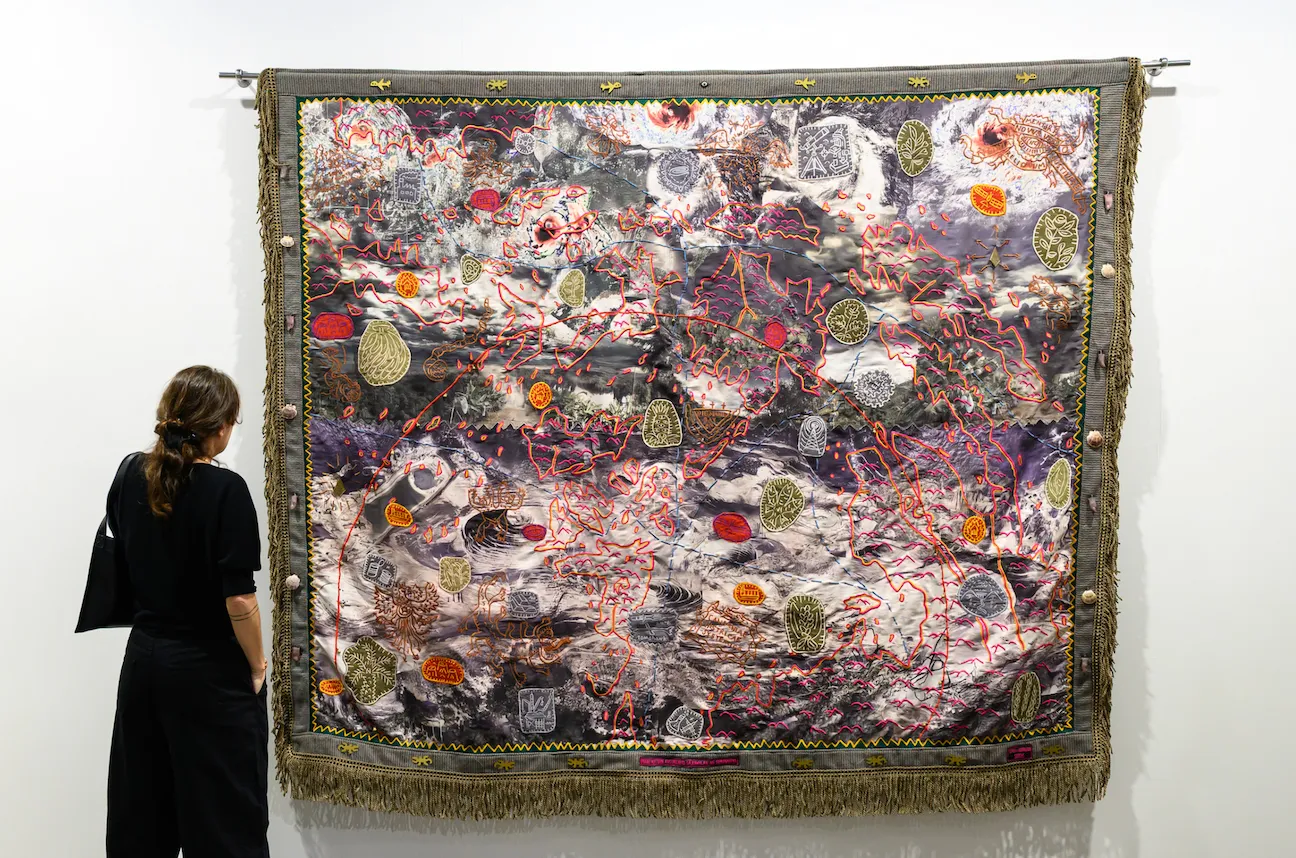
The interdependence of the physical and the visual is of particular importance at the booth next door: NOME and Catinca Tabacaru are displaying artists part of the global artistic and anti-colonial coalition NAM (Non-Aligned Movement). In the booth, visitors are confronted with a visceral physicality, in relationship to their own bodies and the work around them. Moving through the booth, one must maneuver their body around Zimbabwean artist Terence Musekiwa’s sculptures, delicate faces carved from precious minerals like blue aventurine and red jasper, crafted also from copper wire and from artillery shells from conflicts in 1945 and 1970. At the back hangs Filipino artist Cian Dayrit’s ethnographic cartography—here, he superimposes woven symbols of native mythos, colonial tragedy, and current imperial outposts atop a map of the Philippines studded with alternating sickly grey, realistic fingertips thumbs and shells, perhaps not only to suggest pain but to but to confront the booth’s visitor with its proximity to it—what is more horrifying than the familiar? A limb; a map; a "monster."
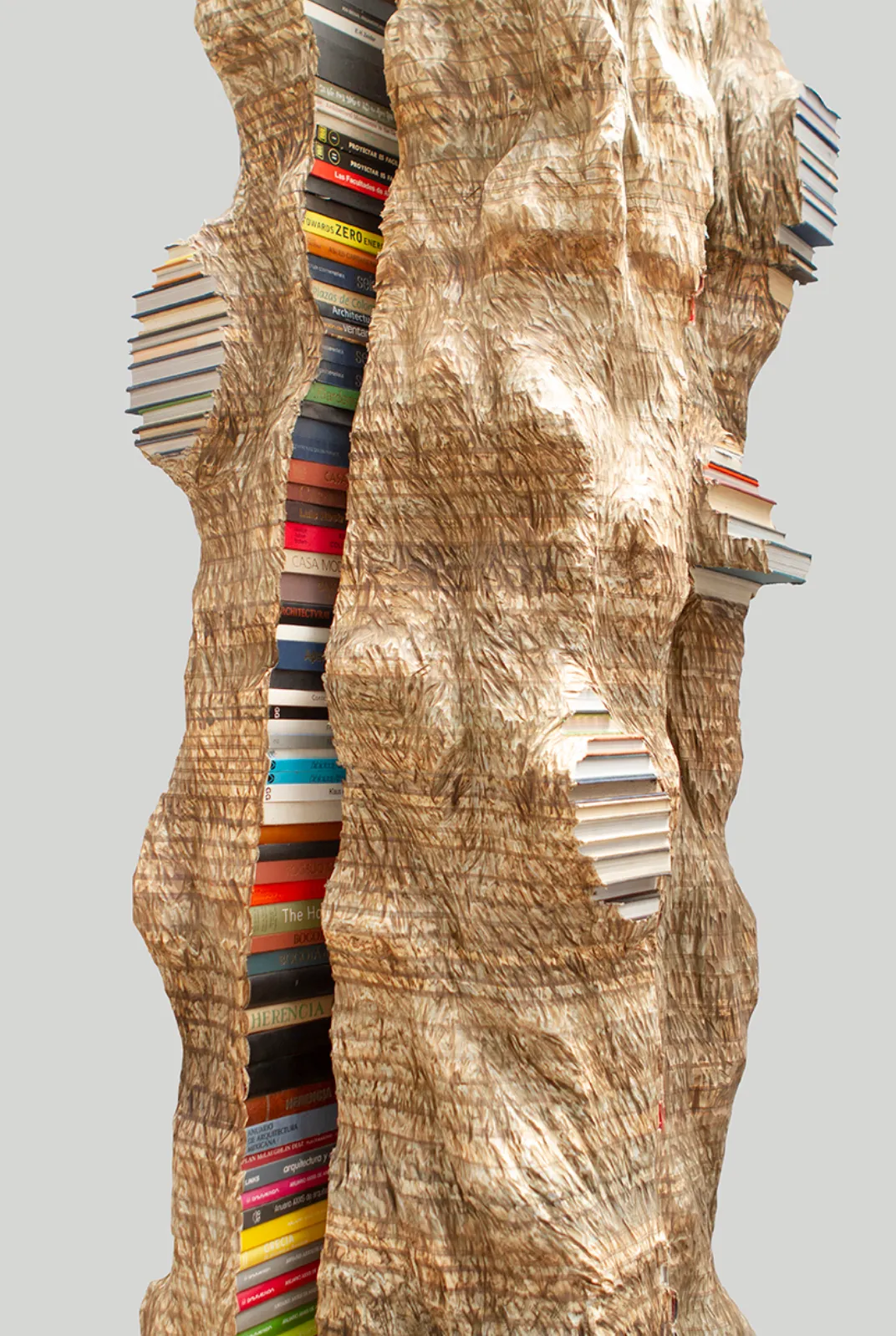
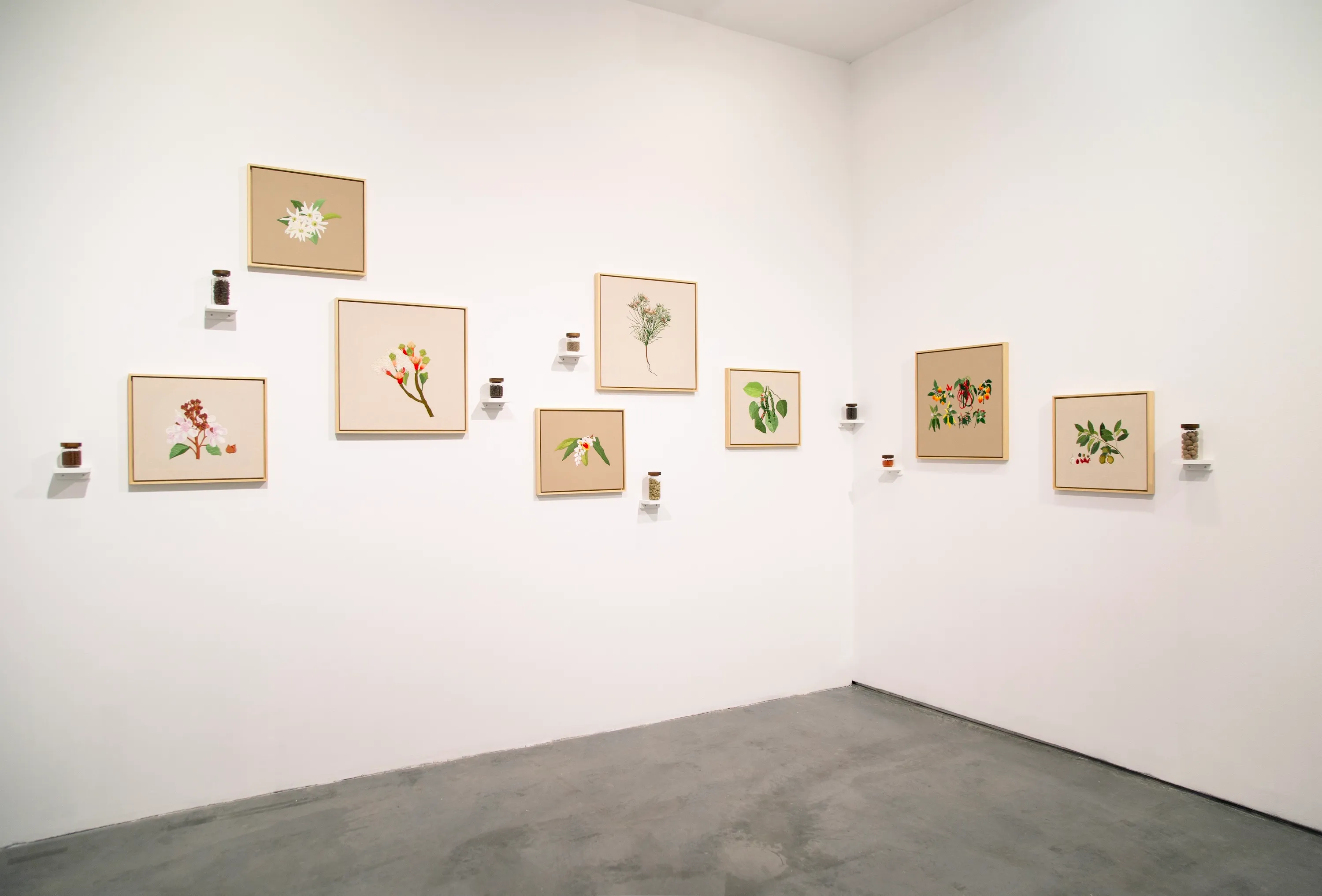
More woven cartographic work hangs across the way at Max Estrella, where Tiffany Chung’s needlepoint pieces consider the impact of globalization on the culinary landscape—a map of hand-embroidered global spice routes, based on statistics and aerial data hangs on one wall; on an adjacent wall, a detailed, precise display of said spice plants, accompanied by glass jars filled with real samples of each pictured plant. Also featured is Miler Lagos’ fantastic paper tree sculptures, made from books that he has glued together and whose pages are, indeed, flippable. This year, Max Estrella booth brings to the forefront the tactile as a means of connecting with historiographies of pain as they contrast with convenience.
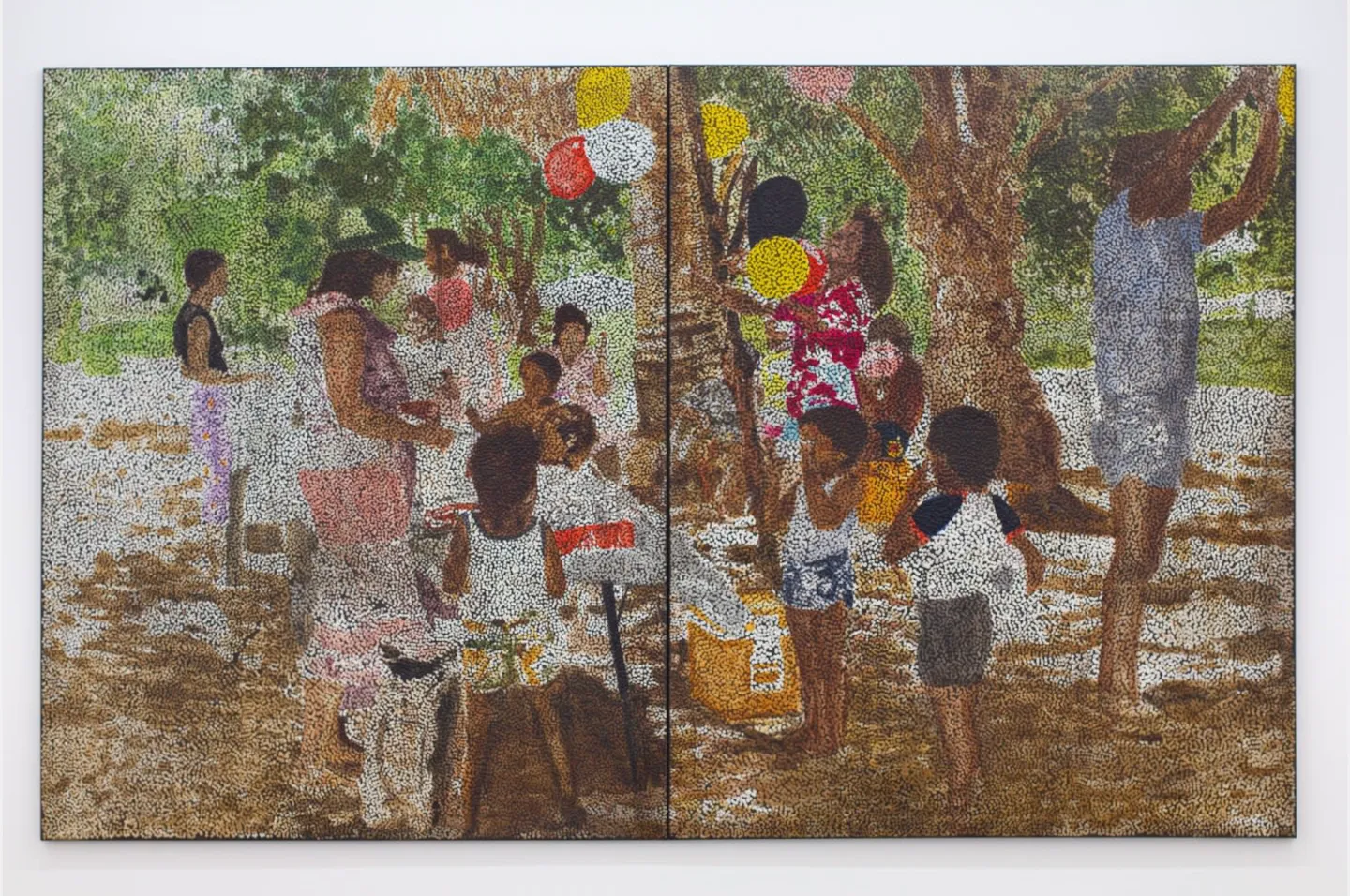
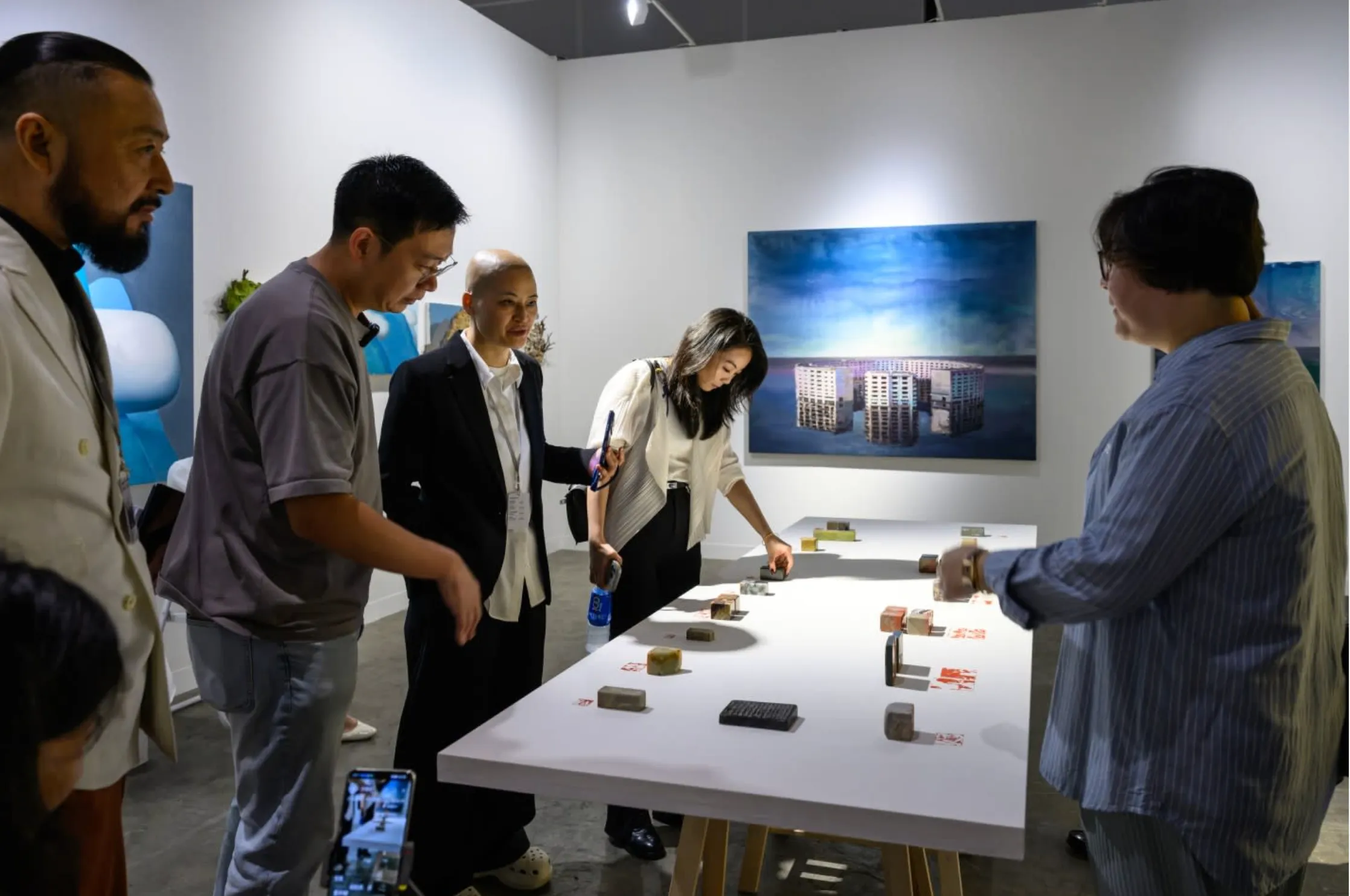
Splayed across a large table at Mocube, one can find a series of traditional Chinese seals, which have stamped bloodred ink across the surface of the slab. Upon closer inspection, the ink does not take the shape of epigraphic characters, but rather depicts various pornographic situations. The Chinese artist was traditionally educated at the Central Academy of Fine Arts, and has maintained a fascination with traditional arts (such as the practice of the seal) since his schooling. At Mocube, find Yiwan’s pornographic prints paired with paintings of dystopic staircases, imbued a sort of destructive melancholy, disappointment, and industrialism. Also in Echoes and worth a visit: Australia-based STATION Gallery, which features sculptures from Tiwi sculptor and performer Pedro Wonaeamirri with Patrick Freddy Puruntatameri, all towers made out of locally sourced ochre on ironwood that are placed in the direct foreground of Daniel Boyd’s pointillist paintings. Boyd, an indigenous artist, creates art that harkens the pixellike nature of memory—or perhaps alternatively, the mimetic nature of a pixel and a singular instance of memory, Boyd’s hazy pictures documenting the the recession of the feeling, or the desire to grasp it tighter in one’s fist.
This week, traversing the cobbled courtyard at the Tai Kwon Galleries on Artist’s night, I found myself engaging in one of those slippery and overplayed conversations about the unique regional personality pitfalls in various international cities. Artist and designer Duyi Han leaned in and whispered something cryptic made me recall the emotional significance of the view of the harbor from HKEC, at the core of what Echoes reflects, at the core of the Art Basel Hong Kong mission-- from individual to collective to city to globe, Art Basel Hong Kong is in a symbiotic relationship with the world and the spaces around it:
“[The city you’re speaking of] is one of thousands of cities in the world,” he told the group. “And, you have to know, the world is a three dimensional space.”
Stay up-to-date with exclusive events and content.


