F L A U N T


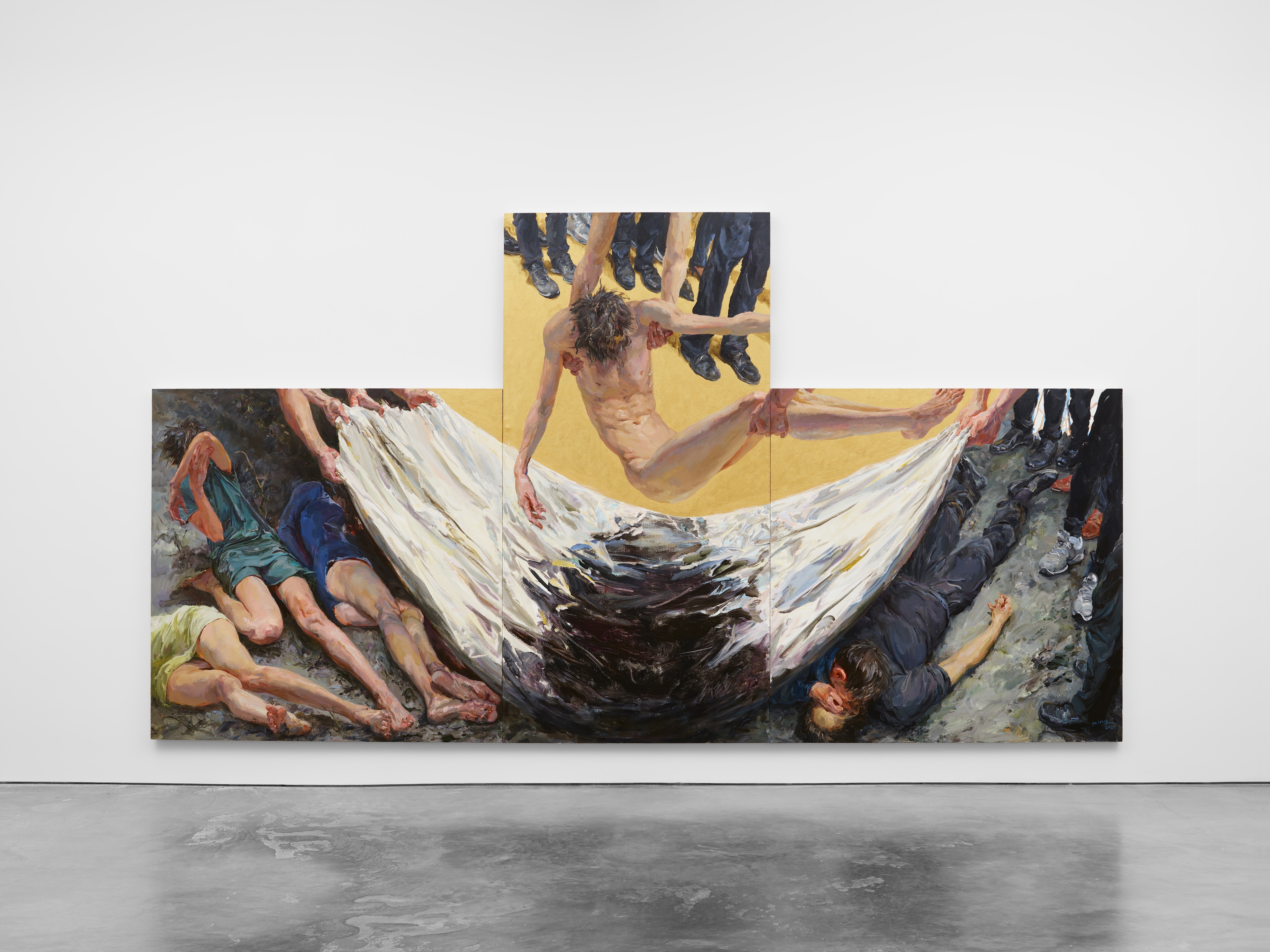
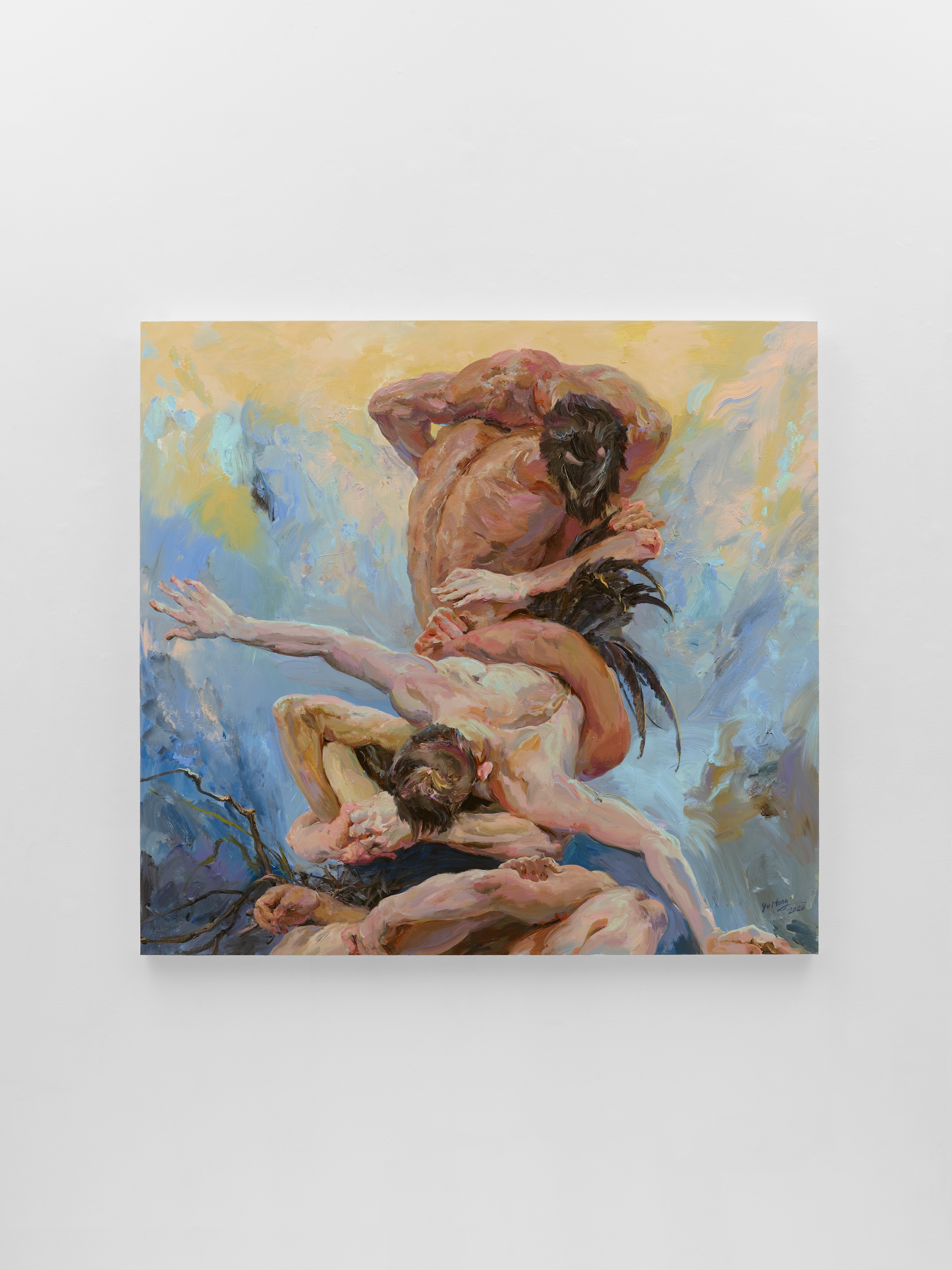
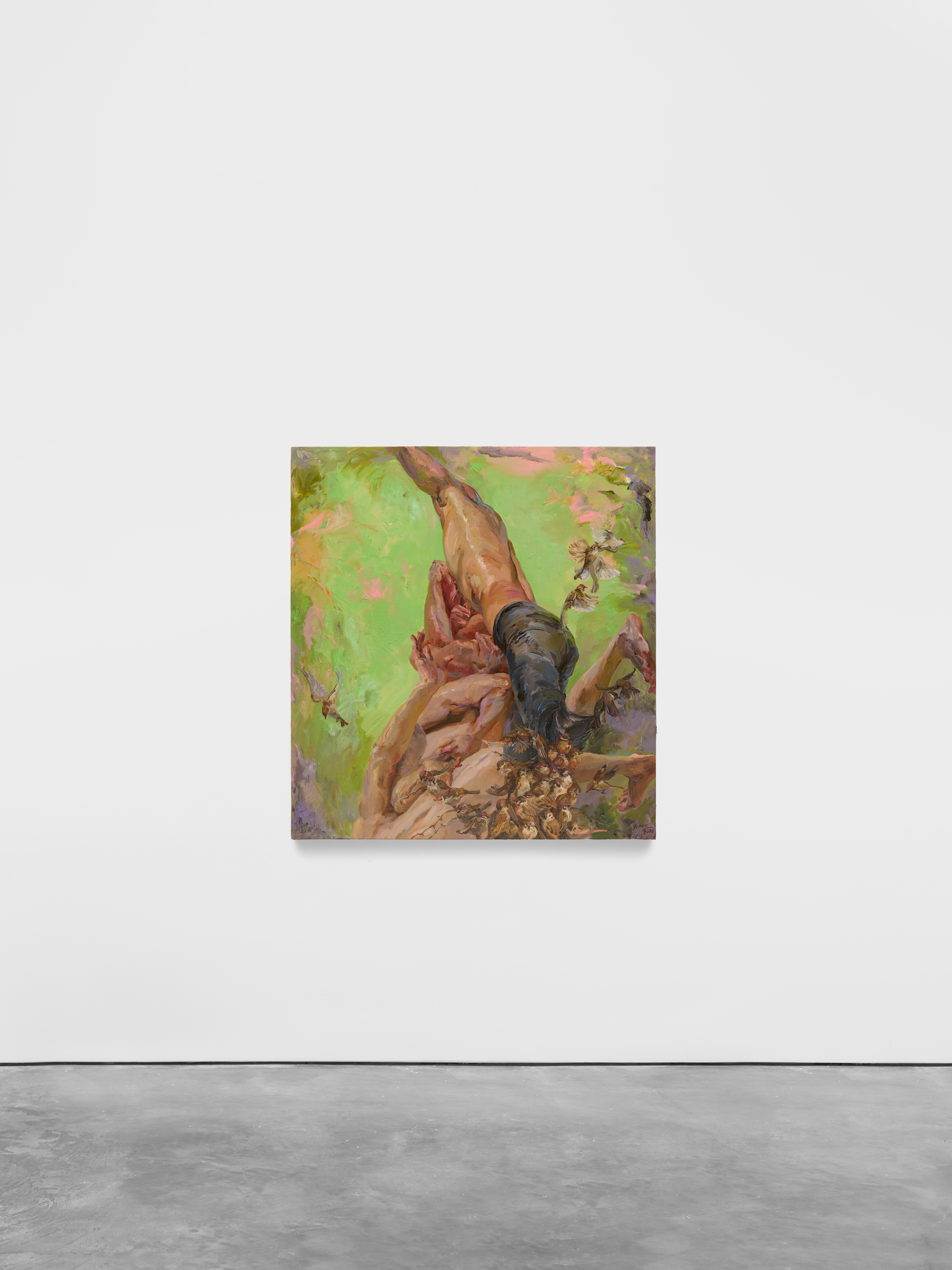
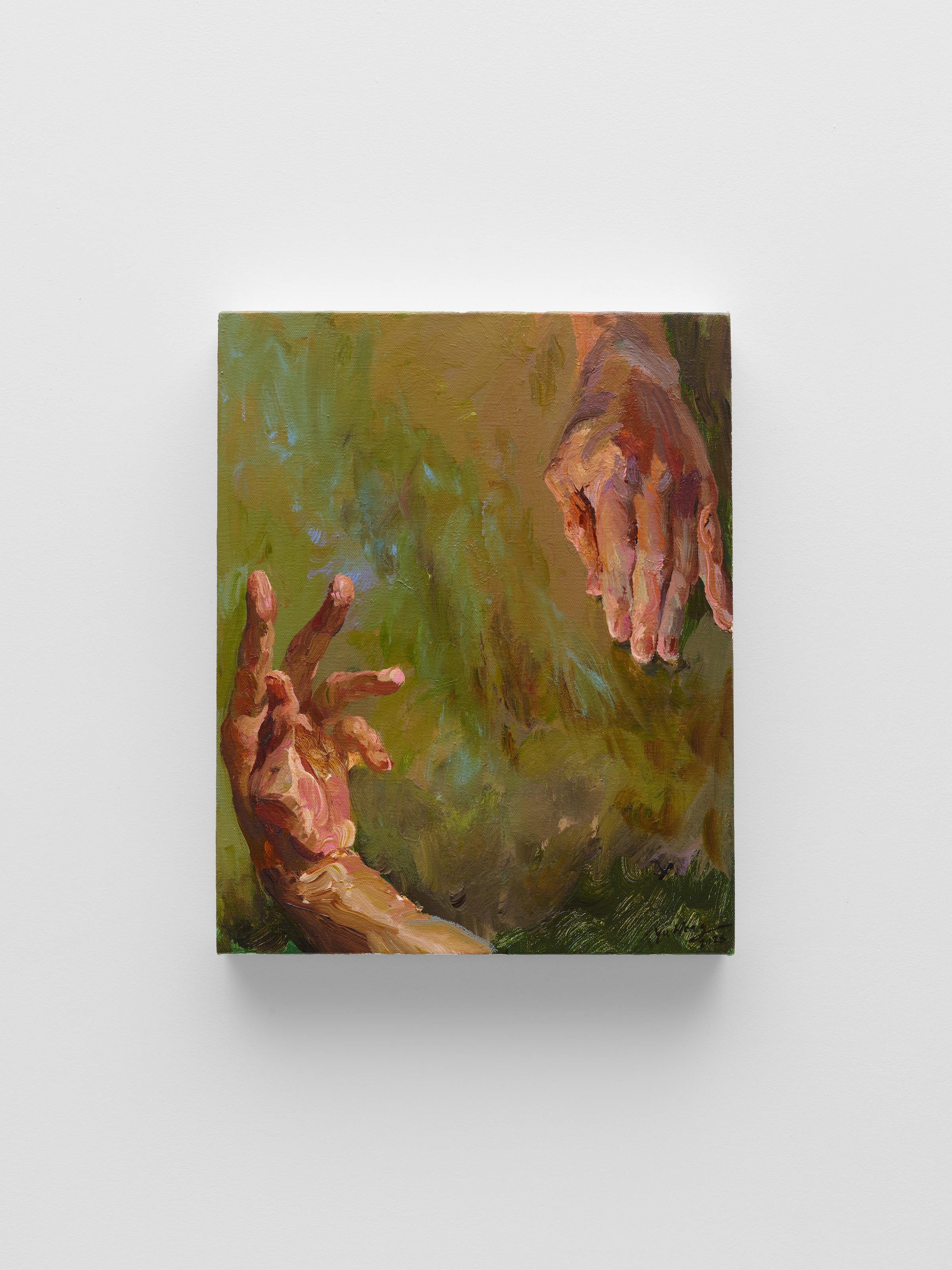
Hands flex and grasp onto one another—onto arms, legs, into mouths, around waists, dug into clothing. Bodies lie limp in surrender or maybe exaltation. Others climb, fall, float, and hold on. In Yu Hong’s Field of Asura, to be human, in a human body with human wants and needs and desires, is to engage in the generations-long struggle of what it means to be alive. The exhibition, Yu Hong’s debut at Lisson Gallery in New York, takes its title from an astral realm of perpetual conflict found in Buddhist and Hindu traditions, where demigods battle for supremacy over heaven and earth. Yet, at its core, this cosmic struggle is found in every human being who has lived through anything personal or planetary—as unifying as it is ruinous.
“I do not think the most fundamental aspects of human nature have changed very much,” Yu Hong says. “Human nature is rooted in a very basic logic of survival. First, we need to stay alive. Then we want to develop, to grow, and to realize our potential.”
Yu Hong has spent nearly four decades watching history inflict itself upon the human body. Born in Xi’an in 1966, the year of the Cultural Revolution began in China, and raised in Beijing, she came of age artistically inside a country undergoing enormous upheaval.
Yu Hong’s work repeatedly brings events that unfold on the scale of nations back down to the scale of a single person. Political upheaval may affect millions at once, but it is experienced individually: through a body, a family, a memory, a life. When a child enters a world in flux, preoccupied by the political turmoil or economic restructuring or social change, their upbringing—like it or not—becomes intertwined with the bearing witness of the upbringing of a new world through nascency to adolescence to full-fledged, operational adulthood.
Her training at the Central Academy of Fine Arts in Beijing was grounded in Soviet-style realism, a dominant model in Chinese art-academy training at the time. Yet her own practice would eventually stretch that training across radically different visual worlds: Buddhist iconography, Renaissance and Baroque painting, news photography, family snapshots, surreal space, gold grounds, and, for a period, mediums including VR, resin, and silk.
“If there is one thing that has remained constant, it is my concern with people,” she says. “From the very beginning until now, my paintings have always been about human beings.”
It’s epic and it’s intimate. Yu Hong’s figures have walked through fire, climbed towers, fallen from ladders, floated through clouds, given birth, embraced, fought, and died. But the people inside these dramatic scenes are often drawn from ordinary life—friends, relatives, acquaintances, people encountered in photographs. Her long-running autobiographical series, Witness to Growth, began in the 1990s, and places scenes from her own life beside images of public events from the same years, forcing private time and historical time into the same frame. History keeps moving at its enormous scale; Yu Hong insists that brushing your hair, raising a child, traveling, aging, and simply getting through the day belong to that history too.
“I began making them because I was already aware of the vulnerability, struggles, and anxieties of individuals living in this world,” Yu Hong says.
In “Field of Asura,” those anxieties appear first through physicality. Her subjects avert their eyes, turn away, or disappear into the larger composition, leaving gesture and proximity to carry the feeling instead. In “Lament,” inspired by Rogier van der Weyden’s “The Descent from the Cross,” a naked body descends toward a funerary shroud. “Wind Rising” gathers figures beneath an ethereal sunset. “Night Walk,” the only pre-existing work in the exhibition, turns to Pieter Bruegel the Elder’s “The Blind Leading the Blind” for a procession that moves from illumination toward something far darker.
The references are centuries old, but Yu Hong is not a reenactor. Around age 40, she says, she began thinking more seriously about how to put her own work into conversation with the classical art she studied since she was young—Chinese temple and cave murals on one side, the Western painting canon on the other.
“One important part of this process has been to take these traditional works out of their original religious contexts, while retaining their sense of gravity and inner power,” she says.
Yu Hong is less interested in religious doctrine than in the questions sacred art has always asked about human life, suffering, and mortality. “I think religious art is so powerful because it often deals not with the fleeting, trivial matters of everyday life, but with more serious and fundamental questions about human nature,” she says. “Beneath their outward appearance, these works often contain an extraordinary depth of energy.”
That is the part of tradition Yu Hong wants to hold onto—not its doctrine, but its ability to make the individual human experience feel consequential.
“What I want to do is connect that energy with contemporary life,” she says.
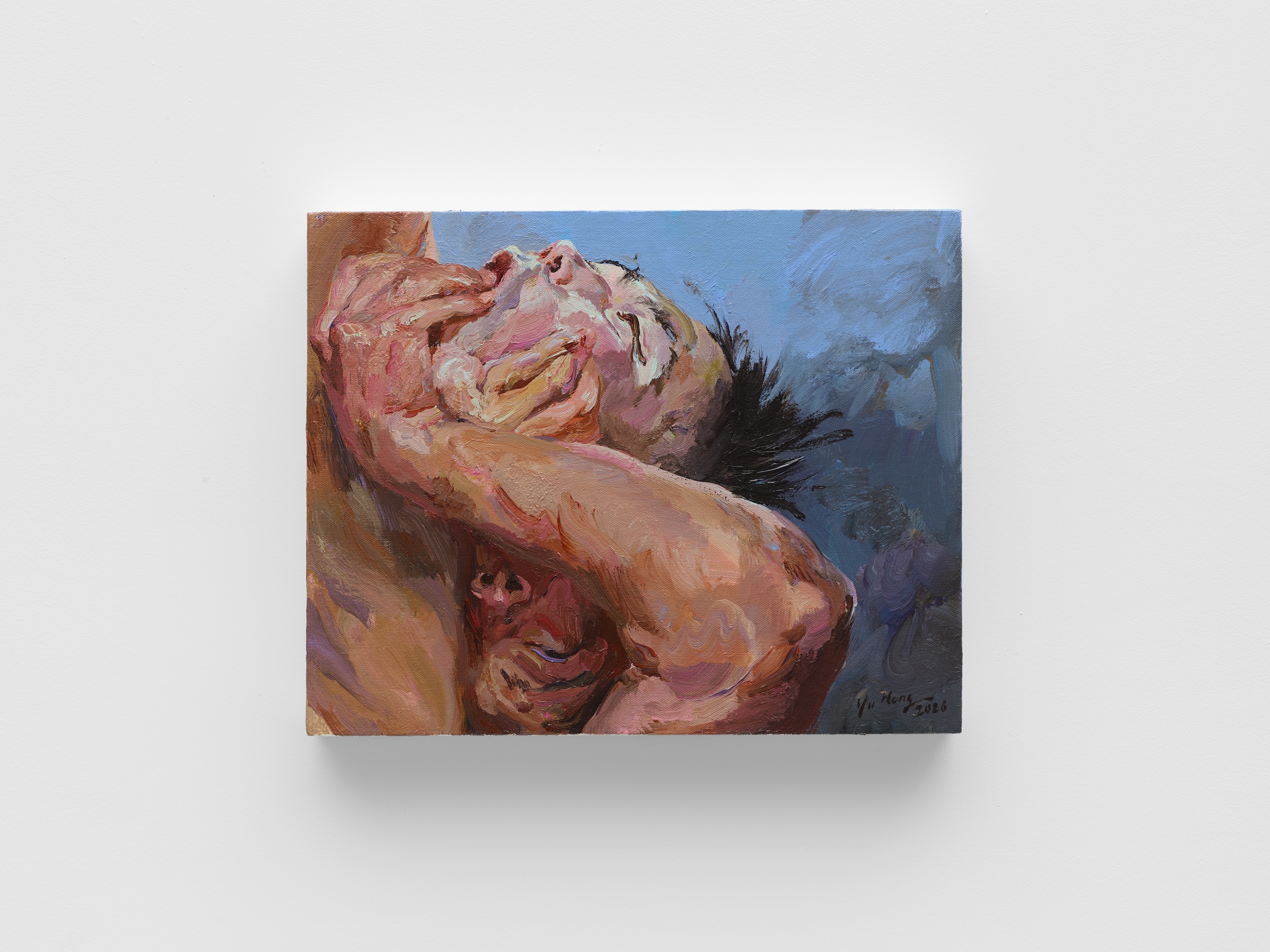
That exchange is reciprocal. Yu Hong brings old visual languages into contemporary life, but her contemporary figures also change the way those older forms read: the sacred becomes corporeal and immediate.
“In everyday life, we experience pain, joy, and all kinds of physical sensations, but our inner worlds also contain many different spaces and dimensions,” Yu Hong says. “Even an experience of suffering can lead to reflections on reality and open up possibilities for the imagination.”
This is where Yu Hong’s work becomes difficult to describe in clean oppositions. Realism and surrealism are not enemies. Neither are beauty and violence. If anything, she seems interested in the point where these supposedly incompatible states bleed into one another.
“But when I talk about beauty, I do not mean something that is simply pretty, sweet, or superficially pleasing,” she says. “Beauty can exist on many different levels, and it can also contain tremendous tension. A painting can convey pain, unease, anxiety, or even intense conflict, while still presenting these experiences through a form that possesses beauty. I do not think beauty and these painful emotions are contradictory.”
Her paintings can be seductive precisely because they refuse to resolve that contradiction. They are lush without being comforting, monumental without offering the stability that monumentality usually promises. The viewer is invited close enough to admire the brushwork and then left among bodies that appear to be falling apart, falling down, or holding each other together.
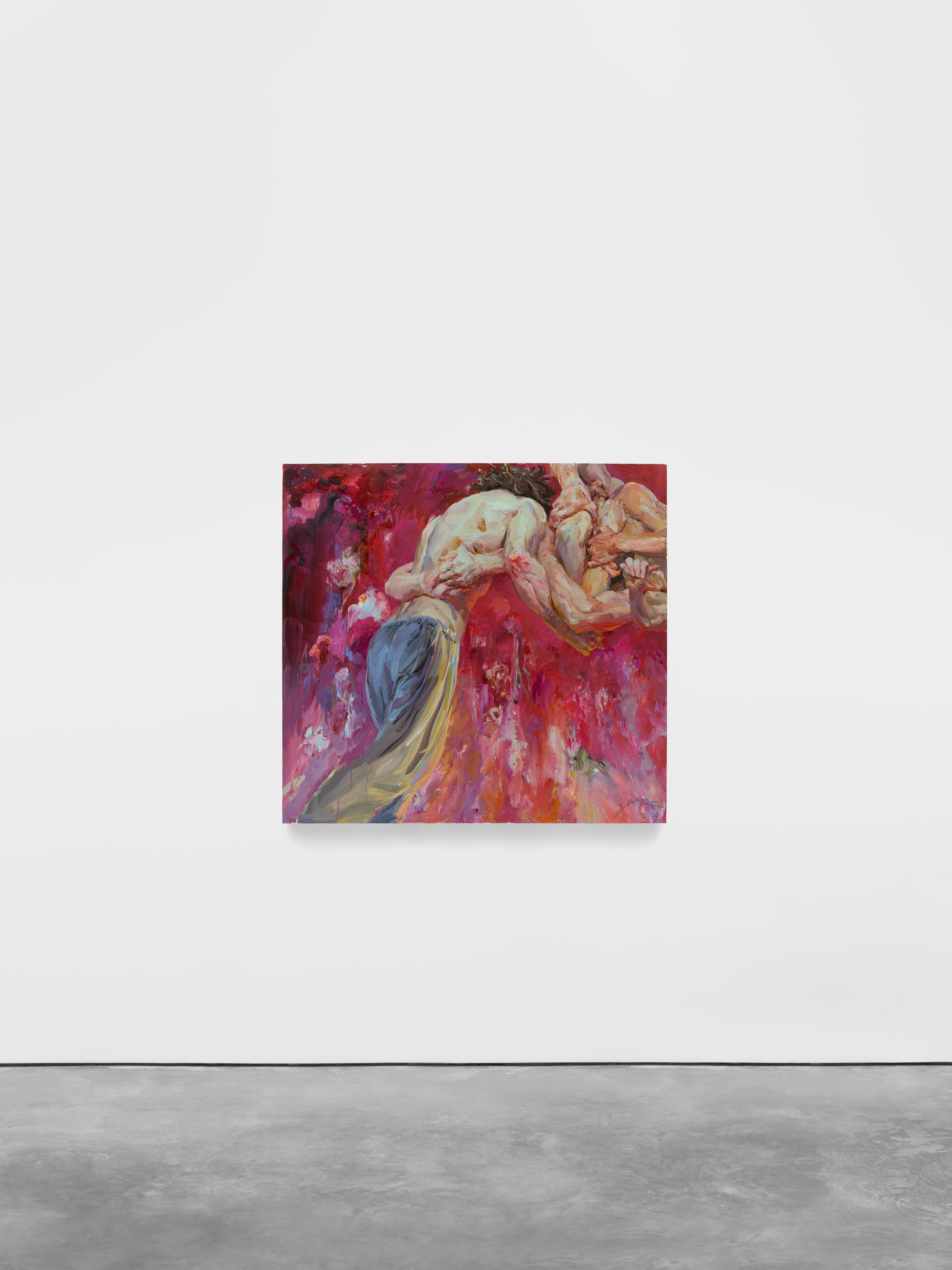
For all the scale of Field of Asura, Yu Hong speaks about painting itself in almost austere terms. After years of experimenting across mediums, she has increasingly returned to the canvas. “The simpler the medium, the easier it becomes to move beyond things that are merely eye-catching or superficially appealing, and get closer to the essence of what you want to express.”
Yu Hong’s canvases can occupy a wall with the confidence of history painting, a fact she knows can still collide with tired assumptions about who is allowed to make work with that kind of physical authority.
“Perhaps some people wonder why, as a woman artist, I make such large paintings, or why my paintings have so much force,” she says. “Maybe this is different from their preconceived idea of a woman artist, someone who might paint smaller, more delicate still lifes or landscapes.”
Force, though, is not just a matter of square footage. Yu Hong describes the process of painting as a stripping down, an image worked and reworked and whittled until whatever is weak or vestigial has disappeared. The comparison she reaches for is geological, and almost devotional.
“It is a little like a piece of jade being tumbled and polished by a river over hundreds or thousands of years,” she says. “Gradually, the looser, weaker parts are worn away, until only the densest, most solid core remains.”
Stay up-to-date with exclusive events and content.


