F L A U N T


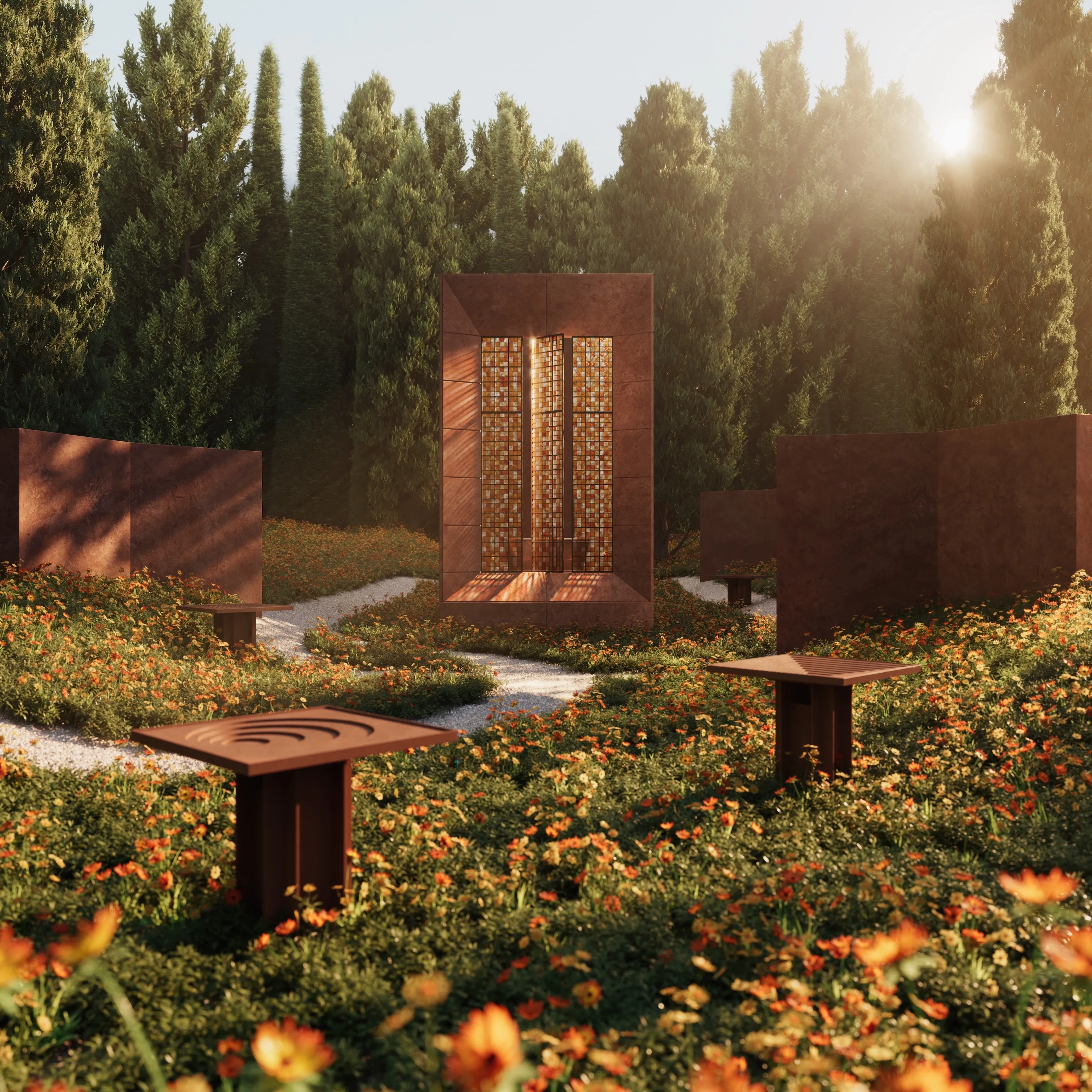
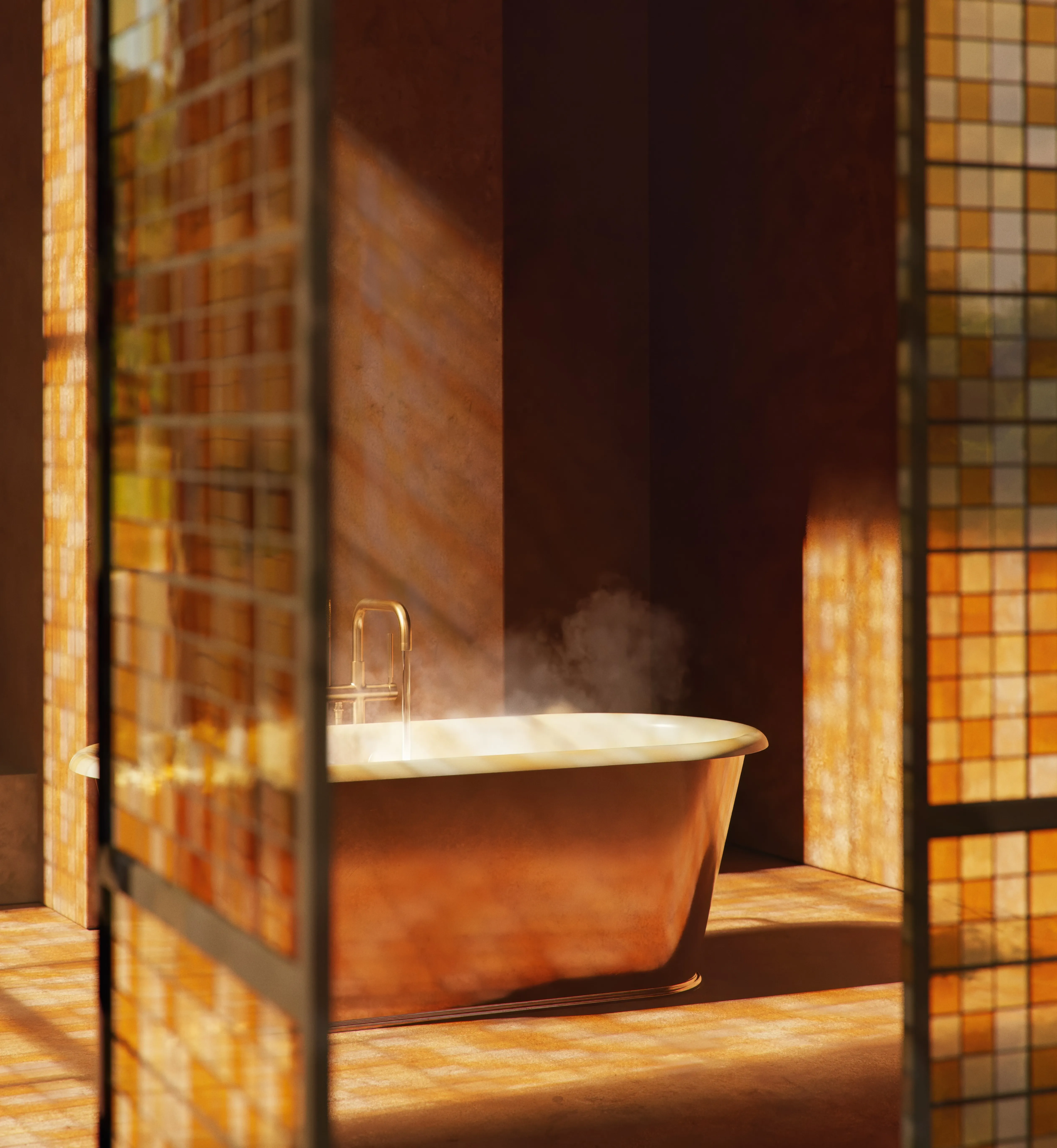
Tucked away in a courtyard lies a waking dream—a place where copper catches the sun’s golden rays and wildflowers grow in abundance. Suspended between city and nature, this wellness sanctuary is the result of a collaboration between American manufacturing icon Kohler and Los Angeles-based lifestyle brand Flamingo Estate at Milan Design Week. Unveiled in the Padiglione d’Arte Contemporanea’s courtyard, “The Flamingo Estate Bathhouse by Kohler” is a multi-sensory installation that invites visitors into a serene world of architecture, nature, and self-care.
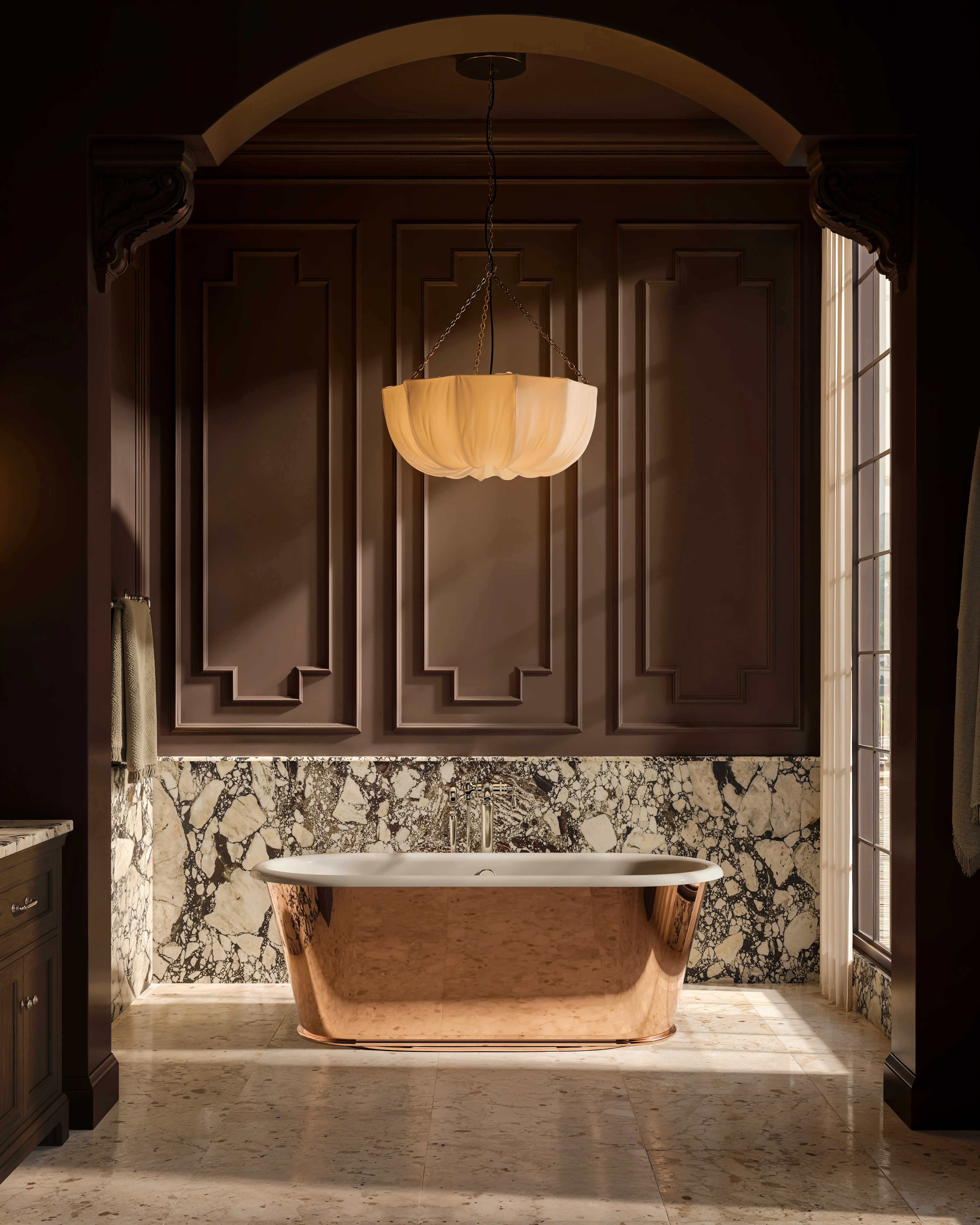
The installation, centered around a brutalist bathhouse inspired by Richard Christiansen’s Flamingo Estate property, is reimagined in Milan as a copper-clad space for renewal. The showpiece, rooted in a color scheme of weathered metals and elemental surfaces, appears to emerge organically from its surroundings, surrounded by 200 Flamingo Estate candles that cast a golden aura, inviting visitors to surrender to serenity for a moment. The new Kohler Reverie enameled cast-iron bath with a copper shroud highlights the manufacturer’s 153-year heritage of contemporary artistry with tradition to redefine the future of bathing design.
To uncover the creative vision and deeper intentions behind this immersive experience, Michael Seum, Kohler’s VP of Global Design, reveals how the project translates the spirit of Flamingo Estate and Kohler's storied precision into an installation that is both grounding and transformative. He shares insights on sensory design, sustainability, and how true wellness arises not from escape, but from an intimate interaction with nature.
This installation blurs the boundaries between cosmopolitan life and nature. How did you approach translating the Los Angeles–rooted spirit of Flamingo Estate alongside Kohler’s global design perspective to Milan, and what does this juxtaposition reveal about the evolving world of modern wellness?
At Kohler, we think about design as a universal language, one that can carry deeply local narratives across geographies. Flamingo Estate is rooted in Los Angeles, but its ethos, of living in rhythm with nature, of elevating daily rituals, is something that resonates globally. Our approach was not to replicate Los Angeles in Milan, but to translate its spirit: a sensibility that embraces wildness, imperfection, and sensory richness.
Milan, as a global design capital, offers a compelling counterpoint. It is refined, architectural, and historically grounded. Bringing these two worlds together allowed us to explore a new expression of wellness, one that is less about escape and more about integration. The installation reflects a broader shift we’re seeing: wellness is no longer confined to the spa or the private interior, but exists in dialogue with the natural world, even in urban contexts.
The bathhouse can be described as an “elemental sanctuary.” What emotions and feelings did you hope visitors would experience visiting the installation, and how did your design choices support that vision?
We wanted visitors to feel a sense of grounding, both physically and emotionally. The idea of an “elemental sanctuary” is rooted in stripping things back to their essence: light, material, water, scent, and sound. There is a quietness to the experience, but also a sense of discovery as you move through it.
Design-wise, we focused on contrast and tactility. The weight and permanence of the cast iron bath is set against the softness of wildflowers and the flicker of candlelight. Materials are intentionally left expressive, weathered metals, natural finishes, so that they age and respond to their environment. This creates a space that feels alive rather than static.
Ultimately, we wanted to create a moment of pause. In the context of Milan Design Week, which can be quite fast-paced, the installation offers a different rhythm, one that invites reflection and reconnection.
The installation includes copper surfaces, wildflowers, and 200 Flamingo Estate candles, engaging multiple senses. Can you share any beliefs, rituals, or daily practices from Kohler that inspired this multi-sensory experience?
At Kohler, we’ve always believed that design should engage more than just the visual sense. Water itself is inherently multi-sensory; it has sound, temperature, movement, and that has long been central to how we think about bathing experiences.
This installation builds on that philosophy by expanding the sensory palette. The warmth of copper, the organic unpredictability of wildflowers, and the ambient glow and scent of candlelight all contribute to a more immersive environment. These are elements that connect back to daily rituals, lighting a candle, tending a garden, taking time for a bath, but elevated in a way that encourages presence.
It’s less about introducing something new and more about deepening what already exists in our routines. The goal is to heighten awareness of materials, of atmosphere, and ultimately, of oneself.
Kohler’s Reverie bath is both a nod to its over-a-century-old heritage and a leap into the contemporary. How did you decide on the materials and forms that would best express both brands’ ethos in this collaboration?
The starting point was Kohler’s enameled cast iron bath. It represents durability, craftsmanship, and a deep understanding of how materials perform over time. For this collaboration, we wanted to honor that legacy while exploring new expressions.
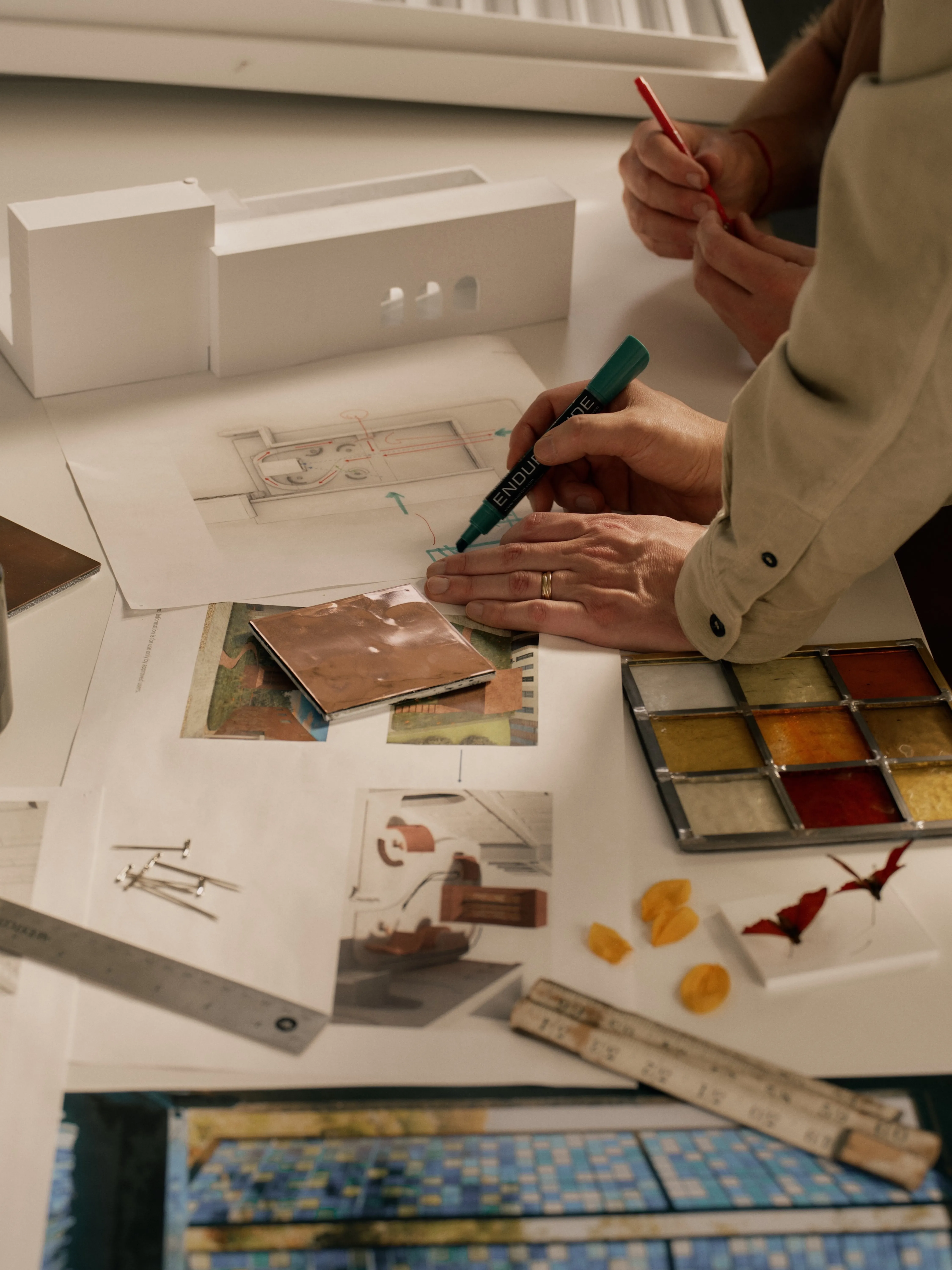
The introduction of the copper shroud was key. Copper is a living material; it patinates, it evolves, which aligns closely with Flamingo Estate’s appreciation for natural processes and impermanence. Wrapping that around the precision and performance of cast iron creates a dialogue between permanence and change.
Formally, the bath remains grounded and architectural, but the materiality softens it, making it feel more integrated with the surrounding environment. It becomes less of an object and more of an experience, something that sits between design, craft, and nature.
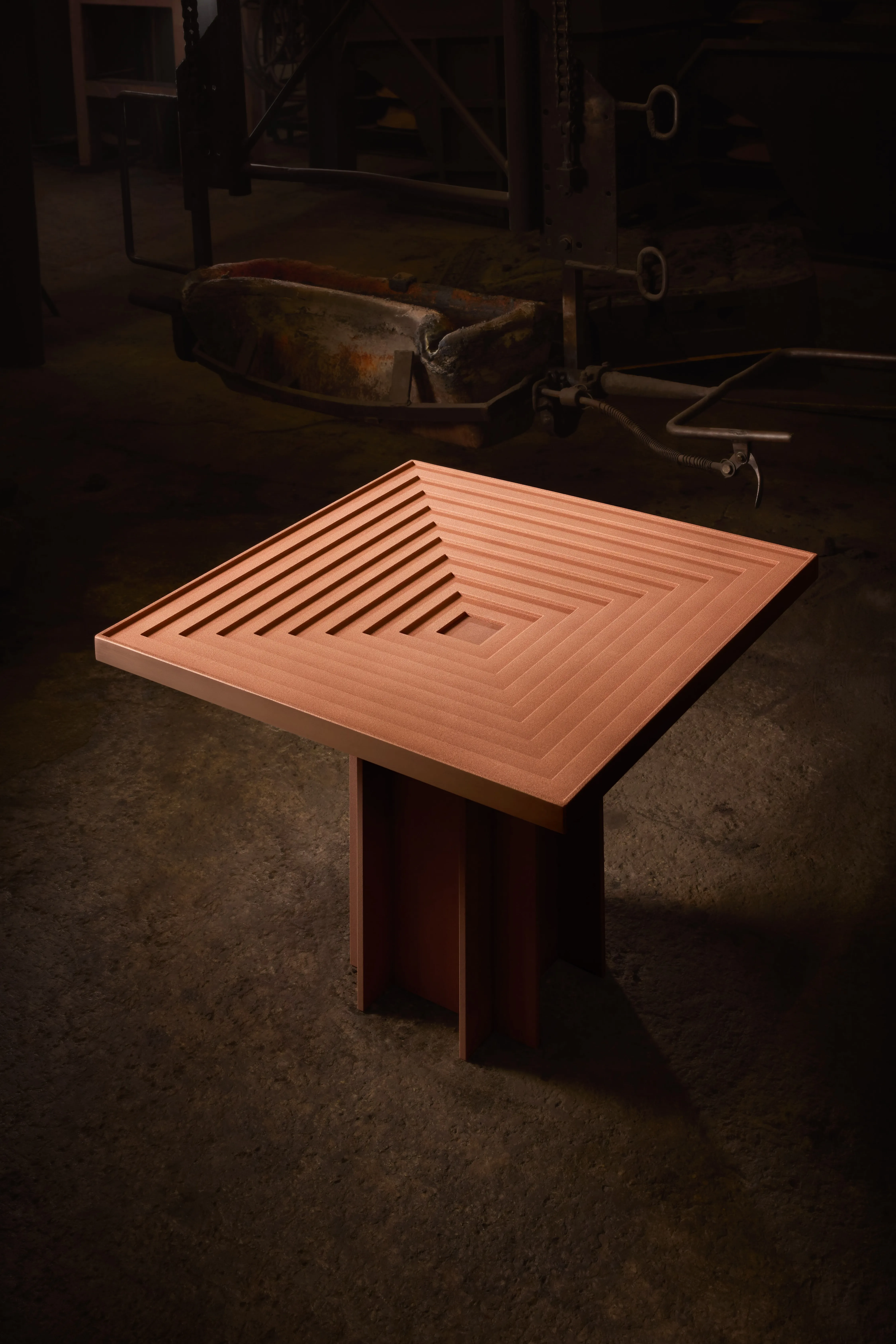
The installation includes pollinator baths as sanctuaries for birds, bees, and other pollinators. What role do you believe design should play in supporting biodiversity and preserving nature—both in public spaces and at home?
Design has a responsibility to extend beyond human-centered needs. The pollinator baths are a small but meaningful gesture; they acknowledge that the environments we create are shared with other species.
At Kohler, we think about sustainability not only in terms of materials and manufacturing, but also in how our designs can contribute to healthier ecosystems. Whether in a public installation or a private garden, there is an opportunity to create spaces that support biodiversity, through water, through planting, through habitat.
What’s important is that these interventions feel integrated rather than additive. The pollinator baths are designed with the same level of care and intention as the rest of the installation, reinforcing the idea that supporting nature can, and should be part of the design language itself.
For Kohler, cast iron carries a memory of the land. Long before it became part of the home, it belonged to the field, shaped for labor, durability, and coexistence with nature. In revisiting that heritage, we saw an opportunity to use the material not only structurally, but symbolically, as a bridge between human ritual and the natural systems that surround us. In that sense, it supports a broader idea of design, one that acknowledges our responsibility to think beyond human needs and consider the ecosystems we share.
Beyond Milan Design Week, how do you hope this collaboration will influence future projects for Kohler, and how do you hope The Flamingo Estate Bathhouse will inspire the broader worlds of architecture, wellness, sustainability, and design?
Collaborations like this allow us to step outside of our usual frameworks and explore new ways of thinking. Working with Flamingo Estate has reinforced the importance of storytelling, of sensory experience, and of designing with nature rather than around it.
Going forward, I think this will continue to influence how we approach both product and environment, placing greater emphasis on emotional connection, material authenticity, and ecological awareness.
More broadly, I hope the installation encourages a more holistic view of wellness. One that is not defined by luxury alone, but by connection, to materials, to rituals, and to the natural world. If it inspires designers and architects to think more expansively about how spaces can support both people and the environment, then it has achieved something meaningful.
Stay up-to-date with exclusive events and content.


