F L A U N T


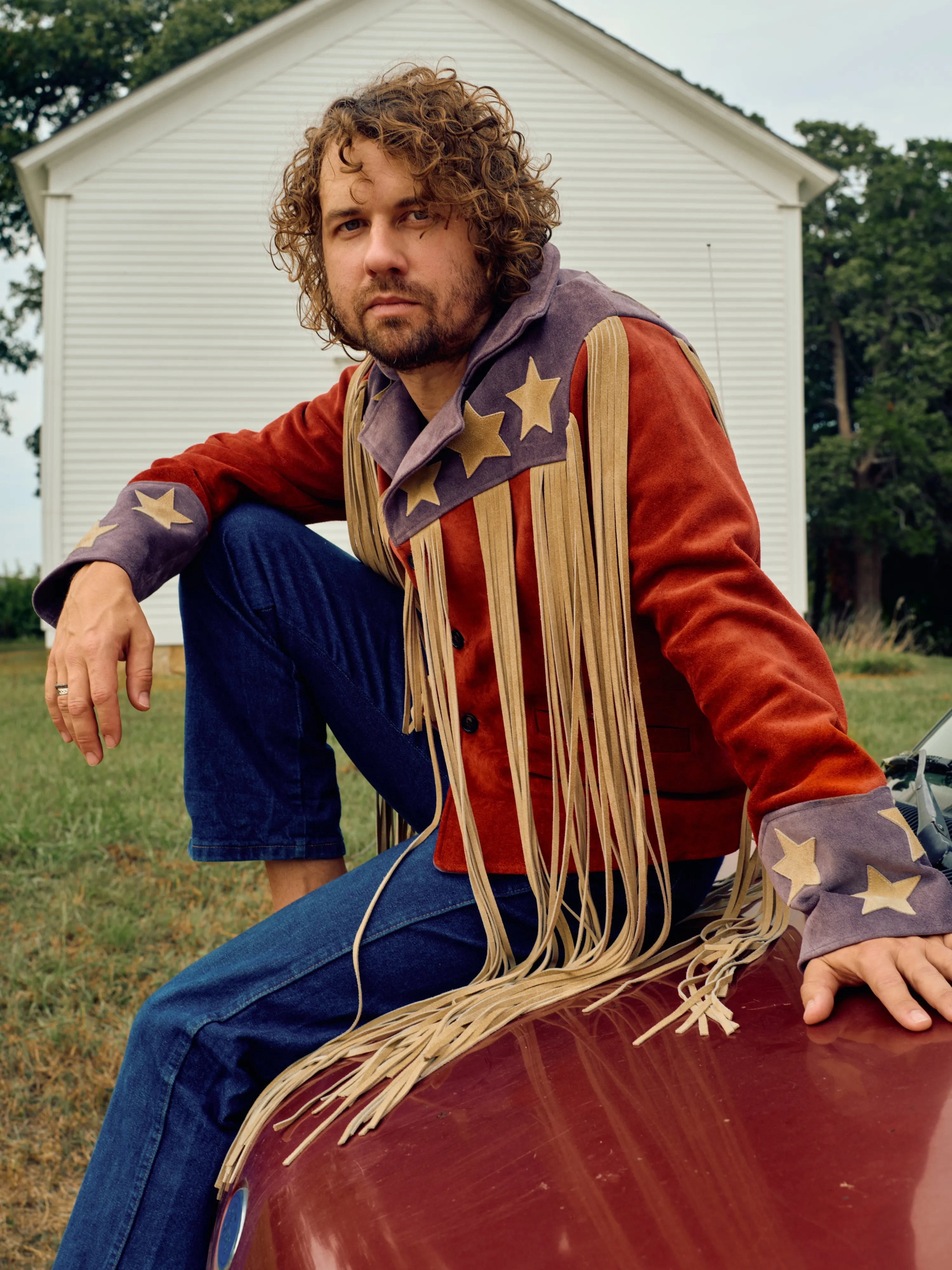
Kevin Morby is moving ahead.
The singer-songwriter, even before his touring days, has seen more corners of the United States than a long-haul eighteen-wheeler. Upon completion of a childhood lived among Lubbock, Detroit, Tulsa, Oklahoma City, and Kansas City, he moved to New York to chase a music career, which later took him to Los Angeles and then back to Kansas City. As he puts it, though, “the third place I’ve lived as an adult is on the road,” touring for his albums Sundowner, This Is a Photograph, and now, Little Wide Open.
Little Wide Open is a portrait of the Midwest, of reckless youth, of grief and the constant narrowing of life’s branches. The oft-repeated motif “time is a violent driver” recalls Morby’s earlier album This Is a Photograph, in which, he says, “the metaphor was that I was in a boxing ring with time, waiting to get laid out by it.” Time is an invincible adversary: its defeat of you is a matter of not if but when–indeed, it is the when. These days, though, Morby recognizes that it’s more complicated than that.
“My relationship with time right now is just this notion of gratitude, and just being happy to have some time on this earth, this beautiful planet Earth with a lot of wonderful people and things,” he says. “You should really try and embrace [time] more than you are afraid of it.” And that’s the thing: time’s greatest threat is its ability to take away the gift of itself. None of us are in a boxing ring with time–time is the ring, and if we’re lucky, it can make us champions.
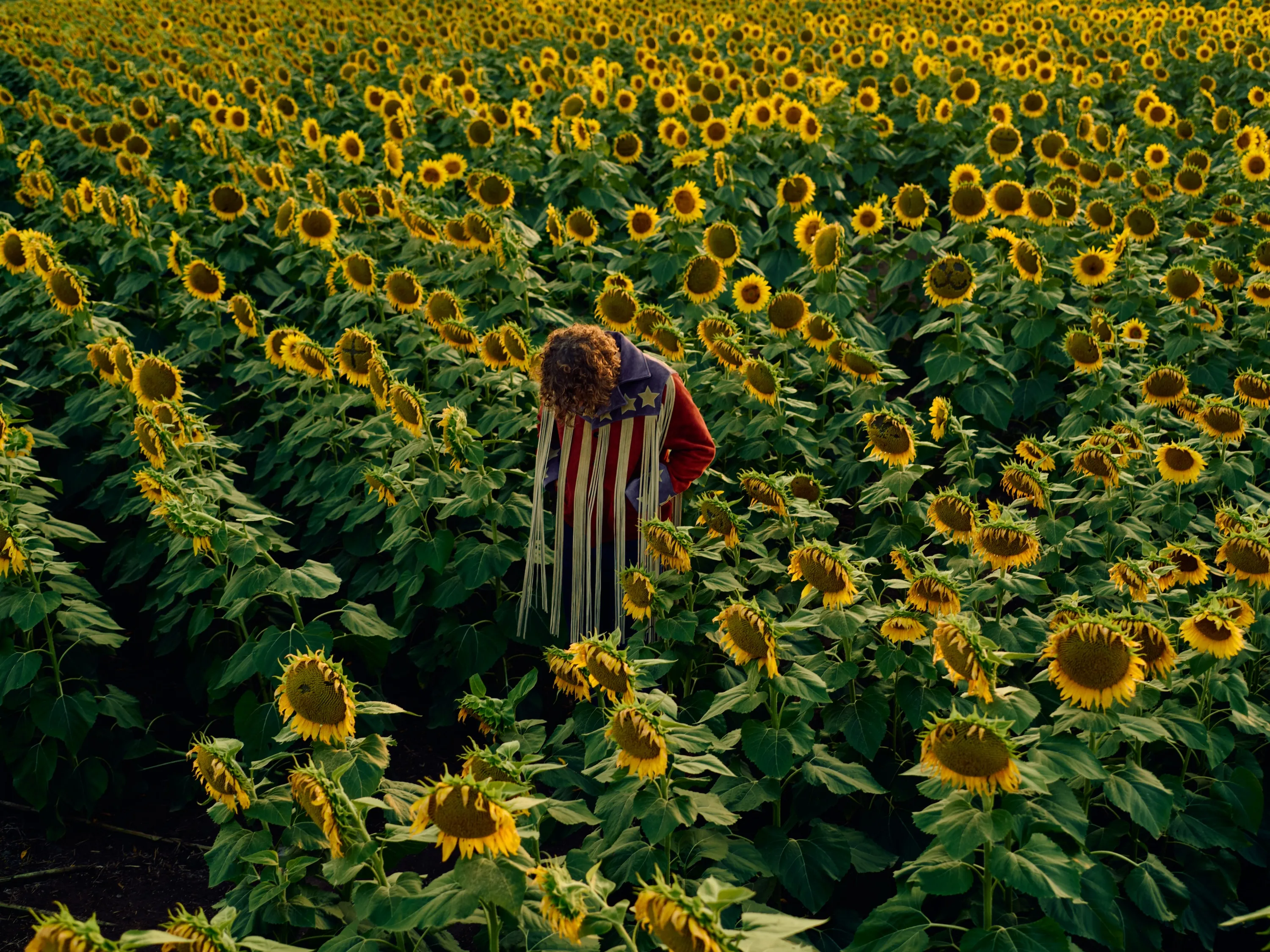
These days, Morby lives most of the time in east LA, which he sees as having its own brand of grit, calling it a “mystical Mexican cowboy town full of amazing food and people.” It’s dustily beautiful, merging a small-town feel with an abundance of other artists. He doesn’t know how living there will affect his songwriting long-term, but he looks forward to finding out.
Today, I’m video-calling him at his studio in Kansas City, land of, as he puts it, “big skies, thunderstorms, cicadas, [and] humidity.” Those things are all at the core of the Little Wide Open album, which he describes as “tying a bow on my time here.”
To Morby, the phrase “little wide open” describes that sky–its immense beauty clashing with the limits of what the world beneath it has to offer. In the title track, he reflects that a place has different needs than a person, and what maintains and redeems the one can destroy the other. To be a little wide open as a person–that is, to be vulnerable, to face the reality of the impermanence of yourself and your life–is to reckon with the kind of powerlessness that can wreck you, that maybe you’d have been better off never even knowing about.
On the other hand, to never know the concept of the little wide open is to lock yourself out of the opportunities beyond it, as Morby portrays on “Cowtown,” “Little Wide Open”’s immediate successor in the tracklist. In “Cowtown,” he imagines life if he’d never left Kansas City–stagnant, shiftless, sitting in the oppressive summer heat as children erupt out of schools into summer vacation, a once joyous tradition rendered meaningless by the passage of time. Bereft of stimulus, Morby’s alternate-timeline self loses the ability to express his own emotions. “I feel like cryin’,” he sighs over the steady rhythm guitar part that drives the song forward, “but I’m all out of tears.”
A pivotal moment in the topography of the album, “Cowtown” was almost left off the tracklist entirely, along with its successor, “Bible Belt,” an existential lullaby of hammer-ons and acceptance. Together, the songs provide a counterweight to the occasionally inundated perspective of the album’s first half, reminding us that just as we can die of drowning, so too can we be done in by dehydration. Time flies no matter what you do with it.
“Track order is this sacred thing that feels like it means nothing, but it also means everything at the same time,” says Morby. “I like to think of my record cinematically: if this was a film, what would be a good song to open this film? What would be a good song to close it?”
At different stages in the timeline of creating Little Wide Open, those two questions were answered the same way: with “Field Guide for the Butterflies,” a cautiously adventurous song that juxtaposes butterflies with behemoth vehicles. One is unmistakably beautiful, a cultural icon, free to move in three dimensions by simply flapping its wings; the other is dull and overlookable, confined not only to the ground but to a web of narrow roads. And yet, it poses a great threat to the former. “Can’t be too brave out here underneath the sky,” Morby sings over an instant classic of a guitar riff, but he concludes that “it’s not suicide if I die out chasing thrills/just me trying to grow wings.” In the final album, “Field Guide” is the closing track.
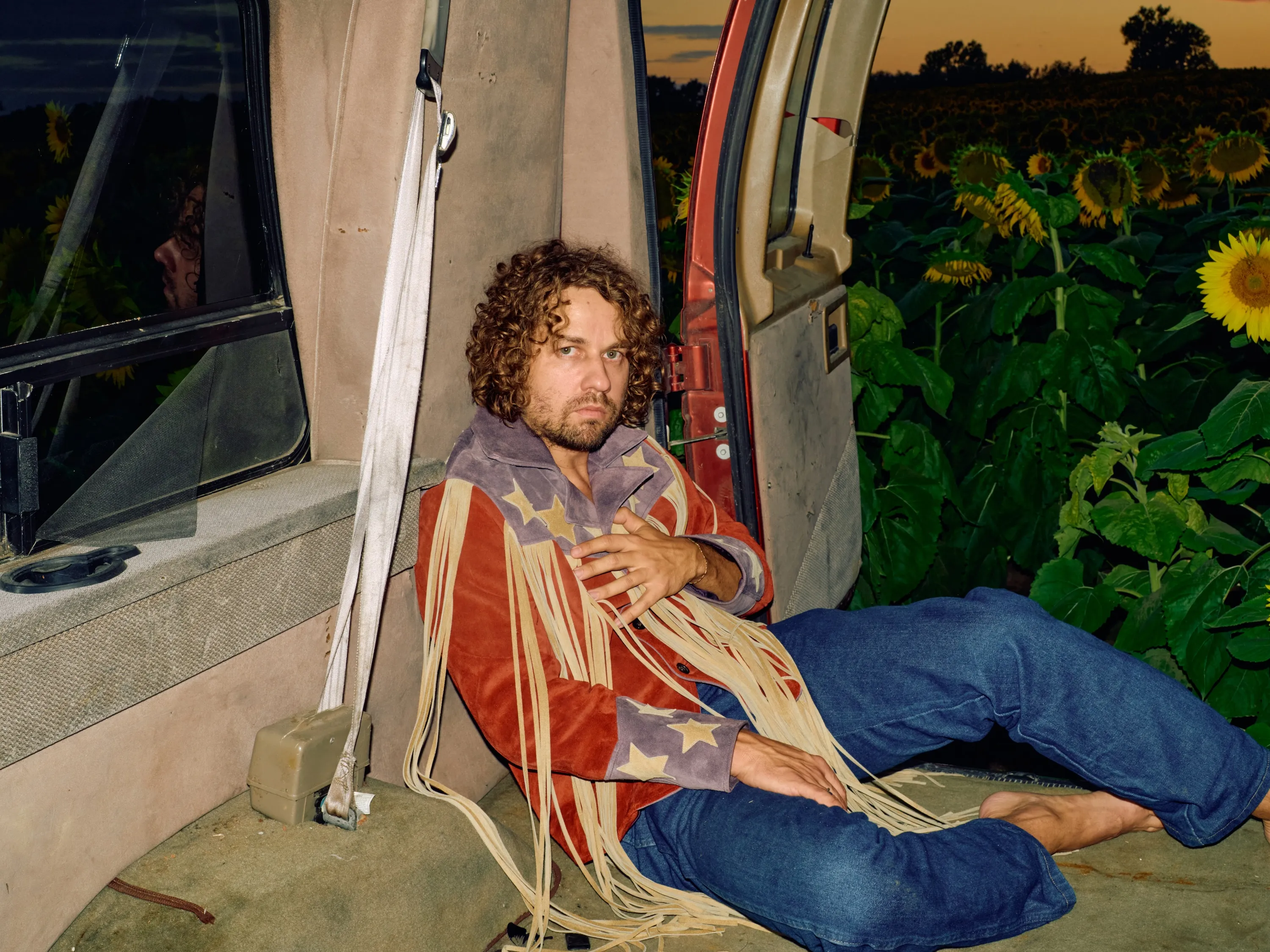
Listening to Little Wide Open, I’m continually impressed with Morby’s ability to blend complexity with clarity: no song is about just one thing, but every line is direct. He connects this to the process of making sense of his emotional landscape: “I often describe songwriting as its own form of therapy…it feels good to let those things surface and to talk about your feelings in those ways.”
I’m a fledgling songwriter, and near the end of the interview, I ask Morby if he has any songwriting advice.
“Just envision, if one of your heroes was singing it, would it sound good coming out of their mouth?” he responds, naming Nina Simone as a singer he uses for this mental exercise. “Pretend that you’re in a band and you need to write songs for that band.” He adds that the genre of this imaginary band doesn’t matter, but what matters is giving yourself assignments, letting yourself have confidence, and if having confidence doesn’t come easy to you, tricking yourself into it. Creativity is what happens when you believe you have something to say.
Stay up-to-date with exclusive events and content.


