F L A U N T


The death threats started with a made-up word. When content creator and educator Kyla Scanlon coined “vibecession” in a 2022 Substack post, she couldn’t fathom that the portmanteau would be used—and occasionally misused—by journalists, finance novices, and even Treasury Secretary Scott Bessent. What was perhaps even more surprising was how strongly people reacted to a Gen Z-esque nomenclature that refers to the dissonance between strong economic markers and negative public sentiment.
“It was the first time that I was like, ‘Oh my gosh, this internet thing that I’ve been playing around with is scary,’” the 28-year-old shares, a whisper of Kentucky-born twang in her vowels. “But I think the internet itself, the good parts of it are very good. You wouldn’t have been able to really do something so many creators are doing 20 years ago.”
It is this sort of discernment that has endeared over a million social media users to Scanlon and her content demystifying the intricacies of the economy.
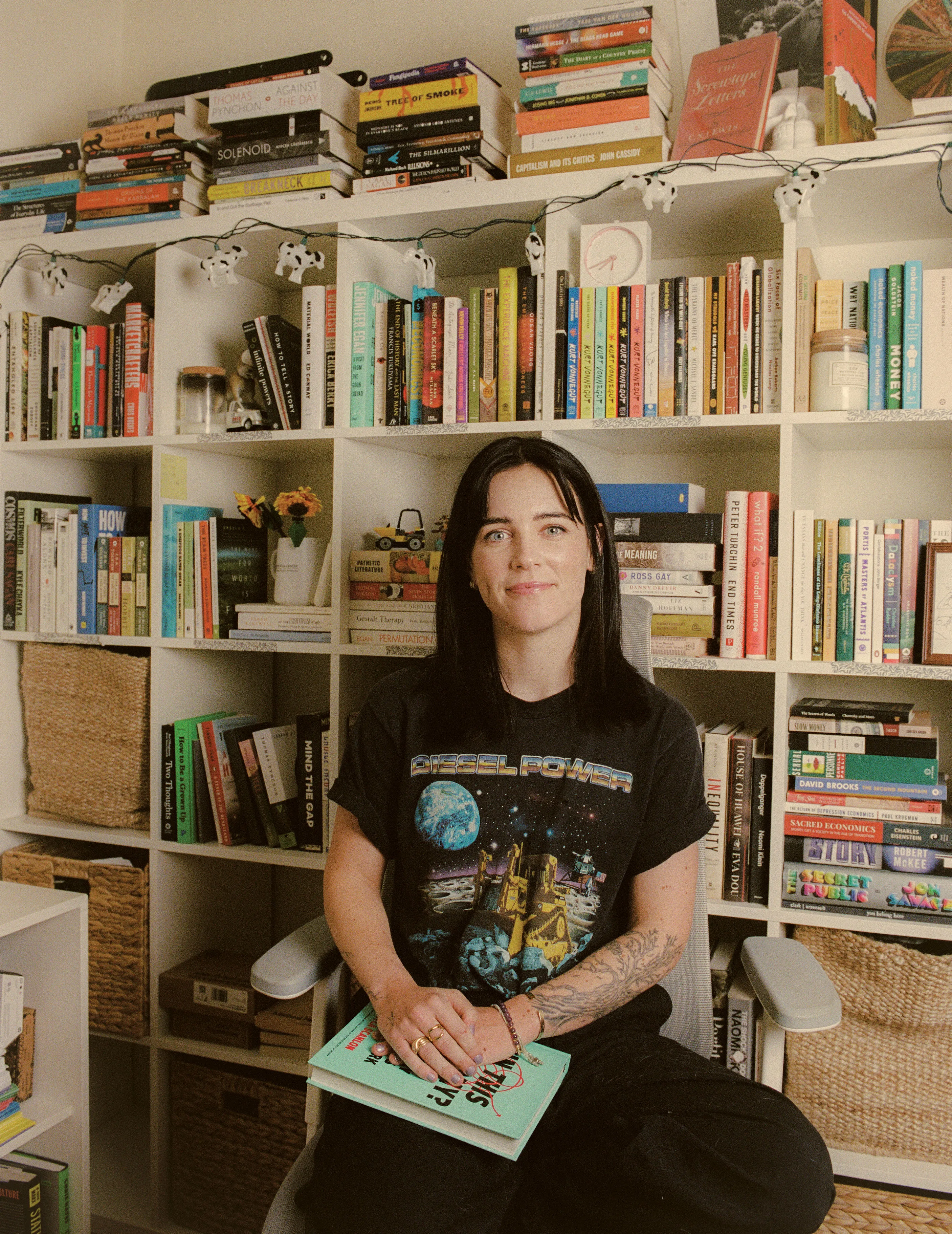
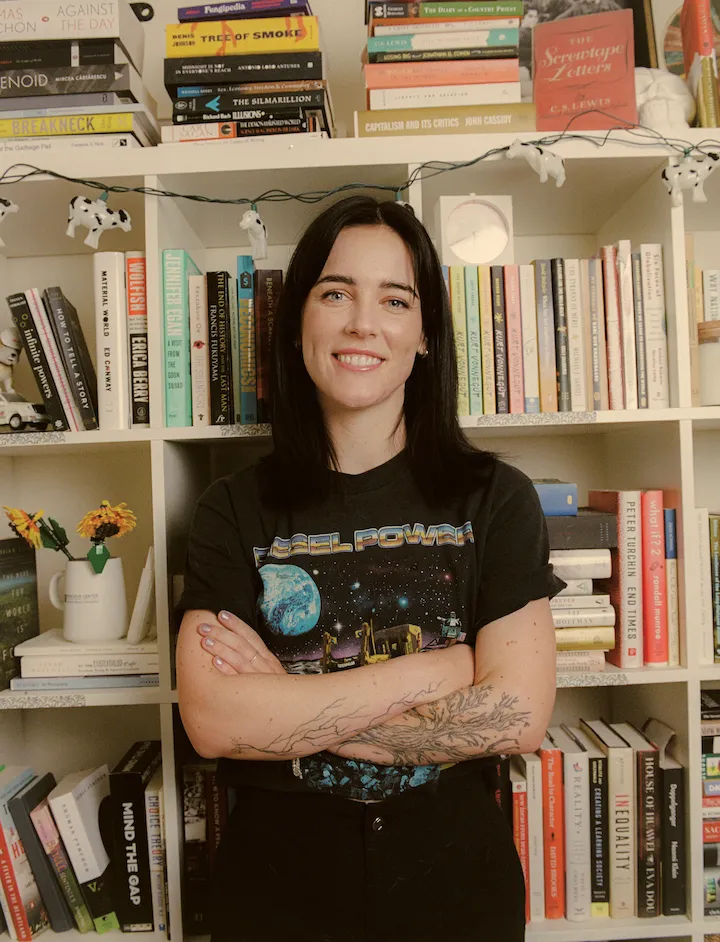
Every day at 4 a.m. while the rest of Los Angeles is deciding whether to exist, Scanlon is up and poring over the news. After a running or cycling workout, the Kentucky native situates herself in the warmly-lit office that loyal viewers will recognize as the backdrop of her videos: floor-to-ceiling bookcases filled with multi-colored spines of fiction and nonfiction titles, as well as a collection of hand-made clay monsters.
The first video on her TikTok page is a skit from 2021 parodying the tension between the then Treasury Secretary Janet Yellen and Chair of the Federal Reserve Jerome Powell—though Scanlon has them communicate entirely in Snapchat-like correspondences, gradient text bar and all. The 48 second video is free of dialogue, scored solely by the instrumental piano version of Kanye West’s “Runaway.”
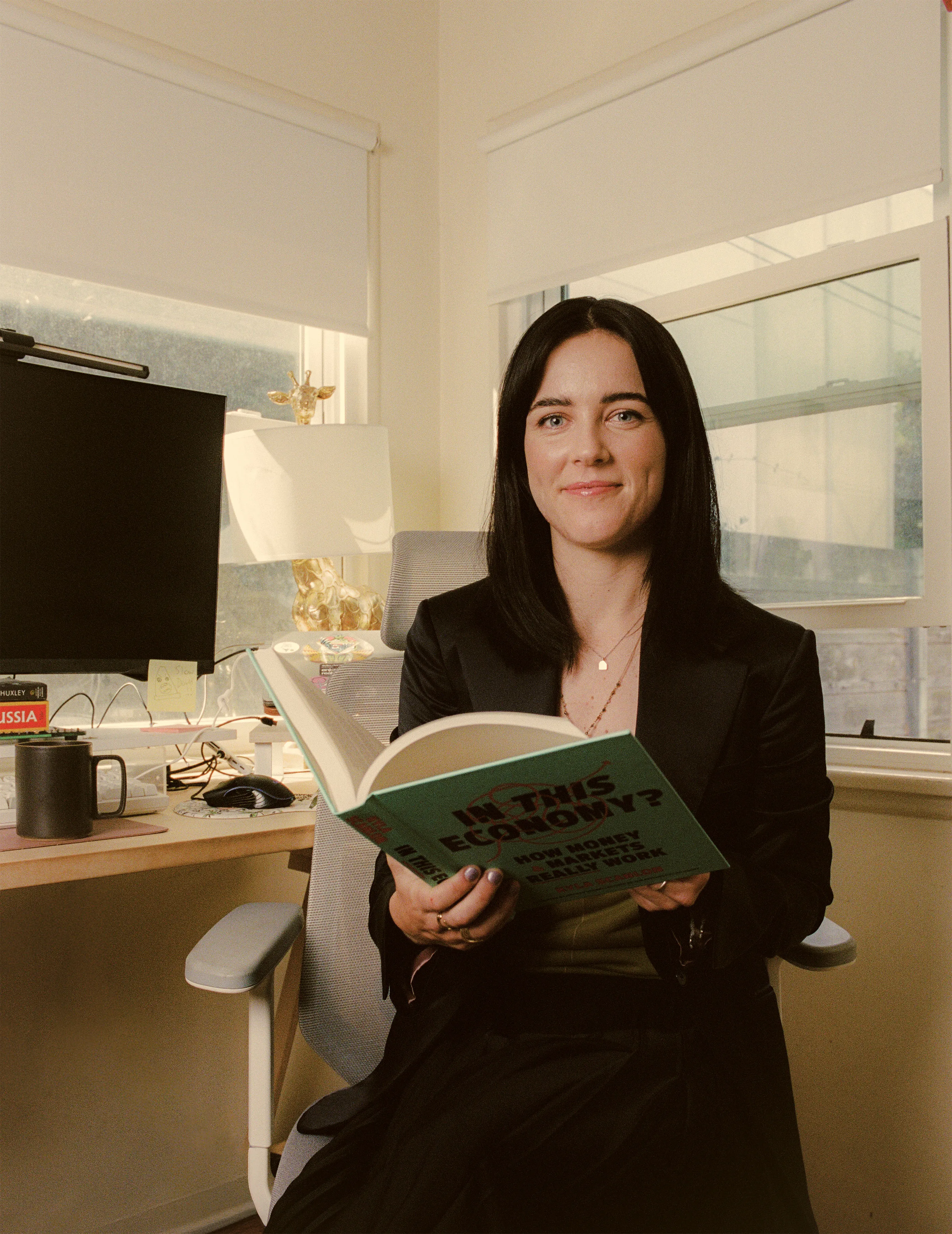
The aphorism of “meeting the audience where they’re at” is undeniably cliched but also a valuable precedent and part of the foundation of Scanlon’s career. Her videos catered to helping Gen Z understand topics like GDP, tariffs, and prediction markets have led to podcast appearances, contributor bylines for the New York Times and the Wall Street Journal, multiple viral terms beyond “vibecession”—hello “FAFOnomics”—as well as her 2024 book In This Economy?.
Her virality and credibility as an economic educator “snowballed” from there. “I don’t totally understand it sometimes, but I think because we have a society that doesn’t always allow younger people into the room… I was welcomed into the room, in kind of a fluke,” she says. “I was luckily able to help out as much as I could.”
Scanlon has said that she’s not an influencer, rather a commentator and educator. When I ask her about the intention behind this distinction, she laughs, “That was just me being a curmudgeon.”
She points out that other creators that go viral for creating TikTok dances, for example, feel very removed from the goal of her content as well as the breadth of mediums and platforms she occupies. Still, Scanlon understands why people put her under “the influencer umbrella.” Just don’t call her an economist—she doesn’t have a Ph.D., and when “somebody calls me an economist, I get emails.”
Regardless of what people call her, the throughline of Scanlon’s work is clear. “I was having a conversation with somebody yesterday, and we were talking about my work, and she’s like… ‘I don’t need to know about inflation.’ I respond, ‘you really do.’” Scanlon shares. “Ultimately, we’re all better off if we can all make marginally better decisions. Humanizing this sort of stuff is reminding people that they are part of the economy. They’re the reason that the economy works.”
For now, between her many endurance sports and reading the latest Barbara Kingsolver novel, Scanlon is working on a second book—she can’t reveal its focus but followers of her Substack should have a sense of its contents—as well as a television show. Think “Bill Nye the Science Guy” but for economics.
Scanlon, ever humble, wants to talk about the fans that have set her up for these opportunities, the young people learning what their high school personal finance classes never taught them—and surprisingly—a fair amount of dads and grandmas.
“I do wish people would ask me more about them, because I’m nothing without them,” she says. “They’re just a really good representation that people care about finance. They’re the only reason that I’m able to do this stuff.”
Scanlon is no longer simply meeting her audience where they’re at. She’s showing other educators, creators—and yes—even influencers, where to go next.
Photographed by Ethan Johnson-May
Styled by Laura Cheron Haquette
Written by Isa Luzarraga
Glam: Nicole Bizer at Exclusive Artists using Rare Beauty
Photo Assistant: Jacob Flores
Stay up-to-date with exclusive events and content.


