F L A U N T


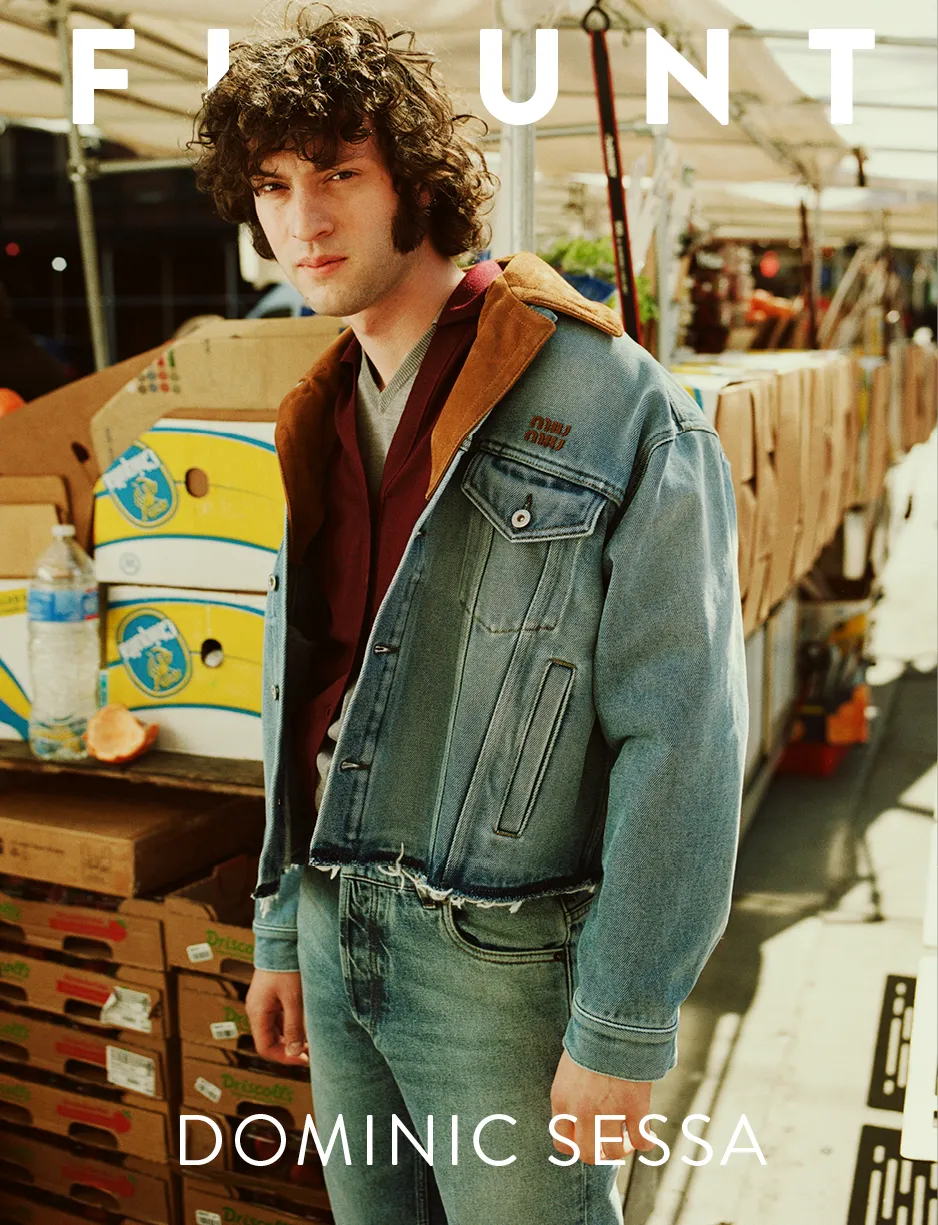
It is not hard to define a hero: he who is the defender, dealer, and arbiter of the truth. The truth is harder to define. And it's less important which arena we find that hero in—a stadium, a stage, or our own households—and more important that we do find him at all, his figure bringing clarity, reassurance, and hope to a world that tends to, increasingly, inspire the opposite. The fact is that the hero is always there; our access to him is available (and this path is always the only way) through a good story. "That's the duty as an artist," says actor Dominic Sessa, positioning his insight on the importance of story telling, "to present something to people that helps them understand the world or understand themselves better. You see so deeply into their internal dialogue…and then you get to learn about yourself."
This summer, not three full years into his professional acting career, Sessa makes his quest as Anthony Bourdain in A24's Tony. Directed by Nirvanna the Band the Show the Movie and BlackBerry's Matt Johnson, Tony takes place before Bourdain actually achieves what makes him the culinary, literary, and cultural figure that we remember him as today, but rather narrates the chef some 25 years prior to the release of Kitchen Confidential, in his early days as a dishwasher in Provincetown during the summer of 1976. "The biggest thing is finding a reason why to make the movie," Sessa wonders after reading the script. "Why is it important to tell a story about Anthony Bourdain when he was 19 or 20 years old?"

Why is Anthony Bourdain important at all? There is, of course, the aforementioned Kitchen Confidential, an exposé of sorts, one of the first written accounts of the realities of a restaurant's back of house and its operations: which day of the week is the fish most fresh, what kind of person is preparing your food, what is the culture that burns between hot ovens and broilers and fryers and discarded beef cuts. This book was one of the first of its kind to introduce the general public to the once elusive makings of THE KITCHEN, which we are obviously so well aware of now, to the point of near obsession. Then there are his traveling television shows like No Reservations—where one must imagine a fresh-out-of-9/11 America, untrusting and comforted only by turning inwardly towards itself—watch on their TV sets, Bourdain begin an episode traversing the world for a fine-tasting foreign dish, and ending it with a thoughtful introspect about connection and how yes we are all so different but we are all the same at the dining table. And, to Sessa's point, the movie won't touch any of this subject matter, won't even approach the decades in which Bourdain actually began to make an impact on the dining and travel industries.
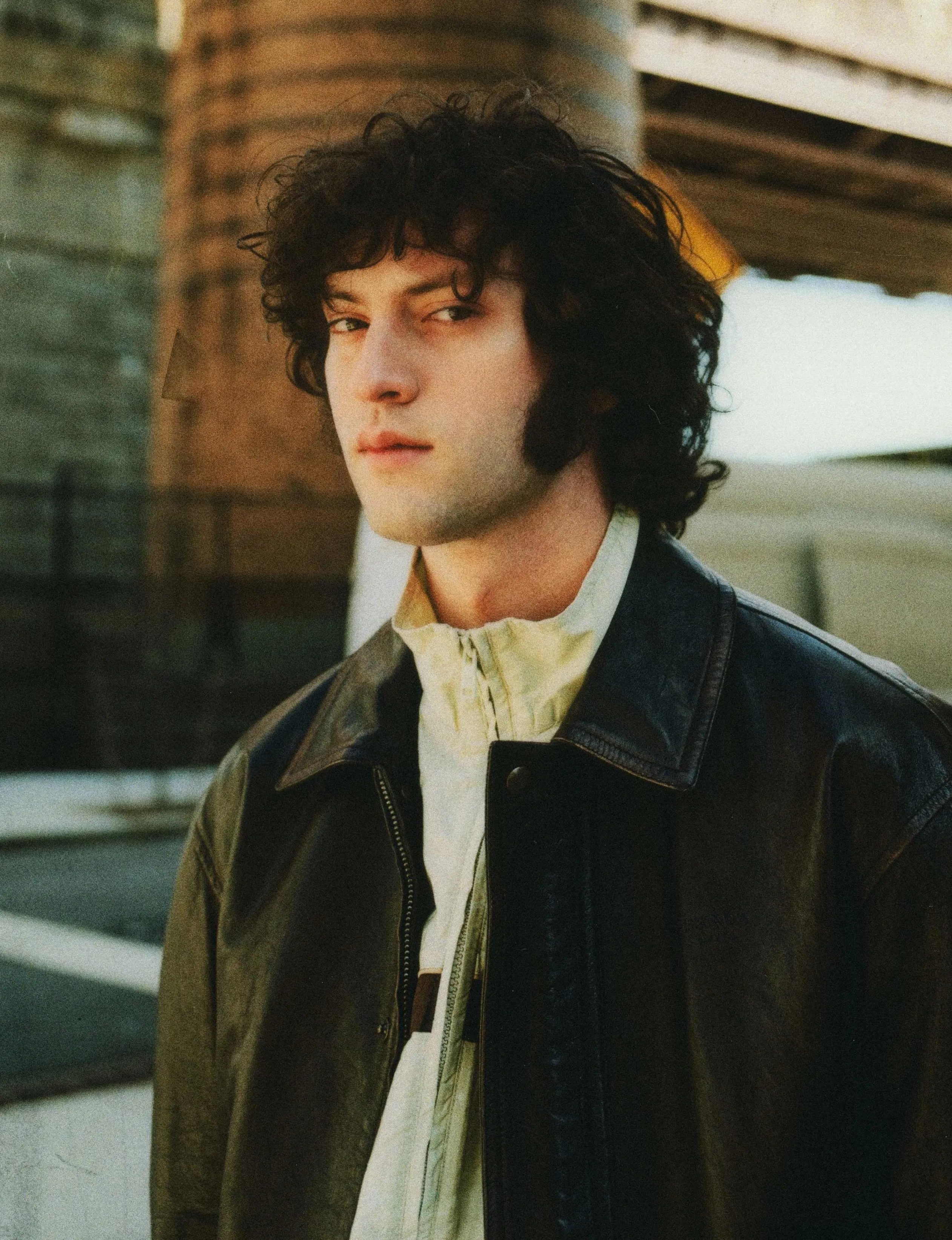
"We wanted to understand why he is the way he is," continues Sessa, "why he's so bound to this sense of integrity—just being honest with yourself, not bullshitting. I think that was the importance of the movie: the foundation of him was really built at this time in his life."
To tell the story of 70s Provincetown, director Matt Johnson—who is most commonly known for his independent comedy work alongside best friend and creative partner, Jay McCarrol, the composer of Tony's score—is joined by One Battle After Another's cinematographer, Michael Bauman. This will be the first in Johnson's directorial canon in which he does not also write or star in the film, and will instead see actors, both new and seasoned, make this story come to life. "He cast the best possible actors," Sessa says of Johnson, "we just got so lucky." Further cast includes Cum Town and Bugonia's Stavros Halkias, The Mask of Zorro and voice of Puss In Boots Antonio Banderas, Task's Emilia Jones, and The White Lotus's Leo Woodall.
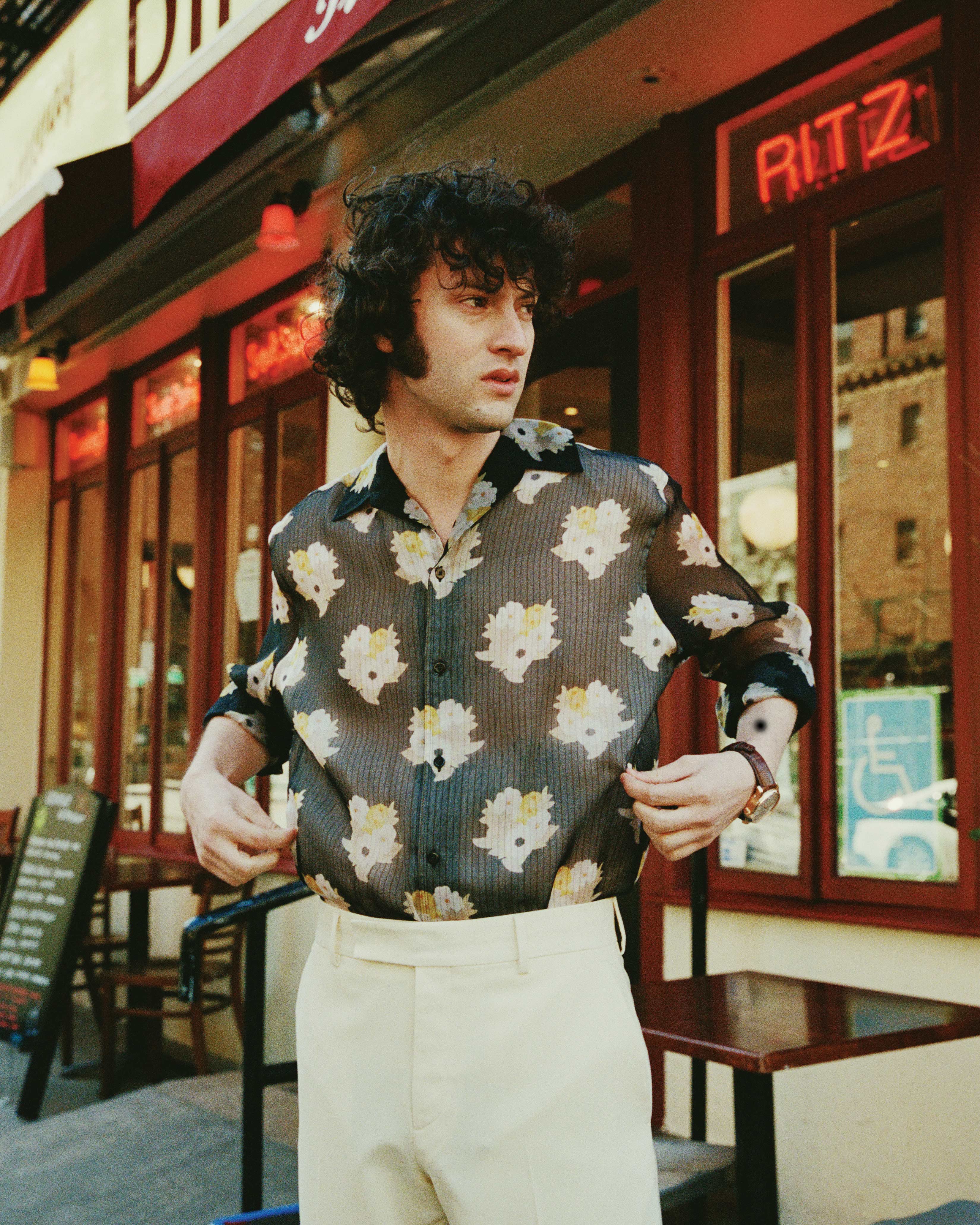
"[Matt Johnson] is one of my best friends now, and someone I want to work with many more times in the future," says Sessa of their collaboration. "We immediately had a very similar sense of humor and a very similar vision on the character and the story, and who this person was. I've never had this level of trust in someone. I really, down to my core, trust him. Even when he's editing the film, he knows something that I might feel is off—he has that connection with me that is really rare. I'm grateful that we've met each other at this time in our careers, because I think we could make some really awesome stuff in the future."
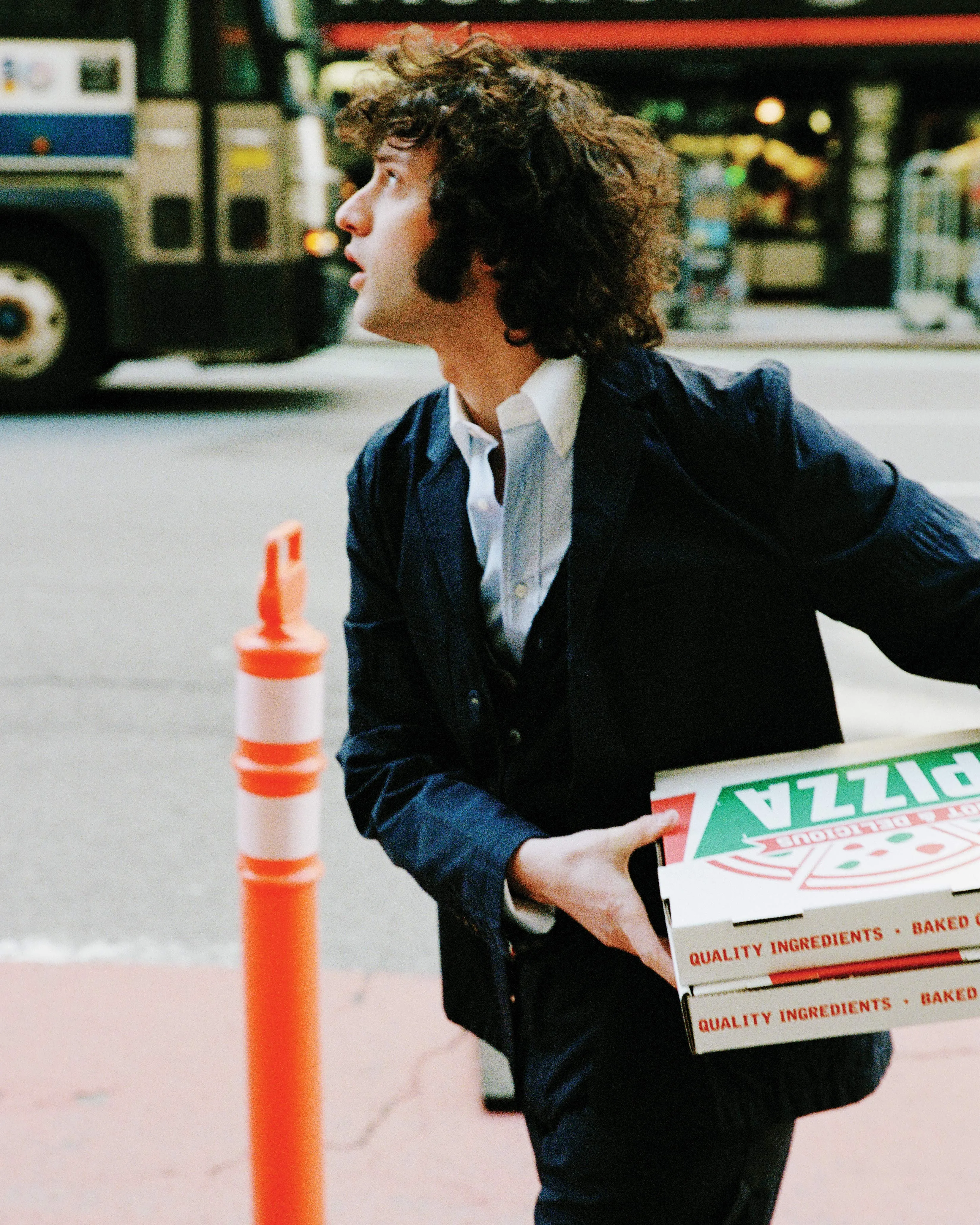
In accepting the role as Bourdain, Sessa is tasked with understanding a man who had yet to be publicly perceived, a perception that was about being cool and suave and funny and smart, handsome and stylish but griddy, honest, and real. Everyone felt like they knew Bourdain, the guy who went to Hanoi and shared $6 noodles and drank bottled beer on plastic chairs with the sitting president of the United States. "Half of [preparing] was reading all of the books and watching his shows," Sessa says, looking up into the corner of the room, hands together, "but then it was really troubleshooting that into a way of asking: what could that person possibly be like as a kid? He's kind of this half-and-half between a rebel person—a badass sort of guy—but also very well-spoken and professional. How does that come to be?"
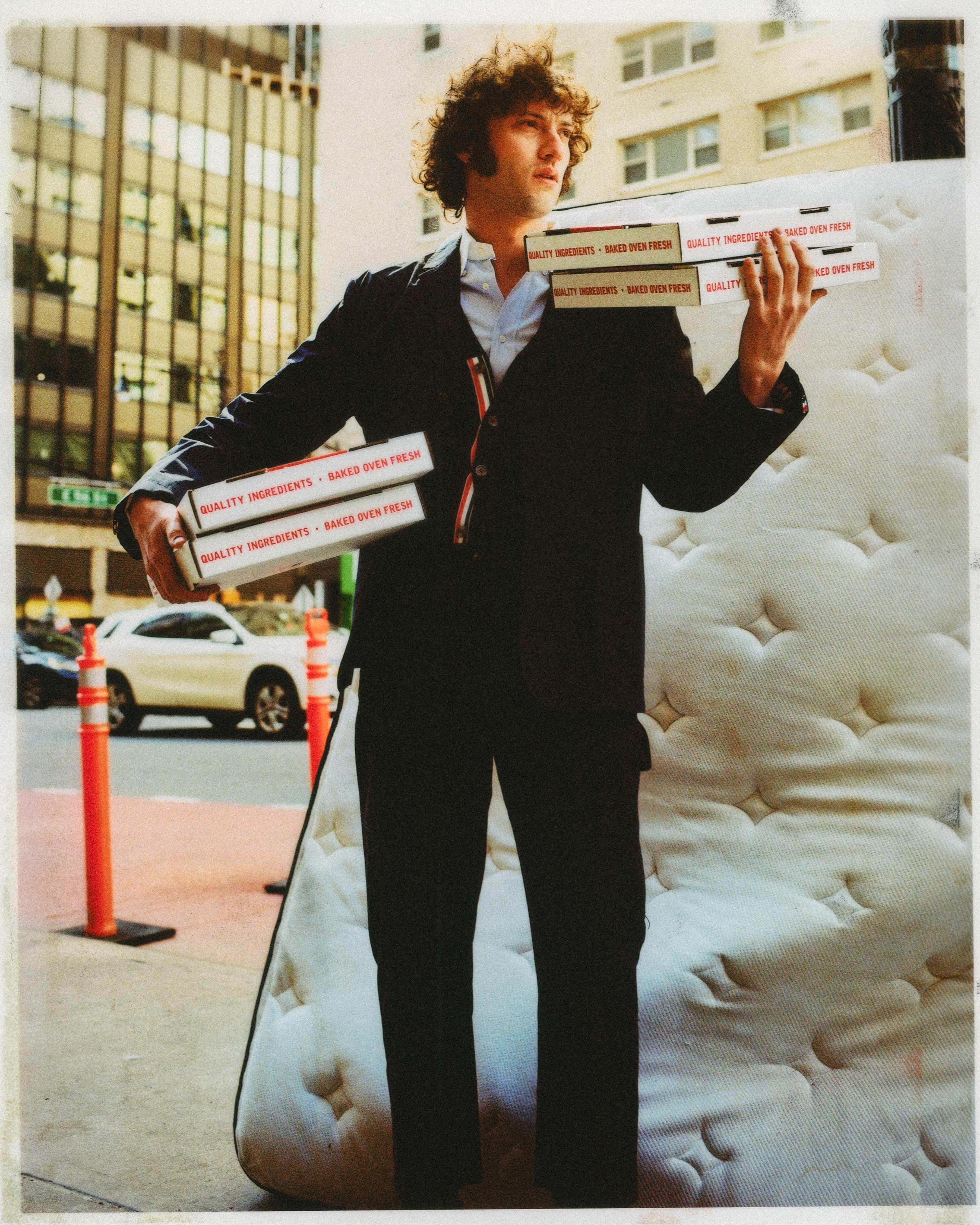
Like anyone starring in the titular role of a biopic, Sessa has the hindsight of Bourdain's life that Bourdain, at the time in which Tony is set, did not. And perhaps the real joy of getting to know Bourdain as a young dishwasher is only satisfying because we all know who he turns out to be, eventually. "It is a feeling of relief, almost of pleasure, at knowing yourself at last genuinely down and out," writes one of Bourdain's influences, George Orwell in Down and Out in Paris and London. "You have talked so often of going to the dogs—and well, here are the dogs, and you have reached them, and you can stand it." If not pessimistic, then at best true, an existence is a sum of one's highs and lows, but a lifetime is what we make out of ourselves between our best and worst moments.
In portraying someone who did seem to make the most of himself, who was able to pull out of low moments (such as heroin addiction) to the point of inspiring total strangers, Sessa says, "In this movie, my character starts in a place of being pretty misdirected, not having a good sense of where they're going, what they believe in, who they really are." He continues, "and then there's a really good sense of hope towards the end of the story. But then, knowing what we know about Bourdain…that he ultimately passed away," Sessa delicately uses the term "passed away," not specifying that Bourdain's death was a suicide. "You put that into perspective and you realize: just because this part of his life ended in a really happy moment, things change over time. That was something I had to grapple with and really appreciate, that even at my highest moments, when things are feeling great and I have a sense of direction, that can always change. Being grateful for being in the present... when I was on set, being able to say to myself, 'I'm doing what I've always dreamt of doing,' I'm acting in this movie about someone who's so beloved and appreciated around the world—just being able to live in that and appreciate it. I really learned to be more present after that," he says.
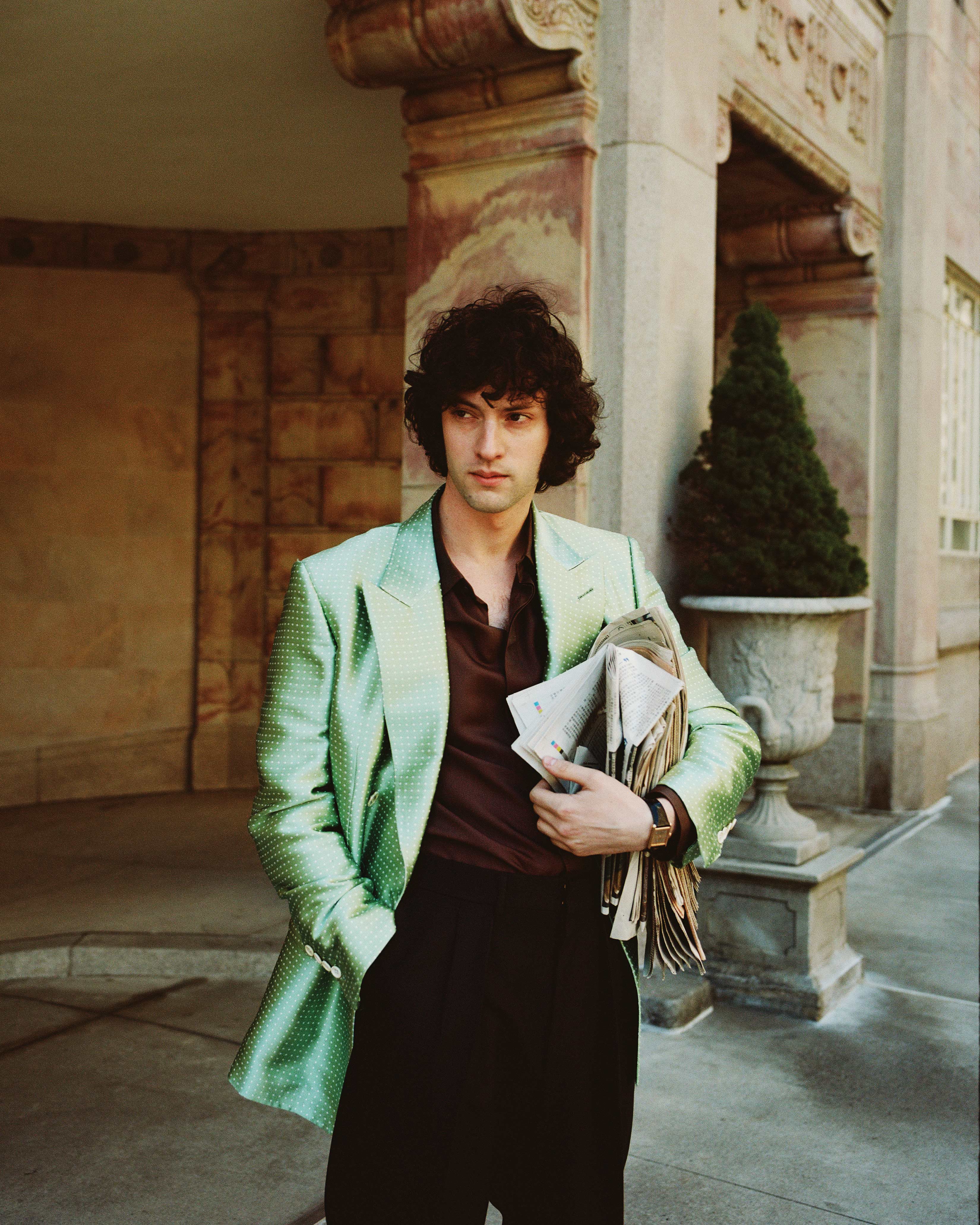
When Sessa was growing up in New Jersey, he spent most of his time in Ocean City, a place that, as he describes, "doesn't really have a lot of kids—it's kind of a place where people retire…I was just kind of close with my family because of that," he says. "My grandmother lived there, and I spent a lot of time with my sister, my mom, and my grandmother. I kind of had a matriarchy around me, in a way." His interests and commitments were eclectic: he practiced ice hockey, ballet, and gymnastics before heading to boarding school, where he would go on to study theatre and acapella. Such scattered cultivated skills developed in his youth, especially ahead of attending boarding school, "saved" him. "...in a way," he says.
"[Boarding school] was an environment where people thrive off groups and cliques, and I came in just willing to do whatever," he reflects. "There wasn't really any other hockey players who were willing to do a play, but I didn't really think about it in that way—I didn't really feel like I was taking a risk. I was just kind of being myself. My childhood, I guess, really influenced and saved me in those vulnerable high school years."
Sessa's move to boarding school would ultimately lead to his casting in his acclaimed debut role in The Holdovers (2023), a film about a kid who gets left behind over holiday break at an all-boys school in 70s New England. Production used Sessa's boarding school, Deerfield Academy, as part of the filming set, and casting director Susan Shopmaker decided to hold auditions from the school's theater program.
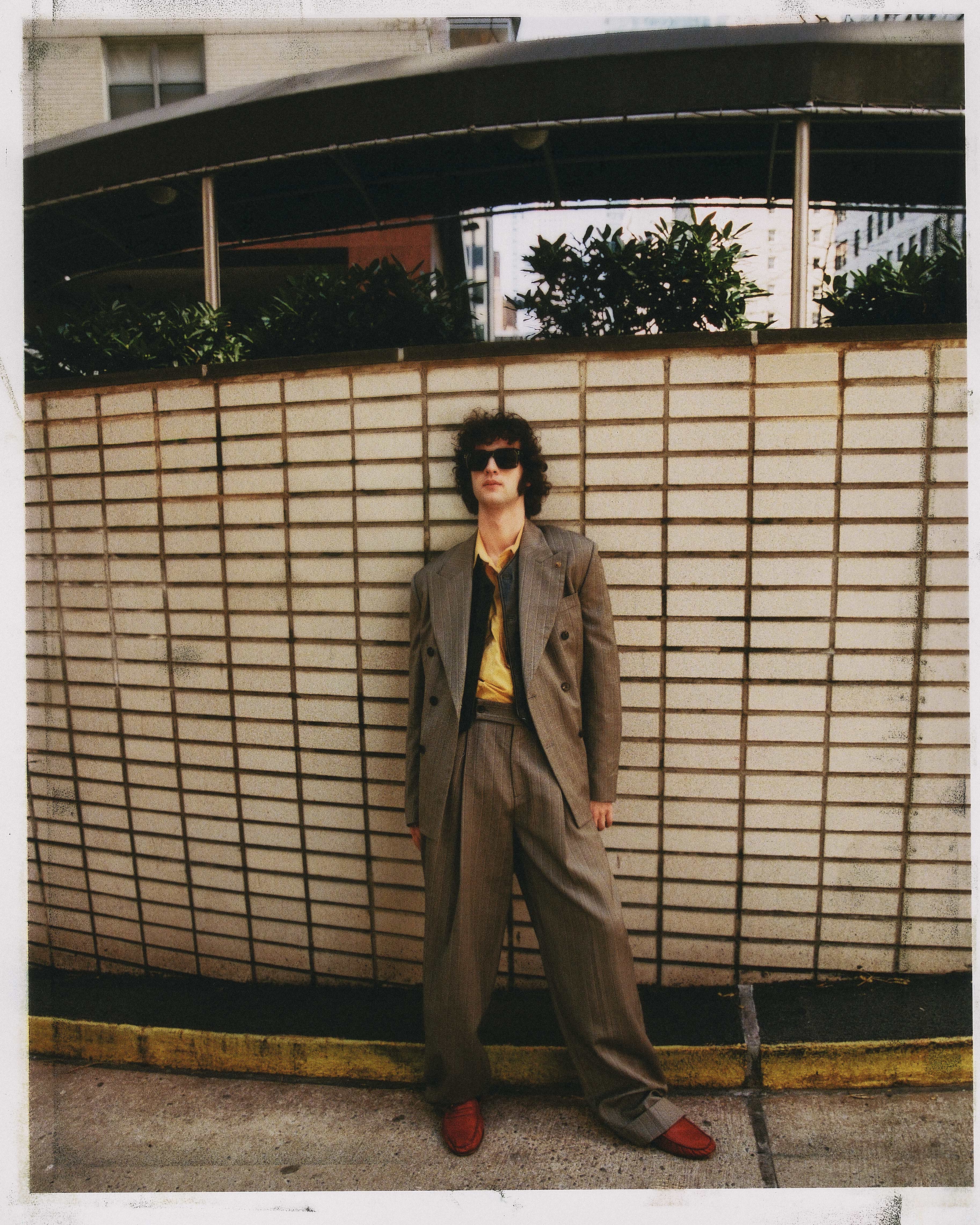
In his role as Angus Tully in The Holdovers, Sessa manages to be flailing and flamboyant but somehow still contained, achieving in this film the extraordinary-to-watch performance of someone who is not just excelling but excelling at something that he's really doing for the first time. With a sense of charm and familiarity, at 20, he took Alexander Payne's direction of a David Hemingson script and mirrored back to his audience the interpersonal and circumstantial absurdities—imperfect families, unforeseen friendships, grudges, petty fights, disappointments, great joys—that become the stories of our lives. The Holdovers earned five nominations at the 2024 Academy Awards, and Sessa became an exciting new face in the film circuit that winter. "I always appreciated and still appreciate just how unprecedented and crazy it was," Sessa reflects on the reception of The Holdovers. "I never had an expectation that I was gonna be able to do another movie, I never thought it was something that was gonna start a career. I was just hoping that maybe it could get me something small in another movie, anything." But the beginning of his career, despite having the makings of some great Hollywood myth, and one that you cannot avoid to read in any profile written about the actor thus far, is just that—a beginning.

Between The Holdovers and Tony, Sessa has been a magician in Now You See Me: Now You Don't, has been the youngest and most dramatic son of Michelle Pfeiffer's character in the Christmas movie Oh. What. Fun., and has acted as pro-bono lawyer Kevin Eggers in Tow, where alongside Rose Byrne, he plays the real-life story of a woman suing a towing company for impounding her car and charging her tens of thousands of dollars. The great act that Sessa, such a freshman to adulthood himself, is able to manage is the actor's job of convincing you that they understand something fundamental that you don't. Here, watch my performance and maybe you might learn something and if you don't, you might feel something that you haven't in a while. This part of the job, according to Sessa, is not so much "about being able to understand people. I don't know what that ability looks like," he thinks. "I guess it's more about having that desire to understand other people."
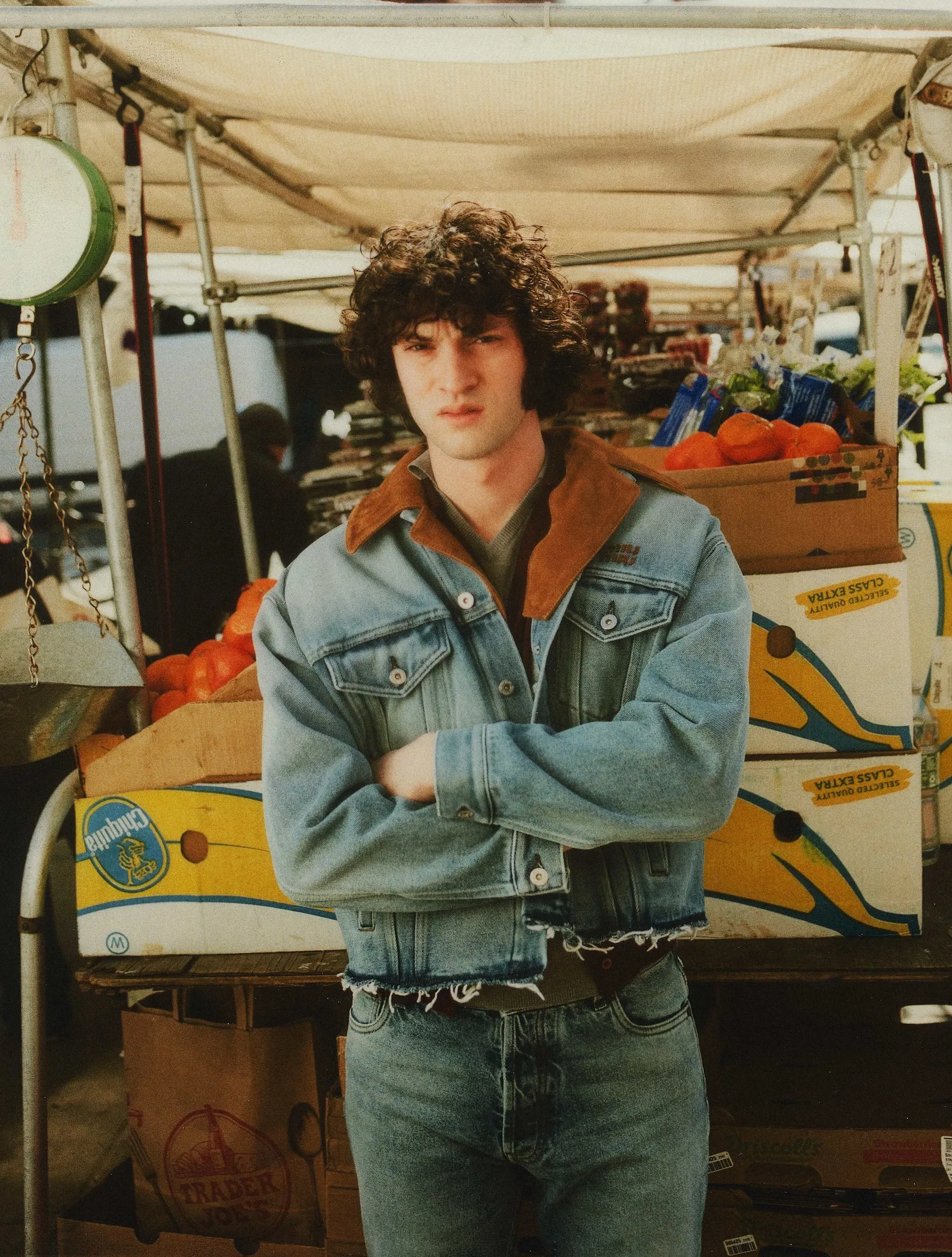
"For actors, for audiences, it's about problem solving," he continues on, again about stories, film, and theater. "You want to see how people solve problems, confront things, deal with obstacles. When we have theater and movies, you have an opportunity to watch someone who doesn't really exist in real life—or maybe they did, but it's still just someone playing them—who's confronting something and dealing with something. You want to see yourself, you want to see someone you know in those problems, and that informs you. You feel like you understand the world better and yourself better. In that way, it's ironically a selfish pursuit, because you're using these stories of people who don't even really exist, and using that to learn about yourself and make yourself better—which is a good thing. And it's super ironic," he shakes his head, "for a lot of people, the only time they can cry for themselves is if they see something in a movie that brings that feeling out of them, because they can't do it otherwise. You can empathize with a character in a movie sometimes more easily than you can with yourself. It's wild."

Photographed by Cody Lidtke
Styled by Charles Ward at See Management
Written by Franchesca Baratta
Grooming: Melissa Dezarate at A-Frame Agency
DP: Kenny Martell
Styling Assistant: Devi Penny
Stay up-to-date with exclusive events and content.


