F L A U N T


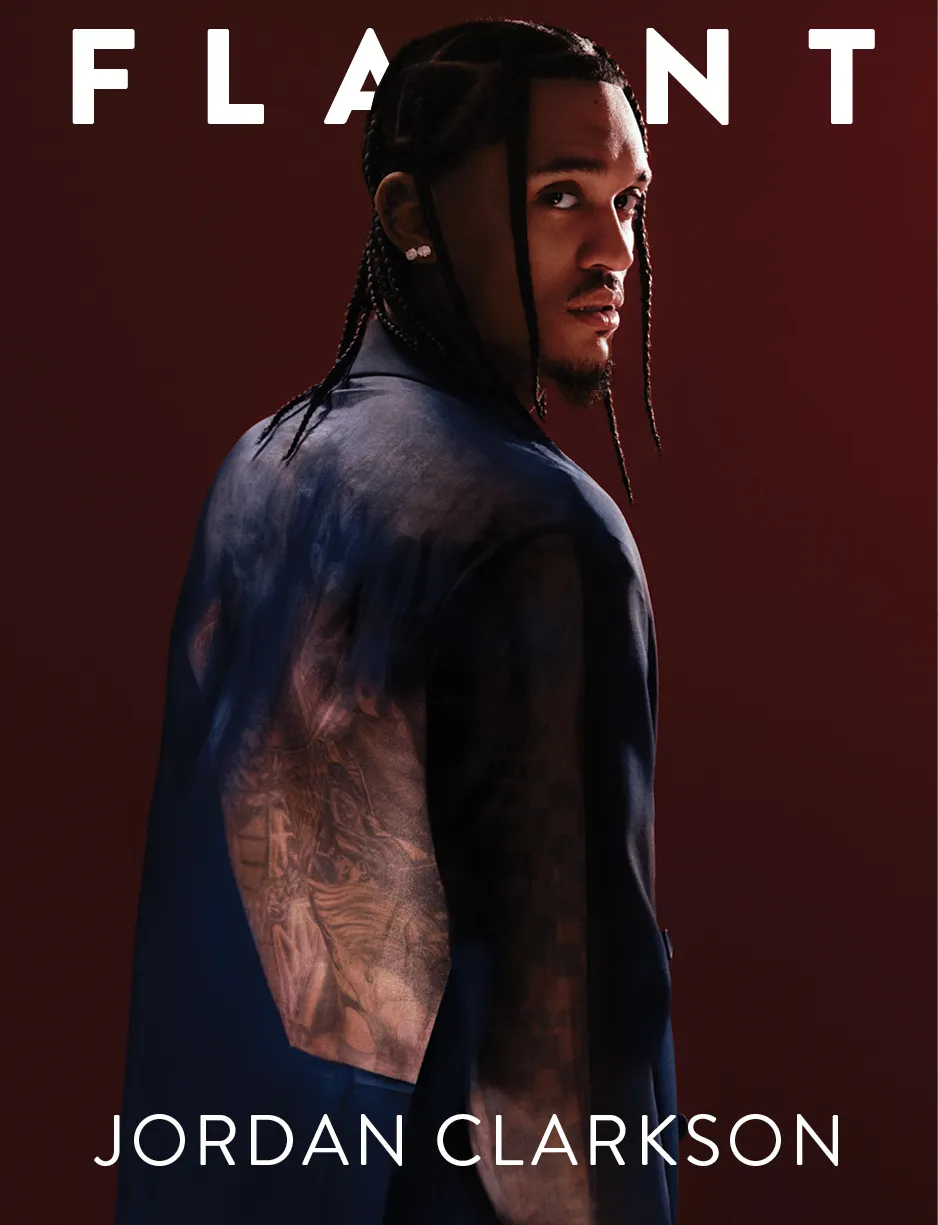
There’s a moment before tip-off—just outside the locker room, where the hallway narrows, and the cameras begin to gather—when everything slows down.
This moment has become a significant part in the understanding of Jordan Clarkson, both in his public personhood and his athletic prowess. Clarkson has always played and dressed on instinct. What if we could boil this magic down to the exact moment, pinpoint the exact liminal turning point in which Clarkson decides? Could we, too, get some of that luck?
Impossible. But it doesn’t keep the public from trying. People are always attempting to take it in. That moment in the tunnel, those instants of adrenaline on the court—cameras and phones go up, eyes track, and team and network social media channels all update. Then he’s gone. Decision made.
Clarkson has never been easy to place. Over a decade in the NBA, the New York Knicks guard’s career has resisted easy definition. Drafted 46th overall in 2014, he broke through quickly with the Los Angeles Lakers, producing offense in ways that didn’t always follow structure. Time with the Cleveland Cavaliers brought a finals appearance. His stint in Utah brought him alignment and saw him recognized as one of the best sixth men in the league. And now, a position on the Knicks has brought him to one of the premier fashion capitals in the world, New York City.
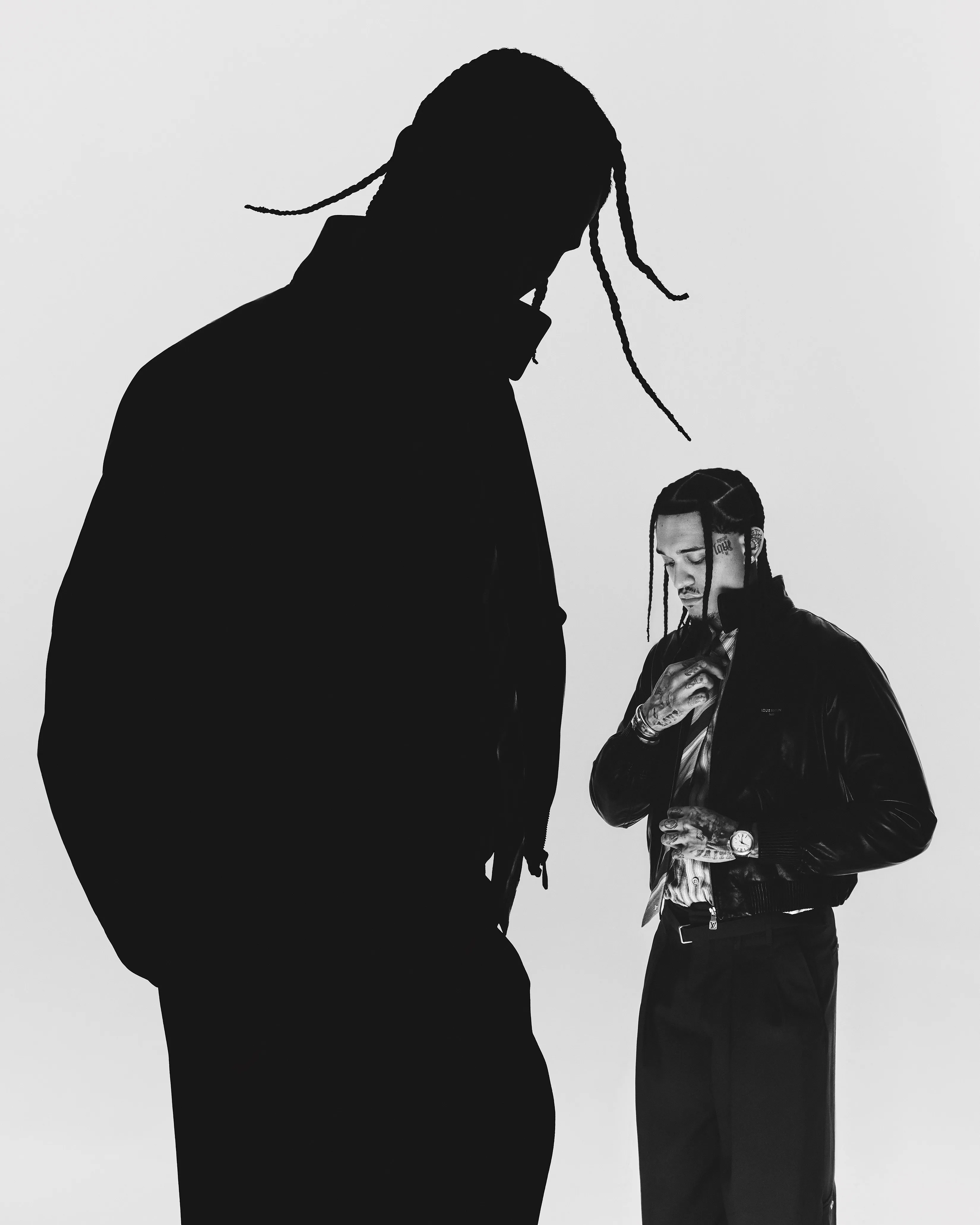
Ask him what feels different now, and he doesn’t take long to ponder:
“Clarity,” he tells me.
“A lot of this was new for me early on,” Clarkson continues. “Being around the fashion world and my career in general, I’ve had experiences where I made mistakes and learned from them. Now I’ve found my own lane.”
When our conversation, which takes place on an early spring morning right before the playoffs, moves to what he considers “mistakes,” his tone changes slightly. That word carries resentment and doesn’t respect evolution.
“I don’t really consider [any missteps as] mistakes,” he emphasizes. “Everything happens when it’s supposed to. I’ll look back and think maybe I wouldn’t have worn something. That was part of the growth—having no boundaries and just being myself.”
That idea: “No boundaries,” shows up everywhere in Clarkson’s life now. It isn’t a philosophy he’s trying to prove, but something that has settled in over time.
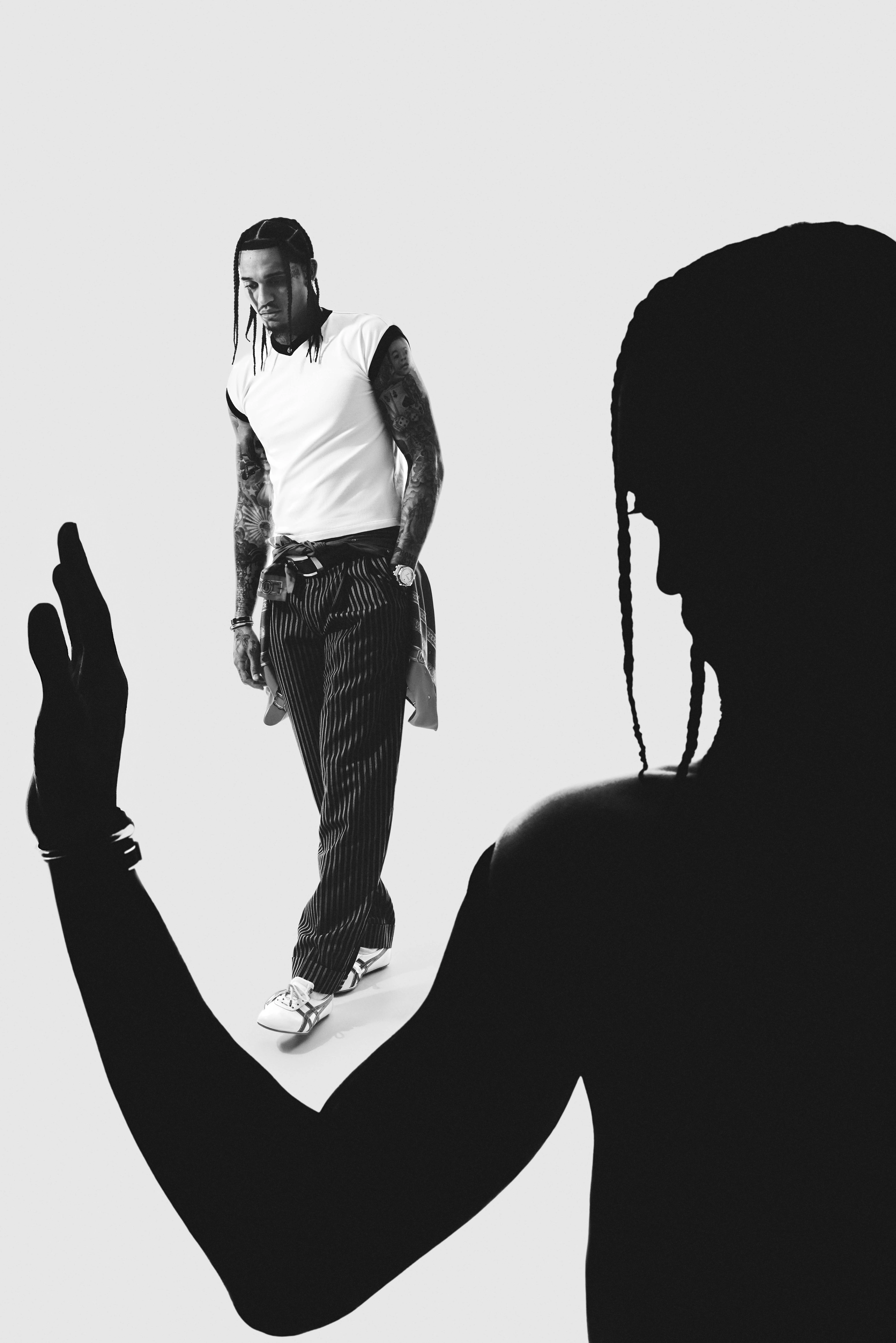
“I don’t go into a game with a strict plan,” he says. “It’s all a creative process.” You can see it if you watch long enough. His game doesn’t move linearly. There’s a sudden burst when it appears he’s about to reset the offense, a pause where you expect acceleration. Defenders guess wrong, usually because the timing doesn’t follow a pattern. It looks instinctual, but it’s really repetition that’s been internalized to the point where it comes naturally.
Getting dressed works the same way for him. “It’s whatever I’m feeling that day,” he admits. This alignment—between how he plays and how he presents himself—has been here for a while. Before the league. Long before the player’s entrance into the arena turned into something people paid attention to.
Back in school, even a student dress code felt like something to remix. Conformity always grated against his intuition. It was nothing dramatic. Just small changes to stand out without stepping completely outside the lines to raise an issue with the school faculty.
He was drawn to the bright Ralph Lauren polo, the styles at Hot Topic, and anything else that offered variation within a limited range. His first real fashion purchase came later, once he had access.
“[It] was some all-white Balenciaga Arenas,” he says, thinking back to around 2015-2016. “That was the first time I felt like I was really in it.”
By the time Clarkson reached the NBA, his affinity for style came with more visibility—and more pressure. At one point, he considered handing off that responsibility.
“I remember thinking about hiring a stylist,” he laughs.
It was a fleeting thought.
“Nick Young told me, ‘You don’t need a stylist,’” he recalled. “‘You’re the stylist. Just do your thing.’” And so he has.
What began as experimentation gradually turned into discovery—something more settled. Less about trying things for the sake of it, more about understanding what already felt right.
“Over time, it just became who I am,” Clarkson says. “I don’t overthink it—it’s natural.”
That same mindset translates to how he approaches everything off the court.
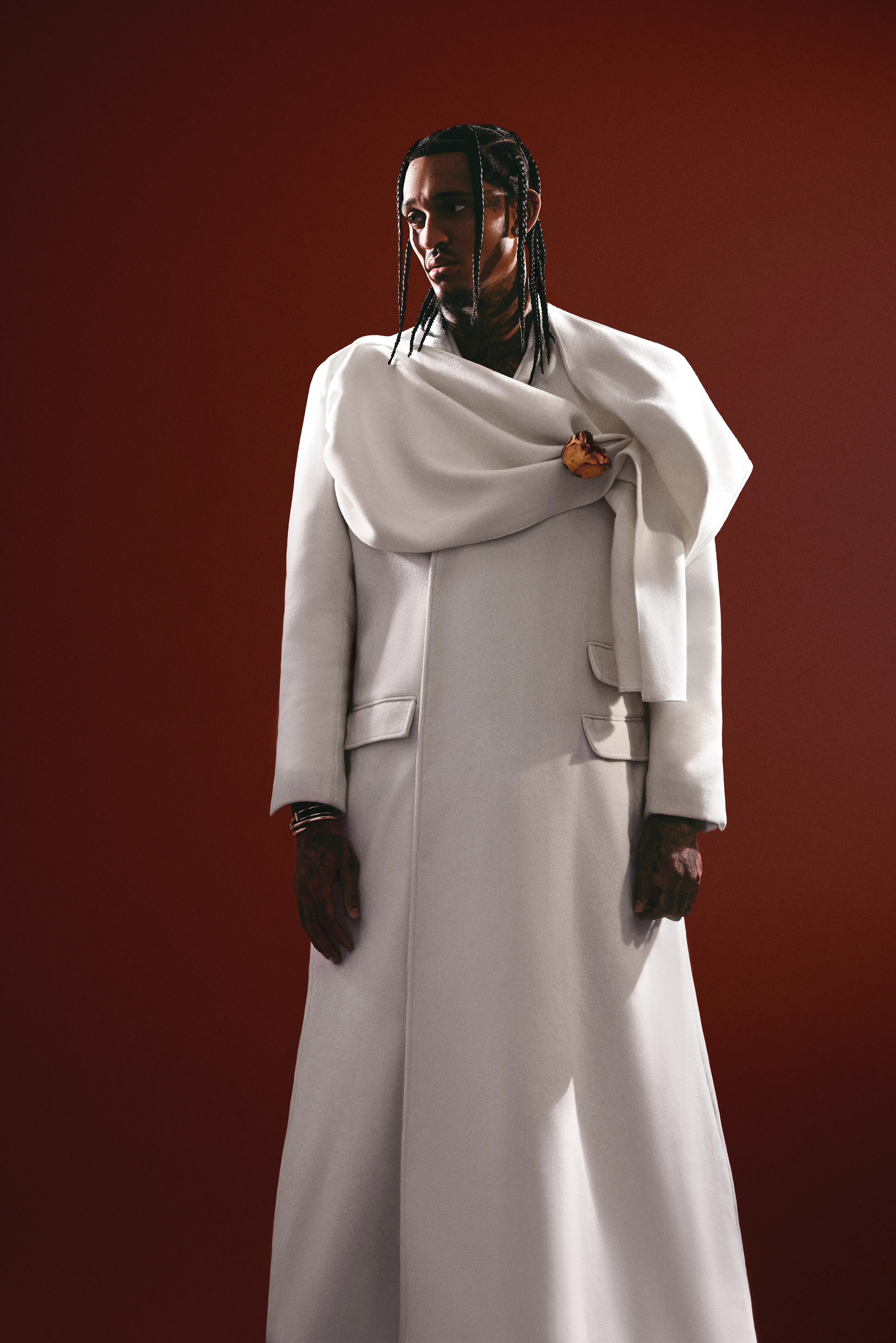
Clarkson isn’t drawn to partnerships where he’s just a face in a campaign. His interests are in collaboration—spaces where he can contribute, not just participate. With brands like Aldo and Camp High, and through a long-term partnership with Lululemon, he’s leaned into something closer to creative ownership.
“Authenticity and freedom,” Clarkson shares on what’s most important with these relationships. “I want to be myself creatively.” The undertones of that feeling of freedom are present throughout the conversation. It isn’t forced or something he’s trying to define. It’s more something he recognizes when it’s there. It’s also what’s guiding his next step.
Through Seventy-Eight Studios, Clarkson has started building something of his own. It’s early as of now—largely focusing on pop-ups and essential pieces—and the foundation is still taking shape, but there’s no rush to scale it beyond letting it grow naturally. “It’s all about timing,” he says.
Ask him to describe his style now, and he quickly offers his aesthetic.
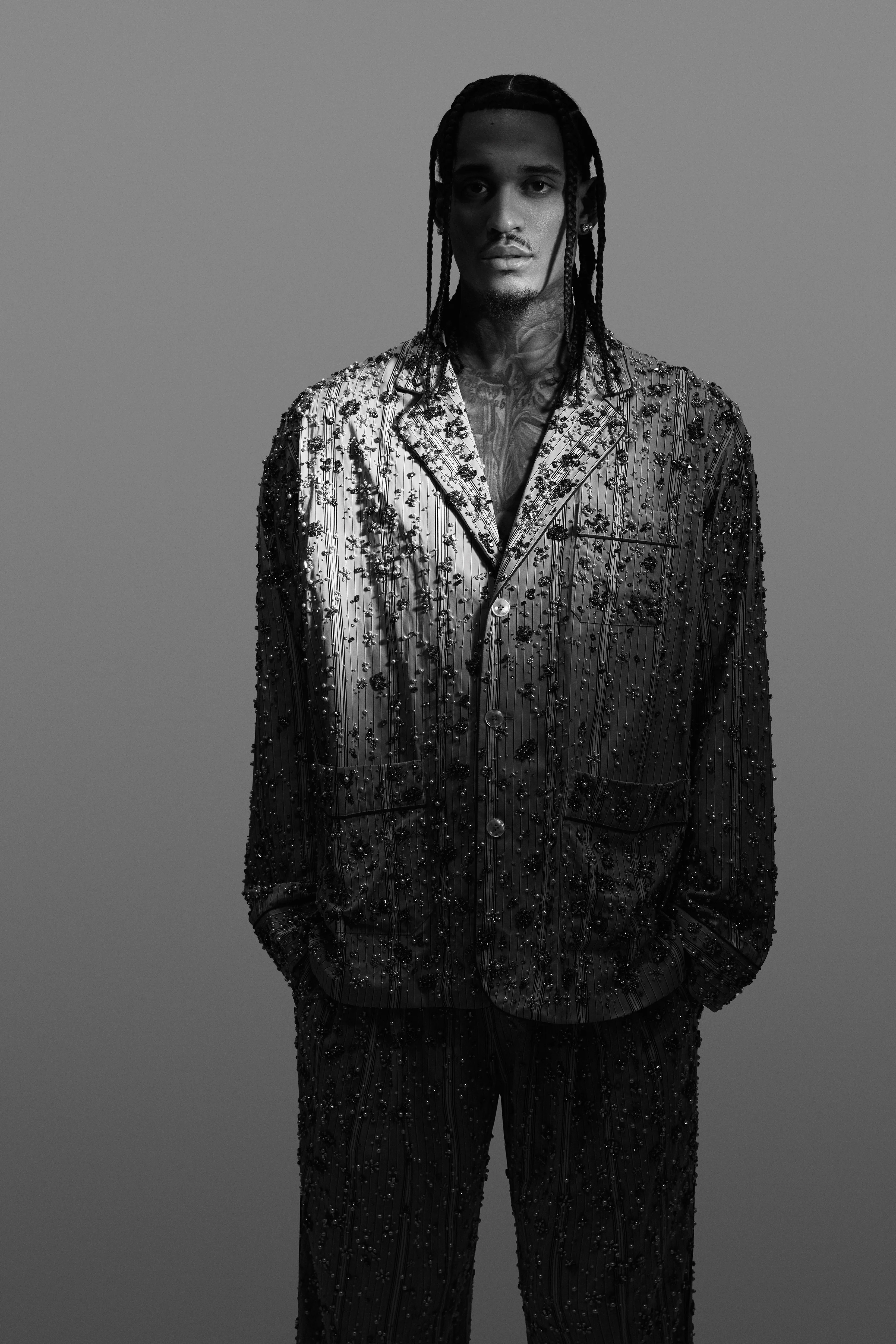
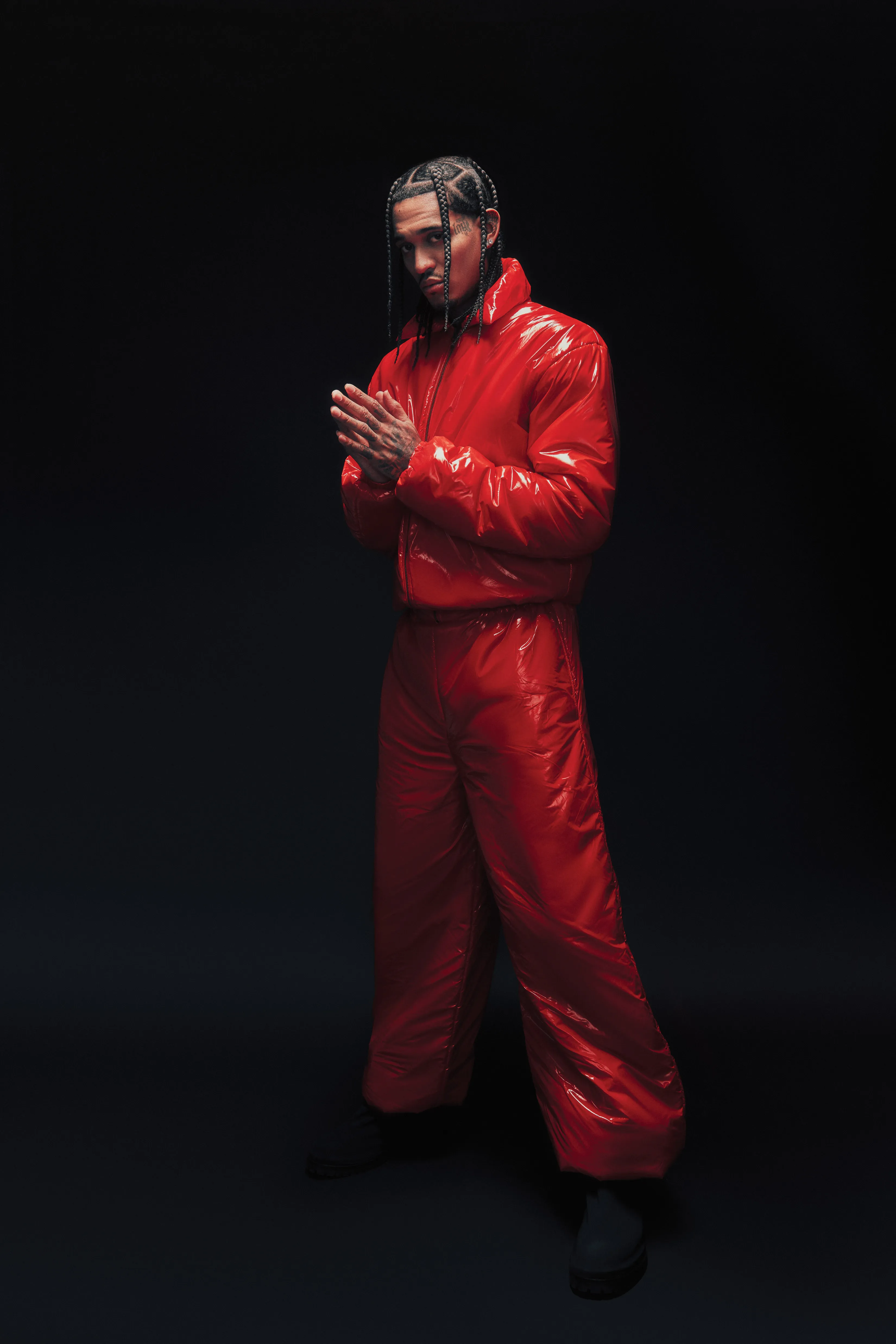
“Dark, with a pop of color,” he says. Check his Instagram, and it’s just that simple. There’s restraint in how he dresses, but he rarely lets it stay there completely. There is always an interruption—how the light hits his jewelry, a texture, or a shift that changes the feel of the entire look.
“It’s free-flowing, creative, instinctive,” he shares of his look. This assertiveness gives him a say in how he enters a space. And unlike some players, it never feels like a version of him that exists only for the cameras.
“I feel more fluid now,” he says. “I’m just me—not just a basketball player. At the same time, I know people from sports see me as someone in high fashion.”
At Paris Fashion Week, that fluidity becomes more visible. It’s easy to focus on the surface (runways, front rows, the obvious moments). But for Clarkson, the value is in what happens around those moments.
“It’s about being intentional,” he says. “Aligning with brands I actually wear and building real relationships with the people behind them,” he reflects, telling me about spending time in rooms with the leaders of Louis Vuitton, Rick Owens, and Thom Browne.
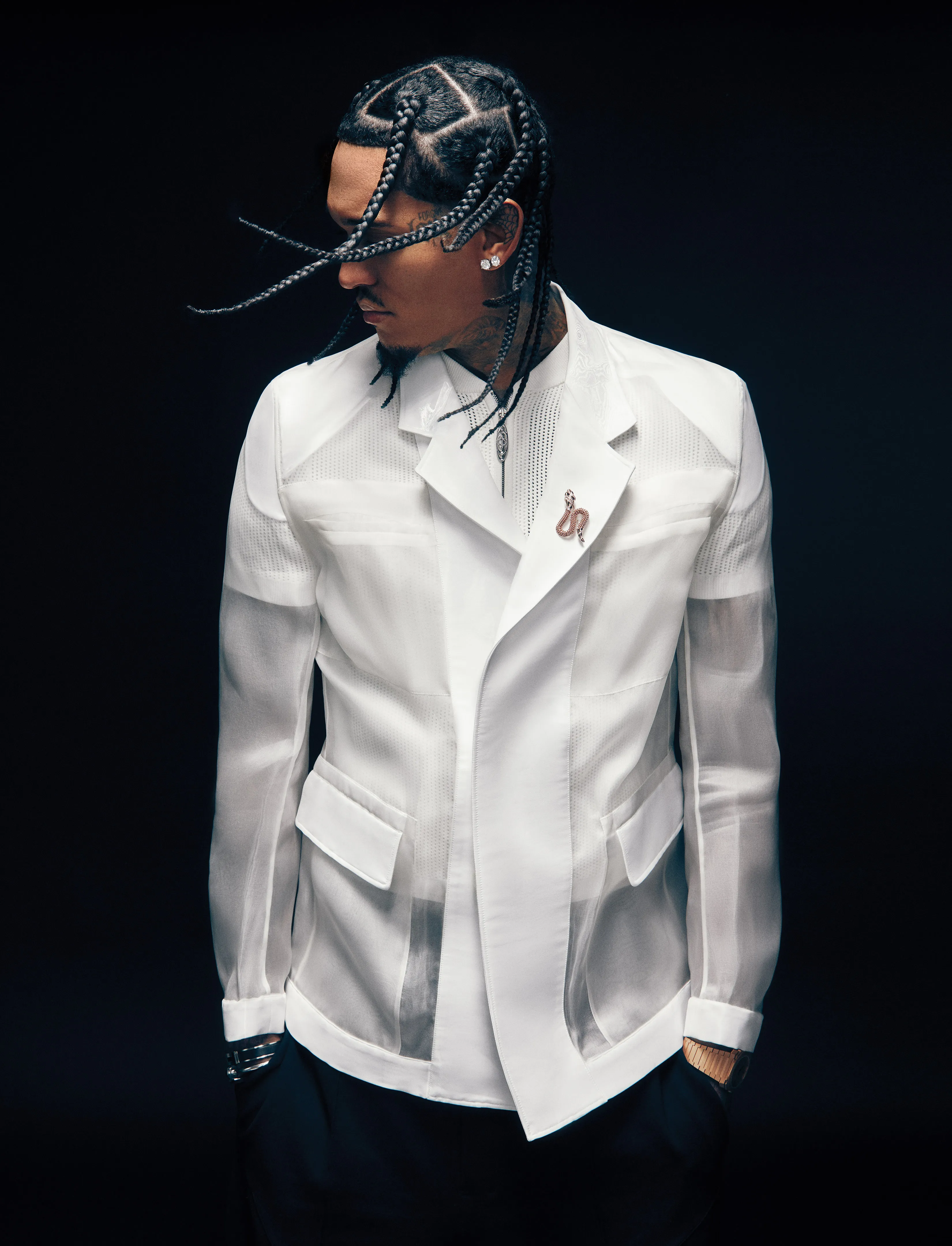
These environments where the process is just as important as the outcome.
“Fashion Week lets you meet designers, understand their process, and connect,” he says. “You never know where those relationships can lead.”
There’s a familiarity in studying the unseen work. The attention to detail. The time it takes to get something just right.
If there is a time in his career where everything started to come together, he estimates it happened while he was in Utah.
“That’s where I really found myself,” he says. “It’s not a big market, but I could be myself and still reach people.”
In Utah, Clarkson’s role sharpened. Life on and off the court began to slow down. The quiet of mountains and landscapes were a welcome change from the crowded skylines and the reverberation of rush hour traffic. In this space, things started to settle. Not just his role on the court, but how he saw himself off it.
He would earn the NBA Sixth Man of the Year Award in 2021. The recognition felt more like a checkpoint than a turning point. In a league built on constant movement, not many players get that level of a pause.
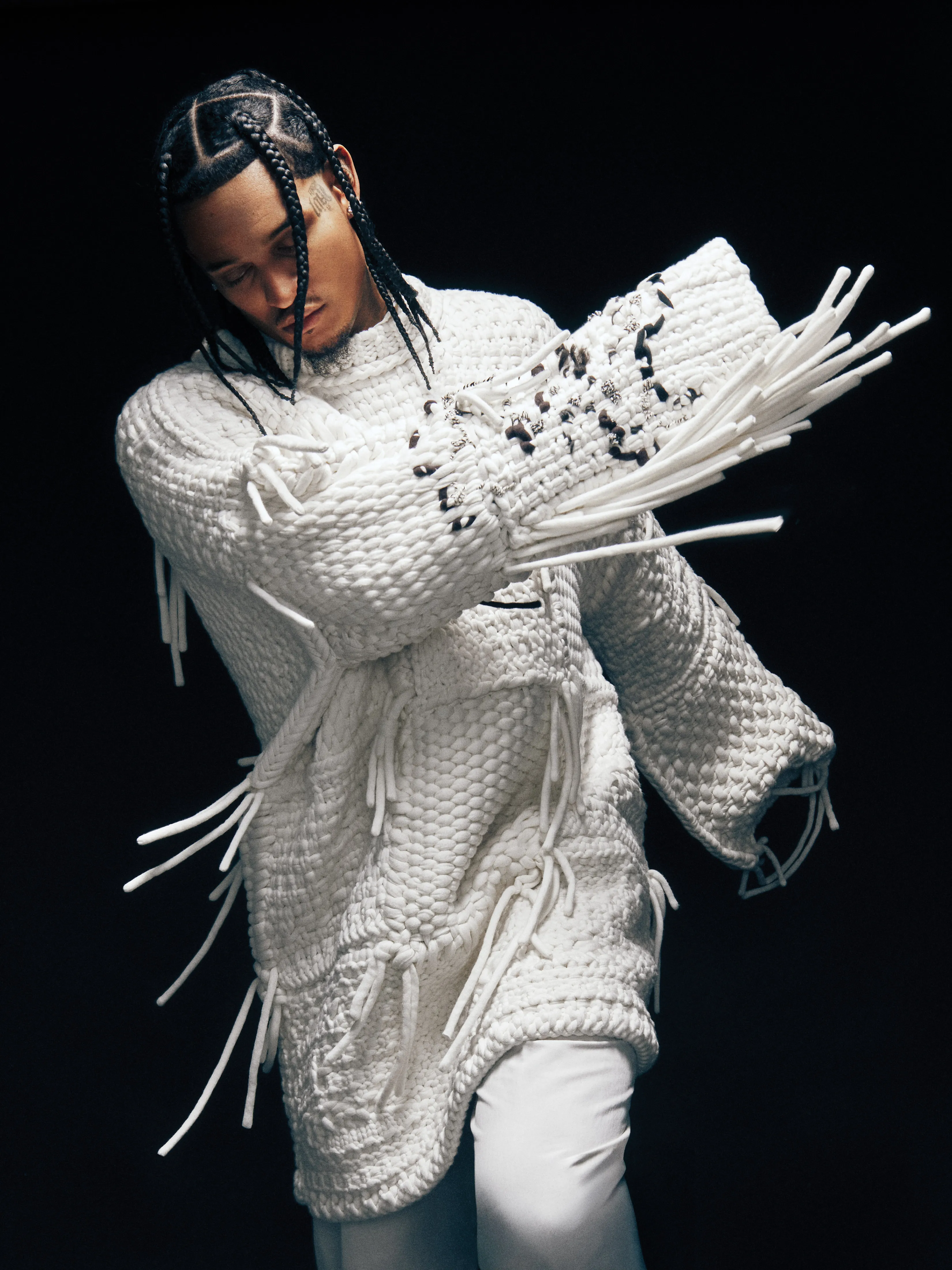
As a Black Filipino-American player, he’s aware of what that visibility means.
“It means a lot to me, my family, my grandma,” he reflects. He doesn’t frame the responsibility that comes with that heritage as pressure. It’s more like an honor to carry forward. “There aren’t many of us in the NBA, so I want to be a role model,” he continues.
When the conversation turns to legacy, he doesn’t mention any accolades or statistical benchmarks. He details what’s gotten him to this point and the freedom he’s found.
“Hard work, always ready, and free,” he tells me of himself. There’s that word again. It’s the simplest way to explain everything else. Free to play how he plays. Free to move between spaces without adjusting who he is to fit within them. Free to exist without being reduced to one version of himself. Not a basketball player, or even a fashion tastemaker.
“[I would like to be] able to be myself and express that on and off the court, and that was always led by love,” he concludes.
If style is a language—as it often feels in the spaces he moves through—he’s still working through his own vocabulary. He takes a second when asked: What do you want to say?
“A bunch of letters not put together yet...Just moving them around.” A blank canvas. Not finished. Still unfolding, the same way his game has. On feel. On timing. And entirely on his own terms.
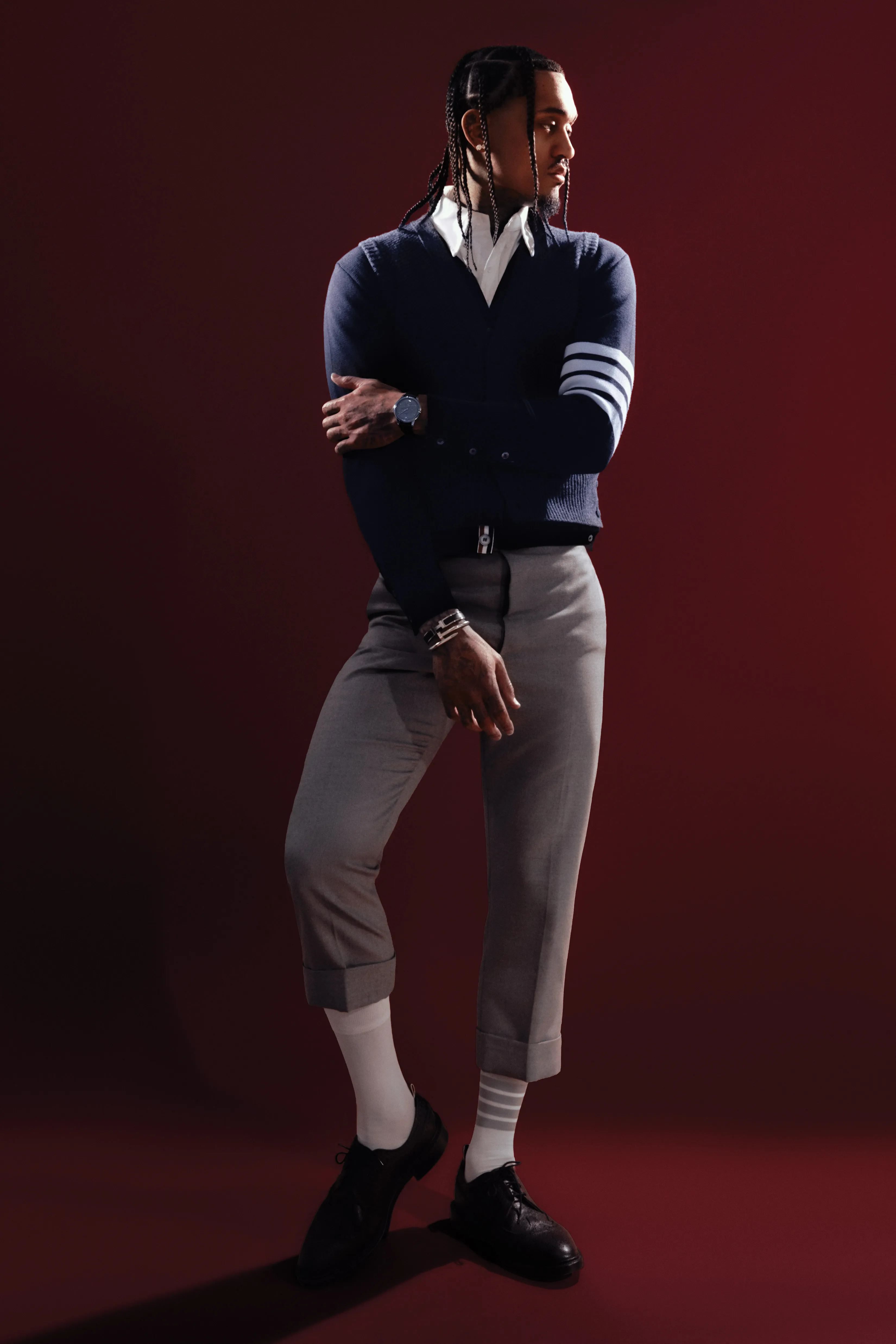
Photographed by Stephanie Pistel at Tempo Media
Styled by Charlie Ward at See Management
Written by Christopher Cason
Grooming: Gracie Antoinette
Line Producer: Frankie Production
Photography Assistant: Nick Stokes
Postproduction: Veronica Scarani
Styling Assistant: Devi Penny
Location: Saxum Studios
Stay up-to-date with exclusive events and content.


