F L A U N T


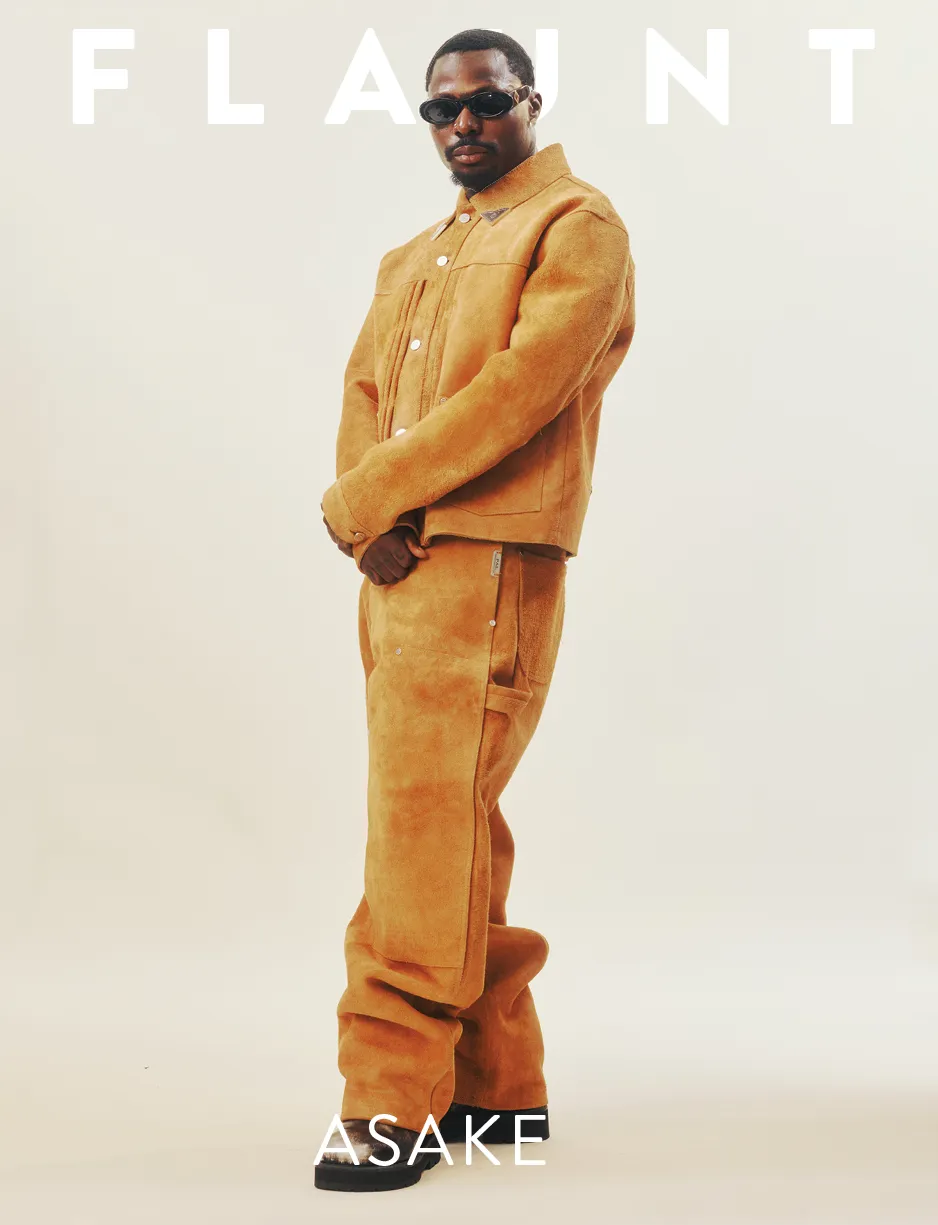
Despite a schedule that would require a body double and time-traveling capabilities, Asake (born Ahmed Ololade) is remarkably calm. Following a trilogy of Afro-fusion monoliths (2022’s Mr. Money With The Vibe, 2023’s Work of Art and 2024’s Lungu Boy), the 31-year-old shows no signs of stagnation. Much like the spinning blue rock we call home, M$NEY is the catalyst for the Lagos native’s latest creative orbit, so much so, it’s the name of his latest album.
Asake’s rise in the music industry is both a result of his growing popularity and a new benchmark for contemporary Afrobeats. He is a two-time Grammy nominee and the most-streamed artist in Sub-Saharan Africa for 2024. His journey reflects the genre’s expanding global influence, which he credits to “God’s plan.” However, his body of work challenges the idea that African music is uniform. Across his first three albums, Asake skillfully transitions between fújì, Amapiano, Afropop, and hip-hop, creating a sound that is both influential and increasingly difficult to categorize.
A few billion streams and sold-out nights at Madison Square Garden later, Asake shrugs off the spectacle, treating those milestones like background noise—just part of the regular grind. “I feel so immensely proud of myself. I know the teenage me is looking at all I’ve done proudly. I’ve got a long way to go, but this movement and vibe I’ve created is speaking for me right now.” For Asake, the numbers and metrics remain peripheral to the vision. Instead, the livewire creativity and his status as one of the forebearers of contemporary African music are far more important.
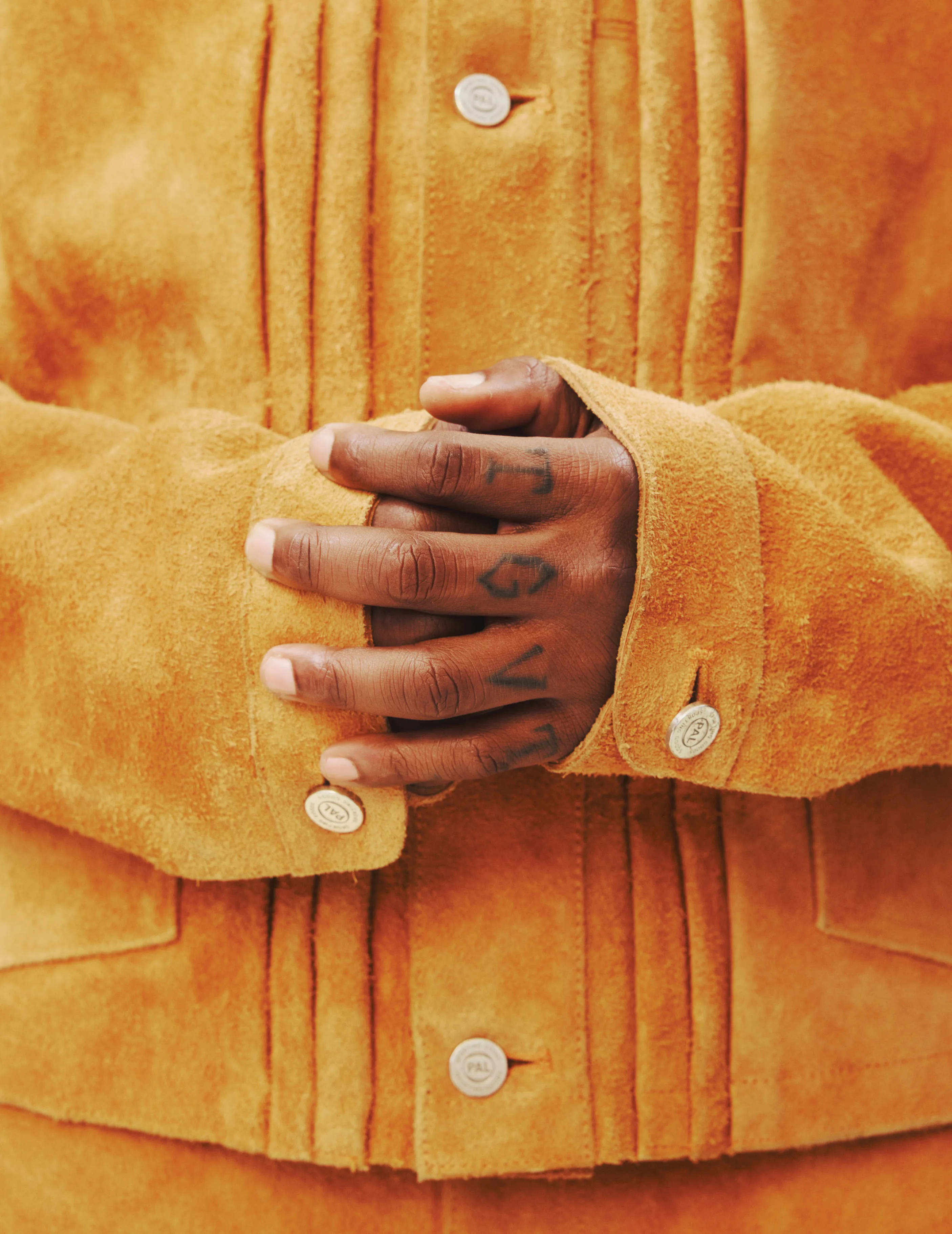
I caught the singer-songwriter on a good day. In Los Angeles, the sun is relentless—casting a crystalline sheen over the sapphire waterfront just outside Asake’s makeshift creative base. Reserved and effortlessly suave (like he’s Nigeria’s answer to James Bond), he greets me with a measured calm. “Life’s good, man. I’m blessed. The sun’s shining. Really, really shining today. I’ve actually spent most of the morning with my family. I really can’t complain, considering how busy everything’s been.” Clad in a black skull cap, charcoal jorts, golden satchel and a black tee, he eases into the conversation.
At the time of our chat, Asake was just putting the finishing touches on his fourth LP. Even in the middle of recording an album, he has little interest in tightening the frame around himself. REAL, Vol. 1, his recent EP with Wizkid, came together without ceremony. The two artists—brothers beyond the booth—circled a high-wire blend of Amapiano and Afrobeats, giving it just enough time to take shape on their own terms. “It didn’t really have some crazy concept or goal behind it—it was just us having fun in the studio,” he says, pointing to “Turbulence” as a snapshot of that looseness in the creative process. “Big Wiz is my brother, man. Our EP was just us having fun, especially after [our song] ‘MMS’ in 2024.”
That same openness runs through “WORSHIP,” his recent collaboration with DJ Snake that leans further into EDM textures without losing its Afropop pith. The timing, he admits, mattered. “I’d just celebrated Eid, so a track like ‘WORSHIP’ really made sense.” The sentiment lands, without ornament. “I think the track’s been a really important way for me to channel my faith into my creativity all at once.”
Fresh off Eid, and with last summer’s candyfloss-blue blowout afro now sliced down to something more minimal and close-cut, Asake is frank about faith’s place in it all: “It’s tough. I really don’t know if I’m balancing things well right now. I’m still trying to figure it all out, but with the grace of God, I’ll continue to learn,” he says, caught between the hedonistic LA opulence and the spiritual grounding he frequently basks in.
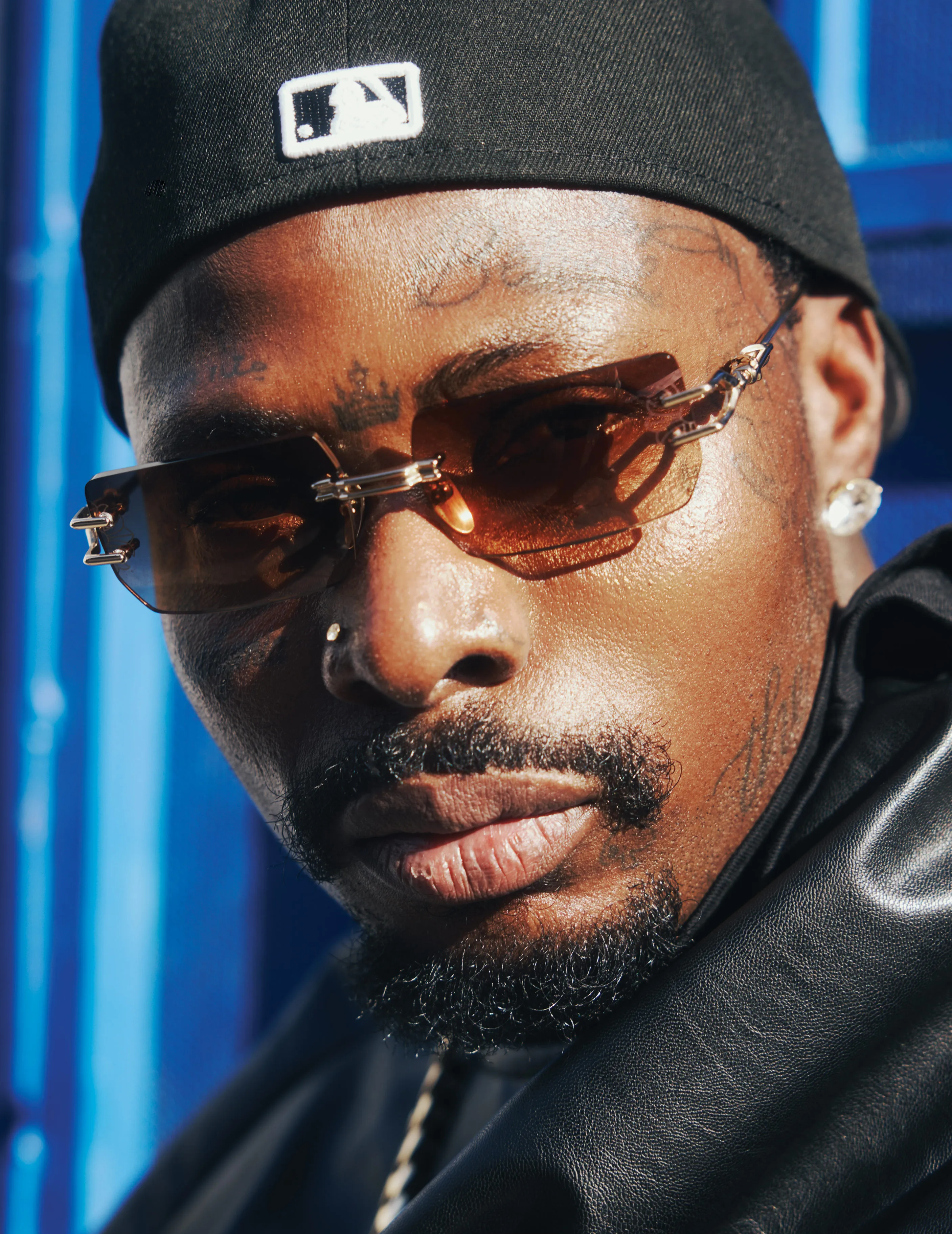
Asake’s sound today is shaped by a swirling collage of family, culture and self-discovery. Music wasn’t always his plan: he once dreamed of dancing. Still, fate had other plans. Growing up in a household steeped in sound meant it was quietly in his blood. His father introduced him to traditional Nigerian music and a catalogue he wryly describes as “too big and too obscure to fully get into.”
From there, Asake discovered Fela Kuti on his own, immersing himself in Afrobeat music. With a stint at university, Asake further advanced his education—and musical bug at the same time. Artists like Ayinde Barrister and other Yoruba musicians also left a mark, instilling a sense of communal energy and storytelling that continues to drive his performances.
Beyond his familial roots, Asake’s secret weapon lies in his internet-ready sensibilities as a 90s kid, as well as his command of the Yoruba language. Blending Afrobeats with classical, orchestral and jazz-leaning textures, he expresses his penchant for freedom in the booth, saying he “needs producers [like Sarz or Magicsticks] with a diverse ear.” His native tongue of Yoruba remains central—a constant through line that anchors his music, no matter the type of song he tackles.
As one to keep his creative process mysterious—especially regarding M$NEY—Asake did drop a small jewel about how his genre mash-ups come together. For his 2024 track “Whine,” which samples Mary J. Blige’s 1992 hit “Real Love,” he highlighted the interplay between his production team and his broader influences: “That was my producer [SAK PASE]. He came up with the Mary J. Blige sample. It was a blessing to work on that song with LUDMILLA. It was a vibe,” he says. In other words, the spark often starts in the studio, but it’s shaped by the sounds and artists that have inspired him and his community.
Asake then steers the conversation back to his current album, reflecting on its essence and place in his trajectory: “Honestly, if I had to describe it, I just think of water and the ocean. More than anything, my album feels like water, you know what I mean? It flows, it moves, it’s calm in some places, deep in others. I didn’t want to overthink it—I just wanted it to be natural and peaceful. I want my music to speak for me. It speaks for itself.”
“My new album’s just a continuation of me and my journey and where my mind’s at right now. Money makes the world go round, so the title is really self-explanatory [chuckles]. I didn’t want to overthink it, I just wanted it to be all about the experience.”
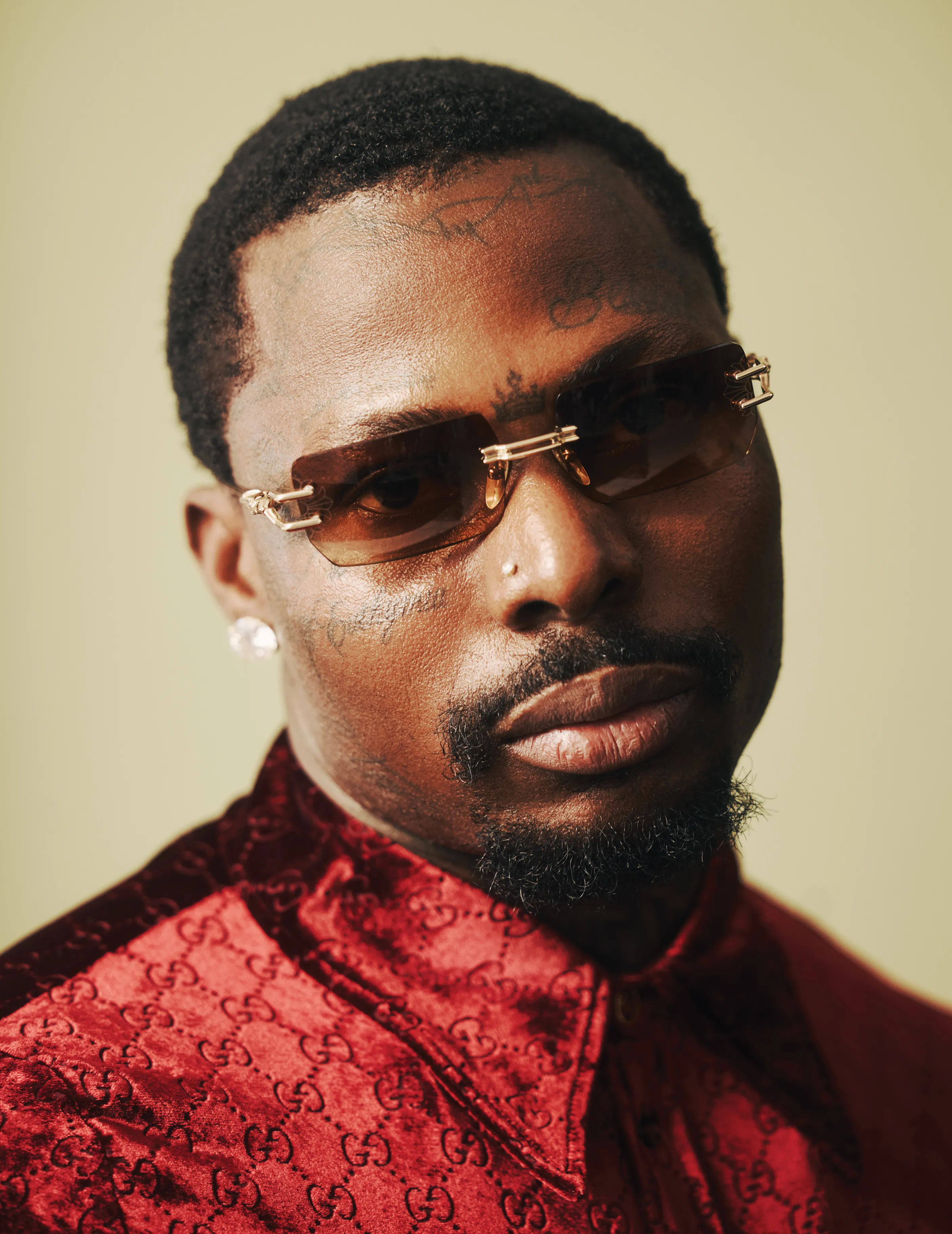
With the momentum he’s built so far—chart-topping singles, streaming milestones and a rapidly growing international audience: Asake isn’t chasing pressure or comparisons. “I feel no pressure because it’s all God. God is guiding me and he’ll take me where I need to be. I don’t really think about pressure like that. I just stay in my lane and keep working and this album will do exactly what it needs to do. I don’t want to think of myself as the person guiding my journey. God is guiding me.”
Asake’s love for UK and US rap runs deep, with nods to Stormzy, Central Cee, and Travis Scott across his 2024 album. Still, Asake frames himself more as a student than a master, especially when it comes to London. “I love London, you know, but I wouldn’t say I know a huge amount about London culture,” he muses. “It’s quite different from Nigerian culture, but that difference is what makes it cool. There’s this energy in London—in the music, in the people—that just complements my own culture.” For Asake, the city is less of a home away from home (like the US) and more of an untapped creative goldmine.
Last summer, Asake made it clear his mission was twofold: lacing tracks and lacing garments. Military-inspired jackets, tailored cuts and streetwise luxe found him front row at Paris Fashion Week, soaking up shows from Jaquemus, Casablanca, Wales Bonner, Off-White, and whatever else the fashion world could throw at him.
Naturally, our conversation drifts to fashion, one of Asake’s biggest passions. “I’m loving Off-White right now. Fashion is a huge part of my life—it’s kind of like how I express myself in music. You’ll probably see more of it from me in the future. For me, though, it’s also about seeing Lagos and Nigeria represented meaningfully on the world stage—like sitting front row at those shows.” He later draws a direct line between his music and his style, explaining that recording tracks and assembling outfits tap into the same side of his brain. “It’s the same creativity,” he says. “The way I put together a fit is the same way I put together a song.”
As we glance toward the horizon of what comes next for Asake, he keeps his cards close to his chest, as expected. After all, he describes himself as a solitary individual who thrives in the quiet between the chaos of LA’s fast pace and the bustling streets of Lagos.
Dance has always been part of him, a thread running from his student days to the stages he commands today. “I love dance. It’s a big part of my shows,” he says, explaining how he wants every performance to feel as grand and cinematic as possible. It’s the same instinct that shapes his music and style—a seamless blend of precision, flair and freedom.
And when asked what’s next? Asake’s answer is tantalizingly simple, deliberately holding back. “More shows, more everything. More videos, too. Even though I already dropped earlier this year with Wiz[kid] and DJ Snake before my album, I don’t see myself slowing down anytime soon. I think I’m ready for whatever comes next. But let me not say too much,” he says, with a nip of mischief in his tone.
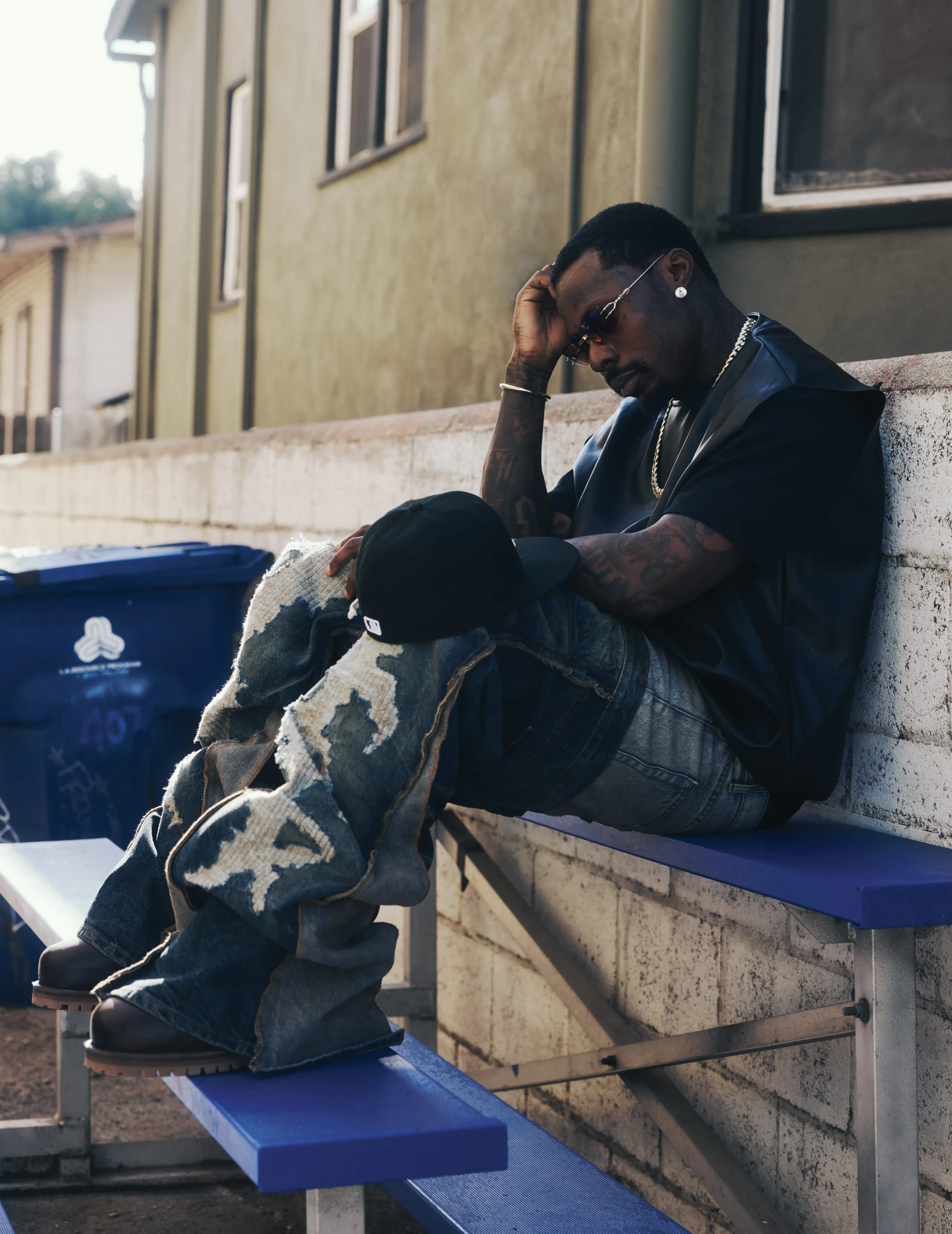
Photographed by Cody Cloud
Styled by Jay Hines
Written by Niall Smith
Grooming: Michael
Production Assistant: Ameen Kher
Stylist Assistant: Michael Iverson
Stay up-to-date with exclusive events and content.


