F L A U N T


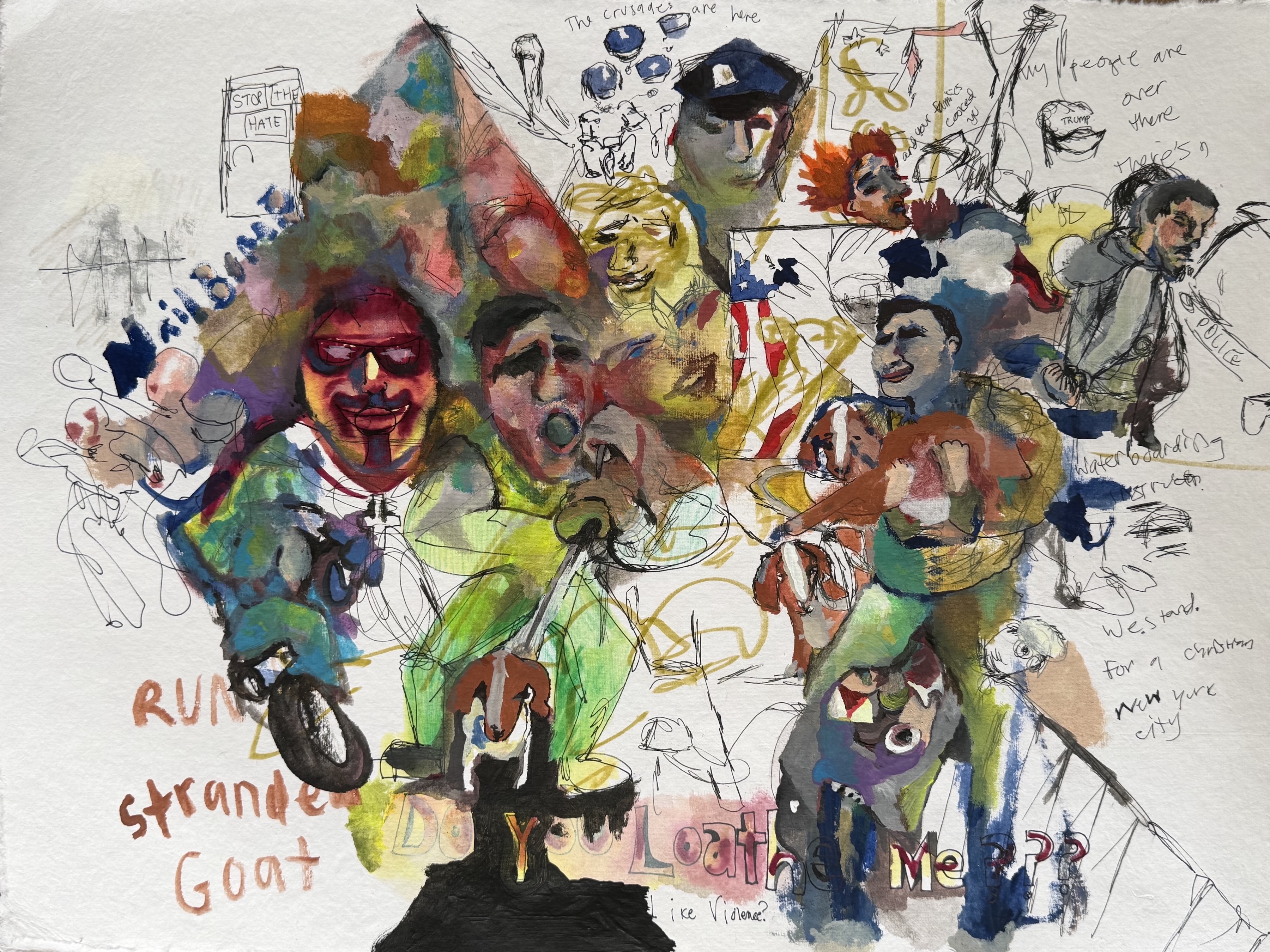
We all intellectually understand the absurdity of American politics. Every day, we are inundated with media depicting the boundless volatility of American society, yet we have lost our ability to process this information viscerally. It’s what Steve Bannon notoriously called ‘flooding the zone with shit,’ a media tactic that he confessed “is not about persuasion” but “about disorientation.” Even as I relay this phenomenon to you, you understand that what I am saying is not some profound revelation or extraordinary sentiment, because part of the scheme is our meta-awareness that the media eviscerates our capacity to feel.
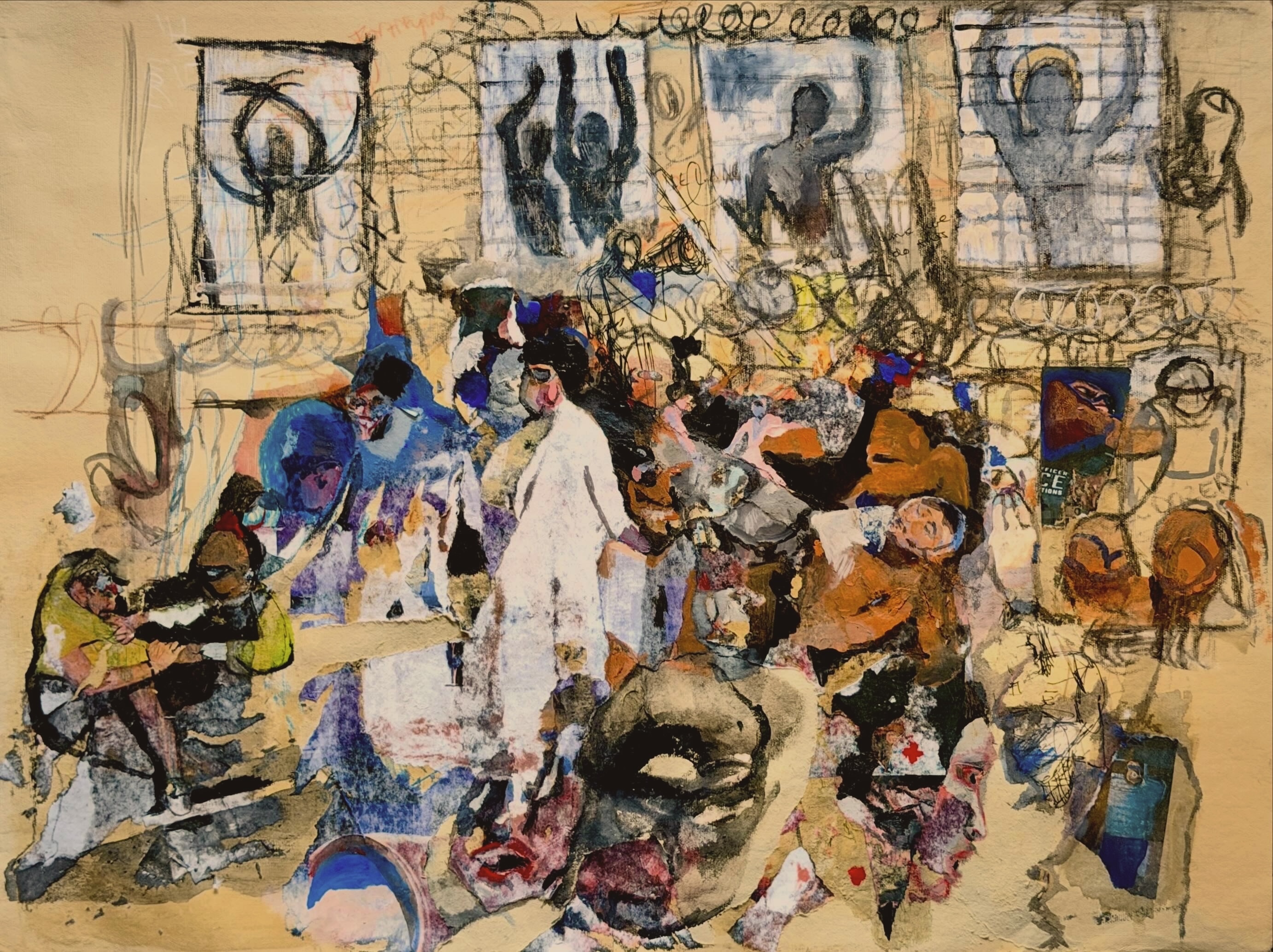
Then there is Isabelle Brourman, whose courtroom sketches are some of the most intricate portraits of the American psyche that I have ever seen. Brourman just unveiled her latest exhibition, You Have the Body at Brewer Martin in Los Angeles, and it is virtually impossible not to feel the severity of each scene she displays. She began her work as a courtroom sketch artist for the infamous Depp v. Heard trial and has since covered cases like Donald Trump’s hush-money trial in New York, proceedings in the Luigi Mangione case, Nicolás Maduro’s arraignment, and the ICE immigration crackdown, amongst many other critical events over the last three years.
“I come at the work project from my own personal trauma,” she tells me. “There's this need for healing because my story in particular was one in which a big institution put me in a horrible place and basically was a conspirator in my abuse.” She’s referring to her experience at the University of Michigan, in which she and seven other former students of the university pursued a lawsuit against their undergraduate professor Bruce Conforth for sexual assault and against the university for failing to address complaints about him for nearly a decade. The lawsuit was dismissed, however, since it was filed outside Michigan’s statute of limitations.
“I think that I went to court to basically liberate myself from that space," she says. "Because there's so much energy in these spaces, and because I am accessing it from this origin of institutional abuse [...] It lives in my trauma brain. It's honestly a superpower because I'm so hyper vigilant in these spaces, and I am taking down little details, and I sense things.”
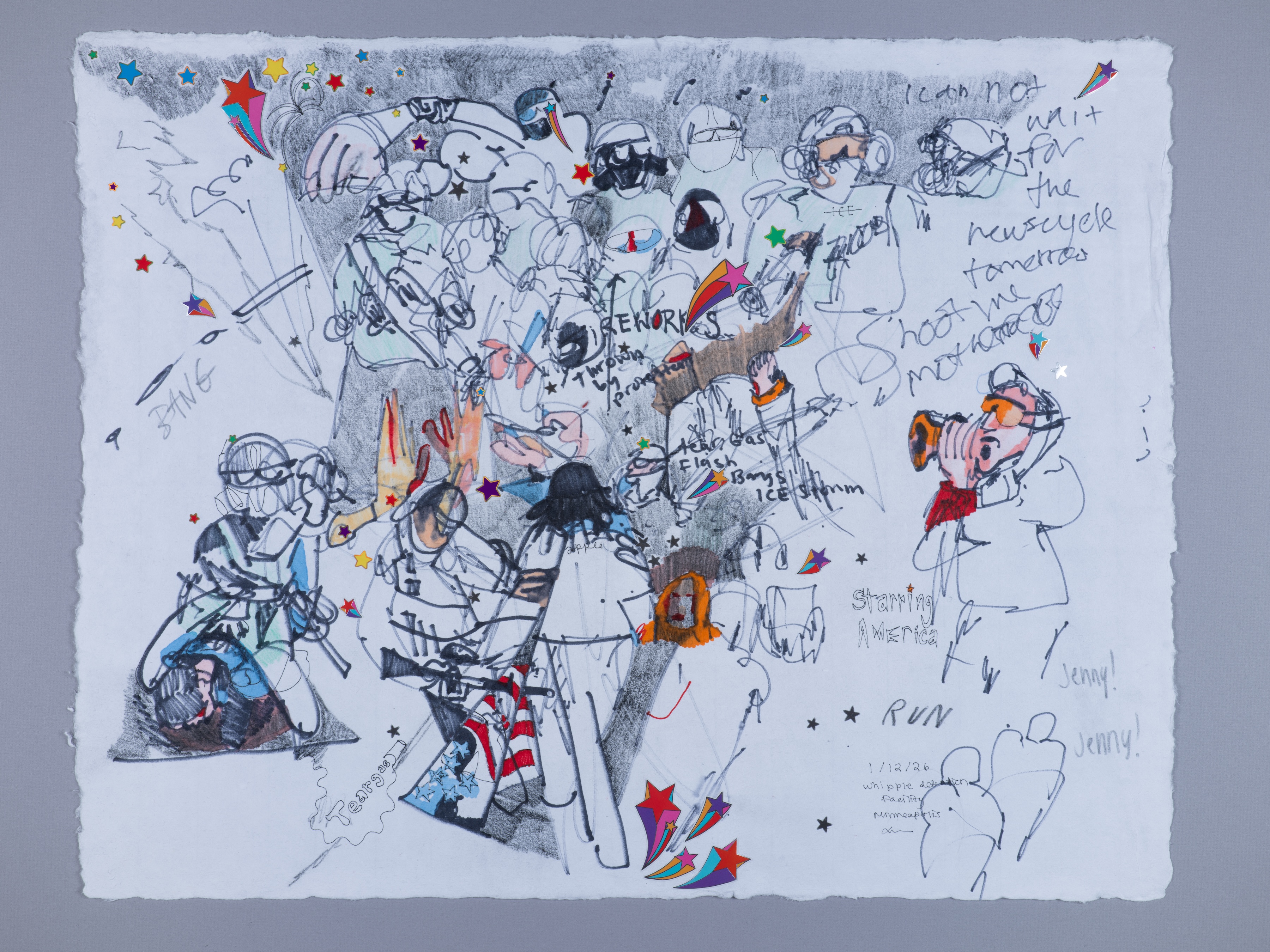
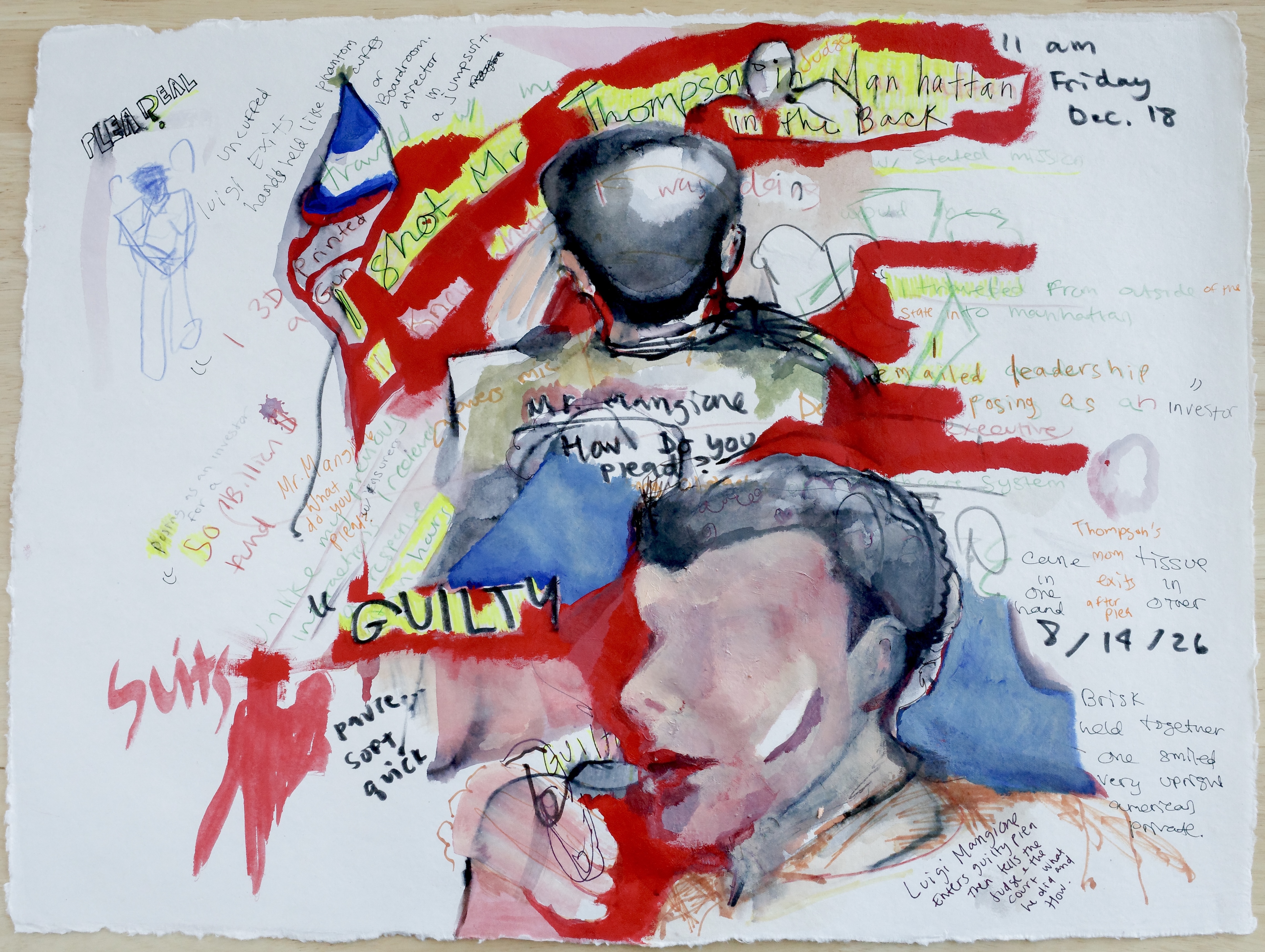
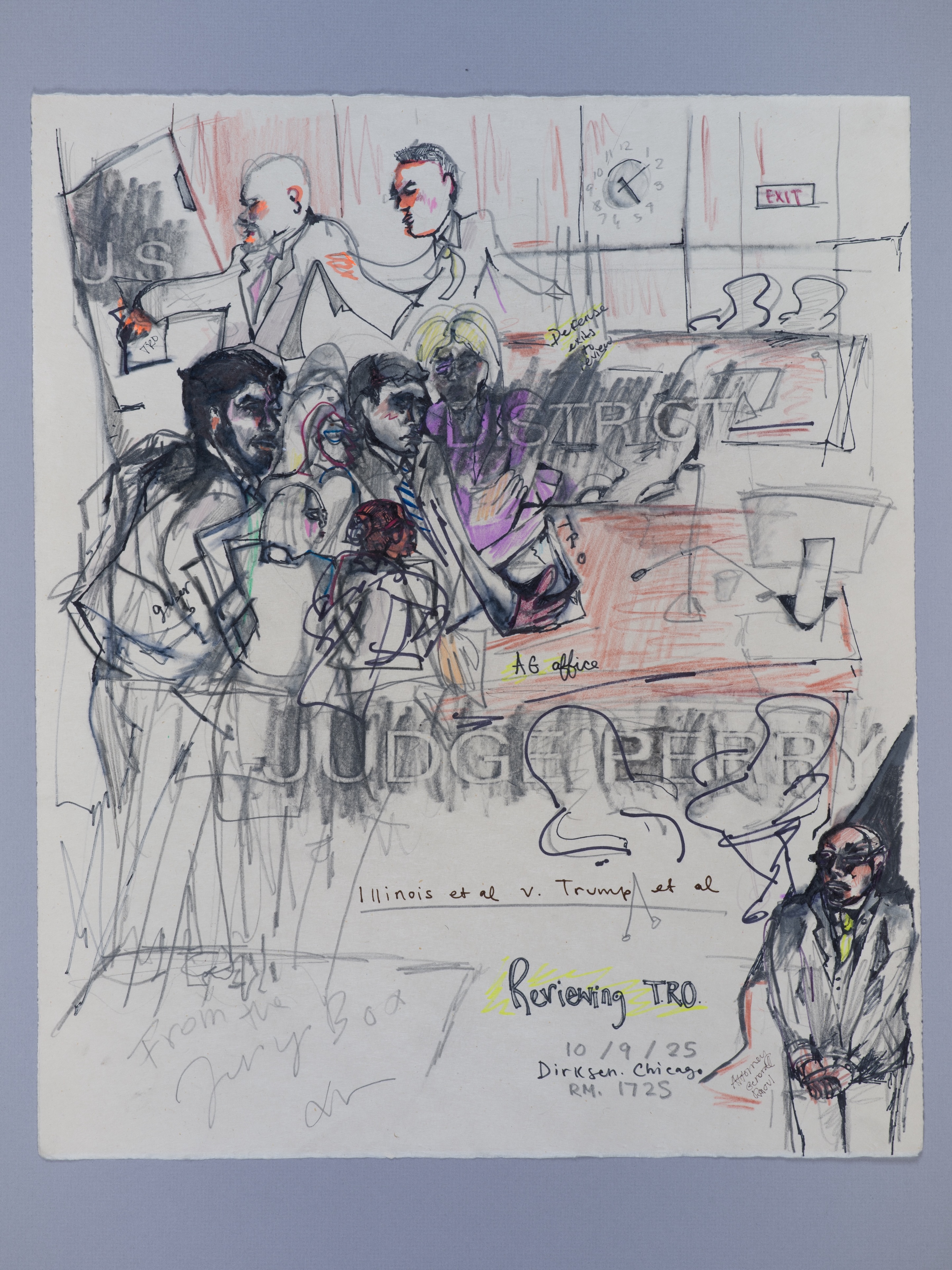
This hypersensitivity is palpable when you look at the images, and you can literally feel the ferocity of Brourman’s hand while looking at her sketches. Her portraits embody the energy of each moment, immersing viewers in the fervor of each scene. In Emergency Development—which documents the 2025 Illinois v. Trump case—she depicts a captivating urgency, illustrating some of America’s most prominent political figures in a rare moment of submission. Kids portrays a poetic contrast: children protesting in Minneapolis at the Whipple detention facility opposite the brute ICE agents charging at them. In Luigi Mangione’s Guilty Plea, Mangione is semi-encircled in red, eyes obscured, as he is branded “GUILTY,” surrounded by cryptic utterances and phrases documenting the day's turmoil.
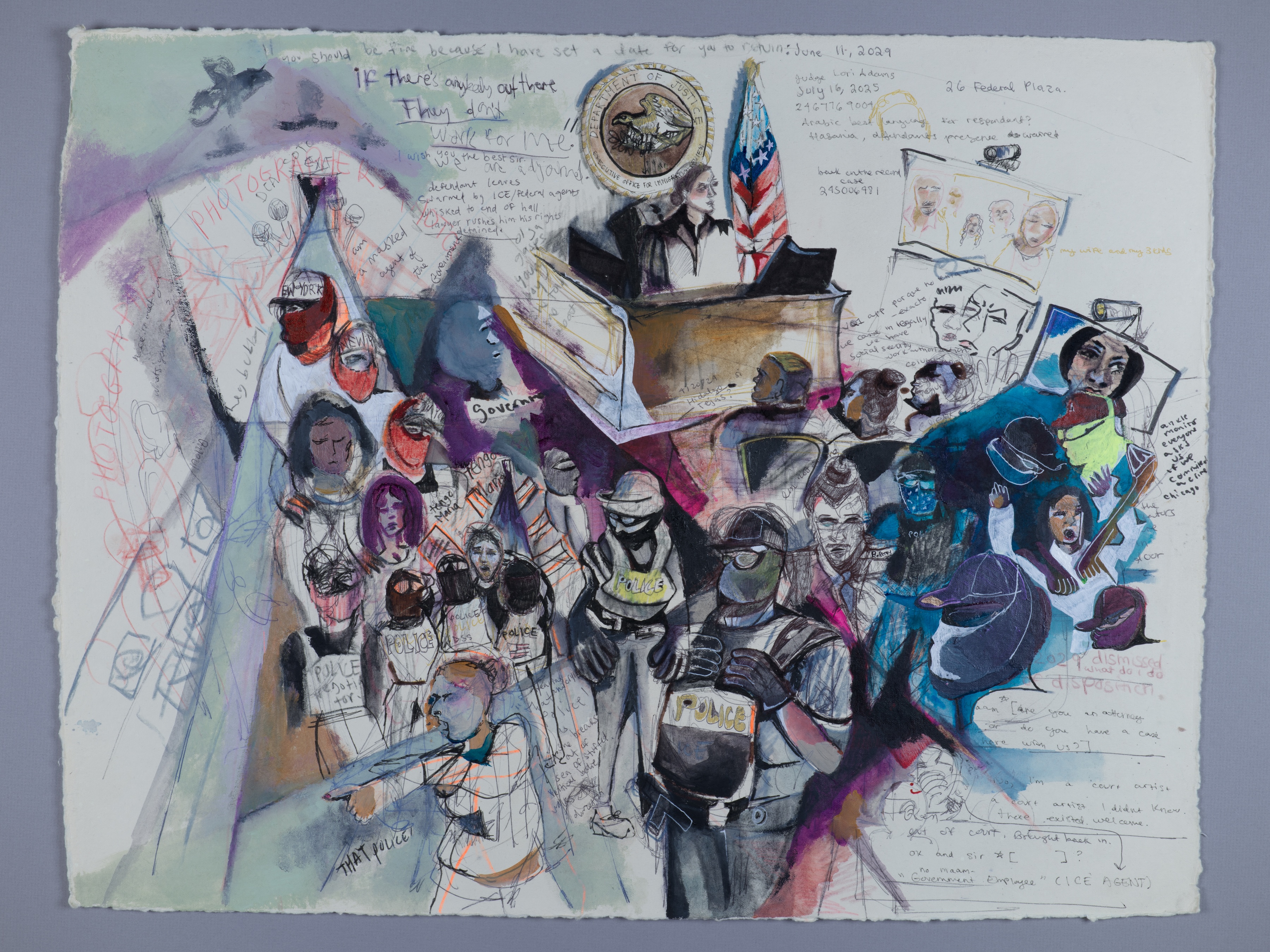
In her title piece, You Have the Body, Brourman portrays what she calls “the structural collapse” of 26 Federal Plaza. She tells me it felt like being “in a space of urgent poetry; almost like, you're looking at things, and they feel very alive.” She describes 26 Federal Plaza as this sinister entity rife with anticipation as everyone waits to see who ICE will detain next. “I call it a haunting,” she says. “Even in the times when the detentions weren't happening, they were haunted by it.”
The piece vivifies this intoxicating sense of dread; on the right side of the portrait is the courtroom, and on the left is a hallway swarmed with ICE agents. At the top of the painting reads a quote by the judge: "if there's anybody out there They don’t work for me.” She highlights a proclamation of deniability veiled under a vague (and vapid) declaration of solidarity, juxtaposed against the terror of the ICE raids. This is what makes Brourman’s body of work so important: her subtly profound observations and injections of sentimentality convey the subtext and, by proxy, the humanity of every room she inhabits.
“When I started this project, I was in my own story, and it was very clear to me that there was a villain, and it was very mythical,” she states. “I was very innocent at the time that I was abused, and this was somebody who had power and used it to do these horrible things, not just to me but to my sister survivors. And the villain—it was very American. It fell into this American myth.” As I look at the evolution of her repertoire, it becomes even clearer to me that Brourman is radically committed to her role as an observer; she’s not sensationalizing her subjects out of hostility or for anyone’s entertainment.
“I view the work as courtroom work,” Brourman posits. “When it left the immigration court and went into the streets, law and order left with it; the judge and jury left with it. ICE took that role into the hallways of the court and then into the neighborhoods of our communities in this country.” Her work tracks this phenomenon, extending beyond the physical courtroom and into the open air as ICE’s deportation machine endures across the country. “Where I think the project has really strengthened conceptually is like, where does one thing end and another thing begin? And that's kind of the question that I've been asking since I started this work.”
Stay up-to-date with exclusive events and content.


