F L A U N T


Artists and theologians have long wrestled with the origins of humanity. Explanations and mediums change, yet the same questions persist: where did we come from, and where are we going?
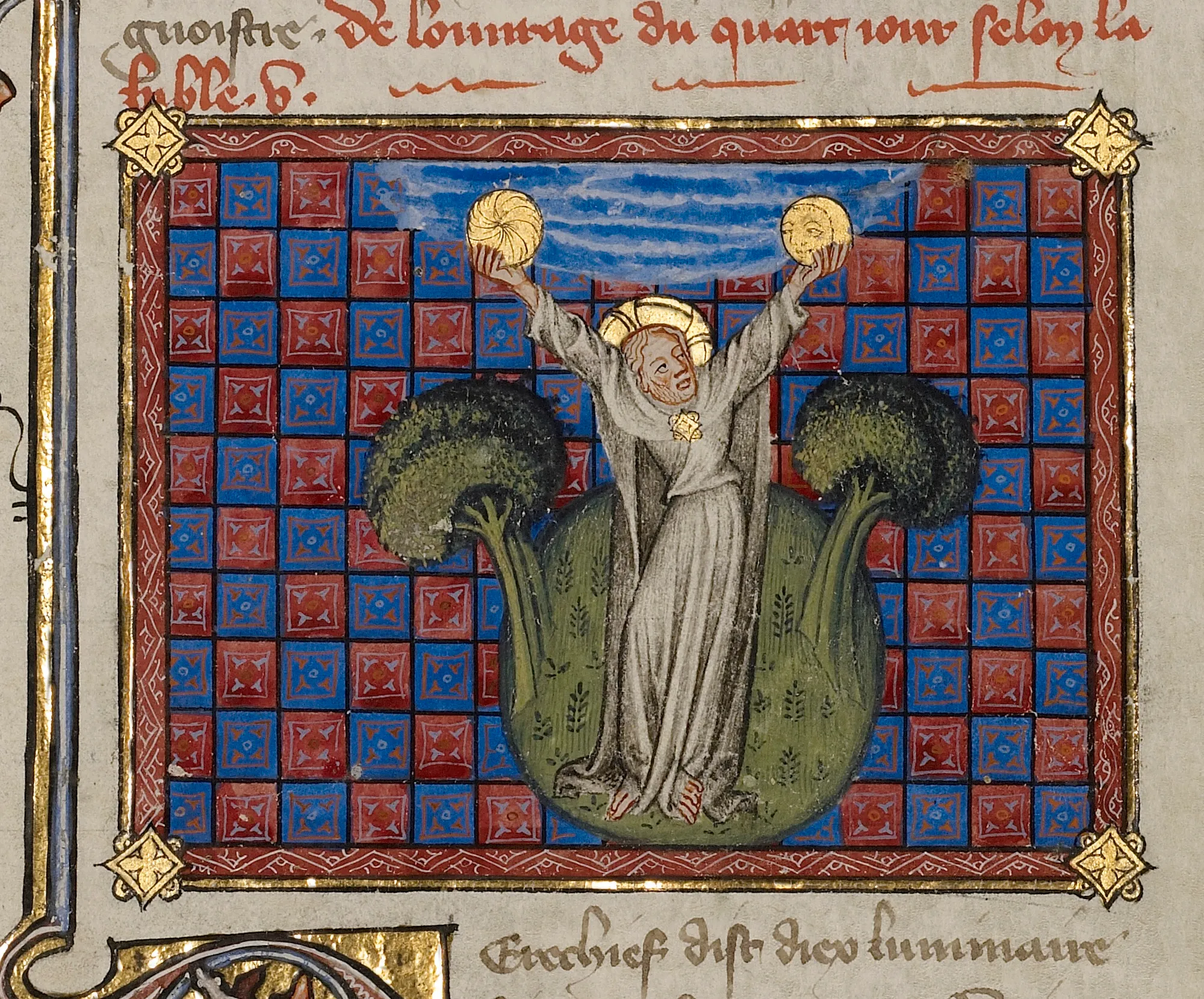
For many, the beginning of the world unfolds in the Book of Genesis. A Christian God is said to have created the universe, the earth, and all living things in six days. The stories of Adam and Eve, Cain and Abel, and Noah’s Ark illustrate humanity’s earliest moments and the moral lessons embedded within them. Medieval European artists translated these narratives into images—particularly in illuminated manuscripts—shaping how generations of viewers imagined the story of creation. But those images also reflected the cultural and political structures of the societies that produced them.
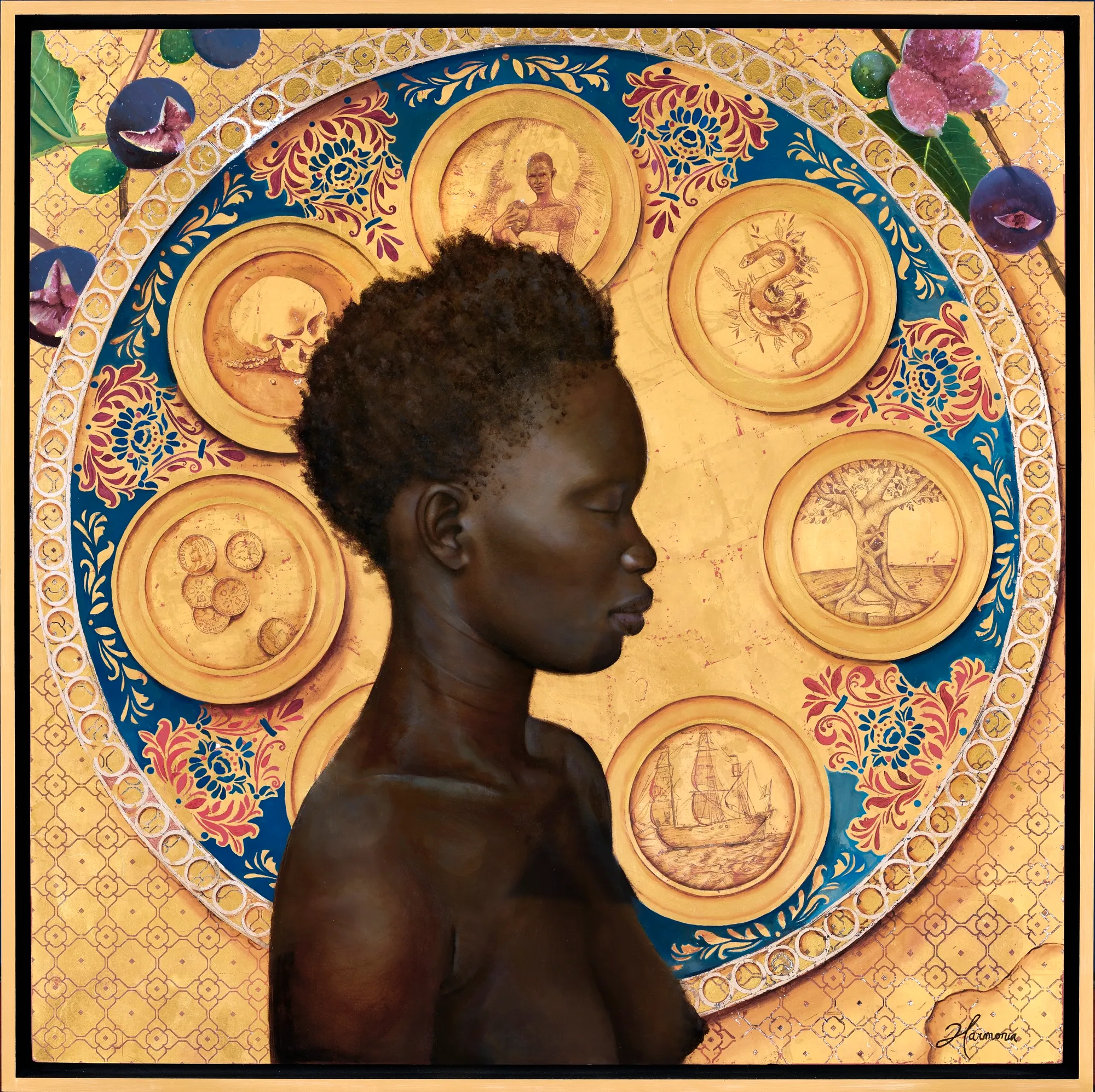
Chicago-born, Afro-Cuban artist Harmonia Rosales approaches this visual legacy as both an inheritance and a challenge. Her work reimagines canonical scenes from European art history, inserting Black protagonists into compositions historically reserved for saints, angels, and classical deities. In Beginnings: The Story of Creation in the Middle Ages, presented at the Getty Museum, Rosales's works enter into direct dialogue with medieval depictions of Genesis, responding in particular to the illuminated manuscript Stammheim Missal.
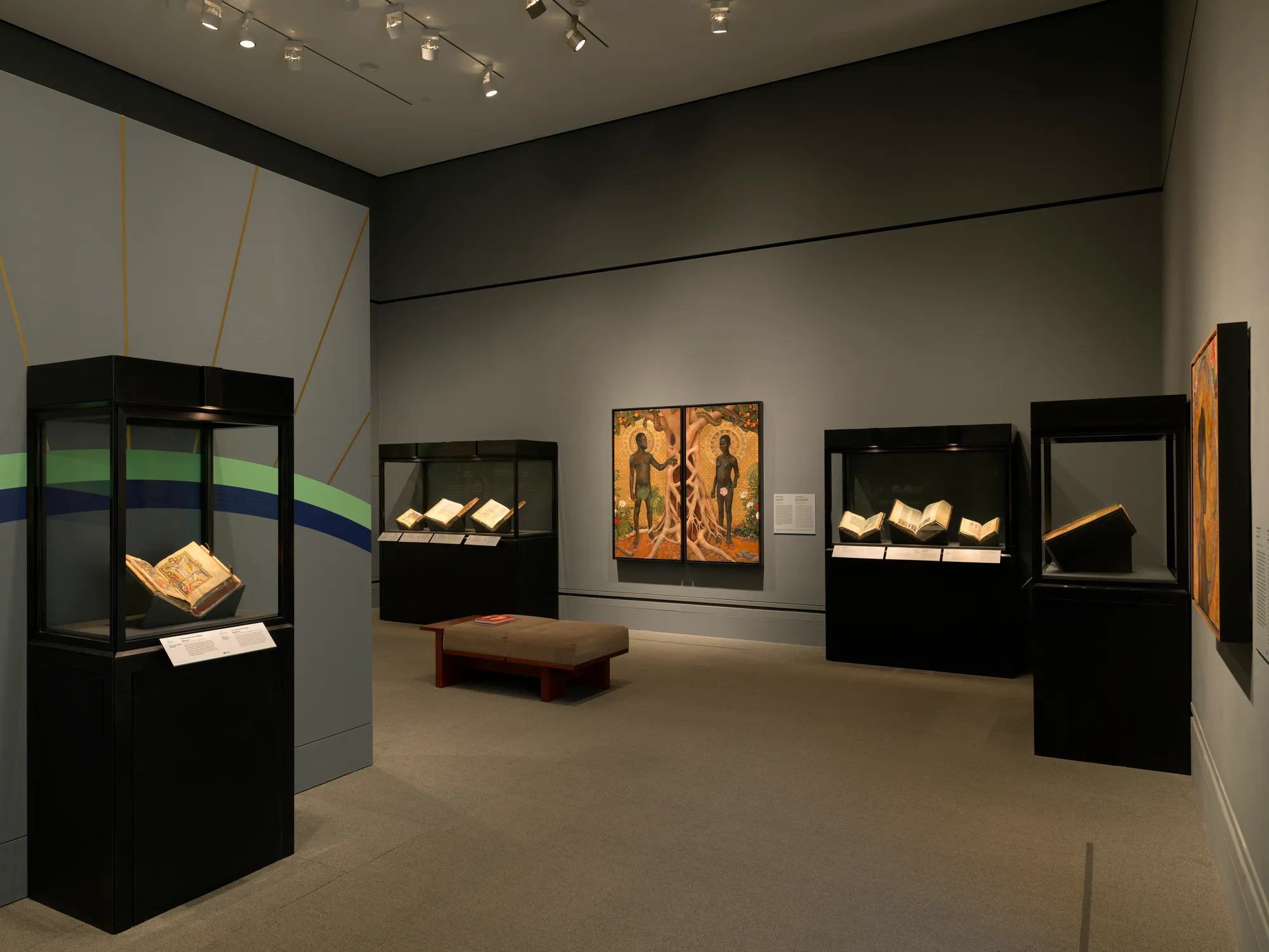
The exhibition considers how origin stories function visually and culturally—how images of creation shape ideas about divinity, power, and belonging. Drawing from Renaissance and Baroque compositional traditions while incorporating West African cosmology, Rosales reframes creation as something expansive and cyclical.
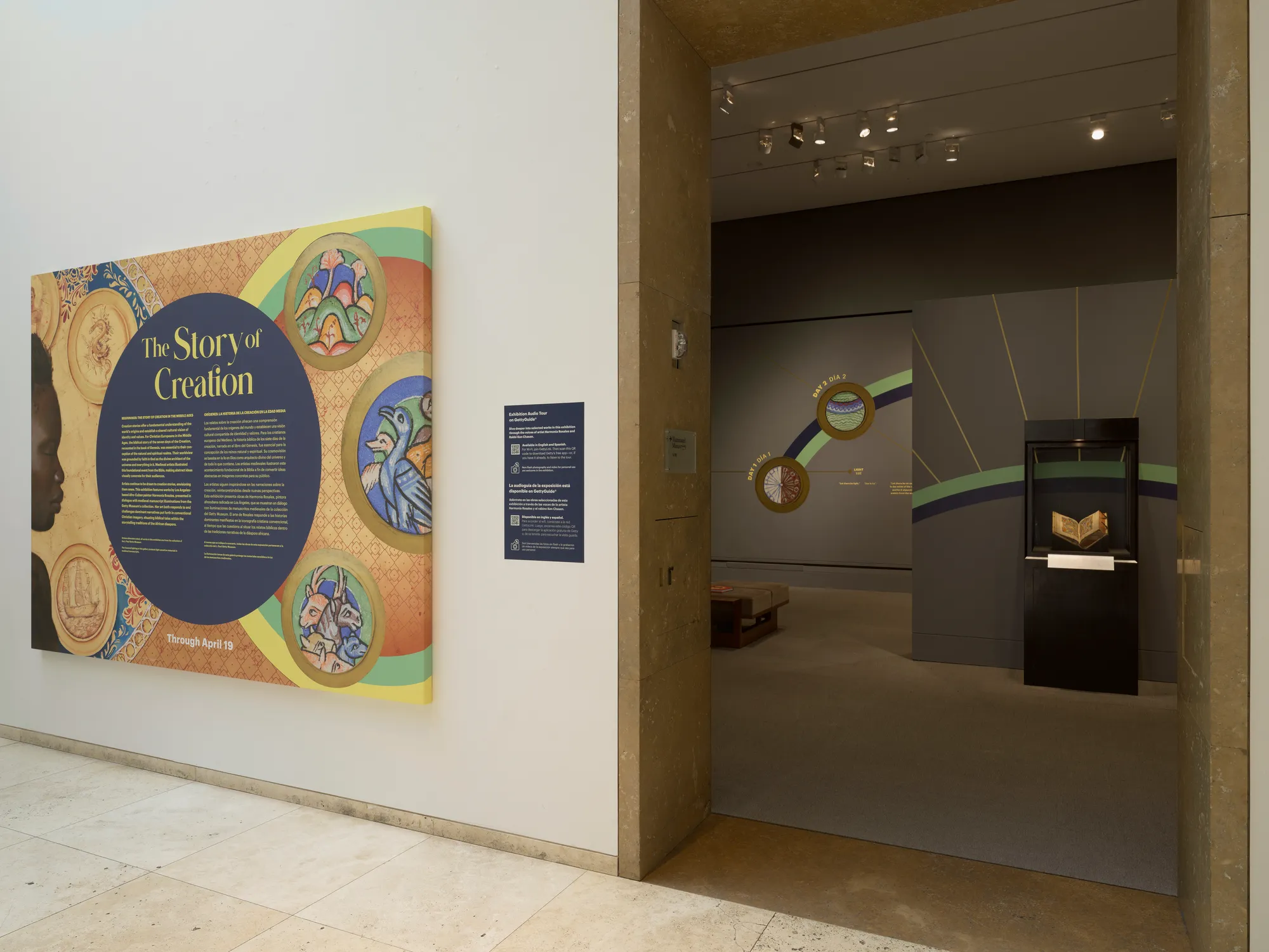
Beginnings opened at The Getty Center in Los Angeles this January, and will run through April 19. Rosales spoke with FLAUNT about the influence of medieval visual storytelling, the dialogue between her paintings and the Getty’s collection, and the question at the center of Beginnings: Who gets to be there when the world begins?

What made the Biblical creation story particularly interesting for you as an artist? What historical events, themes, or moments inspired this exhibition?
What interested me about the Biblical creation story wasn’t just the narrative itself, but the power of the imagery that carried it.
Origin stories are infrastructure. They shape how societies understand who came first, who belongs, and who holds divine authority. For centuries, the Biblical creation story has been one of the most visually reinforced origin narratives in Western culture.
Medieval art played a huge role in that. It was designed to indoctrinate. Through paintings, sculptures, and stained glass, theology was taught visually to largely illiterate populations. Images established who was holy, who was central to the story of humanity, and who was saved.
And in that sacred narrative, Black bodies were almost entirely absent.
But historically, something instinctual happened with preservation of African gods during colonization. As Christianity spread through the transatlantic slave trade, many African spiritual systems weren’t erased entirely, they went underground. In the Caribbean and the Americas, the Orishas often survived by hiding within Christian imagery and saints. Their stories were layered beneath the dominant narrative.
So in many ways, what I’m doing in this exhibition is peeling back those layers.
I’m interested in taking the same visual language that once taught theology and later helped reinforce colonial hierarchies, and redirecting it. If those images were powerful enough to shape belief for centuries, they’re powerful enough to reshape how we imagine origins now.
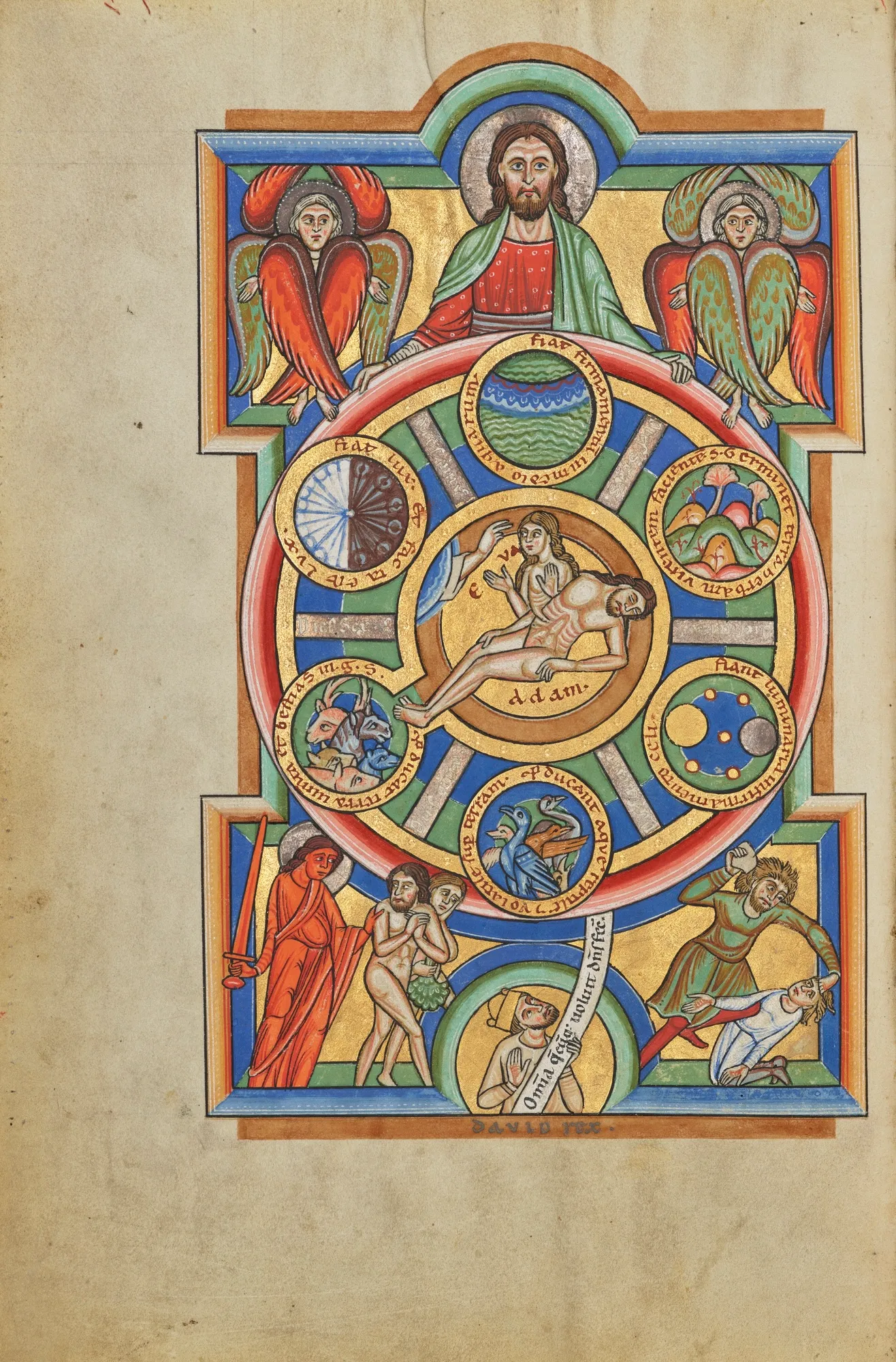
A new work in this collection responds to the Getty's Stammheim Missal. What was your reaction to the piece, and how did it inspire you?
What struck me first about the Stammheim Missal was how beautifully medieval art could communicate something incredibly complex in a visual way that anyone could understand.
I was especially drawn to the circular roundels that organize the narrative. Creation unfolds in a very structured sequence, controlled and linear.
After sitting with the work, I began thinking about how different that structure is from many African cosmologies.
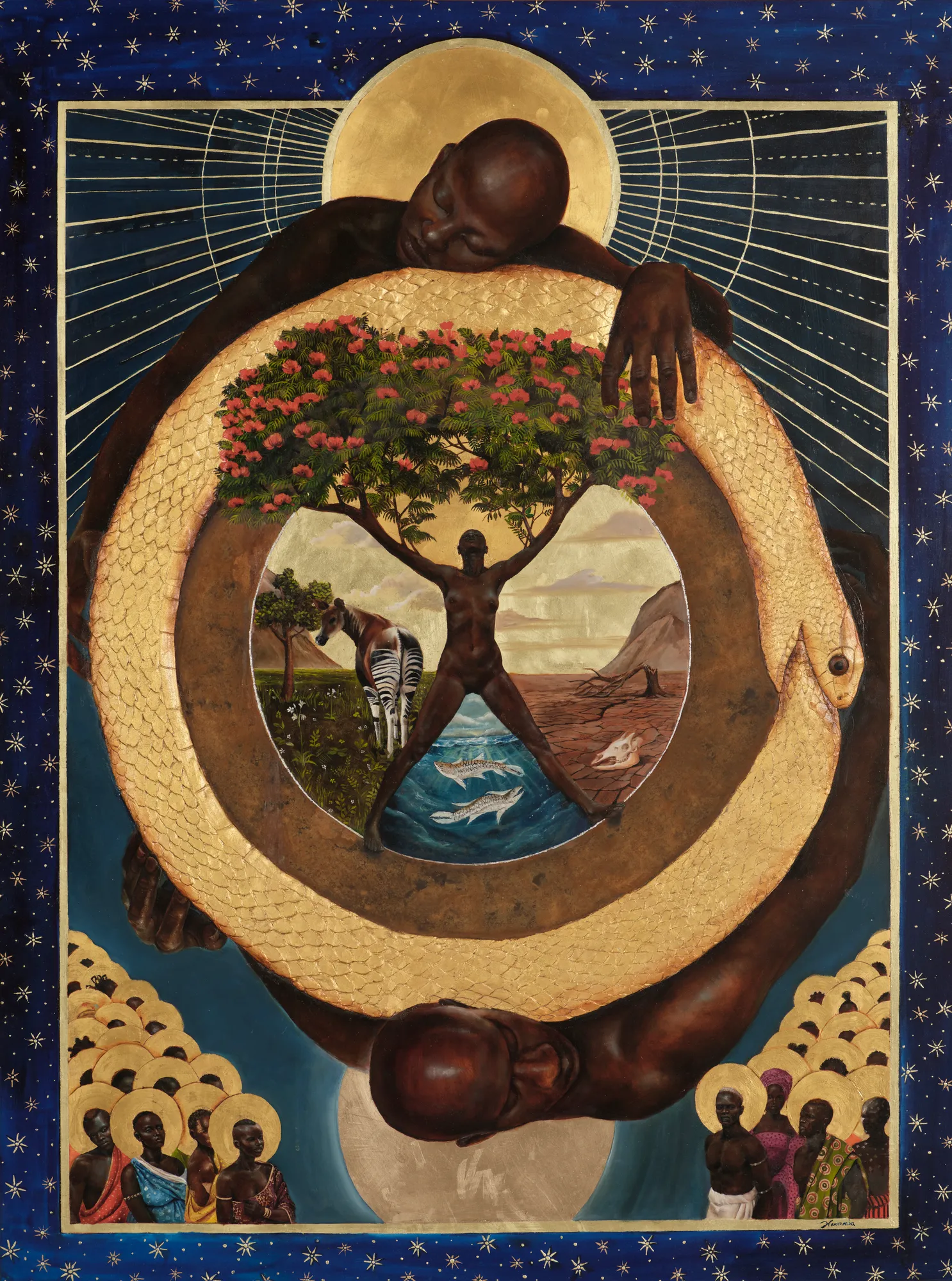
In the Biblical framework presented in the manuscript, creation tends to center humanity. The world is organized around us. In many African cosmologies, however, nature is the central force. Humanity is not placed above the world but exists within a larger living system governed by rivers, storms, forests, and deities that embody those forces.
So when I engage with a work like the Stammheim Missal, I’m entering into a dialogue with it. My work introduces an African cosmological perspective into that visual language, one that restores nature as the greater power and reintroduces a sense of humility about humanity’s place within creation.
What does it mean to you to merge Renaissance and Baroque compositional strategies with depictions of Black protagonists and West African spirituality?
For me, merging Renaissance and Baroque compositional strategies with Black protagonists and West African spirituality is about reclaiming one of the most powerful visual languages in Western art history.
The Renaissance “perfected” the human figure, societies idealized anatomy, luminous skin, and
monumental scale. It elevated the human body as the central subject of divine and philosophical thought.
But that beauty also helped establish a visual hierarchy of humanity at the same time Europe was expanding outward through colonization.
The Baroque period then intensified that language. It introduced drama, movement, and emotion. These works were meant to overwhelm the viewer, to make the divine feel immediate and powerful.
Together, these periods shaped how the West visually understood divinity, power, and civilization.
And in both moments, Black bodies were largely absent from that sacred narrative or positioned as servants and enslaved figures.
I’m taking those powerful visual tools and instead of reinforcing the hierarchies those styles once helped normalize, I use them to center Black bodies and West African cosmology within the divine narrative with historical weight. The goal isn’t simply representation and to be seen. It’s how we are seen, with that same theological seriousness in European art.
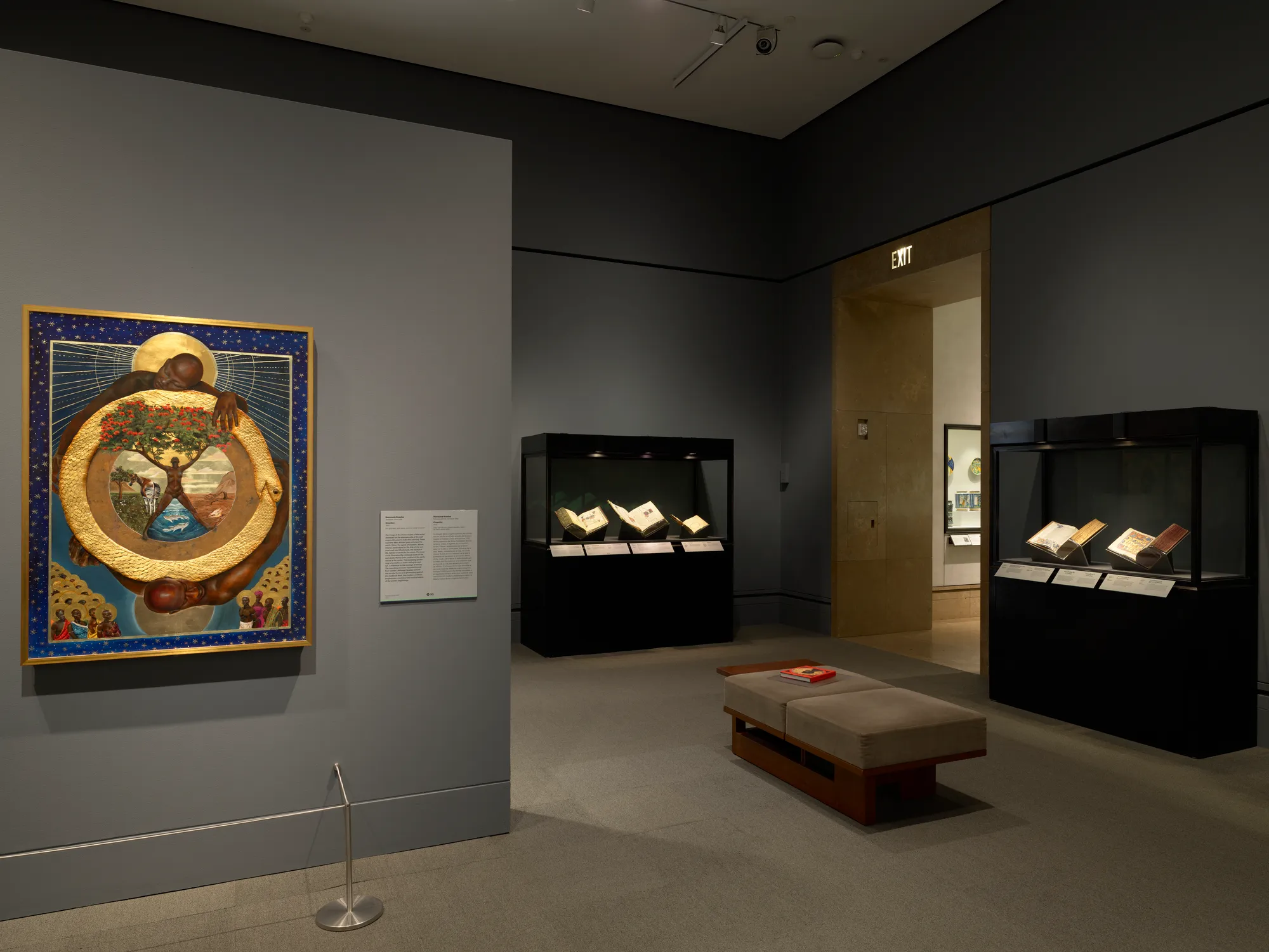
Your works are positioned in conversation with medieval pieces depicting the story of creation. If these works could speak, what would they say to each other?
That question actually brings me back to childhood. When I visited museums, I used to imagine the artworks talking to each other once the lights went off.
I think first, my works would be excited to finally be able to speak. I imagine them debating in a very intellectual way and finding balance within that conversation.
If the medieval images place humanity at the center of creation, ordered and divinely appointed. My work speaks from a place where nature is the greater force and humanity exists within it rather than above it.
Together they would be asking the viewer an important question: is the world organized for us, or are we part of a much larger living system?
In that sense, the conversation between the works isn’t about contradiction. It’s about expanding how we imagine the story of creation.
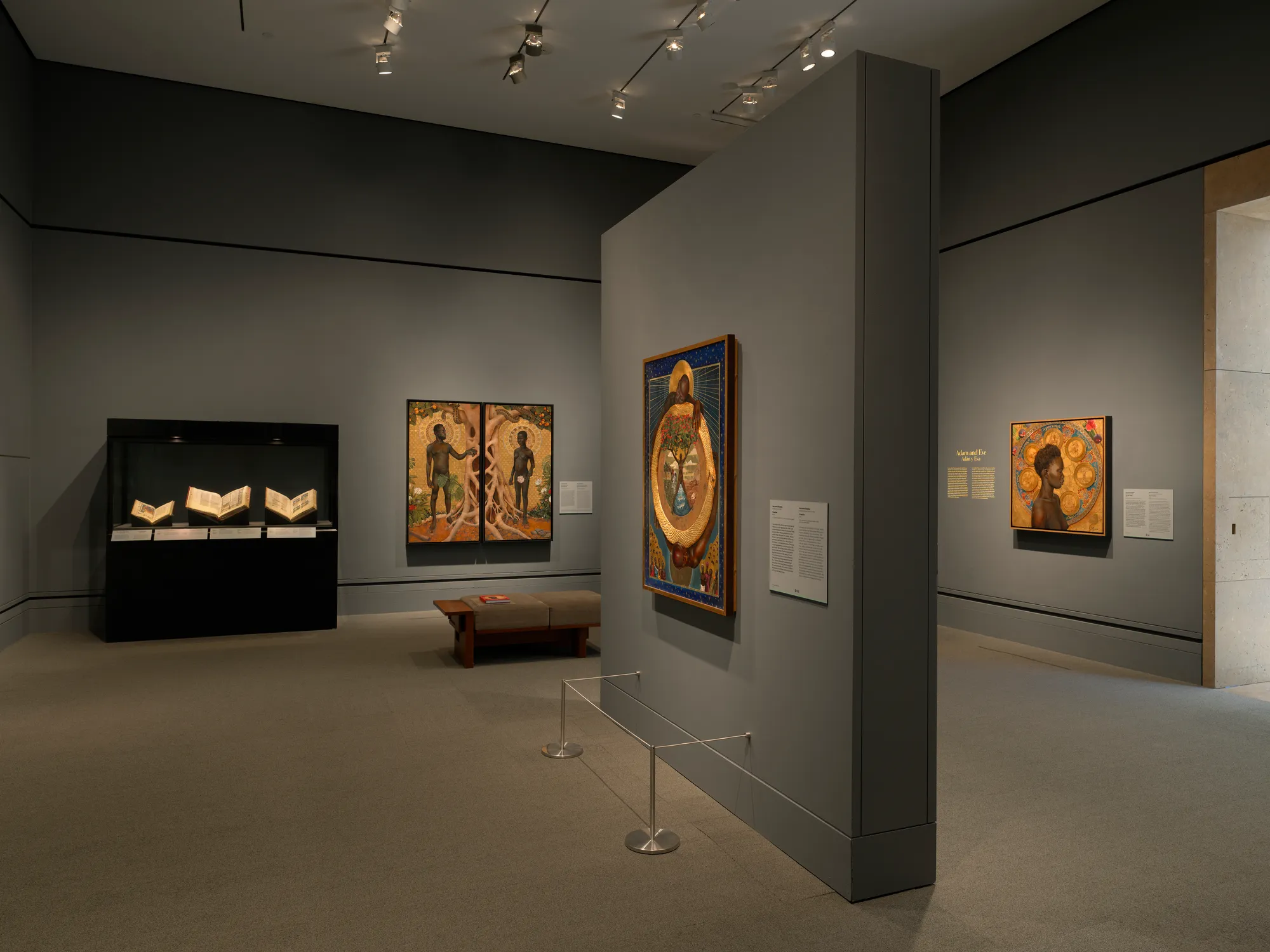
Do you see Creation as an ongoing process, and if so, how does that perspective appear in your work?
Yes, I do see creation as an ongoing process.
In many Western depictions of Genesis, creation is presented as a completed event; a beginning that happened once and then concluded. But in many African cosmologies, creation is cyclical and constantly unfolding through nature, through human action, and through the forces that govern the earth.
There’s an African proverb that I used in the very beginning of my book Chronicles of Ori that says, “If you want to know the end, look to the beginning.” It suggests that origins aren’t just something in the past, they are something we return to in order to understand where we are going.
That idea appears in my work through the presence of the Orishas, who embody natural forces like rivers, storms, iron, and fertility. Through them, creation is never static. It’s always in motion.
And as an artist, I see painting itself as part of that process. By using historical visual languages to reintroduce different cosmologies, I’m participating in how we continue to imagine our origins and ultimately, our future.
What do you hope viewers at the Getty take away from Beginnings?
I hope it invites viewers to question what they have been taught to accept as history.
I want them to see Black bodies painted with the same luminosity, monumentality, and theological seriousness traditionally reserved for European figures. To feel what happens when we are positioned as origin, as mythic, as divine.
Because that visual shift reshapes imagination. And imagination shapes how we understand worth, power, and belonging.
If visitors leave recognizing that divinity was never limited, that it was simply framed that way, then the work has done its job.
Stay up-to-date with exclusive events and content.


