F L A U N T


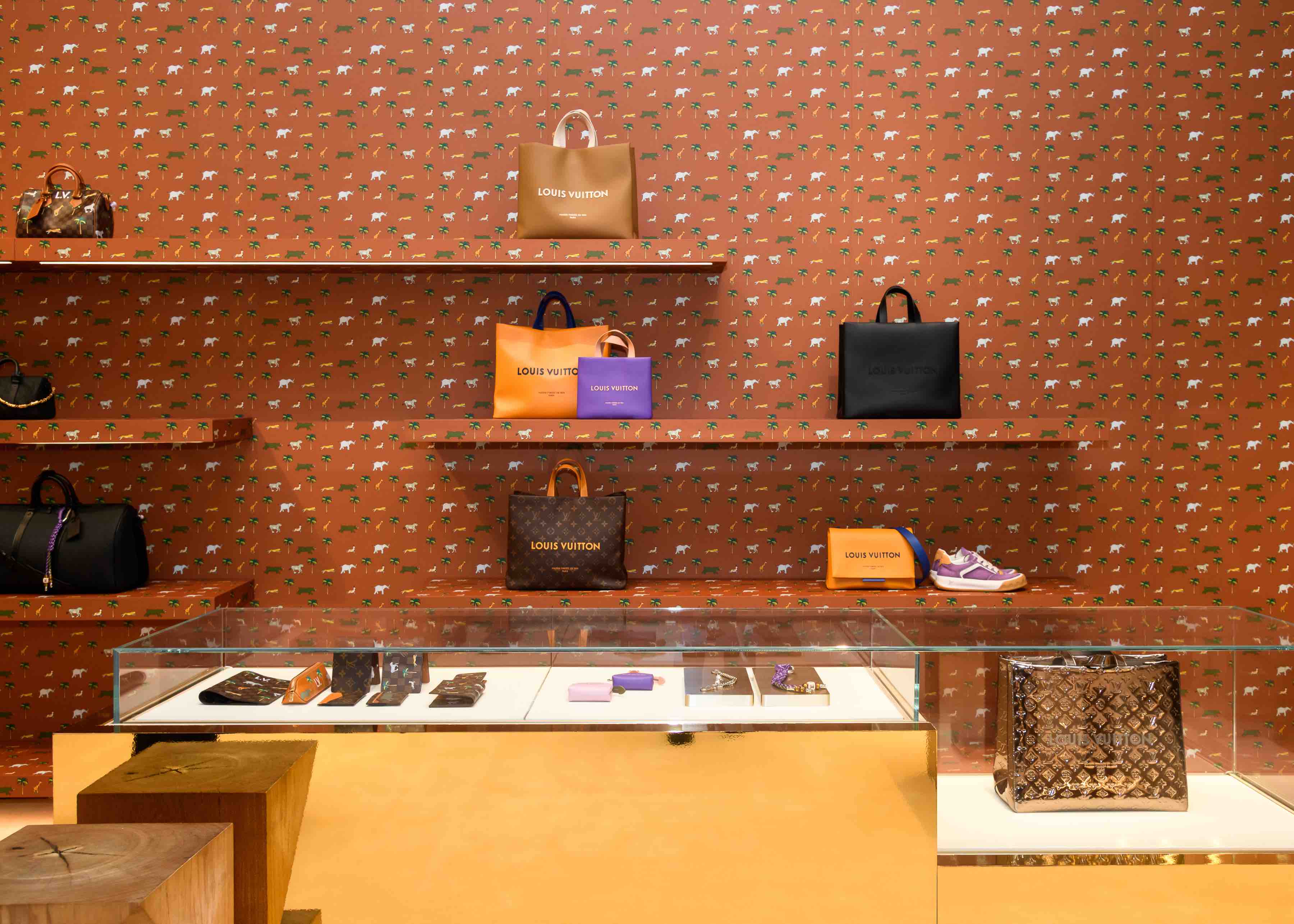
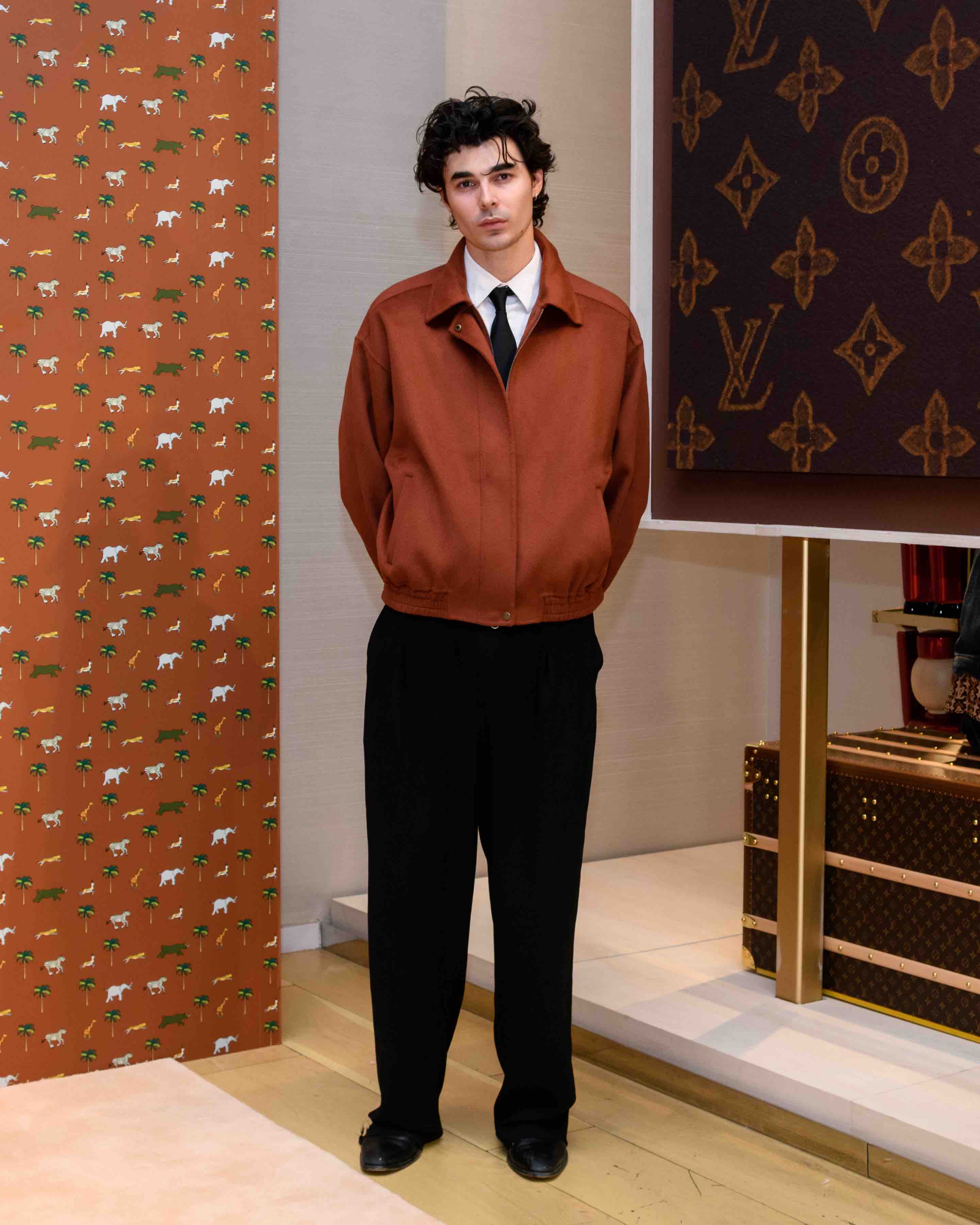
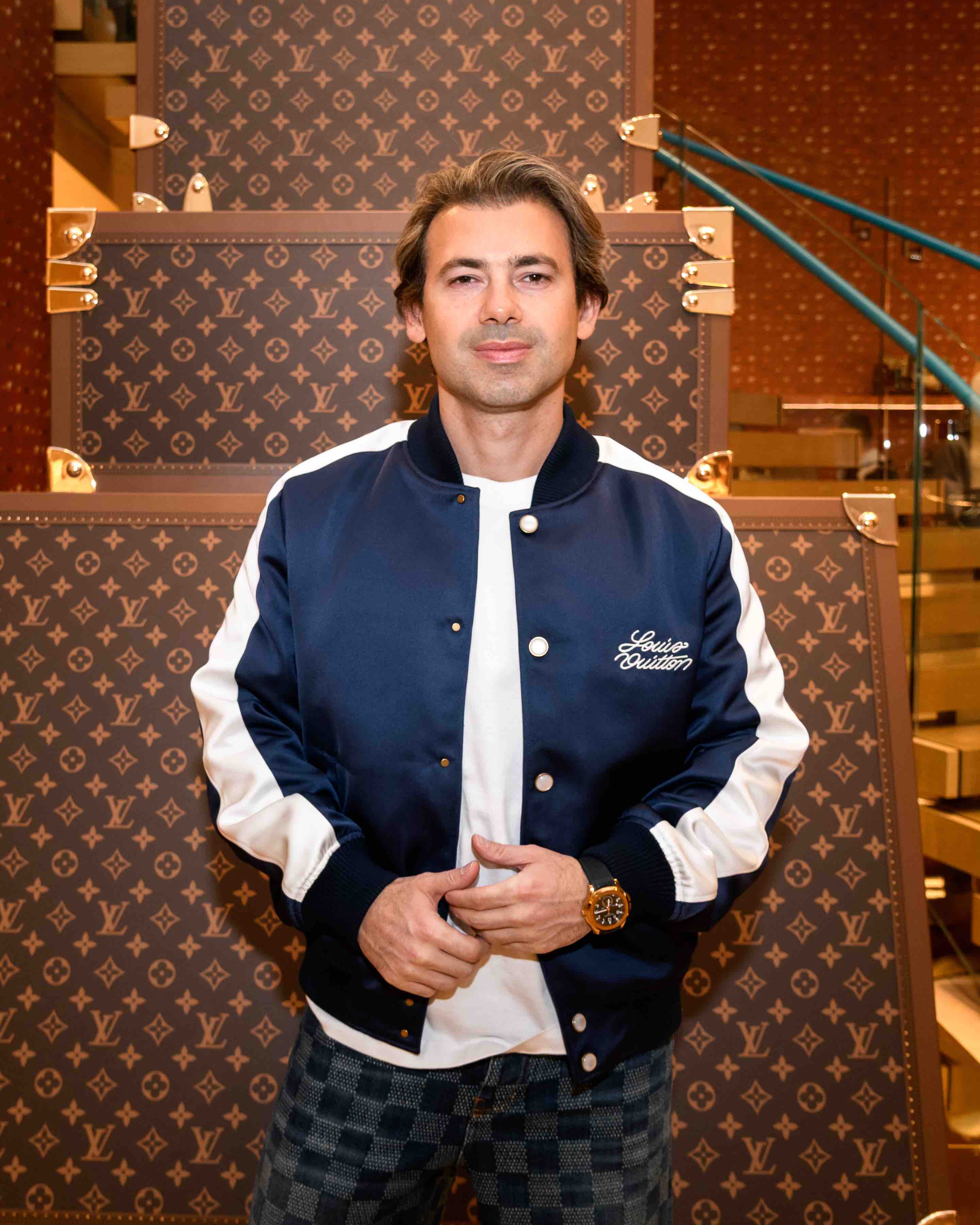
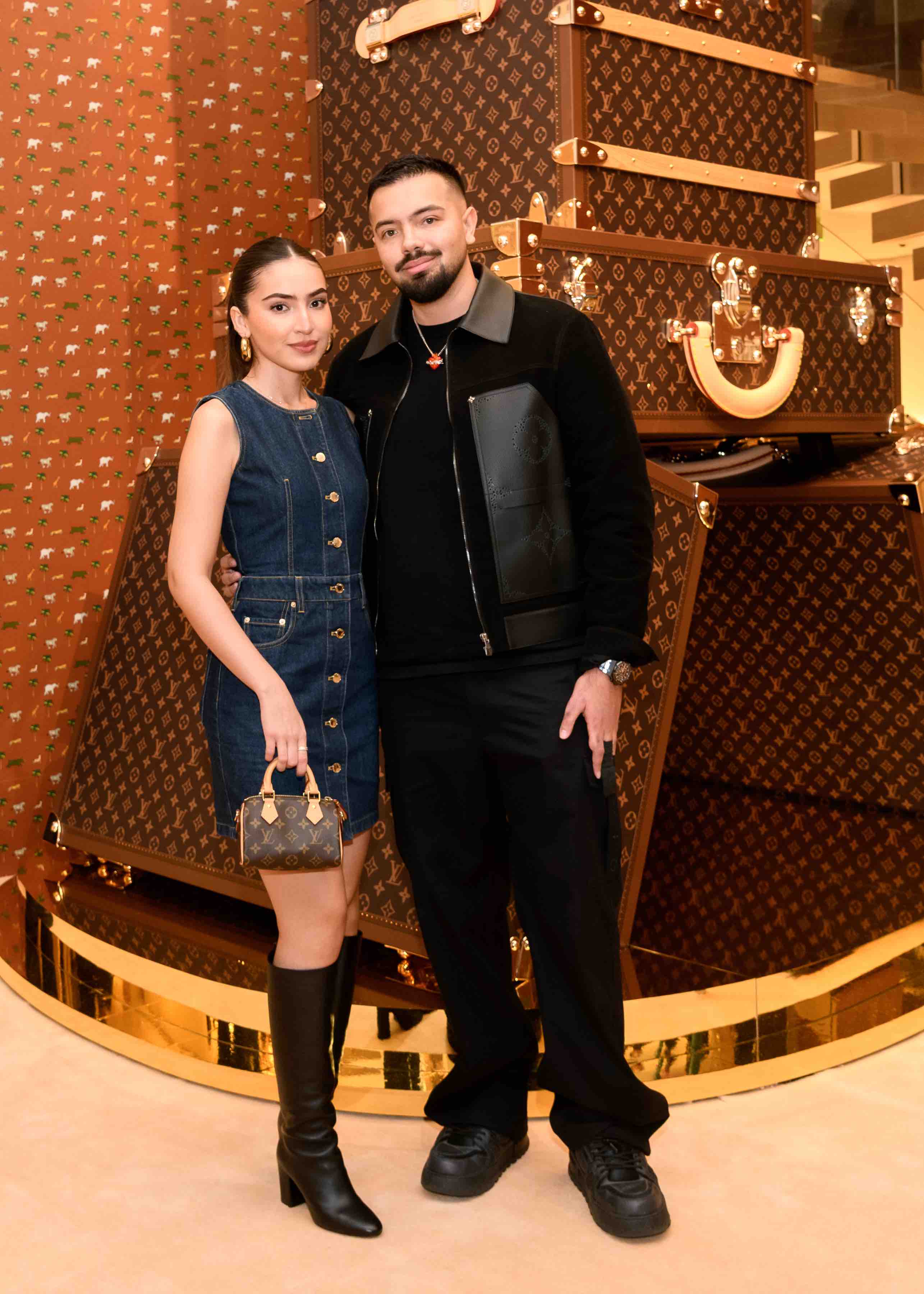
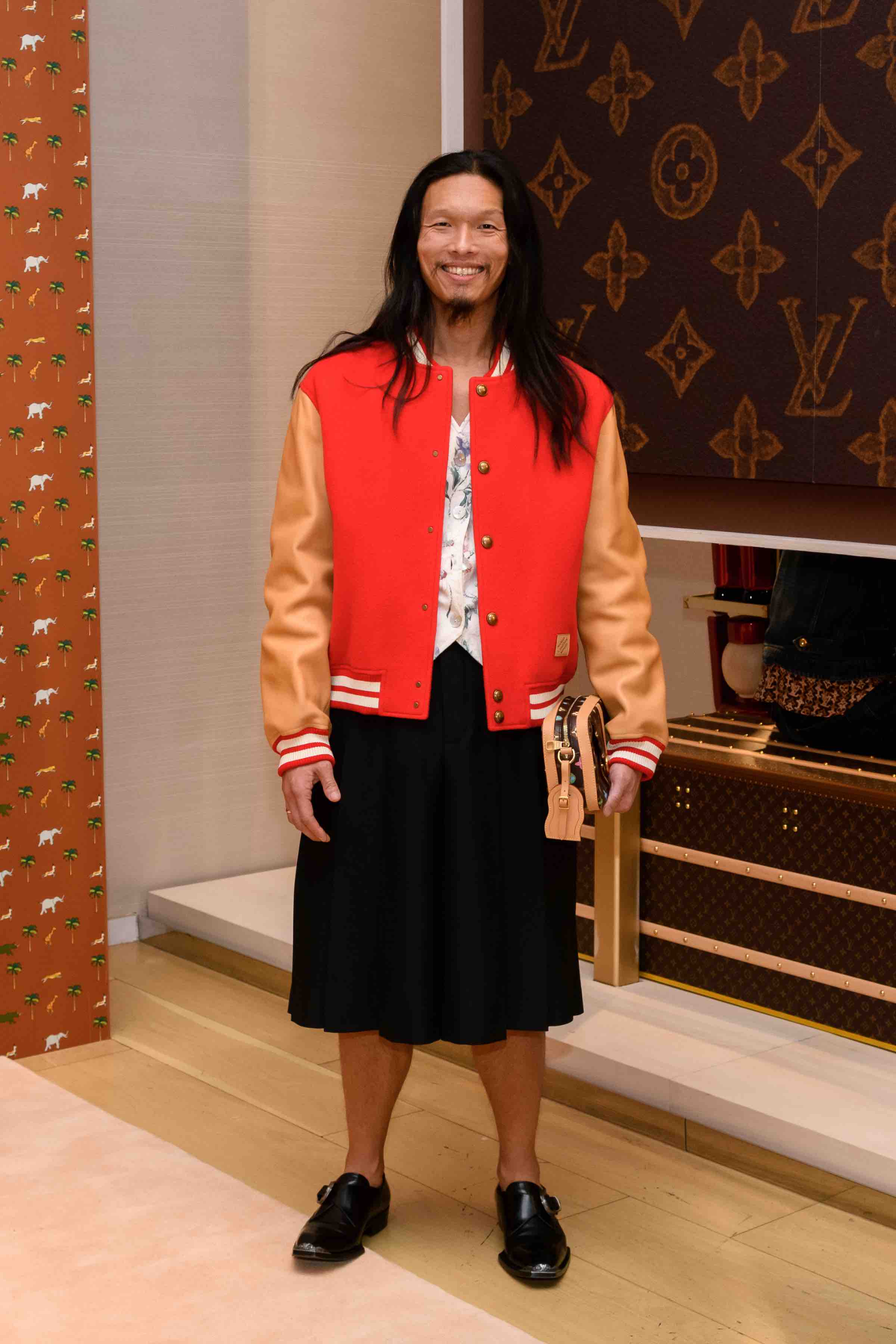

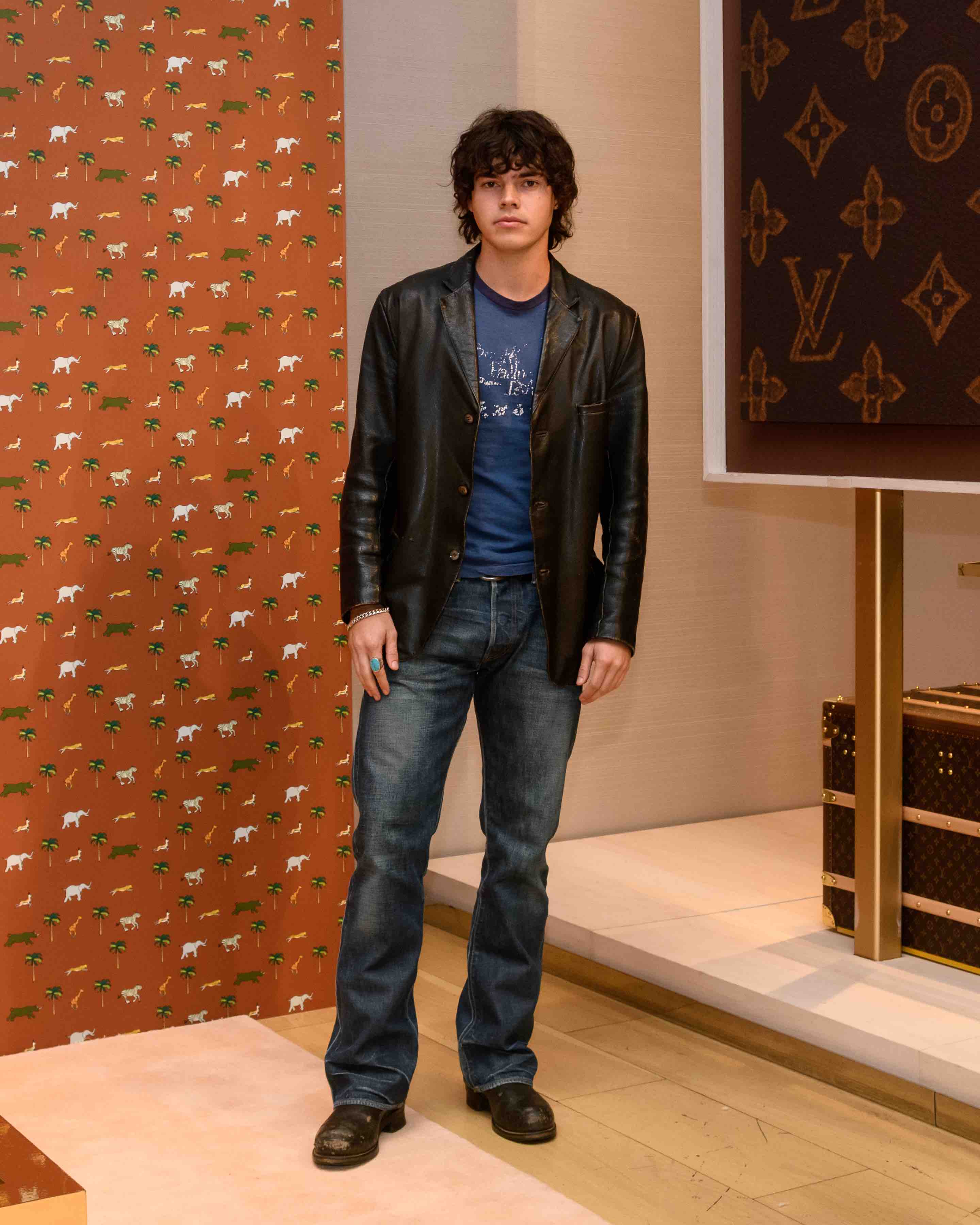
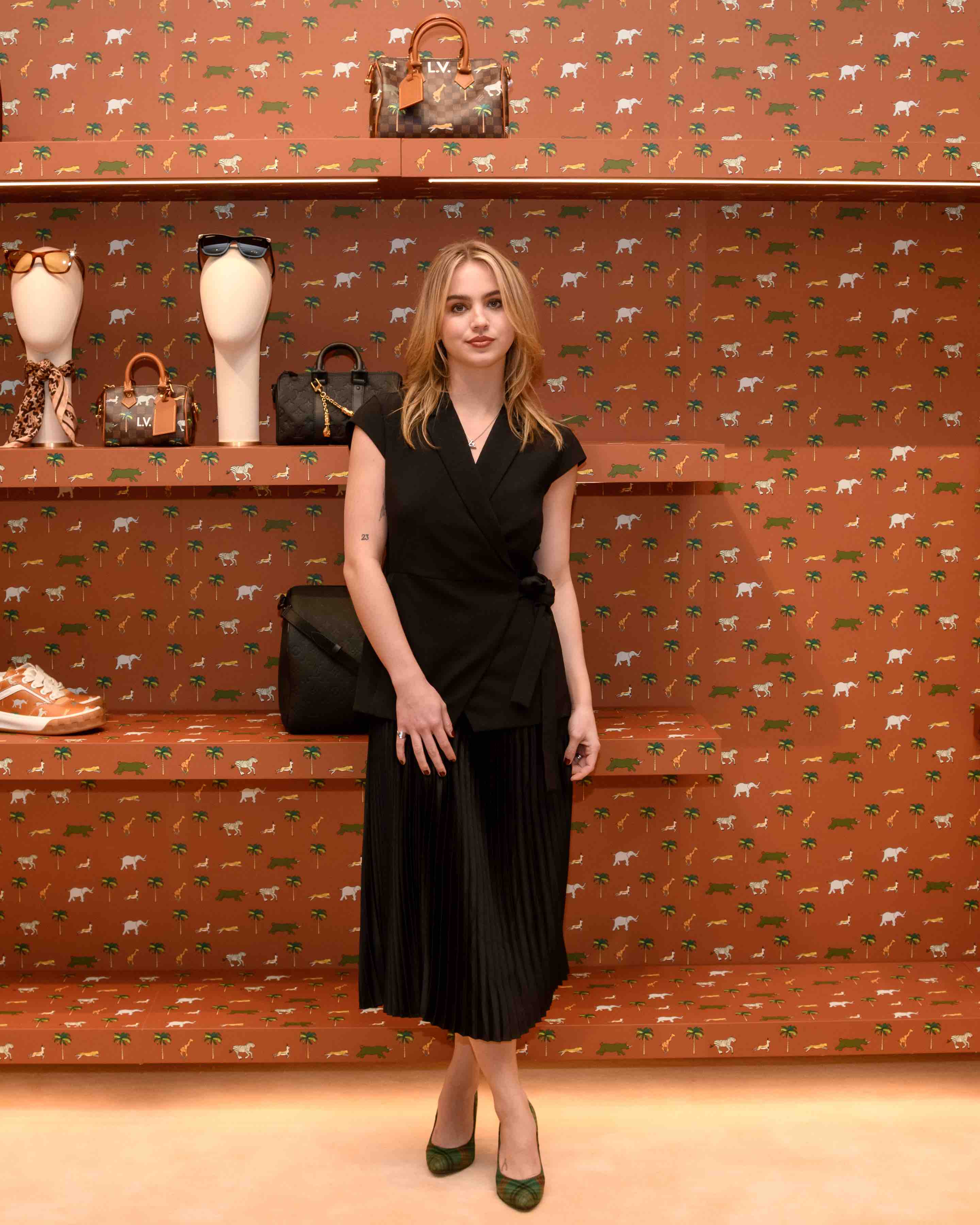
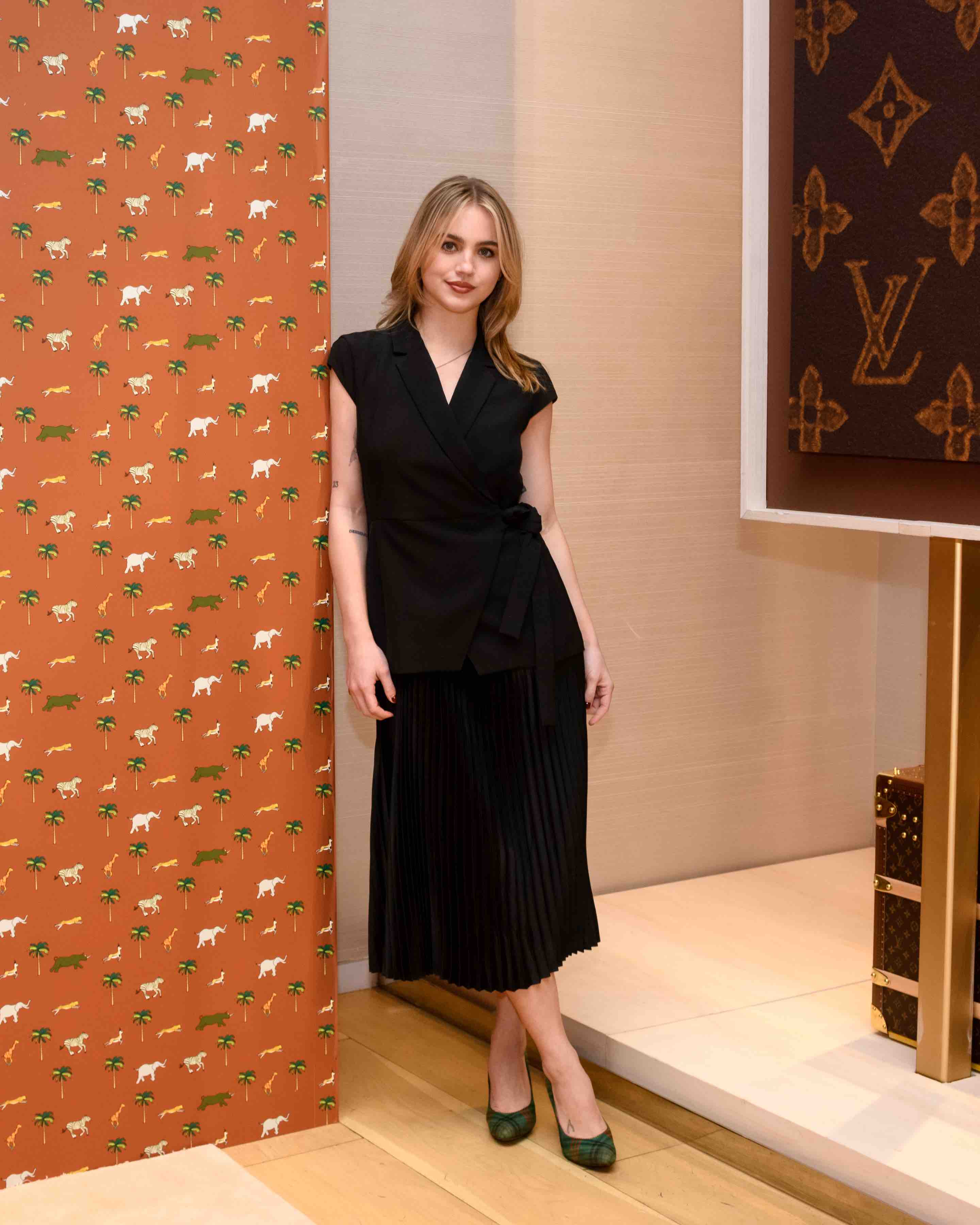
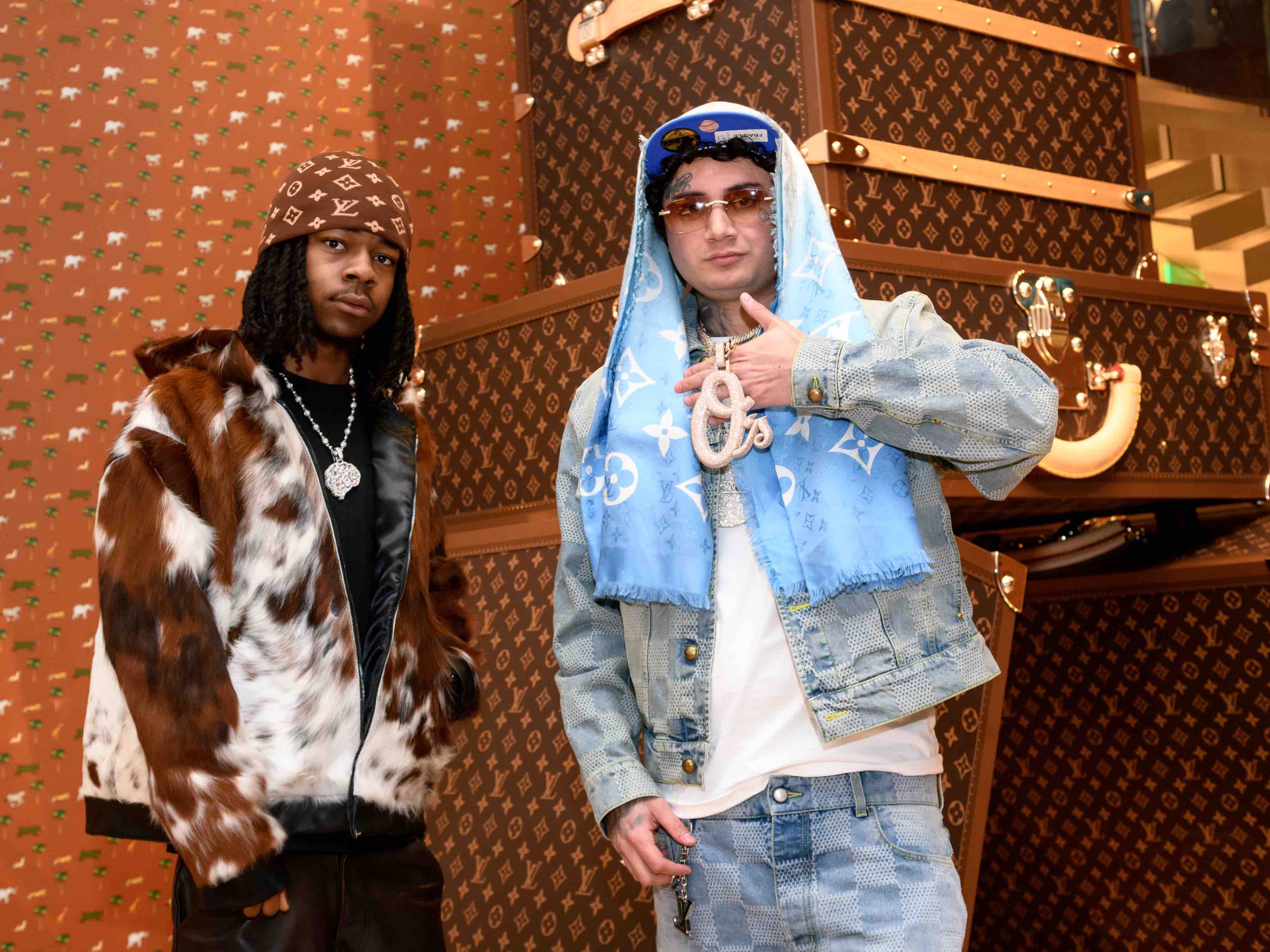
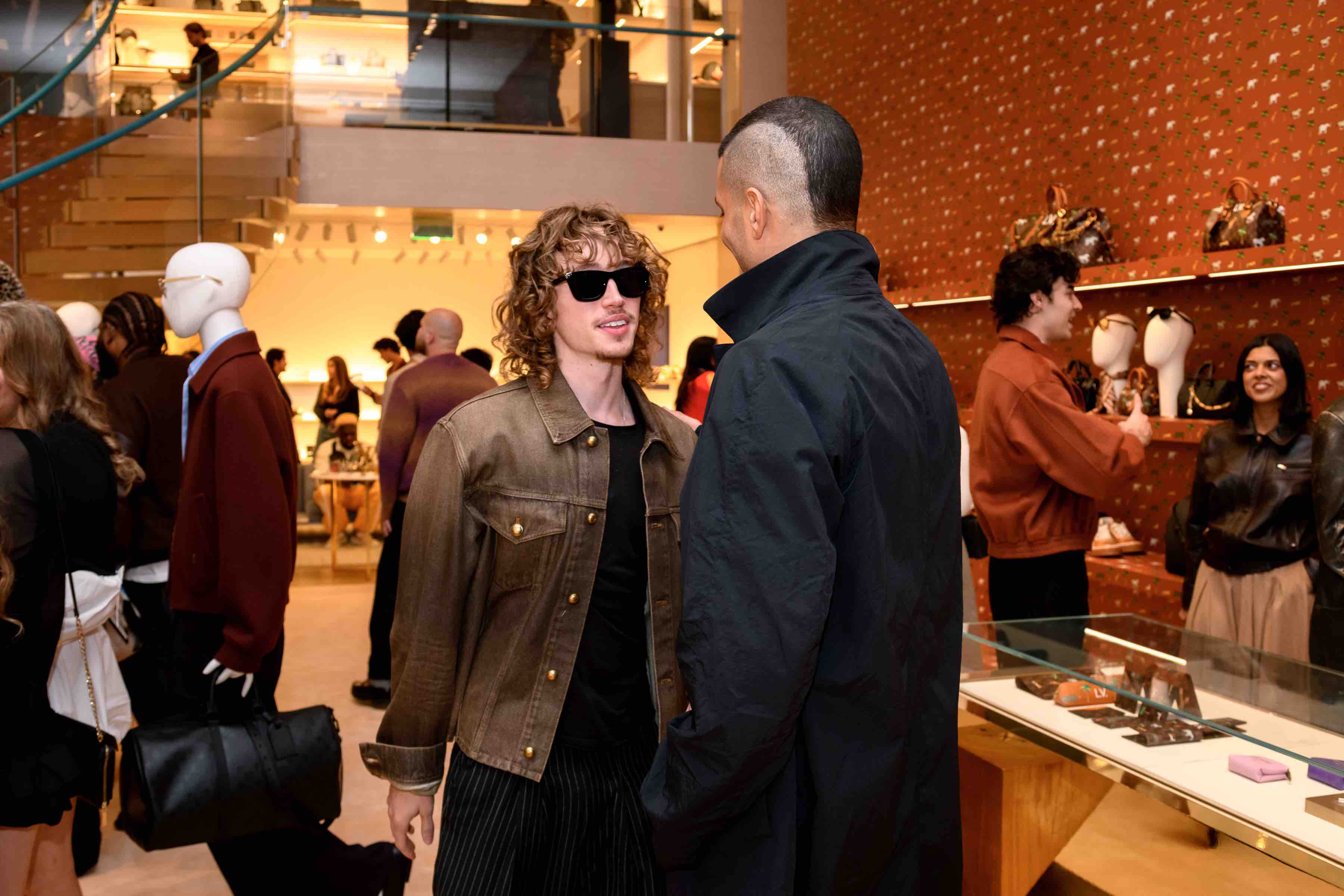
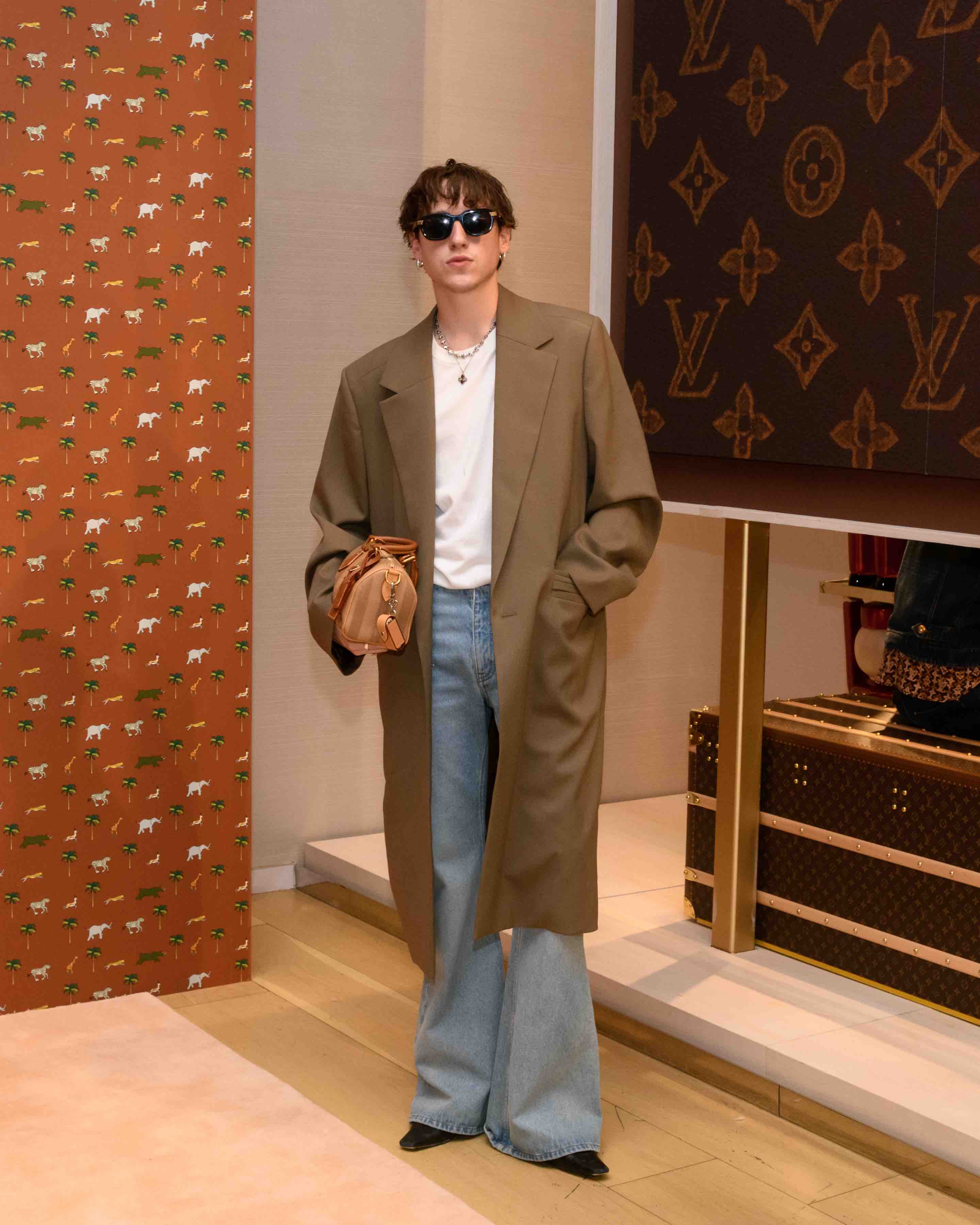
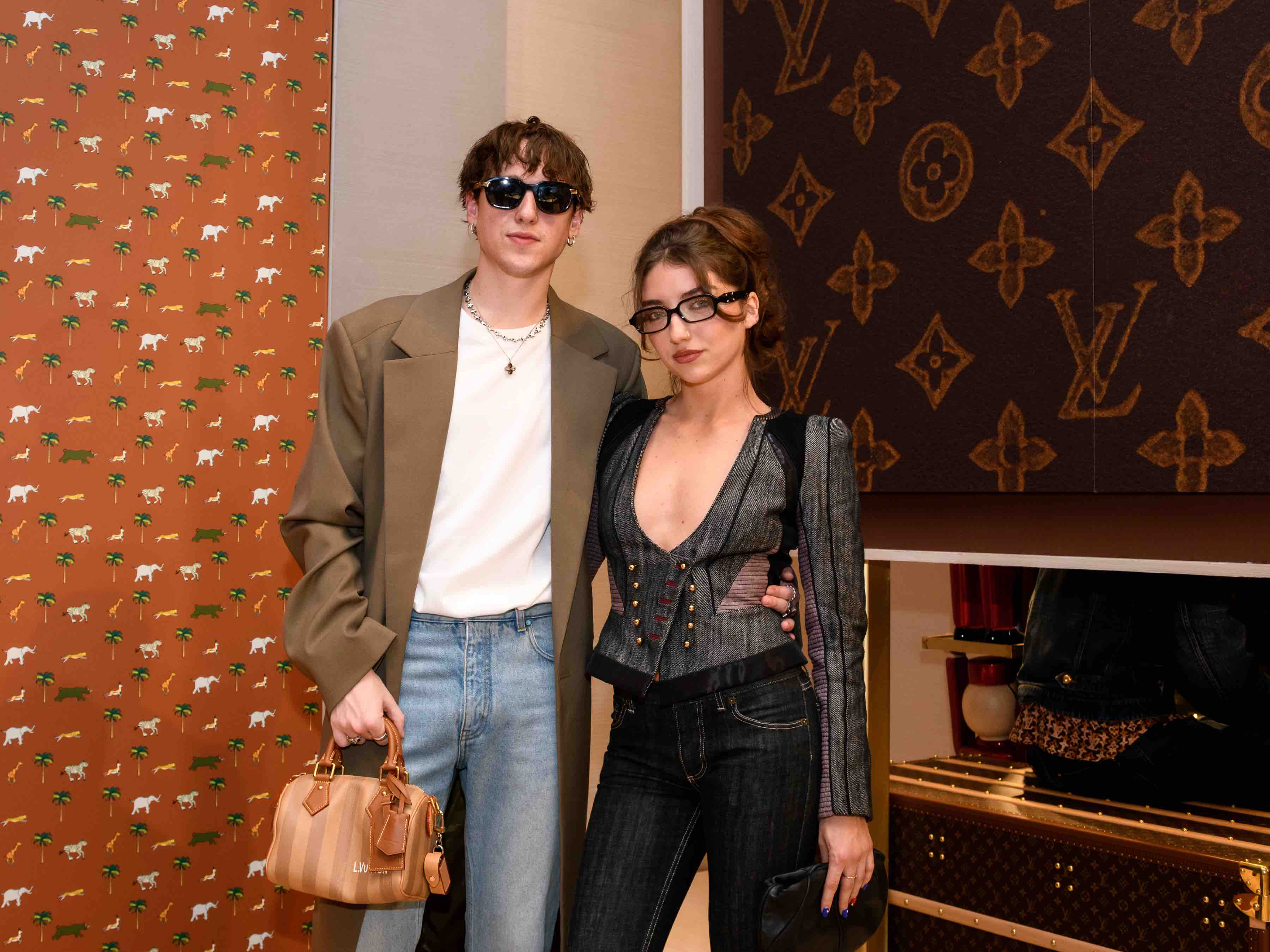
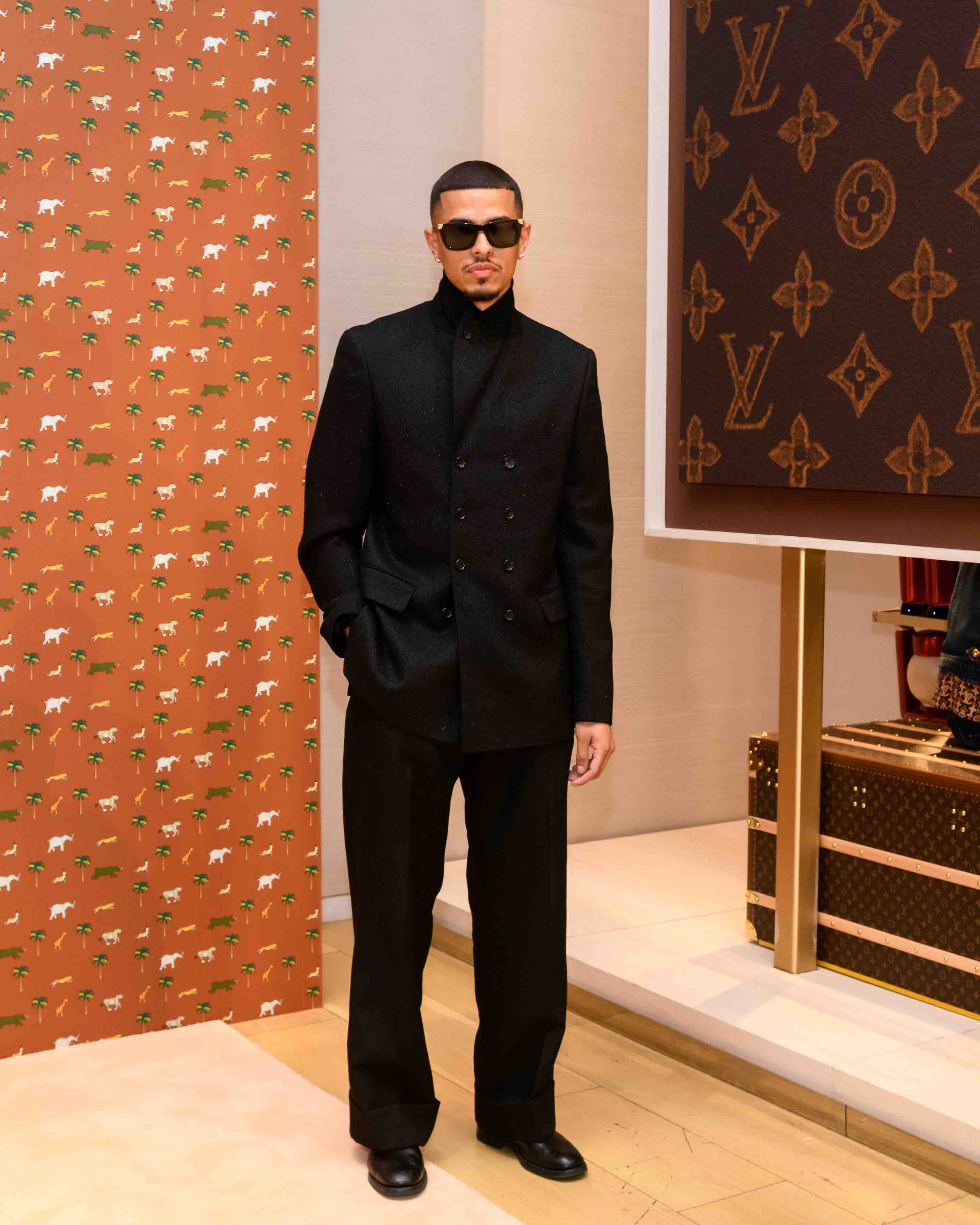
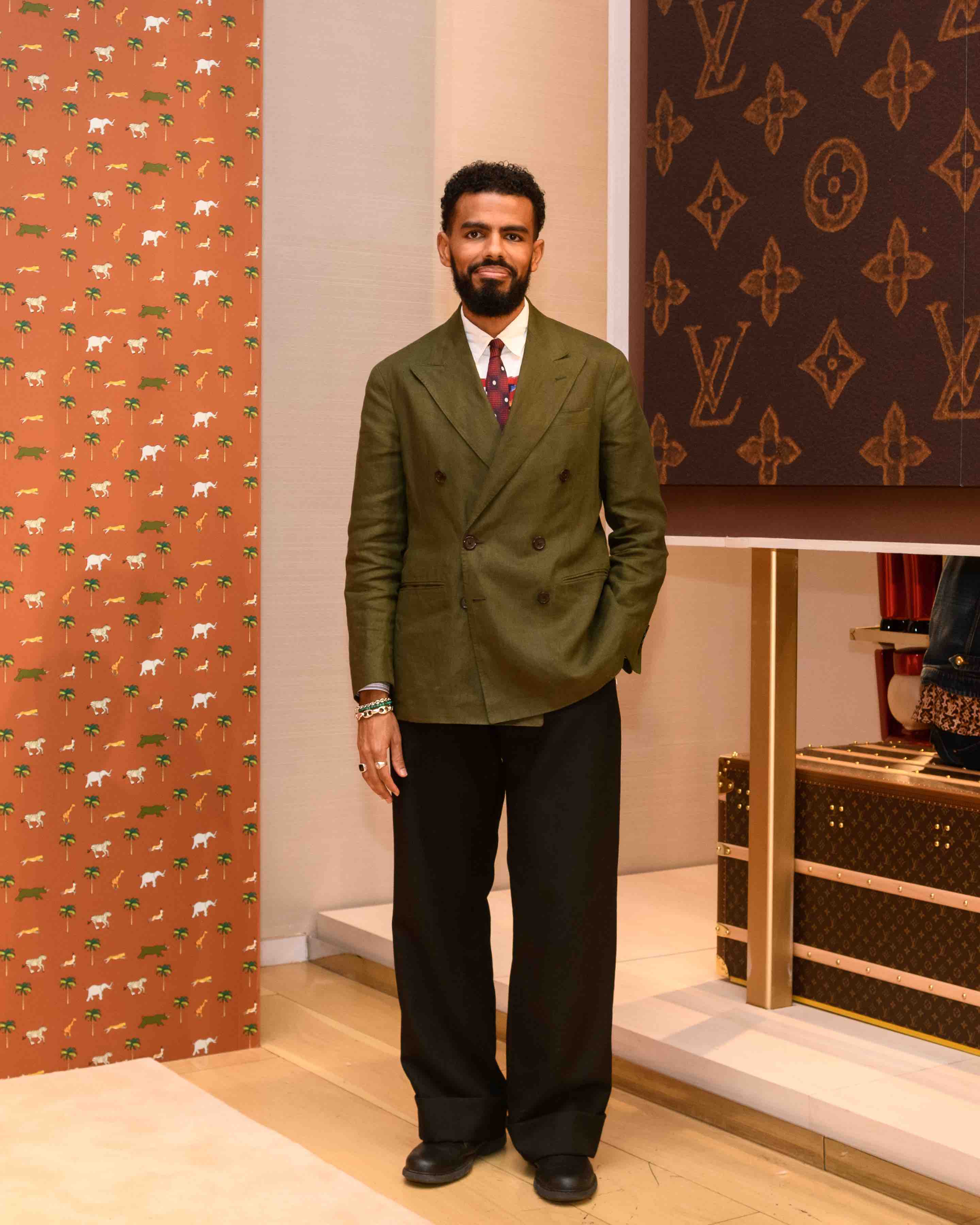
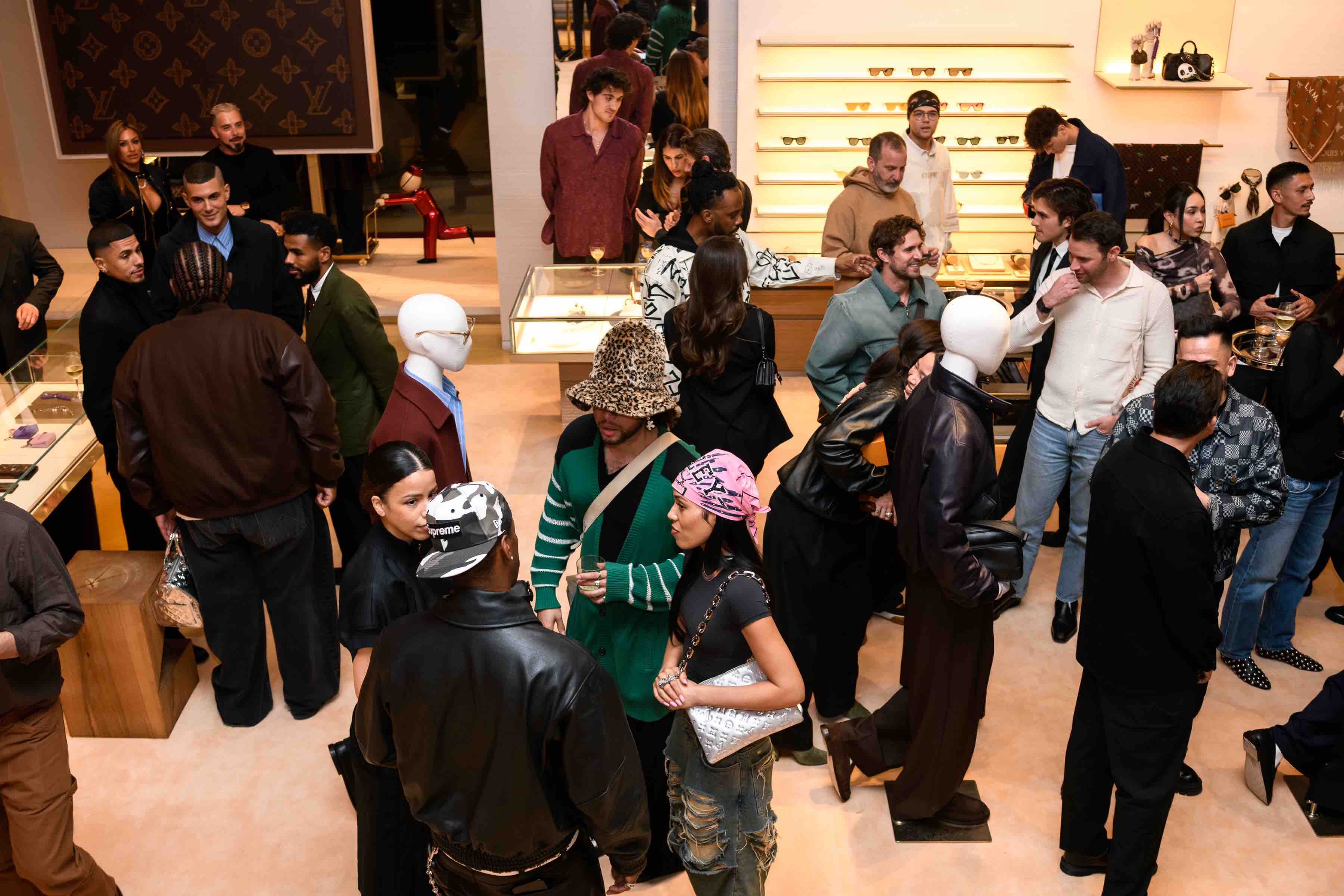
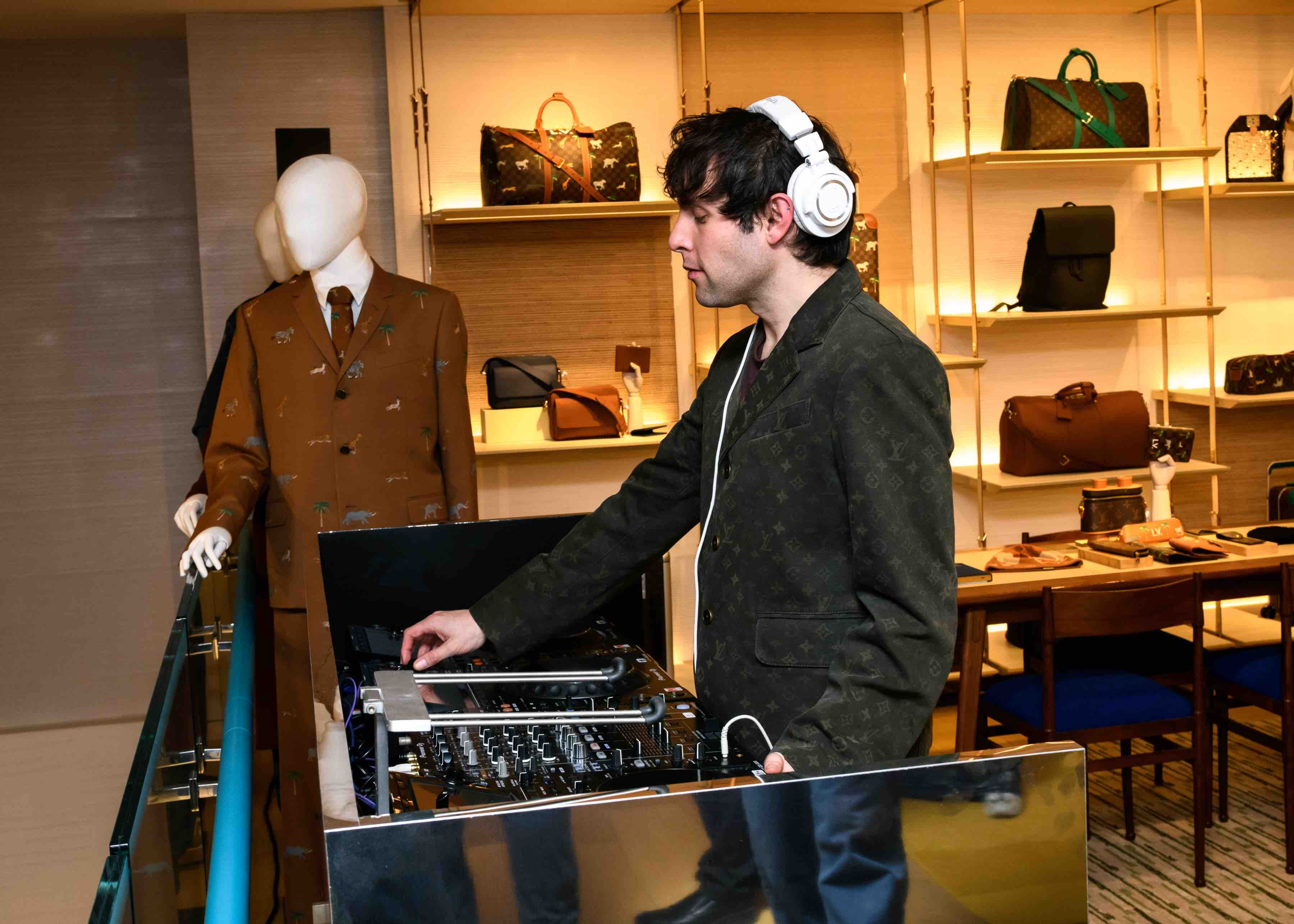
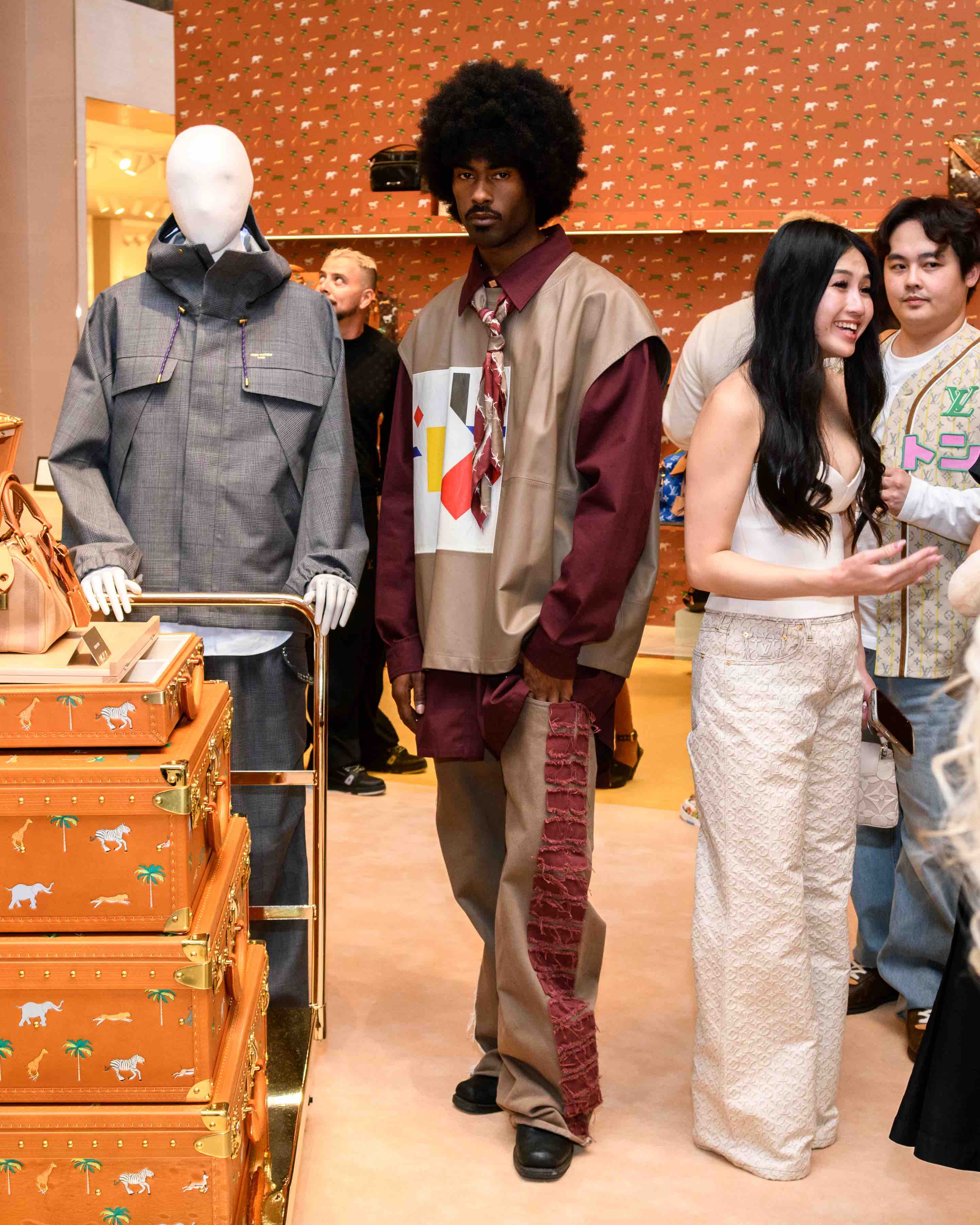
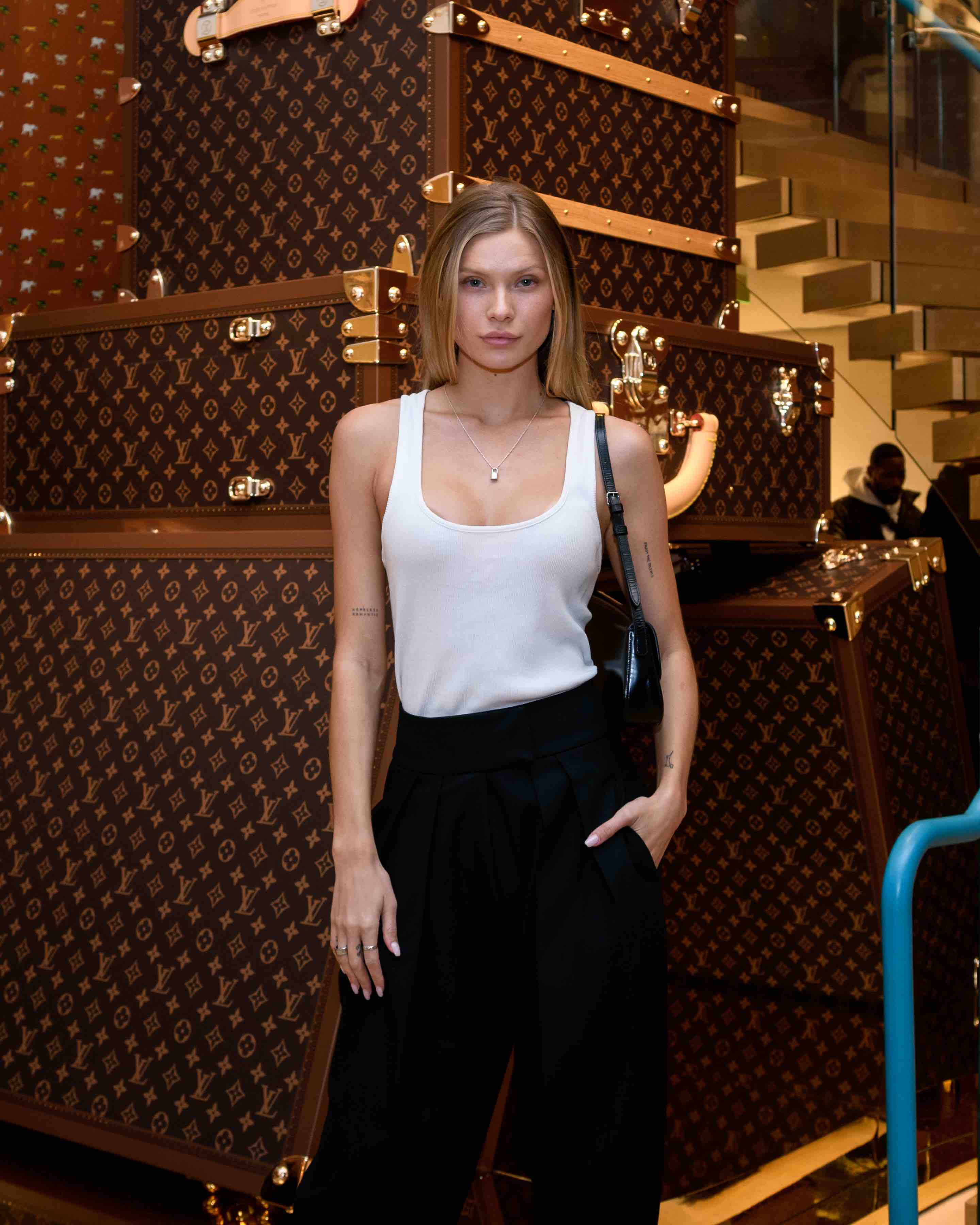
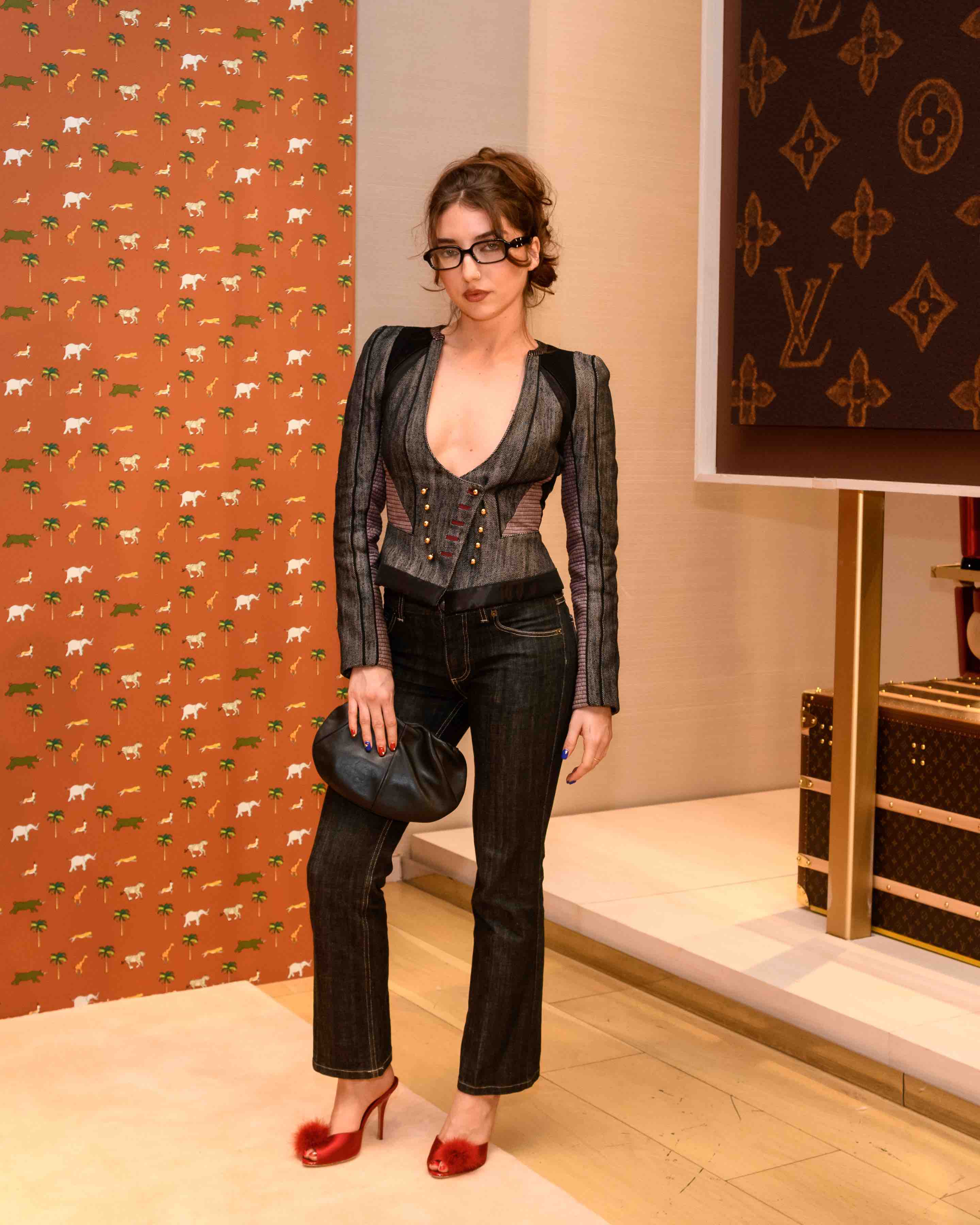
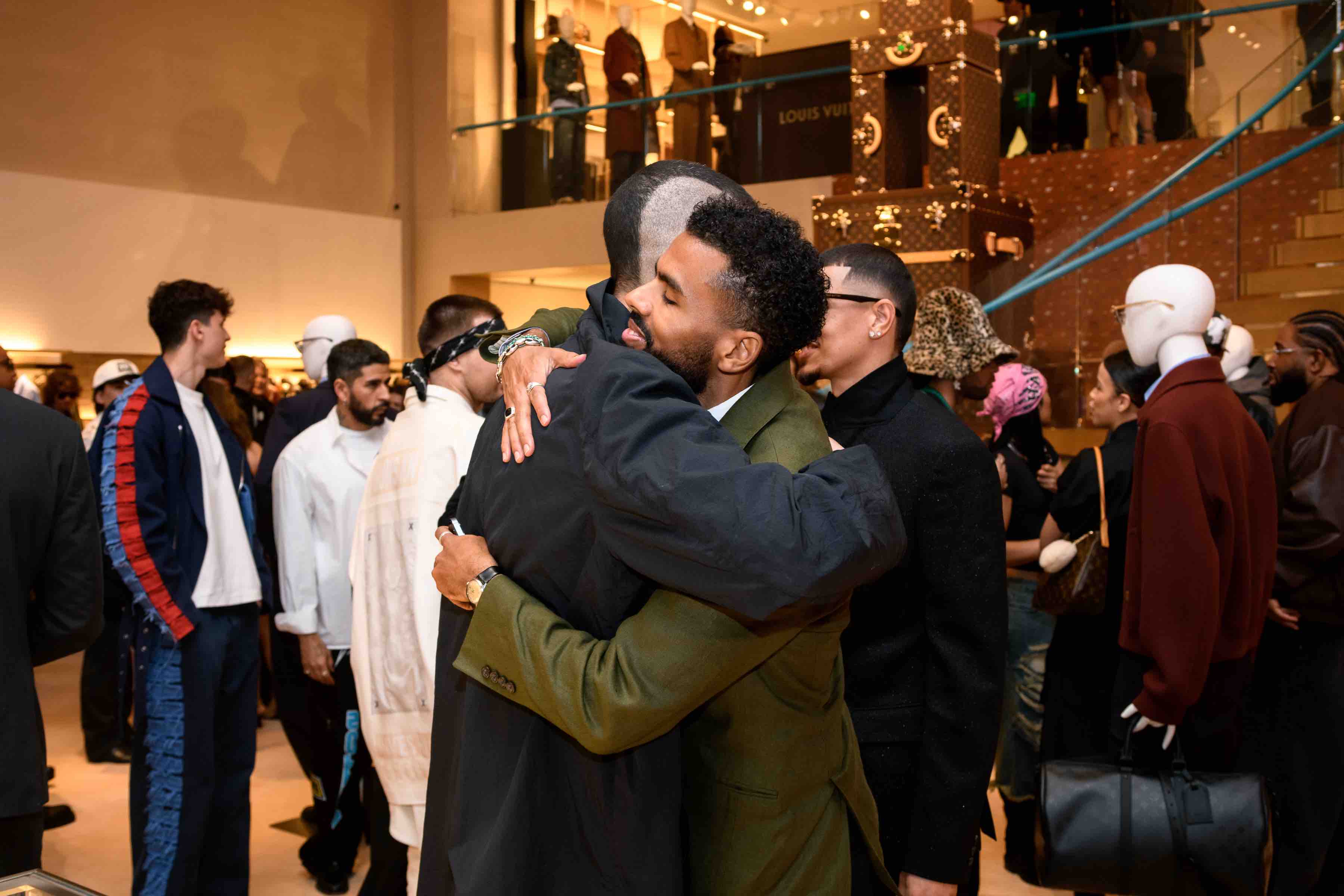
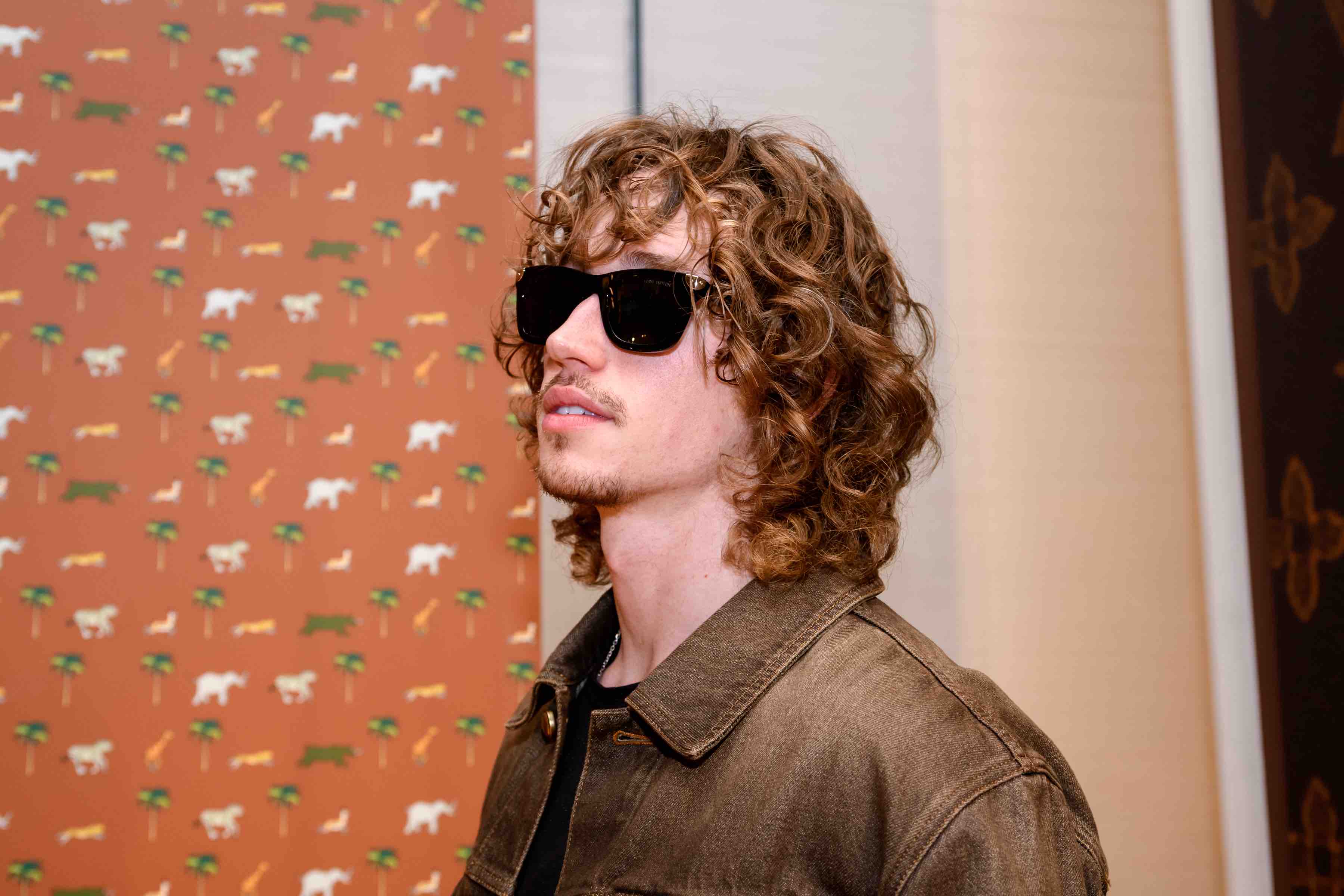
Beverly Hills, in its usual state of lacquered unreality, transfigured into a kind of global crossroads as Louis Vuitton toasted the arrival of its Men’s Spring–Summer 2026 collection inside the Rodeo Drive men’s store. Over cocktails and the low thrum of fashion-world chatter, the house transformed the boutique into a concentric space where silk, sun, and cultural exchange converged.
Pharrell Williams’ latest chapter for Studio Homme draws deeply from modern Indian sartorialism, translating its multiplicity into a global vernacular. The palette is distinctly sun-kissed: purples stand in for black, denim shifts into coffee-toned browns, and weather-worn graphics echo the hand-painted signage of Indian city streets. Cloths breathe. Cuts glide. Color behaves like memory—faded, radiant, alive. This is dandyism recalibrated for heat and movement, conditioned by the push and pull between city and nature, ritual and reality.
The evening’s guests—Fai Khadra, Delfin Finley, Jordan Huxhold, Zack Lugo, Josie Canseco and Ashley Scarrott among them—moved through the space like living extensions of the clothes, each an embodiment of the notion of style as lived experience. Louis Vuitton, a house forever defined by travel, reframed the concept entirely. This was not about distance, but sensation. Not just movement through place, but movement through feeling. Maybe that’s the point. Maybe this is what travel looks like now.
What emerged was a vision of menswear as connective tissue—a worldwide community stitched together by discernment, savoir-faire, and curiosity. In Beverly Hills, thousands of miles from India yet spiritually adjacent, Louis Vuitton made a persuasive case: that fashion’s future lies not in borders, but in the vibrant, sunlit spaces between them.
Stay up-to-date with exclusive events and content.


