F L A U N T


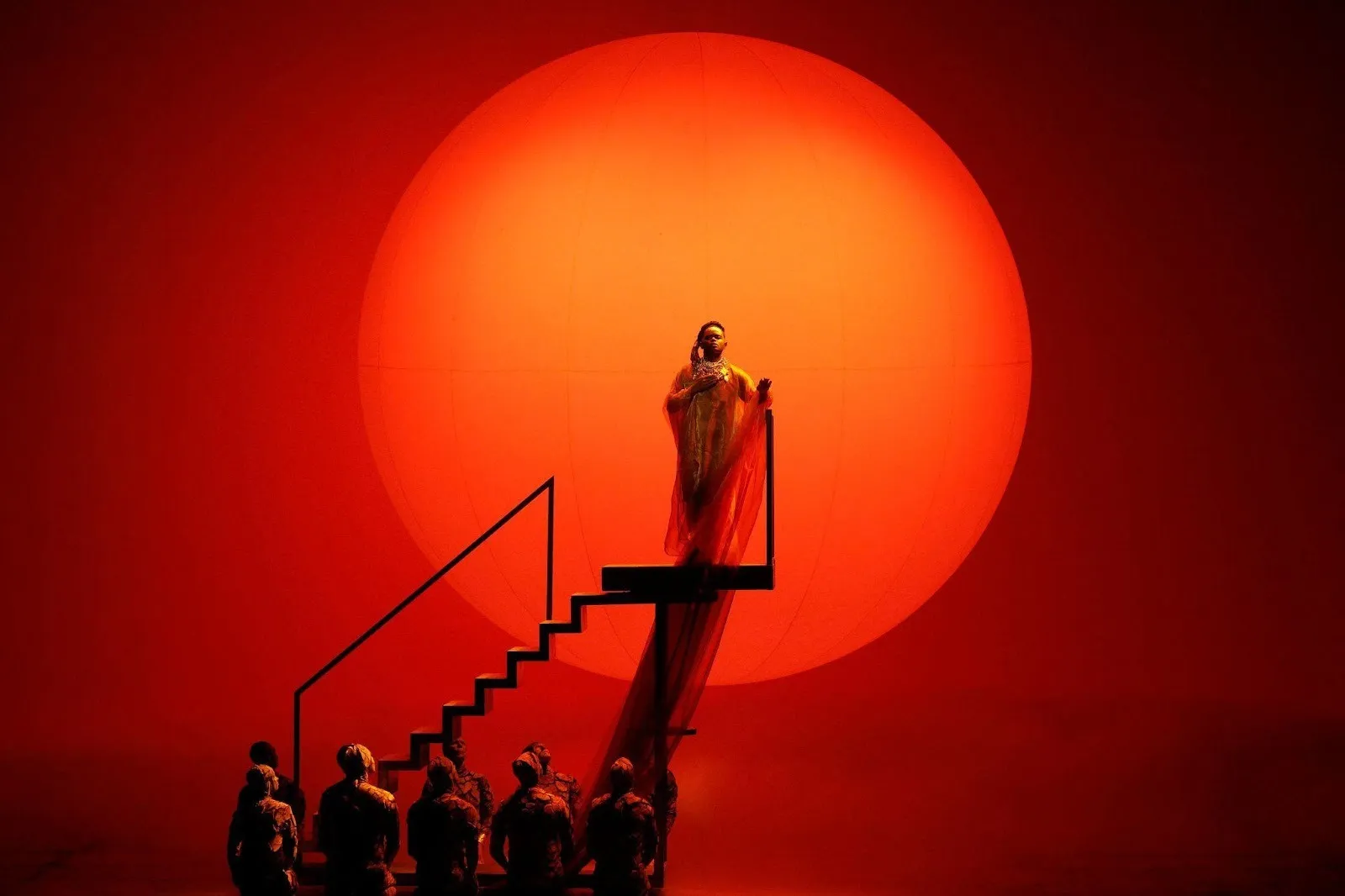
It opens with a steady beat and minimal instrumentation. As we pass through each of the opera’s three acts, this beat grows and diminishes, telling a complex story while the figures on the stage glide elegantly in slow motion. This is the essence of LA Opera’s revival of Philip Glass’ Akhnaten. Composed in 1983 and first performed in 1984, Akhnaten presents a contemporary view of the ancient Egyptian pharaoh Akhnaten’s reign during which he transformed Egypt into a monotheistic society. Though minimalist in execution, Akhnaten tastefully combines strong visual storytelling and gripping instrumentation in its efforts to raise a forgotten figure from the dead.
The opera begins with the death of Amenhotep III, whose heart is weighed against a feather to determine whether he travels into the afterlife. Upon the success of this ceremony, the figure of Amenhotep III himself—performed by Zachary James—becomes our narrator. Through his narration, the audience witnesses the birth of Amenhotep IV—performed by countertenor John Holiday—who will change his name to Akhnaten.
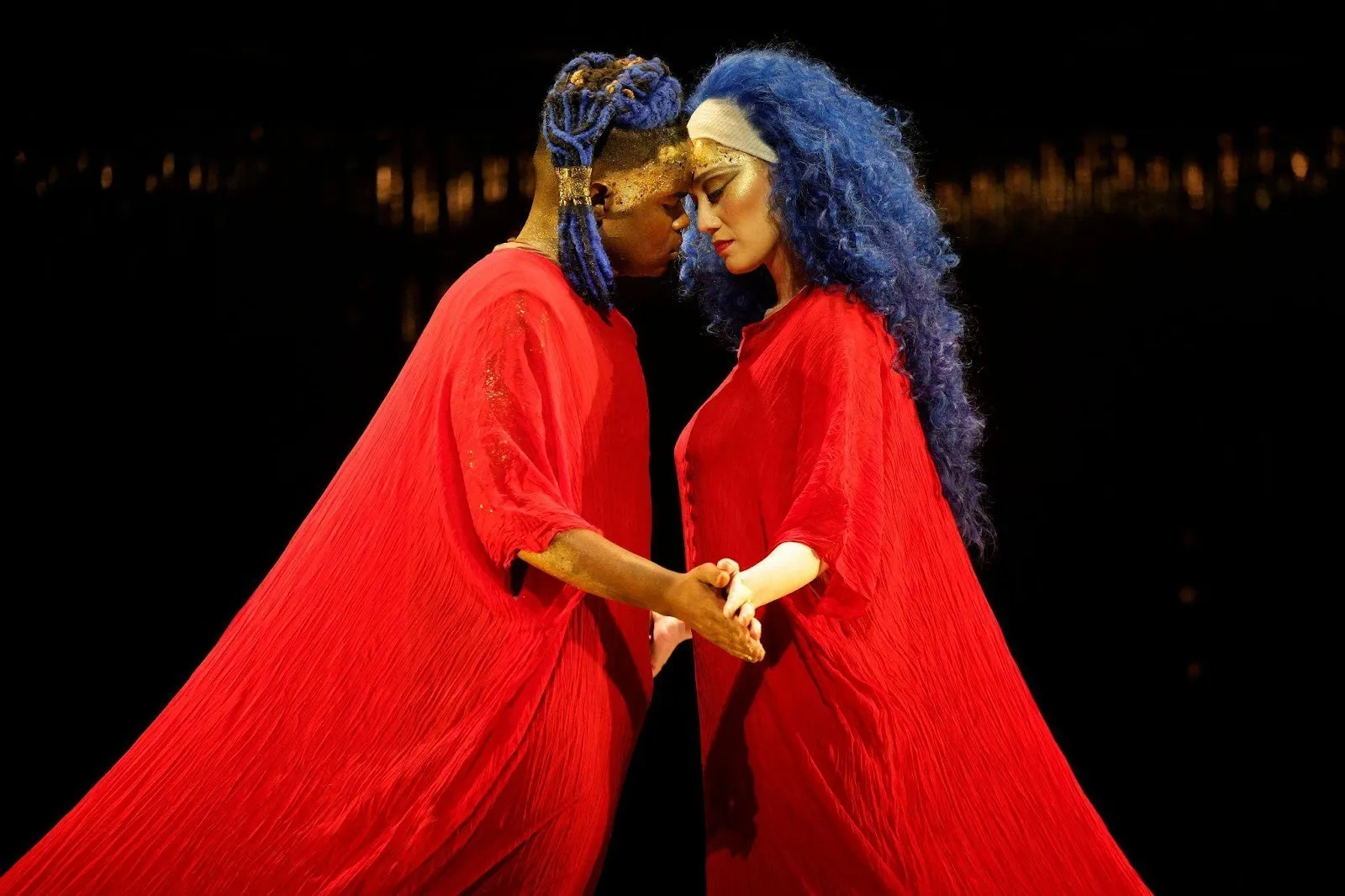
We then see his reign as Pharaoh, during which he is joined by his wife, Nefertiti–performed by mezzo-soprano Sun-Ly Pierce–and his mother, Queen Tye–performed by soprano So Young Park. He casts aside the polytheistic religion of his forefathers and establishes Egypt as a monotheistic society, worshipping only Aten (the Sun) as their god. His reign as pharaoh lasts only seventeen years, after which he is replaced by his son Tutenkamun, who restores the old ways of polytheism. It is a short but transformative chapter in Egypt’s history, as a single man uproots society’s established ideas about religion.
The production achieves a level of immersion that makes you feel as if you are at once in Egypt during the 1300s BCE, as well as a 21st century audience, gazing at paintings on a wall. By having the performers move in slow motion, director Phelim McDermott has presented a case for bringing a cinematic feel to the stage. The quickening and slowing pulse of Glass’ libretto drives the dramatic tension while the performers slowly move through the steps of their lives. The slowness of the movements on stage contrasts with the fast and complex machinations of the music, which in turn fills in the days/weeks/months passing by within the lives of these ancient figures. Although Akhnaten’s reign is short and his changes are reversed, Glass treats this story with intentionality, every step becoming a lifetime before us.
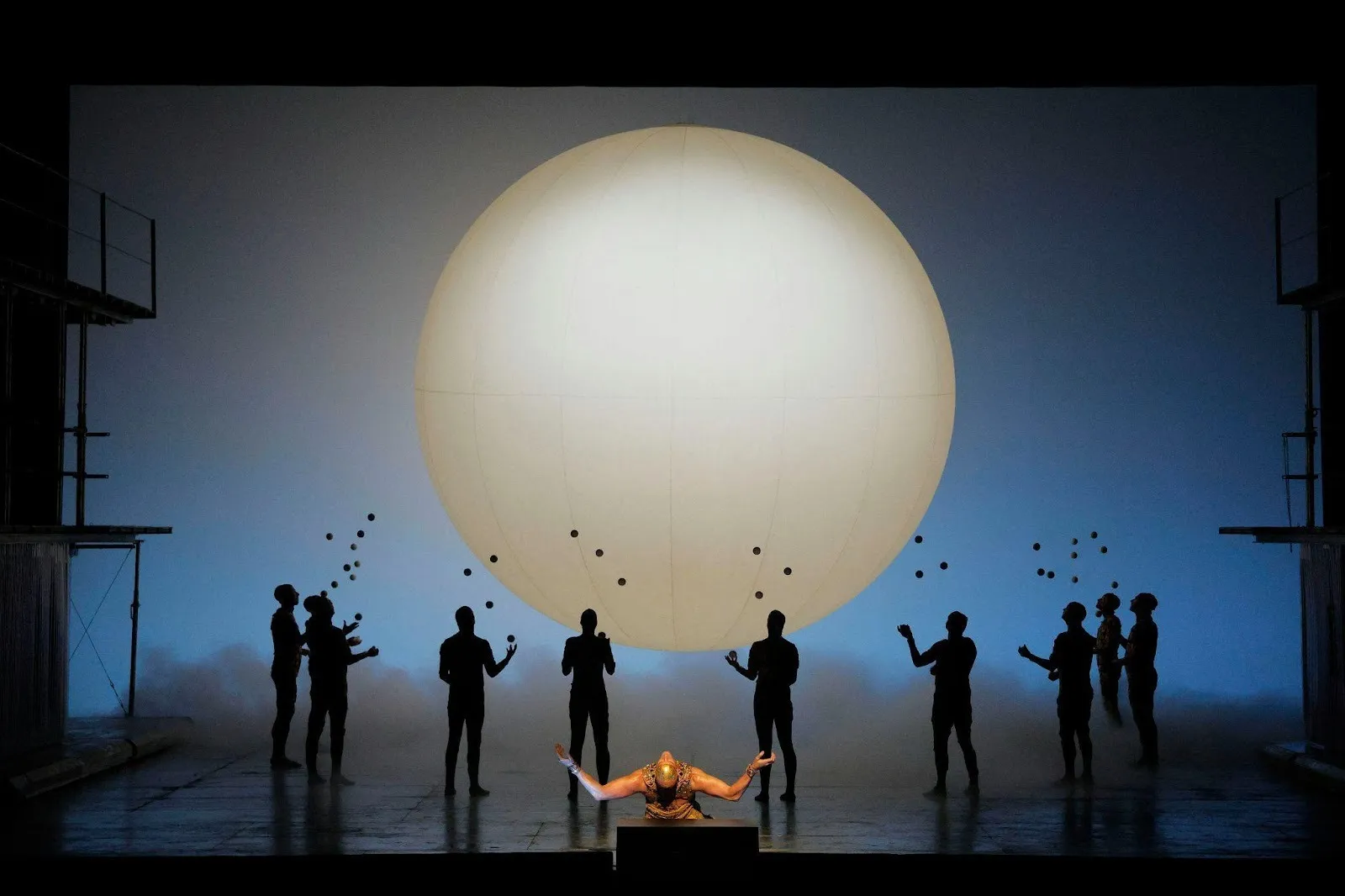
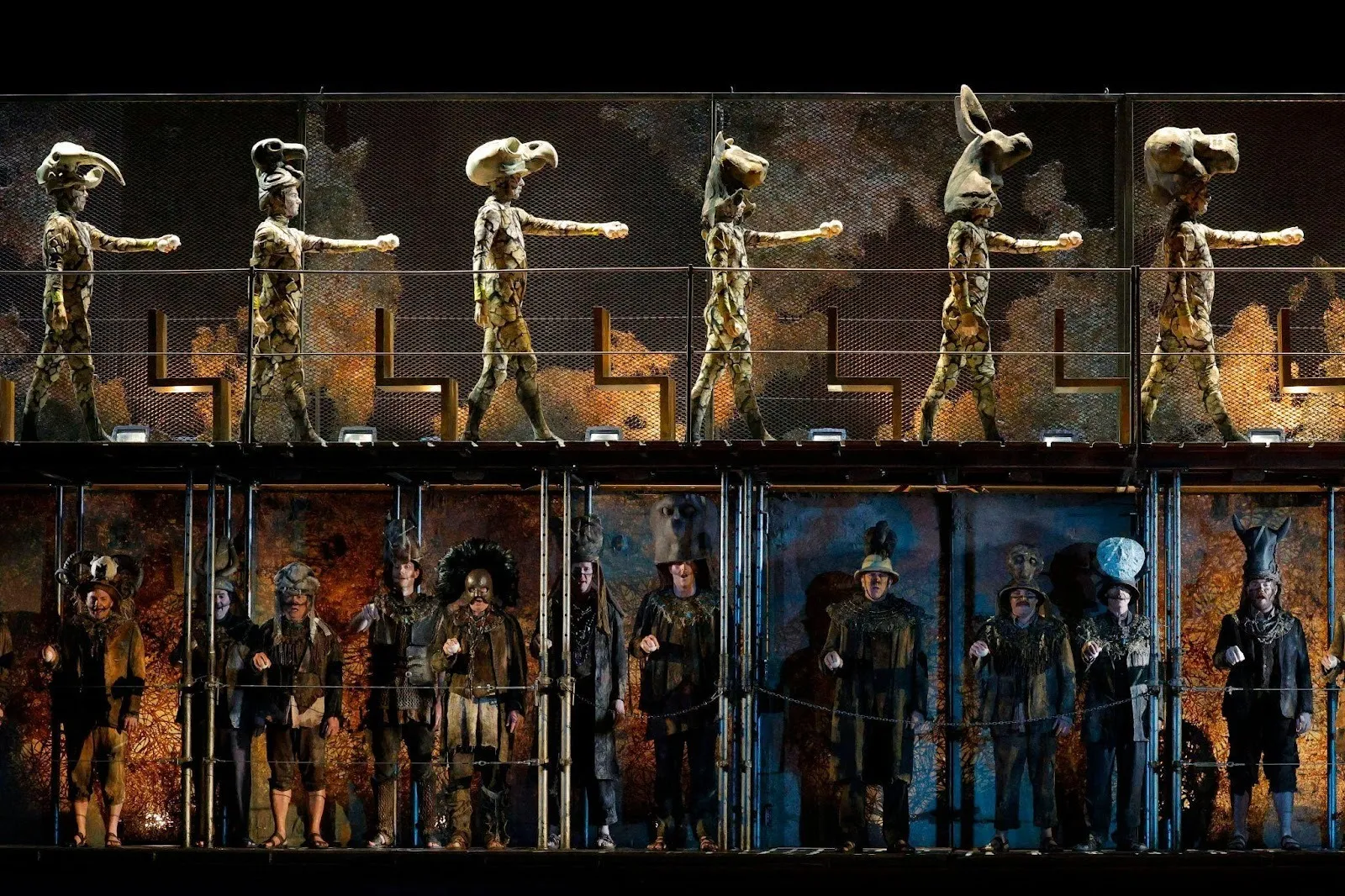
Another important element within Akhnaten’s storytelling is the scenic and costume designs. Scenic designer Tom Pye and costume designer Kevin Pollard deliver a masterclass in visual storytelling. The story flows through a series of transitions out of polytheism, towards monotheism, then back again. In the beginning we see a stage setup consisting of three tiers. At the very top are the Egyptian gods, at the center are the priests, and at the bottom are men. It harkens back to similar paintings found in Egypt, with multiple tiers having dynamic scenes play out upon them. With a fast tempo and choral arrangement, juggling gods, and opulent costumes, extravagance is the defining theme for the old world of polytheism on this stage.
Once Akhnaten establishes his new religion, the performance draws back. Glass’ much simpler score and McDermott’s minimal direction on stage parallel the shift to monotheism from polytheism. A big sun, the Aten, engulfs the stage with minimal other ornamentation. Akhnaten and Nefertiti in turn wear simpler clothing. These choices help audiences intuit the enormity of Akhnaten’s decision, the complete upending of previously established ways and onto brand new horizons of spirituality. From an audience’s perspective, the experience is like that of the sublime, with a sense of awe that follows. Glass achieves this through an almost impressionistic style of biography, emphasizing feeling as the primary source that guides the story.
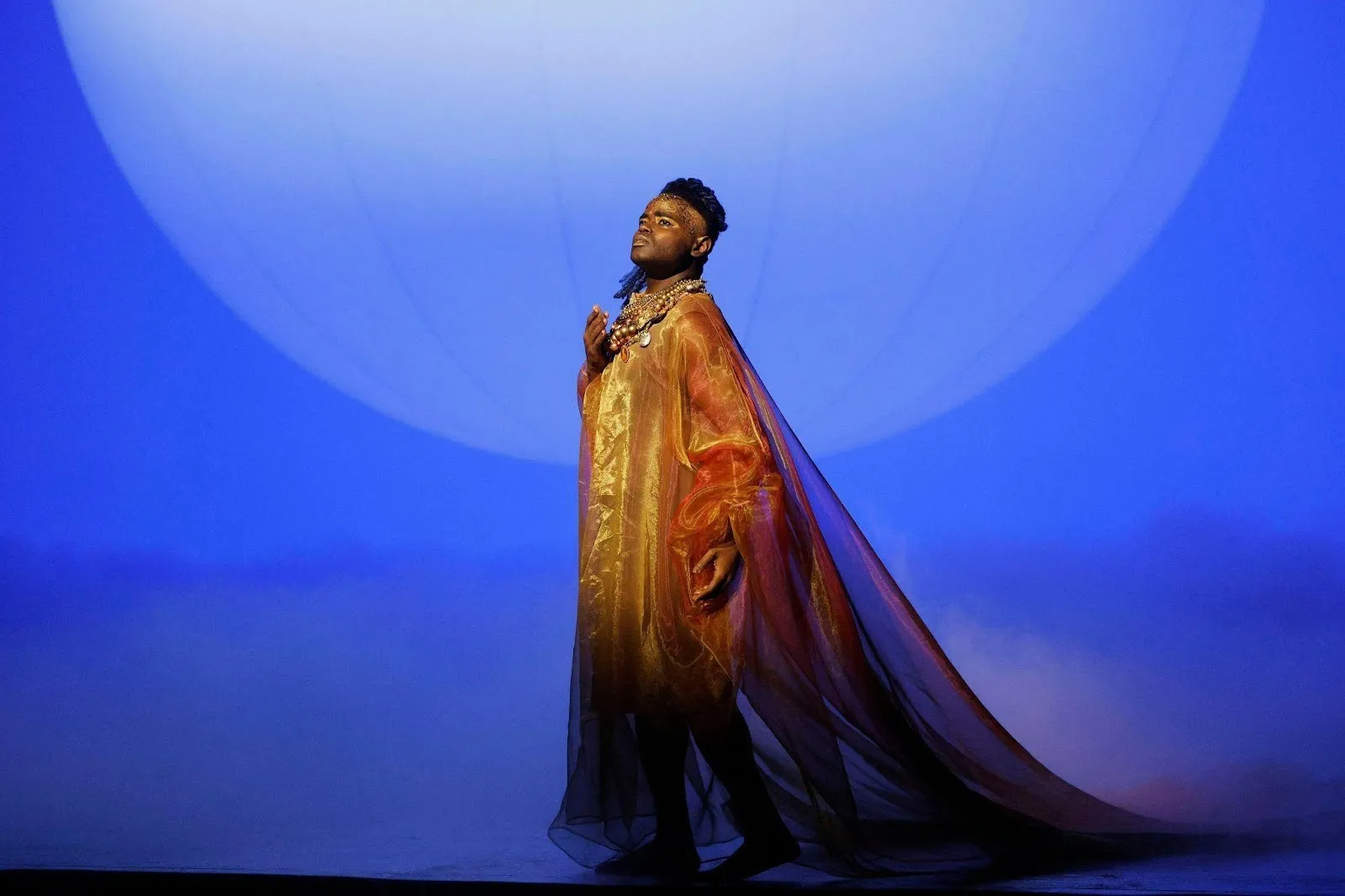
The steady beat of Akhnaten’s life ebbs and flows until he falls to oblivion, his religious revolution short-lived and his city Akhetaten destroyed by his successor. Despite this, Glass decides not to end the story there but instead to breathe a new life into it in the 21st century AD. Having a broadly anticipated revival of a minimalist opera about an ancient Egyptian pharaoh in the year 2026 is a testament to the power of art. As history remembers only that which has been recorded, so can art breathe a new life into that which has been tossed into the annals of oblivion. Minimal but intentional, Philip Glass’ Akhnaten is singular in execution and a must-see for seasoned opera fans and opera newcomers alike.
The remaining dates to see Akhnaten are:
Saturday, March 14, 2026, at 7:30pm, Thursday, March 19, 2026, at 7:30pm, and Sunday, March 22, 2026, at 2pm.
Tickets are available at laopera.org/performances/2026/akhnaten.
Stay up-to-date with exclusive events and content.


