F L A U N T


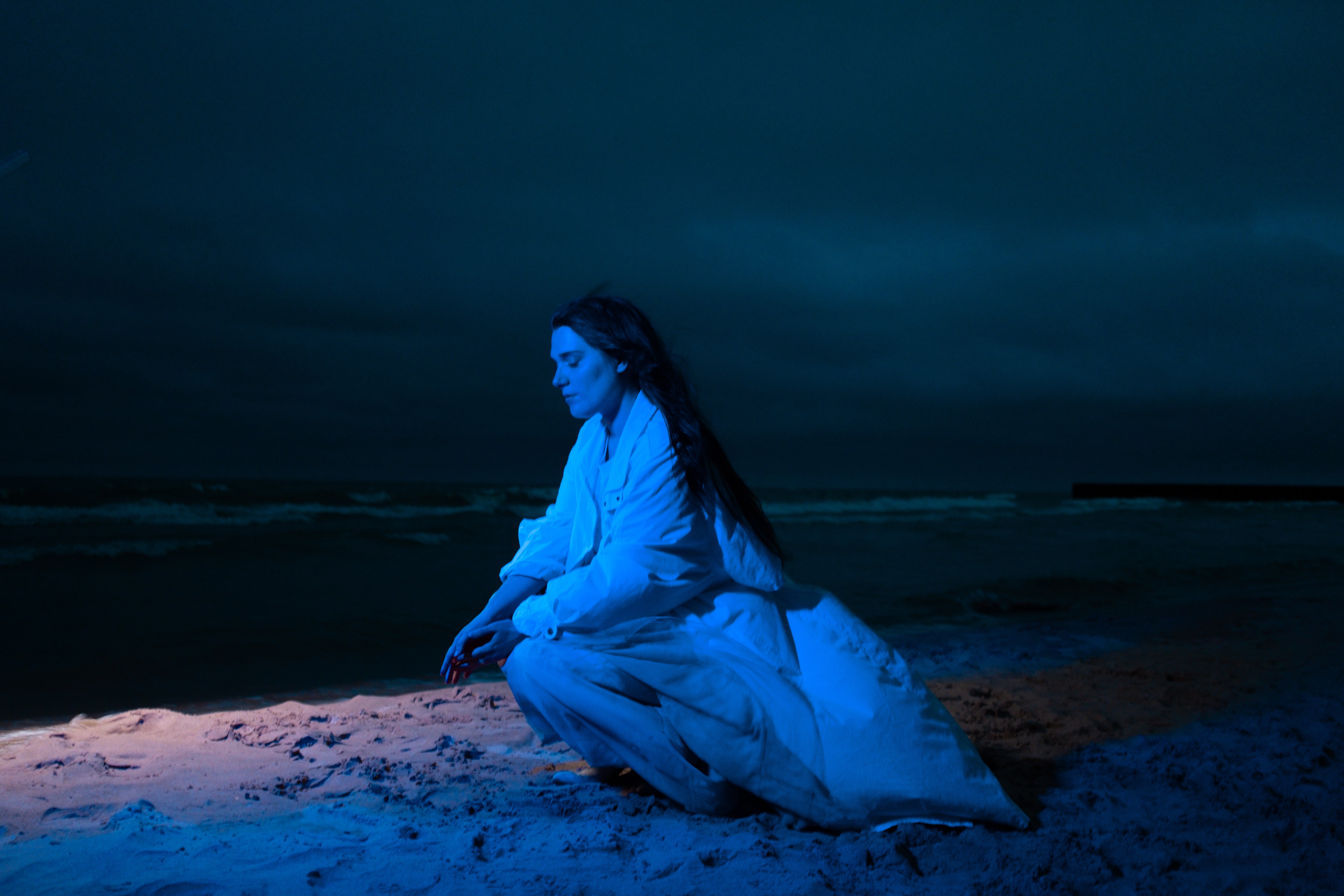
Our voice will never not be the problem. Specifically, it is its insistence on failing us at the exact moment we need it most, time and time again. The voice is not engineered for loyalty, and when that voice shreds, you're left with everything you meant to say calcifying somewhere, marooning behind your teeth. What do you do when silence is no longer a perpetual mental agony but a physical, medical inhibition? Perhaps you learn to listen slant. Perhaps you discover that there is an unbeknownst grammar to silence and that a synth chord can do the work of a boastful declaration. Perhaps you emerge from the quiet with a keener sense of what actually warranted breath in the first place.
Gia Margaret’s last decade has been defined by absence. A vocal injury coerced the Chicago-based producer and vocalist toward the world of instrumental work, where she built intricate ambient landscapes from piano, texture, and a myriad of deliberations. Without lyrics, Margaret grew accustomed to assigning meaning elsewhere in a song’s anatomy: in the overstay of a fermata or in the decrescendo between melodies. Silence became generative in Margaret’s ambient over the last eight years, but it also complicated her vocal return. What does it mean to sing again after learning to communicate without language? Singing answers with deliberation—it means to be able to speak with a voice that had once been stripped away, with the newfound awareness that it can be stripped away a million times over.
Voice restored and vocabulary expansive, Margaret returns with Singing—her first vocal album since 2018's There's Always Glimmer, out April 24th via Jagjaguwar. The title is almost aggressively literal, reading disarmingly banal until you consider the years she spent unable to do so. She's singing because she can again, because silence clarified what needed saying and lent her the discipline to say it as big as she wants. The album is abuzz with the jeweler's sensitivity Margaret honed in her instrumental years: piano lines that settle like breath on cold glass; sampled voices flickering at the periphery of each song; clouds of strings, both real and synthesized, gathering and dispersing. In "Good Friend," Gregorian chant and turntable scratches miraculously cohabitate without bloodshed—the product of sessions with Frou Frou's Guy Sigsworth, who urged Margaret to voice every idea, however seemingly ridiculous. Sean Carey, Kurt Vile, Amy Millan, David Bazan, Deb Talan appear across the album, yet this project remains unmistakably in the cultivated authority of Margaret.
Throughout our conversation, Margaret keeps returning to a phrase: acting out of love rather than anger. It is her grand takeaway from vocal rest, when speech was rationed to moments of genuine necessity. Sit with a feeling long enough, she discovered, and you can finally meet it honestly. Singing is the coda of someone doing exactly that—metabolizing years of insecurity and internal pressure until something spills. By the album's gauzy closer, "E-Motion," Margaret describes her throat chakra unlocking, which reads like wellness-speak until you hear the track: six minutes of accumulated wanting finally granted permission to be louder and wordier than ever.
Gia Margaret speaks to me from her room in Chicago. Her laptop camera is broken, she tells me, so all I have to go by is her voice—which feels apt, somehow, for an artist who spent years learning what that instrument could and couldn't do. We muse on collaboration and control, about the strangeness of returning to yourself after you've changed, about the insurgency of laughter during the worst time of your life. In her dulcet presence and thoughtfulness, Margaret shares her first-hand account: the world doesn’t end when we finally say what we’ve been dying to say—it receives us wholeheartedly.
So this is the first vocal album you’ve put out in eight years… how are you feeling? You’ve obviously put out vocal songs in that time, but what is your range of emotion looking like right now?
I feel excited about this one in a way I haven’t felt excited about releasing music maybe ever. It’s strange—I usually feel a bit embarrassed before I release work. When you sit with anything that you work on for too long, it starts to warp into something else. With music, it stops sounding like music. It’s hard for me to judge whether I think it’s good or not. I think I have to always trust that while I’m working on something, I obviously wouldn’t keep working on it if I didn’t think it was okay at that moment. But for this album, I like the songs. I feel like they are a lot more meaningful. I mean, not that it wasn’t meaningful before, but I worked through way more than I anticipated while making this album. I feel like I have butterflies. It usually feels like social suicide, but this time around feels like celebration.
Listening to Singing—everything you had to work through absolutely comes across. Not to impose any spiritual concept, but you mentioned that you felt your throat chakra open with this a little bit, and I honestly felt that shine through. What was that feeling like for you?
It felt really necessary at this time in my life to own my emotions. I think having a vocal injury just added this whole other layer of having to think about the ways in which I physically use my voice. I was going deeper, and thinking, what are the things that I'm afraid to say? Or, like, what are the things that I'm avoiding, or what are the conversations that I'm avoiding, or what is necessary to say? Because for a time, I had to be on vocal rest, so I could only use my voice in the moments when I really needed to say something. So I don't know if that was a good or bad thing, but when I started to feel more at ease with my throat, I noticed I was more at ease with my body and the way that I communicate, and that felt like it was all working as one machine. I think as human beings, everybody is on that journey—you're raised a certain way, and then you're on your own—at least for me, I feel like I went through an identity crisis in my 20s, figuring myself out. And then my 30s was like this whole other area of really wanting to know who I am and how I feel, and you start to think about how short life is—why not say that thing to the person you love? I didn't want to suppress myself anymore.
We have a voice—we need to use it! Do you find that production can do something that words might fail to?
I think that even a chord can make me feel so in tune with myself. I think that’s why I’ve always gravitated towards music, because through it, I’m able to access what I can’t otherwise.
What does trust look like now with your own voice? What does intention look like after having gone through this period with your voice?
It is so important to trust your own intuition, your feelings, and to sit with something before you react. That was a huge takeaway from not being able to speak—sitting with a feeling so that when you are ready to say something, you’re able to act out of love rather than anger.
In terms of the album itself, there were so many peculiar elements that I really enjoyed—Gregorian chanting, record scratching, all encapsulated in this ambient drift. What tells you when something belongs in an album, or in a song?
I think sometimes I hear things in my head that feel ridiculous. In the past, I’ve brushed them aside, but this time around I really just wanted to have fun with the music and exert some bravery. I was working with Guy Sigsworth on Good Friend, and it was such a practice of—okay what’s the worst that could happen? He encouraged me to say every idea I had, and he loved it. It all came together. Like I said earlier, it’s really about intuition. The chanting and scratches were very much a product of nostalgia too. It's such a light and young song, and I truly felt at play while making a song that wasn’t incredibly heavy.
It definitely captures a light moment in the album—do you think it was necessary to have this track as a contrast in the album? How did you approach sequencing?
I brought this song from a very buried place, and I felt as though this album needed—not comedic relief, but I felt as though it would be good to break things up, because the second half is pretty heavy. It felt like a fun surprise before throwing the emotional stuff in. It felt like a little something to laugh at, because life is like that. You can have fun while going through the worst time in your life—I actually think you should.
Absolutely. In the larger scope of Singing, you mentioned Good Friend being older—did you pull other songs from your archives for Singing?
It was definitely a blend of old and new tracks. I had songs in mind while making the album that are on there, and there are also a lot that didn't make it on there. Sometimes, when I get into any process, like of any project, my brain is just activated. I would say it's like 30% old and %70 new. A lot of the songs just came about as I was making the record. They surprised me—I had an idea of what this record would be, and it's not where I landed at all.
Is there a particular song that you're surprised made it onto the album?
I think the one that surprised me the most was E-Motion. I thought I was done with the record when I wrote that song, and I felt like it was the weirdest thing I had ever written. It’s the longest song— the most wordy; it has that loud, grungy, distorted section. It surprised me in a really great way, because it all came together so quickly, and in the past I've worked on some songs for six months up to a year, just chipping and chipping away. This one just felt like the chakra opening moment where I was just saying how I feel. I'm writing this song. It took about two weeks to write and record it.
You mentioned that Singing feels like the end of a cycle, but I also think this marks a new beginning for you, in a sense of rediscovery. What do you feel like you’re ready to do now that maybe you weren’t ready for prior to Singing?
I hope that things feel easier. I hope that I'm able to experience—yeah, I keep using the word, “easy.” I hope that I'm able to experience more ease and freedom with my art. This album was a product of me working through insecurities and a lot of internal pressure. Singing taught me that it doesn't have to be that way. I can show my emotions, and someone will receive it. You know, aside from future experimentation and more self discovery.
I think whatever we do informs our future work and our future selves through discovery. I also wanted to ask, returning to Good Friend, you ended up having a myriad of incredibly versed collaborators who informed the making of Singing. What was it like to collaborate with others—especially on your first vocal album in nearly a decade? I’d imagine it’d be hard to relinquish control.
It was definitely hard, but it helped me reach places that I didn’t know my music could reach. I knew that making an entire album by myself wasn’t the move. I was craving connection. I remember the first session that I did was in Wisconsin with John Kerry. It took five hours to drive there, and I panicked the whole time. When I stepped in the studio, I told him and his engineer, “I'm just like, freaking out,” and I hadn't been in the studio like that ever in my life. I mean, I had recorded with people, but this was a studio studio, so it felt like I was in another universe. I think it was good for me to collaborate—especially with Sean, I had been listening to his music for so long, and there was such a respect for what he did. He elevated those songs in such a great way. Guy Sigsworth is one of my heroes too—how can I not go make music with this person that I’ve been listening to since I was sixteen?
There’s also my friend Doug Saltzman, who worked on all of my albums. He was a grounding force for me—I was able to go into studios, work with people, get new information, new experiences, and then come home and hunker down and still do what I do at home, and have this engineer who I have an amazing rapport with. The language that we have together, it's like we have the same brain, always thinking the same things. It’s what happens when you have a long standing working relationship with somebody. I was so lucky to test all of those waters and return to myself. It did affirm me as a producer as well, even though I had to learn how to let go.
Did it feel like a return to form, in that sense? Maybe something beyond that?
Both, I think it feels like a return to like a really old part of myself, but also I'm using my voice in ways that I wasn't brave enough to before, so it's kind of just a blend of all things. And isn't that existing? Always changing, but there's always parts of us that stays the same?
Stay up-to-date with exclusive events and content.


