F L A U N T


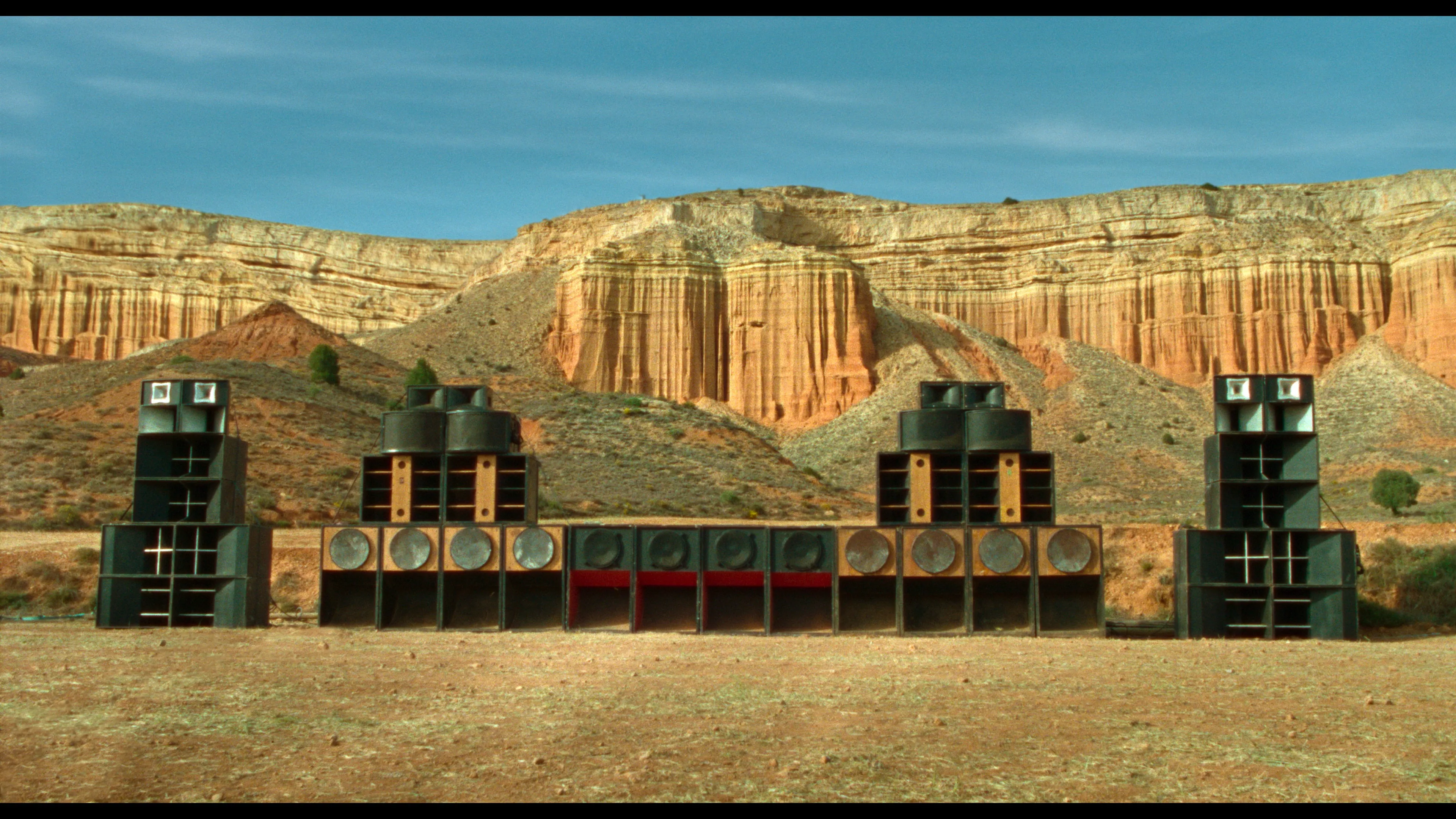
In Islamic scripture, As-Sirāt is the thin bridge that connects this world to Paradise. Righteous souls will cross easily. Others fall into flaming pits of Hell. All of one’s life, all of one’s domestic messes and interpersonal fretting and monetary gains and losses, amounts to the way one’s soul fares across that razor-thin bridge. How much of oneself can be stripped away before one is no longer saved? What can be done to salvage the damned? Galician filmmaker Oliver Luxe’s newest film Sirāt—a psychological, dystopic thriller that will play at Film at Lincoln Center this February—posits that even if everything else collapses, kindness does not have to.
Out via NEON, Sirāt follows protagonist Luis (Sergi López) and his young son as they journey into the glorious and forbidding Moroccan desert in search of his missing daughter, Mar, who was last seen months earlier at an unsanctioned rave. In their pursuit, the two skirt along the margins of seemingly endless, sleepless, degenerate dance parties in the Sahara, in turn getting closer to an encroaching geopolitical conflict.
The film’s central conceit is the question of survival in apocalypse—emotional, spiritual, communal. Why go to one last party at the edge of the world? Because even in the face of hopelessness, people still reach for shared rhythm. Because tenderness, offered unexpectedly, can interrupt inner turmoil and even offer salvation to a scorched, blistered soul.
Winter beckons us to look inward, but inward can become a dead end. When apathy threatens to crystallize every feeling, Sirāt offers a potential cure: gather what remains of yourself, however battered, and make it loud enough to find one another. Perhaps that resolve is not always stoic. It might just look like dancing in the dusk, choosing communion over isolation. When our insides begin to frost, sound becomes shelter, and for a moment—during one last party, maybe—it is enough to keep the fire burning.
Stay up-to-date with exclusive events and content.


