F L A U N T


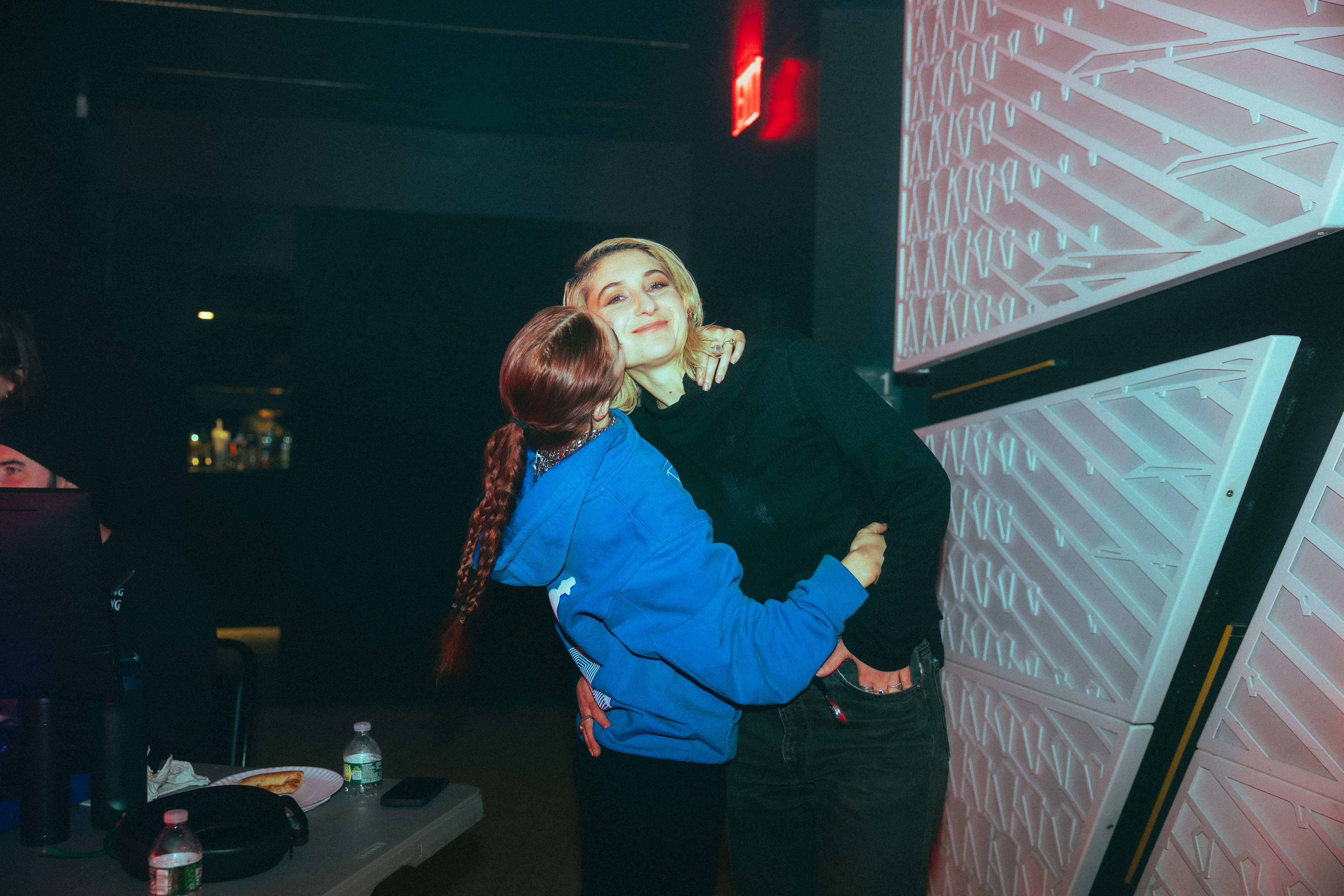
Music moves people — literally. It gets people to dress up and visit dark corners of cities every night of the week. It gets people to travel to deserts, mountains, and forests in search of new experiences. It gets people to run, jump, and climb to new heights. And all the while, all these people are traveling, moving, schlepping, trudging, marching, stepping so that they can dance.
Future Forms, a project founded by electronic artist and producer EREZ and choreographer Tanguay, is a fresh nightlife experience blending contemporary dance with live electronic music composition and nightclub culture. It looks to align the parallel energies of performance and participation and create an intentional, collective energy on the dancefloor.
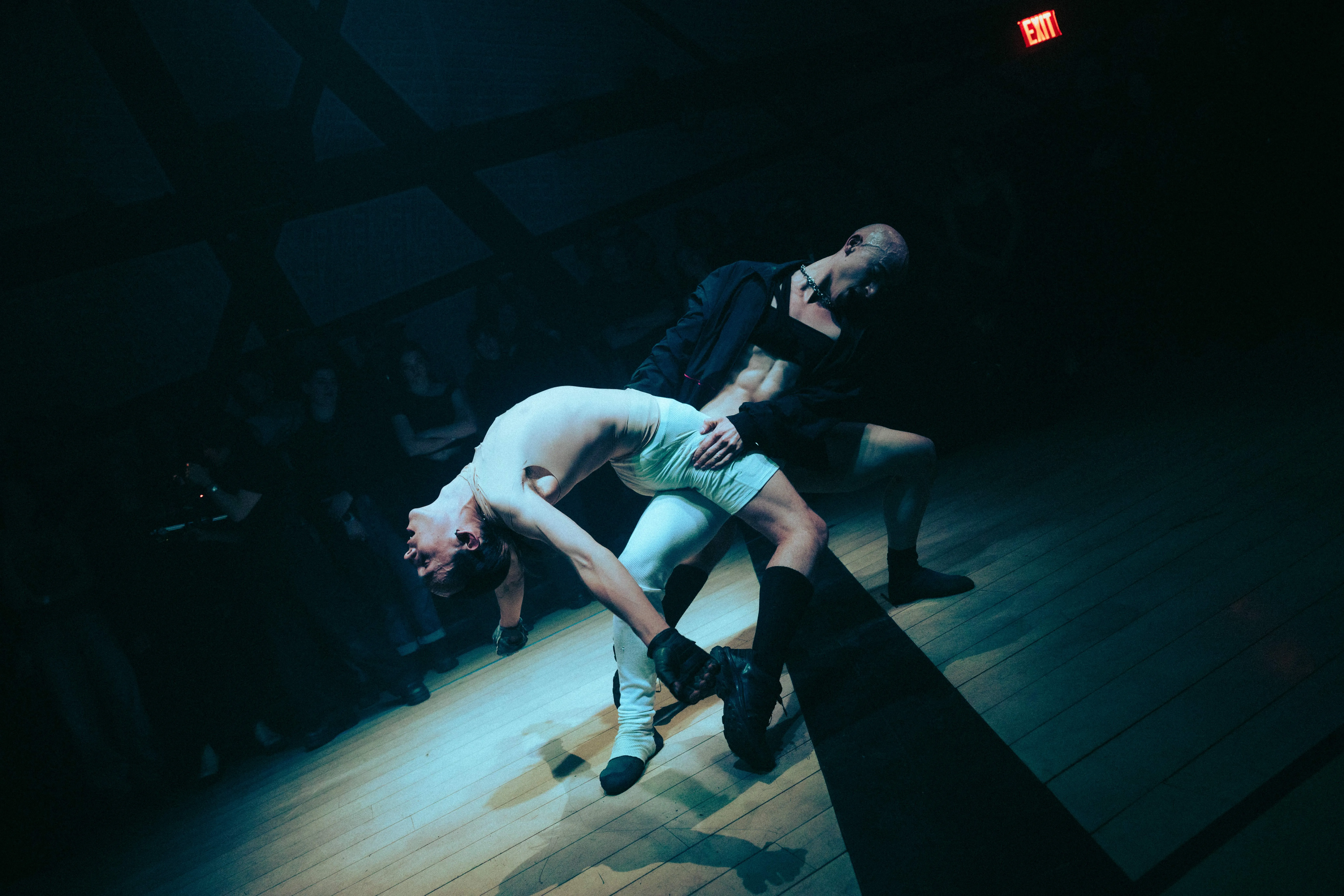
The night opened with BASE, where original electronic music created live by EREZ met choreography created by Tanguay, performed by a cast of exceptional contemporary dancers including Ben Green, Destinee Jimenez, Graham Feeny, Mio Ishikawa, and Ohaz Mazor. As the night progressed, BASE opened into OUTPUT, where DJ sets by x3butterfly and Seb Wildblood extended the project’s movement and sonic language onto the dance floor.
Future Forms envisions an ever-changing performance, keeping the audience in tune, allowing free movement, and continuing to push boundaries of self-expression. Following the standout debut, we caught up with EREZ and Tanguay to discuss their vision for the eclectic project.

Future Forms lives at the intersection of choreography and electronic composition. What felt missing in existing performance spaces that pushed you to build a project where those two practices are in constant dialogue?
Nightlife and going out are a part of our essence and in EREZ’s case, her actual job, so it felt natural that our studio practice would eventually end up on the dancefloor (haha). We met four years ago through creating, and a conversation we would always have with each other is: “how come DANCE music isn't actually engaging with professional dancers?”
The desire to explore how electronic music and contemporary dance can shape each other and an audience that’s witnessing it is really what made us pursue this calling. It was less of us feeling something was missing, as much as we followed our own excitement and curiosity to expand a nightlife environment, which feels like our second home. In making Future Forms we wanted to create conditions where people could experience something different within themselves, something more expressive, euphoric, sexy, authentic, and more surrendered. Those are the same qualities we’re always searching for on a dancefloor: getting lost in the moment and feeling permission to move beyond the everyday self.
The project grew out of an intimate studio practice between the two of you. How did that private, process-driven exchange evolve into something meant to be experienced collectively—and physically—by an audience?
We’re partners in life and in creation. In fact, one of our very first interactions was in the studio, making work together. Those sessions became one of our most intimate spaces that we would visit on a regular basis, with no clear intention of why, where to, or how. This ritual was just about exploration and discovery between us.
When we understood that we created a special language between our artforms of electronic music and contemporary dance, we quite literally found new ways to create. We decided that this energy is worth sharing, so we made our studio the rave. Inviting an audience into that space felt incredibly vulnerable, but also deeply rewarding, like letting people into a world that had once existed only between us. Their presence introduced another voice, another energy, into our shared dialogue; something that felt immediate, palpable, and genuinely alive.

BASE and OUTPUT operate as two distinct but connected environments within the night. What do you hope attendees take home from this experience?
Future Forms unfolds in three acts: BASE: the immersive performance made in collaboration between EREZ’s original music and Tanguay’s choreography, MODULAR (more to be revealed soon), and OUTPUT: the rave. BASE isn’t just a performance; it functions as a kind of ritual. It gathers the audience into a shared space and shared state, preparing the ground for what comes next.
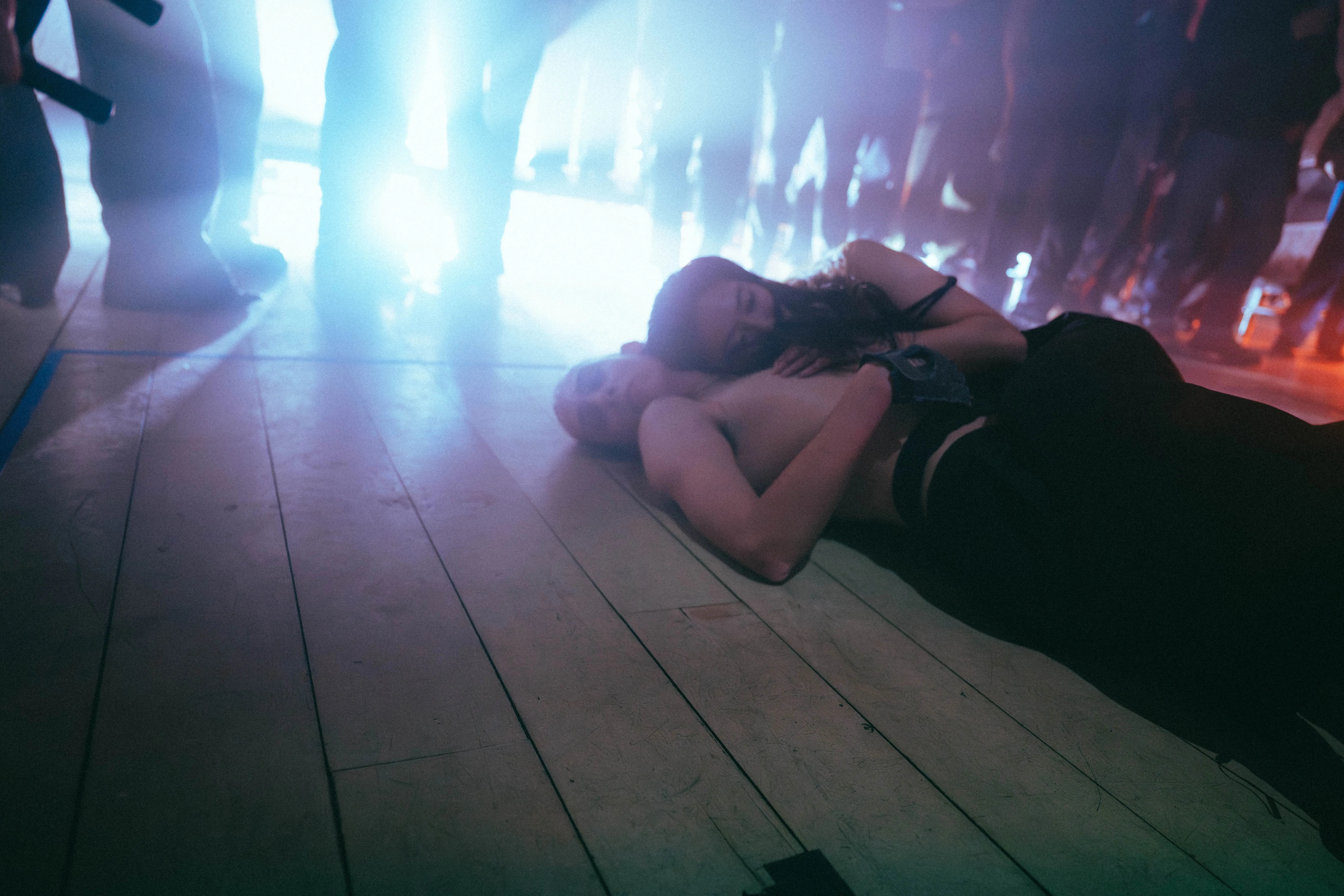
That collective rhythm carries into OUTPUT, where the energy built in BASE is released physically on the dance floor. This is where the audience evolves fully from the observer to the performer. What we hope people take with them is the feeling of having moved together through a process of transformation: with connection, tension, release, and the memory of being part of something communal rather than merely witnessing it.
Both of you work across multiple disciplines and cultural spaces—how does Future Forms challenge the idea that these worlds need to remain separate or siloed?
Art is an ecosystem. Like any meaningful conversation, it needs a multitude of voices and perspectives to truly exist. Future Forms challenges the idea of silos by bringing music, dance, styling, creative coding, design, and rave culture into the same room. Not as separate disciplines, but an interconnected being.
When these mediums overlap, influence, and respond to one another in real time, the project creates a space where collaboration feels organic and where boundaries soften in favor of shared experience.
Looking ahead, how do you envision Future Forms evolving across future iterations? Is the goal refinement, expansion, or continual mutation?
We actually got the name Future Forms because it was the title of a list describing all of the different ways this project can take shape. Evolution has always been the foundation. We see ourselves as students of the project, it tells us what it wants to become and we do our best to facilitate its desires.
Future Forms exists as a creative entity in continual mutation. It’s a live show, a shared space, and most recently, a music artist that will be releasing dance tracks for the first time in a few weeks! Each iteration’s aim isn’t only to refine or expand, but to allow the work to transform into its next necessary form.
Photographed by Hannah Mayfield
Production by EREZ, Tanguay, Cameron Sczempka, Kendra Borden
Styled by Essel Aidoo
Performed by Ben Green, Destinee Jimenez, EREZ, Graham Feeny, Mio Ishikawa, Ohaz Mazor, Tanguay
Stay up-to-date with exclusive events and content.


