F L A U N T


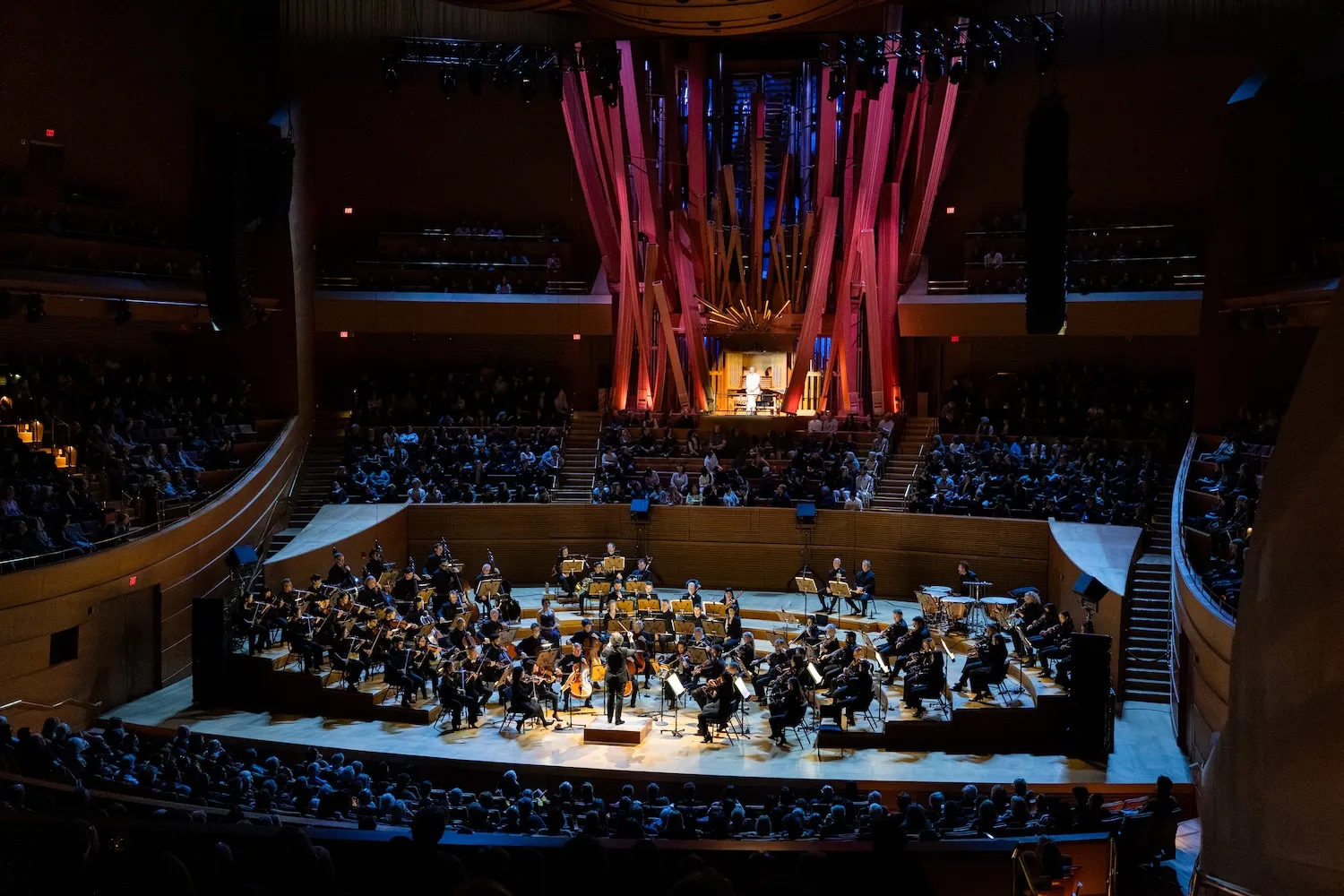
In Johann Wolfgang von Goethe’s 1788 political play Egmont, the titular character is set against a tyrannical opponent in the midst of a period of political and religious strife. His staunch commitment to empathy; to the protection of people and to the tenets of liberty; ultimately get him sentenced to death. Egmont is a story both rife with tragedy and suffused with hope; whether it be the hope that there is nobility in martyrdom, or that the plight of the just is still one worth pursuing.
Hope is a potent thing. Beethoven knew it, so well that he penned Egmont, Op. 84, a 9-part incidental overture to score the von Goethe play, debuting in 1810. Against the backdrop of the religious polemics thrown across Europe at the time: Egmont (the character, the play, the overture) saw prominent artistic minds unite to explore the idea of justice.
Hundreds of years later, Los Angeles has seen something similar. Last week, the LA Phil hosted a groundbreaking collaboration—esteemed playwright Jeremy O’Harris staged an adaptation of the von Goethe drama, with Cate Blanchett as the narrator and Elena Villalón as the soprano, and Gustavo Dudamel conducting Beethoven’s Egmont.
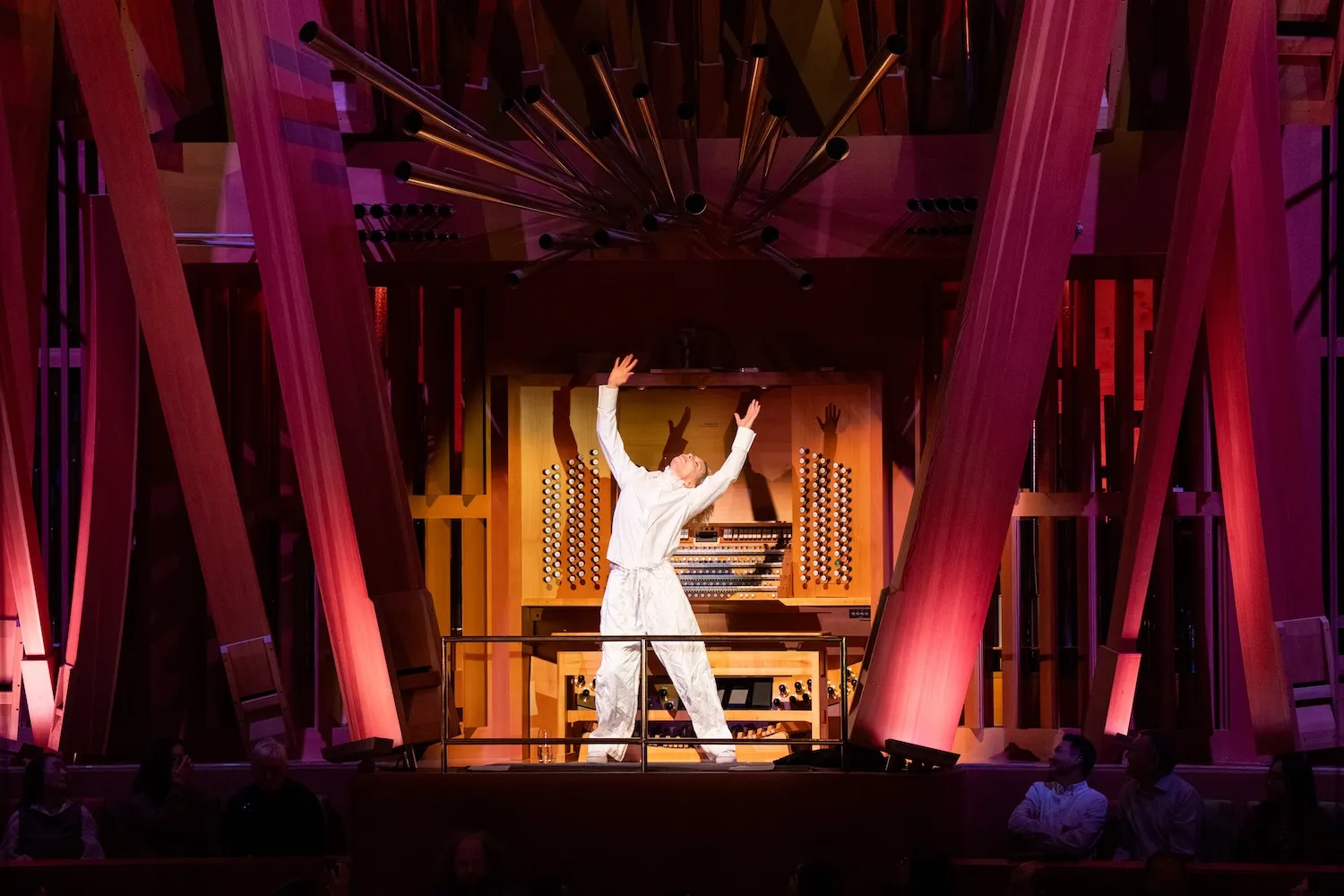
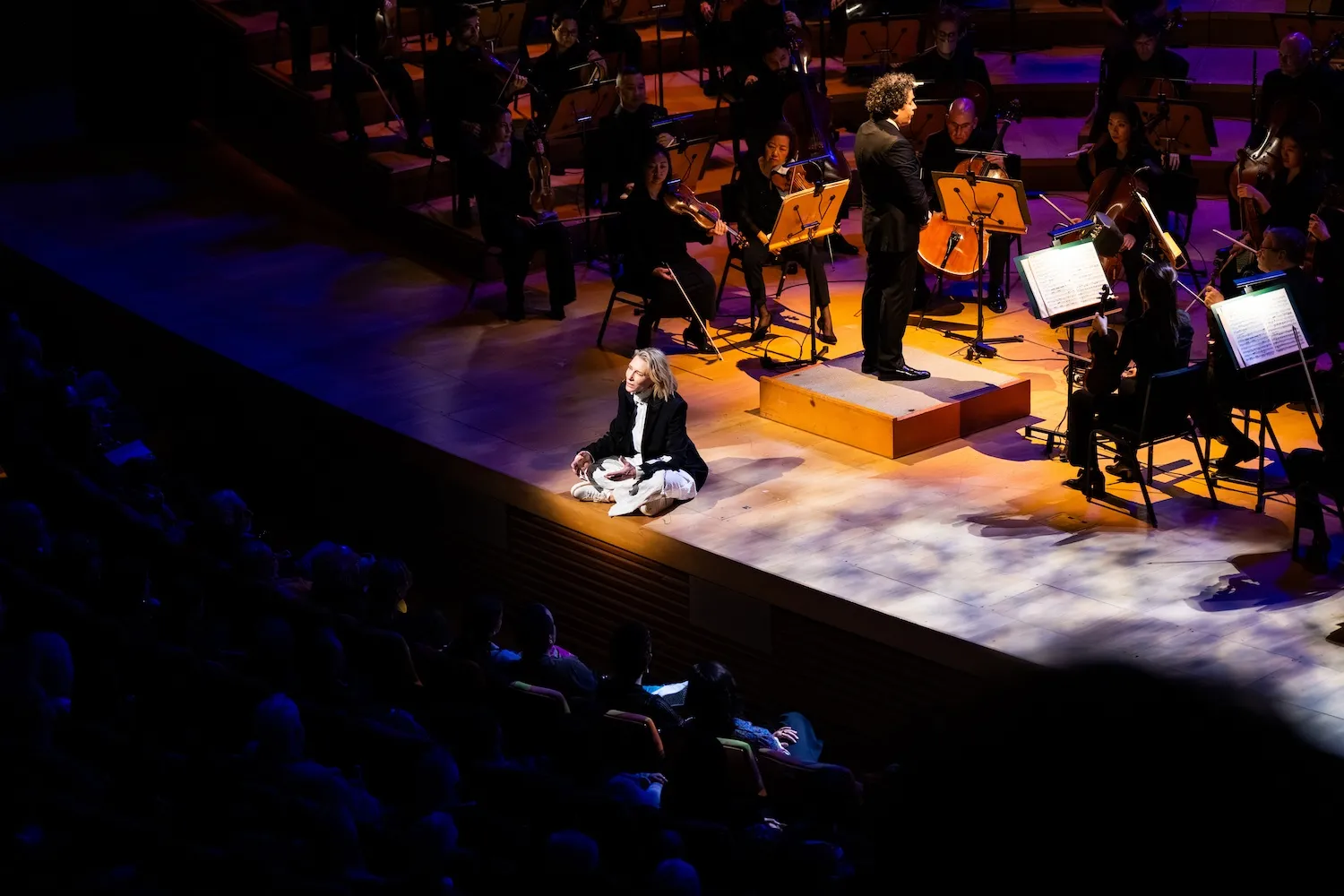
In the incendiary collaboration, O’Harris brought the story into a prophetic perfect tense, using the Egmont framework to unravel the audience’s sense of temporality. In his adaptation, O’Harris collapsed time down into an operatic and visceral deliverable for the audience. Cate Blanchett, as the titular character, guided the audience through fractal time leaps, leaving the audience with a warped sense of a universal present, the collaboration an empowerment of the theatre’s roots as a community-based and proletarian medium.
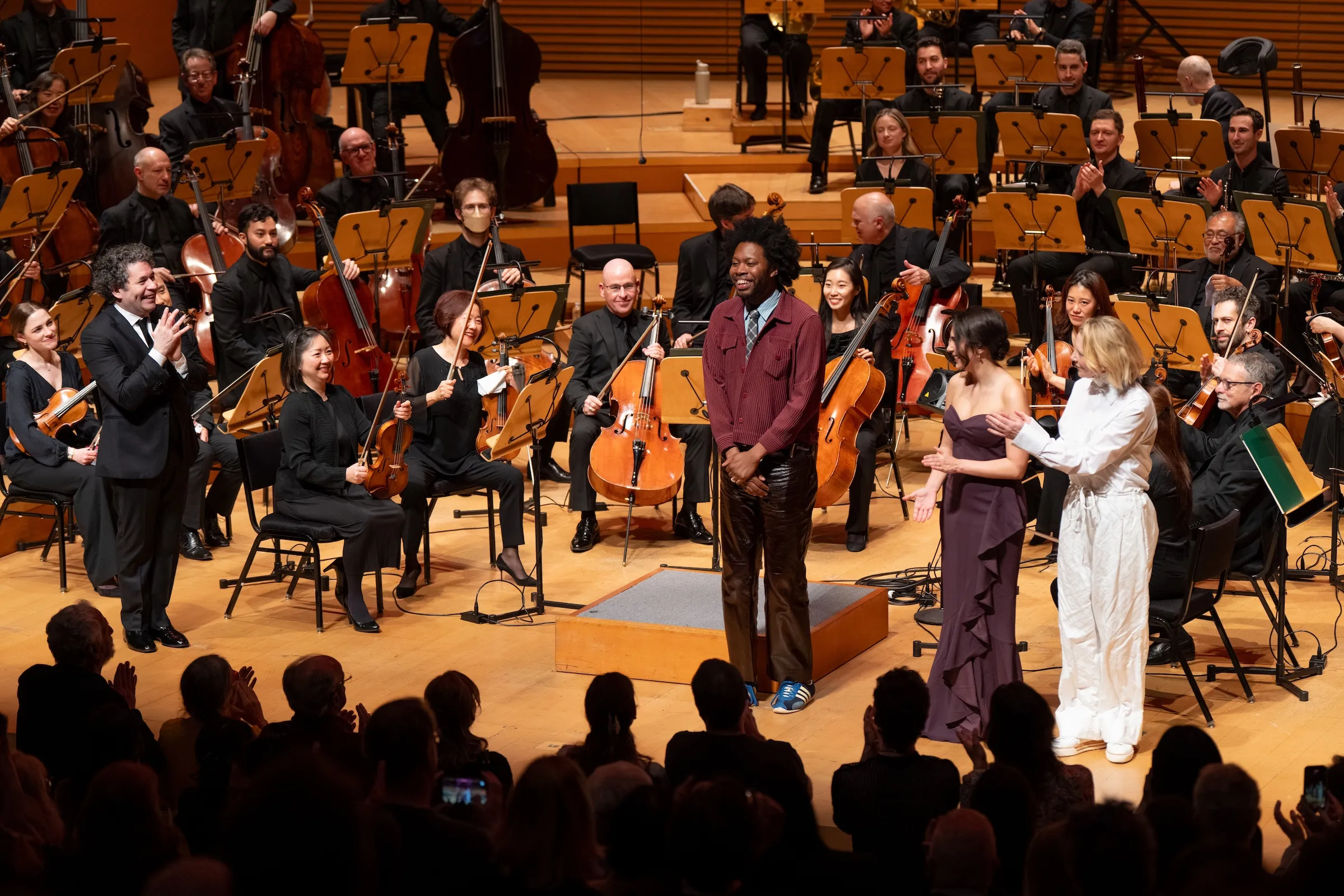
This work concerned itself with compelling us as the audience; “…Bring the bravery of your dreams into reality. Fight! Push!” In a condensed amount of time, O’Harris encapsulated the theme Dudamel alludes to in the program, for which connecting the struggles of the past precisely informs the struggles of the present. The show did not offer meandering political commentary, but instead a call to action to all of us: How do we redirect our path?
In speaking with O’Harris, I wanted to understand the place from which he was coming to the show more intimately—especially because of his undeniable voice present in all of his work. O’Harris rose to the occasion: He reflected in synergy with the moment we’re living through, not shying away from the work or waxing poetic in the abstract, but instead allowing the work to call out to us from the stage to meet us just where we are as we sit quietly in the hall, perhaps timid when we come in, and maybe braver as we leave.
What do you think of this specific iteration of Egmont, as it speaks to the moment that you think that we're in? What do you think that moment is?
We're in a continuous moment, which I think is the sad truth of Egmont. You read the original play, you read about the life of Egmont, and you realize that, the same people who use and distort their power to oppress others for religious, political, jingoistic aims. The same impulses haven't dulled in those with power. That is what this play was inherently about. It's about a person who stood up against a regime and stood up nobly and was cut down for it. His life was ended. It has a lot of immediate resonances with what's happening right now today. In Gaza, Ukraine, Minneapolis, it's all over. There felt like a real urgency around not shying away from the truth of our moment in the engagement with this piece.
How did you come into Egmont? Was it something that you had proposed, or did people come to you with it and it made sense to do it?
Egmont has been very close to Gustavo's heart for a long time. I think he told me yesterday he played it when he was 12, which is so amazing. I think that he had always wanted to do it at the LA Phil, and this was a really perfect opportunity. He's always felt—I'm just quoting him—that people had looked at the music of Beethoven's incidental music as a bit naive. But that also often happens, separate from the play it was written for. He's done it before in Berlin, and I think he wanted to do it now, but bring it even closer to the time by having a contemporary playwright sort of meet Goethe's text in the same way that as a conductor, he's meeting Beethoven's score. When he and Cate started collaborating on it, Cate brought my name up. I have been telling everyone I feel like the luckiest email recipient in the world.
In what ways did you feel like you were able to bring parts of yourself or your experience, or the ways that you tell stories, to Egmont? What parts of yourself do you think are in this, if at all?
I very rarely ask for permission when I'm writing, especially for the theater or film. I feel like my knowledge is such that I know what all the rules are, so I don't need to ask permission to break them. And I felt my start with this was very different, not because it's an adaptation. I think every adaptation becomes the author's like, you know, understanding of that piece, or the author's piece. Because I was entering the classical music space, I didn't feel the same freedom. And since then, I could break the rules. I don't know all the rules of classical music; it was a space where I was being invited as a guest, and I wanted to treat it as such.
What was amazing about Gustavo and Cate is that they were like, “We wanted you here because we wanted you to give us all of you, to take full ownership of it, to be your full self.” Gustavo has such a sort of holistic understanding of what music is and how important play and experimentation are for the form to push itself. I didn't feel hemmed in at all, I felt completely the thing I was making was something very much Jeremy O’Harris. But with this, inflection due to Mel and Blanchett in my call to action. I knew that I had to write something that was worthy of those two people, and that was all that mattered to me. If I could get 10s from them, on what I wrote, I knew that I had accomplished. I feel like, from what they've said, unless they've just been gaslighting me, they felt very strongly that what I did was right. Before I came in, I was nervous that I wouldn't have authorship, or that I didn't deserve authorship, and because of their collaboration, I learned that authorship was what they wanted from me.
Outside of temporality, do you feel you're thinking through these themes of subjugation and liberation differently? Do you feel like some of the ways that you are looking at liberation in your other works are coming through here at all?
Yeah, I think it always does. My politics are most alive in the work that I write. We've been in a really interesting moment where, for the last couple of years, it has felt like the best way to articulate our politics, or to activate our politics, has been to be somewhat passive and promote those politics in spaces that enrich those who are oppressing us. I.e., social media. For someone like me, social media didn't feel like the landscape that I wanted to present these ideas. I wanted to present these ideas in a different, more embodied way. My call to action for myself has always been, “How can the ways in which I feel about the world be most loudly articulated in my work?”
When I had a recognition of the sort of incompleteness I felt in articulation would be around/inside of social media. So I think that there is no separation, from my politics and my work. It is going to be in everything I write, even if it's about sex and sexuality, you're going to be having questions or dealing with the ways in which power is wielded and shaped by those who want to oppress or subjugate others.
This piece, at its core, is about the fact that Egmont represents someone who, moved to action, put his body on the line for his politics. We have become numbed by our screens, all of us—myself included. The actions of communities like those in Minneapolis that we're seeing come together to protect their neighbors are the actions we need to reawaken within ourselves. At the core of the piece, it's that. Wake up, walk outside, we are becoming benumbed because of these things in our hands, which were given to us by people who are all over every Epstein list. ChatGBT’s CEO is the largest donor to Trump. The more we utilize these tools of the hegemony in order to enact our activism, the harder it is for us to actually, like, get from under their boot.
It's very hard to work and create in this environment, and to feel like what you do is honest. It's very cool to be able to take a step back from convoluted conversations about politics and to actually exercise your politics seriously. Especially with what's happening in Minneapolis—it didn't start with ICE, it's a long list. Anti-blackness and anti-indigeneity. That has gotten us to this moment that we're in right now. With Egmont, it goes so far back. We have to be thinking through the ways things are connected and entangled.
100%. I don't want to be self-aggrandizing here and say me writing an adaptation of this at the LA Philharmonic is the revolution. What I want people to know and take away from this is that the thing that excites me about what we're doing is that music and embodied text are known to reshape people's physiology, the way in which your blood flows to your heart, the way in which synapses in our brains work. This is just one piece of activism to wake up a part of someone's body that has been lying dormant for a long time, and remind them of another way to raise a
fist against the man. Will that change the world? No. But it might change, a couple of people in the audience who might have been more intransigent when coming into it than they are leaving.
The reason I love the theater, the reason I love live performance, is because it’s embodied community work. I want to know, I want to be able to look in the eyes of the people in my community, even the ones I don't agree with, and have them look in my eyes and see me as a full human. Which is harder when you are doing things through a screen? In this moment when there's like a funding crisis for every major arts organization in America, I want the generation, my generation, the generation behind me, to remember that a true undercommons, a true third, third space for discursive politics, is in the theater, is in the Philharmonic, it's at the ballet. The conversations one can have at intermission can go under the radar of the Palantir tech, that is, tracking everything we do on our phones. Come to the theater, plan the revolution there.
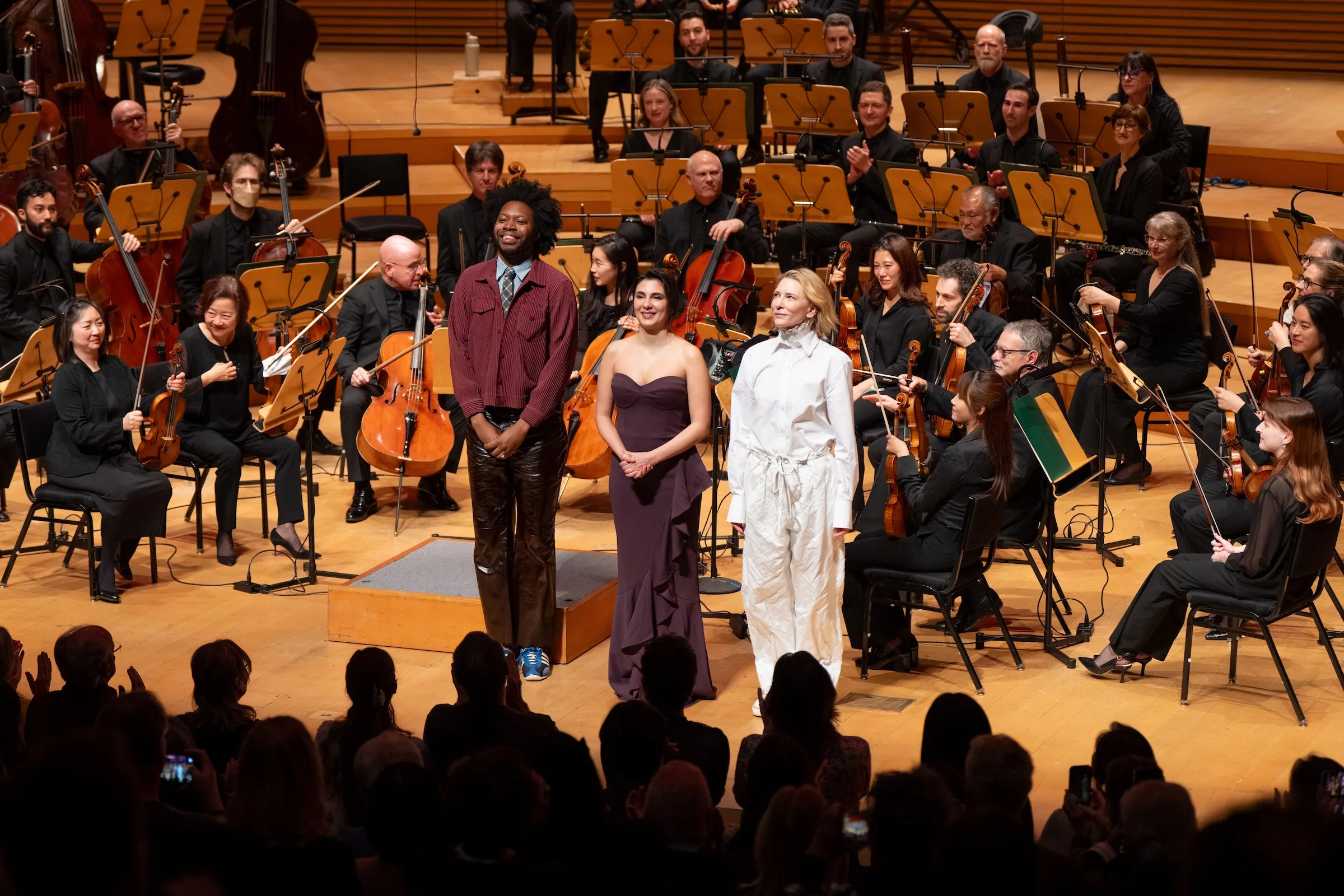
You made a big, bold decision, which was gender swapping Cate Blanchett. Are you trying to problematize gender in this story? Do you feel like it's serving the interpretation in a different way, or does it serve your interpretation better to problematize gender at all?
No, I think the story is so universal that it can exist inside of anybody. And to have it embodied by one of our greatest performers, ever, is a gift to the piece, more so than anything. If people are having conversations about gender outside of that, that's exciting as well. But that was not at the forefront of my thoughts for this.
What aspects of the show do you think audiences will be surprised by? Do you think there are any sort of significant changes you've made in the show that inform the story differently in your rendition?
We are not doing the two-hour production of Egmont. That would be phenomenal to do. People are coming to this piece and meeting this music in a really exhilarating and exciting way. And in meeting this music, you are going to be understanding its gestures, because this version of the play text is teaching you how to read the play. What's really exciting is that it's a really awesome introduction for an audience that may be familiar with the text but not really think about how it implicates them in their own lives now. And also a great introduction to people who don't know the text at all, who maybe are younger, who are like, “Oh, wow. This thing from 300 years ago is about me now.” That's what's exciting to me about it.

What do you hope people will sit with after the show, long after the show? Are you interested in audience reactions? Do you write from that, that standpoint, or do you completely throw it out the window?
Usually, I'm writing for myself and an audience, and that is legitimately a fact. In the same way, when someone gives a bold opinion at dinner, they want to have someone engage with it. I am writing things that excite me, putting things on stage that excite me. But in this case, specifically, my audience was Cate and Gustavo, and if they don't like it, then I am going to kms. But because they did, I feel like my job is done. The audience could get up and boo for all I care. I don't think they will. But the fact that the primary audience for this was Cate Blanchett and Gustavo Dudamel, and they responded with such gusto and enthusiasm, meant that I feel confident that I did a job well done.
How do you keep new endeavors on the stage fresh? How do you introduce experimentation? How do you keep it engaged and engaging practice for yourself?
By never letting my well run dry. I'm constantly meeting new pieces of work that challenge me. And when I'm challenged, it gives me a new idea to challenge other people. So that could be from watching an anime or a Polish reality TV show, or just working with someone who works very differently from myself. That's how I can continually up the gambit of experimentation for myself and my audience.
In that time when you were reading, was there anything that you've seen, read, or heard, whether it was recently or a long time ago, that helped you maybe flesh out your approach?
It was literally just the music. This music is so inspiring and such a battle cry; the music is what I'm really, really inspired by. Because, again, that is a space of pure ignorance for me. I didn't grow up listening to Beethoven, so listening to this piece over and over and over again really was the foundational pull.
Stay up-to-date with exclusive events and content.


