F L A U N T


No one knows “booked and busy” like Minnesotan singer-songwriter Anna Graves. With over 65 million global streams, Graves has skyrocketed in the music sector as an Americana potpourri of country, pop, and alt-folk. Fresh off an extended tour with Jonah Kagen, the artist has built quite a repertoire with works featured in the Golden Globe-nominated series ‘Nobody Wants This’, the Netflix drama ‘Ripple’, and ‘Brilliant Minds’. On stage, Graves has gained sweeping acclaim as an opener for renowned artists, Stevie Nicks, The Head and the Heart, and Maren Morris.
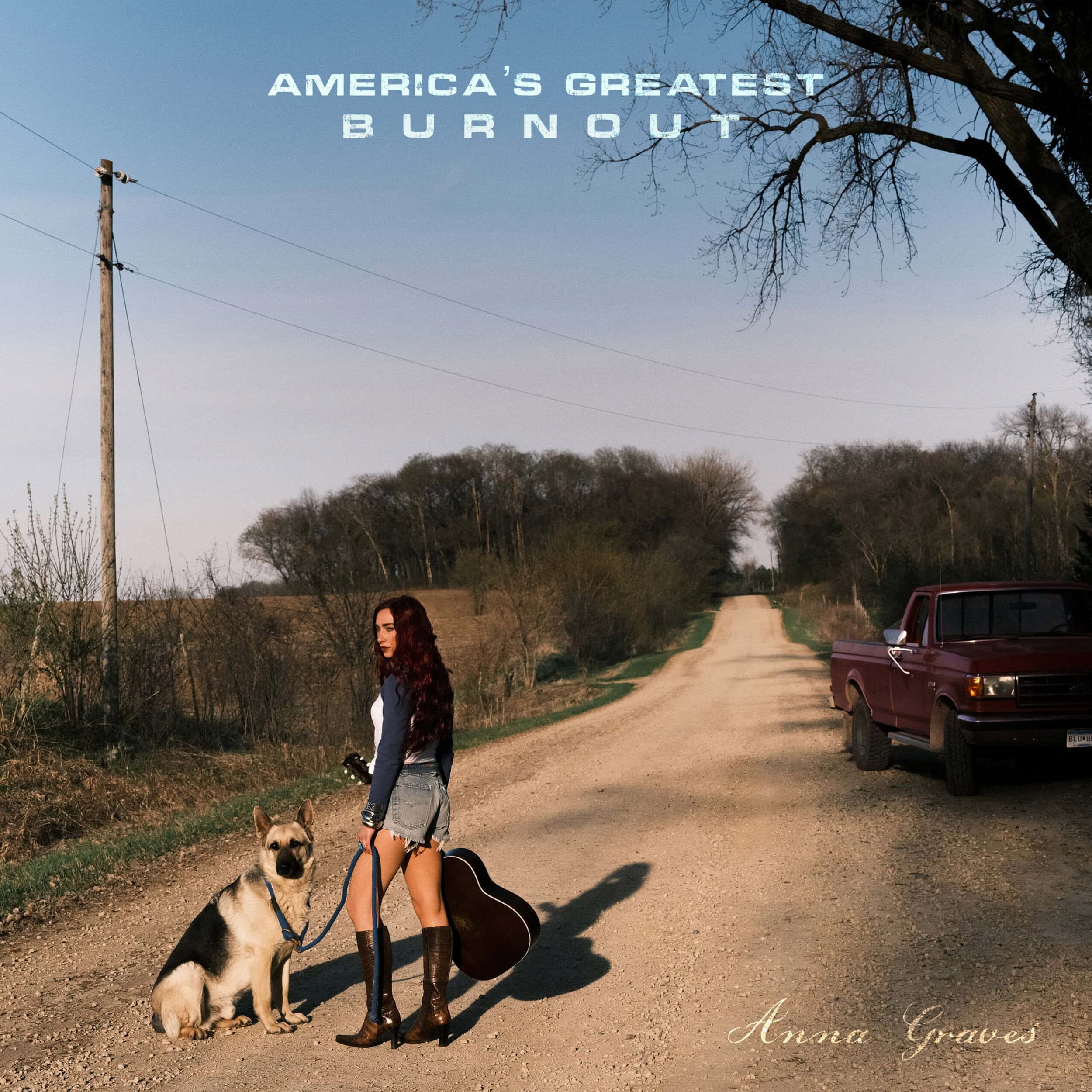
Today, she continues to carve out her own narrative, as she announces her upcoming debut album, ‘America’s Greatest Burnout,’ releasing August 21 via Rounder Records. ‘America’s Greatest Burnout’, produced by David Naish, is an exposition on the previous decade of the artist’s life, displayed through tenderness and truth. As Graves peels back the layers of vulnerability and success, she reminds us that some of life's greatest lessons emerge from trials and hardships. The artist shares, “It’s about learning to fall into the dirt, finding the courage to dust yourself off, and getting up to do it all over again…stumbling forward, perhaps a bit scuffed, dirty, and bruised, but wiser and stronger than ever.”

To give listeners an exciting taste of what’s to come, Graves is releasing the acoustic title track, “America’s Greatest Burnout." In its essence, the song is an ode to all young artists, reflecting the heartbreak of empty promises in the music industry. Co-written with songwriter, producer, and mixer Alex Sacco, Graves' resonant vocals ring, “I used to be an angel till I sold my goddamned soul,” as the open country calls her back home. Her project’s largest inspiration stems from her life in the Minnesota countryside. On her family’s farm, in the company of her rescue horses, Anna Graves finds life’s simplest joys and transforms them into euphonious masterpieces. The visualizer, shot on her family’s farm, is available on YouTube. Alongside Graves’ vocals are Rob Humphreys on drums, Sean Hurley on bass, Rob McNelley on acoustic and electric guitar, and producer Davis Naish on keys.
The upcoming album features one of the artist’s recently released singles, “Damn in Love”, which explores the complexities of navigating arduous relationships. With Graves' elegantly evocative sound paired with A-list instrumentals by John Humphries, Sean Hurley, Rob McNelley, and Marty Rifkin, the track is an experience both undeniably raw and lived-in. The artist conveys, “Sometimes love isn’t just about hanging on, it’s about letting go. The visualizer is available on YouTube.
But her Americana journey doesn’t stop here. Anna Graves is taking off on September 9 for her debut headlining tour across North America. Beginning in Decatur, Georgia, Graves will embark across 17 cities, including Brooklyn, Chicago, Denver, Los Angeles, San Francisco, Seattle, before concluding in Toronto, Ontario. General public tickets will be available on Friday, June 19, at 10 a.m. local time, with presale beginning Tuesday, June 16, at 10 a.m. local time.
So what’s up next for Anna Graves? The midwestern rising star is heading abroad this summer, debuting in London, England on June 25 at The Social alongside special guest Bertie Newman. She is also set to perform at the major State Fayre Festival in Chelmsford, UK, on June 27, and Cavendish Beach Music Festival in Cavendish, Prince Edward Island, on Friday, July 10. While the rest of us unwind under the summer sun, Anna Graves is just getting started.
The title track, "America’s Greatest Burnout,” narrates the struggle between persistence and surrender. How do you define success, and do you think achieving it is a myth?
We’re taught that success is how others see us, something we can measure. So, for a long time, I chased money, status, and accolades, because I thought they’d bring satisfaction. But the more life I experienced, the more I realized how lonely and empty they were. These days, success looks much simpler to me. It’s making music I’m proud of, having people I love around me, and being able to turn to them and say, “Look how far we’ve come”. I don’t think success is a myth; I just think we’ve been sold the wrong definition of it.
“Damn in Love” describes the paradox of close relationships, in which familiarity often becomes alienation. Beyond lyricism, how does this theme translate into your instrumental composition?
What’s interesting about "Damn in Love” is that the melody came before the lyric. I was in the studio with Phil Simmonds and Max Cooke as they riffed on the guitar and bass, and once I sang out a chorus melody I liked, I asked myself what it made me feel (a constant internal question when writing). It felt hopeful, but there was sadness underneath. That led me to a relationship in my own life that had become painfully stagnant. We cared deeply about each other, but we were holding on more for comfort than for growth. That song helped me understand what I already knew deep down: that sometimes love means letting go.
What is your relationship to letting things go? Do you tend to be optimistic about the results, or does the prospect of loss inspire dread?
Letting go has never come naturally to me. When I love someone or something, I tend to give it everything I have. But the older I get, the more I realize loss is a part of life. It still hurts when things end, but I’ve learned to trust that letting go of what’s not right for you makes space for something that might be. So, while there’s sadness, there is always hope.
Do you think relationships ever stop changing? Is stagnation a definite ending, or a new beginning?
I don’t think relationships stop changing because people never stop changing. Life has seasons where everything feels still, but the question is whether there’s still room for growth - and there usually is. I think the healthiest relationships allow both people to keep evolving, and I think that’s true of the relationships with ourselves as well.
Your forthcoming album, America’s Greatest Burnout, is an autobiography. Which experiences and eras of your life did you find yourself focusing on the most?
This record is largely a reflection of my twenties and the moments when I had to take an honest look at myself and ask difficult questions. It explored burnout, heartbreak, the loss of friendship, family wounds, and the process of figuring out who I wanted to become. Songwriting became the tool I used to understand those experiences. In many ways, this album was the blueprint for my healing. It helped me live with more courage and honesty.
In the past, you’ve described your music as being interested in the liminal aspect of Americana. How does location inform your art, and what sort of imagery do you find yourself referencing to hone in on this aesthetic?
Growing up in rural Minnesota, I found a freedom and openness in those landscapes that have never left me. The countryside reminds me of who I am. The pedal steel sounds like prairie grass bending in the wind. A harmonica reminds me of singing along to Tom Petty, racing down country roads, dust blowing in the wind. When I need inspiration, I usually just need a little space and a good, old tree to sit under.
With this being such a personal record, what do you hope listeners understand about you in the aftermath of its release?
More than anything, I hope listeners see themselves in these songs. This record taught me that being lost is a part of being human. We all make mistakes, we all wander, and we all have moments where we don’t know what’s next. If there’s anything people take away from 'America’s Greatest Burnout,' it’s that you can begin again as many times as you’d like. You can be bruised, exhausted, and uncertain… and keep moving forward.
Stay up-to-date with exclusive events and content.


