F L A U N T


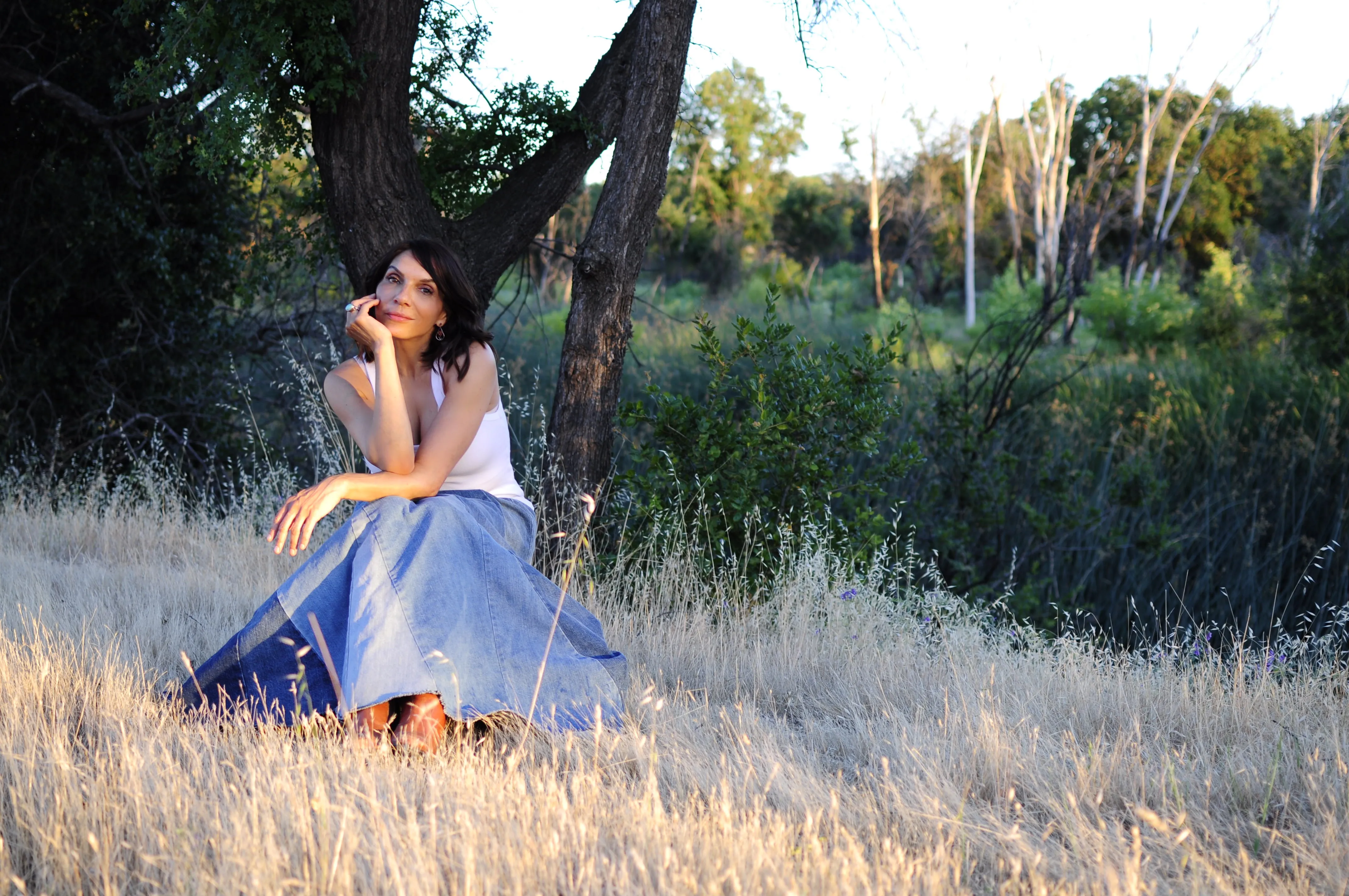
As America celebrates its 250th anniversary, formalized through the Declaration of Independence, many Americans have been left to wonder: what comes next? The past 250 years have brought moments for Americans to take pride in their country, though each comes with a more sinister counterpart. These dark spots in American history have often been left to be forgotten. However, this disregard for some aspects of our past fails to consider what good can come from reckoning with our entire history. Pianist Lara Downes, through her new album and series of performances, unifies America’s past across eras to create hope for the country’s future.
In her upcoming album Hold These Truths, Downes explores the musical heritage, current beliefs, and potential progression of America. Reimagining compositions by acclaimed Americans, Downes presents a musical quilt of American culture, dating from the signing of the Declaration of Independence to today. This historical ecotone allows Downes to bring America’s past into conversation with its present to determine a course for the future. To support this weaving of time, Downes intersperses oral reflections from Americans, focusing on their perspectives on the country, between each track as introductions. Gathered from The Declaration Project, a two-year, cross-country investigation into people’s interpretations of American philosophies, each recording reveals the honest, unaltered visions Americans hold for the country. Together, the music and introductions conceive an America that is at a beginning, not an ending.
Accompanying Hold These Truths, Downes will be hosting a concert at the Lincoln Center titled Declaration: Songs of Democracy, Voices of Hope where three musical pieces will debut: Valerie Coleman’s “Life,” Arturo O’Farrill’s “Liberty,” and Christopher Tin’s “The Pursuit of Happiness.” Like the album, the concert will feature video recordings from Downes’ The Declaration Project, offering Americans’ definitions to each term. Downes is also presenting The Declaration Project at the Aspen Ideas Festival and MASS MoCA to continue this open discussion beyond the anniversary. As an NPR host, Downes elaborates on her work in America in Pursuit, a series of conversations intersecting American music with historical reckonings featuring intellectuals like Bryan Stevenson and Adam Gopnik. Throughout this series, Downes utilizes musical pieces to highlight moments of history in need of revisiting. With her piano as her primary tool, Downes offers a space for Americans to answer the question, “What does it mean to be American?”
Your album, Hold These Truths, looks at America through various perspectives, crossing historical eras and heritage, to encapsulate American culture in celebration of America’s 250th anniversary. Other than the anniversary, why did now feel like the right time to release an album like this?
This album feels like the latest installment in a body of work I've been making over the past decade, a kind of sonic time capsule of America in motion. The 250th anniversary is a compelling backdrop, but what really drew me in was the emotional weather of this moment. We're living through a time of profound doubt and uncertainty, where old narratives are cracking open and so many of us are asking existential questions about what has been, what is now, and what we can do to design the next chapter.
Music is my way of decoding America. It’s so honest about absorbing contradiction without trying to resolve it. Music holds grief and possibility, fracture and belonging, all in the same breath, and that's something our culture seems to struggle with right now. We're constantly pushed to react, decide, categorize. The algorithm rewards certainty. But music rewards curiosity and empathy. It asks us to slow down, to sit with complexity, to let someone else's story change the way we experience our own.
This record investigates some very timely questions that are also timeless: which parts of our story need protecting and preserving? Which myths are ready to be retired? What new truths are emerging? And if we actually listen to one another, what does America sound like?
Previously, you have said that American music exists within the past, present, and future at once. How did you accomplish this on Hold These Truths and were there any challenges?
This music moves through time the way memory does. Nothing really disappears. The past keeps sampling the present, and the future is already hiding inside the stories we tell ourselves now. American music has always worked that way - less a timeline than a feedback loop.
There's a track on the album called “Wondrous Free” that lives inside that loop. It’s inspired by a song written in 1759 by Francis Hopkinson, later a signer of the Declaration of Independence. That tune is often described as “the first American song,” which says as much about the stories we've chosen to canonize as it does about the music itself. That label conveniently overlooks the thousands of years of Indigenous music that already filled this continent, and the traditions carried here by enslaved Africans. So I invited the Nigerian American composer Shawn Okpebholo to reimagine this 18th-century tune, and suddenly this tidy colonial artifact becomes something much less nostalgic and much more alive. The piece stops looking backward and starts asking questions across centuries.
That kind of temporal collision happens throughout the album. A spiritual refracts through a contemporary score. A Kentucky mountain song survives inside a new work by the Louisville-based composer Daniel Gilliam, sampling a 1952 recording of Jean Ritchie introducing a melody already generations old. All of this music invites its ghosts and ancestors to comment on the world of today.
My challenge is just staying clear about honoring history while resisting nostalgia. Preservation can become a way of freezing something in place, but I want to reveal this music as a living organism that’s always evolving and changing.
Your upcoming performance, Declaration: Songs of Democracy, Voices of Hope, debuts the works of three composers engaging with life, liberty, and the pursuit of happiness, respectively. How do these ideals characterize American music?
American music has always been where those ideals get tested in real time. It's the sound of resistance becoming culture, of memory refusing to disappear, of people inventing themselves against impossible odds. Indigenous traditions, spirituals, the Blues, jazz, gospel, folk, concert music, hip hop, protest songs, experimental soundscapes... All of these musical languages speak the truth of lived experience. Again and again, American music-makers redefine the sound of this place and its people.
These three new works continue that practice. They celebrate an ongoing and unfinished struggle for freedom, they imagine the radical power of joy in an age of anxiety, and they ask what kind of life we're actually creating for the generations that follow us. And they express the inherent polyphonic democracy in music - independent voices choosing to intersect in a constant flow of dissonance and harmony.
Rather than offering your perspective, Declaration: Songs of Democracy, Voices of Hope and the accompanying The Declaration Project act as a mirror for real, individual Americans to share their values. How do these projects act as evidence of the current cultural landscape of America?
I wasn't interested in explaining America - we've all been talked at enough. I wanted to create a space where people could speak for themselves and hear each other outside the endless feedback loop of headlines, hot takes, and algorithmic certainty. And it turned out that space was so needed. I found an intense desire for dialogue, and gratitude for the permission to voice perspectives and ideas. The Declaration Project introduced me to people whose lives couldn't look more different on paper, but who kept circling the same questions: Where do I belong? How can I contribute to my community? How do we stay connected without erasing our differences? I found an America that's far more nuanced, curious, and compassionate than the version we've been sold.
If my encounters document one consistent theme, it’s that we Americans accept that this project is still under construction: that it’s messy and unfinished, that its timeline is unpredictable, that its progress is not linear. That’s the reality, and it’s the work. We haven’t given up on that work, or on each other.
With your projects examining and showcasing the varied cultural perspectives of Americans, how do you hope audiences reshape their understanding of the word “American” following the release of Hold These Truths?
I hope these projects reflect the kaleidoscopic nature of this place, the myriad ways of being and becoming American. I think the greatest danger of our time is the regressive attempt to claim ownership of that word, to define it narrowly and fence it in so that it keeps others out. That's not the true soul of this country, and it's certainly not the soul of its music.
American music reflects the gloriously unruly, brilliantly creative energy of a place built from collision, migration, resistance, and reinvention. Every tradition that arrives here changes every other tradition already in place, adds new layers and colors and dimensions. If Hold These Truths leaves listeners feeling that "American" is a bigger, stranger, more expansive and surprising idea than they’d imagined, I’ll be happy. American identity isn’t captured in the dried ink of a document from 1776, or in the notes of any one song. It's something we keep improvising together, now and always.
Stay up-to-date with exclusive events and content.


