F L A U N T


.jpg)
Who are we to others, if not our faces? Our brains decipher the humanity in others based on facial cues of consciousness and emotion. It’s the first impression we offer in every form of meeting and the most natural thing about our existences—that is, if we allow it to be. In something as innately human as movement, it seems logical that the face should be integrated to the fullest extent as a means of maximizing the body’s declarations of feeling.
Los Angeles-born choreographer Micaela Taylor aims to make its inclusion more than just an afterthought, centering the characters of dancers in her compositions to encompass their whole, emotional beings. Her performers tense their foreheads, stretch their mouths wide, blink their eyes rapidly, frown. “Whether it’s through the body, facial expression, or both, I want the performers and audiences to feel a guttural, raw reaction to what is happening,” the choreographer shares. Her work is driven by a curiosity for individuality, utilizing its emphasis to build narrative ballets underscored by communicative movement.
Spending her formative years training in both ballet and street dance, Taylor honed her understanding of the body’s expression through immersions in two disparate styles. She describes the freedom of articulation available in hip-hop and jazz environments as “sometimes seductive, sometimes aggressive, and even sometimes filled with rage.” Opposingly, the more traditional atmospheres of classical dance expect the face to appear stoic and focused, emphasizing technique above all else. While each discipline’s aesthetic was built to supplement the demands of its physicality, Taylor recognized that setting limitations around personalized expression could hinder the performer’s connection to their work. The choreographer first established herself as an emerging visionary in her early 20s by developing her own movement language known as “Expand Practice,” defined by integrations of theatricality and highly precise, athletic performance. She started her own dance company, TL Collective, in 2016, eventually gaining enough recognition to be commissioned internationally by Ballet BC, Nederlands Dans Theater, and Paris Opera Ballet.
.jpg)
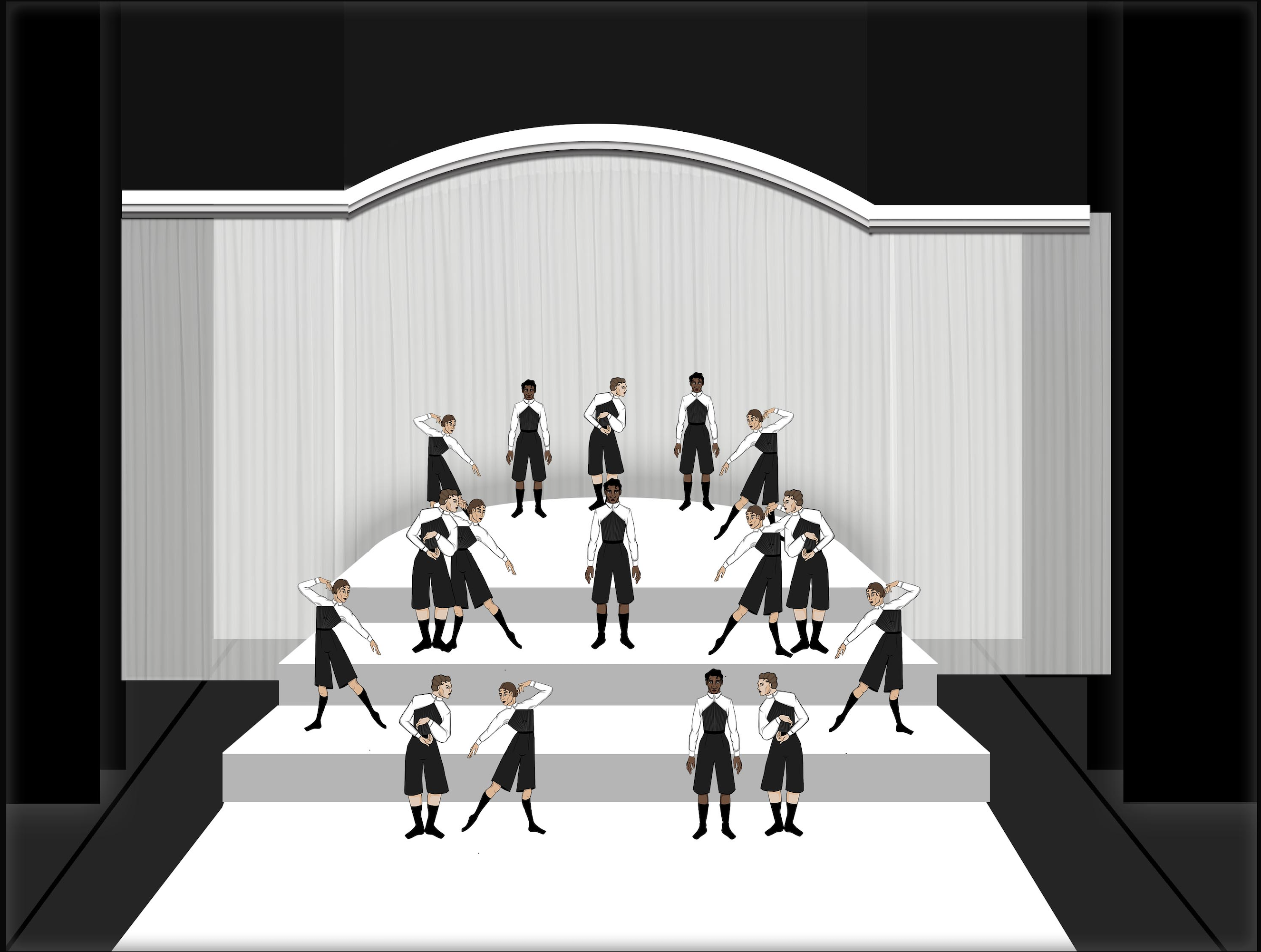
This September, Taylor’s newest work, Bow Out, will have its world premiere at English National Ballet. A part of the company’s season-opening triple bill, the ballet will be performed alongside George Balanchine’s Symphony in Three Movements and Jae Man Joo’s forthcoming debut of Auguries of Innocence. Bow Out ventures into previously untrodden territory for Taylor, taking rhythmic cues from the Nicholas Brothers’ enigmatic tap performances. Taylor is admittedly not a tap dancer, nor has her choreography previously delved into this particular realm, yet in her extensive research of the pair’s stage acts, she’s found undeniable inspiration. “They dance in sync, yet remain individualized in their personalities and quirky antics,” she describes, citing a fascination with their “organic” displays of jubilance. “When I think of the Nicholas Brothers—a young Black tap duo performing for an all-white audience at a time when racism was so prevalent—it’s complex. Perhaps one of the few places they felt true and free joy was on stage.”
Above all, Taylor wants her audience to interrogate their own feelings. In its arrangement of phrases meditating on the theme of joy, Bow Out prompts witnesses to consider the various facets and manifestations of the emotion. Her expressions study the intricacies of feeling “good”—honoring confusion, guilt, and hesitancy as extensions of this primary sensation. “I hope to evoke a questionable joy,” Taylor says of the impending premiere, “I want people to want to get up and dance, yet question why.” The contagious energy of dance is a point of interest for the choreographer, who simultaneously understands that despite the unanimously connective sensation of such feelings, the celebration of movement is ultimately an intimately personal experience. In Bow Out, she aims to invite an investigative exchange between dancers and audience, prompting, through displays of facial and physical vulnerability, one essential question: Is this too good to be true?
Stay up-to-date with exclusive events and content.


