F L A U N T


Have you ever spent a crisp fall evening flâneuring the pathways along Rodeo Drive? The sun setting its purple majesty over Louis Vuitton, convalescent spirits making their way out of the House of Dior, the previous hour’s Prada purchases already displayed around their shoulders as the newest, shiniest, most state-of-the-art luxury automobiles journey by. There’s nothing like it.
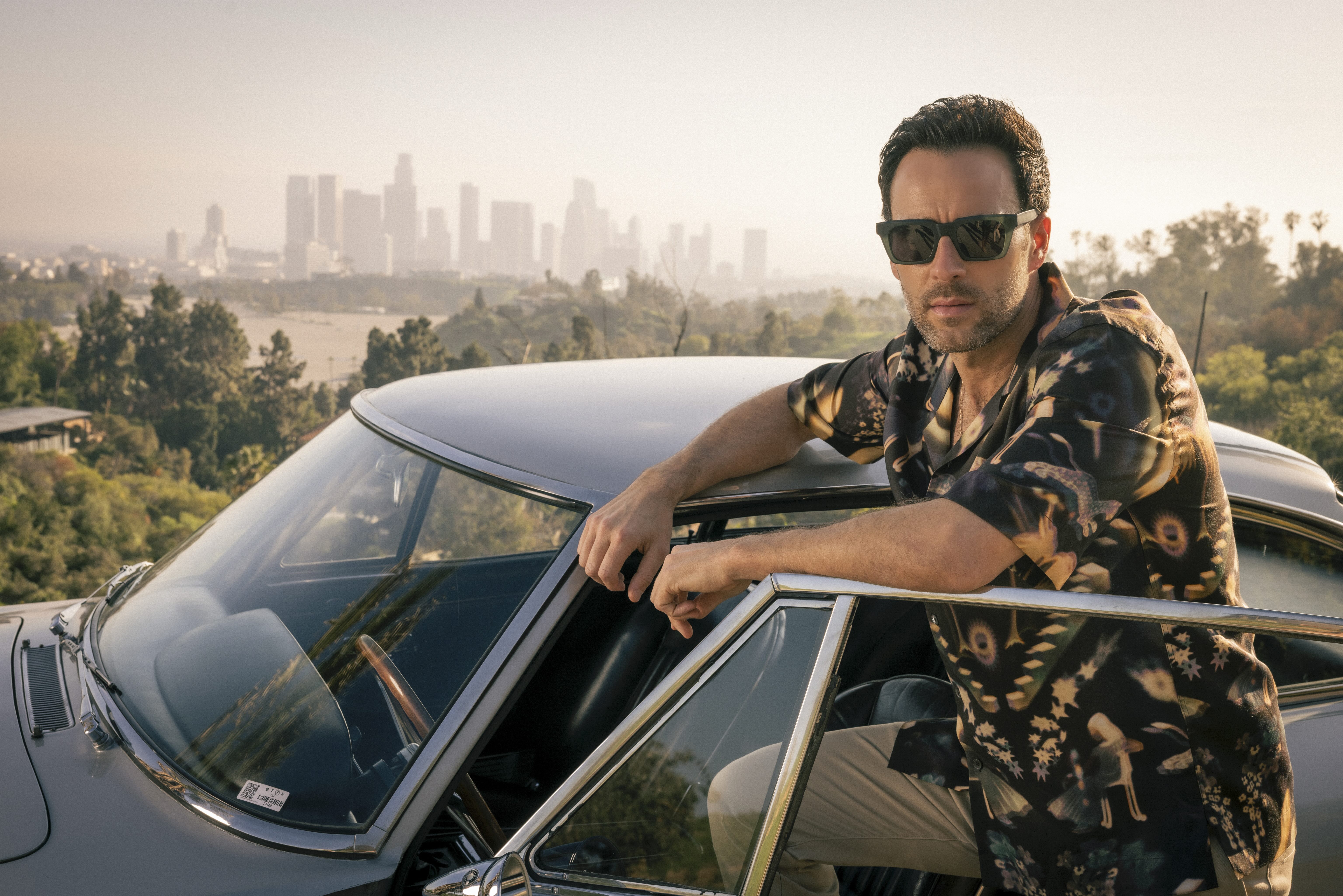
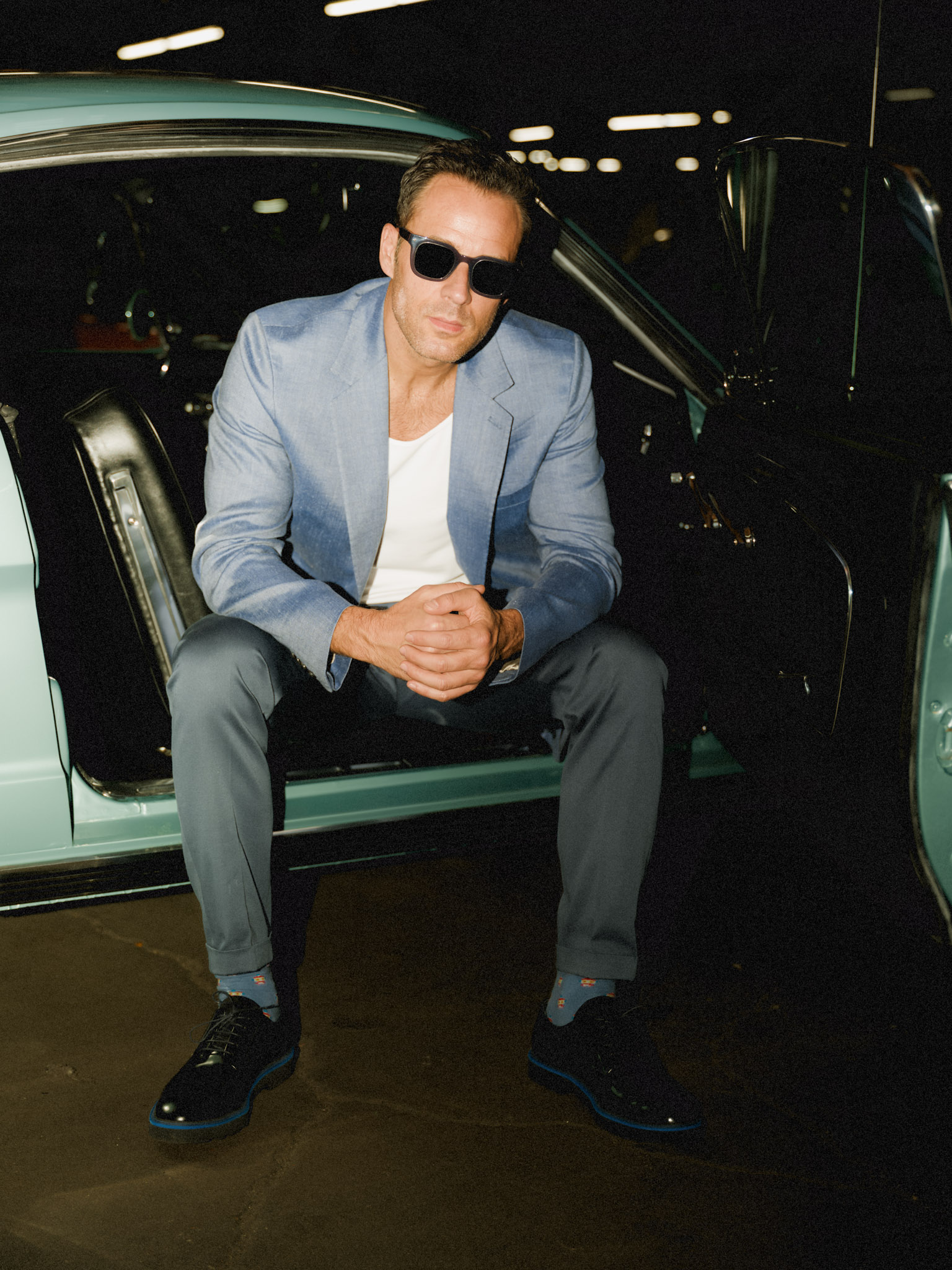
If you’re lucky, you might just encounter a parade of classic cars that, being honest here, put those newer machines to shame. There’s just something about the classics - exquisite engineering mixed with elegance mixed with that unmistakable aesthetic charm of a 20th century world gone by. And that’s where Alex Manos comes in.
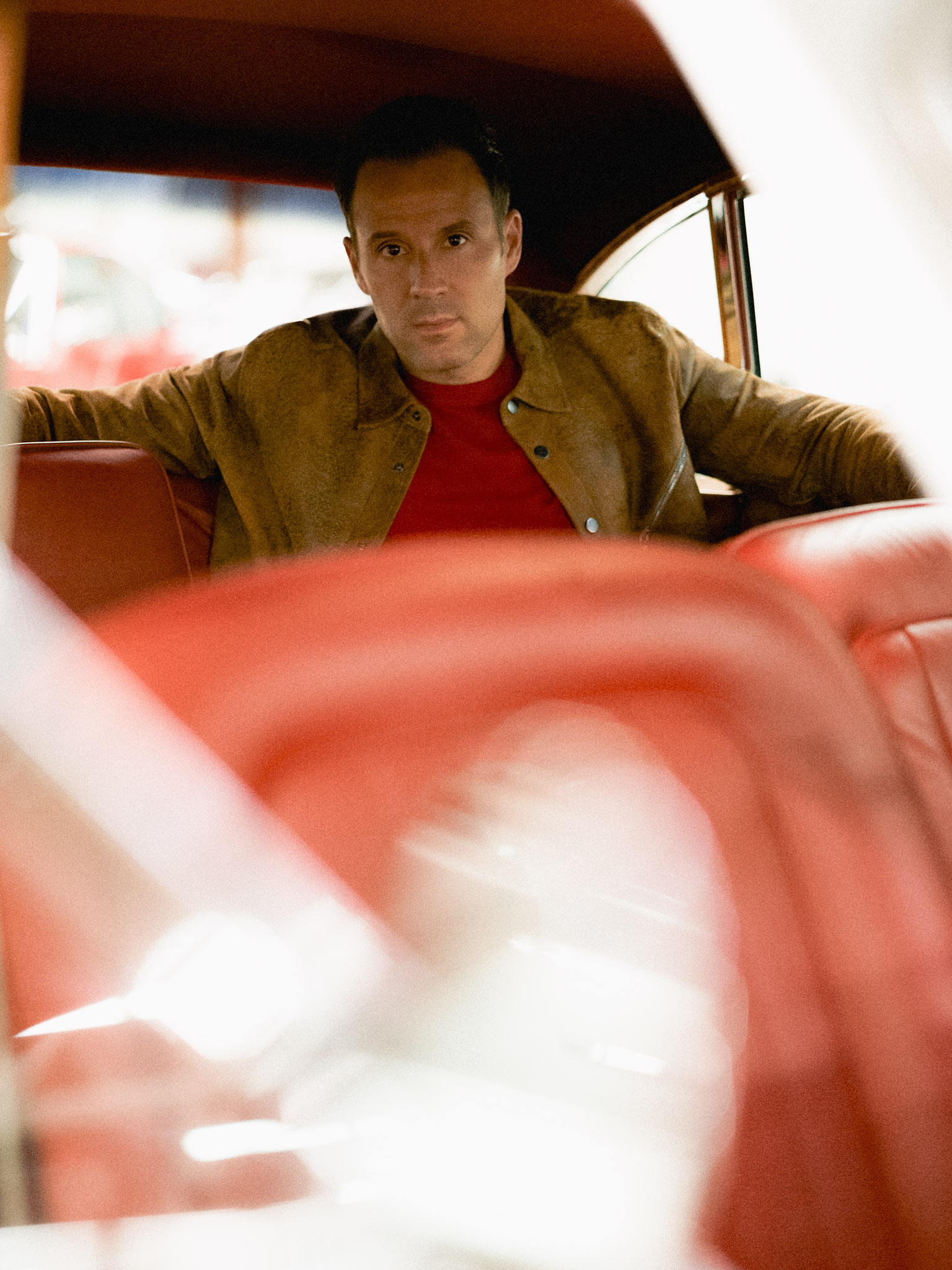
Manos has, over the years, made a serious name for himself in this world of opulent oldies. The British born entrepreneur moved to Los Angeles when he was just a young kid and immediately became enamored with So Cal’s distinct car culture. His interest led to an expertise, which then led to a collection and finally to the Beverly Hills Car Club: one of largest classic car dealerships in the world and founded by Manos, who is still in charge of curating, selling and distributing the hundreds of classic automobiles displayed in his 40,000-square-foot indoor showroom facility.
A step inside the Beverly Hills Car Club is a step inside Manos’ realized dream. A Wonka’s factory for classic car fanatics: Rolls-Royces from the 1920’s, Jaguars from the 50’s, Alfa Romeos from the 70’s, Porsches from the 80’s and everything in between.
We caught up with Alex to find out a bit more about him, how this dream was realized, the state of the classic car market and anything else that is currently catching his fancy.
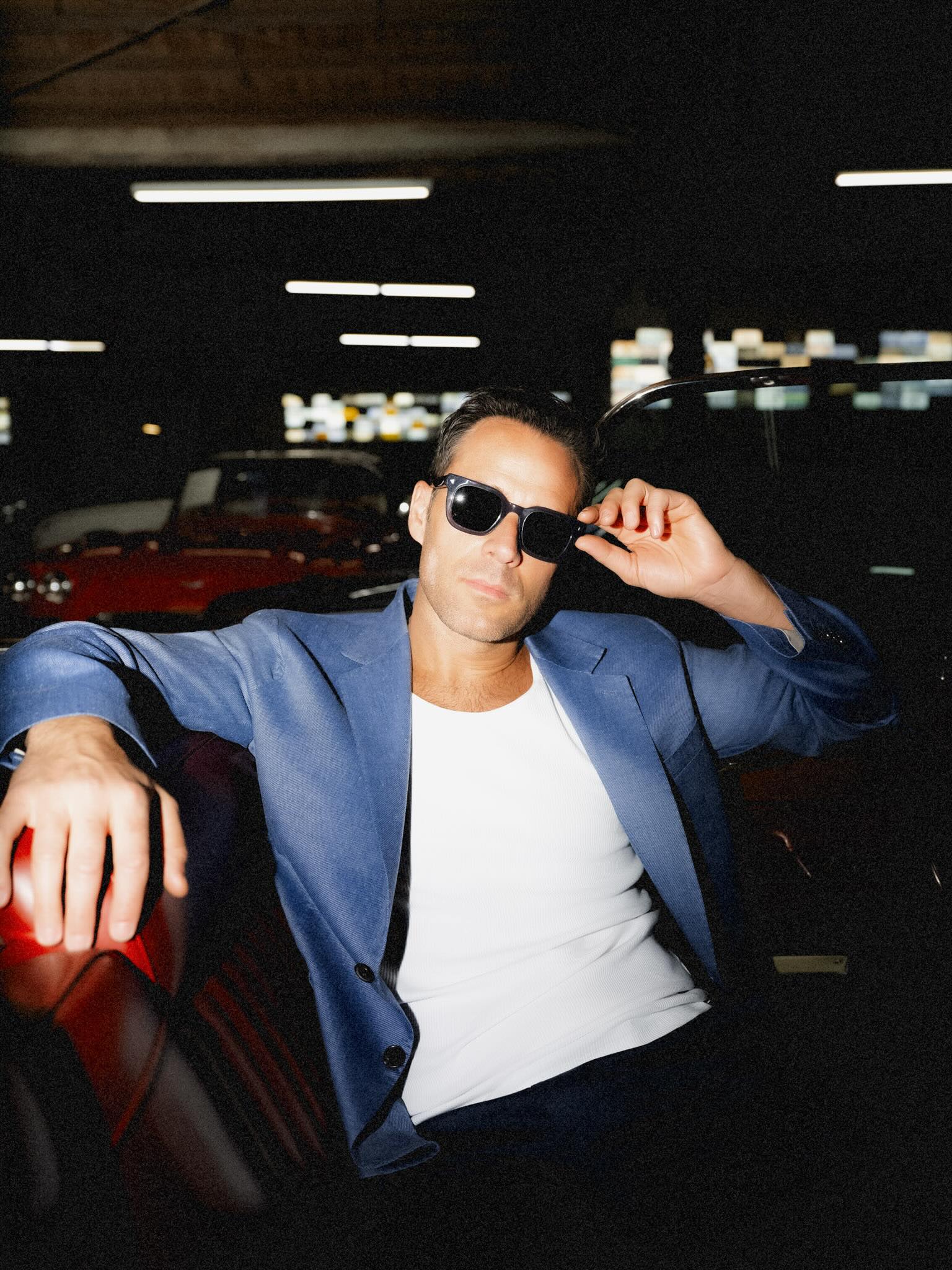
Talk to me about growing up in London. Not just the impact it had on your love of cars, but your aesthetic identity more broadly.
I grew up in South London, in Clapham, which was a very Jamaican neighborhood. My dad was a music journalist, and my mom was in music PR. I was young when I moved, but growing up in London had a big impact on who I am as a person. London is like New York. You walk down the street and see somebody wearing cool shoes or with a cool vibe. It's easier to pick up style and build your own version of what you think is cool from what you see. L.A. is different because everybody's in their car. London is a melting pot of so many different places, with people from all walks of life.
Do you think that impacted your professional outlook - how you view the car dealership business and car culture more generally?
What you and I go through today is going to change us tomorrow. Even this interaction. I lived there for eight years of my life, and I feel like everything we go through prepares us for tomorrow. It could be a breakup, a car accident, buying a new car, a career change or a promotion. Whatever you go through gets you ready for tomorrow. That was an impactful part of my life because those were my first eight years, when you're really learning about the world. Thinking about where I am now, I remember the Volkswagen Golf GTI was my favorite car in the '80s. I used to look at it and think, "Wow, that's so cool!" My mom and dad both had Volvos. My dad had a Volvo Amazon, and my mom had a 1967 Volvo P1800 S. I'd be sitting in the back seat of my dad's car, and he'd be playing The Clash. I'd say, "Turn it up, turn it up!" I'd be bouncing on the seat, singing the songs.
Were your parents big car people when you were growing up?
My parents liked to be different, stand out and be individuals. So, yes. This was in the mid-'80s, and having cars from the '60s was definitely unusual.
In the past, you've talked about being struck by the automotive culture when you came to L.A. Do you remember what specifically hooked you?
Boyz n the Hood is really what got me. I wasn't even living here yet. I went from London to Sydney, Australia and then to L.A. I remember watching that movie in Australia and then coming to L.A. It was those Impalas and the lowrider culture. Back then, that really separated you and gave you the individuality that classic cars do now. When I came to America, my first classic car was a 1962 Lincoln Continental. It was the iconic American car: power windows, power steering, power brakes, AM/FM radio. I put a sound system in that car and some 20-inch,150-spoke wheels. It was amazing. I was playing reggae music and driving this car. It was such a vibe. Everywhere I took that car, people wanted to buy it.
It's interesting that you chose such a uniquely American car. Do you think that reveals something about wanting to assimilate into the culture when you moved here?
Of course. In my mind, that car represented success in America. I could only afford a hardtop, but driving it was a 10-out-of-10 experience. People were giving you thumbs-up. Anything could be going wrong in your day, but you'd get in that car and drive to the supermarket, and your whole mood would change. I'm talking about a three-minute drive. Going to the gym takes an hour. This was a five-minute journey, and your whole mood had changed. I remember driving down Olympic Boulevard, telling myself, "If this were a convertible, it would be twice as good." I was obsessed with having a convertible. Back then, in the early 2000s, convertibles were always more expensive than hardtops. Now it's changed, but that was how it worked. The joke was, "If the top goes down, the price goes up." Eventually, I got a great offer on my hardtop, so I sold it and bought a convertible. I found the best deal I could and spent a year fixing it up to make it perfect.
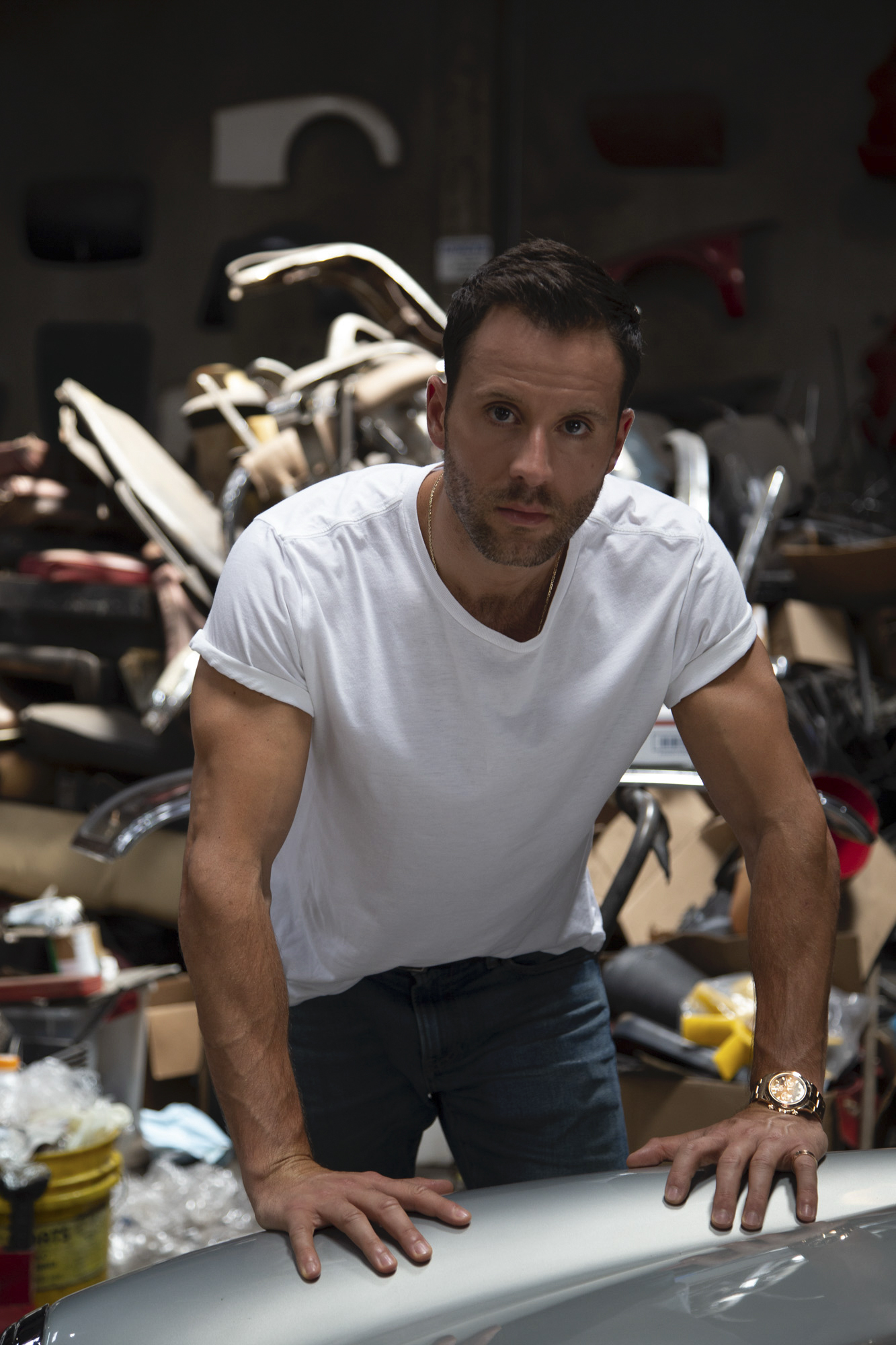
When you're selling cars now, how much do you think your customers consider what they envision themselves becoming? How much of that aspiration is represented in the car they're looking to purchase?
I'll go out on a Friday night and run into someone who says, "I've been dying to see you. I want to come to the dealership. I don't even know what I want. I'm just going to come over and find it." But we have 700 cars at the dealership. Don't just come. Go online, look at what you like, find a few cars you're interested in, and narrow it down. Otherwise, people come to visit me, and there's so much to take in. Another question people ask me is, "What's the car that's going to go up in value the fastest?" I always tell them, "Buy the car that you gravitate toward the most, or that makes you happy, or that your dad had, or that you saw in a movie. Find a car you have some connection to. And if that car goes up in value, it's a bonus."
Do people tend to care about the history of a specific car when they're looking to buy?
It's a bonus. If Alfred Hitchcock owned the car, how much cooler is that? But it might just be a grandmother in Pasadena who was a secretary's assistant, and she bought this cool Mercedes that she could afford. I tell people it's still a rare and unique car that has a story to it. Every single car has a story. All of these cars have stories that were created throughout their lives. The histories are different, but every car has a history.
Do you think there's a renewed interest in classic cars because the world feels like it's evolving so quickly technologically?
I feel like there's more attention, energy and focus on classic cars than I've ever seen. I bought my first classic car in 2000, and I swear I feel like there's more interest in classic cars now than ever before.
What do you attribute that to? Is it a multitude of things?
I think it's Instagram, among other things. Look at Sabrina Carpenter at Coachella. She comes out in a classic car, and her whole Coachella set was made up of classic cars. Everybody is into classic cars now. I have a friend who deals with rappers and athletes. He has a Pimp My Ride kind of business where he takes their cars, puts rims on them, installs sound systems and customizes them. He's always calling me, saying, "This person's here. He wants to buy a classic car." I ask, "Are they going to drive it a lot?"He says, "No, they just want to have it in the garage so that when they throw a party, they can leave the door open." It's a flex now. People want to say, "I've got a 1960 Impala in my garage."
Does the definition of "vintage" or "classic" change as the years go on?
That's interesting you ask that. This morning, a friend referred someone to me who's 22 years old. He owns a huge social media management company, and he's crushing it.He bought a 1965 Mustang today, which was intriguing to me. I would have assumed he'd be interested in something like a 1995 Acura NSX, but he wanted a '65 Mustang, which was awesome.
Could you talk about how the business started, its origins and how you've managed to grow it relatively quickly to what it is today?
I told you about my first classic car, the 1962 Lincoln Continental I bought in 2000. It was a sedan, and I always wanted a convertible. I sold the sedan and bought a 1961 Lincoln Continental convertible. I spent a year fixing it. I took it to the best shops I could find that would give me a good price, and I put in some elbow grease myself. It took me a year. We're in 2002, and I'm at my mechanic's shop, putting the final finishing touches on the car. I take it out for a victory lap down Sunset Boulevard. I've had the finished car for less than 45 minutes. I pull up to Sunset and Crescent Heights. A guy pulls up next to me in an Escalade. The front passenger seat is folded down, and he's sitting in the back. I look up, the window goes down, and he asks, "How much?" I say, "$55,000."He says, "No, not what year it is. How much?" I say, "$55,000." He says, "Pull over." I pull over in front of the Chateau Marmont, right before the little hill, in the loading area. He pulls up in front of me and gets out of the car. We sit there for two hours, and he buys the car. I go to his house the next day, and he writes me a check.
This was a profitable exchange for you I imagine?
I made a very good profit. He didn't pay the full asking price, but it worked out.It wasn't enough that I could retire, but it made me think, "Wait a second. This could be something." Then he wanted to buy more cars, and he had another Lincoln he wanted me to restore. That's how I got into the business, through that venture.
Did you have partners when you started?
No. It was just me.
Were there any notable business lessons you learned the hard way in those first three or four years?
You're always learning. I'm still going through things today. If you want to be good and strong at what you do, you're learning every day. You can't give up. At the bottom of my computer, it says, "Never give up." You have to keep going. The hard times make you stronger for the good times. When the good times are there, they feel great, but it's a roller coaster. There are going to be good days and bad days. I'm almost more cautious now when there are good days because it scares me that a bad day might be coming.
Have you ever encountered a car that you found almost impossible to part with? Something you knew might be the right financial decision to sell, but that you wanted to keep personally?
Alex Manos: Oh, yes. I have about 28 of those. I have my own collection. You have to remember, I started this in 2000 because I loved that classic car. I had to have it.There have been so many cars over the years that I wish I hadn't sold. But there are 28 of them where I said, "No, I can't do this. I can't let you go." I have a 1956 Mercedes 300 SL Gullwing that I bought in 2012 or 2013, and I've never sold it. When I bought it from a guy in Pasadena, I told him, "I'm never going to sell this car." He might have thought that was just a line, but I still have it. It's been about 13 years. We actually just emailed each other, and I said, "Why don't you come by and see it?"
How much time do you spend thinking about the future of the automobile? What happens in a world where vehicles no longer need drivers?
There used to be windup watches. You had to wind them to make them work. Then digital watches came out, and everyone was panicking that the watch business was over. But the business evolved. I think during the pandemic, the watch business did better than ever. I don't have any fear about the future of classic cars. In fact, I feel like the business is going to do better than ever as everything becomes more digital. First of all, there aren't unlimited classic cars. There are fewer of them as the days go by, so they become more desirable and collectible. And you don't necessarily have to drive them. They're pieces of art. You can have them in your garage, your driveway, or your living room if you have a big enough house. It depends on what you're into.I feel like the desire for classic cars is only increasing. With the internet and social media, Instagram and TikTok, why not go for a cruise in your classic car with your friends and post it if you're an influencer? It just promotes them more. They're called influencers for a reason. Big brands like Gucci or Prada hire people with 20 million followers to post themselves wearing a jacket, and suddenly their jackets are selling. These people are posting classic cars for fun. They're not even getting paid. They're doing it because they like them, and it's making the snowball grow.
Do you envision a world where the act of driving itself becomes more romantic as it starts to fade? Where people are predominantly in self-driving cars, and physically driving becomes something that's not just antiquated, but romantic, something people aspire to?
Yes. Right now, I could buy a Tesla myself, but I drive a brand-new Range Rover day to day, and I drive classic cars all the time. I feel like there's no connection with an electric car, or with a car that drives you around autonomously. If you get into a Waymo and it moves you from point A to point B, there's no connection. It might get you to Ralphs or wherever you want to go, but sometimes you want to put on music and shift into second gear. You don't need the speed. You just want to feel the car go. It's more romantic. There's more of a connection, energetically. You can feel it. You're at a red light, you hit the gas, and you feel the car move. You hear it. And it's not just the sound. You can smell it, too. Classic cars have such a distinctive smell. We had a '90s Porsche at the dealership, and a friend of mine came by. His brother had bought that same car new in the '90s. He was just stopping by, and when he saw the car, he opened the door. The smell hit him, and he said, "Oh, my God." It took him right back to 1990. His face went pale because his brother had passed away. It brought everything back to him. It was incredible to witness. These cars have a smell, a feel, a power. There's so much more to them than just jumping into a Waymo, pressing a button, and going down the street.
How much of your business do you think is dependent on nostalgia? Whether that's literally people wanting to own a car they had at a certain point in their lives, or being homesick for a time or place they've never actually experienced?
Look at me. Can you hear the passion through the speaker? I think passion is a huge part of it. That's really what it is. People see these cars in a movie or a TV show, maybe with their girlfriend, wife or kid, and it reminds them of something. They think, "I've got to experience that. I'm only here for so long. I love that car." They figure there's a good chance the car will go up in value, so why not buy one and enjoy it? Maybe they get their money back, or make a little money, but they get the experience. I was speaking to a friend today about how much people are willing to spend on entertainment. Classic cars are all of those things. They're an experience, entertainment, nostalgia and passion. They bring you back to your childhood. They check so many boxes.
I asked you earlier about some of the challenges you've encountered. Is there a particular decision that stands out as the best decision you've made in your career?
That's a tough question. I really love the location we're in now.
Could you talk more about that, and where you are now?
I'll give you some backstory. I used to be in East Hollywood, selling cars out of my apartment. Then I rented a space in Whittier that only had two parking spaces and an office. I wasn't there for long. Then I moved to Downey, where I rented three two-car garages that were connected, another three two-car garages, another one on the side, and the parking lot. Eventually, I filled the entire space with cars. Then I moved to our current location in East L.A. That was in 2010. At the time, I wasn't sure if it was a good idea, but it couldn't have been a better decision. It's in an industrial area. You walk up to this small door, open it, and there's an abyss of cars. You go into one room, which leads into the next room, and then another room. There are 700 cars on the property. Moving to that location has to be one of my best decisions. At the time, it didn't feel like it, but now it fits us perfectly. My guys are in the back. They used to be in the front, but as we've expanded, they're now in the back, where the detailing and washing happen. Everything flows perfectly. Moving to that location was one of the best decisions I've made.
How do you imagine the company growing over the next decade or beyond?
It's hard to say. I don't have a business plan that tells me exactly where we're going to be. But I feel like I'm just getting started. We've done a lot, but I'm working seven days a week. I try to push myself every day to do more. Whether that means having more locations, innovating or doing something else that's unique, my goal is to stay in this space, keep figuring it out, and never give up.
Stay up-to-date with exclusive events and content.


