F L A U N T


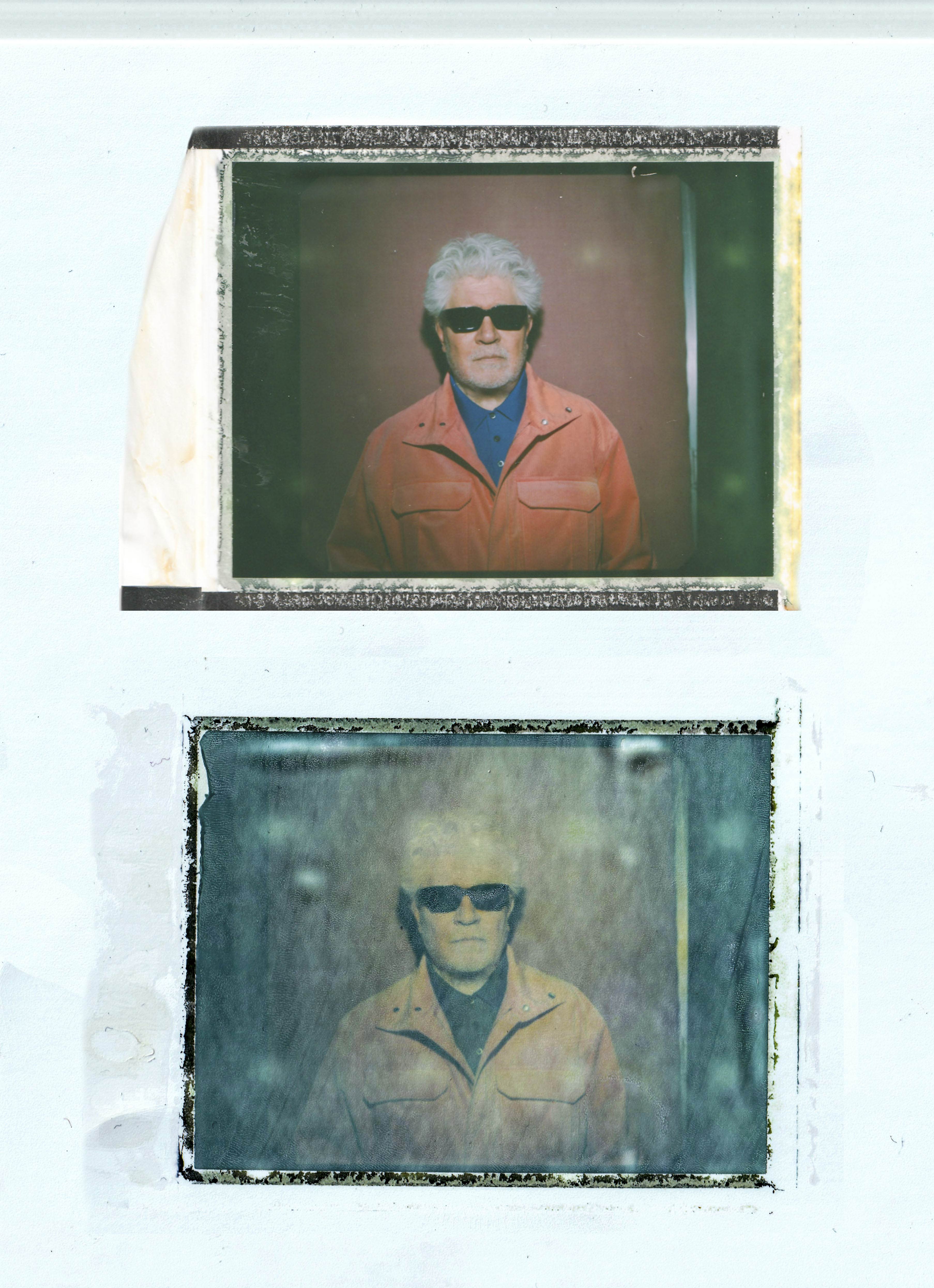
“Fiction does not have the power to solve real-life tragedies,” Pedro Almodóvar tells me. “Yet, although a film cannot change real life issues—it can’t help fix the climate or help end the war in Ukraine—it can show us things about ourselves and that can be just as important.”
The Spanish auteur and I are conversing in front of more than 300 people at a couple of special preview screenings for his latest film, Bitter Christmas, held at the Curzon Mayfair in London. The historic 1930s cinema is where Almodóvar first watched Louis Malle’s Atlantic City, starring Burt Lancaster and Susan Sarandon, a film he credits with igniting his own desire to make cinema. As the award buzz kicks off for Almodóvar’s latest tragicomedy, there are BAFTA voting members among the audience, along with Scottish star Tilda Swinton, who has famously worked with Almodóvar, plus legendary costume designer Sandy Powell and Curzon CEO Philip Knatchbull.
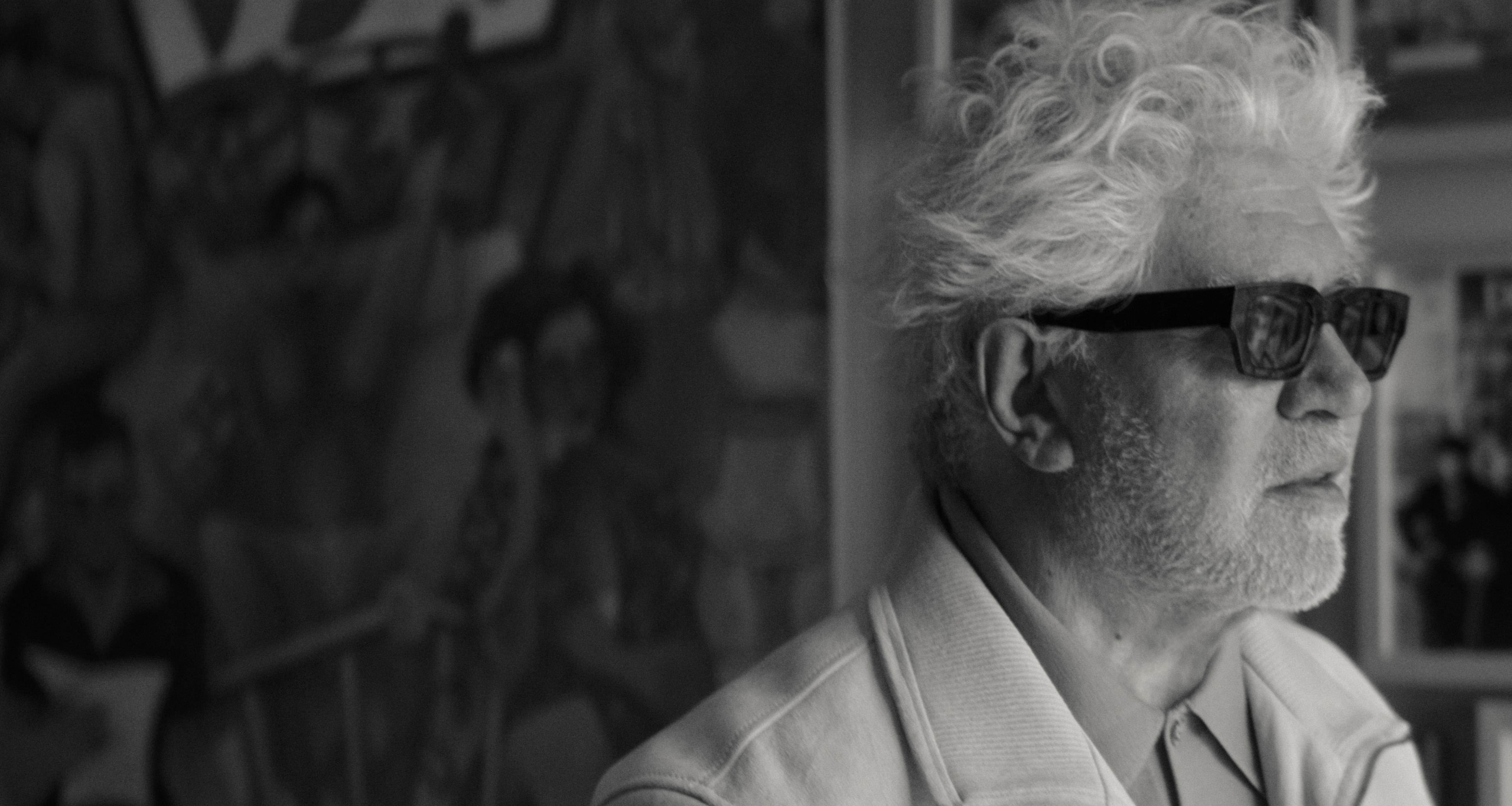
Almodóvar is known for films that excavate motifs of queerness, interrogate relationships between unlikely partners and friends, and feature strong, intelligent women throughout. Many of his films also touch upon his special relationship with his own mother, Francisca Caballero, who passed away in 1999 shortly after All About My Mother premiered. Yet in Bitter Christmas, along with his signature autofiction, Almodóvar proposes a reckoning of sorts, complete with a confrontation between two characters about whom he confesses has a “very personal” touch.
Bitter Christmas is the story of a director, Raúl, who hasn’t made a film in five years, writing his next project about a writer and cult director, Elsa, all the while exploiting the lives of those around him to draw inspiration—told in the extraordinary tones for which Almodóvar is known. Yet the 70-something filmmaker admits that writing this film “was an interesting exercise…it was the first time that I found a character questioning my own work, questioning the director. And in fact, everything that I found [Mónica, another challenging character] saying, I could easily say myself as well.”

Early on in his life, as little 8-year-old Pedro spent time with his mom (whom he calls “a very clever woman!”) watching her write letters on behalf of their illiterate neighbors. She would add in a line here and there, not corresponding with what the senders told her. When Pedro questioned his mother, she simply pointed to “the satisfied, happy faces” of the recipient because of that tiny line she had ad-libbed in their letters, something which turned out to be one of Almodóvar’s biggest lessons: “Reality, all of life, needs fiction to be more bearable, more livable,” he says.
Almodóvar is of course known for his oeuvre of award-winning films, which include Talk to Her and his recent English language collaboration with Swinton and Julianne Moore, The Room Next Door, but also for recently publishing a collection of short stories The Last Dream, which features one called “Bitter Christmas,” as well as collaborating with Zara on the retailer’s 50th anniversary capsule in 2025.
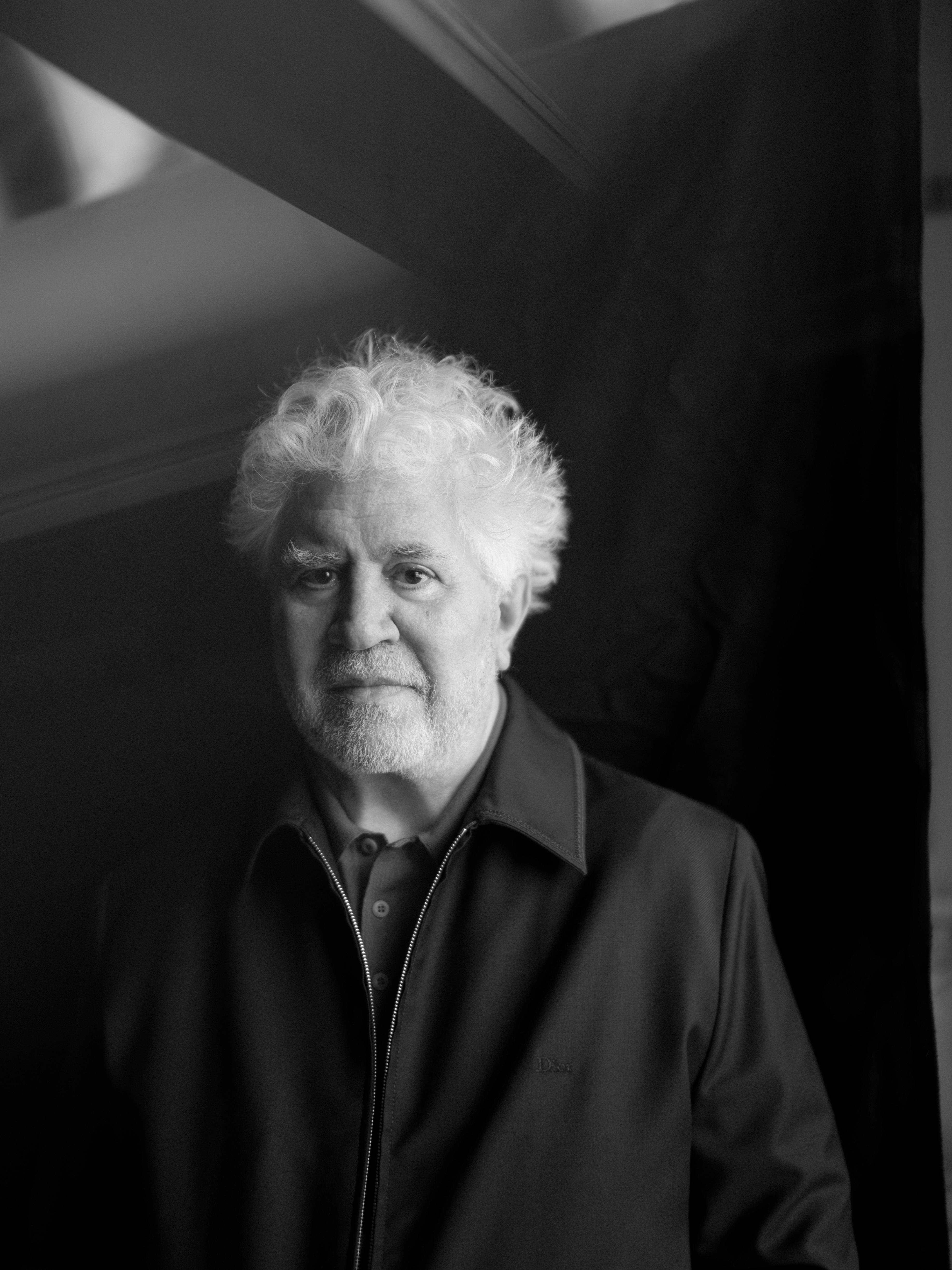
In his latest for the big screen, the costumes, assembled by Spanish costume designer Paco Delgado, become part of the narrative, in some instances informing the audience’s subconscious of things to come.
Bitter Christmas, which is releasing in LA and New York City on November 13th and nationwide on November 25th, screened in Cannes in May of this year, after a cinema run in Spain earlier in March of 2026. While on the Croisette, the film’s composer Alberto Iglesias, a frequent Almodóvar collaborator, won the Cannes Soundtrack Award for his haunting score, evocative of Bernard Herrmann’s score for Hitchcock’s Vertigo. “This film is very intimate, and it talks about this mysterious relationship that exists between life and fiction,” Almodóvar shares. “And although it is by no means a thriller, there is something of a mystery to it that goes beyond the simple drama.” He continues: “And I think it’s something that the composer captured really well because the soundtrack has elements of genre to it.”
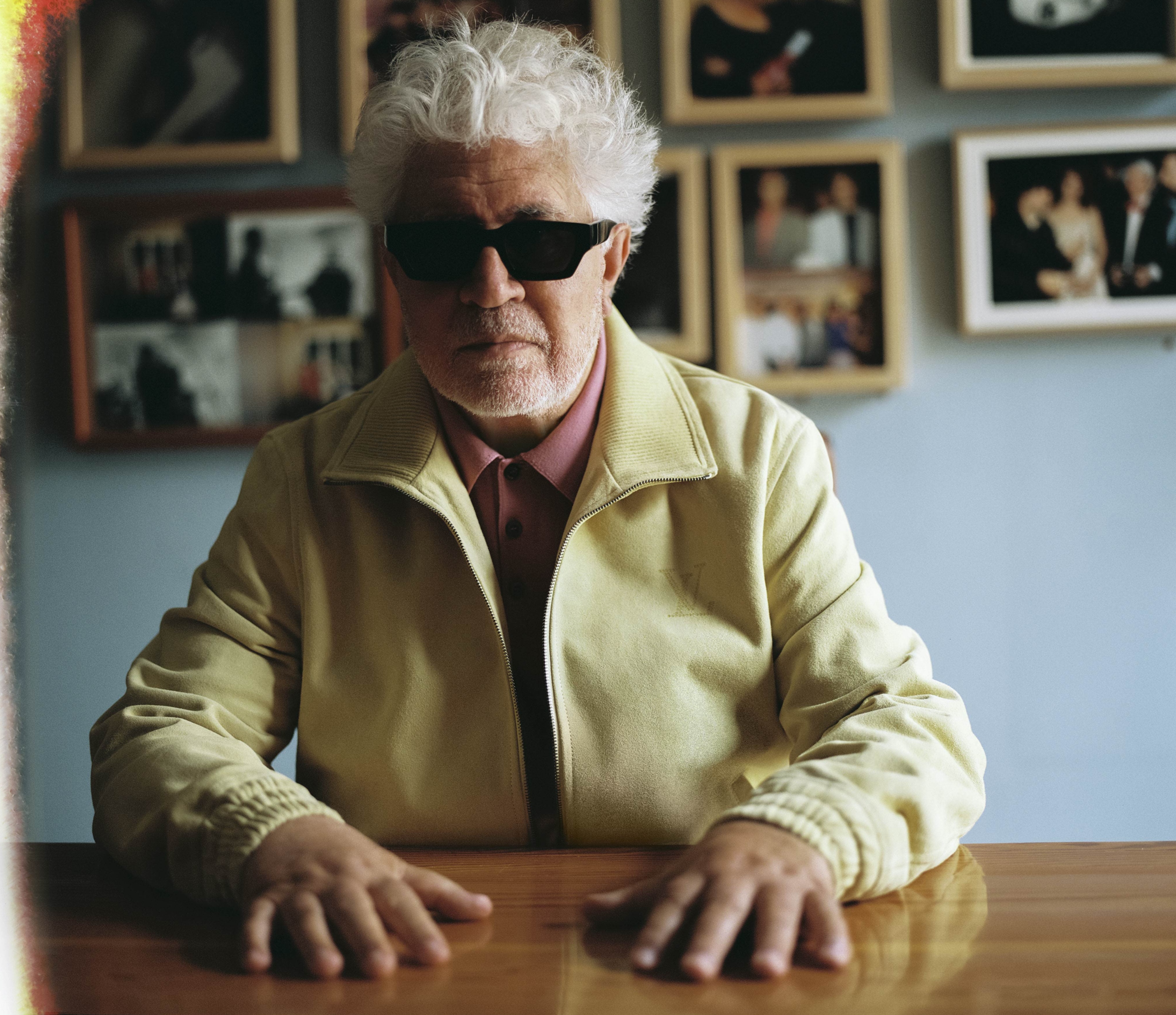
Shot between Madrid and Lanzarote, a volcanic island with black sand that Almodóvar describes as a “perfect spot to go to hide, to die, to run away and also to recover a desire to continue living,” Bitter Christmas features beloved songs at the center of its story, as is often the case with the Spanish helmer’s work. This time around, Almodóvar goes a step further, using the name of a classic song by Chavela Vargas as the title of his film. That haunting, nearly spoken song by the aging Mexican singer, along with a soft ballad performed by Spanish singer Amaia, remain with the viewer, accompanying us long after the film has ended.
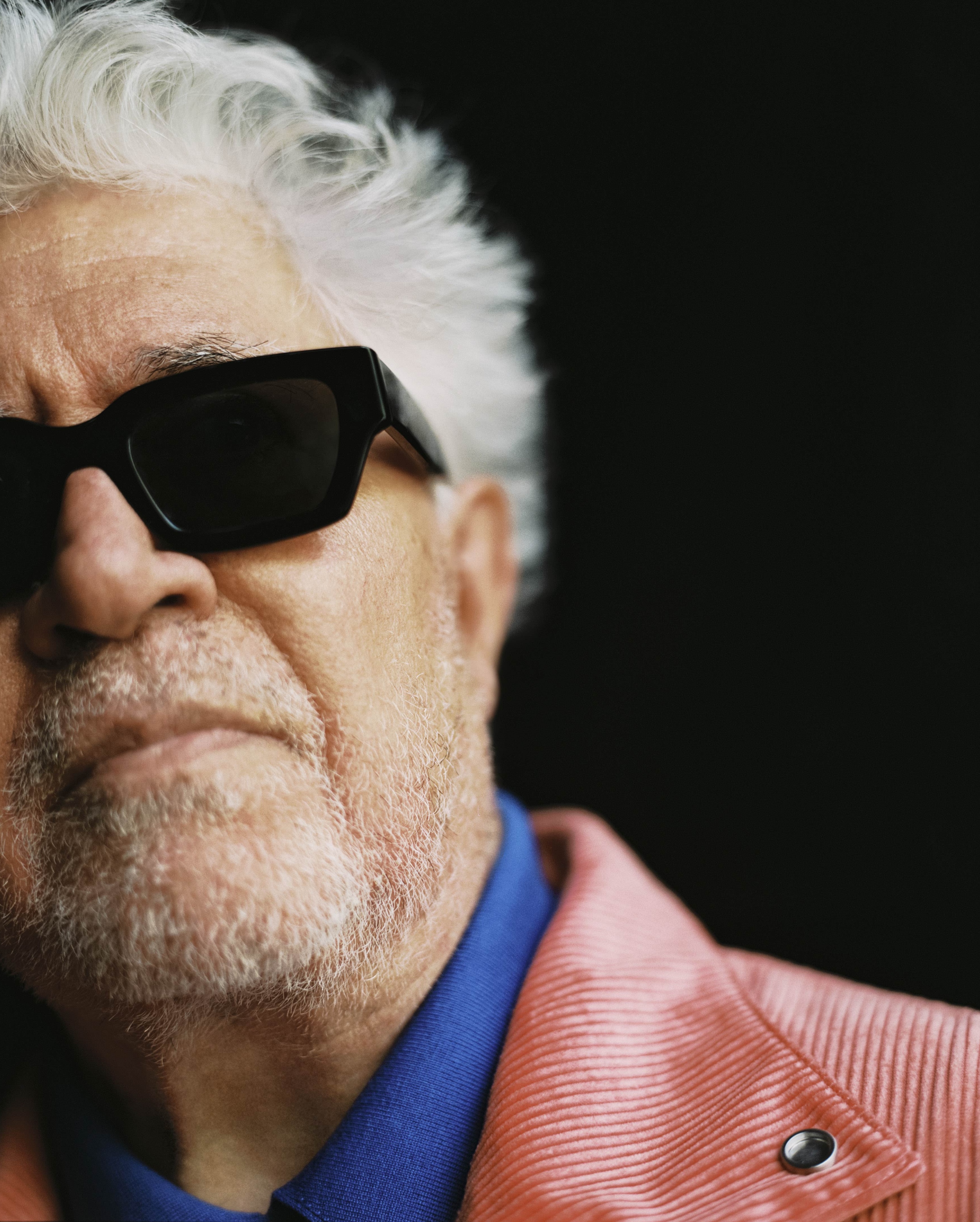
What is obvious to anyone who meets Almodóvar is how kind he truly is. He spends the few minutes of break he has between screenings in London chatting with his fans who have been patiently waiting for him outside the cinema. He takes selfies with them and signs various items they brought along, from books to posters. He doesn’t seem to believe in velvet ropes—when more fans crowd outside the impromptu roped-off green room, he tells the cinema staff to let them in. His outlook of the world is what comes through in his films, which possess an undeniable and unbeatable belief in humanity.
“I get a little bit tongue-tied and shy every time someone asks me for any advice, like acting advice and directing advice,” Almodóvar concludes, “because a career is really created, you’ve created it yourself and although there are film schools where they can teach you how to do things, really cinema is something you can only make by doing it.” He then adds, importantly, “the one piece of advice I am happy to give, not just to filmmakers, is to never throw in the towel, to keep going—because resistance is essential, it’s crucial, not just for creative practice but also for living.”
Stay up-to-date with exclusive events and content.


