F L A U N T


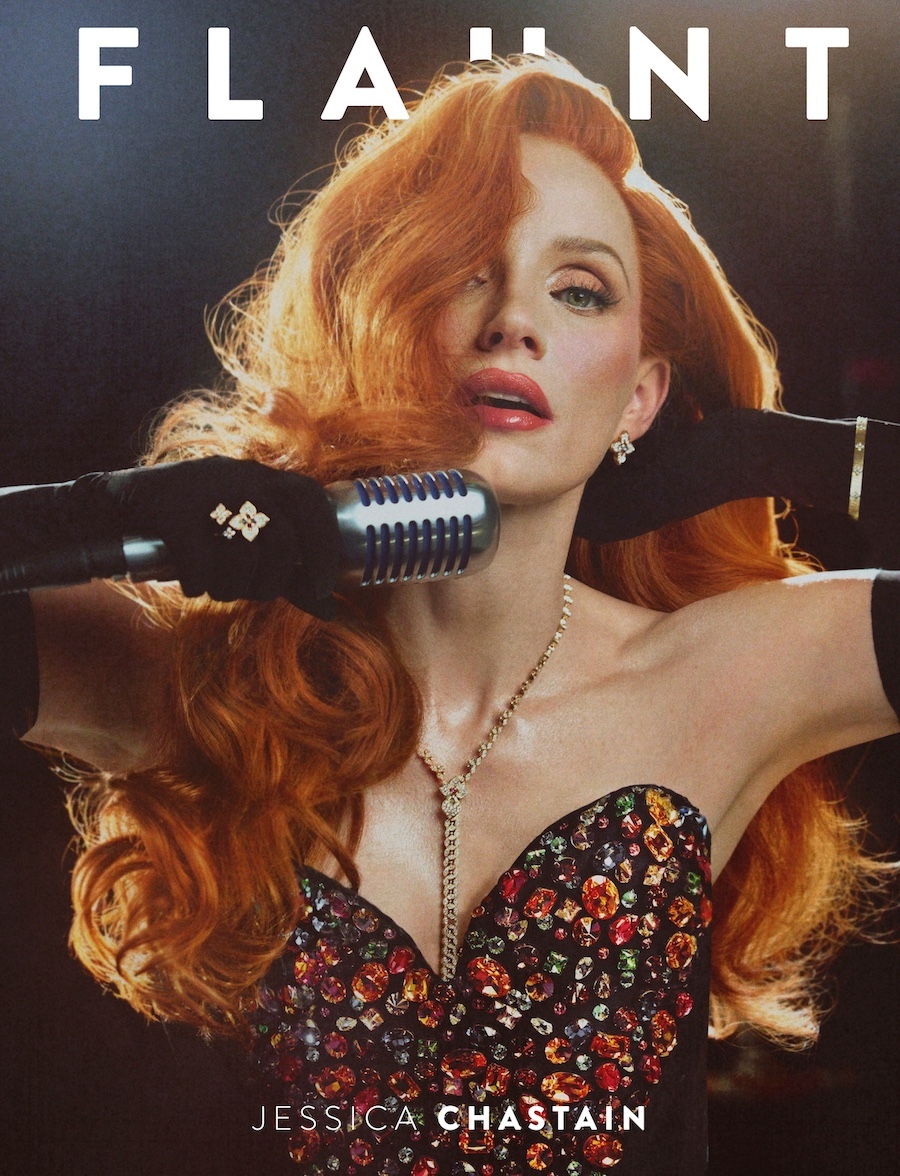
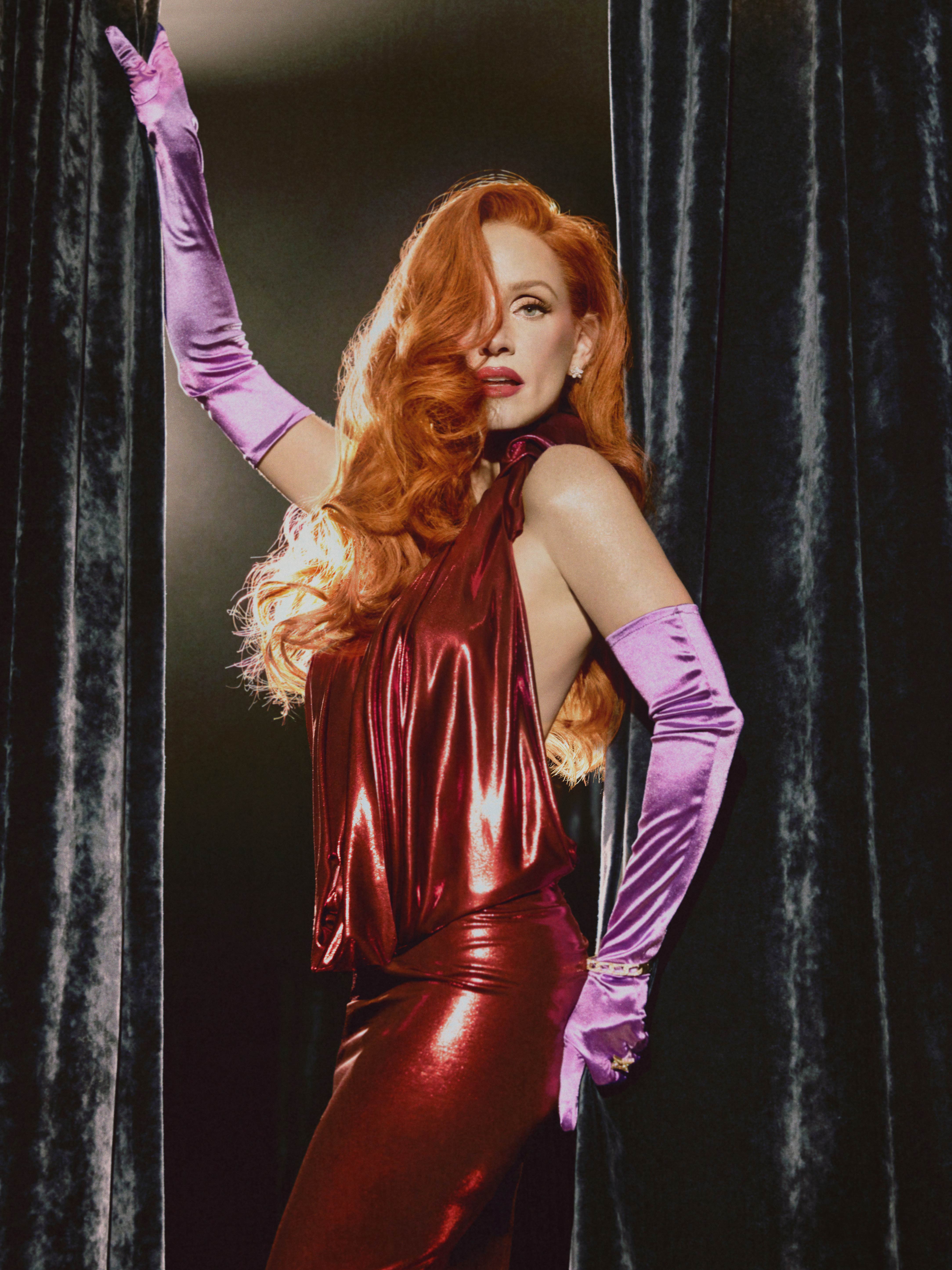
Jessica Chastain is on the way to set. An early morning, a car with dark, enveloping upholstery. These moments of repose, perhaps used by the actress to make notes on her lines, dip into a paperback, or just look out the window, are now, due to the perma-connectivity of our contemporary situation, open for conversation. I’m a little conscious of crashing into a personal decompression zone, but warm and willing to engage, Jessica never makes me feel that way. Unexpected to encounter in the video-frame are the flaxen waves of an unstructured, cool-blonde bob, snipped just above the nape, rather than her signature below-the-shoulder rich auburn-red tresses. Present as anticipated is her luminous porcelain skin, and soft blue-gray eyes behind wide glasses lenses that reflect the passing vistas of an already bright California day as the set of her latest feature film draws ever closer.
Now 49, Chastain projects an innate elegance with the theatrical range of Bette Davis and Katharine Hepburn. On the red carpet, she glows with the kind of Old Hollywood glamour. The cinematic auteurs of our own time have deployed Chastain’s remarkable amalgamation of abilities to take us back—and forward—in time and space and into the heart of their art form. Her pages-long filmography features Christopher Nolan (Interstellar), Terrence Malick (The Tree of Life) Guillermo del Toro (Crimson Peak), Ridley Scott (The Martian) and Kathryn Bigelow (Zero Dark Thirty, for which she received her first ‘Best Actress’ Oscar nomination in 2013). Bergman muse Liv Ullmann directed her in the title role of the 2014 adaptation of Strindberg’s Miss Julie. And top cinematographer Benoît Delhomme made his directing debut with 2024’s Mothers’ Instinct with Chastain and Anne Hathaway trapped in a circuitous loop of domestic psychosis.
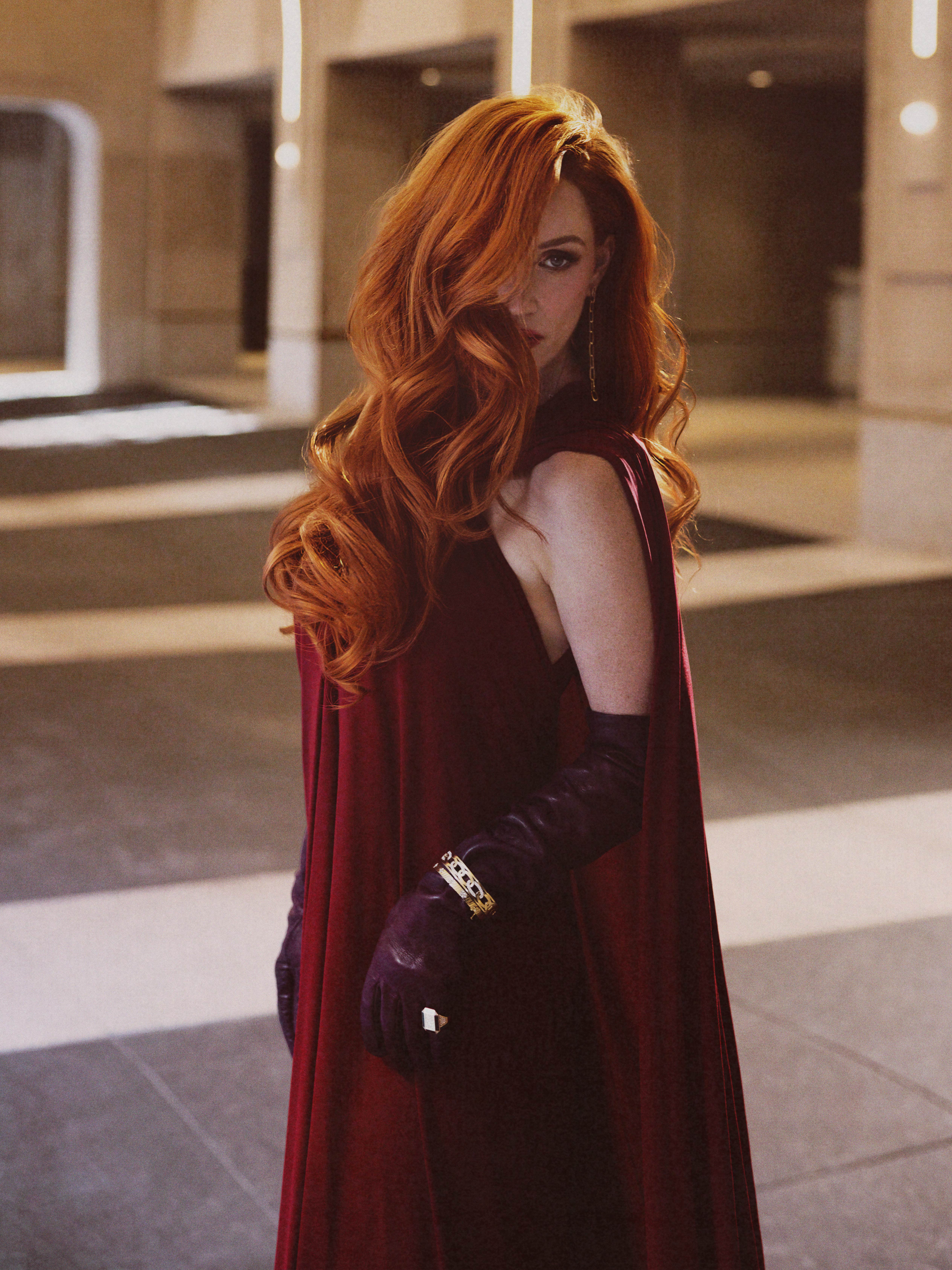
Behind it all is raw talent honed by a determined focus on her craft, a curious, literary spirit, and a deep love of Shakespeare (Jessica has performed Romeo’s Juliet, Desdemona in Othello, and King Lear’s daughter Goneril). She began as a young hopeful who leapt from the San Francisco theater scene to train at the highest level in New York via a scholarship to Juilliard, who awarded Chastain a BA in 2003, followed in 2024 with an honorary Doctorate in Fine Arts in recognition of all the above. Today she’s the kind of unaffected star who might have a Best Actress Oscar (won in 2022 for her hypnotic turn in The Eyes of Tammy Faye) on her shelf, but will still roll up her sleeves to take on the crucial transformations necessary for each subsequent role wholly on its own terms.
Chastain recently starred in high-concept Blumhouse horror, Other Mommy. A dual role, Jessica plays an insidious shapeshifting entity who mimics the form, voice, and mannerisms of “real Mom” Ursula, with the actress seamlessly inhabiting both sides of the spectral plane as she fights for the life of her 7-year-old daughter. It’s a real jump-scare fest, proving that extensive immersion in Shakespeare’s gloom preps an actor in ghosts, ghouls, dreams, within dreams and things that are not what they seem. Hot on its heels, and demonstrating her consummate versatility, is Netflix feature Heartland. Here, Jessica picks up the microphone again as Misty Jones, a reclusive former Nashville singer who turns detective to find her missing niece, streaming from November 13. Both roles I can’t wait to ask her about. But before that, I wanted to take the opportunity to gain some insight into her process and the professional practice she’s developed over the past two decades.
Because I’ll never forget the first time that I, and the world, was introduced to Jessica Chastain.
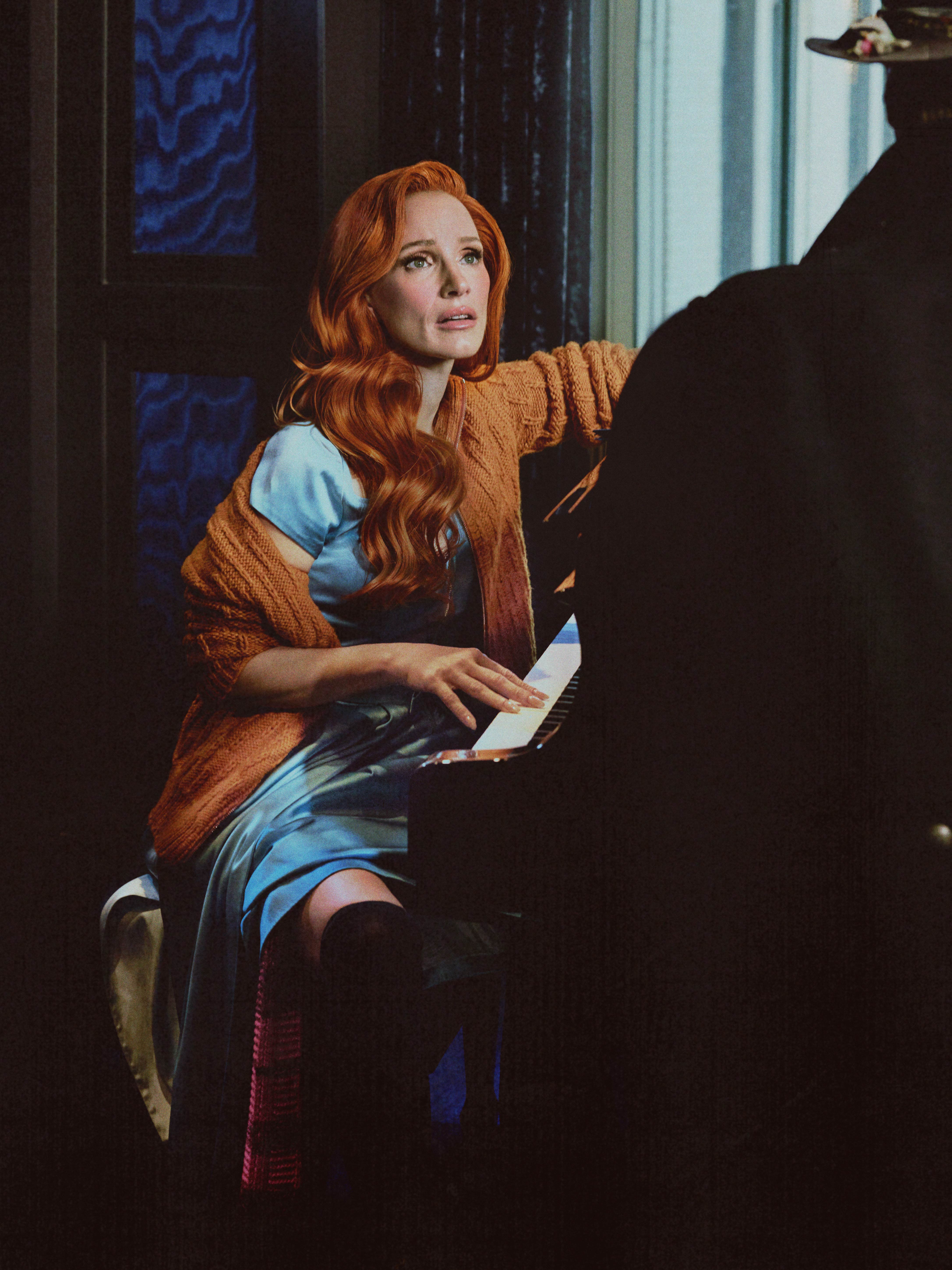
I was at the September 2011 Venice Film Festival premiere of Wilde Salomé, [a docudrama released in companion with his adaptation of the Oscar Wilde play Salomé] directed by Al Pacino. Mr. Pacino was also being given a special award for his work in cinema, which you presented him. I remember him striding up through the room to take the stage. When he got there, he declaimed to all of us how he had been so overcome by the discovery of your existence, that he was completely reinvigorated in his feeling for the craft of acting, through being able to witness your performances as Salomé. I wanted to begin with that moment, when things were coming together. How did that all happen?
Oh my gosh. In the mid-2000s, I was here in Santa Monica, auditioning for many things and not quite getting anything. Then I went and visited a friend in Australia, and while I was there my agent called me and said, “Al Pacino has asked you to audition for Salomé at the Actor’s Studio.” Which was very confusing to me [as] I’d never even met Al Pacino. I come to find out his good friend Marta Keller had seen me in a play off-Broadway, knew that he was looking for a Salomé, and she had suggested me. And that’s kind of where it all just took off. Before I met Al, it was really tough auditioning—no one really “understood” what I was. I mean, I was out there hoofing it, you know? Someone sent me something really funny from an old issue of Backstage a while back. A casting director described me coming in years ago: “Jessica came in that day. She had had seven auditions that day and she was memorized, her hair was messy and she was a little sweaty.” Al was really the one that kind of plucked me out of obscurity.
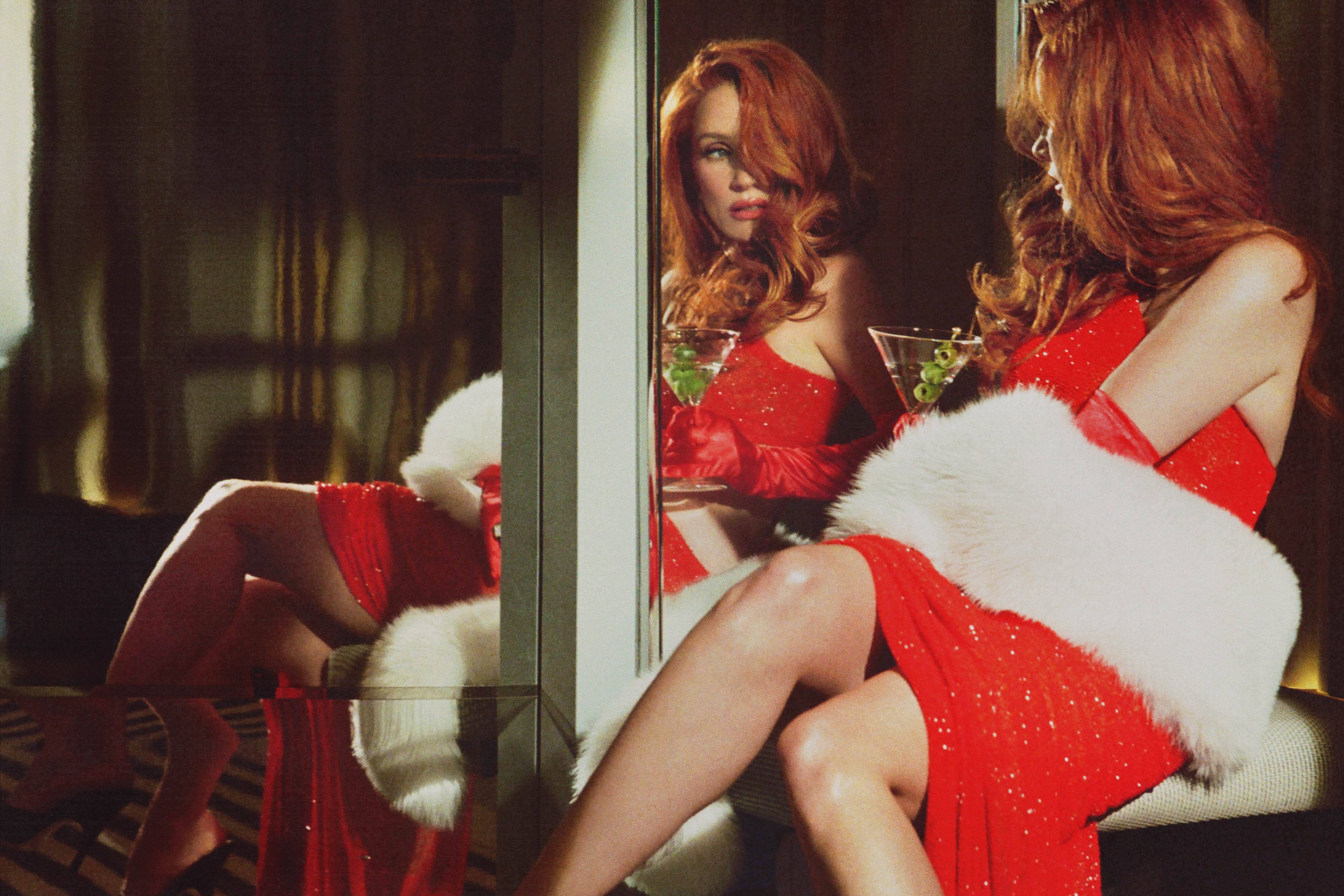
It was quite a “debut,” even though you had completed so many, great projects already, which then seemed to arrive all at once. [The 2011-2012 period marked a truly generational run for Chastain, with features Take Shelter, Coriolanus, Texas Killing Fields, and The Help, for which she received a Best Supporting Actress Oscar nomination, all released in 2011, and The Color of Time, Lawless, and Zero Dark Thirty in 2012]. You then worked with Terrence Malick on The Tree of Life (2011), which is the most ethereal, beautiful film. When you start with that level of production, has there been a contrast between working on a film like that, and then everything else coming after?
Al taught me so much about acting on camera. I was so scared [to shift from theater to film] and then through these shoots, I started to understand the camera in a really intimate way that I now try to take into all my work. Terry just taught me about being a human being. He was a philosophy teacher to me. In Tree of Life, I was asked to become the embodiment of grace, which is no small task. So I really delved into meditation to get to that space. Looking at Raphael’s paintings and the Madonnas…It was just such a meditation on life. This shoot had the consequence of really teaching me about the camera, the idea of the camera as “always rolling.” So I got to just learn by doing by being part of an approach to filmmaking like his. If I’d ever been nervous or shy, I think that film completely got rid of it, because I just got used to living in front of the camera.
I made a list of your works to discuss with you, and it runs over several pages. With so much more new work coming out, is there anything in your now-huge catalog that you would say is a “defining role” for you, or will always be with you?
I feel like there are so many. That’s a tough thing. Because of course, Salomé was so important for me. I really just threw myself into it with so much. And Tree of Life, of course. Tammy Faye. That’s another one where the role was so different from who I am. Being her was a different way of speaking and a different way of laughing, how she carried her body. Even singing in her way was so difficult for me to do. Anything that feels really scary, has, in some sense, even if it doesn’t turn out great, become some kind of defining moment in my career, because it pushed me beyond the boundaries or whatever I thought I was capable of or comfortable with. I like it when something forces me to get out of my comfort zone.
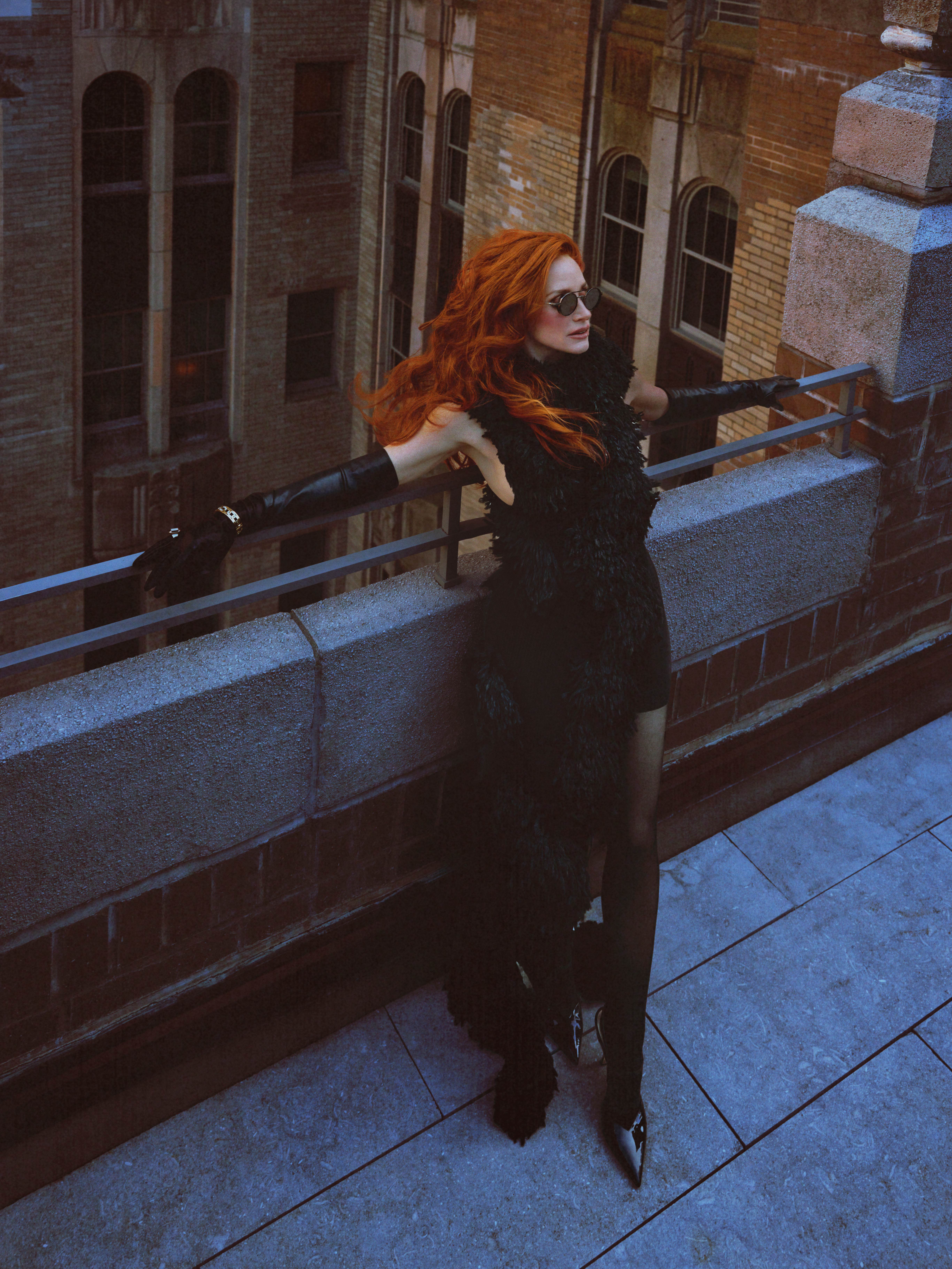
You can see that with every role you take on. You have something in your eyes in every character that I’ve seen of yours…that you’re not afraid to put it all on the line. I just rewatched Molly’s Game—you’re just so tough and so cool, and your performance really nailed that very complicated person and the situation she found herself in.
I mean, Aaron [Sorkin] really helped me with the cool factor. It’s just encoded into the dialogue and in the language, and I work well with him because I love language. I studied Shakespeare. I love the rhythm of language. And so, if something is written like that, I will memorize every piece of punctuation. I savor it, and he could tell that I did, and I think he appreciated that also. The “coolness,” honestly, is just in what he writes.
That was an interesting time because, Kardashian culture was really at the fore then. I read her book, and I thought a lot about Molly coming to Los Angeles, finding herself assisting at these private poker games…I remember when I moved to LA, and, you know, the scene around Sunset Boulevard, and these clubs that I would sometimes get invited to…I think that’s why I moved to New York as soon as I could, because I really didn’t really embrace that kind of culture. What we tried to explore in Molly’s Game was this idea of the complete transformation that this woman goes through, and how, as she transforms, she gains power. There’s nothing wrong with the transformation she’s making, and I’m not judging any woman for the choices they make.
Actually, I don’t judge women, full stop. What I thought was really interesting with this was using it to see how the world navigated around her, and then how they punished her. Because at a certain point, a woman’s “not allowed” to have too much power, so they’re gonna try to take it back.
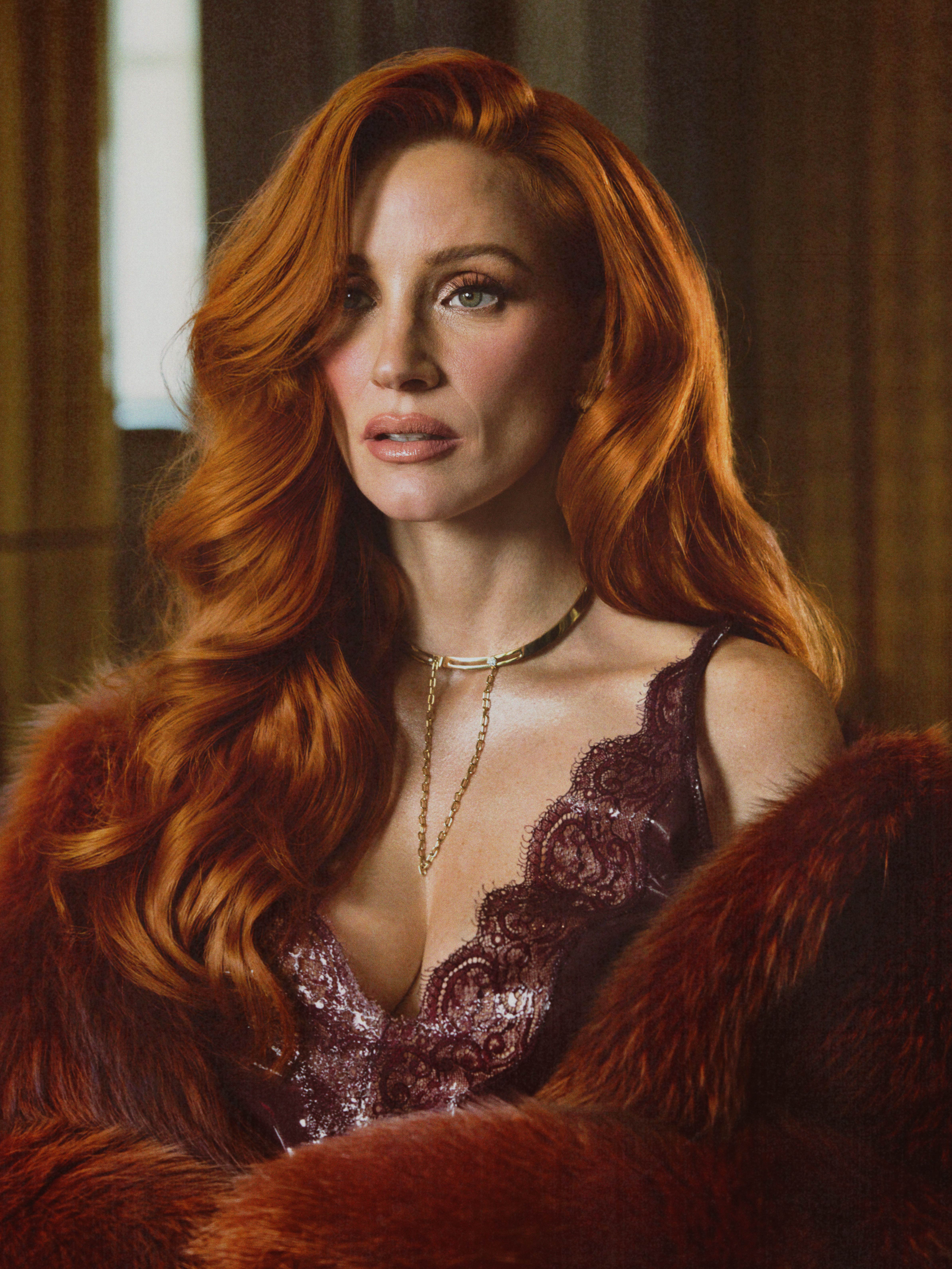
It was clear that [Molly] very quickly “learned the rules” of the game, of that flashy, celebrity-adjacent moment, and she was playing them to her own benefit. Then society, the justice system, tabloid media, everything, slammed down on her. It’s just another tough woman you have played. If we could also touch on Interstellar (2014) here. Where you are the heroine, you’re the hero, you’re the scientist, you’re the emotional heart of an incredible endeavor. What was the Interstellar experience like to be a part of?
I was so moved by the character of Murph. It’s interesting working with Chris. He doesn’t give you the answers. You gotta find them. He’ll give you the breadcrumbs to explore, but he doesn’t tell you. I became like a detective on a set. There’s a lot of things there that I discovered that weren’t obvious at first. When I went in to do my costume fitting, the clothes were very particular, and I was confused by them. They were very masculine. And I thought it was such a strong choice, and I didn’t understand why…I didn’t realize until I saw Matthew [McConaughey] on set in his own costume, right? I was like, “Oh, okay, this coat is my dad’s coat. That’s why I dress like this. I’m dressing like my dad.” I discovered, in press coverage actually, that the film really was somewhat of a love letter to Chris’ children. I was moved by the responsibility that was given to me, that I got to something that was so personal for him.
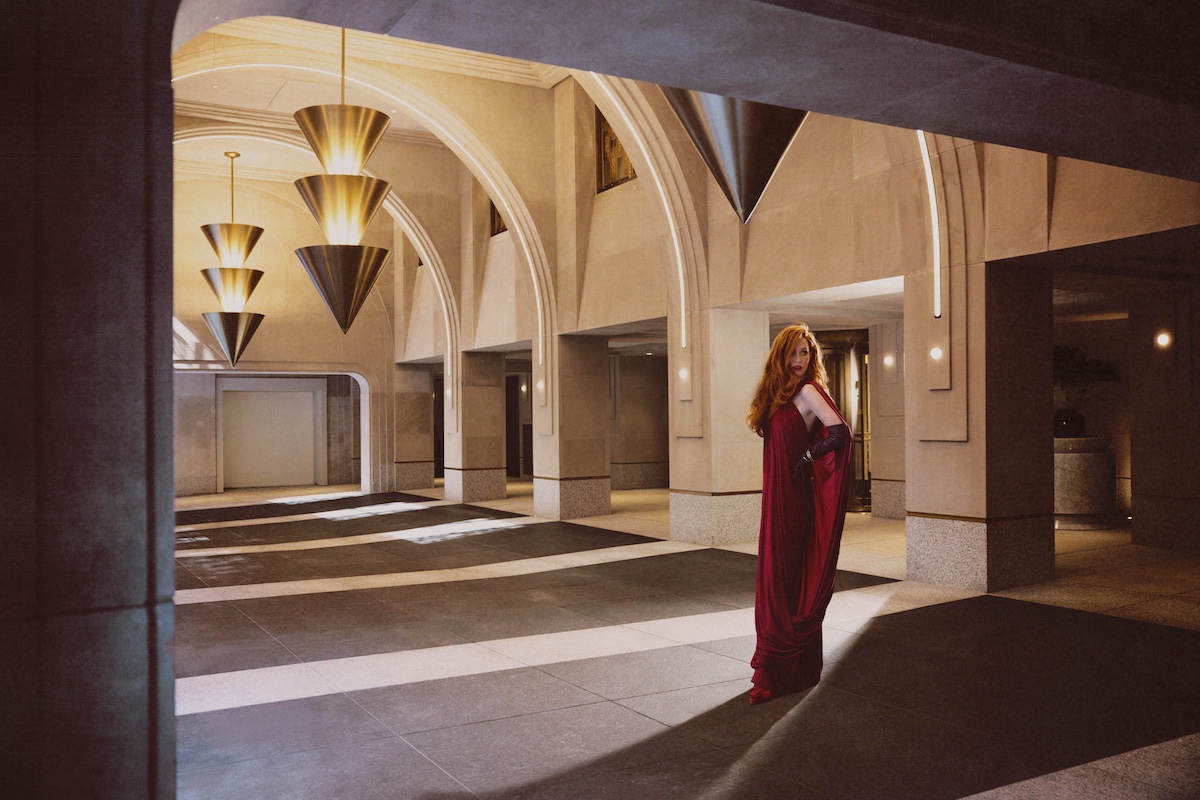
Of course, on the surface, it’s a work of science fiction, these grand ideas, astrophysics and time travel, black holes, et cetera. But that’s what comes across, that personal feeling.
When the film came out, I feel like people didn’t really get how special it was, but I think they do now. At the time, the reaction seemed a little tepid; I was like, “What’s happening? This film is amazing.” I went to Chris, “I know you’re a genius, you don’t care, whatever. But when 2001: A Space Odyssey came out, I think it was the New York Times that said the film was boring…This is a film that will stand the test of time. People don’t get it yet, but they’re going to.” And the fact that Interstellar was back in theaters again 10 years later, in IMAX, and broke all these records, really goes to show that that is the case. [Interstellar is now the highest-grossing IMAX re-release in movie history, with the latest run boosting the film’s total box office to $724 million].
That brings us to your next cinematic release, Other Mommy (2026, dir. Rob Savage) which will hit theaters in October, features a suburban family’s life turned upside down by the appearance of their child’s extremely unsettling imaginary friend. As you play the real mother at the same time, what were you drawing upon to make the two parts of the dual role equally authentic?
I thought a lot about the shadow side of people, and specifically, the shadow side of motherhood. I found the script to be exciting because it delves into things that we’re not really allowed to discuss. You know, as mothers, as women, we are raised and programmed to always be grateful, and never to complain. If you complain, you’re a bad mom, you’re a bad whatever. So I thought it was interesting to show something of that “other” side. I don’t want to give away any spoilers… But I can say that the film and the subject matter does get into some secrets that might be hidden by the idealised concept of motherhood.
Your interpretation of the entity seems to be based in demanding physical labor... How did you find the most effective way to present the “Other Mommy” onscreen?
At first when I came on, they were thinking of using some prosthetics, but the shoot was moved up, so we didn’t have a lot of prep time. So Rob and I were talking one day—“Well, is there anything we can do without the prosthetics? Let’s consider what that would look like.” Initially the prosthetics idea was going to be an effect where my skin was ‘falling down’ a little bit. Then we did some thinking: “Okay, if this entity is working really hard to hold this shape, the shape of human skin, that maybe that’s a painful thing. It would take a lot of attention to keep it up. So after a while it gets heavy, feels like carrying a weight.” And if it’s painful, there’s the tension, then the tears. We were just talking in makeup, trying things out. At one point, an actual child came in, I just said, “What do you think about this?” And I made the face. Then Rob and I were like, “Okay. This is it.” I think it’s just weird enough that it works for the entity of “Other Mommy.”
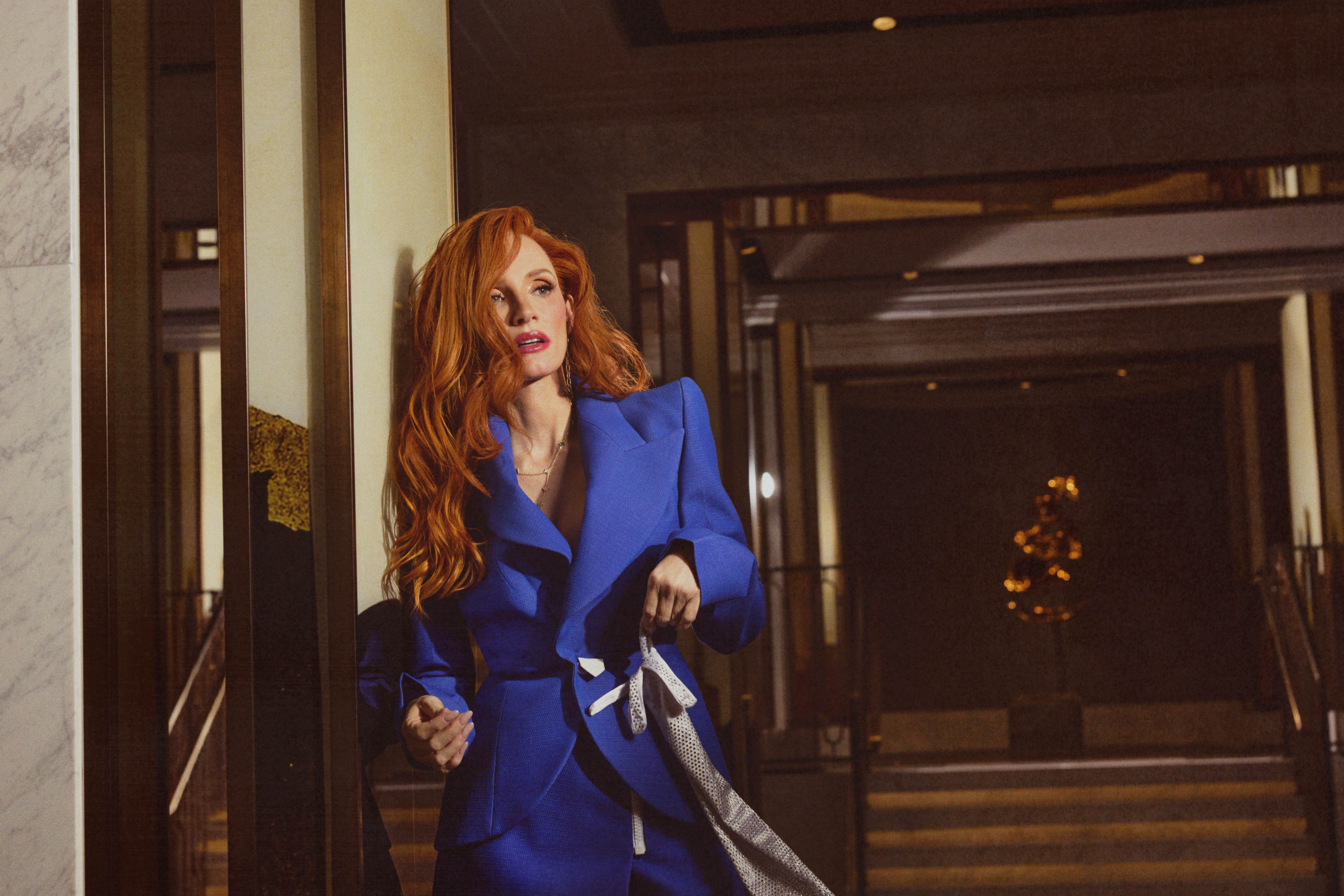
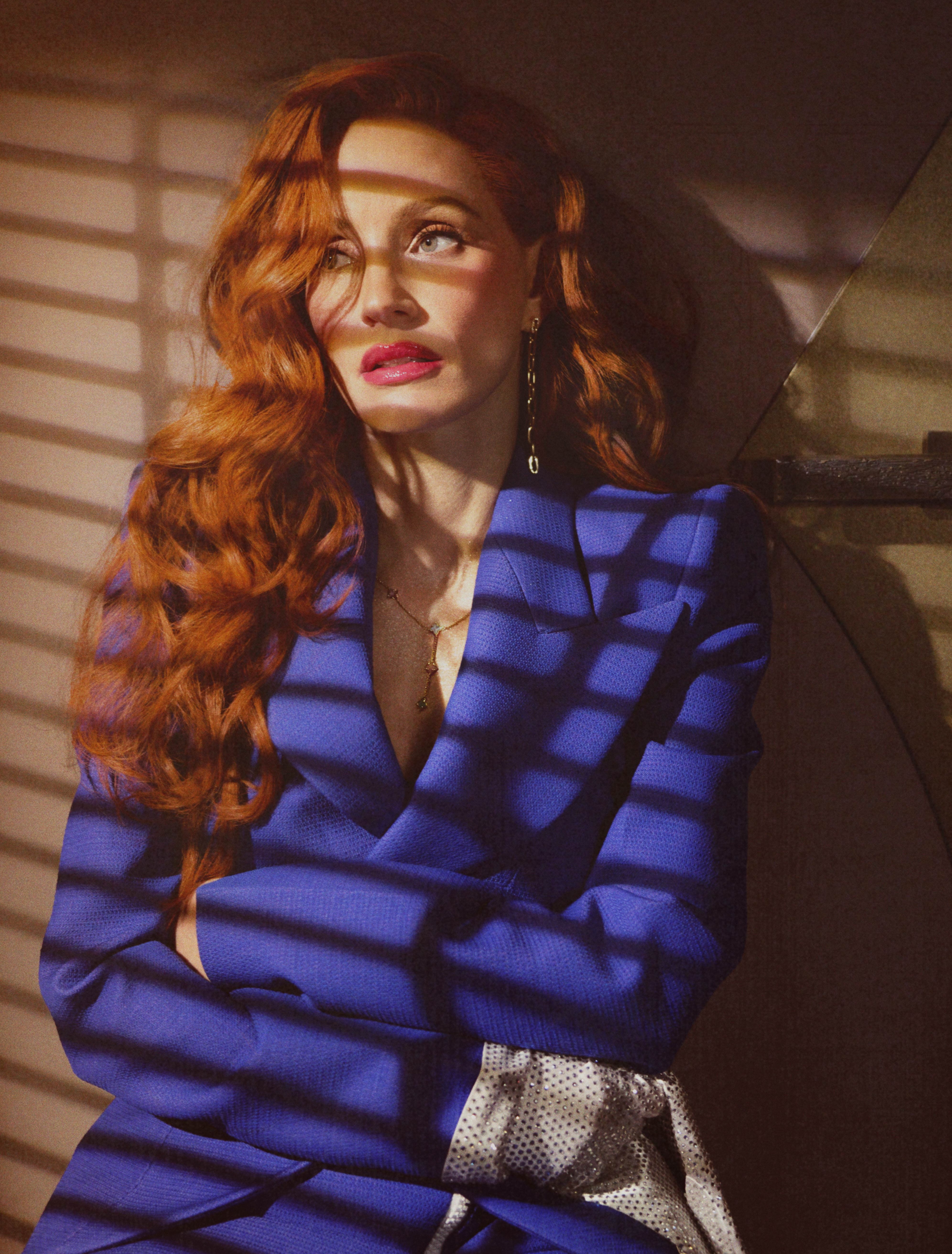
Let’s jump to your new feature Heartland, which releases on Netflix in November, a dark thriller set in the Nashville music scene. This is a location and culture that you’ve been immersed in previously, with George & Tammy (2022, dir. John Hellcat) and The Eyes of Tammy Faye, (2021, dir. Michael Showalter on televangelist Tammy Faye Bakker). Tell me some more about your character, Misty Jones.
She had been at the epicenter of the Nashville scene, had fame, but she left it all. She’s become a recluse, she’s fragile and vulnerable. Misty Jones is a woman searching for the truth, all the while knowing these dark secrets, tied up in everything she’s tried to escape by leaving. The story of the missing niece is interesting and exciting, and also kind of dark. She’s forced to return and confront these men from her past, “the rule creators,” the ones who pull all the strings, hoard all the power in the industry there. She really doesn’t care what anyone thinks about her, and there’s something kind of freeing about that. Frances McDormand has that quality in a lot of her work, and I’ve always admired it so much. And it’s very rare to see it in any character, a female character especially. So to have Shana [Feste, writer and director of Country Strong, The Greatest, Boundaries] write something like that, I felt like it was a gift that I got to play it. Every time I turned the page something new happened that I wasn’t expecting.
I saw some stills of you looking completely badass walking down a lane in a black cowboy ensemble.
I called that my Johnny Cash moment.
In September 2025, you were given your own star on the Walk of Fame. How did that feel to get the star and to have that chance to tell LA your story?
It was beautiful. To have Viola [Davis, her co-star in The Help] and Al there, for them to speak before I got up…I want to say it was one of those pinch me moments, but to me it was bigger than that. I mean, they’re so incredible in terms of who they are and how they navigate the world as human beings. But as artists, what they give us as storytellers…So to have them show up for me on that day, it almost meant more than getting the star. Because I was like, “Have I really gotten to a place where my heroes do this for me? Wow.” It felt very emotional.
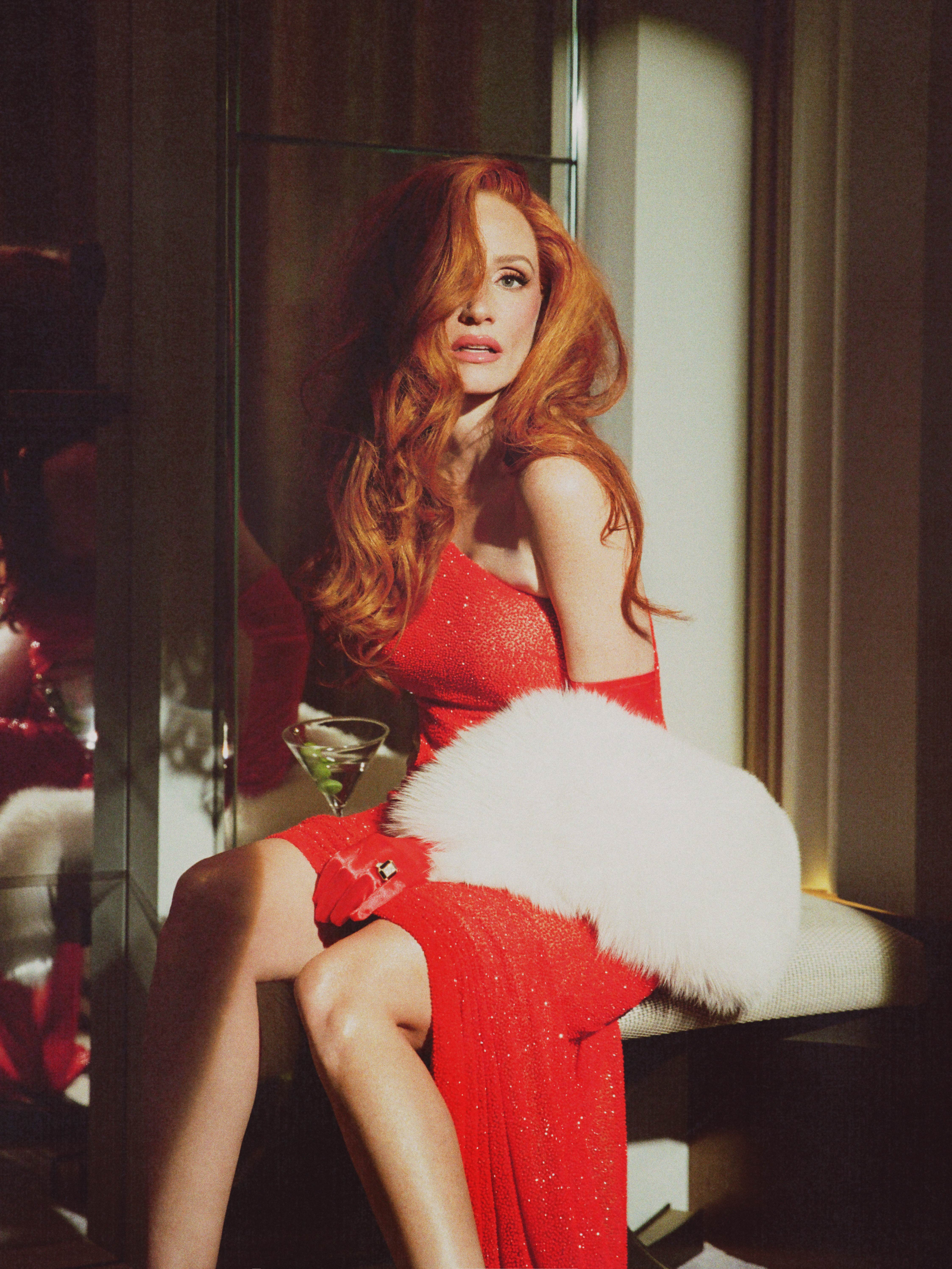
Your own speech on that day discussed your trajectory through life, from Northern California to today, how acting changed your life, and how acting changes everyone’s lives. You said, “Acting is what I do, but storytelling is why. Stories build empathy. They make us care about people we’ve never met.” Can you expand on, at this point in your career, looking back and seeing all of the works, like pearls on a necklace, adding more?
It’s really hard to talk about my career in that way, because I do feel like a student, much more than someone that’s consciously assembling “a body of work,” or “pearls,” as you said, into a necklace. Rather than adding up to some kind of thing, it feels like it’s constantly moving. Sometimes when I talk to a journalist, they’ll connect dots and unpack the movie in ways where I’m like, “Oh, I didn’t even think about that.” Once I’ve made a film, I can then talk about it almost from the perspective of being a fan of the filmmaker, and about the story that’s being told. But it’s hard to talk about the personal journey that goes on to get there, because it feels like some kind of hypnosis or meditation when I’m doing it. It feels like an out of body experience. I forget the emotions that I feel almost immediately because I throw myself so far into it. I know I’m in my body and I know I’m Jessica, and I know I’m not disappearing fully into a character…It’s very hard to speak about. I don’t know if that’s a protection mechanism that’s developed because it’s so deep, what I’m feeling. It’s tough to put it into words.
I think there is a detachment that you must have to be able to continue to wake up every morning and go forward. You can’t overly identify after the channeling of the character has passed through you. It’s passed through you into the camera, into the lens, and onto the screen, to us in turn through the viewing experience. That detachment is absolutely necessary to keep going forward. Perhaps it’s best not to overanalyze things, but just to feel them, as you just so eloquently have said. It’s that feeling them in the moment, before the camera, that is what is transmitted in all of your incredibly diverse roles.
It’s impossible to describe it when it’s happening. It’s exactly what you just said. It’s like a flow state and you can’t really be logical about it because there’s something about it that feels almost spiritual. You just open yourself up.
***
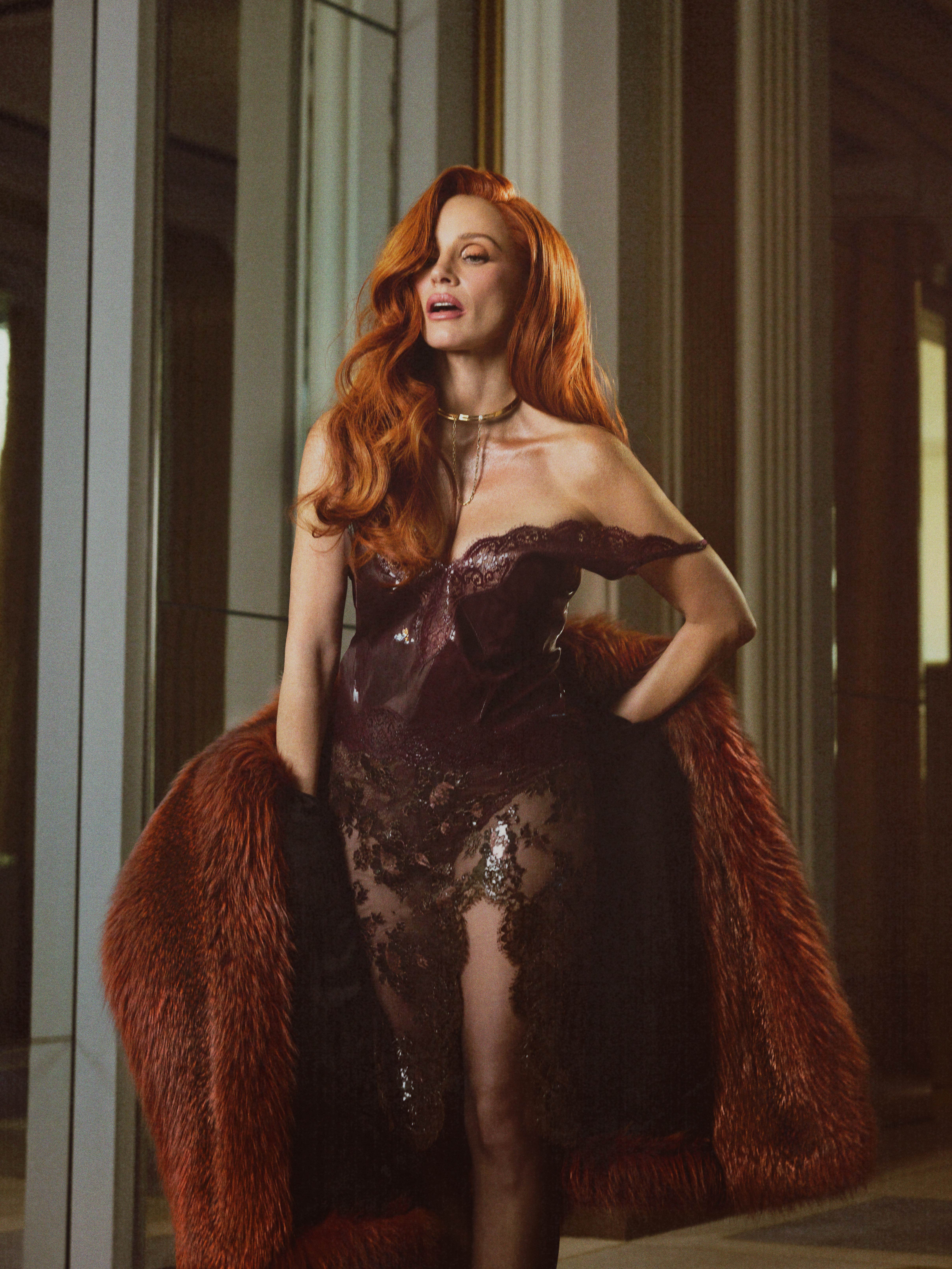
And so she does, each and every time. Whatever the role calls for, Jessica Chastain will go there for you. Porcelain and fire over steel, her beauty is in the service of the unique intaglio of each character, the most precise sinewal couture. With a calm approach to emotional fearlessness, a practiced abandonment of ego and self, Chastain always brings her A-game to the ensemble. She draws heat from surviving the cold times, used them to build from, with portrayals that shoot icy fishhooks into the screen. Just referring back to her two latest roles, like the fluid-edged entity, she’s infinitely mutable. Like the questing country singer, she’s prepared to bring out the big guns to get the job done. A perpetual student of her craft who refuses to even consider declaring herself a master of it, she embraces the challenges each fresh scenario brings. Her method of giving herself completely to her role, while the kernel of self remains inside, pulsing behind, glowing through different skins, is hauntingly effective.
After her time possessed by the character is over, they will continue to speak, expertly captured by the world’s best cinematic artisans, sealed forever on celluloid and pixel to be projected into our cultural consciousness evermore. While you’re watching her latest movie, Jessica Chastain, serious and serene, gracious and grateful, will be out there, just getting on with it, and already speeding off to her next assignment.
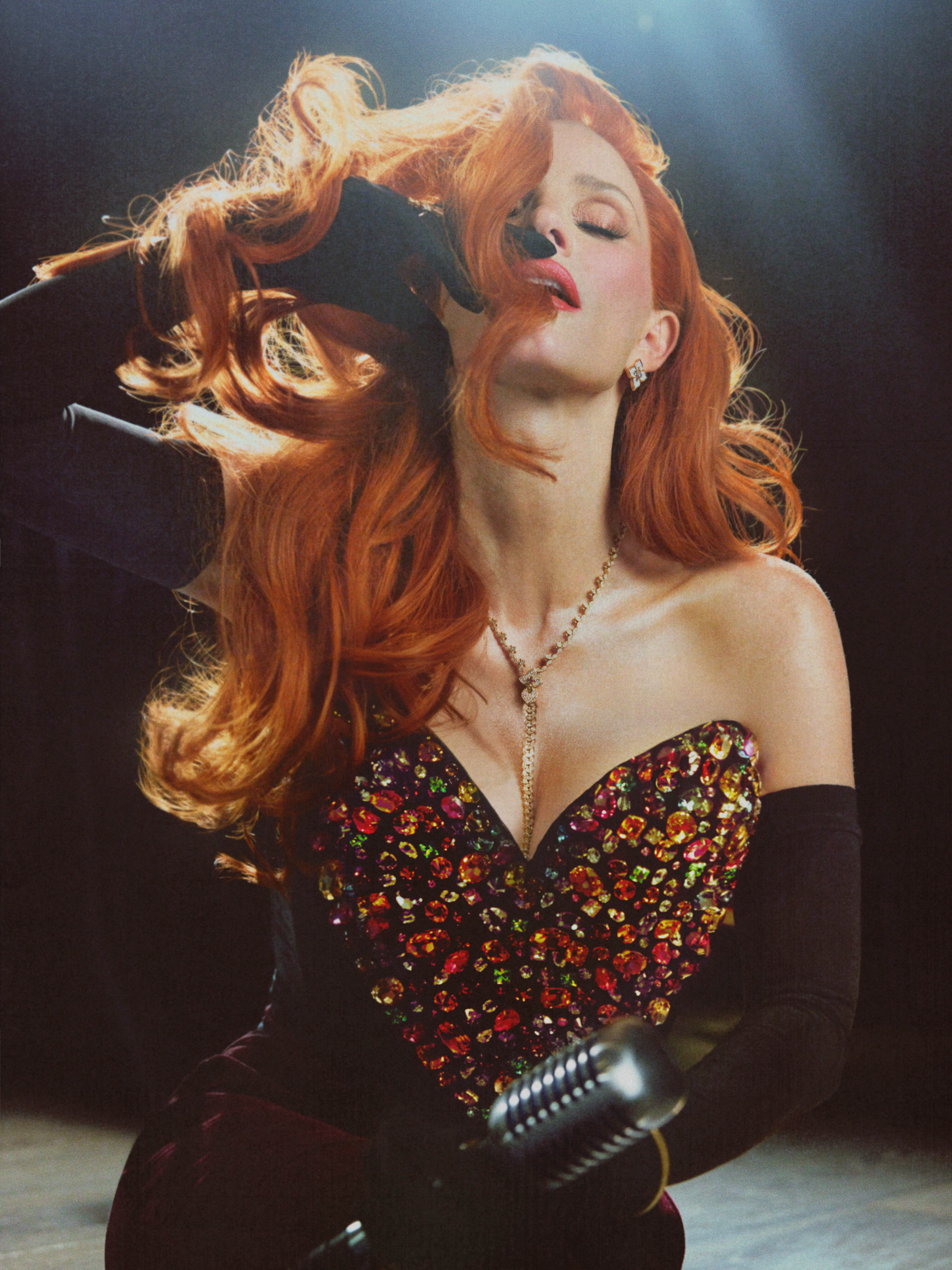
Photographed by Greg Swales
Styled by Christopher Campbell
Written by Hannah Bhuiya
Hair: Davontae Washington at Opus Beauty
Makeup: Kristofer Buckle At Opus Beauty
Production: Alexey Galetskiy at AGP
Flaunt Film DP: Chevy Tyler
Flaunt Film Editor & Sound Design: Natalie Hill
Film Colorist: Nate Seymour
VFX Artist: Viktor Metelev
Lead Lighting Assistant: Taylor Schartz
Lighting Assistant: Elena Gutierrez & Heins Evander
Digi Tech: Yoshi Park
Styling Assistant: Mia Hurley
Production Assistants: Alexandra Strasburg & Iran Shentalinsky at AGP
Location: Waldorf Astoria
Stay up-to-date with exclusive events and content.


