F L A U N T


The ocean has long been mistaken for emptiness. Perhaps its vast blue expanse and rare kind of silence read as absence. But some places, like the ocean, for instance, cannot be understood from above. Some places ask to be entered. And there is something so alluring about the ocean’s darkness. The way it can be a refuge from the relentless noise of the everyday, how the deeper you descend, the less the world reveals itself through visibility and the more it demands feeling, intuition, and trust. For Los Angeles-based musician Oxis, that descent has become her ongoing pursuit of what exists beneath the surface.
“[The ocean is a] peaceful mind, a peaceful subconscious, and a place where I can go in my head where it doesn't feel so busy and loud and crowded because I can be very scatterbrained. Oxis confesses, “It's hard to be a good friend. It's hard to be a good daughter, so sometimes I will just close my eyes and imagine I'm sitting at the bottom of the ocean.”

That imagined seabed has become the foundation of an entire mythology for the artist. Since introducing herself-described “marine electronica” in 2023, Oxis has existed in a state of constant submersion. Here, sound behaves the way water does. Textures ripple and drift, glitchy electronics dissolve into ambient passages, and hypnotic repetition gather and disperse like shifting currents. Each song feels suspended somewhere beneath the surface and is aptly named after types of fish. Her visual world ebbs with the same fluidity, and even her moniker carries the same current, as Oxis is derived from Auxis, the Latin genus for tuna, which also happens to be her childhood nickname after her school teacher’s persistent mispronunciation of her given name, Valentina. And through this small accident of language, it eventually became the identity through which Oxis would build an entire universe.
In early 2025, that universe unexpectedly surfaced into the algorithm. “Long Sardine,” a frenetic, live-coded electronic composition performed alongside motion-reactive visuals created in TouchDesigner, introduced millions to Oxis’ singular ecosystem. From there, she signed to Boom Records and released a steady stream of releases, including Oxis 6, Oxis 7, and Oxis 8, all released earlier this year. But even as her audience has expanded, her intention continues to move in the opposite direction, inward, downward, and toward the quiet.
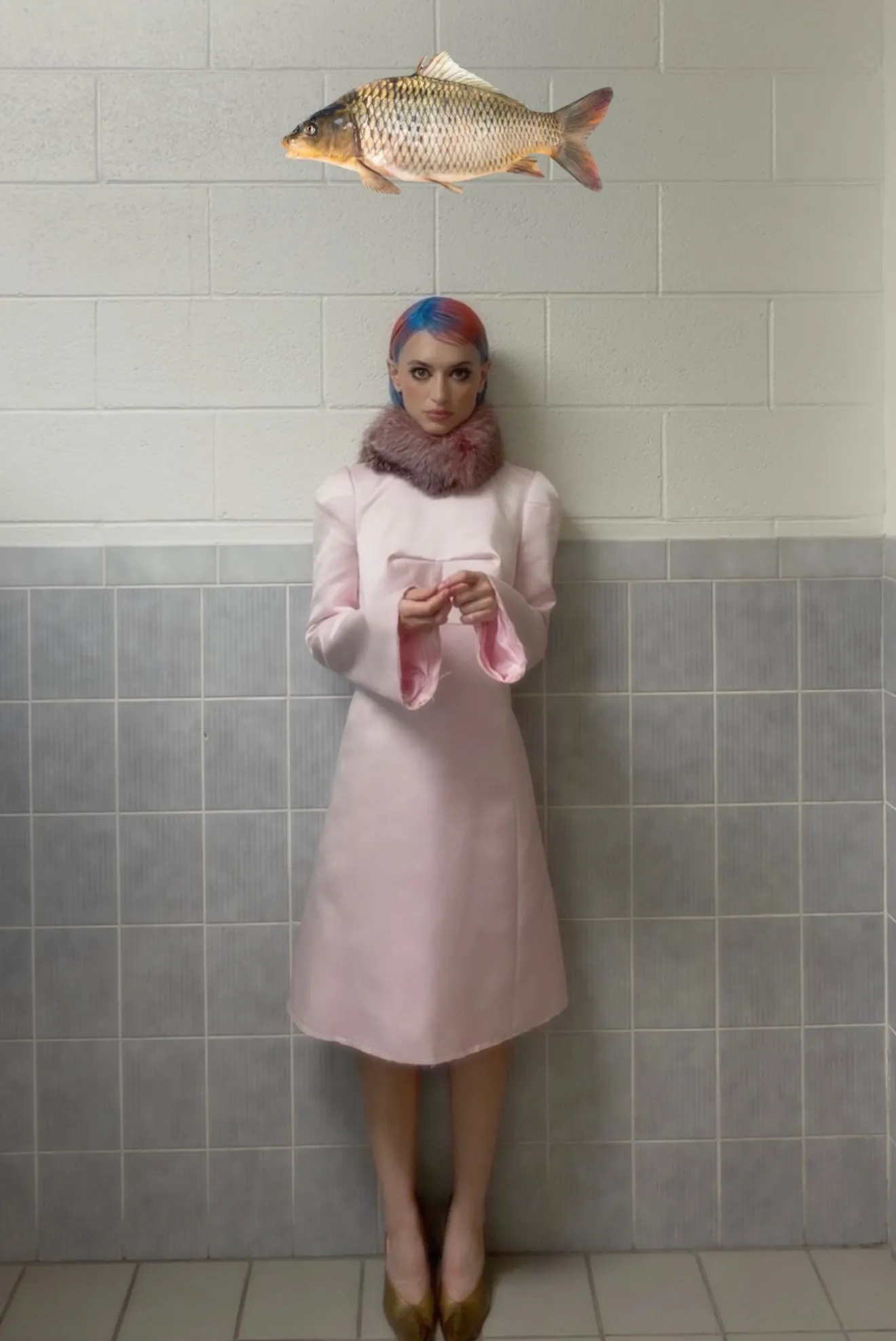
“This feels like my secret little fish project to me still,” she admits. “It's very difficult for me to express to most people how I'm really feeling. And so when I first started creating my fish songs, I was anonymous because that felt like the only safe way to truly express myself.”
But the safety she found in Oxis also forced her to confront what she had spent years trying to distance herself from in the past. “I wanted to kill that part of me after high school, which a lot of people do, I think. You know, you wanna become this new person. You don't like the person you are, and then you reinvent yourself,” she explains. “And I thought reinventing myself, to kill the tuna inside me, would make my life better and that would make me happier. But then I just felt so sad, and I didn't wanna make music anymore. Something just felt very dark in my soul for a while.”
But eventually, she found her way. “I had to go back to the tuna inside me, and I had to find that safe space,” she says. “I didn't think about anything of what it would mean to anybody else except for maybe it could save me a little bit.”

This summer she released the ninth iteration of her Oxis series, Oxis 9. The record moves through the tension between overwhelm and solitude, the noise of the world above and the quiet she searches for below, transforming personal anxieties into something abstract, immersive, and difficult to separate from the environment she has created. Across nine installments, Oxis has proved that returning to the same place does not necessarily mean remaining unchanged. Each release reshapes meaning, according to where she is. She shares, “I think everything in life evolves, and I think it can feel suffocating if something's not allowed to evolve or if there's certain parameters that it should live in. And so I'm just very excited not to have any walls, except for that it's fish, and we have lots of that, so it's okay.”
And she is right. Even after nine records, Oxis still has around 35,950 species left to transpose into her ever-expanding catalogue. There is a sense of playfulness in that endlessness, but I guess you don’t just enjoy a sunset once. “I have this anxiety and need to create things constantly. And the more that I create, the more I feel connected to the tuna inside me, and the more I feel like a little kid, and the more I get confused as to why people around me are maybe pretending to be adults,” she says. “I think right now I feel strangely younger than I felt in, I don't know, five years ago. And I think time skips and drags and is nonsensical.”
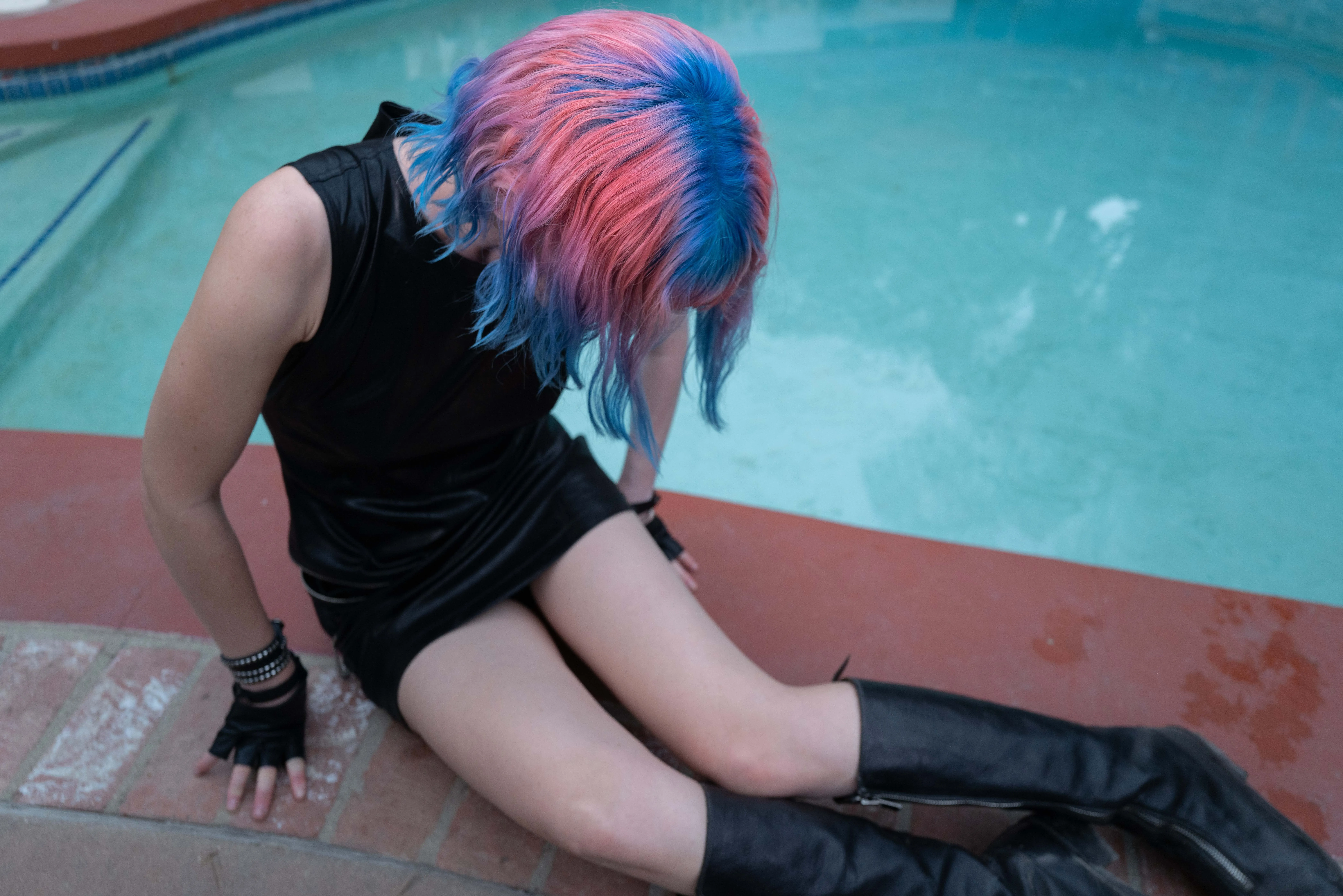
Time and repetition have always existed at the center of Oxis’ music. Her songs often circle around the same phrases, textures, and melodic fragments, allowing small moments to transform through recurrence. Rather than functioning as loops, these repetitions reveal thought patterns, the way a feeling, memory, or worry can return again and again, revealing something different each time. Her last single from Oxis 9, “knifefish,” extends that idea through its own sense of spiraling repetition. Throughout the track, she repeats the question. “Can you hold me tonight?” At first, it feels like a plea for comfort, but with each refrain, it transforms into a mantra, something to block everything out. A brief moment of serenity amid the constant motion of existing.
“I think when I'm wildly anxious or angry, I have to repeat certain things in my head. And because of the mental and physical strain this last year, and the traveling, and just having a lot of new things to think about, and new people to talk to in my life–that overwhelms me a lot. So I have to have certain things that I say in my head, and it changes all the time, and it makes me feel meditative.”

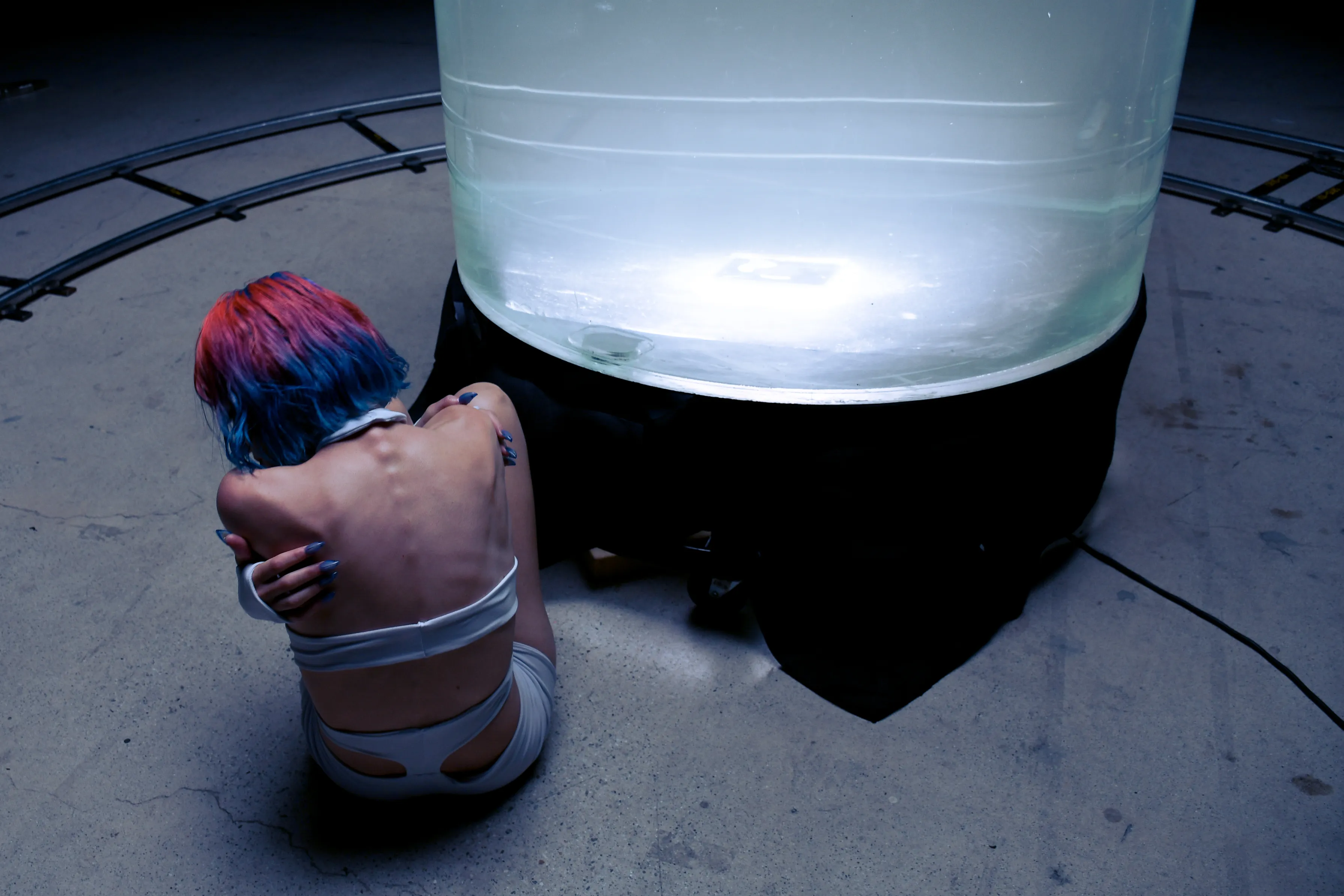
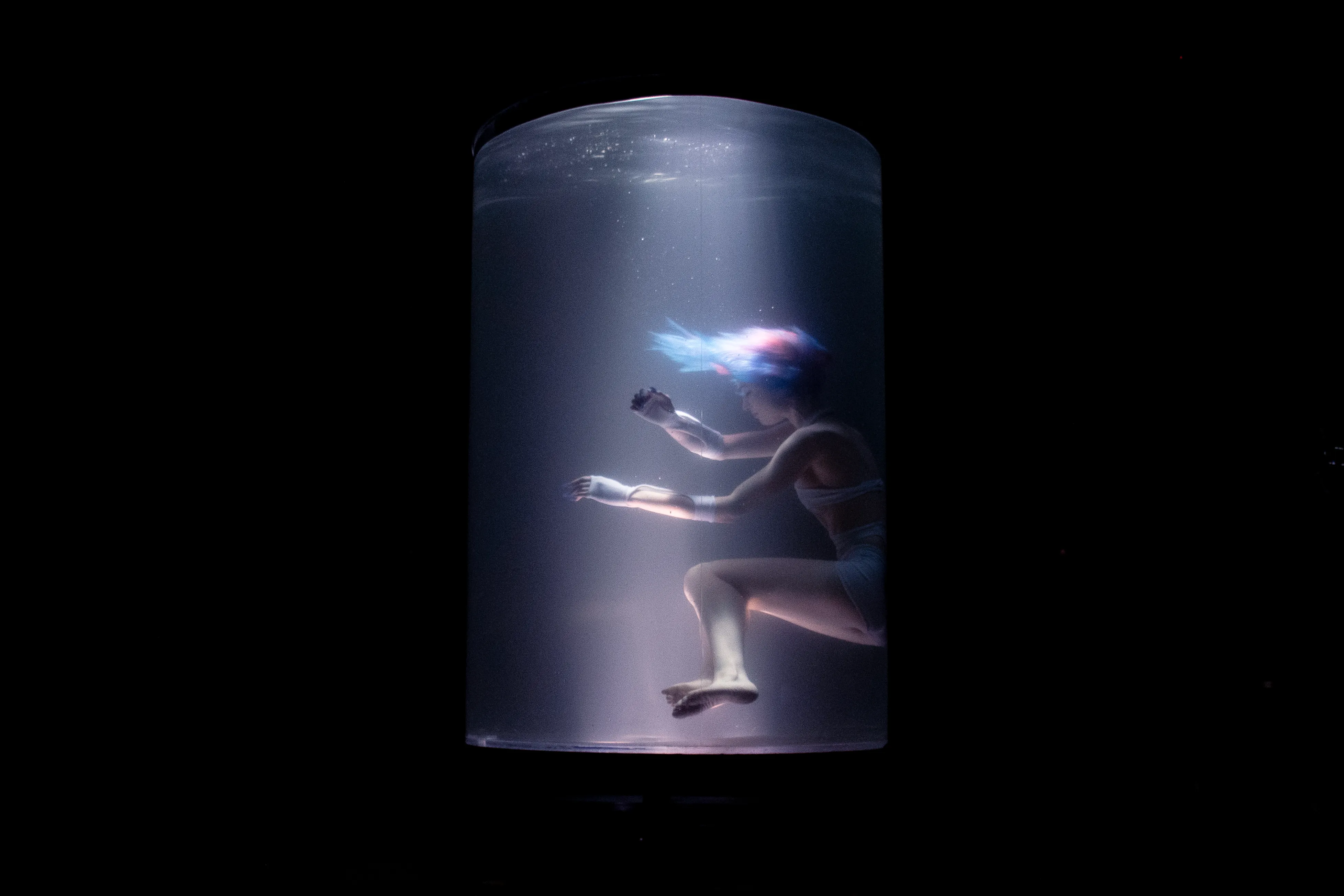
In the accompanying music video for “knifefish,” directed by Matt Wisner, Oxis chases silence. The video captures the overstimulation of modern life, the relentless sounds, distractions, notifications, and expectations that make moments of stillness increasingly rare, before arriving at an unlikely refuge: a human-sized fishtank. The scene turns the familiar image of an aquarium inside out, where what is typically a space for observation becomes a place of retreat. It is here that Oxis becomes the weightlessness she has long associated with the ocean. Beneath the surface, away from the noise, she finds the quiet she has been searching for.
She shares, “I think we really tried to show the panic that comes from this loud world, and the busyness that comes from the sounds on the streets, people arguing, calls, and work, and that there's nonstop noise. It's about how we find the moments to ourselves, and how we make sense of any of it.”
That search for clarity is ultimately what drives much of Oxis’ work. Despite the intricacy of the worlds she creates, her process begins somewhere much less controlled. She allows instinct to lead, trusting that meaning can emerge after the fact rather than needing to be defined from the beginning. “I think I subconsciously document things and explain what's inside my head, but I try really to not think about what I'm doing, so I under-think, and what comes out, comes out,” she says.
And there is something radical about that approach in an era where creativity is increasingly shaped by visibility. Oxis resists that demand for immediate understanding; that mystery is part of the connection itself. Her songs, like the ocean, ask listeners to spend time beneath, not going for the easy surface.


“It's very easy to feel like in this day and age of social media and cameras and phones everywhere, everybody's watching, and you have to do certain things, and you have to make certain things and do it a certain way that can make you feel trapped. And so it's very important to just realize that nobody cares at the end of the day, and we're all gonna die in 100 years.”
For someone who is always searching for stillness, Oxis seems to understand that peace does not come from having everything figured out. But still, one question remains. After all of the searching, the building of worlds, and the descent beneath the surface, does she have a guess? A guess to why we are all here, why we must endure life to live it, and what is the meaning of it all?
She laughs, “I don't even try to figure that out.”
Perhaps we should just keep swimming.
"knifefish" by Oxis
Production company: Three Fifteen
Three Fifteen EP: Brenden Clarke
Producer/Three Fifteen HOP: Matt Wisner
Director of Photography: Emerson Duggan
1st AC: Pancho Ortiz
2nd AC: Fred Porras
Camera PA: Colin Wong
Gaffer: Evan Croker
Best Boy Electric: Samuel Diaz
Key Grip: Simeon Mihylov
Best Boy Grip: Ryan Blons
Sound Mixer: Miliken Gardner
Art Department Lead: Carter Christman
Stylist: Lauren Gray
Custom wardrobe by Samuel David
Wardrobe assist & alterations by Grady McFerrin
HMU artist: Kendell Cotta
Manicurist: Rachel Sun
Hair color by Daniel Moon
Production coordinator: Moira O’Shea
Production assistant: Bella Chao
Production assistant: Anna Glasgow
Production assistant: Olin Burke
Editor: Dakota Giglio
Post house: Church
Colorist: Ryan Urzi
Color studio: Ethos
Color producer: Miraida Guttierez-Colón
Stay up-to-date with exclusive events and content.


