F L A U N T



Brain scans of the newly infatuated are nearly indistinguishable from those of cocaine users mid high. which is a proven clinical observation that has been replicated across several dozens of peer-reviewed studies and which, if you sit with it long enough, begins to explain a whole lot about our mystifying human condition—our penchant for obsessive texting, the inability to eat, the way our person becomes a cerebral black hole that needs continuous feeding.
Dopamine floods the mesolimbic pathway, the same reward circuit activated by nicotine and the particular cruelty of Las Vegas. Serotonin plummets to OCD-adjacent lows, and the ventromedial prefrontal cortex—responsible for critical assessment and the capacity to perceive flaws in the beloved—goes functionally dark. And when that love curdles, withdrawal presents identically across substances: cortisol flooding the system, the anterior cingulate cortex unable to distinguish between heartbreak and somatic injury, the body revolting against absence in ways that feel—and this is the clinical and colloquial consensus—like dying.

Tokischa’s forthcoming debut studio album, AMOR & DROGA, takes this clinical reality and does something uniquely perverse with it: she makes it a dance record. Seventeen tracks she ardently anticipates we’ll cry to as we “shake ass in the club.” It’s devastating and filthy, transcendent, and extremely clubbable, which is to say it understands that certain truths enter through the hips before they reach the brain.
Days before we speak, Tokischa shaved her head at Madison Square Garden onstage mid-performance, which, when asked about, Tokischa states: “It was just something I wanted to do.” The gesture postures the most distilled image of AMOR & DROGA itself, or rather, its aftermath—the album that delineates love through the customary trail of obsession, collapse, relapse, and uneasy repair. Although she’d intended to shave her head at the tail end of touring her album, she’d crossed the finish line of excavating inherited wounds and destructive devotion and the psychic afterlife of men who leave irreparable damage in their wake. Tokischa quite literally removes the excess (hair is rumored to fossilize our traumas, but this isn’t a fact that has been peer-reviewed or corroborated). “It also looks really damn good.”
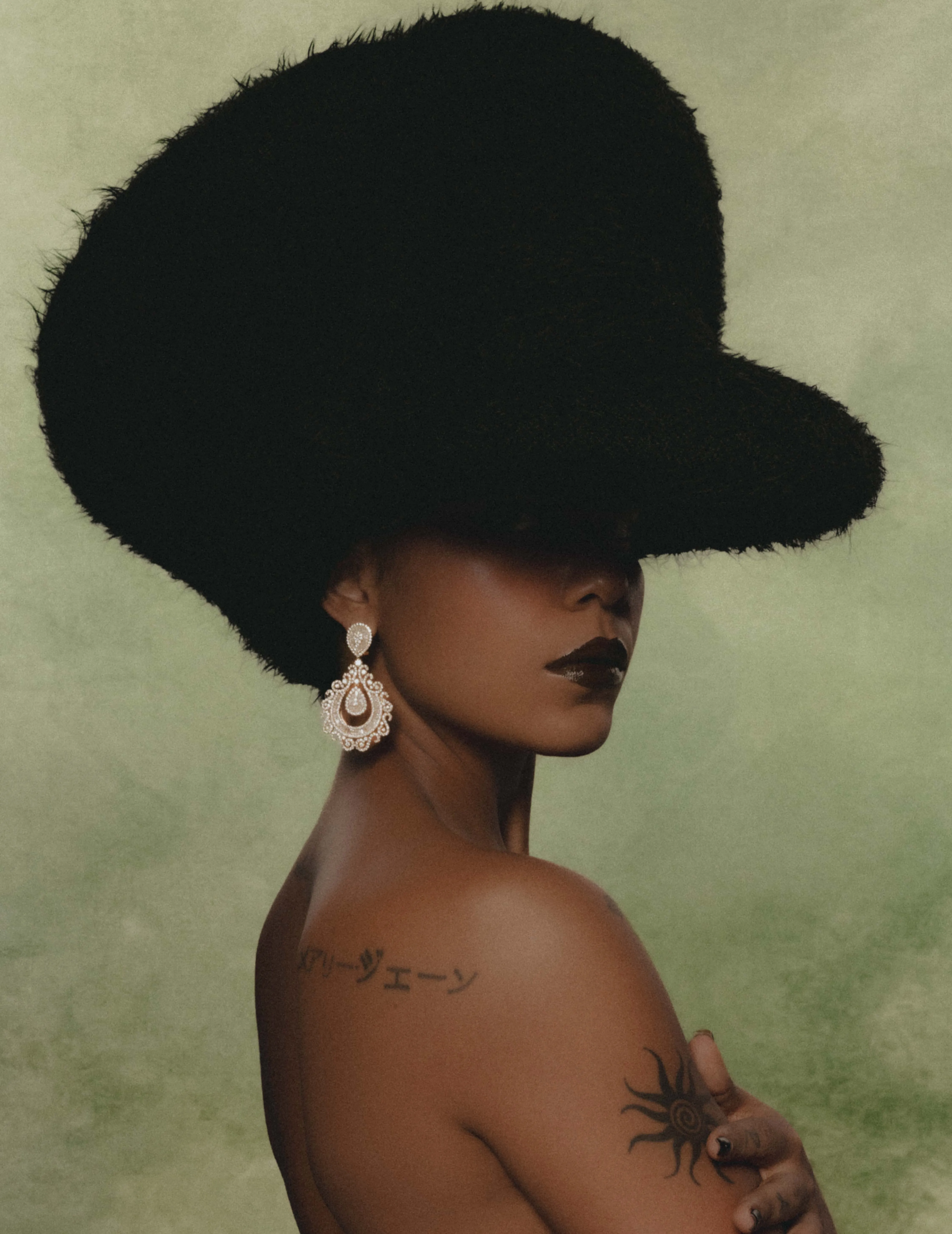
“We are all traumatized,” Tokischa tells me over the phone, freshly bald and incandescent by way of Miami’s sun and its evergreen palms. She’s shooting a music video with Diplo, whose initial inputs gave way to the sonic architecture of AMOR & DROGA. “And we’re all like, ‘Okay, this is perfect right now, but I’m still never gonna trust you all the way.’”
She’s referring to her current relationship—it’s healthy by all reasonable measures, she says, with a man who treats her like a princess—but she could just as easily be talking about everything else: the music industry, the public and her controversial reputation that’s shadowed for almost a decade. Because here’s the current state of affairs of Tokischa Peralta, better known as Tokischa la perra, Tokischa la bellaca, Tokischa Popola, the woman who kissed Madonna at Pride and showed up to the Billboard Latin Music Awards dressed as a giant vagina: she just spent years making an album about a relationship that ended 10 years ago, and finishing it nearly killed her.
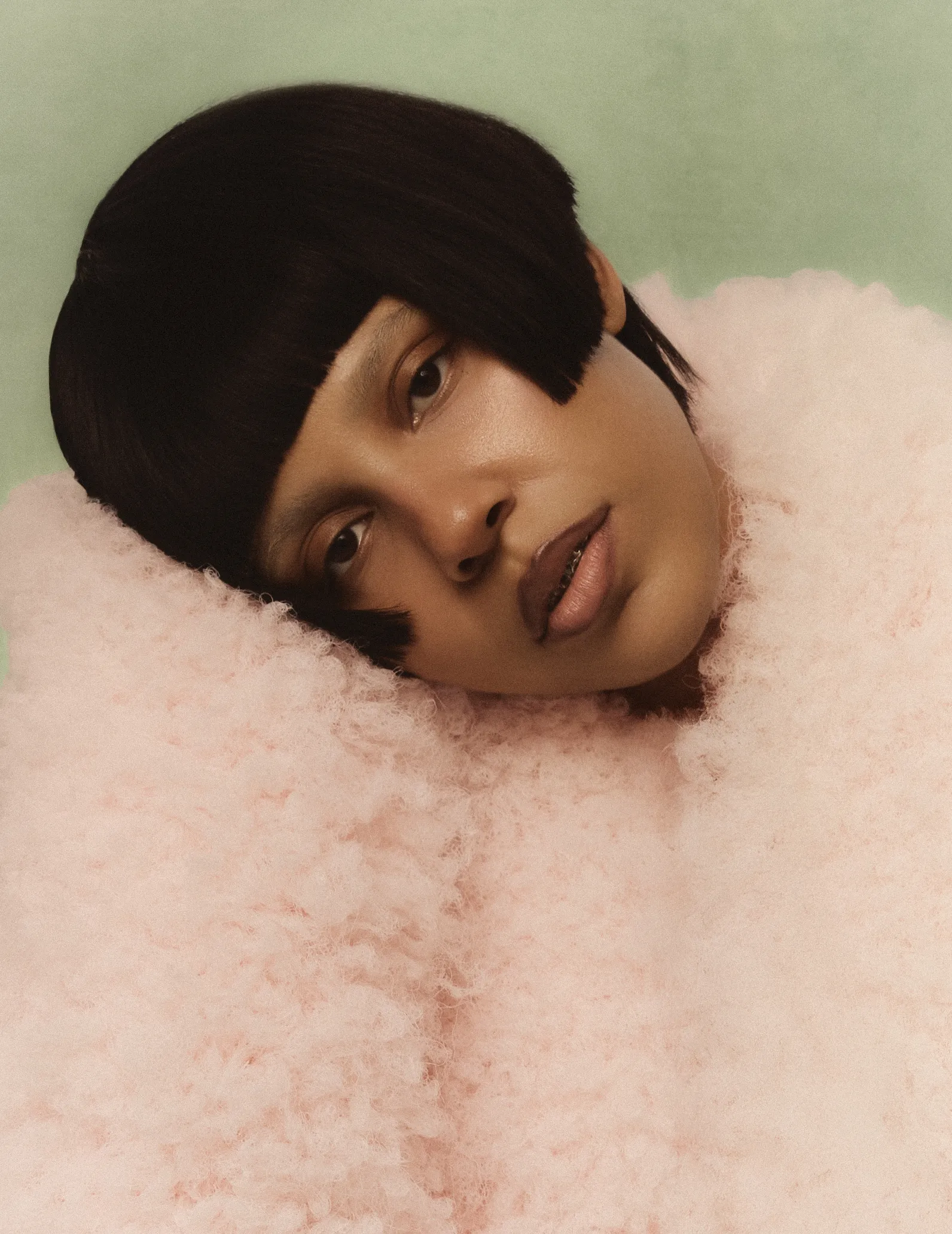
AMOR & DROGA—love and drugs, or love as drug—is a seventeen-track pharmacology, narrating a decade-old story of an all-consuming relationship with a man who was, as she announces in the album’s opening line, a drug addict. But telling it required Tokischa to open the vein of this romance and transfuse its contents into the album, going back into the studio and finding the timbre of a woman feeling the highest highs and the lowest lows of love. “No one knows how fucking hard it is to go put yourself back in that time,” she says. “That was the most traumatizing thing, and I’ve struggled so much. It was so hard reliving that part of my life.” Throughout our conversation, she cannot reiterate enough: “Getting here—I’ve struggled so much.”

“Surfboard,” produced by Skrillex is as synthetic as a honeymoon phase itself, saccharine with a romance that complicates what we know to be true about Tokischa: Este cuerpazo lo guardé pa’ mi novio, a bodily devotion only romantically rendered by her. “MONO” (withdrawal, but also the colloquialism of monkey, the thing on your back you cannot shake) tips into obsession. By “Celos,” Tokischa gives us dembow at its most unhinged, jealousy anatomized into the promise that she will cut off her man’s dick and eat it for dinner, the rhythm so propulsive you’re three listens deep before you realize that you, too, are threatening to cut a man’s dick off. “Perreo Llorando”—grinding while crying—marks the commonplace juncture at which one incessantly clubs their way out of the throes of heartbreak: “I literally don’t care if I’m crying while grinding. I do it, you probably do, everyone does it.”

Tokischa’s mastery of the dembow genre is precisely why Rosalía called her for “Linda,” why A$AP Rocky wanted her on “FLACKITO JODYE,” and why the reggaetón renaissance ardently pulses through Santo Domingo to the rest of the globe. When I ask Tokischa whether or not she’s concerned about the throes of AMOR & DROGA’s story not thoroughly reaching her global fans, she says, “Struggle is felt, love is felt. It’s all energy. When I go into the studio, I really put my energy in those vocals because I need to feel it. So if I feel it, I know everybody else is gonna feel it. You don’t need to know the language, you just need to feel empathy.”

Tokischa operates in a curious moment where hypersexualized Latina artists are having an unprecedented international cultural reckoning. Young Miko, Villano Antillano, Bad Gyal, Cazzu—a whole constellation of hot and sexy women navigating the same terrain, each reining the relationship between provocation and personhood on their own accord. Tokischa can be easily identified as the woman most visibly embodying the question the culture cannot quite answer (and that of which AMOR & DROGA asks, structurally and lyrically and in the fact of its own existence): can you perform sexual liberation on a global stage and still be understood as a person who wants the simplest, most nonexotic version of love? Can the girl who showed up to the Billboard Latin Music Awards dressed as a giant vagina also be the girl whose happy ending is having a boyfriend who she calls princesa?

“I had no idea it would be such a big part of my career,” she says of the sexuality that has defined her image. “I just felt like a sexy girl all the time. My dad used to tell me I was going to be an exhibitionist because I never wanted to wear a bra. I only wanted to wear little tank tops. I’ve just always wanted to be naked.”
There hasn’t been a point in Tokischa’s career—in her life—that wasn’t anchored in her sexuality. She is also the woman from Los Frailes, Santo Domingo who appeared semi-nude in front of a religious mural in La Vega, paid the court fine, issued the mandated apology, and left the post up. Prior to ever releasing a single song, she amassed a cult following by way of posting nude self-portraits on Instagram. “And then Instagram came with all the restrictions and took my shit down,” she laughs. “Girl, I was so happy just showing my little titties out there. My career was just starting!” And starting it was—it is through her photo shoots that she met photographer Raymi Paulus, who encouraged her to start taking music seriously. It is these beginnings that have molded a figure so thoroughly defined by the performance of transgression that the industry spent years failing to notice what was underneath it: an Afro-Dominican woman rapping unfiltered about sex, pleasure, queerness, poverty, and oppression, whose most important service and radical act was to keep probing.
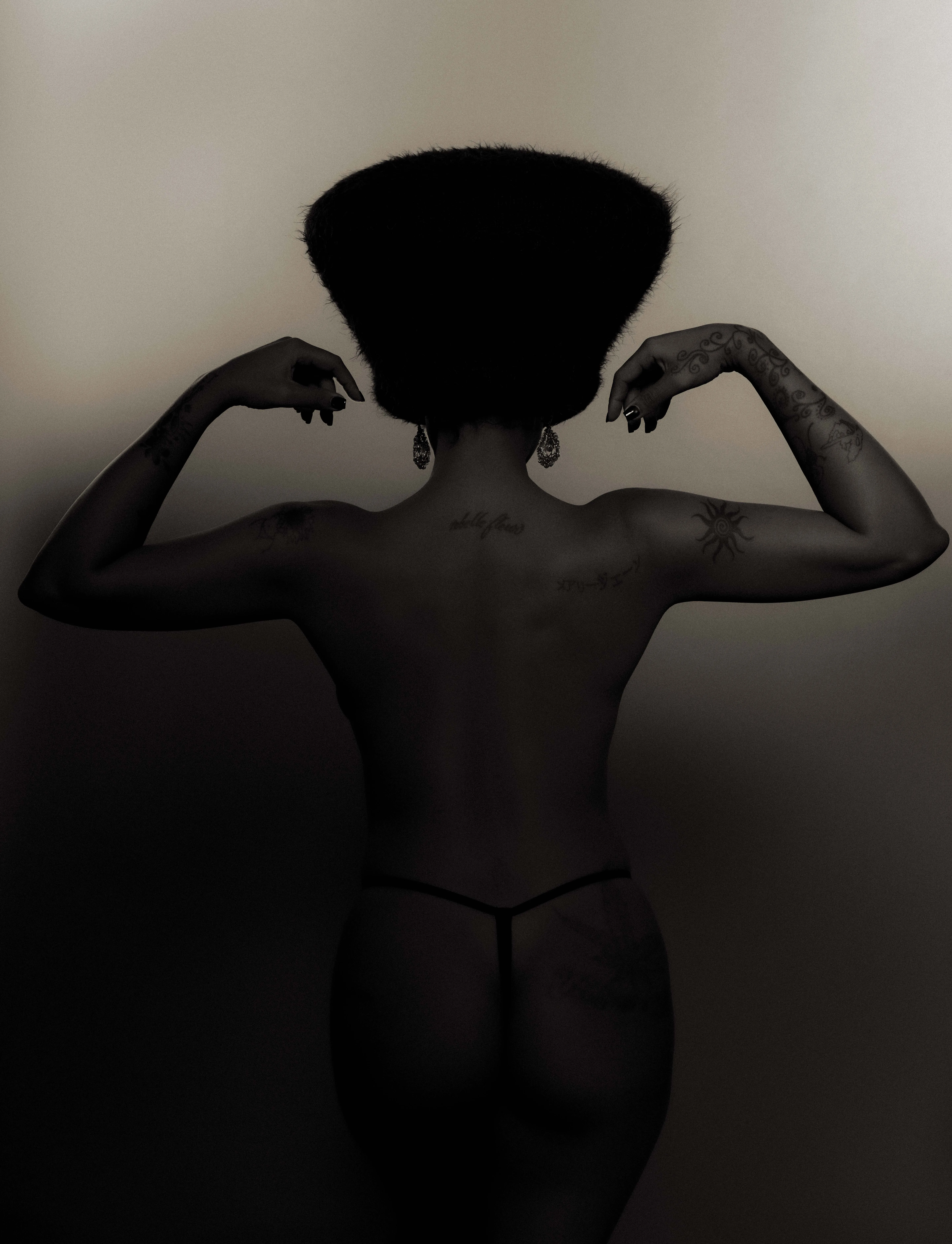
This is the double bind that AMOR & DROGA anatomizes: the same transgression that secured her visibility simultaneously postures a certain kind of legibility. When you perform desire at the volume Tokischa does—drinking from a dog dish onstage, licking a crucifix, making dembow that sounds like fucking and fucking at the most liberative degree—you become spectacle before you become person. The culture knows what to do with Tokischa la perra, but it has no framework for Tokischa in love, Tokischa heartbroken, Tokischa who becomes unrecognizable when utterly abandoned.
It is at the album’s crux that Tokischa is called on to overcome the love, the heartbreak, and the wanting to be held and starts detailing the architecture of her trauma. “Su-Frida,” punning on the Spanish word for “suffering” and Frida Kahlo, takes that plunge—bar after bar, detailing family wounds, the negative reception in her own country, illicit encounters with men, why she gets depressed. The path away from that decade-old wound ran through sobriety, confronting not just the relationship but the foundational cracks that made her vulnerable to it in the first place.

“Love right now is the main ingredient in everything I do,” she says. “When you love yourself, you respect yourself. When I started respecting myself, everything changed. Everything changed the day I said, ‘I deserve to be sober.’ I told myself I was going to be sober, and I never wanted to break my word to myself.”
Sobriety led Tokischa to Hawaiian meditation practice, the name of which she had to look up on her phone mid-interview—sorry, forgive me, thank you, I love you—and to the systematic forgiveness of everyone who had ever hurt her as a means of enlightenment. “I forgave everybody that hurt me, and that made me free. I was like, ‘You hurt me? Girl, I love you. I don’t care.’” And from that forgiveness ensued a cascade of radical love—for herself, for nature, for the sun, for the unsophisticated pleasure of touching grass and hugging trees and being with animals, pleasures that sound almost absurdly wholesome coming from one of the most infamously licentious women in Latin America today, but which she describes with such evident sincerity. “The sun is one of the most amazing things God put up for us.”
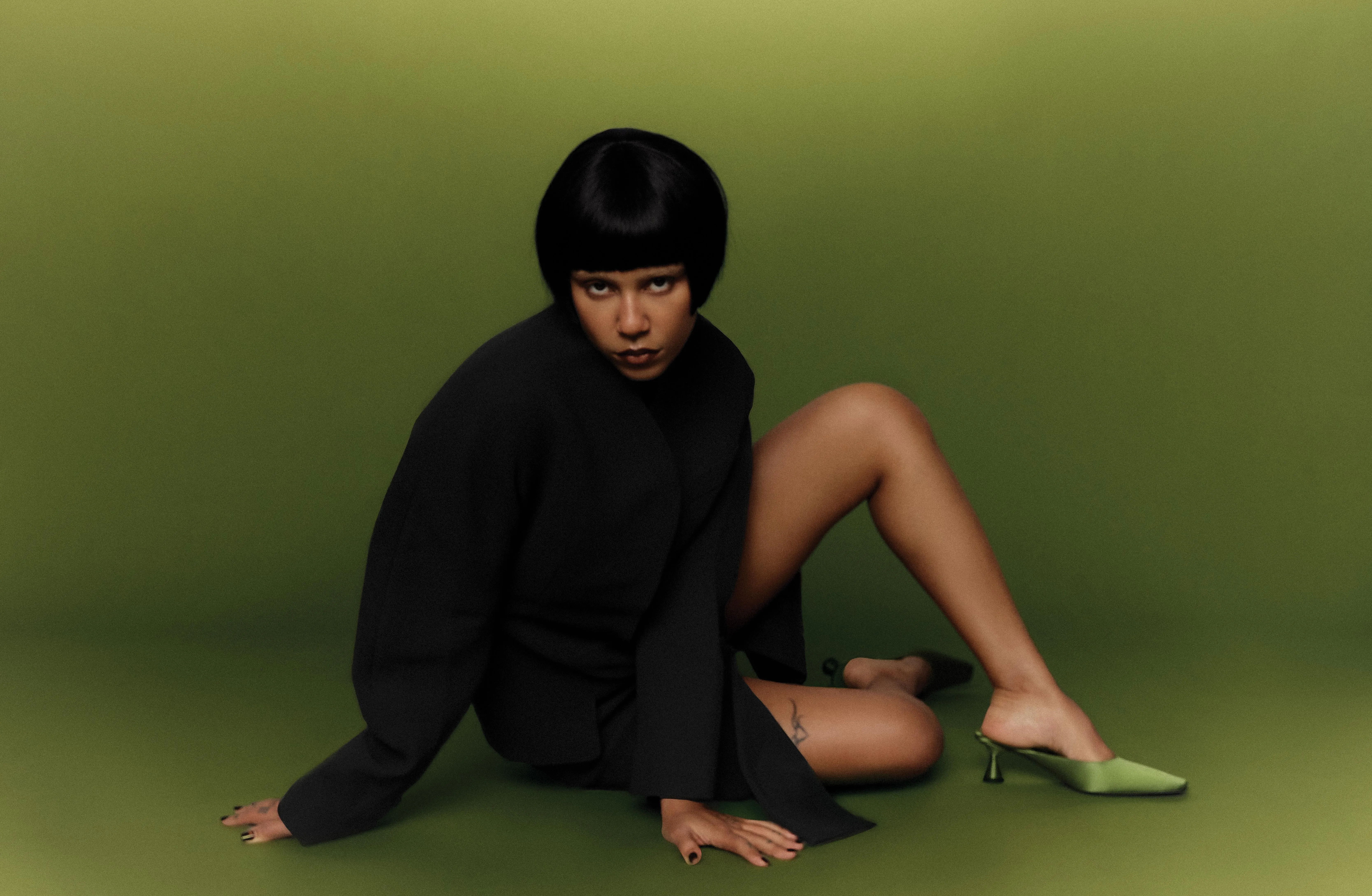
Because Tokischa, infinitely sexier and more outspoken about it than all of us, still wants to luxuriate in the same indulgences that we plebes partake in. Particularly, love. AMOR & DROGA says yes, she can have it—and the yes has effectively metabolized into “being with the dream man.” But the yes is complicated in the way recovery complicates itself: she’s acutely aware of the substance that is love and its effects, aware that her mesolimbic pathway will flood with dopamine the same way it always has, that serotonin will plummet again and the prefrontal cortex will be rendered dark. “It doesn’t matter how many times I go through it,” she says, running her hand through the new shape of her head. “I will continue to consume the drug of love, but I’m aware of its effects.”
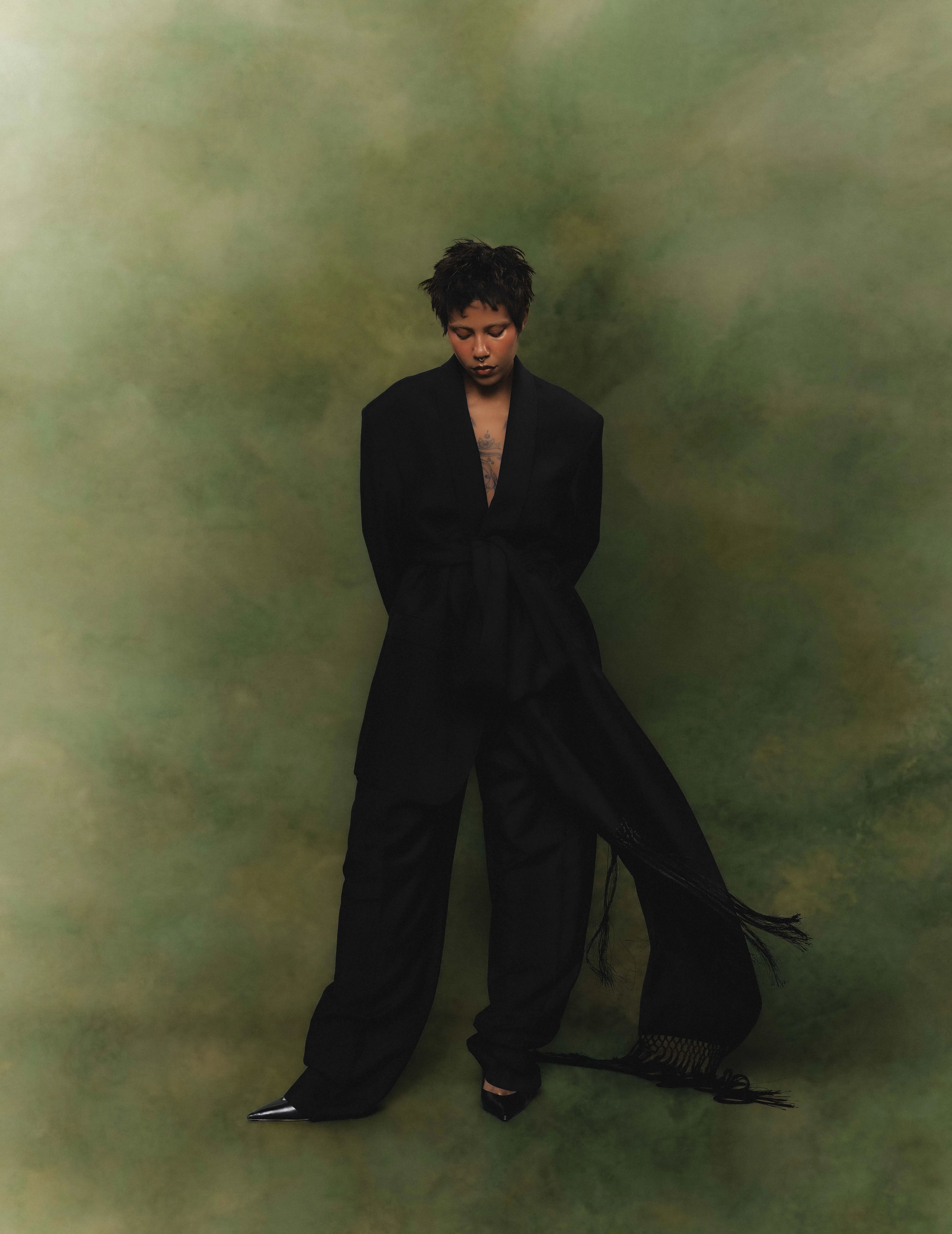
Photographed by Melissa Isabel Quiñones
Styled by Taisha Suero
Written by Melanie Perez
Hair: Takayuki Umeda
Makeup: Karina Milan
Flaunt Film: Mynxii White
Styling Assitant: Marvin Daniel
Location: Between Space Studio
Stay up-to-date with exclusive events and content.


