F L A U N T


“Let me show you this,” Jordi Luke says, turning their laptop toward an open closet. On Zoom, the screen fills with color: shelves of purses, rows of dangling earrings, textures and hues crowding the frame. Luke wears an electric-blue, rounded-brim hat and a button-down splashed with oversized cobalt flowers. Most of what’s visible is thrifted. None of it feels accidental.
It’s fitting, then, that Luke is now officially a Style Icon. The activist and nonprofit leader won the Style Icon competition, powered by the fundraising platform Colossal and benefiting Elton John’s AIDS Foundation, earning global attention for a maximalist aesthetic inseparable from their organizing work.
Luke is quick to redirect the praise. “I wouldn’t have won the Style Icon [competition] if it weren’t for my community,” they say. “Whether I won or not, we were all going to win—because ultimately we were bringing resources to causes that help people around the world.”
The competition raised over $1.8 million for the Elton John AIDS Foundation, which supports HIV prevention, treatment, and LGBTQ+ organizations worldwide. Luke plans to donate the entirety of their $20,000prize to nonprofits in Cleveland and in the Global South.
That instinct—to reroute attention and resources outward—has shaped Jordi Luke’s life. Born in Mexico and raised in Chile and Bolivia by missionary parents, they spent the first thirteen years of their life abroad before relocating to the United States as a teenager. “Being in Chile from seven to a little past sixteen was definitely my most formative time,” Luke says. “I always took something from every place.”
Luke’s time abroad, though culturally enriching, was also riddled with setbacks. They were bullied throughout school for their creativity and tendency to stand out, often being perceived as an outsider, resulting in Luke changing schools seven times over a five-year period. Eventually, their parents sent them to a boarding school in Bolivia—a decision that would unexpectedly shape both Luke’s sense of self and aesthetic worldview.
Rather than socializing with classmates, Luke gravitated toward the school kitchen. The cooks, a group of Quechua women, took them in.“They taught me how to prepare their food. They taught me words of their language,” Luke recalls. “They became like my moms in Bolivia.”
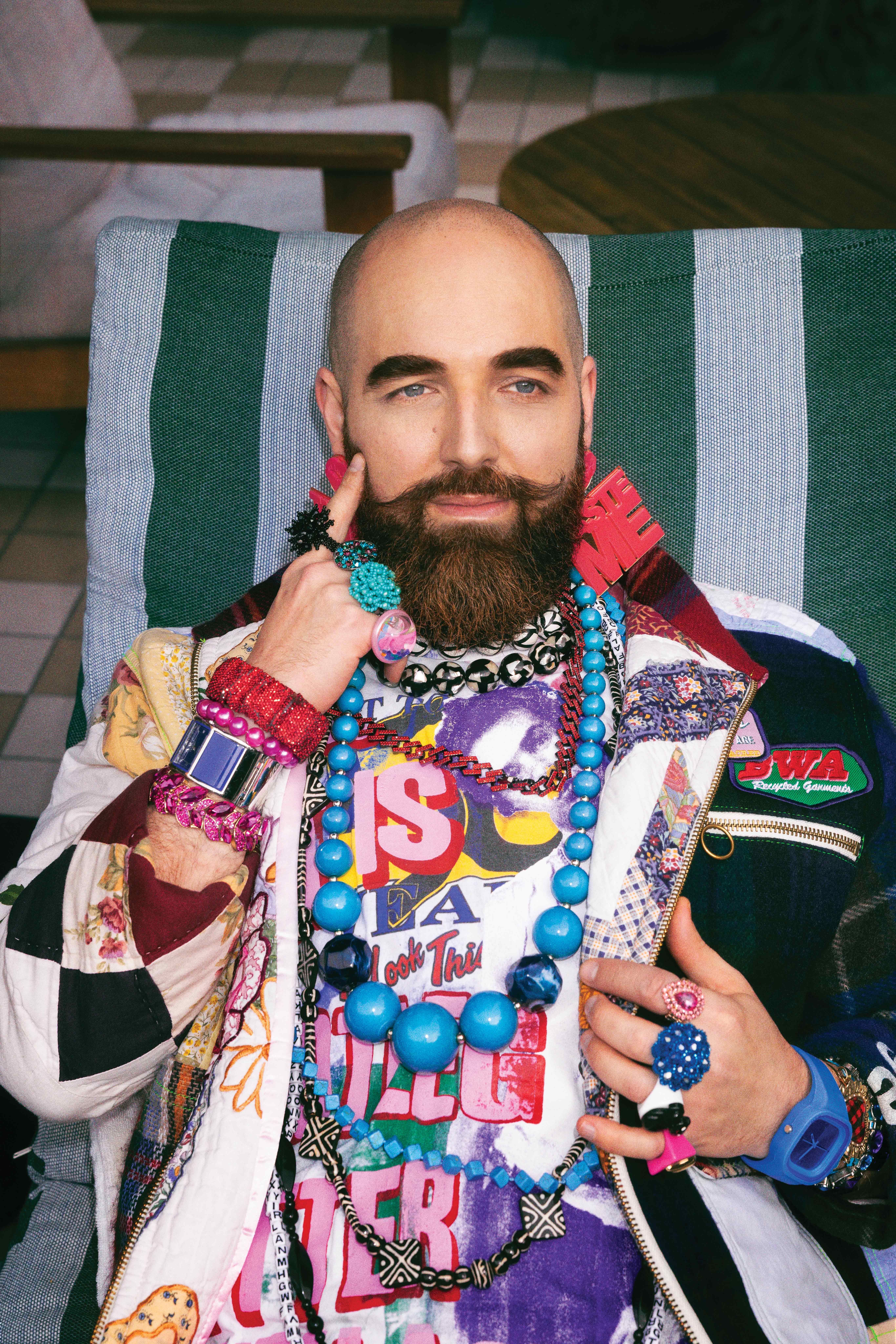
Luke fell in love with Quechua embroidery work, as well as their use of color and unique hats in their art and fashion. “Even though I was only there for a year, it planted many seeds,” Luke says. “It shaped my respect for culture and art in a way that still inspires my work.”
Finding that safe space in the kitchen inspired Luke to create other safe spaces, later on, in college. Luke attended Lee University, a conservative Christian institution in Cleveland, Tennessee, where LGBTQ+ identities were prohibited. As Luke came into their nonbinary identity, they briefly transferred to the University of Tennessee, Knoxville, where they encountered campus LGBTQ+ organizing for the first time. But with only one semester left to graduate, Luke returned to Lee—and started an underground LGBTQ+ group.
“We were connecting through MySpace,” Luke says, laughing. “This is back in the MySpace days—I’m showing my age. But I learned how important it is to create community, especially in places where there’s a lot of adversity for persecuted folks. I learned how to not just be a recipient of the problem, but also be part of the solution.”
After graduation, Luke spent more than a decade working in senior leadership roles in healthcare, including as a group director at the US Department of Health and Human Services and later as chief quality officer at a community health center in Cleveland. All the while, they remained deeply connected to grassroots mutual aid networks—organizing support for friends facing eviction, hunger, or utility shutoffs.

The turning point came during a drive home from a conference in Columbus, Ohio. Luke and their Two-Spirit best friend, community engagement director SlayIcon Wamego, began talking about formalizing the work they were already doing. “We were already organizing mutual aid,” Luke says. “So we thought—why don’t we create a nonprofit to bring more resources to this?”
And thus, in 2023, Haus of Transcendent was born. The organization’s name draws inspiration from the “houses” of the queer and BIPOC ballroom scene, and the idea of collective transcendence. Haus of Transcendent now serves trans and immigrant communities in Northeast Ohio and the Global South, offering mutual aid, advocacy, and long-term solutions rooted in local needs.
Transcendence is a quizzical thing. It’s a pillar of the American Dream: that one can overcome their circumstances through hard work and dedication to achieve economic prosperity and upward social mobility. The safety of the white picket fence, the comfort of a home and a place that is yours, yet it seems that with each year that passes, true transcendence becomes further and further out of reach.
It’s this drive to accessibility, a dream that The Dream can be possible, that keeps Luke going. “The closer I get to the community, the more I see the pain,” Luke says. “And it just lights a fire under me to do more.” Luke’s work is certainly timely. Under the second Trump administration, immigrants and trans people have been among the first to receive extensive attacks on their rights and place in the United States. It’s often puzzling, trying to see a way through. “I’ve always tried to approach this work as one who doesn’t know the answer,” Luke says. “The first thing I’ve always done is listen.”
Throughout it all, Luke insists on showing up visibly and joyfully. “Being outgoing and fabulous has been an amazing outreach tool,” they say. “We walk into spaces, and people are curious. Why are we so colorful? Why are we so joyful?”
Most of Luke’s wardrobe is thrifted, assembled intuitively, and without regard for traditional fashion rules. “Sometimes I’ll wear something in a way it wasn’t intended,” Luke says. “A necklace around my head, or three hats at once. It’s very playful.”
Though playful, Luke’s style still sends a message. Luke points out that men’s clothing sections are often dominated by muted tones, while women’s sections overflow with color and print. “I just asked—why can’t I wear that?”
Style, for Luke, becomes a refusal of inhibition, a reclamation of choice in a world that often denies it.
“Icon” is a word that’s liberally thrown around these days, a semantic satiation so robust it feels almost democratic. But to Luke, being iconic is simple. “It’s iconic when anyone allows themselves to be who they want to be,” they tell me. “That takes courage.”
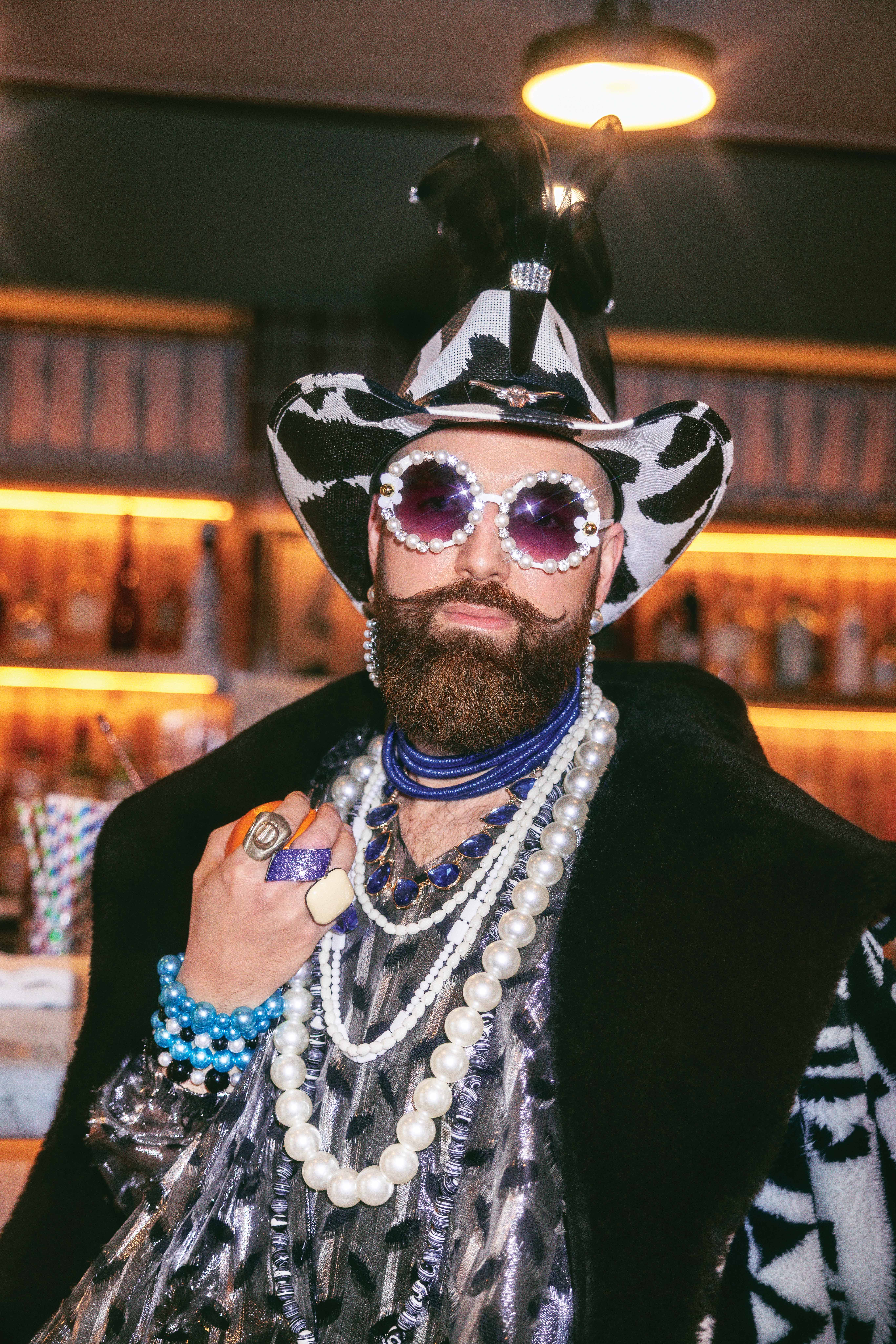
Photographed by Andi Elloway
Styled by Erin Zhang and Jordi Luke
Written by Abby Shewmaker
Location: Palihotel Hollywood
Stay up-to-date with exclusive events and content.


