F L A U N T


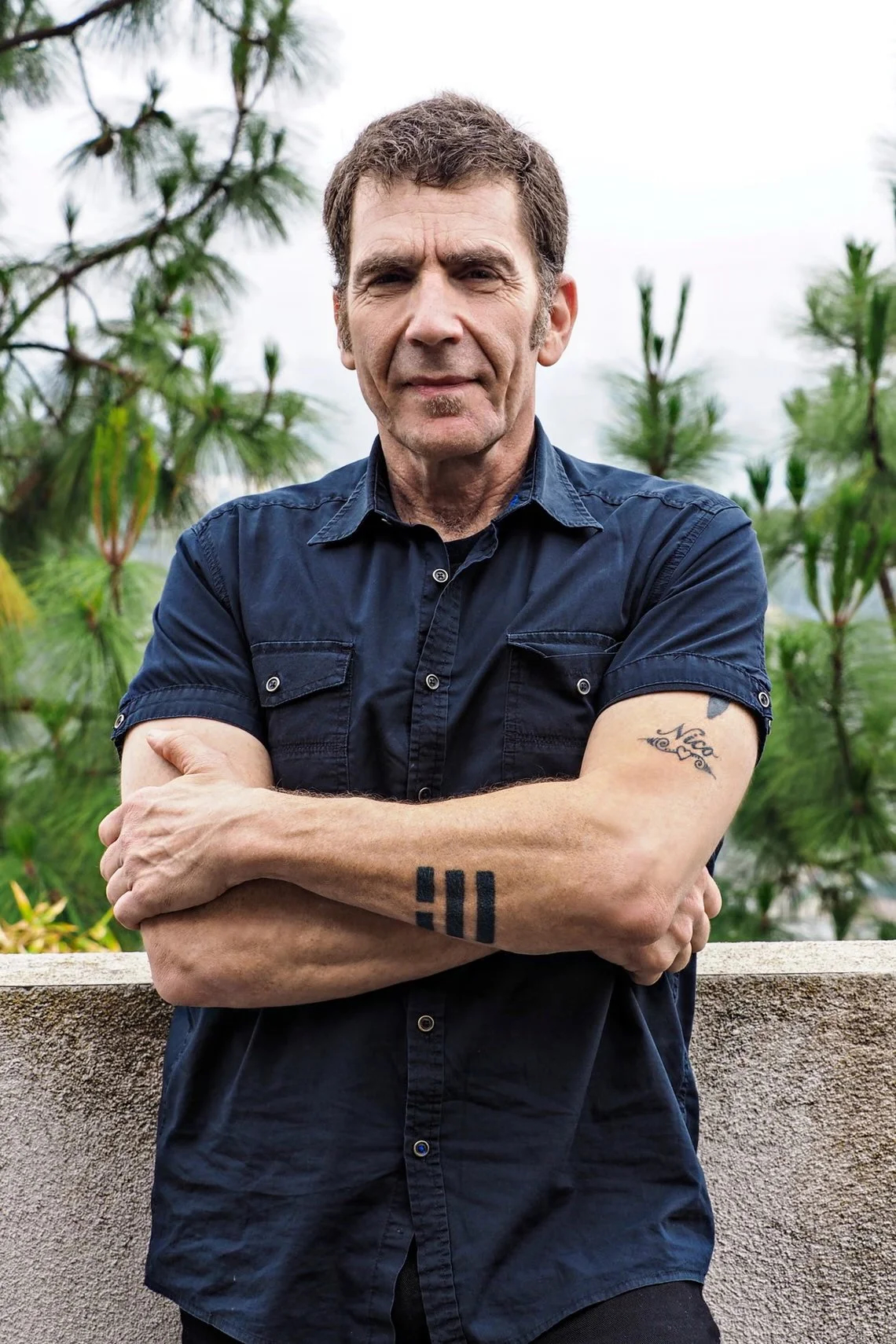
“I just did a gig on Severance—they flew everyone out to Newfoundland,” says Jerry Stahl on a sunny Tuesday morning from New York. “You’re hanging out with other people, you’re in a strange place, you’re being fed—it’s the opposite of being a writer.”
Despite his recent dramatic turn and his career-long Hollywood adjacency (Severance director and producer Ben Stiller starred in the adaptation of his first memoir, which drew from Stahl’s experiences juggling television writing jobs and addiction), Stahl’s still most at home on the page. “It’s such a great life—in the sense of, like, ‘boy, this beats working,’” he continued on acting. “But writing gives you something to do with your pain.”
If he’s to be believed, Stahl has had a new reservoir of pain from which to draw: he opens the intro to his new book, an anthology of sorts, by saying he’d rather “have testicle surgery, on horseback, performed by Special K-crazed lumberjacks, than sit down and read my old writing.”
And he’s turned that pain into new writing: introductions to each piece—which range from essayistic memoir and scene reports to celebrity profiles and an excerpt of a CSI script about furries. They find him as gleefully caustic as ever while they reminisce upon, contextualize, celebrate, and poke fun at his oeuvre.
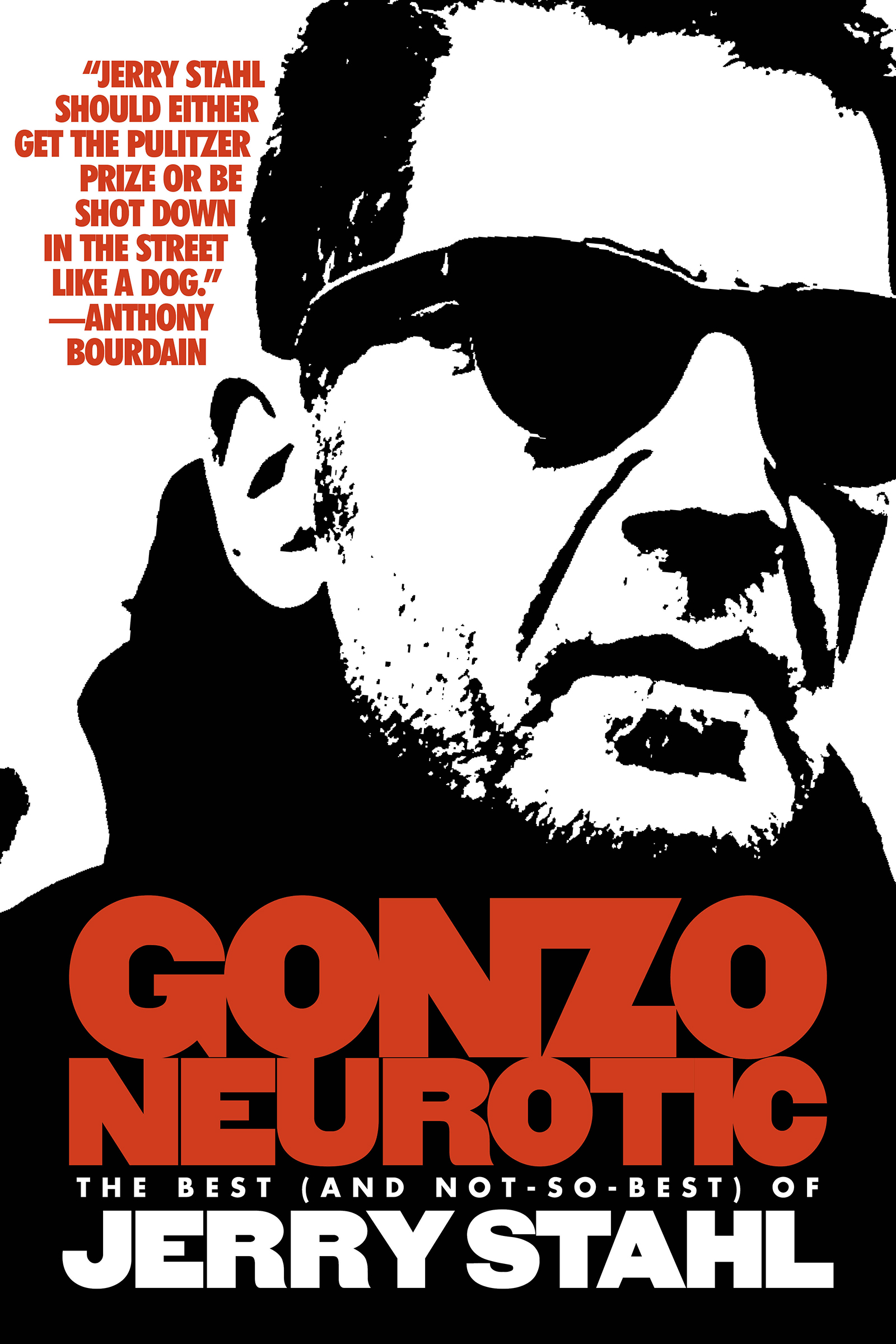
Stahl broke down Gonzo Neurotic: The Best (and Not-So-Best) of Jerry Stahl below (edited for concision and clarity).
So was it painful after all putting the book together?
I was happy to do it because it was like reclaiming a chunk of my life that had drifted into obscurity. I started when I was, like, 19 writing for magazines and shit. And it’s like I didn’t exist for those years because none of it is around except moldering in my garage, you know?
But I had to resist the impulse to be like, “Ah, what a fucked up adjective.” [So] the way the book is structured is that each piece has an intro to it. It’s not just a collection—there’s a ton of new writing about the old writing. It’s smartened up a bit so it won’t look like some arcane old recollection of, you know, a boomer.
I don’t know—these pieces, though of a time, have something universal about them. Whether or not you have an attachment to Al Greenwood, “The Bedspread King,” [your profile on him] really brings you into that world.
To me, that’s what ‘gonzo’ means, you know—getting yourself into situations from the bizarro to the dangerous, plunging in, and writing about how you feel putting yourself in that situation, you know? I write about these outré characters, a lot of characters.
You know how new journalism was invented, right? When Tom Wolfe was [writing about a California car show for Esquire], he just couldn’t fucking do it, and he wrote this long letter to his editor, Byron Dobell, writing about all this crazy shit. And he just took off the “Dear Byron” and the “see you later” at the end and just ran it. In writing about [his experience in the situation], how he couldn’t write, that became the piece. And I love that juxtaposition—about what you’re going through with what other people are going through.
I once read an interview where you said, “I’ve come to realize everyone is recovering from something.” Is that what draws you to writing about subcultures, characters on the fringes—finding empathy for them and universalizing their struggles?
In my, you know, callow youth, I could be vicious about people—I would insult people. I called a woman [at a nudist retreat I was writing about] something horrible like “plump as a dumpling,” and I would never write that now.
But as I got older and my own life fell apart and I sort of crawled on the glass through my own little story, you know, I came back, and I realized that in a way, it is about compassion. All of our secrets are the same, essentially, and everyone’s fighting a battle that you can’t see. And you kinda have to understand that.
I love Flannery O’Connor…the way she wrote with such love about horrible people. It goes back to that compassion thing. Hubert Selby, who wrote Last Exit to Brooklyn and Requiem for a Dream. He was a dope fiend, and kicked dope strapped to a table in West Hollywood’s sheriff substation. He said, “When you write about people you hate, write about them with love,” which sounds so hokey. But this guy who was such a badass and who had been through so much—I had to think about it.
Doesn’t mean you can’t make it funny, cause it’s always gonna be. But in my dotage, I’ve come to realize that I don’t know if I’m ever going to be happy, but my definition of happiness is not making other people unhappy, you know?
What else do you value in writing? You talk about loving things as dense as Walter Benjamin, but so much of what you write is so kinetic. What excites you?
You just gotta make me give a fuck. All I care about is voice—that’s the most important thing to me as a reader. If I like your voice, I’ll follow you anywhere. But I don’t know if everyone has those standards anymore. This kind of writing that I do, it’s wildly out of fashion, you know? It’s not cool in the sense of [being detached.] It’s more like splattering yourself [against a wall,] like Road Runner.
Is there ever a temptation—for you and for other writers to soften edges or maybe place themselves outside of a scene, not examining fully the ways in which they are a part of it or even potentially implicated in it?
Well, you’re implying that I have any control over what I write…but I once interviewed a writer who was a hero of mine, a guy named Bruce Jay Friedman, who said, “If you write a sentence that makes you squirm, keep going.” You gotta make it hot for yourself. I love writers who put themselves out there, [and who] don’t hide their struggle.
You expect the two-tone eyes—the left pupil huge, the right one pinned, as if half of him just nozzled a busload of coke and the other side slammed smack. It’s the rest of David Bowie—the glistening wire-rims, the starched white shirt, knife-creased annel slacks, and sensible lace-up shoes—that’s so normal it’s . . . shocking.
“So much of the image thing—the in White Duke and all the rest—was a way of hiding from myself,” he says of the bad old days and nights of Ziggy Stardust et al. “I felt that if I created this kind of doppelgänger that took on all my faults and guilts and paranoias, then one day I’d be able to destroy it. I would be able to run away from it all. Then I would be free . . .
“I was consciously trying to create two me’s out there. Unfortunately, what I was doing was drawing myself into this creation of me. I was ignoring the reality of my self, my feelings and emotions. At that point, you’re in an abyss. You are no longer part of humanity. You have taken yourself out of the spirit of life, and it is soul-crushing—if you have any soul left. It’s probably like looking into the face of Satan. It’s just cold and numb and scary as hell.”
But enough on the joys of fame and money! All this heavy chatter renders even the clean-and-soberest superstar a tad squirrely. Bowie has tucked one knee up on the oral hot seat. Now he stops hugging his leg long enough to reach for a cigarette from a provincial end table. There are two packs, Marlboro Reds and Marlboro Lights. He pauses, one argyled ankle slipped discreetly beneath his slender ass, and selects a Light.
He looks, at this moment, if not exactly like the Marlboro Man, then at least like the Marlboro Light Man. Masculine yet slightly fey. Impassioned but understated. A sort of Zen dandy.
So now we’re lit up. Ready for more rough stuff, the torrent beneath the elegant facade. Bowie blows out smoke, waves it away—even his cough is stylish—and returns his gaze to some interior horizon.
“Mental illness was a huge factor in my family background. I had a stepbrother who committed suicide in 1986. There were actually three suicides in my family. And many of them were mentally disturbed. A number of my mother’s sisters were hospitalized because of it.
“So I used to wonder about my eccentricities, my wanting to explore and put myself in dangerous situations, physically. . . I was scared stiff that I was mad, that the reason I was getting away with it was that I was an artist, so people never knew I was totally bonkers. And the whole time I’m thinking, Why am I doing this to myself?”
He speaks, even of the abyss, with alarming charm; the suspicion that even this may be the warbling of a chic doppelgänger can’t help but icker forth. The pale blue eye seems sincere enough. But that dark right one . . . “So much of what seems to be important in rock is that you give your life for the work. And the audience, by some means, wants to watch somebody destroy himself.”
Stay up-to-date with exclusive events and content.


