F L A U N T


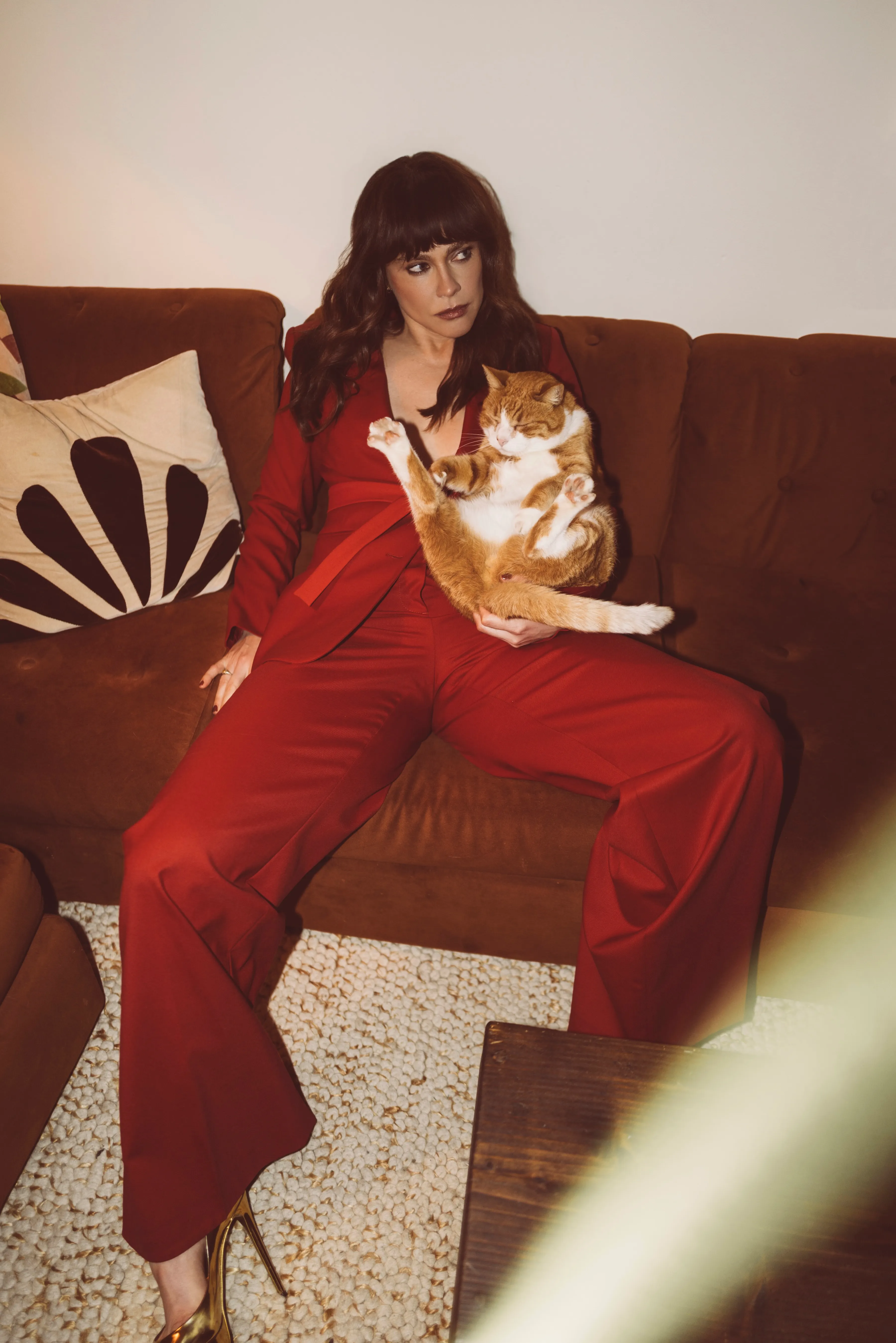
Fiona Dourif is a nice Hollywood person. It’s the first thing most people learn about her—likely when on a social media search binge while curled up couchside watching HBO’s Emmy, Golden Globe, and Critic’s Choice award-winning smash-hit The Pitt, or leaving the cinema after the first major post-pandemic blockbuster Tenet hit theaters in 2020, or after a horror movie marathon, wondering, “What the hell is Nica Pierce up to now?”
“Nice” is a moniker the 44-year-old, New York-born, Los Angeles-based actor has embodied and shared, both on- and offline. In an industry often vilified for its insincerity, it’s refreshing for audiences to see a person who centers kindness so publicly succeed.
Dourif’s apparent goodwill is no substitute or detriment to her for accomplishments, but rather its companion. Her Pitt character, Dr. Cassie McKay, has become a favorite among fans, leading them to dedicate entire Instagram pages to photos of her bangs. Since its January 2025 debut, the first 14 episodes of The Pitt have drawn an average of 10 million viewers per episode, with the first season’s premiere only building in popularity. Horror fans know her as Nica, the unconventional, wheelchair-bound final girl of the Child’s Play franchise (the original killer doll was voiced by her father, Brad Dourif), a role she began in Curse of Chucky (2013) and concluded with the Chucky series in 2024.
Since her start in the industry as a documentary segment producer, she’s worked with some of Hollywood’s most sought-after directors—Christopher Nolan (Tenet), Paul Thomas Anderson (The Master), and Gus Van Sant (When We Rise). Such credit, buzz, and adoration might go straight to someone’s head if it were not properly adjusted to their shoulders. But not Dourif. She’s got her feet on the ground, researching, advocating, and speaking up for those who are vulnerable, those who may otherwise be left unseen.
Read below for FLAUNT’s conversation with Dourif.

You began behind the camera as a documentary segment producer before stepping in front of it. How did learning to shape storytelling before inhabiting it inform the actor you’ve become?
My job in documentaries was researching information and scheduling experts. Think a 24-year-old kid with no background in science compiling a binder titled: “physics”. It was totally fun, but not relevant to anything, really. I did discover that I am a curious person! To this day, my favorite part about acting is the research: I find out everything I can about a character, their job, day-to-day life, what gestalt events shaped their world view. It’s fun and varied, and I feel lucky to do it.
You’ve worked with Paul Thomas Anderson, Gus Van Sant, and Christopher Nolan. What might an auteur demand from actors that more traditional productions don’t?
Not much! Acting is acting. However, it is much easier on set when everyone trusts the director. We feel reassured that they won’t move on unless they have the performance, and they usually have the money to do that. I remember Paul Thomas Anderson rarely said action; he would just let us begin the scene when we were ready. That was cool.
Michael Crichton’s work often examines the unintended consequences of expertise. How does The Pitt update that idea for a contemporary audience?
Oh, that’s an interesting take on Crichton! I think of him as just an all-around exceptional science fiction writer, but I think you’re right! I have this theory on why The Pitt is so popular. I think the world is starved for kind characters trying to do well. Not heroes or anything, but three-dimensional, relatable people trying to help. I think that’s behind the success of The Great British Baking Show, also. We are all a little thirsty for kindness.
The Pitt isn’t just about saving lives—it’s about navigating institutions. What did playing a doctor teach you about power inside seemingly benevolent systems?
I learned how much paperwork doctors have to do to keep the system running. It’s quite depressing, really. It’s like 60% of their job.
The character of Nica Pierce has evolved across multiple Child’s Play iterations into something far more psychologically dense. At what point did you realize you were anchoring the emotional gravity of the franchise?
Well, that’s a nice thing to say! It’s been fun to work on a franchise that keeps reinventing itself. I was brought in on the sixth movie, which was a return to horror from the sheer absurdism of Seed Of Chucky. I was asked to play real terror at this walking, knife-wielding puppet that sounds like my father. It sounds insane, but it was actually delightful. Later on, I got to play more of the comedy, and even Chucky himself. How lucky am I?
You’ve positioned yourself as a fierce mental health advocate, writing previously about homelessness and mental illness in California. What responsibility, if any, do you think artists have to contextualize the worlds they profit from?
I don’t think artists have a responsibility to contextualize anything. I think good art rings true, and that can’t help but reflect the world. I think you have to watch out for that sort of thing—who wants to watch a polemic?

Photographed by Lindsey Byrnes
Styled by Lindsay Flores
Hair: Briana Dunnig
Makeup: Courtney Hart
Stay up-to-date with exclusive events and content.


