F L A U N T


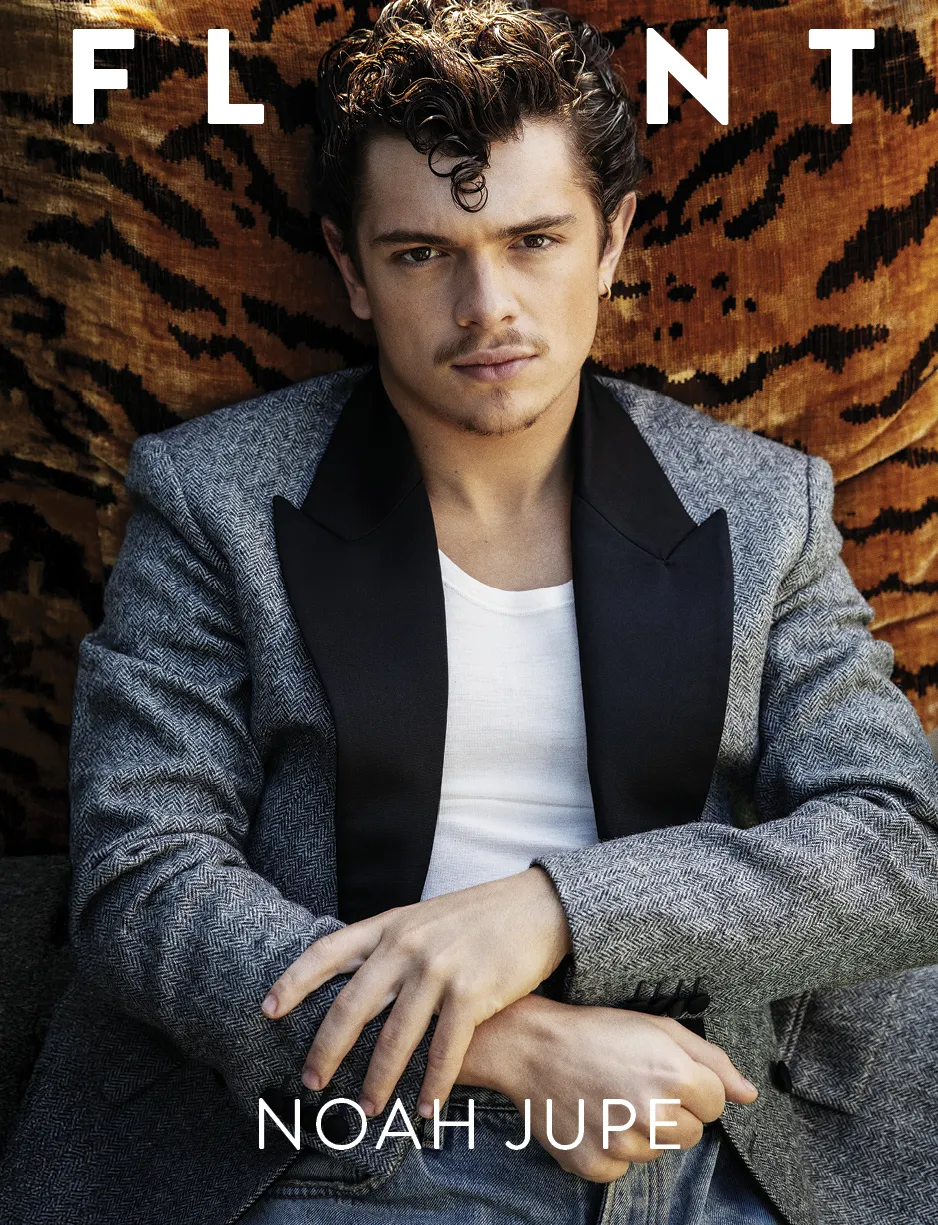
Noah Jupe has been a suburban son, a dystopian survivor, a medieval wanderer, a boy reckoning with trauma, and—soon—the most famous teenage lover in dramatic history. But ask the English actor if there’s a thread tying all these incarnations together and he will laugh. “There is no through line, and that’s intentional,” he says. “With the roles I choose, I’m extremely specific in making them something I’ve never done before. I love being an actor because it allows you to jump into different people and characters experiencing different emotions and ways of life. I want to explore that as far as I possibly can. I’m just trying to find as many different roles that can teach me as many different things as possible.”
This is classic Jupe: curious, unscripted, and just self-aware enough to recognize that the lack of a plan is the plan. At almost 21 years old, he’s already amassed the kind of filmography actors twice his age chase—Ford v Ferrari, The Undoing, A Quiet Place, Honey Boy—and yet he’s wrapping 2025 with the energy of someone who’s just getting started. And, frankly, he is.

On Instagram—a platform he uses “very rarely”—his bio currently reads “currently in someone else’s shoes.” Consider it Jupe’s thesis statement. “I love to step into other people’s shoes and wear them for a little bit to see what that teaches me about myself,” he shares. “It can be very good for your heart to empathize with other people. And I guess that’s my job, which is pretty awesome.” So, empathy as occupation. Shoes as portals. A philosophy that’s both poetically simple and startlingly accurate.
There’s a moment in many young actors’ careers when the “child star” label either calcifies or shatters. For Jupe, it was neither an award nor a breakout role that catalyzed the shift; it was COVID. He speaks about it without melancholy or ego—more like someone describing a natural phenomenon. A tide went out, a tide came back in, and he washed onto the shoreline taller, sharper, and with a darker wardrobe. “I had this two or three year gap before things started picking up again,” he explains. “In that time, I think I really got to mature. When I came back, people were like, ‘Oh, he’s not a kid anymore.’”

Audiences noticed, too. His most recent performances in Chloé Zhao’s Hamnet and Pablo Trapero’s & Sons announced a new era, one he says reveals a sense of maturity. “I think that this year is the first time I’ve been able to play roles that showcase that I have grown up and that I have stepped into another phase in my life.”
In the past couple of years, Jupe filmed a survival thriller (Play Dead), a psychological descent (Psyche), and a biblical-meets-surrealist fever dream (The Carpenter’s Son) that paired him with Nicolas Cage and FKA twigs. “Oh god, there were a lot of wild moments from that set,” he laughs, recalling the production. “[It] got overrun with bees at one point and then there were a couple flash floods.”
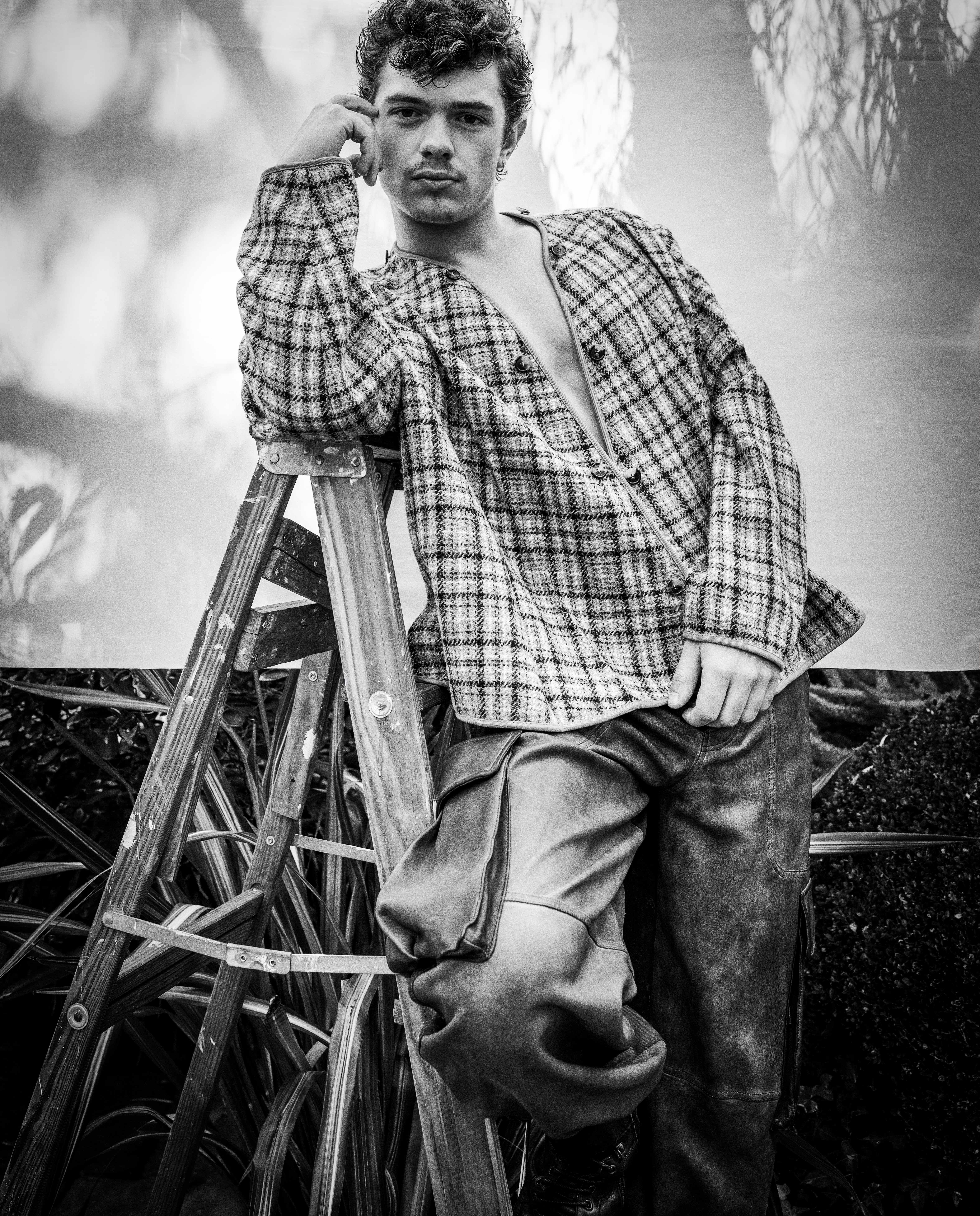
Working in Greece in the middle of summer was already an extremely hot, physically demanding job—and then, there were the animals. “I had to hold a scorpion and a tarantula,” he says. “[I had] to face a lot of fears for that film.”
Still, nothing this year pushed him quite like Psyche, which he not only stars in but also produced with his family. “It’s the first thing I’m producing and the pressure on that was huge,” Jupe says. “It follows a guy who is slowly going insane, so that was quite challenging to dive into the psyche—no pun intended. It was very dark and intense, but I had a lot of fun.”
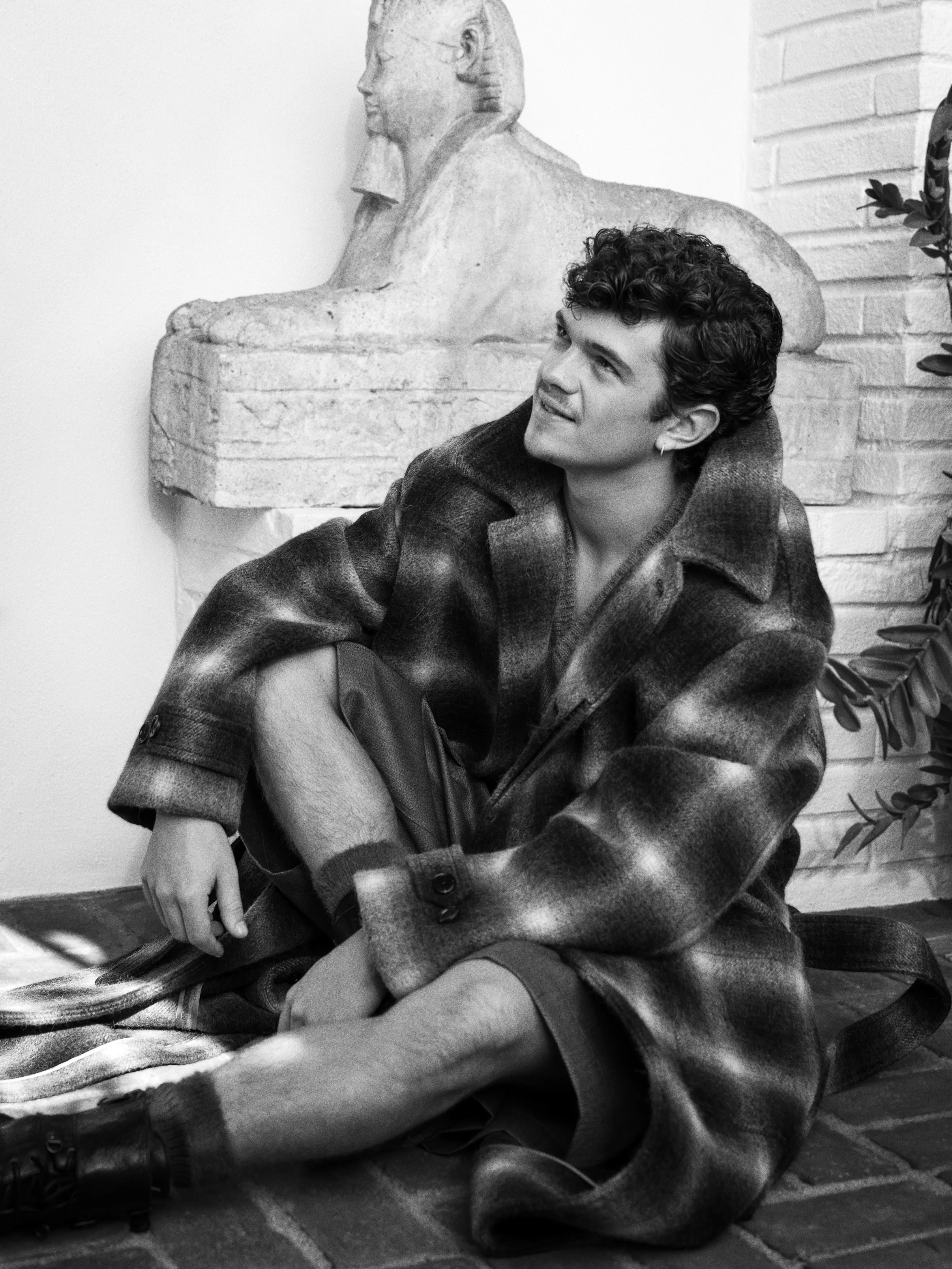
Mental and emotional risk for Psyche, physical risk for Play Dead. But when I ask which he prefers, he refuses to choose. According to Jupe, “There are roles where you feel very close to the character and roles where you’re nothing like the character. Both of them are equally difficult in their own way.”
When he’s not emotionally unraveling on camera or trying not to be stung by Greek bees, Jupe decompresses the way any 20-year-old would—with a highly sophisticated Formula One simulator that takes up a significant amount of space in his home. “It’s so embarrassing, but I will get home and spend six hours racing on that. It completely clears my mind. It feels like a meditation.”
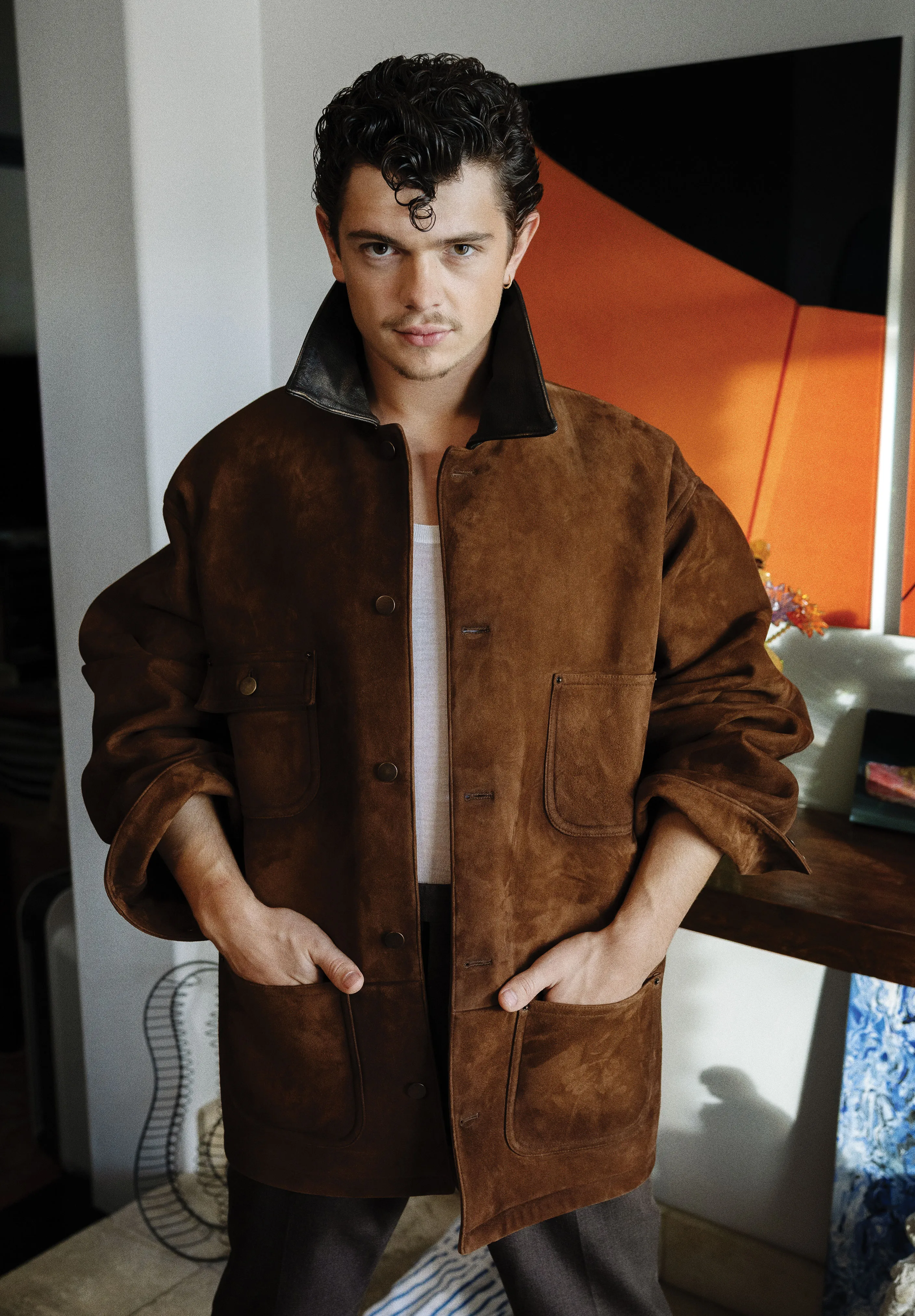
He’s a die-hard Lando Norris fan and delivers a statistical update with the seriousness of a sports commentator. “He’s 24 points ahead in the championship with two races to go,” says Jupe. “It’s nail-biting stuff.” Acting may be his craft, but speed, clearly, is his therapy.
But like any good artist, comfort is not the goal. “I like to put myself outside my comfort zone,” he admits. “That’s when you find something special.” Maybe that’s the real through-line, even if he rejects having one: constant disorientation as artistic nourishment. A creative method built on jumping, not landing.
So, as the risk-taker he is, where is Jupe’s style these days? “It’s had a massive growth spurt,” he says. “Style, for me, feels like another character. When I get the chance to do press, carpets, or premieres, it feels like another creative outlet.”

Like many actors moving from adolescence into adulthood, he’s transitioning from color to shadow. “I wore a lot of colors when I was a kid. Now I’m moving into a darker phase of more blacks. I love a high-heeled black boot, flares, and a black tank top,” he grins. “That’s my ideal outfit right now.” The new look is both rockstar and romantic—a fitting precursor to his Romeo era.
Jupe’s now stepping into the West End Theatre, making his stage debut as Romeo in Romeo & Juliet in March 2026. “I think the thing I’m most excited about is Shakespeare and his language,” he says. “To dive into that and study him for the next few months is going to be eye-opening.”
He’s equally eager to collaborate with Stranger Things and John Proctor Is the Villain star Sadie Sink, who’ll star opposite him as Juliet. “If it was just Romeo, I’d be kind of sad, but it is Romeo and Juliet,” he starts. “To go through a journey like that with someone and to develop two characters that are iconic in our own ways will be awesome.”
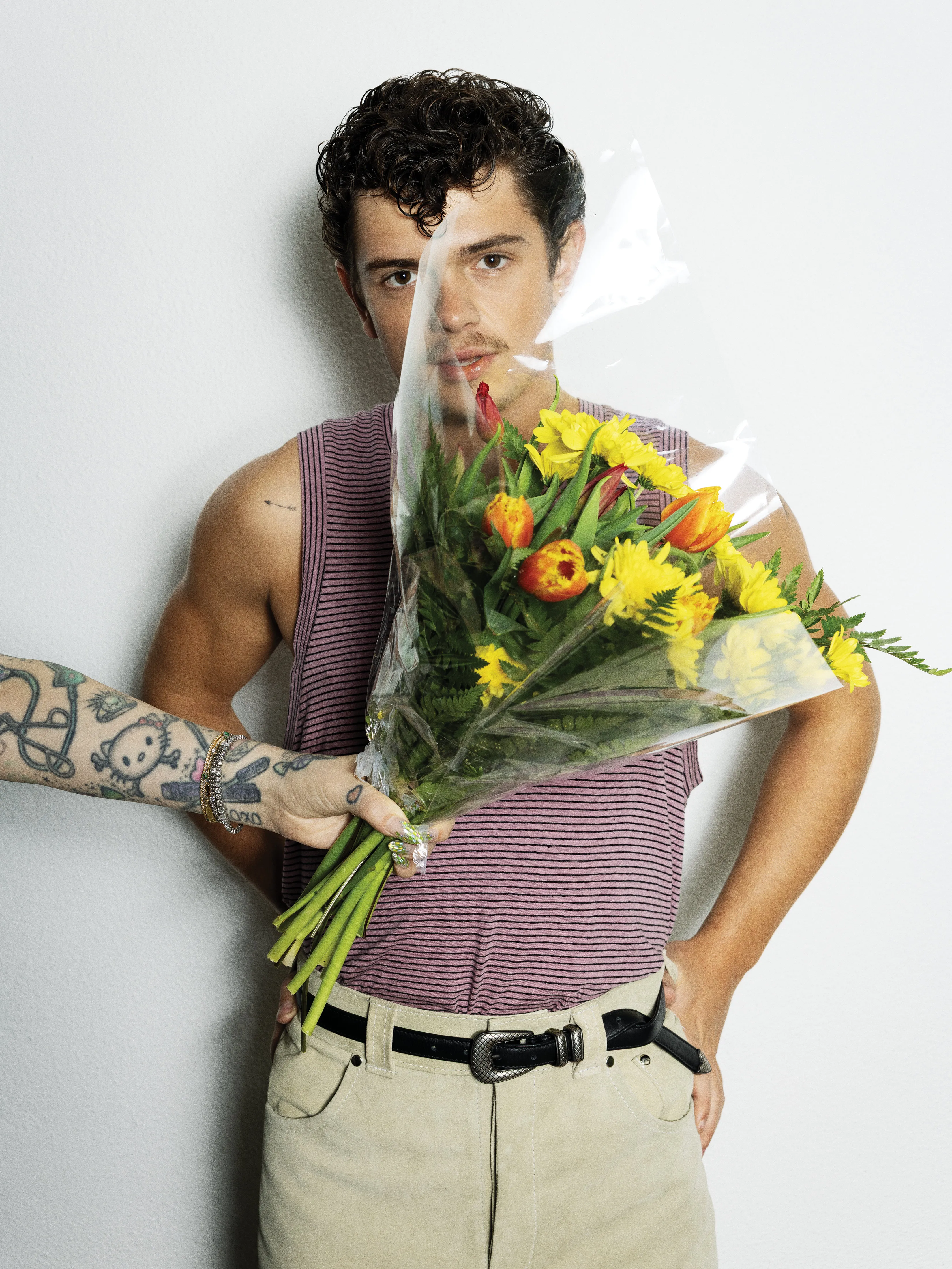
Jupe has played in dystopias, historical landscapes, alt-realities, and now Shakespearean tragedy—but where does he feel most at home creatively? “In a modern piece,” he admits. “It’s what you’re doing every day, it’s the way you’re speaking, and it’s the world you live in, so it feels authentic to you.”
Five years from now, what does he hope people will be saying? “I’d like to hear people be shocked and that I have that range,” admits Jupe. He also cites Jesse Plemons as inspiration—another shape-shifting performer who bends himself to every role like he’s melting into it.
And Jupe wants that. He wants to disappear, but in a noticeable way. “I don’t think there’s a dream role for me particularly,” he says. “I just want to do something that no one’s done before. I’m saying this as I am about to play Romeo, so I am a hypocrite, but overall that’s my view on it all.”
Jupe’s not just the kid from A Quiet Place anymore. He’s the young man balancing producing, Shakespeare, thrillers, and high-fashion black flares—an actor actively shaping his own mythology.
He’s also someone who could, when pressed, summarize his career with a single sentence: He’s currently in someone else’s shoes. But the secret is—he’s also building his own. And they happen to be a pair of black heeled boots.
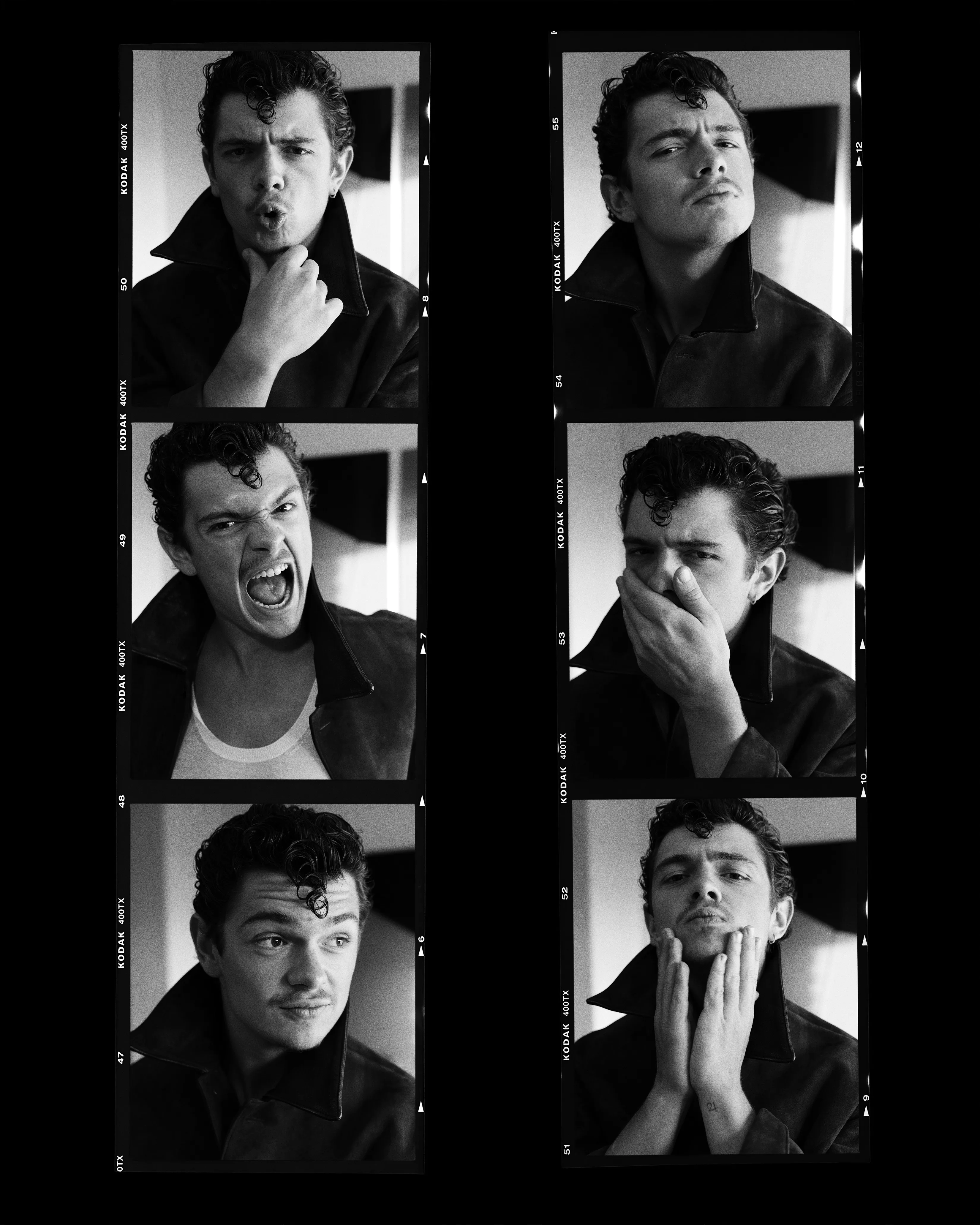
Photographed by Doug Inglish
Styled by Christopher Campbell and Gorge Villalpando
Written by Lily Brown
Grooming: Christine Nelli
Flaunt Film: Ethan Schlesinger
Production Assistant: Dana Albala
Stay up-to-date with exclusive events and content.


