F L A U N T


No matter the insularity of your algorithm, the hermit-like nature of your 9 p.m. bedtime routine, the misanthropy of your strongly held beliefs, the compression weight of your noise-cancelling headphones, or the number of Uber Black charges on your credit card, it’s impossible to ignore the humanity at your feet in New York City.
Cab Ellis makes a bold proposition in the Year of Our Lord 2026: that if you want to understand them, you might actually have to leave your house. Without much of an online presence, the underground alt-rock seven-piece has sold out some of New York’s most well-trodden venues, including The Bowery Ballroom, The Mercury Lounge, and Baby’s All Right. Tonight they’re at LPR, or Le (Poisson) Rouge if you’re fancy, in Greenwich Village.
I arrive with a rag-tag collection of friends old and new, some I know, some I don’t. A nonzero quantity of them have never heard a Cab Ellis song before. But that’s alright. They’ll figure it out as they go. There’s something so beautiful in not knowing what to expect, especially in a world where it’s hard to go a day without being bombarded by the easily-optimized and formulaic sludge of capital-C Content passed off as entertainment, or, even worse, art.
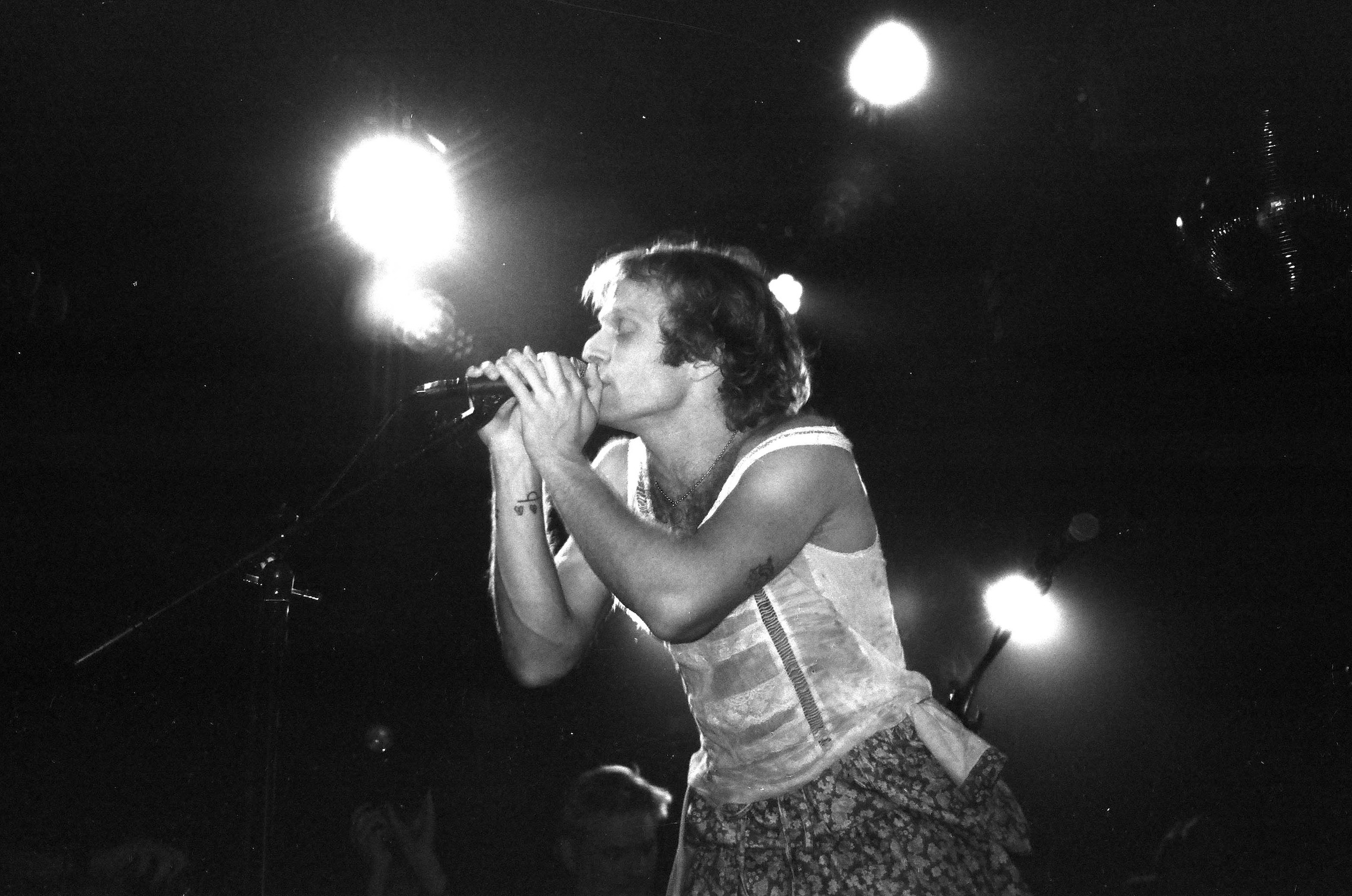
Frontman Connor Abeles started out as a teenager rapping over YouTube beats from his family home in Hagerstown, Maryland. The first manifestation of Cab Ellis as a Band materialized in 2018, after Abeles moved to Los Angeles and met a group of jazz students at the University of Southern California. Tonight, Cab Ellis consists of seven members, with Abeles on lead vocals and keyboard, Gabe Fraivillig on trombone, Greg Carleton playing saxophone, Devlin Tenney and Olin Clark on two electric guitars, respectively, Josh "Ugi" Uguccioni on bass, and Chris Cotton on drums. On paper, it’s a configuration that sounds almost overbuilt; in practice, the excess is the point.
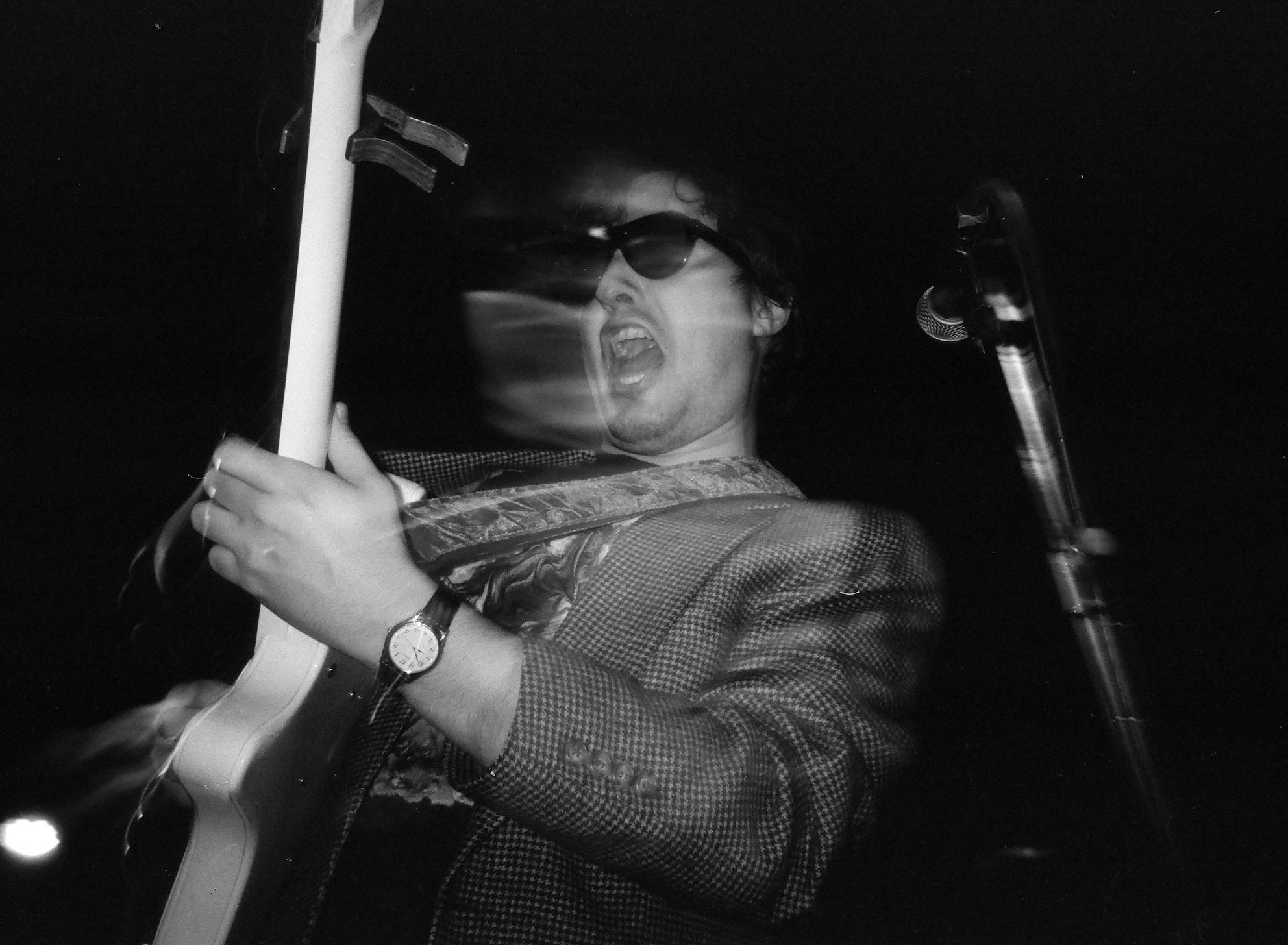
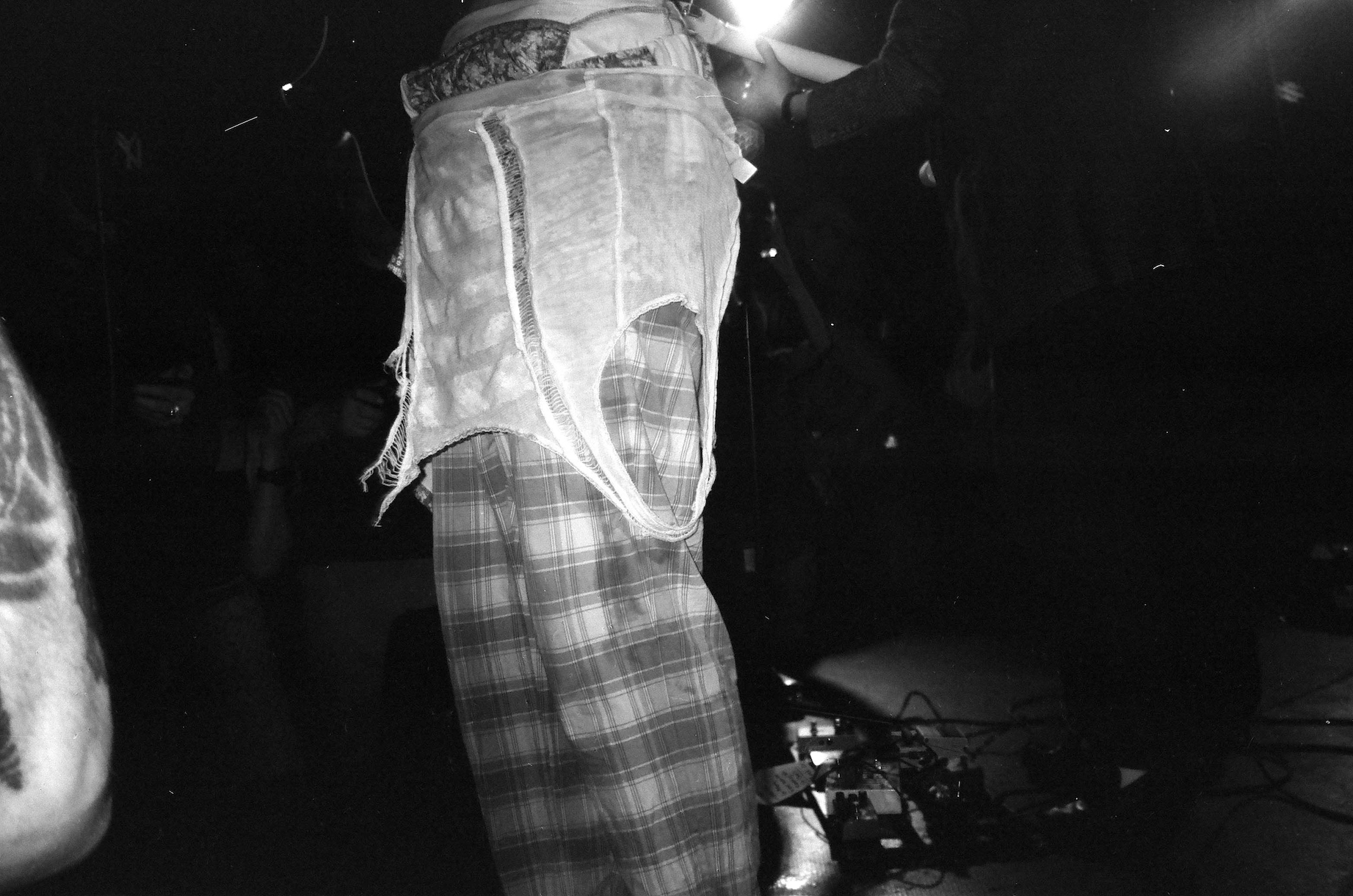
When the band makes their way to the stage at LPR, it’s around 8:45 p.m. in New York. A crowd has amassed, and they thunder and condense, surrounding the stage. All seven of them are enveloped in a bluish-purple light on the 360-degree dais in the center of the venue. Their clothes look like the haul from a spectacular Goodwill bins raid, with dresses layered over pants, tweedy suits, blackout Air Force 1s, an exposed chestpiece featuring a large stork with a tiny devil dangling from its beak in a baby’s bundle, and so on. Abeles digs the setlist from his pocket, flashes it to the audience like a winning lottery ticket, and sets it on the floor. It’s time to go.
And it begins. The band comes in, and they’re loud and tight and clear, the guitars dense without swallowing the horns, which cut cleanly through the room in bright blasts of saxophone and trombone. Abeles paces, lunges, leans into the crowd, delivering choruses built from the kind of short, sticky phrases that take only one repetition before people start shouting them back.
Abeles’ initial attempt at crowdsurfing is unsuccessful, and he falls to the floor. Perhaps he overestimated his rapport, or the crowd’s early buy-in. They get there quickly, though. The room gets louder and looser by the minute, guitars and horns competing for whatever air is left between bodies so tightly pressed together. Abeles sprays a weaponized beer in bright arcs over the audience. The pit opens, collapses, opens again. People shove and ricochet off one another with the strange mutual trust of an unrefereed contact sport. Someone loses a shoe. Somehow, it finds its way back to him through the mess of limbs. Soon enough, there’s a trombonist sailing above the audience, propelled by overhead handsiness.
The final song ends, and Cab Ellis leaves. Circumscribing the stage, the front row bangs on the stage, about knee-high, for an encore. They make the crowd wait a minute before they give in and return. Carleton gives someone in the crowd his pizza crust. At this point, anything coming off the stage feels like a gift.
The appetite for hardcore’s particular kind of physicality has spread well beyond hardcore. Maybe that’s part of why a band with two guitars, a keyboard, a saxophone, and a trombone can inspire a room full of people to start throwing themselves at one another. The music is loud, yes, but volume alone doesn’t explain it. There is something unusually satisfying about an experience that asks something of your body in return.
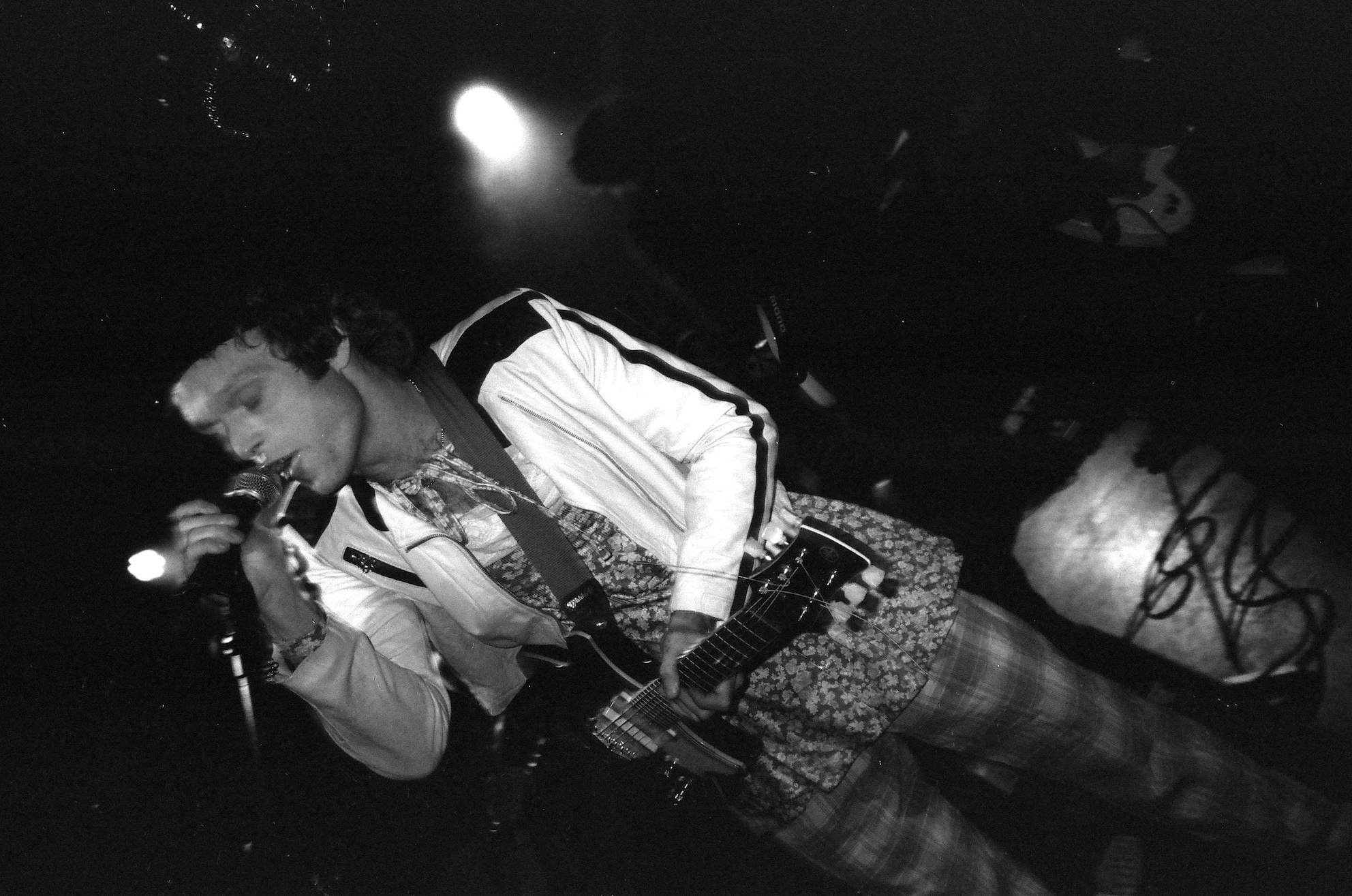
For all the hand-wringing over post-COVID concert etiquette, phone addiction, and audiences apparently forgetting how to behave in public, the crowd at LPR seems remarkably uninterested in experiencing the night through a screen. Phones surface here and there, inevitably, but they rarely stay overhead for long. There are photographers circling the stage, point-and-shoots and DSLRs flashing from the edges of the room, proof enough that the show will not disappear undocumented. The audience, for the most part, seems happy to leave that job to somebody else. They want something more immediate, something that cannot be replayed quite correctly afterward. Phone cameras are touted as memory-makers, devices capable of preserving a moment long after the moment itself has passed, but maybe the appeal here is precisely the opposite: the temporary, inconvenient pleasure of knowing that most of it will be lost. You might not remember every word to every song Cab Ellis played that night in the West Village, or what the bassist wore onstage, but you’ll remember the sweat dripping down your back, bodies bouncing around like ping-pong balls in the whirlpool of the pit, the stranger who caught you before you hit the floor, the horns cutting through the guitars at an organ-rearranging decibel. You’ll remember you have to pay attention.
That last part is almost radical now. So much of contemporary life is engineered around eliminating friction: food arrives without speaking to anyone, entertainment predicts what you’ll like before you know you like it, and an algorithm can spend all day feeding you people who already think exactly as you do. A mosh pit offers almost none of these conveniences. You cannot curate who crashes into you. You cannot skip ahead. You cannot experience it at 1.5 speed. If somebody falls, somebody else has to pick them up.
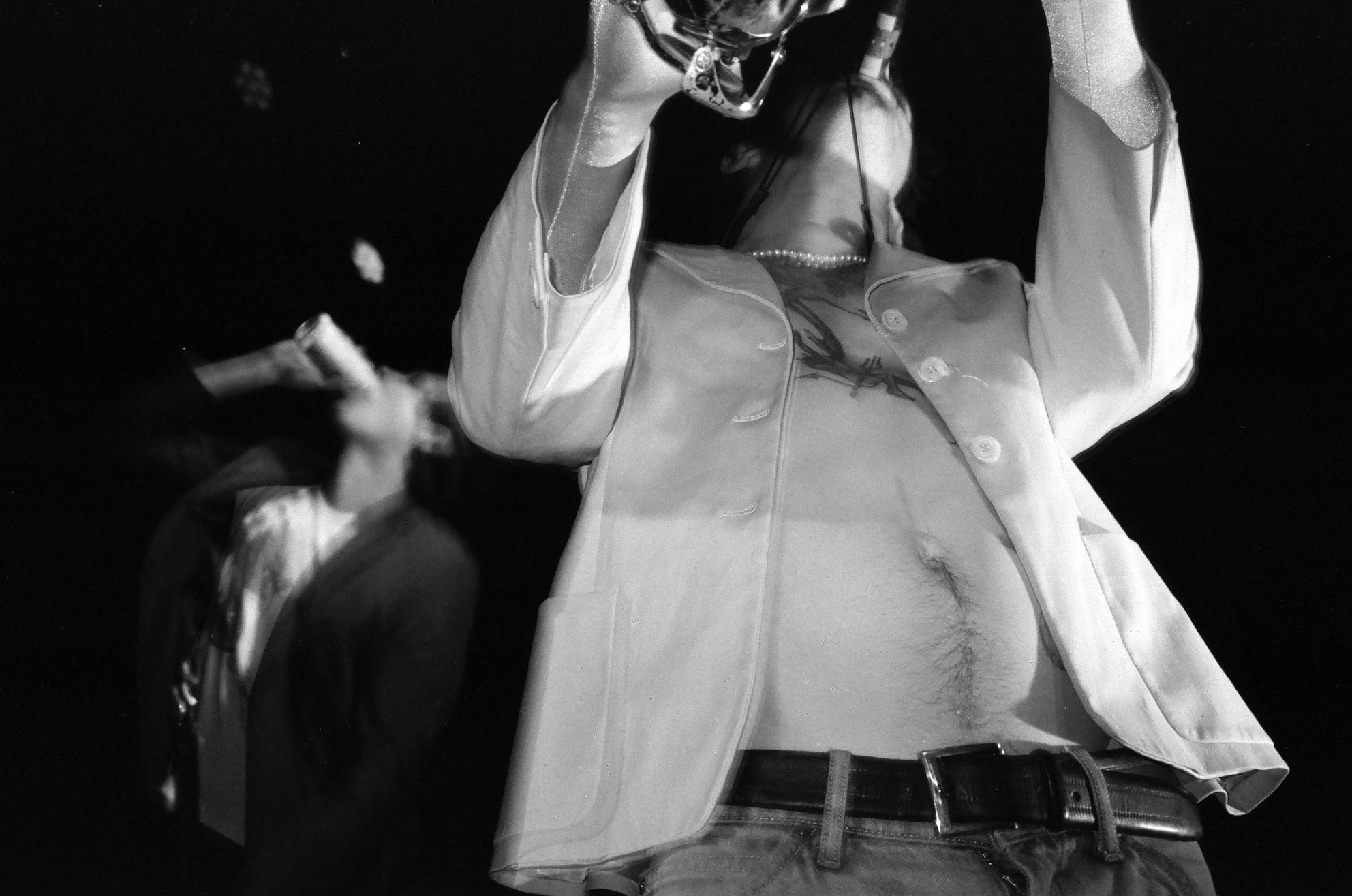
At the risk of sounding eighty years old, it’s thrilling to see other young people be so physical. So much media coverage has been dedicated to diagnosing the generation as sexless, lonely, overly online, socially anxious, and pathologically attached to its phones that you could be forgiven for imagining twenty-somethings as a species slowly evolving out of the need for corporeal form. And yet here we are: sweating, touching, screaming, shoving, and catching one another.
New York, more than many other places, places you face-to-face with humanity. They brush against you on the subway, block the sidewalk, breathe down your neck at the bar, step on your toes, spill things on you. Most days, it’s an inconvenience to be engineered away. For a couple of hours at LPR, it’s the main attraction.
Stay up-to-date with exclusive events and content.


