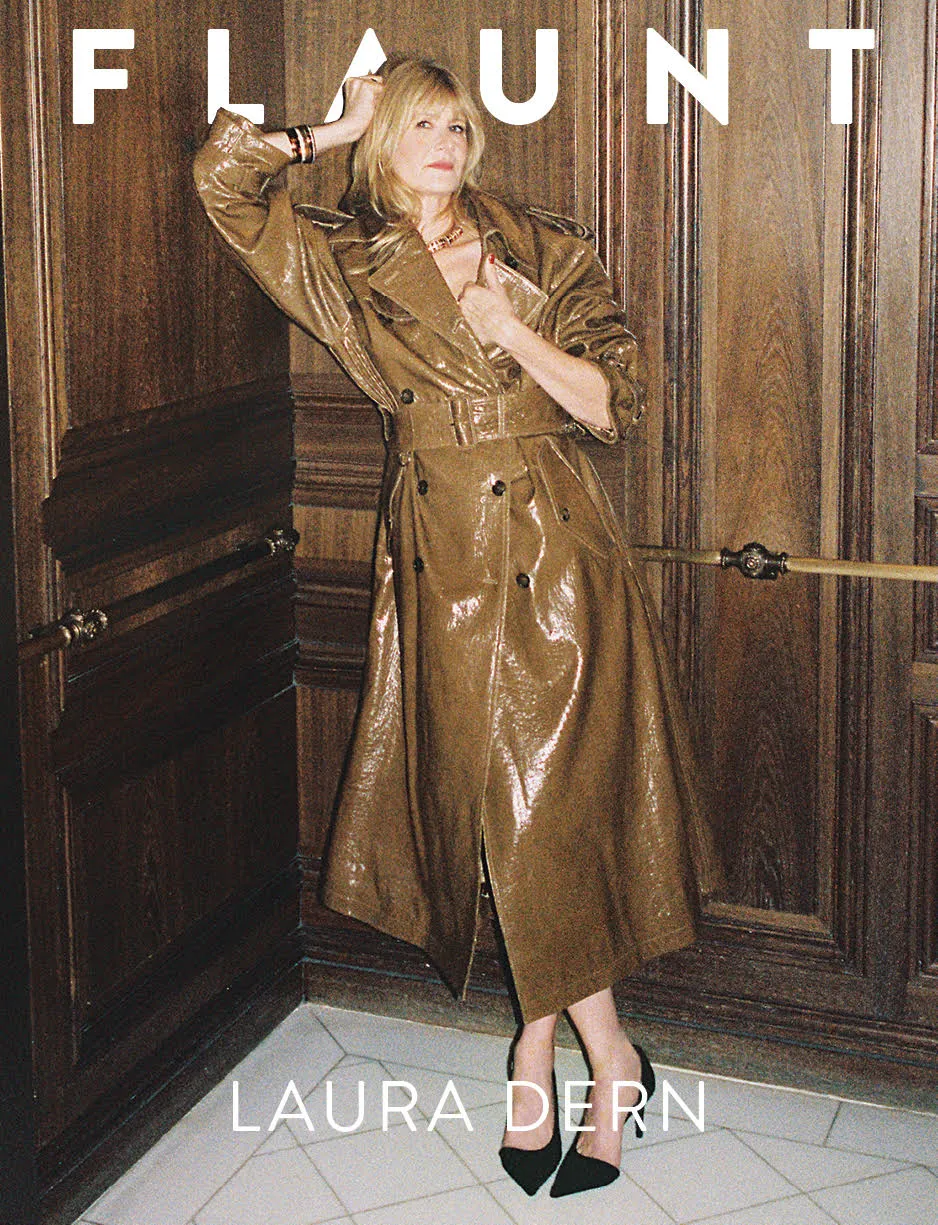
F L A U N T


The footage is vintage and accelerated.Bodies pile in and out of the train car. They file to their desks or trading floors or assembly lines or sites of worship—maybe all one in the same. Intercut are black and white 1920s celluloid scenes of monsters, ghouls, a hand suffocating a face, sinister medical experimentation, agony on the countenance of the bewitched or soon to be butchered. And then failed space rockets exploding, once proud buildings imploding in toxic plumes, bridges collapsing, all while the above’s feet pound the urban pavement. Then famine, unemployment, rage and sorrow, forceps and sutures.
It’s not fantasy. It’s not fiction. It’s the human grind battered into Queen and David Bowie’s brilliant 1981 “Under Pressure” music video. And for the seasoned actor Laura Dern, the song summons the ideas she’s most fixated on at present—confrontations with trauma, the dizzying passage of time, the beautifully ugly in-between, the catharsis of honesty.
“Under Pressure” also bearhugs her latest film, Is This Thing On?—opposite Will Arnett and its director Bradley Cooper—in the form of a next-generation remix in its closing scene that cements your having been slow-walloped in the stomach up until this point. And there it is: despite the teeth marks, the heart can regenerate, it can still flutter, and the pressure of life has blissfully dissipated, if only for a little while…
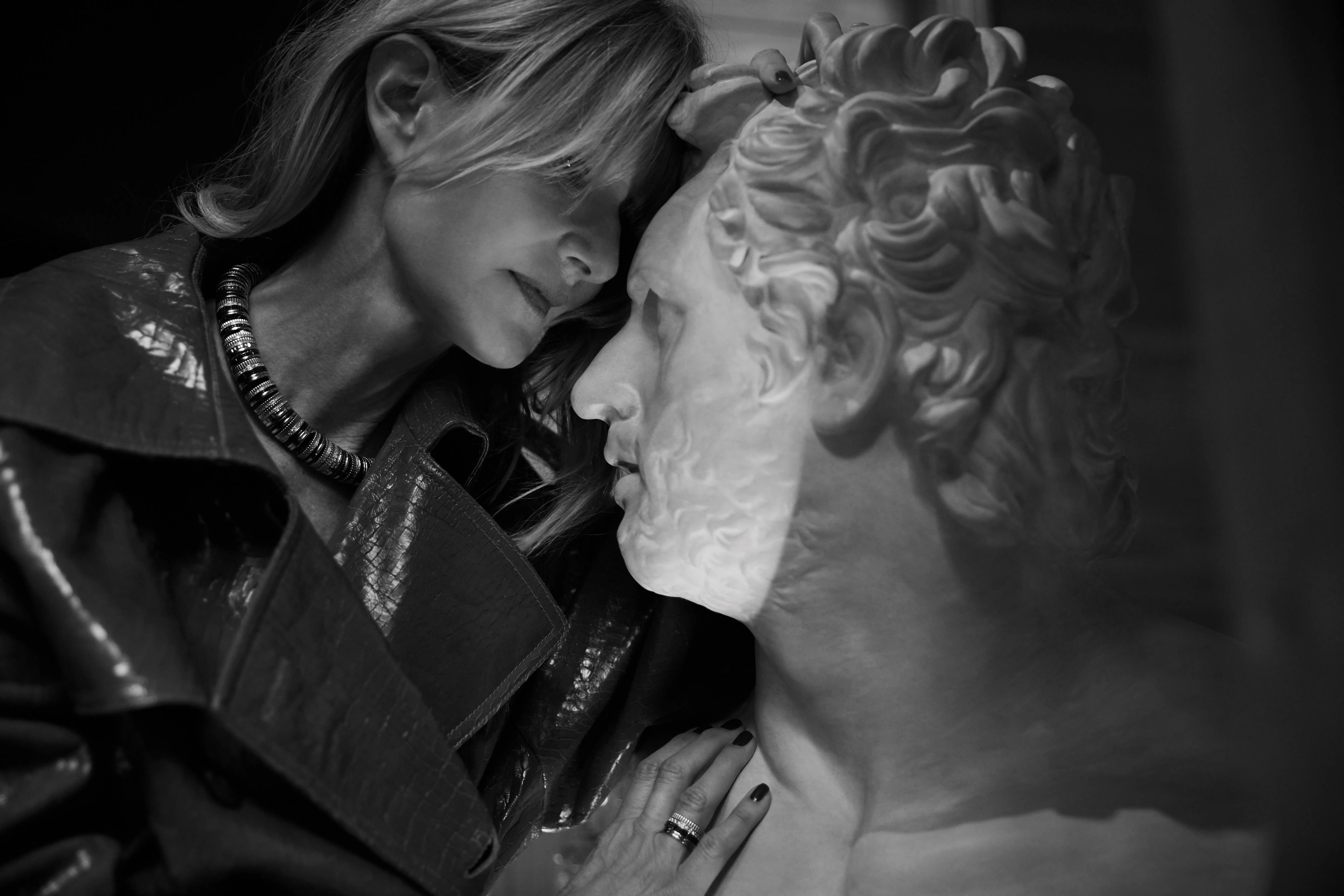
We all know Laura Dern. It was Jurassic Park (1993) or Star Wars: The Last Jedi (2017), or Marriage Story (2019) or Rambling Rose (1991) that fire-branded her range onto our entertainment-subsumed subconscious, the latter two of which saw an Oscar nomination and a win, the former blockbuster success. It’s those mouth agape reactions—often dismay or shock or challenge toward those in the room’s alarming gall or deceit or ineptitude—or her twinkly conspiratorial side glances, the graceful command of her athletic frame, or maybe her tugging on her family’s Southern roots with an occasionally drawling accent, yes, but also her signature brand of conviction meets whimsicality.The skillset composite sees suspended allegiance. You’re always with Laura Dern.
On the carving block of Is This Thing On?—as you might have guessed—is marriage, with its lean, covetously comfortable cuts and their marbly fat, and of course the other half: inedible, sinewy, disposable. Tess (Dern) and Alex (Arnett), parents to a pair of pre-teens, decide to separate after 25 years of marriage. Dern, a stay-at-home mother across Alex’s role in finance, journeys to dust off who she is now versus who she was decades ago—most notably a former US Olympic team volleyball player with sport-adjacent career promise—to at first sheepishly but incrementally meaningful ends. Alex meanwhile finds a sort of frumpy but loving home in Manhattan’s standup underground comedy circuit, a bravery-requiring confessional where he can jest at himself and his situation. The co-parenting quest keeps the two in taut orbit, and the resolution sees both hurt and heal seep from what has come to be presumed as fallow or obstinate granite.
Dern is also in promotion motion for Jay Kelly, in a supporting role opposite George Clooney and Adam Sandler, which sees her reunite with Marriage Story director Noah Baumbach. The story follows a heralded film star confronting the alienation his ascendant career path has created, his long-term relationships distilled to mere transactionality, his family not picking up his real and metaphoric calls. Dern plays a publicist to Clooney’s lead, where, beyond presumably skimming from the non-fictional froth of the countless real life publicists she’s employed or encountered, she is both no bullshit and totally at ease.
Ease is Laura Dern, and at this stage, an attribute almost arterial, deep within her veins, the kind of punk electricity of her early years giving way to stoic relaxation, culling from the Old Hollywood echelon of cinematic grandeur, feminine assuredness, coolly pacing scenes: ease. This harkening, if you will, is not surprising given her parents’ awesome filmic output. Her father is two-time Academy Award nominee Bruce Dern. Her mother, who very recently passed and who knocked out something like 200 performances in films and TV shows over a 70-year career, was Diane Ladd.

Time and the sometimes dizzying achievements that can occur in its passing, like those of Ladd cited above, can be a head-fuck. The inverse, of course—the lethargy, the stasis, the passivity, the impoverishment of the spirit—similarly so. And while it could be said that no one person spends their time equal to any other, life is laden with universals, an increasingly popular one that of navigating its hastening, demanding pace.
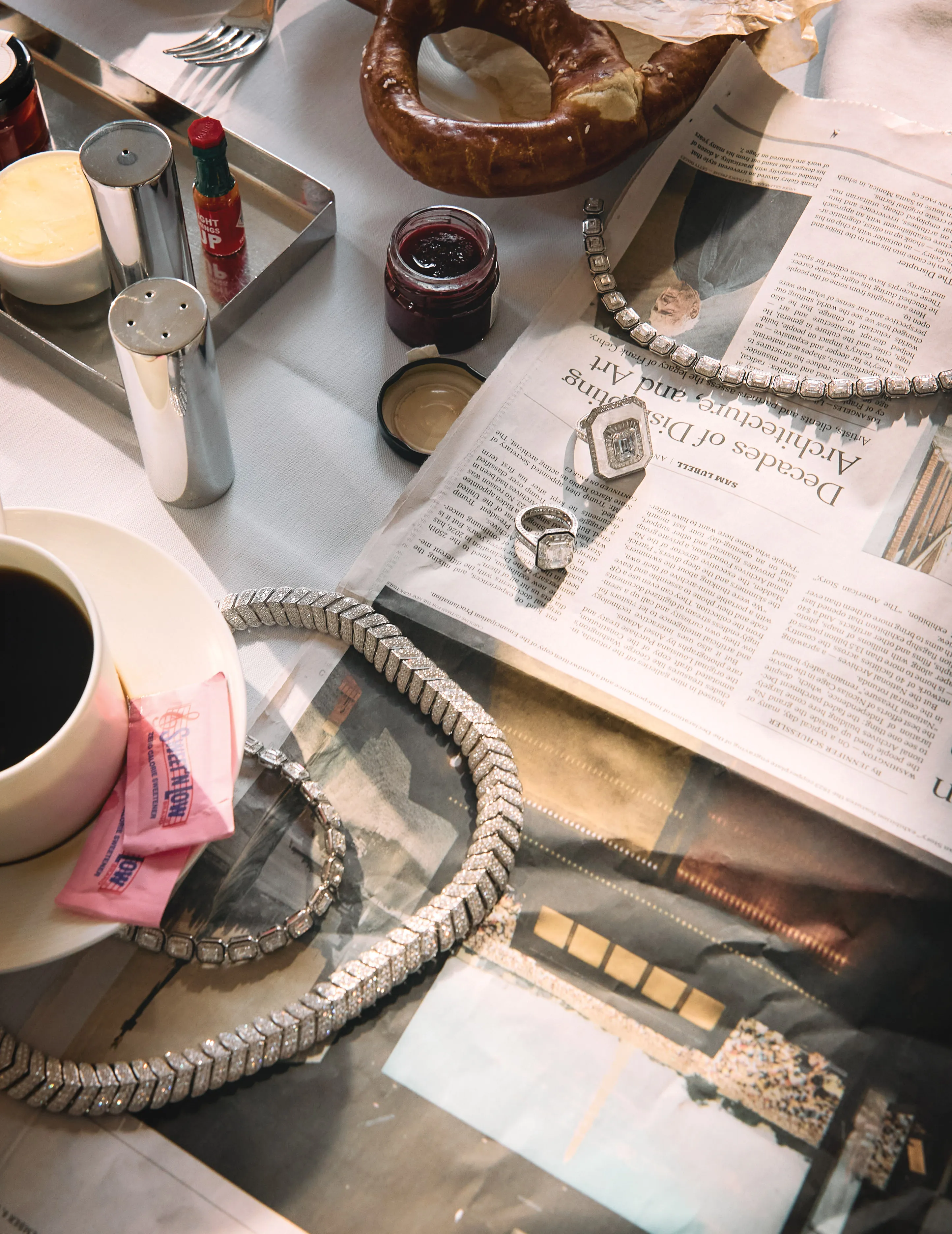
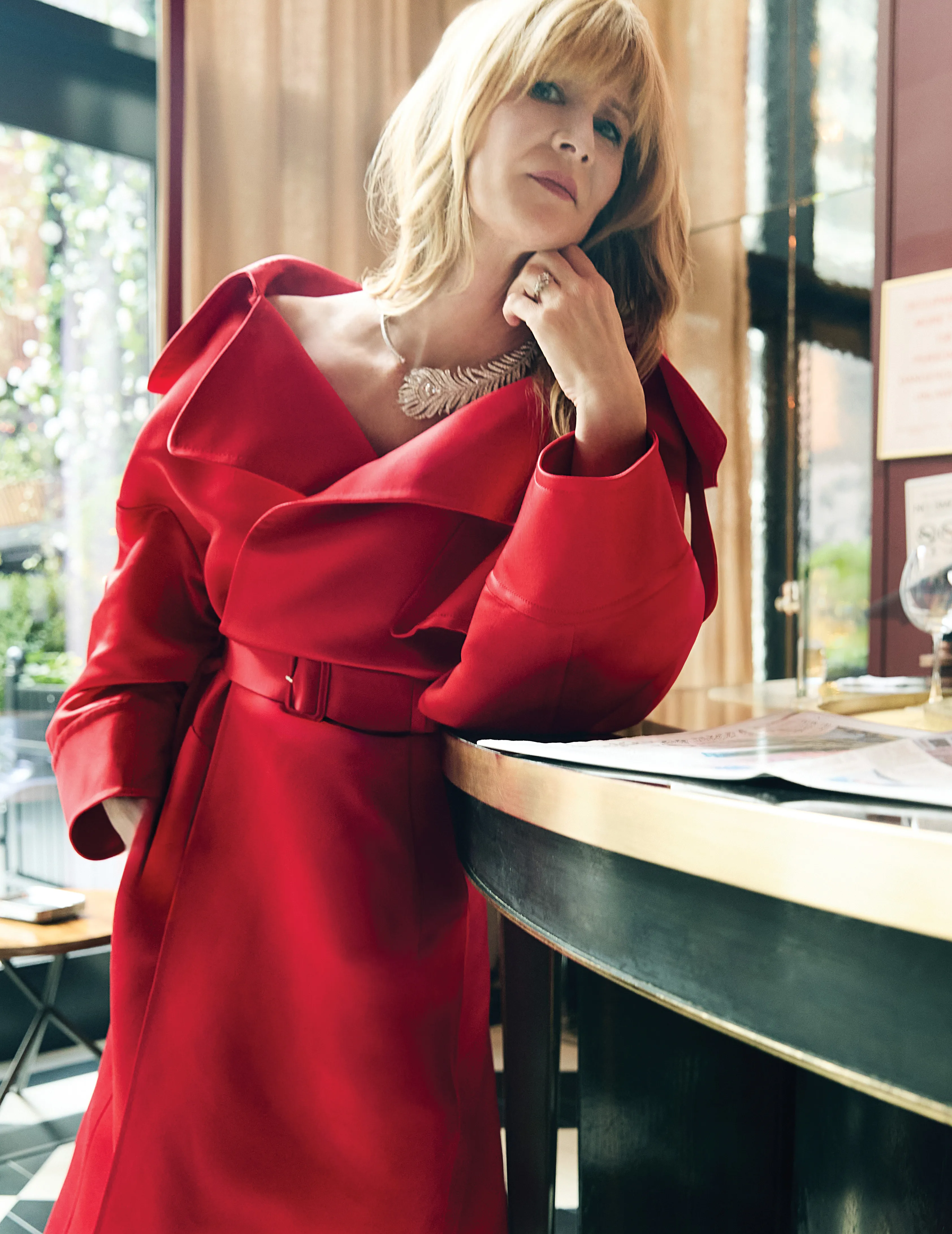
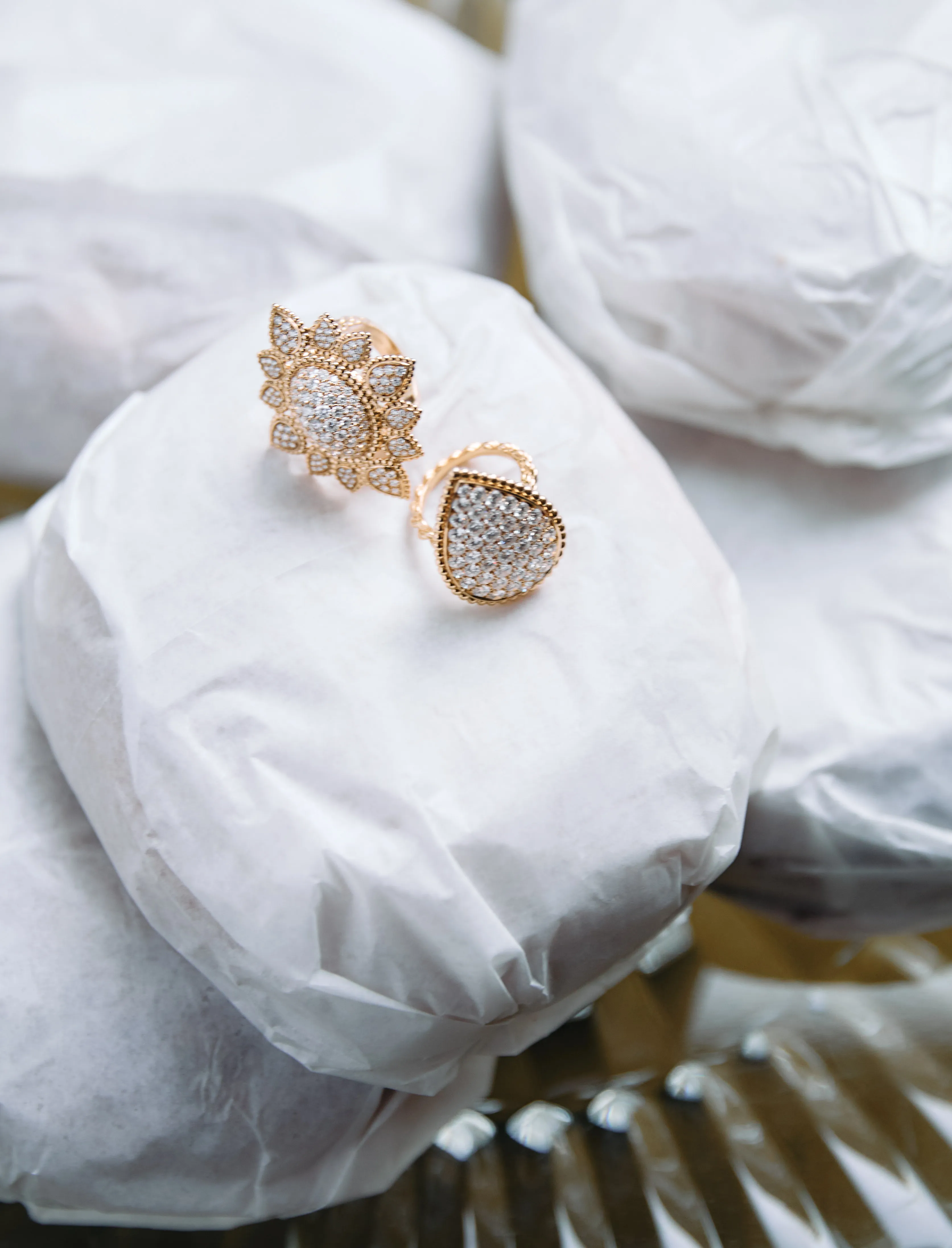
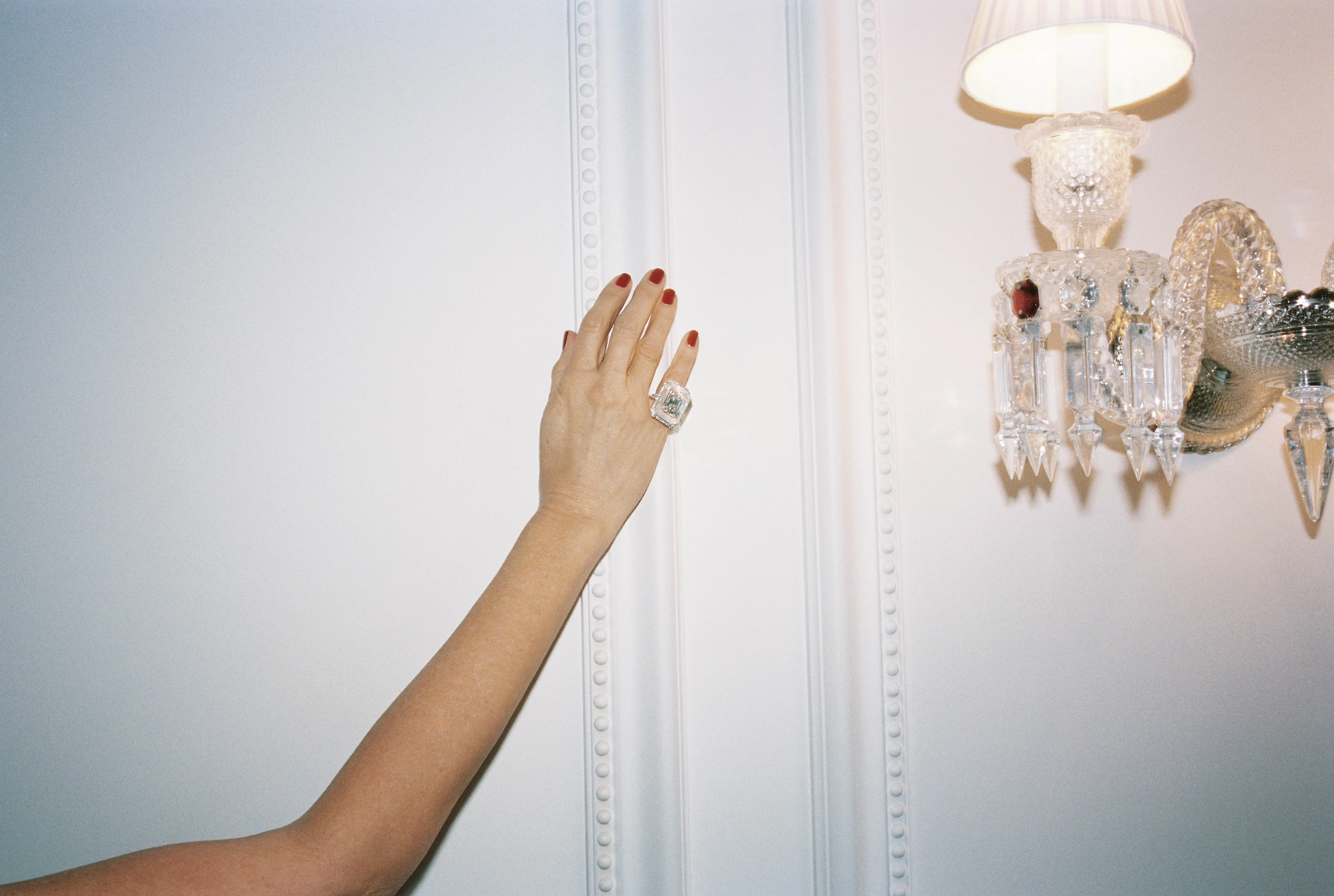
To wit: some weeks back, I see Dern at an event for French jewelry brand Boucheron at the John Lautner-designed Harvey House in the Hollywood Hills, where she knows most people in the room. Now here at our cover shoot in New York City, Dern’s just come from London, and it’s in between these bookended encounters that I see her all over my feed and inbox, stepping out at luxury brand events, perched atop the couches of talk show hosts, in editorials, on billboards—powered by planes and publicists and promotional prowess—a calendar and rhythm that is exhausting just to recite.
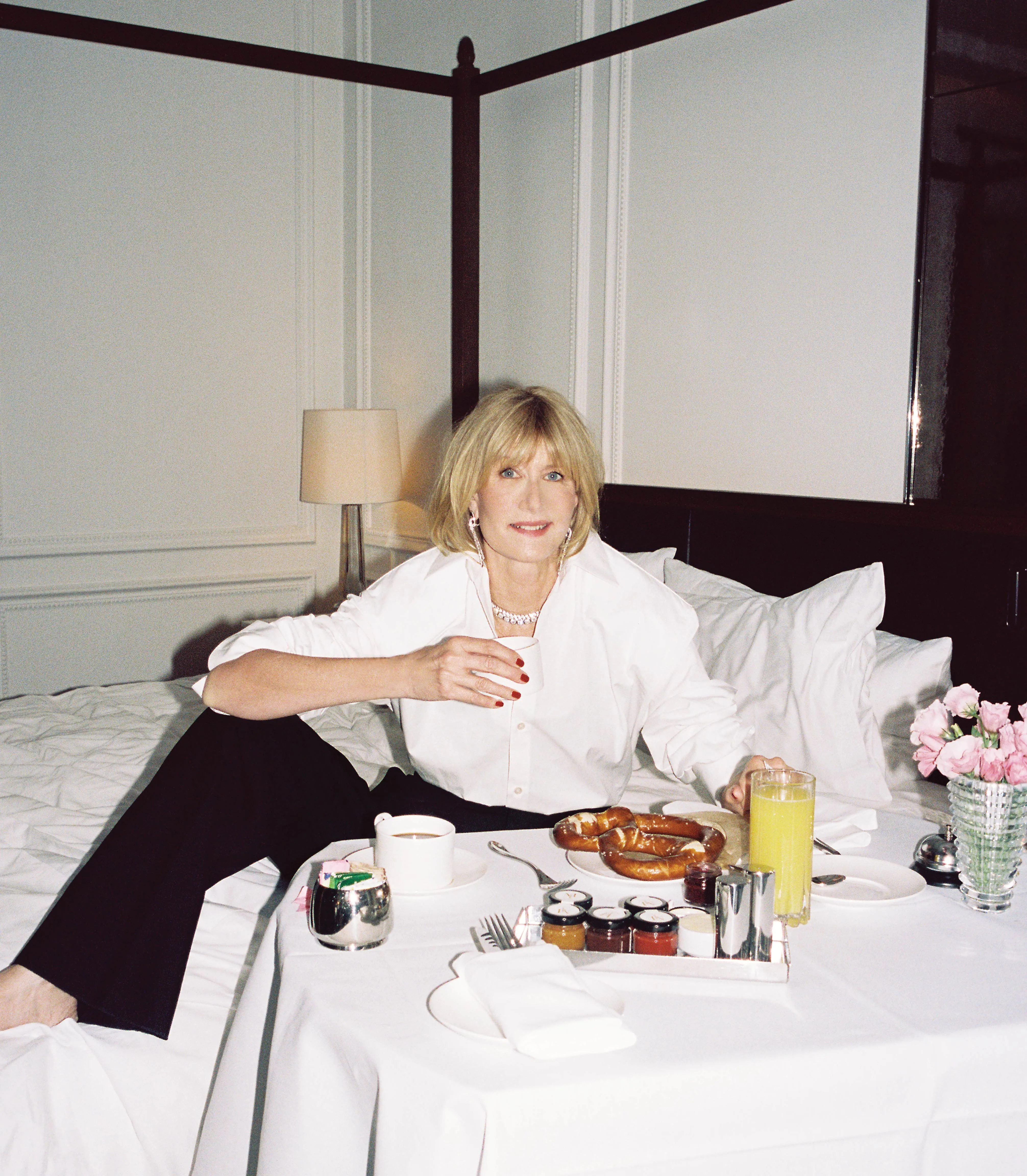
And it’s impressive: Dern’s soldiering through obligations, showing up in NYC hotel rooms to be photographed in harsh yet hip 35mm while it’s 15 degrees outside, making the junkets, getting on the plane, hitting her off-camera marks, smiling and making redundant small chat, because it’s special and necessary and not always about you. Because of progeny. Because of promises. Because of the hundreds of people that helped put together the very amplification-requiring objects in motion.
But this is still, at times, a grind. Because no matter how glamorous the diary might portend, or how we think fame or privilege might counterbalance life’s grit, or our envy at the presumed freedom of one’s artistry, we are all subject to the universal pitfalls of rigamarole, repetition, auto-pilot. And thus, we arrive at what both Is This Thing On? and Jay Kelly seek to attest: it’s in between all this ‘big stuff’ that life happens. We lose someone, we miss something, we don’t look up. And perhaps that’s why our grind is sometimes, by necessity, subject to internal review.
So here it is, a chat with the decorated warrior of cool, with the graceful guardian of evolutionary empathy and enigmas, when it maybe didn’t need to or shouldn’t have happened, and how will we ever know? Here is Laura Dern, at her god damndest, and may there be so much more to come.
Do you feel Jay Kelly is a film about fame? Or maybe the alienation that is part of fame?
I see Noah and Emily (Mortimer), in the writing, attempting to get at something more universal, which is making sure we don’t miss our lives. Doing the hard work of finding balance in a very uncertain life. What is the quote? ‘If the gods want to punish you, they’ll grant your wishes’—something to that effect—and I think people are chasing the wrong things, especially now with social media, because we’re modeled an idea that doesn’t exist.
If the goal is the machine, or the goal is fame, it’s going to be a very lonely path. Even if the goal is craft, you still miss stuff. I mean, my parents’ goal was the craft, and I was very blessed to be raised around that kind of goal—this group of actors that came up together in the Actors Studio, to witness their drive, their ambition, in a somewhat quiet world, not filled with magazine covers and tons of press and social media. That was an era of actors’ goals being the purest, the best, the most truthful—that was the ambition.
But there’s still compromise with that purer ambition?
Yes, because you’re still sacrificing time with your kids. You’re sacrificing a good living to do the play, or study longer at the studio; you’re sacrificing living in a great community where perhaps your family can be and help you raise your kids, because you’ve got to be in New York or LA to do the work you want to do.
In the case of Jay Kelly, he is on a hamster wheel, like ‘strike while the iron is hot, this is a great time.’ And suddenly you wake up and your daughter’s graduating high school, and she’s your baby, you know? His realization of that is an amazing opening of any film, because we’re all left with, “Wait, what? Where did it go? Did I spend it with too much drive or too much anxiety or too much longing, not present in the moment of my own life, my loved ones or my own self care?”
These are universal reckonings…
And how many friends are taking care of elderly relatives or loved ones now and we’re hearing them say, “God, I never thought about taking care of myself. I was just too busy and constantly on airplanes and never ate well and never quit smoking.” And, you know, I think that “missing it” theme is really moving me—in conversations with all walks of life.
This idea of sacrifice threads throughout Is This Thing On?, and sacrifice, of course, relates very much to time. What’s your relationship like to sacrifice at this point in your career?
I’ve learned so much everywhere I’ve gone that I luckily don’t live in a lot of artistic regret. I definitely live in tons of personal choice regret. As my friends will tell you, I beat myself up all the time over, like, “Should I have just taken the kids and raised them in Portland? Why didn’t I go and live there?” I think time is definitely something all of us are confronted with.
It’s common to blame the place for life’s missteps or feeling like you’re missing out, right?
It’s amazing that the things we’re most in fear of—like the uncomfortable-ness of life, the grief that we are all set to face, reflection on what we’ve missed, or what we haven’t gotten right, or where we’ve been stuck—it is only when we are in those moments we try so hard to avoid that we’re willing to look at ourselves.
It’s somebody going, “This isn’t working,” and having to be brave enough to be willing to walk away from a marriage or an old path or an entire career—or get back into a career that others have told you you’re not skilled enough to do, or you’re too old to do, or you never had talent at, or whatever. Only those moments move us forward. And the process is just amazing, like the growth and the connection, the empathy, the deepening of relationships and spiritual path, kind of checking in with ourselves.
I feel like we’re all in this culturally—these same reflections. How did we get here? How are we going to find our way out of it? How are we going to change? Are we going to stand up, use our voice to be our deepest self, trust in our deepest sense of faith? All those questions, whether you’re looking at life from grief or climate trauma or political trauma. It’s facing us all.
Both Tess and Alex, at different stages of the film, have separate conversations with a parent who encourages each of them to act with grace towards themselves—they both use that word. What do you think “grace” means in those moments? Is it about kindness?
It’s absolutely about kindness. For me, it’s absolutely about patience and understanding, and most of all to one’s self, right? That even when you can walk through the world and say, “Oh, I’m such an empath, I try to really be kind to people”… I mean, most of the time we’re not very generous to ourselves, and boy, when we get it wrong, we can really come down on ourselves. As a parent, I would love to give my kids that kind of grace with themselves. I always thought it was interesting—it’s called a “grace period” in school, you know, or on a film or whatever.
That purposeful suspension. Romantic separation is often described in society as “failure.” What are your thoughts on that? Is that a fair term?
Is This Thing On? is really looking at how we are ever-evolving creatures, and the person you marry, and the person you are when you marry, change entirely. You can’t say if you’re going to grow together or grow apart, and you can’t say what your needs will be and how you will identify in a relationship 25 years later. And it’s two years later for many people. And people who’ve gone through addiction and recovery, people who’ve gone through, ‘I thought I wanted kids, and now I don’t’, or the other way around…
Or the fertility journey that can really challenge relationships, which is touched on in the film.
Absolutely. What I loved about the script, and I loved about Bradley’s intent, was there were a lot of radically deep themes in the movie. But the longing for them as writers and for Bradley in the filmmaking is that it felt effortless—like life, it’s just there. It’s just happening to us. You’re just brushing your teeth one night and your wife goes, “Should we call this? Should we call it?”
And we have no clue how we got here. All of my friends are going through it—that is the most common conversation, even when there’s been an inciting incident. Because for most adults’ loving relationships, when you get to a place where there’s been an inciting incident, there have been some years of question marks inside those people about who they are, how they connect. They’ve stopped talking, or they’re not happy inside themselves. Or there’s addiction they’re not facing, or whatever it is.
With younger generations, we hear about declining birth rates. We hear about aversion to marriage, or its statistical decline. How do you think the younger audience might relate to the film?
I’m lucky to have had this incredible home life with my four kids who I am actually raised by half the time. They’re 20 to 28; three are musicians, and one is an actor and a student. And they are not only the people that I love being with the most, and love traveling with the most, and love talking about life with the most, but they also have created—with my son at the helm—our home has become a home of open mic nights. We had every Sunday, every weekend, at least until the fires, musicians of every age. And it inspired, like Will’s character, people who love music and have never gotten up in front of anybody to sing a song, and the sharing is so beautiful.
That sounds so special.
My deepest conversations about the film have been with them. So I really hope people beginning the path of communication in intimate relationships see and love the film, because what I’ve been hearing from them is incredible.
They’re deeply monogamous, by the way. They’re very invested in committed relationships. They’re really interested in intimacy, and I think it’s the backlash of the last decade—that there’s just this swipe-right mentality—and I think there’s a burnout around this idea. For a lot of youth culture, the revolution is about empathy and intimacy—you know, the opposite framework that was set up recently by cultural figures who say empathy is a sign of weakness. I think that we have a generation coming up that have deep longing for connection, and I don’t mean it just in an intimate relationship with a partner, a lover or a friend… It can be anyone.
What do you feel was their most common takeaway?
How you’ve got to talk before it’s too late. That was their big takeaway. I mean, this couple gets very lucky to be able to, at a midpoint of a lifelong partnership, have a wake up call that they can dive deep into. And they’re culpable people, and they’re kind people. The thing that I marvel at in these two characters is they don’t need a bad guy. And I loved playing Tess because I’ve played people who are fierce and strong, but they love a bad guy and they love an enemy.
I learned about volleyball and I was very moved. Because I’m an individual sport person, you know, I was a marathoner. I was a runner and swimmer. But it’s a remarkably accountable team sport, so it breeds like, “This is my responsibility, this is my job, and I can’t let them down.” And I think it’s an incredible skill set to have kids develop, because you’ve got to talk about the hard stuff, and you’ve got to be responsible. And it’s not a movie experience, where you go back to a hotel and you beat yourself up for three hours that you let everybody down if the scene didn’t go well. You don’t have that kind of time. You’re playing again in 10 seconds.
You’re a critical role player.
I really loved training and learning and getting it in my body so that by the time Will and I were workshopping and building this relationship with Bradley, I think I became a much more accountable woman in my cells. You know, that’s just not my nature. I think I’ve played people for so many years, and maybe been a person that’s so scared of getting it wrong, that when confronted, I might be like, “I never…” or “Well, no, I didn’t do it like that,” whatever that thing is. You’re so scared of having upset the person and you deflect. And I just loved playing someone who’s like, ‘Yeah, you know what I did? I did this.’ He’s like, “You were a downer.” And she says, “You know what, you’re right,” doesn’t she? And she sits with it.
How did that scene play out on set?
I said to Bradley, “Dude, I have to take time there, because, like, I’m coming to be accountable.” And the movie moves. This is not a movie that doesn’t have a rhythm. It has a real rhythm, and it has a comedy rhythm, even though it’s very emotional. And he was like, “No, your job is to tell the truth.” Like he never, never once brought up, you know, speed or time, because he knew when we found the truth, the rhythm follows it. But that was very, very exciting to explore and discover together.
There’s truly such a rhythm. It comes across at first as steeped in “middle age” and therefore for the middle aged, but by its end you’re like, “Wow, who is this for?” It’s hard to define that.
I think that sometimes movies can be caught in an identity that’s projected onto them. Based on who Will and I are as our characters, you have this idea about a couple—25 years in, so it means it’s “middle age.” I think it’s great to see the reaction to that, or the assumptions, and then have so much fun with it.
There are clever inversions on assumption throughout the film.
Totally, and in the same way, enough hasn’t been talked about in terms of the score. The play on redefining a hit song was amazing.
So great. “Under Pressure” is first alluded to by the kids tinkling out the bass line on a piano in Alex’s new apartment, which I missed at first but it stuck with me and I went back to make sure that was it.
It thrills me. It is the movie at its core, you know. It’s built on trauma, that song. It’s built on the world we’re looking at around us. And it’s about finding grace amidst people on the street. It’s not pretty. It’s not painting a picture of, “Let’s all get along, because it’s so easy to,” and that’s why I’m just so grateful for the movie at this time, because it’s a time of deep trauma and heartbreak and loss and narcissism and all kinds of stuff happening. At the same time, we can give ourselves grace to find humanity and hopefulness, and love each other and hold on to each other and give ourselves the grace to break ourselves open, to dive deeper.
What a moving final scene.
You know, Bradley, this is his third film, and it can get very noisy, and people can have lots of opinions. As he always says, ‘The movie is defining itself. I’m not telling it what to be. It’s telling me what it needs to be.’ And you know that gym—as he started working on it, it was clear to him that’s where it needed to open and close in that space. A gym is in a school, right? It’s a congregation. It’s where kids are growing up. It’s where kids graduate and leave. It’s where all the parents gather, and they’re either numb and on their phones or they’re engaged in celebrating their kid—we’ve seen both versions. And I love the simplicity of that end sequence of wanting it to be tender and grace-filled and wholesome. There’s these kids—it’s the next generation singing of despair, but doing it with hopefulness and pride. It says it all to me.
One thing I wanted to close with was—sort of off topic, but I think it can bridge into what we’ve discussed today—we were there at the Baccarat Hotel in New York, and you looked out and saw an American flag hanging from one of these Midtown high rises on the rooftop. It was waving just so, right? It was a windy day, and you kind of turned to the set and said: “What are our sentiments around the American flag at present?” Can we revisit that?
I was raised by a feminist, activist, actor, mother. I was raised around a group of women who took me to many a march, and have used their voice—not politically primarily—but to fight for human rights and dignity. And that flag—that symbol—was always in my home, attached to human rights and democracy and freedom and a home for all. That is a very beautiful symbol. And that symbol? Right now, I feel strengthened in my longing to make sure that it can again represent a safe haven for those connected to it. Equity. Neighborliness, you know? Protecting and honoring your neighbor, your own family, and your extended family, your co-workers.
The photograph was being taken of me, and my view was that flag. She was definitely blowing strong in this wind. It was amazing to just turn and ask everybody while we were shooting, and to feel their responses be so complicated, right? Everyone had obviously such complicated feelings, and some were very resentful, and some were ashamed, and some wanted to be hopeful, but didn’t know if it was popular to be hopeful.
An interesting tension in the room in that moment.
It’s amazing, because isn’t the movie—whether you’re 20, or your age or mine—Is This Thing On? really is about releasing the shame and moving toward grace, right? Whether you’ve had a divorce, you long to be in a relationship, you don’t even know what a relationship means to you, you’re stuck in a job, a marriage, or a country that doesn’t represent what you feel deeply connected to or beholden to—we’re not getting anywhere if we’re letting the shame identify our feelings. We’re completely lost.
I think I’ve just spent too much time in the shame of it. I say this about a parenting choice, or my flag, or a partnership that I chose… I mean, any of it. We’re circling back to what we started talking about, which is how to move forward despite feeling that we’ve missed it, right? It’s the same conversation. So hopefully we can all move out of the shame and find the grace to move forward symbolically and personally.
And perhaps reacquaint with our bravery?
Dude, absolutely.
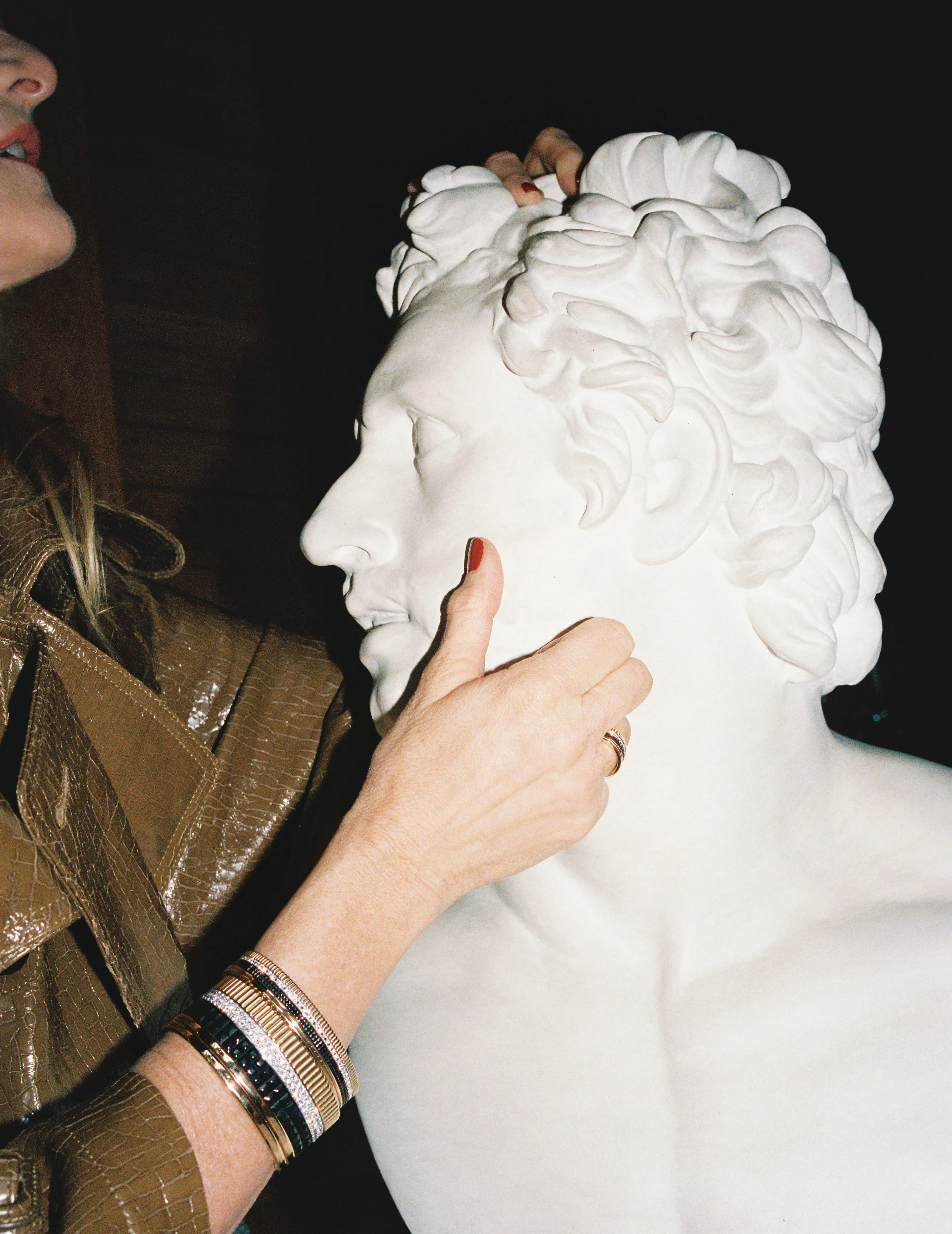
Photographed by Arno Frugier
Styled by Dianna Lunt
Written by Matthew Bedard
Hair: Matthew Monzon
Makeup: Mia Jones
Set Designer: Elaine Winter
Styling Assistant: Aisling Finucane
Production Assistant: Daniela Gomes
Location: The Baccarat Hotel
Stay up-to-date with exclusive events and content.


