F L A U N T


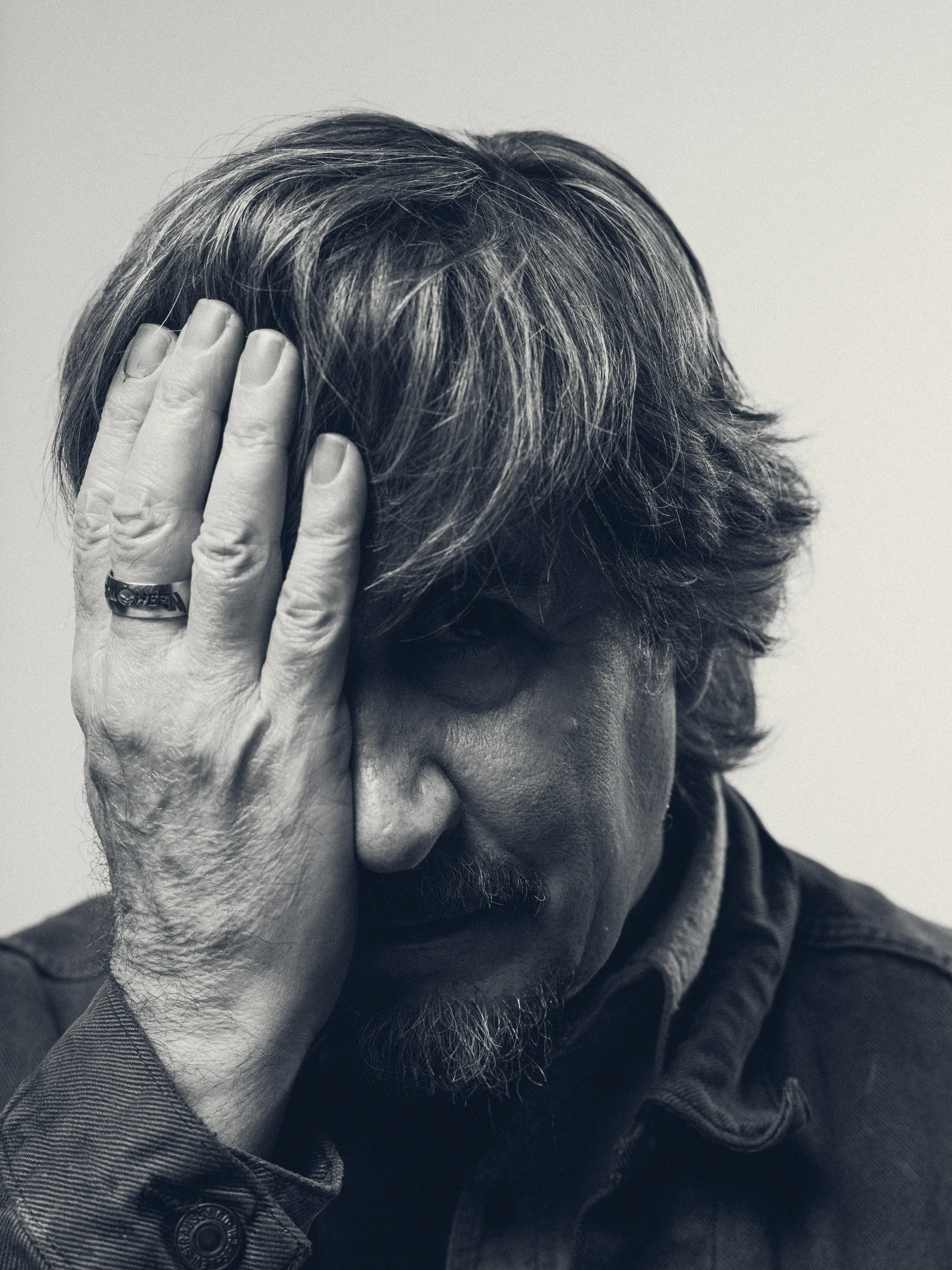
John Darnielle, lead singer and songwriter of the Mountain Goats, has been telling stories about rebellion, disaster, and survival for 35 years.
Darnielle’s earliest records, made throughout the ‘90s with an acoustic guitar and a boombox whose static croak would become an instantly recognizable feature of the Mountain Goats’ lo-fi era, bear little resemblance to his most recent project: Through This Fire Across from Peter Balkan, a full-on musical opus with backing vocals from Lin-Manuel Miranda. In between, the Mountain Goats have recorded albums about a catastrophic Floridian marriage (spawning the cathartic hit “No Children”), tarot cards (spawning the cathartic hit “Damn These Vampires”), pro wrestling (spawning the cathartic hit “The Legend of Chavo Guerrero”), tabletop RPGs (spawning the country-western pastiche “Waylon Jennings Live!”), and California goth culture, plus an album all of whose songs are titled after Bible verses. Darnielle has also written four novels.
Through This Fire Across from Peter Balkan, arranged and produced by Mountain Goats multi-instrumentalist Matt Douglas, tells the story of a fishing boat with a crew of sixteen. When it gets wrecked, the three survivors, one of whom (Captain Peter Balkan) has a head injury causing him to slowly lose his grip on reality, are marooned on a desert island, which none of them make it off of alive. In typical Mountain Goats fashion, there are no lucky breaks, no guardian angels, other than the album’s unnamed narrator becoming a sort of guardian in his caretaking of the ailing captain. The album is an exploration not of hope against all odds, but of human spirit and vulnerability in situations of complete hopelessness. Darnielle cites two previous Mountain Goats works as studies for Through This Fire: “Corsican Mastiff Stride,” a 2020 song about ghosts of shipwreck victims, and Jenny From Thebes, a 2023 rock-opera album that reprises characters from 2002’s All Hail West Texas, widely considered the final installment in the band’s lo-fi era.
At the Portland show on December 8th, the touring lineup (including backing vocalists Carolyn and Jamie Leonhart, whom Darnielle describes as “better singers than me by many orders of magnitude”) is joined by a string section consisting of local musicians Cecille Elliott, Alexis Mahler, Tyler Slaughter, and Shawn Alpay. During instrumental breaks, they play with force and cohesion while Darnielle strides around the stage, beating his chest with his open right hand to keep time with the music. In the middle of the set, he tones things down with more pensive songs before ratcheting back up to auctioneer-patter-esque intros and defiant lyrics about commandeering airwaves and the founding of Rome. In the encore, he assumes the charisma and gravitas of a cult leader, finds time for a spoken-word monologue about signing fans’ divorce papers accompanied by a strumming pattern in a completely different time signature from the song it leads to, and sings lyrics drawn from his own life with such bursting, panic-infused energy that they become universal, before stepping away from the microphone to let the audience sign/scream/insist that “there will be feasting and dancing in Jerusalem next year.” And maybe there will be, but this moment is pretty incredible in and of itself.
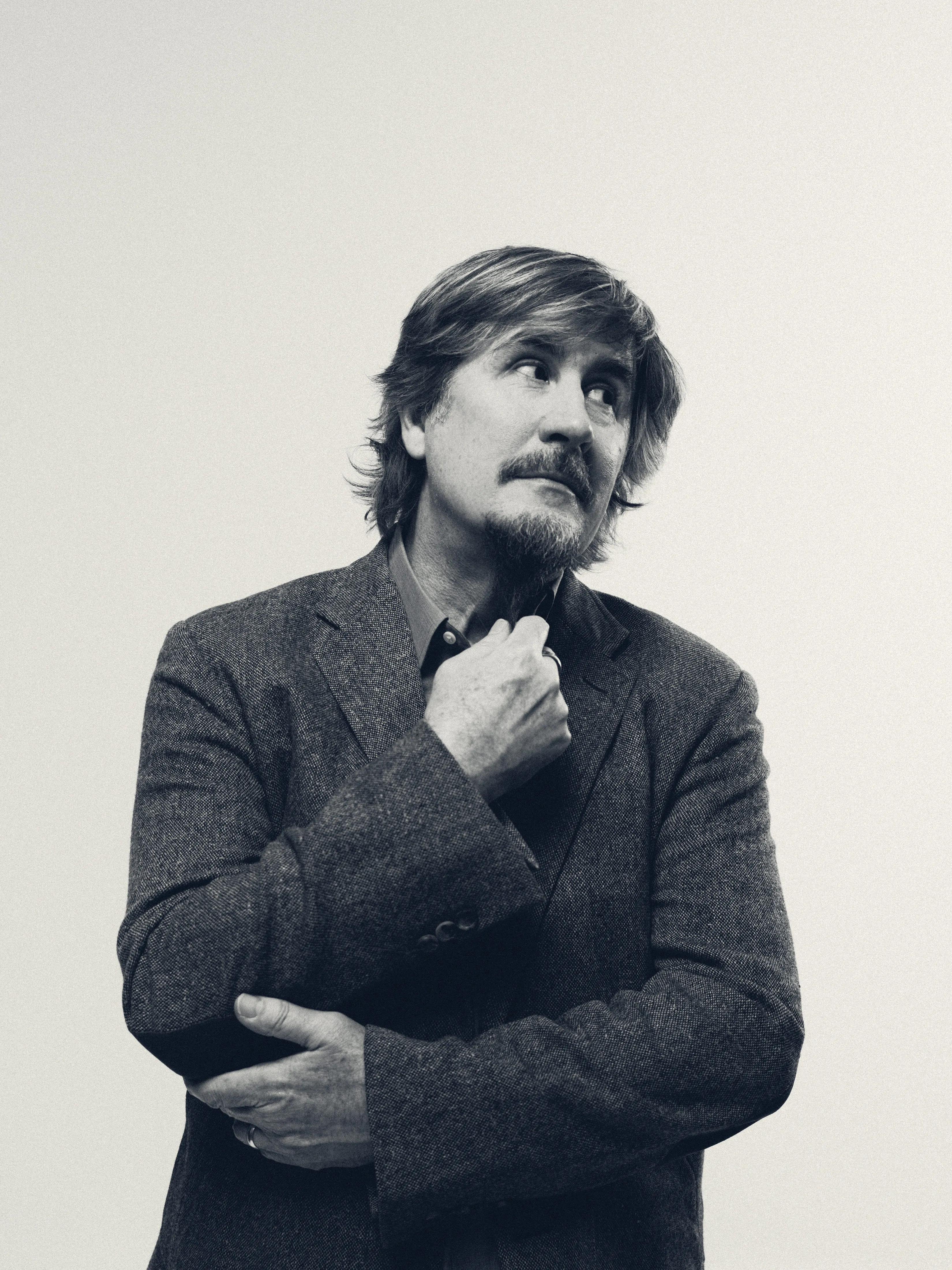
In the new album, freedom comes up often as something only achievable through death, or extreme sacrifice.
I mean, I think that this is a good philosophical question, right? It's a question Americans generally don't like to think of as complex, but freedom comes with responsibility. It's the first thing that happens with freedom, and also it means that you have to take care of yourself. I don't use the word care a lot, if at all, in the album, but that's where it goes. It's freedom that winds up being dependency. The whole middle arc of the album is the captain needing to be cared for, so he's not free. And the thing is, any exercise of freedom winds up, I think, leading to the greater truth of interdependency. I think any notion of freedom that is just individual freedom to do whatever we like is an infant's notion of freedom. And we know that we're enjoying the effects of many people adopting this kind of infantile notion of freedom, but freedom means interdependency.
During the show, you mentioned recently rediscovering a church that you first found in 1985.
I moved to Portland [after high school] because my father (who ought to have known better, because he himself was in recovery, but it's different when it’s your children) thought that the reason that I was on a lot of drugs was the company I was keeping, and that if I got out of my situation, I would get better. That's just called “taking a geographical,” and it doesn’t work.
But it was his best idea to try and save his son, and he said, “I will pay you this amount of money to live anywhere in the US and attend a community college for the next year.” It wasn't a large amount of money. He had taken out a loan from his credit union to do it. And I didn't care about my life and assumed I was going to die, so I said, “Sure, Portland's fine.” We went and found an apartment. I had two Pullman beds in a double studio and a beautiful view of the Willamette. And it was on the fourth or fifth floor, old ass building, old elevators. And I went back to California to tell everybody goodbye and get my stuff, and when I came back, my stereo was gone.
I reported it to the managers, and they called a cop that they knew, and he came and took a report, and I went about the business of being a confused drug addict and got some whiskey within the next week or so, and drank a bunch and passed out in the mid-to-late afternoon with the TV on. When I woke up, my TV was gone, and somebody had gone into the freezer and drank the whiskey. And I reported it to them, and they were so sorry, and they called the same cop again.
I didn't have any means to get new stuff, so I called my father from the pay phone to say hello a couple weeks later, and he said “We have to talk,” because he was getting any canceled checks that I wrote. That was part of the deal: I had a checkbook to pay rent and stuff. And he said, “Your checks came in, and there's a bunch of checks that I have to ask you about.” I said, “Well, to what?” And he named the people. And I said, “I did not write these checks. What does the signature say?” And he said, “John Darnielle.” And I said, “What does my signature look like?” And he said, “It's a scribble. I'm sorry, son, I apologize.”
The signature wasn't mine. The managers were the ones who had stolen my stuff and took my checks and were writing themselves checks. These were a couple guys on the make who had gotten some manage-a-property gig and were just robbing.
The choice you have there is to call the cops. Well, they have a friend on the force, they've called him in every time. I don't have a friend on the force. So I didn't do that. I walked four blocks. I found a place that said renting…I hired some people from my English class to help me carry what little stuff I had into the new place.
In 2025, I was close to that old place, and I walked and I passed a church that said “Dominican Catholic,” which is rarer than Roman Catholic. And I looked at my phone, I went, “are there any Dominican Catholics around here?” And there weren't. [I realized] that's the church that I went to in those days, when you can imagine that a Catholic, lapsed or not, who's getting robbed and all that stuff might go, “Maybe another church.”
I know things like these are unusable. The story’s too long.
Feels like I could condense it.
I’ll tell you right now, when you try to condense my speech, it doesn’t sound like me at all. It’s because I speak in complete sentences, and when you try to edit them, the spirit of them leaves.
[Typing on phone.]
I have to also be looking at my phone while I talk. I need to get physical therapy because I messed up my knee…I am a distance runner. You can't tell by looking at me, because I've been injured for three and a half years now. I was up to 20 miles…It was the joy of my life. There's nothing like it in the world. I had no idea for most of my life. I didn't care about any of this stuff. And then my wife ran a 5K, and I thought, ‘I should try that.’ I worked up to 5K…[and eventually got up to] the half [marathon].
I signed up for a marathon, and my glute started to complain. Everybody said, “Don't run the marathon, you're injured!” So I didn't, but I never got back up. I'm in an old body. It's what it is…Now I'm trying to cross-train and do elliptical and weights and stuff. It's not as bad as I thought it would be, but nothing is like running. I imagine that if I got up to really good weightlifting, that it would compare to the exhilaration you get. But at the same time—no. 15 miles, man, you just go, “I wish I could do this forever. I wish I could just be doing this.” It's the greatest feeling.
In the song “Fishing Boat,” the lyrics include lines like “sixteen on a fishing boat” and “be your own boss for the summer.” How old is our unnamed narrator?
No particular age, but it does sound like he's 16, and I like that it's evocative, that the number of sailors evokes the youth of a crew on a fishing boat. Fishing boat is a fresh-out-of-high-school-style job.I knew a guy who worked on one, either out of high school or early college. It's hard work. He was on an Alaska trawler.
And then the role reversal, where the narrator has to start caring for the captain, it forces him to grow up very fast. By the end of “Broken to Begin With,” he's reckoned with his mortality. He’s staring it in the face in a way that seems almost fearless.
There is a line from Bobby Womack’s “Across 110th Street.” If you've seen Jackie Brown, you've heard it, it's over the ending credits. He says “You don't know what you'll do until you're put under pressure.” That's a beautiful line, because it's true, right? It's extraordinarily true. You hear stories about people lifting a car to save a child or whatever, but it's also true in any other effort where you are under duress. You will find what your values were that you developed without thinking too much about them.
In the introduction of “Peru,” you mentioned a friend named Joel, who wrote the lyrical conceit.
Joel is a friend from high school. If you're a longtime Mountain Goats fan, he's the Joel mentioned on the cover of Full Force Galesburg and in the song “Song for Mark and Joel” from the Beautiful Rat Sunset EP, whose cover was painted by Mark. And these are friends from the band Wckr Spgt. Our scene was not really that much of a scene, but Spgt was very important to those of us who wanted to do music that was different and outlined. First, they were four strange high school students. Two of them went to college, and that left Mark and Joel. And so they got a drum machine and started making very strange music. And it was very insular. It was only for the people who were already interested. [And I was] exposed to that kind of music young, and being part of that scene shapes you, it informs your aesthetics. And so that's who Joel is. He’s one of my oldest and best friends.
You know these interviewees who just lie? It’s a skill set I wish I had. Joel, he's in prison now. He did a B&E, and he's doing a seven-year bid. He's too old for that, but, but it's what it is. He went to Lompoc.
How many songs do you play guitar or piano on on the record?
I play almost nothing on the record. I did all the demos. I wrote them on guitar and piano. Once we got to the studio, I played a little guitar on “Your Bandage” and “Rocks in My Pockets.” That was really fun for me to just say to Matt [Douglas] and Cameron [Ralston], you guys go do this thing, because it makes more sense. My playing is very distinctive. It's got some strengths, but I'm the worst musician in the Mountain Goats, period. And that's not a knock on me. I'm the best songwriter in the Mountain Goats, absolutely. Probably the best frontman.
When do you envision this shipwreck occurring historically?
Within the last 30 or 40 years. I didn't set it, but I would say, because Captain Balkan’s notions, once he gets his head injury, are of an apocalypse. You know, apocalyptic thinking from the 50s onward is pretty big. It's not a question I had asked myself. It's in the historical present, as they say. [Takes drink from water bottle.] What if you leaned over and it turned out I was drinking a fifth of bourbon before my PT appointment?
Whatever it takes.
I bet there’s physical therapists who’ve had to say, “You know, I can't tell you how to live your life, but I noticed that you come in here and you’ve had a few, and it's probably not helping your fitness program.” People who have dependencies like that will try and work it into their deal. You have to get pretty rigorous with yourself.
That's why this kick is really bothering me, because I'm living an absolutely straight-edge life right now. I haven't had one sip of nothing this tour. I'm just taking good care of myself, I go to bed afterwards, and then I take one one high kick. Or maybe seven in the same night, but still.
Any thoughts on the recent Portland protests?
The Portland protests made everybody feel good. And that's a very important part of resistance, is to make people go, I like this, these seem like my people. That can be hard to pull off when you're having to resist with strength. Not everybody's gonna be attracted to this sort of thing. And the Portland protests, by deploying a bunch of comic tropes, really pointed out how ridiculous–I mean, this is a dumb effort. Everything the administration is doing is wrong and evil and misguided, but it's also dumb. Really, it's not well thought through.
It’s the wrong solution for problems we don’t have.
Yeah, and if the problem that they are attempting to persuade you exists did in fact exist, that wouldn't be a good way to address it. Let's you and I agree that you have a wound on your leg. I'm going to pour salt onto it, right? Well, one, I don't have a wound. And two, if I did, I don't want that. And that's the situation here. Sending the army into cities is moronic, by any standard. There is no reasonable position in defense of any of this. Even if the problem were as it is described by them, that would not be the solution. The reason to do it, they don't have a solution, right? And the actual solution is borders are fictional, but I’m a radical on this point.
There were some protests in Durham. ICE was spotted there. They came to Charlotte and did some stuff, but they don't have the stomach for the resistance they're getting. These are not soldiers. They're working a job that’s constructed on a fictional foundation. The one good of it is that you get community unity, you start texting people.This is a value of living in bad times, is that you can form bonds of solidarity. And that’s good, that’s real good. Not that I have any kind of acceleration perspective, hoping for more repression so that we have more solidarity, that’s bad thinking…The thing that you realize is that there are more of us than there are of them, a lot more. We are in fact a looming majority. These people are feeling their grip on the culture and on history recede, and they're doing everything they can to stop that, but that doesn't mean you just let them do their thing because they're gonna die eventually. That's throwing a bunch of people into the fray who don't deserve to be there.
You have to believe in the end, but also continue to fight.
That’s correct…I should stop talking soon. I have a show to play tonight.
[Tests knee, winces.]
Yikes.
This is actually something I do like to talk about publicly. 15 years ago, this would have been hard, psychically, for me. As your body ages, you make peace with the idea that it's gonna hurt more. That's part of it. You're doing your best to keep it up, but I have developed a much healthier attitude for myself about this. I am in pain? No, my knee is in pain, and it hurts because it's trying to do what it can to not be in pain. It doesn't know how. It's a dumb collection
of nerves.
The human soul is not stored in the patella.
I have a pretty rich sense of humor about physical pain at this point, and I have running to thank for that. The first time you run 20 miles, the next day, you feel like absolute garbage, and you go, yeah, but I ran 20 miles. This is part of that….when I was running, I ran in Belfast, the rain was coming sideways, and the puddles were up to here, and I had to fly that day. Did I give a shit? No, it was time for my run, it was running day. People who don’t run think it’s the stupidest thing ever. What time of day was it? Well, it was 6am. That was the time I had.
Photographed by William Pippin
Grooming: Magdalena Major at Tracey Mattingly Agency
Stay up-to-date with exclusive events and content.


