F L A U N T


.jpg)
Make no mistake; the golf course is a violent place. That's one of the key takeaways from the new black comedy drama film Filipiñana, which viscerally captures one fateful day at a luxurious Manila country club to offer a nuanced perspective on the structural inequality in Filipino society. Director Rafael Manuel's debut feature employs a distinct style that combines stunning cinematography with patient pacing, impressing at the Sundance Film Festival with the Special Jury Award for Creative Vision.
.jpg)
Raised in the suburbs of Manila, Rafael Manuel was born into golf, as his family ran an import/export golf apparel company. He says, "I always knew I wanted to kind of explore the social, political context of my country through this microcosm of a golf course because I feel like it's a really good microcosm for my country." The film stars Jorrybell Agoto as 17-year-old Isabel, a new "tee girl" at the club whose interest in its enigmatic owner, Dr. Palanca, leads her to uncover a dark secret hiding in plain sight.
.jpg)
While visiting Filipino golf courses to research, Manuel became most interested in the lives of the "tee girls," whose job consisted solely of serving balls for golfers on the driving range, leaving them with hours of free time at work without anything to do, while being at the bottom of the country club hierarchy. "It's something that's very unique to the region of the world that I come from, where labor is so cheap because the population is very high," Manuel says. "This very idea of a person, a young woman, whose entire job is to sit on a stool the whole day and so that she can serve golf balls for golfers, I don't think it's something that exists anywhere else in the world."
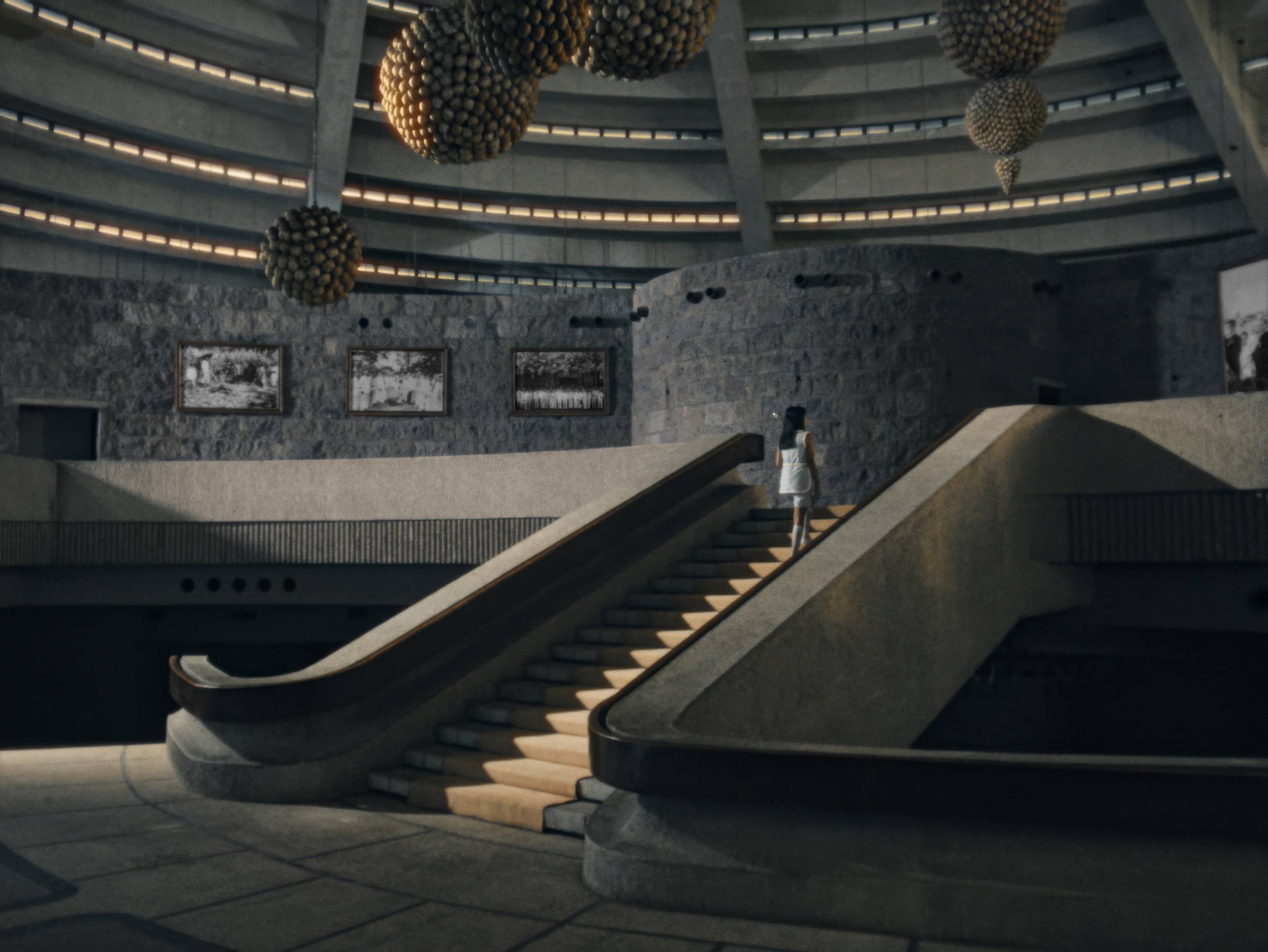
Paired with stunning cinematography by Xenia Patricia, Filipiñana immerses the viewer through its slow, deliberate pacing, which lingers on each shot, allowing the tropical soundscape and subtle yet moving performances to create a vivid sense of realism and a tangible sense of the heat. Shooting in temperatures of over 50 Celsius (122 degrees Fahrenheit), Manuel explains that depicting the intense climate was critical to the story. "When you think about why…the revolution hasn't happened in the Philippines yet, I think the heat can [partially] be blamed for that. It's just so hard to do things. It's so hard to stand up. It's so hard to get up and to take action," he says. "So the pacing of the film is by design meant to further depict this heat. We wanted to bring audiences into this heat, into this humidity, into this tropical sort of quagmire."
.jpg)
While highlighting societal inequalities, Filipiñana is not the type of social satire that presents neat solutions or one villain to blame, but rather manifests the contradictions and frustrations at larger, structural issues. One of the film's many memorable transitions is from a shot of long lines of people waiting for water in the city, being reminded they can only take one jug per family by government workers, to a sprinkler system turning on and instantly spraying a golf course with gallons. "My entire city was going through a water shortage. But when I was visiting these golf courses, the sprinklers were on like the whole day," Manuel explains. "Something as basic as water then gets imbued with violence—that it's accessible to some and not to most."
Reflecting on Filipiñana, Manuel is proud of how the film showcases Filipino talent to create a cultural export from a country that so often imports its media from the West. He concludes, "To be able to send something back and for it to be consumed in the West, I feel that's a step forward in terms of trying to balance out the power between the Global South and the Global North, and that's what we aim to do with this film."
Stay up-to-date with exclusive events and content.


