F L A U N T



In the decades since German-born author Judith Kerr released epochal 20th century children’s title The Tiger Who Came to Tea, scholars have interrogated the meaning of the beast who breaks into a little girl’s house to drink the tea, the milk, the orange juice, and Daddy’s beer. Perhaps the other is the issue in the popular public imaginary; they postulate. There is greed and fear in this world; there is comfort in being aware that the proverbial tiger may come to your door unannounced. Sometimes, though, Kerr herself has asserted, a tiger is just a tiger.
“I don’t really like the whole ironic thing,” muses iKeda, British electropop musician, artist, imagemaker, et al., from a bedroom full of pale white light. We are speaking about the state of the artistic industry, wherein burgeoning artists (like iKeda herself, who just began to widely release music shy of two years ago) inoculate themselves against criticism by way of a performed meta-awareness before they have the chance to really explore their own artistry. “[Irony] doesn’t really land on me because I don’t really know what’s real. Like, what do you believe in? What do you actually do? What do you stand on? How is that different from other people?”
.JPG)
When we talk, iKeda is on the precipice of releasing Bangs N Braces, her second-ever EP release since she debuted with 2024’s Pretty Little Problem. She has just completed a trip across the UK and Europe, where she opened An Evening With… PinkPantheress on tour. In the weeks immediately following, Bangs N Braces saturates my corner of the internet. It’s a fantastic EP, and it has rightfully garnered international praise—iKeda’s sound, an arresting mix of modern hyperpop and dancehall and twirly whimsical bubblegum pop and London twee—is oft compared to that of late-aughts pop experimentalists among the likes of M.I.A. and Santigold. It’s not just the bubble riddim (a phrase she uses often to describe the braided UK-Jamaican genre she produces) that makes iKeda so refreshing, though—iKeda feels playful, and, by proxy, honest.
Perhaps this sense of play is preserved by a close association with a creative group. Bangs N Braces was produced by her friend Tailtiu; her friend and creative director Erika Kamano shoots and directs her visuals; she’s often working with bestie (and FLAUNT alum!) Babymorocco. Her creative process, and her creative product, is engineered within that circle of trust, giving her that DIY tenor not often seen with label-backed projects. “Go!” sees her and Kamano on the beach in Jamaica; “Tiger Tiger” has her prowling the halls of a British estate alongside Clay. There is unquestionably a universe in which iKeda’s music inhabits, albeit a flexible, surrealist one that doesn’t play by any measurable or repeatable rule aside from the fact that she—and her friend group—certainly came up with it.
And made-up world it is—the 6-track EP is a seductive invitation into a realm that feels entirely unmoored from the self-referential music scene. It’s got bouncy kickdrums like rain on a pavement, it’s got glossy synths, it’s got girlish melodies. It seems to be a consistent reaching-out-of the hand, the catalysis of a hero’s journey. “Mapz” draws the listener on a journey across London; “Meoww” beckons to the bedroom; “Go!” calls the gyal dem to the front lines. iKeda’s is music that makes you want to get into something strange; go to tea with a tiger; follow the white rabbit.
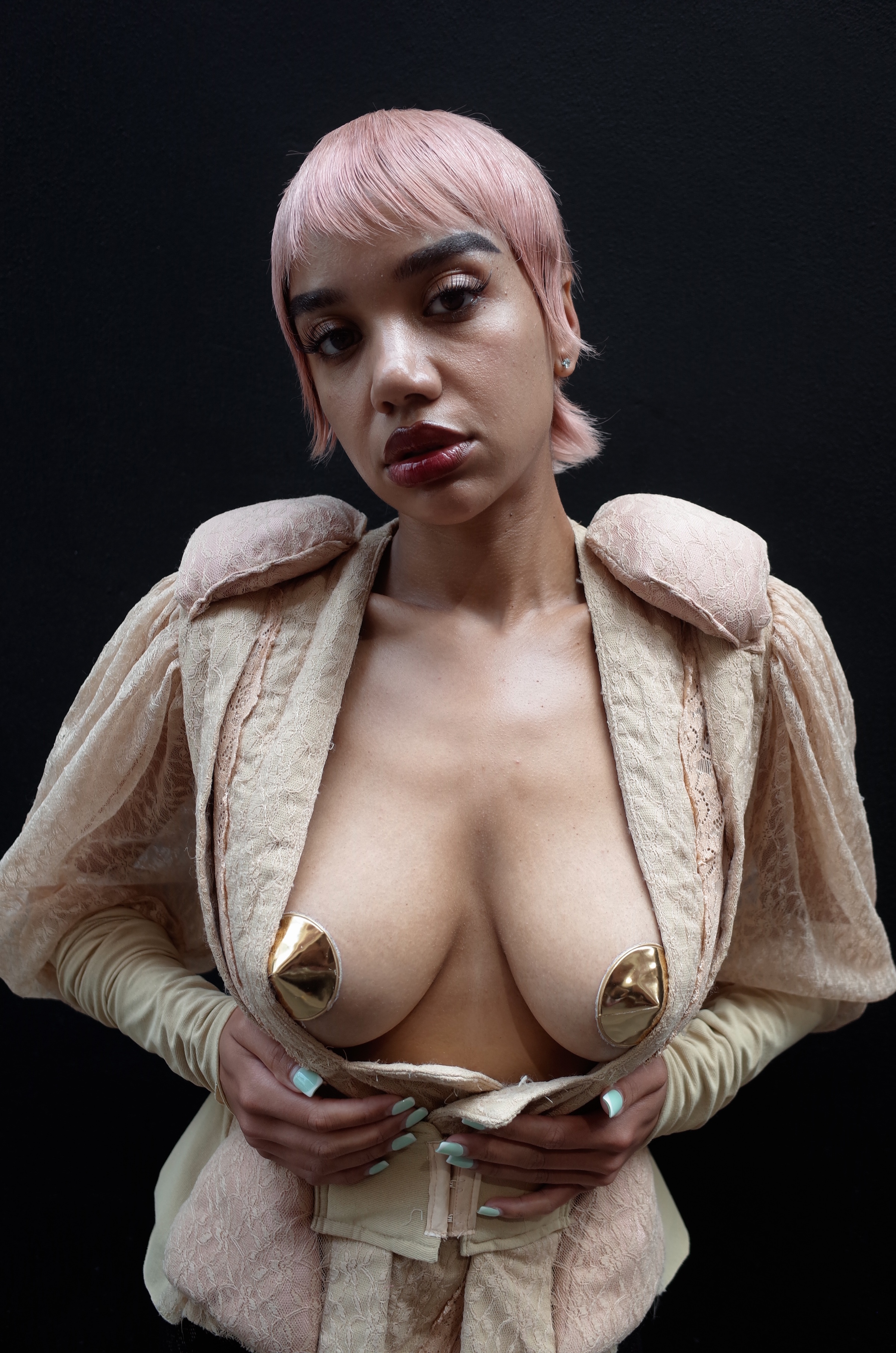
Imagine a world in which you are the sole executor of all who inhabit it; a world in which you’re not saddled with debt or any obligation to longtime fans or contractually motivated to make art you’re not proud of. It’s a world with golden pyramids and promiscuous kittens and girls dancing on white sand. It is, perhaps, a music realm reminiscent of the early days of the internet as hailed by music critics in the reception of the EP, but iKeda pushes back: her music is possible because, not in spite of, internet culture:
“What excites me about the internet?” she asks herself. “Oh my God, so much. I feel like the possibilities are endless right now. I’m so happy I started music now because sometimes I wish I started earlier, but pre-2020, music wasn’t so accessible. It’s so accessible [now] to like to make music and actually get attention and to create fans and, you know, create community.”
It is that sort of keenness to curate community; the willingness to create something new and exciting and strange and bare, that has set iKeda up for such success. “Music is kind of the same as, say, selling paintings,” she tells me. “You wanna make money selling paintings? You have to be able to talk about your art. The whole business behind painting and selling paintings is literally just talking about your art to people and telling them the story and convincing them of the story. It’s so interpretive.”
What will we make of iKeda’s fantasy? Must we make anything at all? Perhaps the tiger is just a tiger, and we’re here to let her in for some tea.
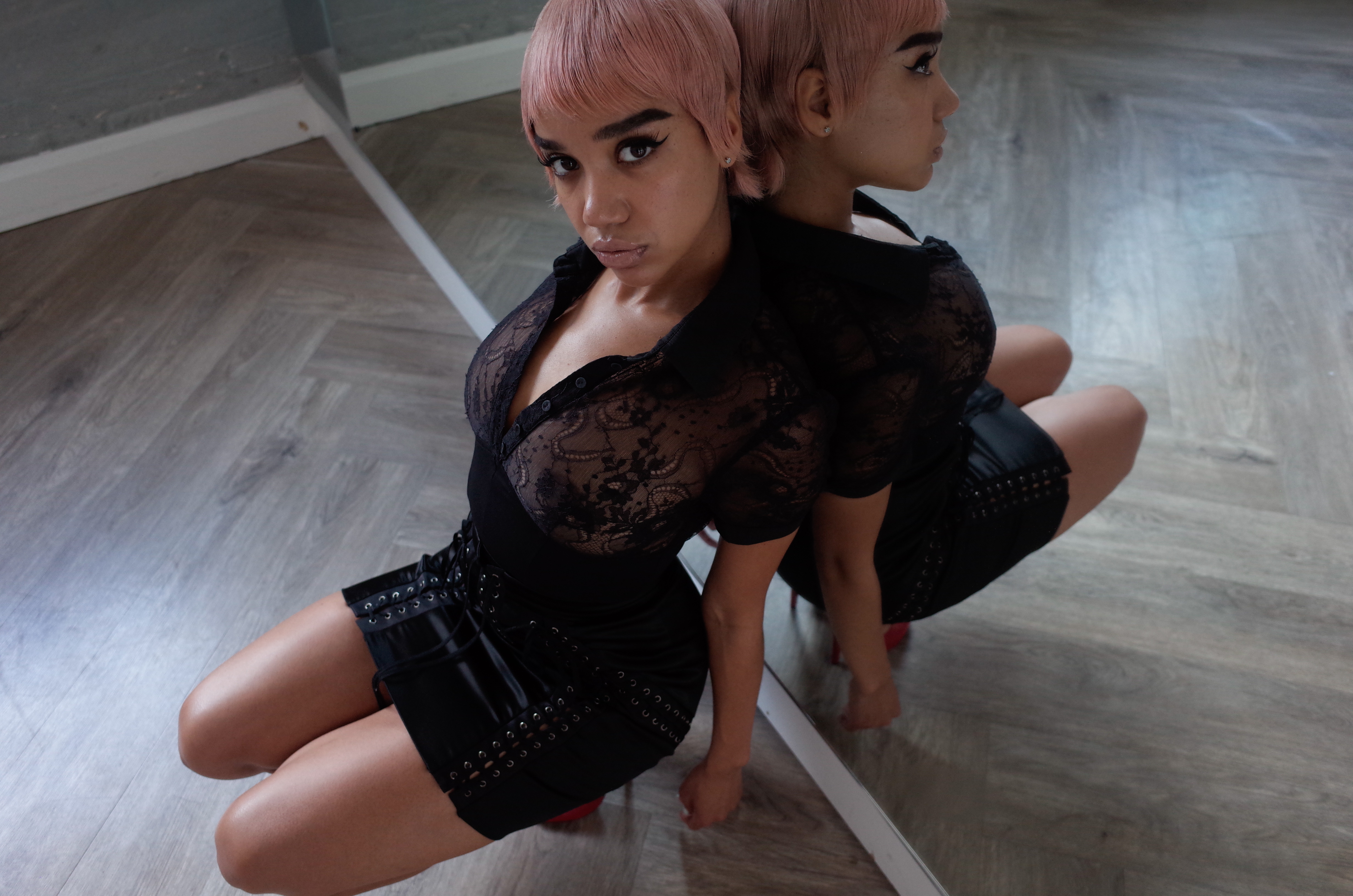
Photographed by Lolita Harley
Styled by Erika Kamano
Written by Annie Bush
Hair: Jacqueline Ezeuko
Makeup: Joe Brooks
Location: Pure Dance Studio
Stay up-to-date with exclusive events and content.


