F L A U N T


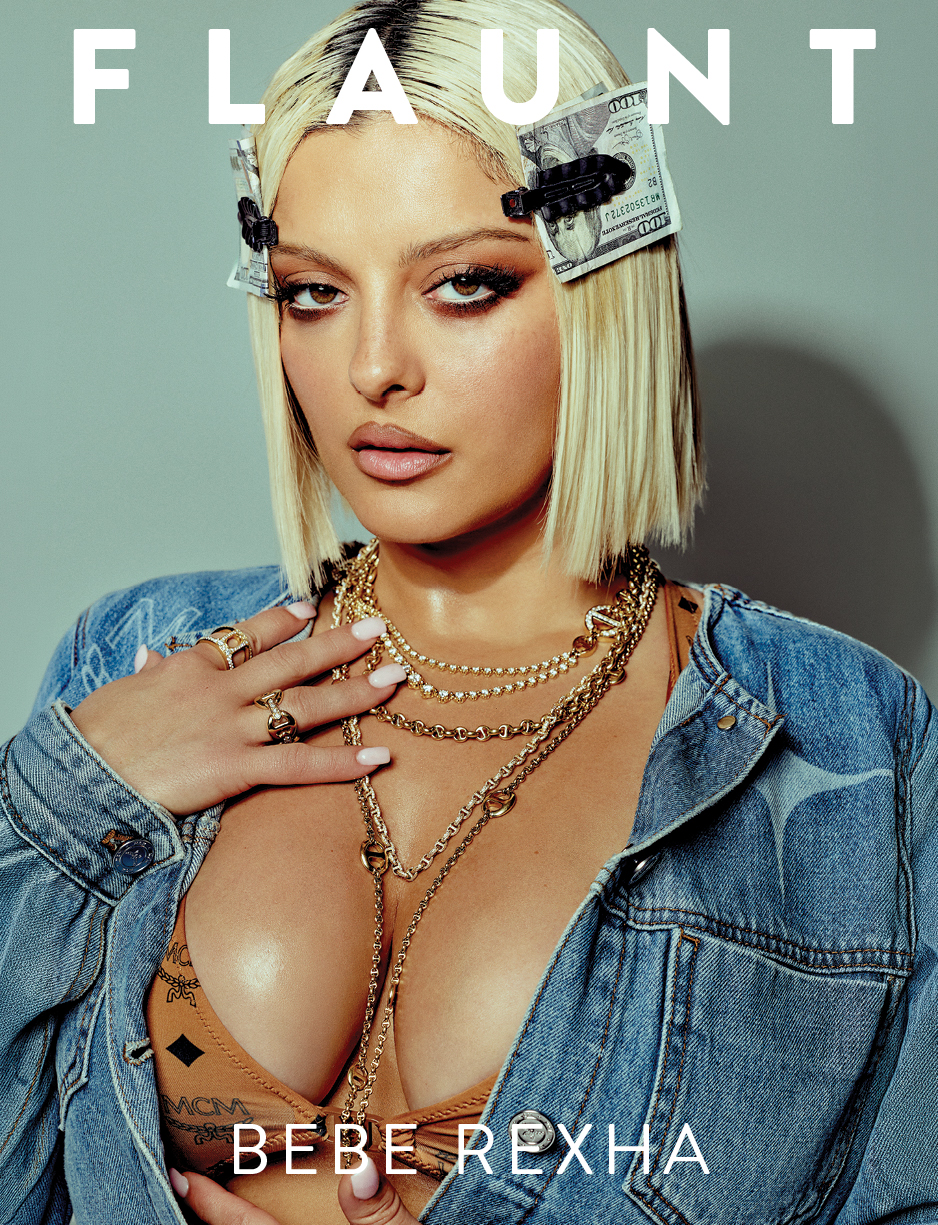
The view of Bebe Rexha through my screen tilts and blurs as she carries her laptop outside. “I’ve been working all morning,” she explains. “I need a little sun.” She settles into a chair on the light-drenched balcony and tilts her screen to show me the cerulean pool shimmering below. “Look, it’s so pretty! It’s a vibe.”
One can hardly blame her for craving some sunshine. With the release of her fourth studio album, Dirty Blonde, her whirlwind schedule leaves little time for any modicum of rest. Despite it all, she’s reinvigorated— perhaps a little exhausted from the trials and tribulations that accompany rolling out a record, but content nonetheless. Surrounded by pink flowers and palm trees waving in the California breeze, tanned skin glowing, smile flashing, blonde bob…well, bobbing, Rexha’s feeling on top of the world.
And well she should be, considering the fact that Dirty Blonde has been a resounding success so far. The 13-song album debuted at No. 1 on the Billboard Top Dance Albums chart, a first for the Brooklyn-born singer. That accomplishment is conceivably the natural result of an artist finally being given the leeway to explore her own desires and ideas. Having spent the last few years dissecting what actually makes her happy—she’s a recovering people pleaser, she confesses—and recently signing to the independent label EMPIRE after more than a decade with Warner Records, Rexha’s ultimately honed in on a sound that’s completely, utterly her.

“Having this whole new team and this whole new energy around me has been so exciting. I don’t feel like I’m alone in it anymore,” she says. “I think that the most important thing, even outside of being an entertainer, is being supported and being uplifted and having a team of people that believe in you and all your crazy ideas…even though we’re working like crazy.”
But Rexha’s been working that hard for a long, long time—ever since she was a girl growing up on Staten Island. When she casts her mind back to those childhood days, she likens herself more to the ugly duckling than the swan, a nerdy girl who played the trumpet, who had braces and glasses and eyebrows that her mother wouldn’t let her pluck. All things that her schoolmates, in their youthful ignorance, singled her out for. The way Rexha describes it, she was a far cry from the platinum blonde, cig-smoking, leopard-print-wearing, unapologetic woman who now struts across some of the biggest stages in the world, playing shows for millions of devoted fans.
So, her parents’ basement became her safe haven. It was packed with boxes and isolated from society, but it also housed the two speakers, microphone, and laptop that Rexha taught herself how to produce music on. “I was just always in my cave. That was a safe space for me because anytime I went to school, I was being bullied,” she recalls. “So I kind of created this bubble, and I just really put in the work.” Sometimes, she says, she toiled down there for up to 14 hours a day, learning how to cut her own vocals, how to make beats, and how to be a better songwriter.
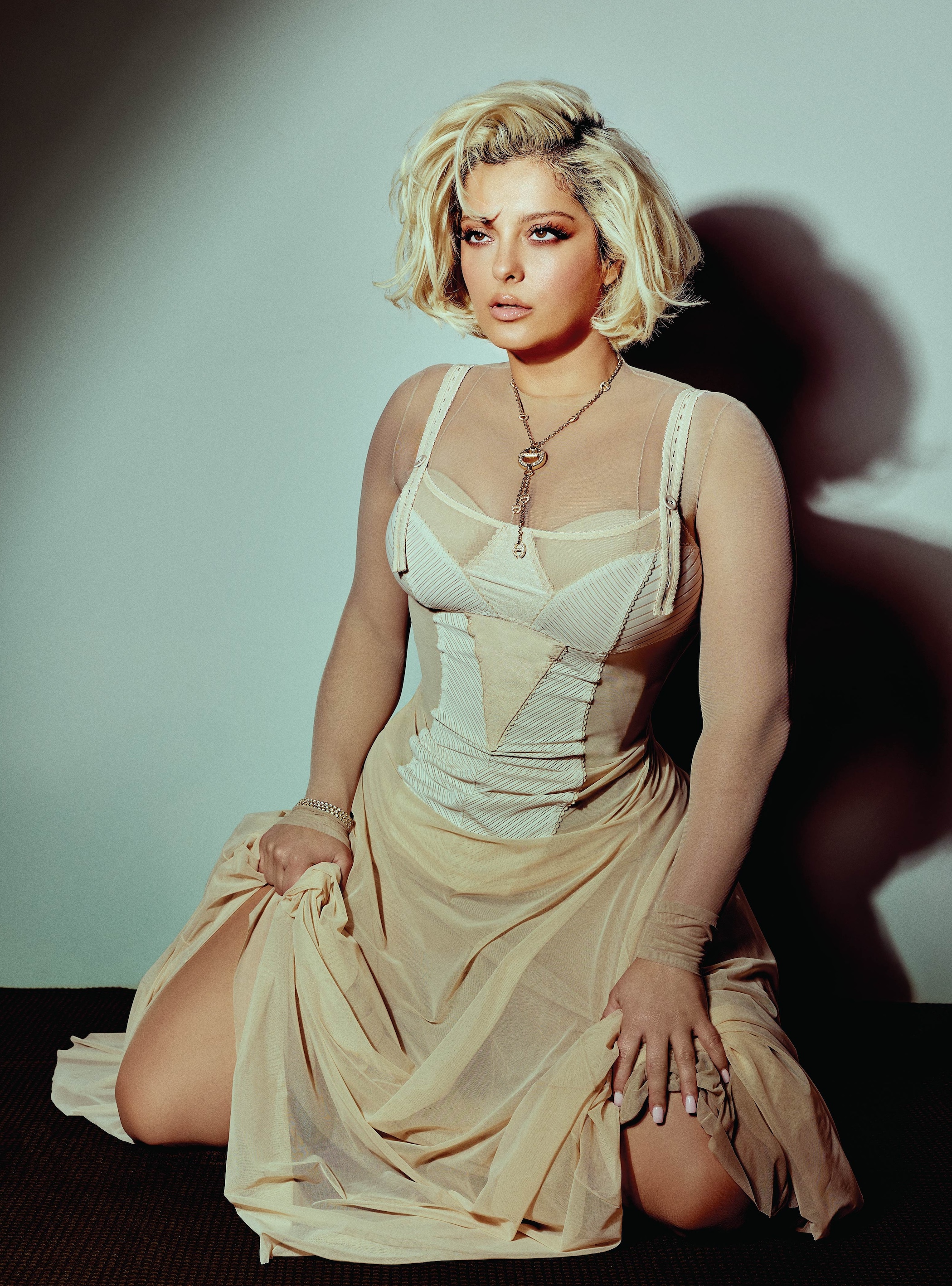
That incessant labor paid off. By 2013, she’d signed a deal with Warner Records and co-wrote “The Monster” for Eminem and Rihanna, which would go on to win them a Grammy. Then came the smash-hit “Me, Myself & I” with G-Eazy, followed by a two-part EP and three studio albums over the years. Now, Rexha has scores of well-deserved confidence. In the song “$.H.I.T,” an energetic girlpop track on Dirty Blonde, she sings “I know that you like me, I’m the shit.” She is the shit, and she knows it, but that doesn’t stop the international pop star from being plagued by the occasional bout of diffidence. The internet, in all its bitterness, has heaped a load of cruelty on Rexha. Ceaseless comments about her body, unflattering photos taken during what should’ve been relaxing vacations, manifold memes, endless opinions and remarks from people who don’t even know her—she’s endured it all after nearly two decades of being in the spotlight.
But while any other person might have broken under the burden of public opinion, Rexha is still determined to just live her life. “I just really don’t give a fuck,” she shrugs. “I know when you say that it can come off wrong, but like…okay, and what?” After so long dealing with the waves of self-doubt and insecurities that are the natural consequences of stardom, she’s developed a battle-hardened nonchalance molded from hours scrolling through Reddit and Twitter, soaking in some of the most outrageous comments about her that anyone could imagine.

“I joke about it a lot. I don’t want to be at home sitting and crying. I’m gonna go live my life and party. And if I want to cry, I’ll cry on the dance floor,” she continues. “I want to cry for good reasons, not bad reasons. Life is way too short, you know?”
Short as it may be, life has recently gotten a whole lot better for Rexha. After a long couple of years treading water in a merciless industry, she finally feels like herself again, especially sonically. Her latest album is evidence of that, packed as it is with catchy dance-pop hits, vulnerable tracks, and a fusion of other genres that somehow works.
When it comes to musical style, Rexha is positively kaleidoscopic. She has a protean ability to not only adapt to any genre, but to squeeze a hit out of it. While she can be most accurately labeled as a pop star, her country track with Florida Georgia Line on her EP All Your Fault: Pt. 2 was a chart-topper, as was her collaboration with DJ David Guetta on “I’m Good (Blue).” She’s worked with artists in every corner of the industry, from Gucci Mane to Dolly Parton.
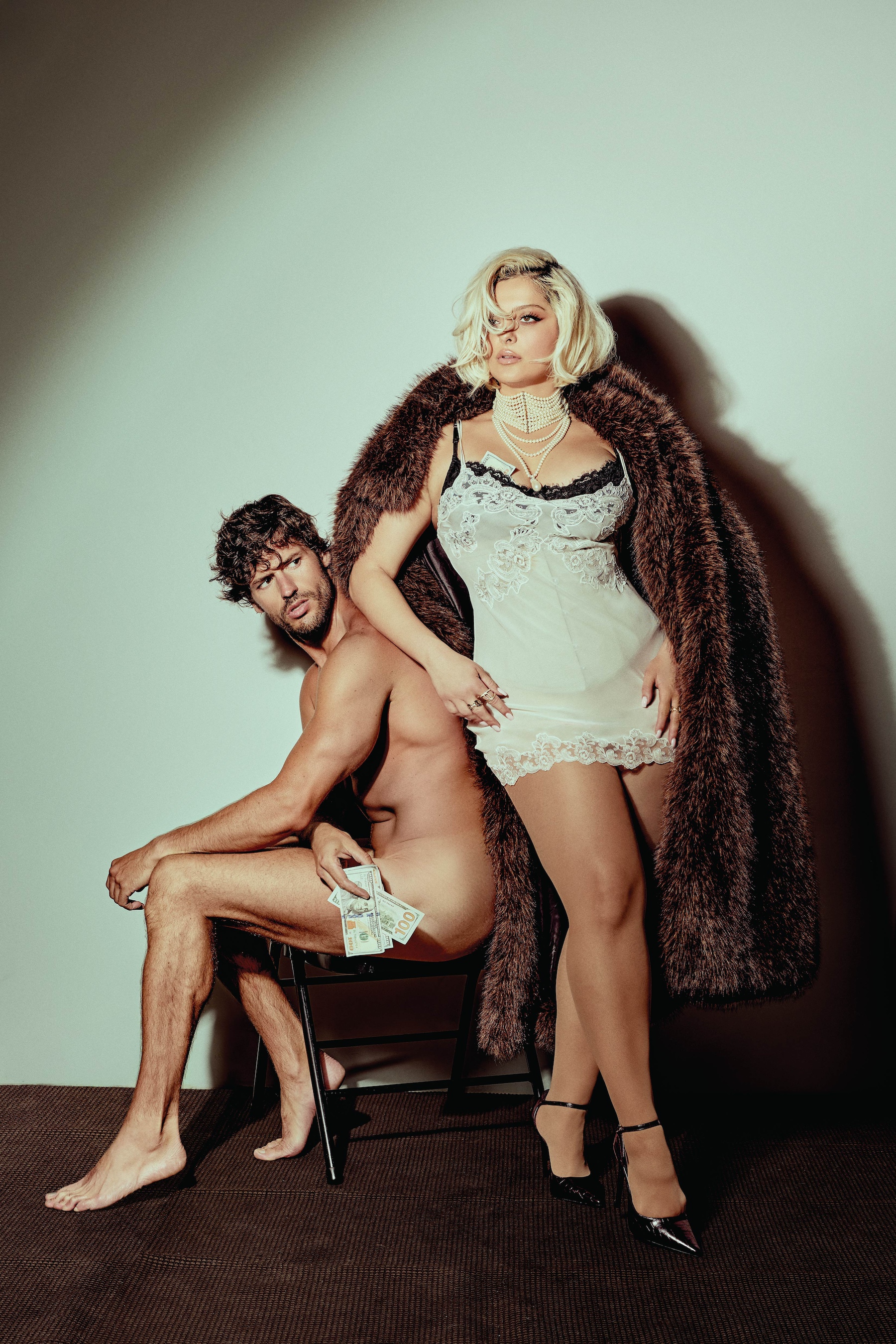
“The collaborative process of being in the studio with different artists and different sounds is what feeds my soul,” she says. “I don’t think I could ever go into the studio and write one sound for the rest of my life.”
Dirty Blonde is a bit of an amalgamation of all these genres that she’s played with in the past. “Hysteria,” “Tokyo,” and “Sad Girls,” her newest collaboration with Guetta, provide pure dance energy, the kind of songs that would get the whole club up and moving. “Time” and “i like you better than me” sound more like excerpts from Rexha’s diary, complete with vulnerable lyrics that examine the criticism she faces from both herself and a scrutinous public, while “Drink And A Little Love” merges her past ventures into country music territory with her love of dance music.
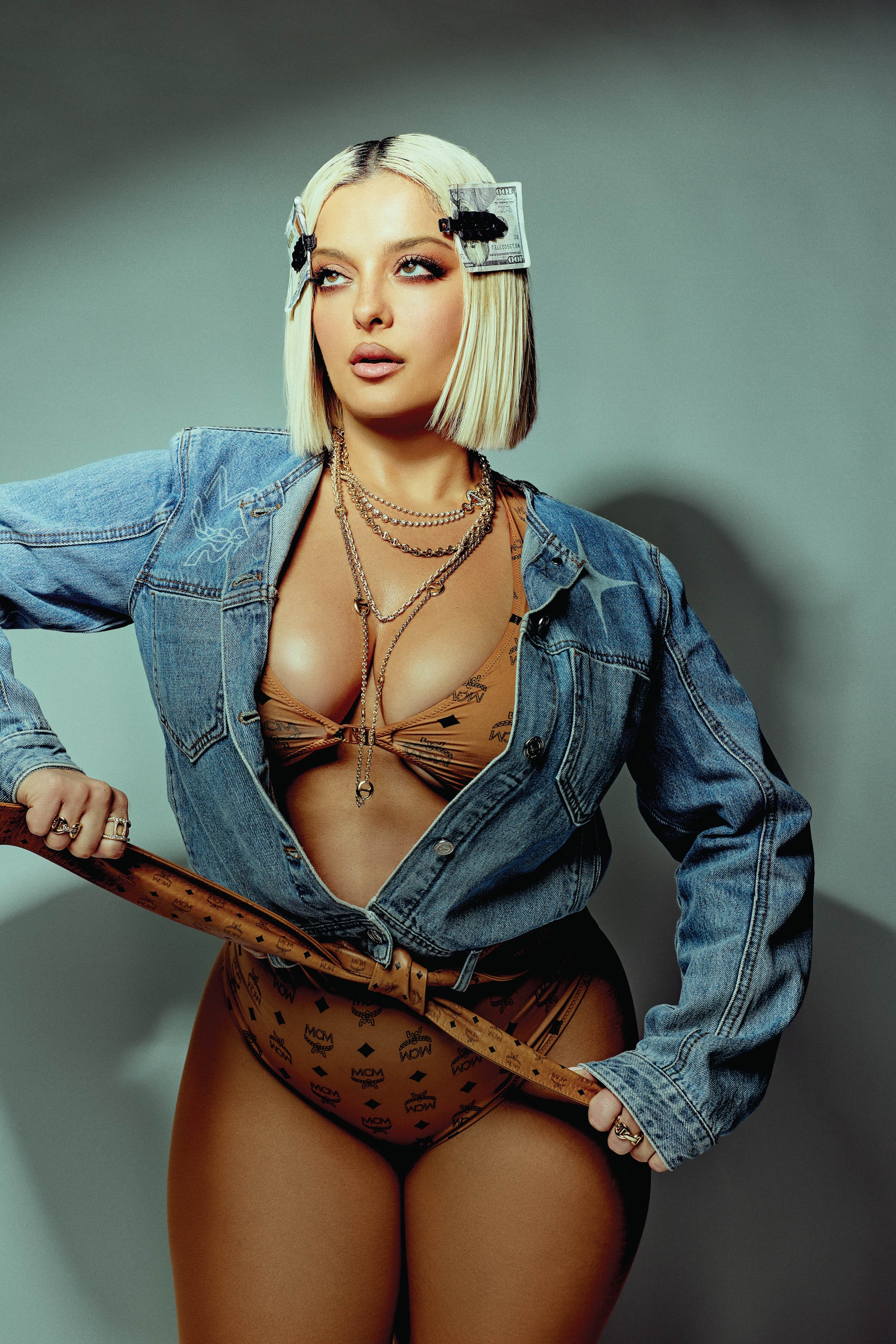
“New Religion” samples the iconic song “Insomnia”—courtesy of English dance band Faithless—and turns it into a refreshed, upbeat dance track that rightfully idolizes the power of a good beat. For Rexha, performing that song in particular “feels almost spiritual,” she enthuses. “When the song comes in, there’s a different energy. I don’t know, it does something to me.”
Then, of course, there’s “Çike Çike,” a catchy night out song for the girls in which Rexha sings in Albanian over a beat produced by DJ Snake. She’s been influenced by a myriad of genres over time—hip-hop, R&B, freestyle, Europop—but especially so by the sound of the Balkans, the same sounds that have accompanied her since childhood.
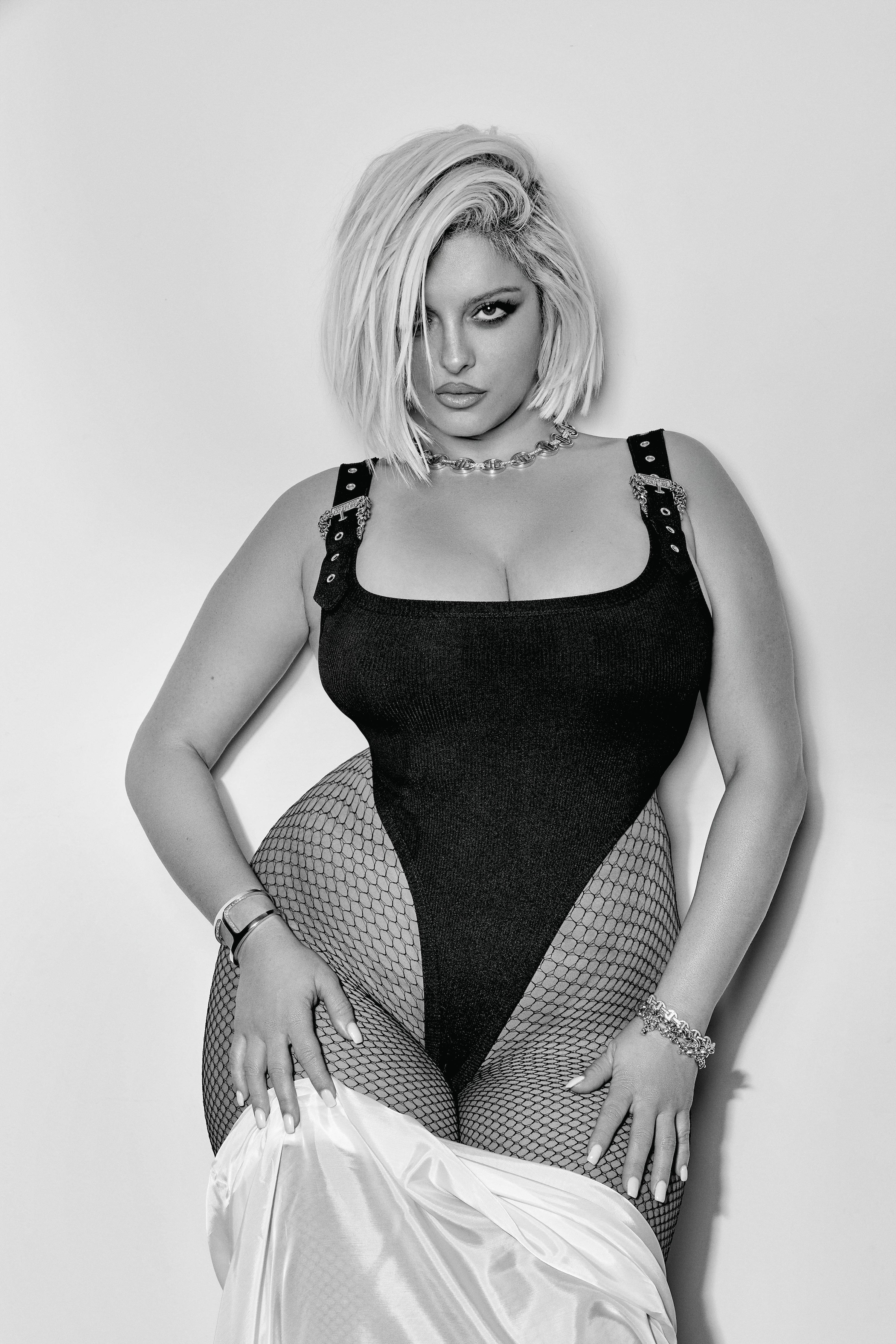
Rexha recalls childhood visits to Macedonia chock full of Balkan weddings—as many as seven a year, she says—that went on for several days and often until three in the morning. Most importantly, she vividly remembers the music that drummed throughout it all. “In our culture, it’s all about music,” she says. “We’re always dancing and celebrating.” It’s that same sense of celebration, of coming together to dance and sing, that especially shines through in Dirty Blonde.
Dirty Blonde is an entirely new era for the pop star, and a busy one too. Last month, Rexha dropped into Guetta’s F*** ME I’M FAMOUS! residency at Ushuaïa Ibiza for a surprise performance of “Sad Girls.” On the day we speak, she’s in Los Angeles taking back-to-back calls, fresh after a rousing performance in Morocco a few days earlier. Then it’s off to the East Coast before bouncing right back to LA, then straight to Belgium for her slot at Tomorrowland, then to Amsterdam for World Pride Fest, then to more festivals and shows in different corners of Europe, and on and on and on. And in between all this there are the fittings, rehearsals, talk show appearances, photoshoots…she’s not getting a break anytime soon.
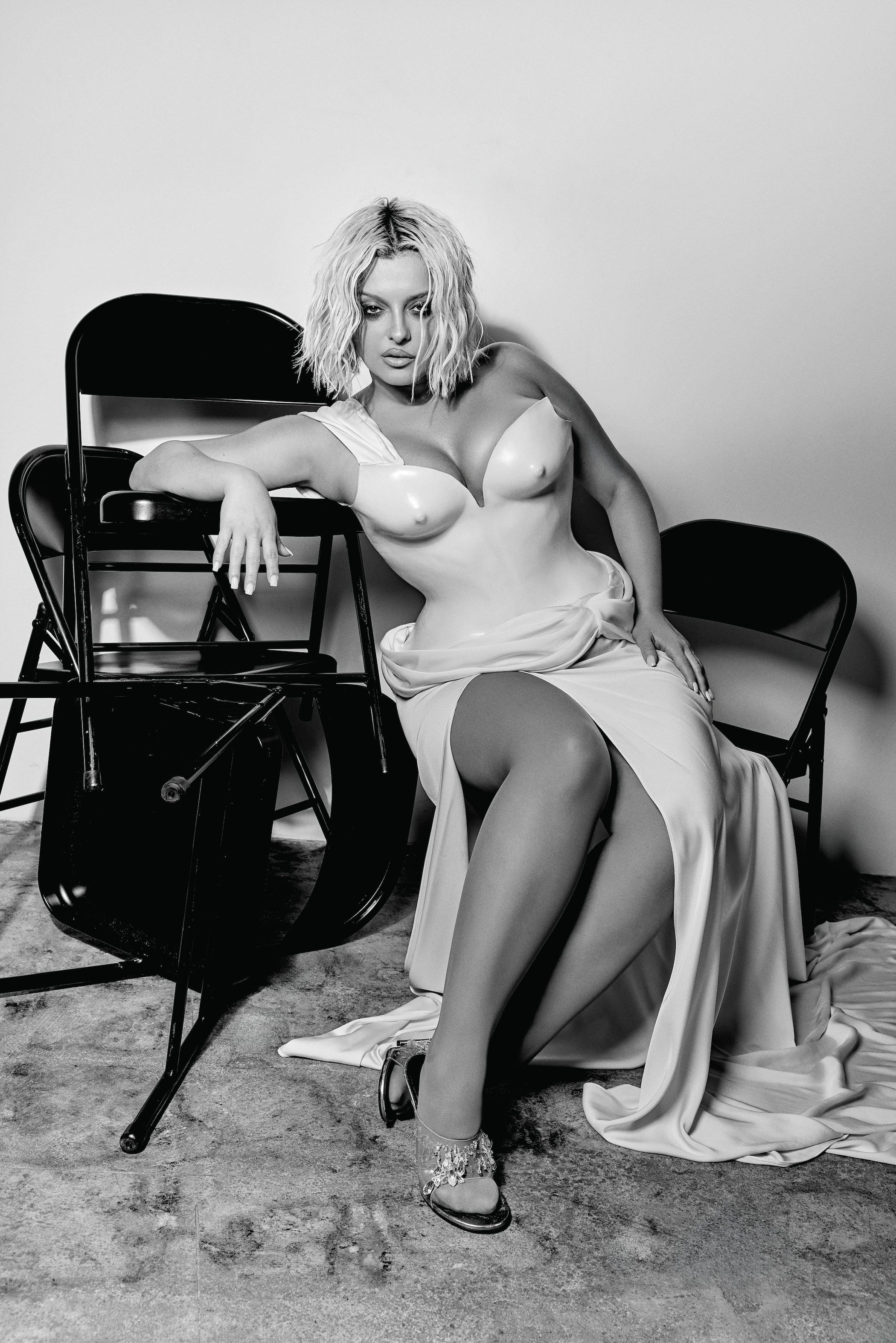
Not that she necessarily needs one. When describing her perfect day off, Rexha still says she’d be at the studio. The day would start with waking up next to her beloved dog Bear, consuming several iced lattes or a midday matcha (caffeine is a must, it seems), taking a nice walk, and then going right back into the studio.
“I truly, truly love it,” she confesses. “One thing I struggle with is having the balance of my personal life, but I really find so much joy in what I do. I could never see myself doing anything else. It’s my purpose.”
That’s because Rexha is, above all else, committed to chasing her dreams. And for someone as gifted as she is, the limit of her talent is nearly nonexistent, and thus the capacity for dreaming is endless. So the best part about all of this—the new label, the new album, the new Bebe—is that she’s not even close to done.
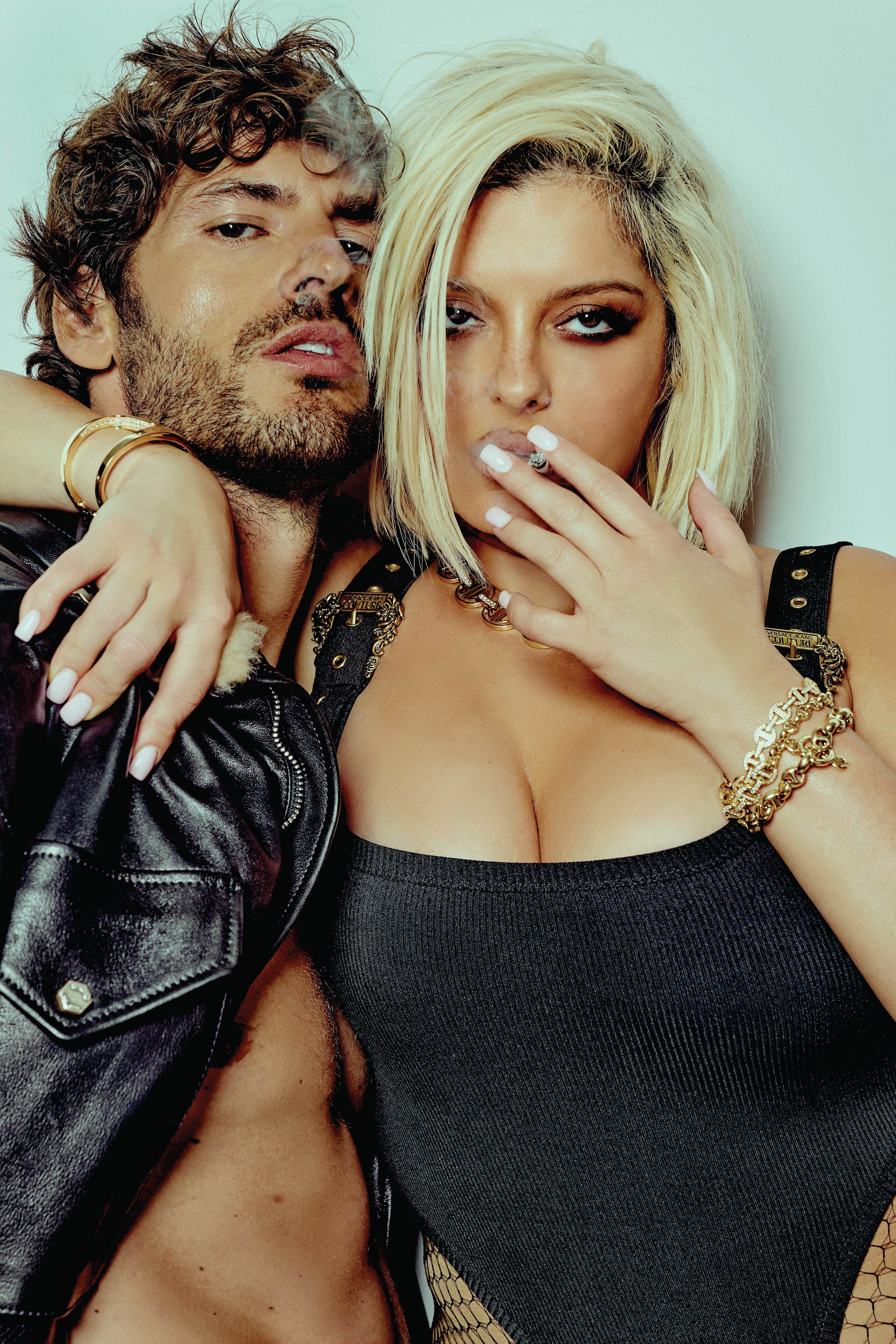
Photographed by Yu Tsai
Styled by Marc Eram at A-Frame Agency
Written by Maddy Brown
Hair: Cesar Deleon Ramirez using Kerastase and L’Oréal Pro at Prjct Mgmt
Makeup: Gilbert Soliz at Paradis NYC
Model: John Jamieson at Vision Models LA
DP: Jonathan Ho
Flaunt Film Editor: Roberto De Jesus
Style Assistant: Amber Simiriglia
Hair Assistant: Delina Kidane
Production Assistant: Marley Brennan
Stay up-to-date with exclusive events and content.


